Born in 1956, Cady Noland made her name – as opposed to her famous artist father’s – in the 80’s. Her sculptural assemblages deconstruct the ‘American Dream’ by suggesting its underlying psychopathology, her recurring themes being, in Gagosian’s words, ‘the mythology of American identity, systems of power and control, violence, celebrity, racism, media culture, and the psychological structures that underlie social behaviour’. Noland stopped making work in 1999, turning her attention to preventing any incorrect display of her established oeuvre. She did allow a spectacular retrospective in 2018, but only as a non-travelling show – which I saw – in Frankfurt. That read as a conclusion, yet she returned to present new work in 2021, alongside a 600-page two-volume book – co-edited with art historian Rhea Anastas – which gave a fresh context to the old work. Now she’s exhibiting new work in London, where ‘The Clip-On Method’ runs to December 19th alongside a relaunch of the eponymous book.
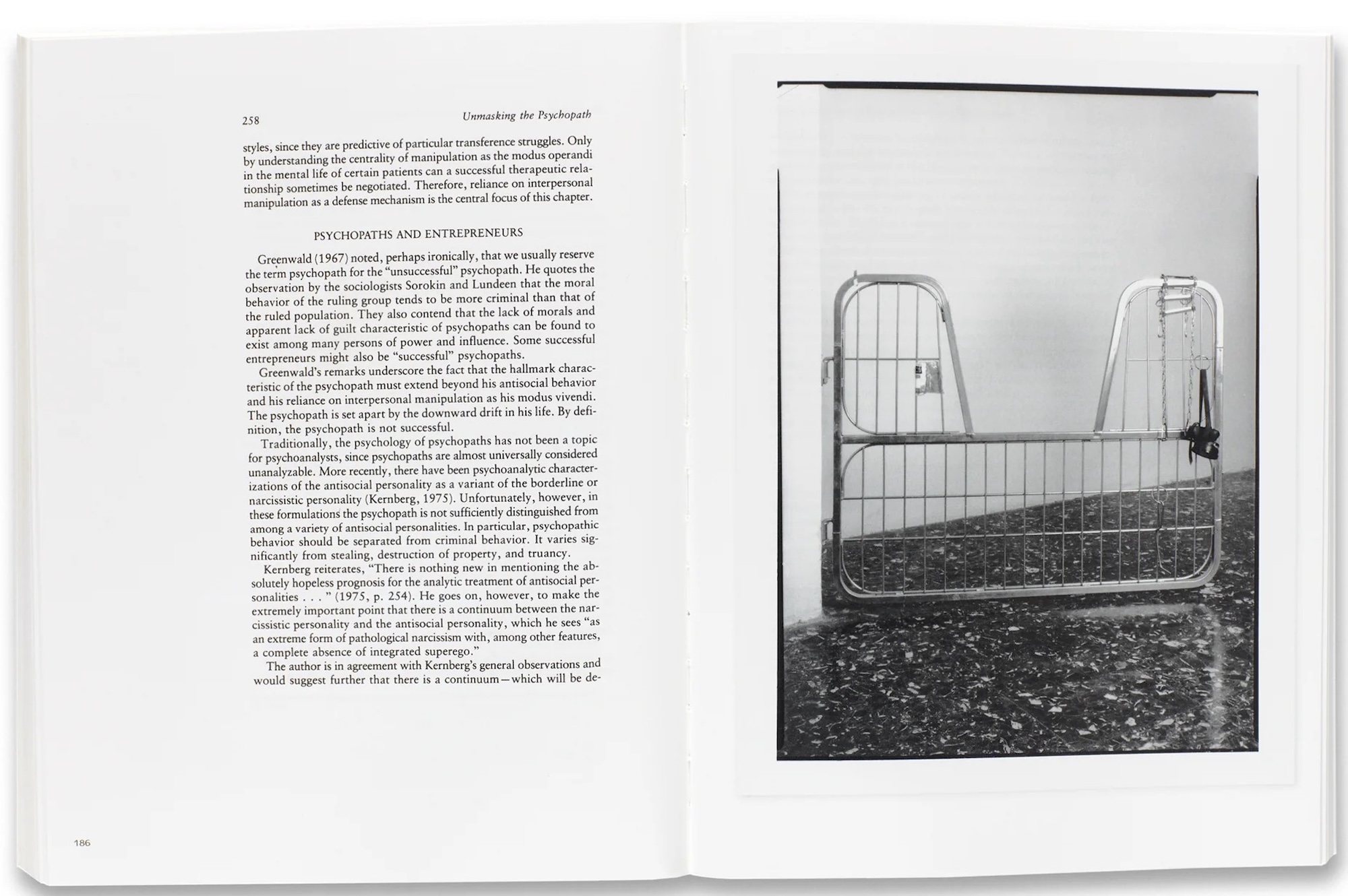
The new work is highly consistent with the old – indeed, it often re-presents or copies elements from it. And almost all the writing in the book – by Noland and by others, mostly sociologists – dates from the late 80’s. One might take that to indicate a creative dead end, but I’d see it more as a claim that her themes and approach maintain their relevance and deserve to be examined afresh in the era of Trump et al. And just as her work often features obstructions, the reader is somewhat obstructed by the book: no list of contents, many blank pages, and no explicit links made from the essays to the interspersed illustrations of work. We find, for example, an analysis of how office furniture is used to symbolise power; a comparison of how manipulativeness operates in entrepreneurs and psychopaths; and the story of how callously profit maximisation overrode safety concerns at Ford in the 1970’s. All of which may be unexpected, but is interesting in itself, dispiriting in how readily it can be applied to latter-day capitalist excesses, and suggestive of the spirit behind the work. Nonetheless, there remains a gap in the market for a more conventional monograph on Noland.
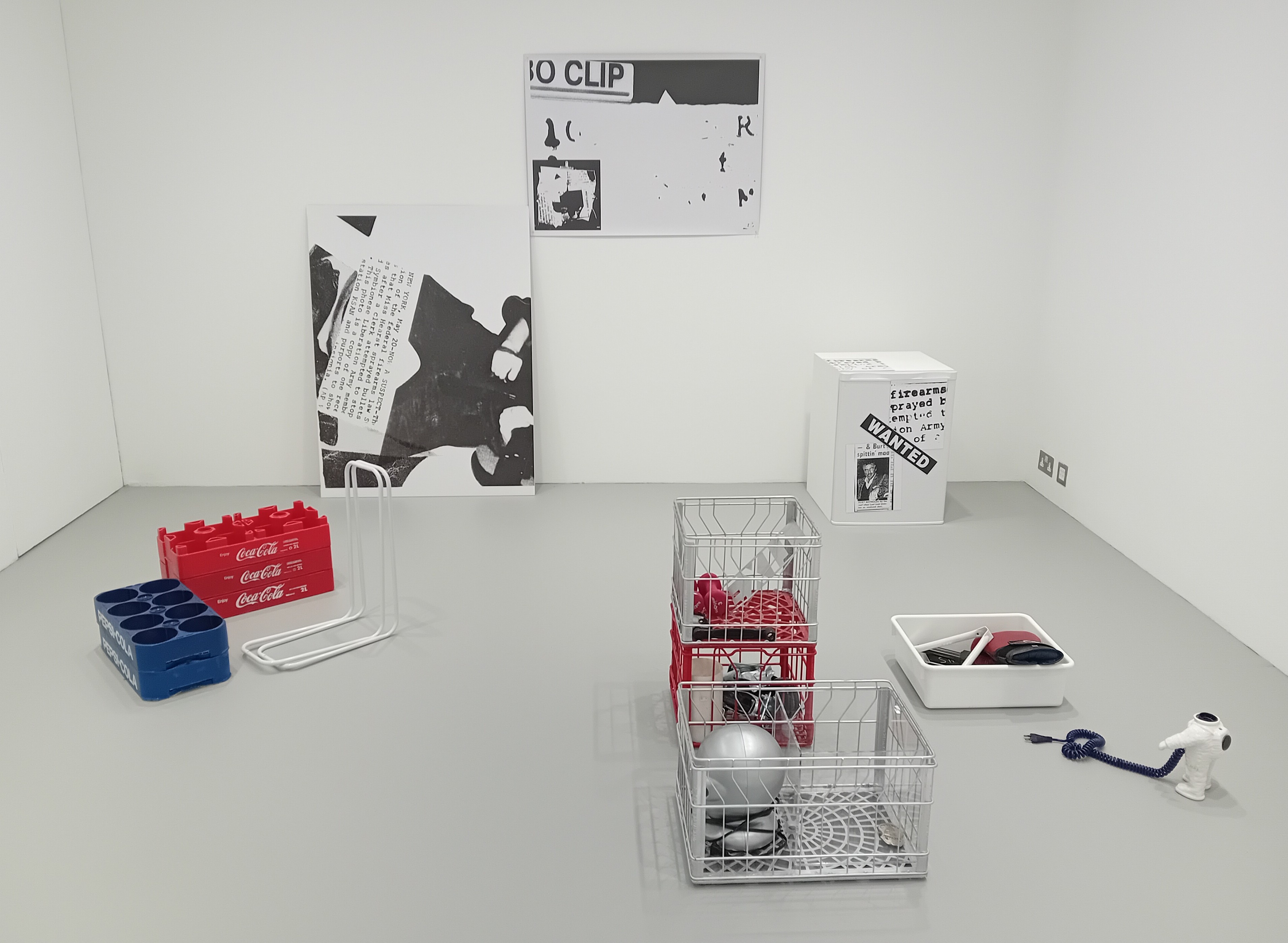
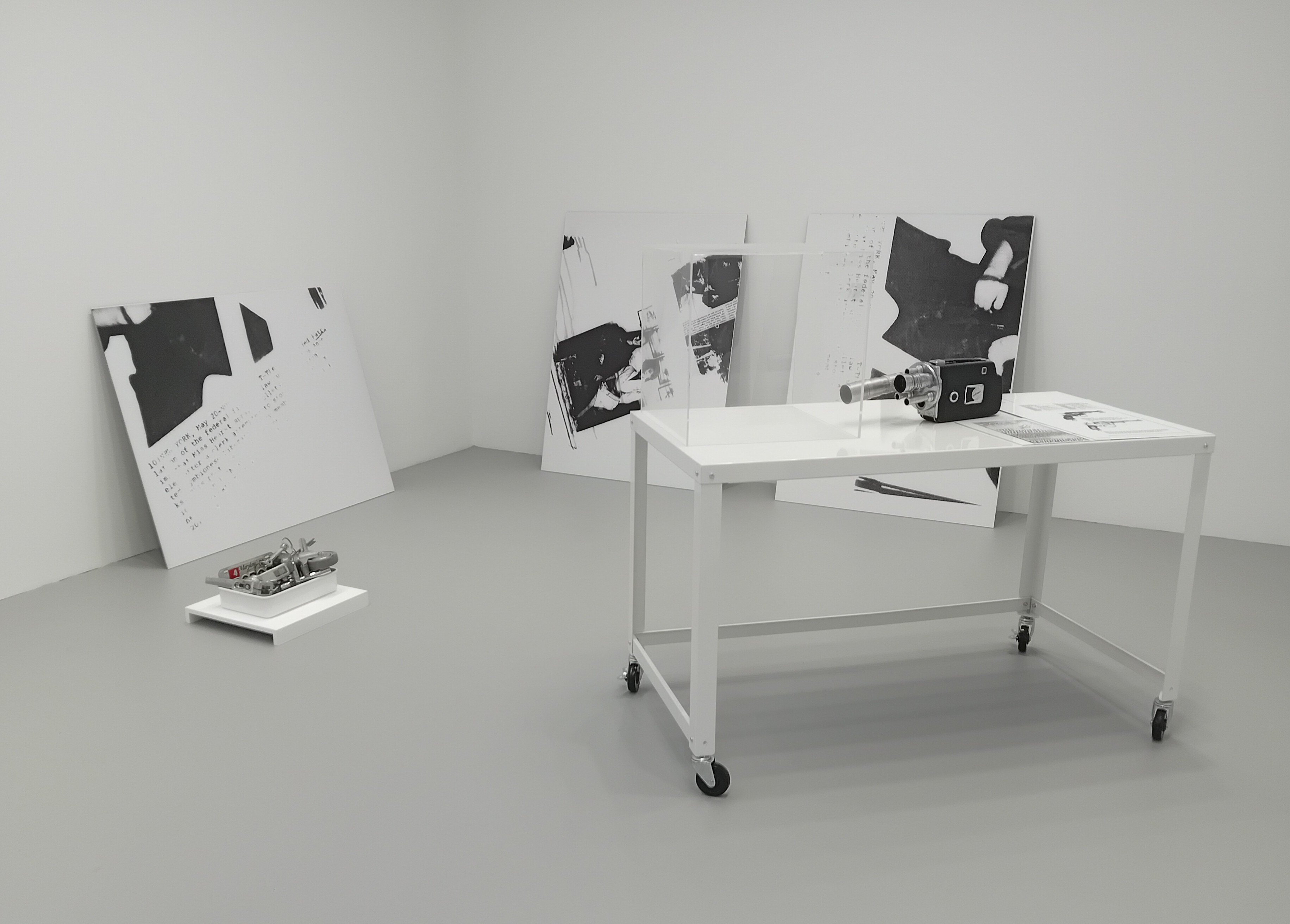
If we move from book to show, what’s striking is how beautiful the accumulation of 34 untitled works proves to be, in a highly controlled installation with the windows blocked out so as not to disturb the black, white and metallic silver palette with occasional red and blue. You wouldn’t guess that from the book’s photocopy aesthetic. But you certainly can connect the book to the way objects are blocked off, disassembled, jumbled together and rendered generally dysfunctional. This isn’t direct symbolism, but a possible parallel with how society might be taken to operate – forty years ago and now. The overall experience is to be productively disoriented by book and show alike.
Paul Carey-Kent selects a ‘Gallery of the Month’, a ‘Show of the Month’, a ‘Work of the Month’ and a ‘Book of the Month’ for his weekly column in FAD. A collection of previous gallery columns, ‘Paul’s Galleries To Go ’, and his book of photo-poems, ‘The Death Suite ’, are available from FAD.