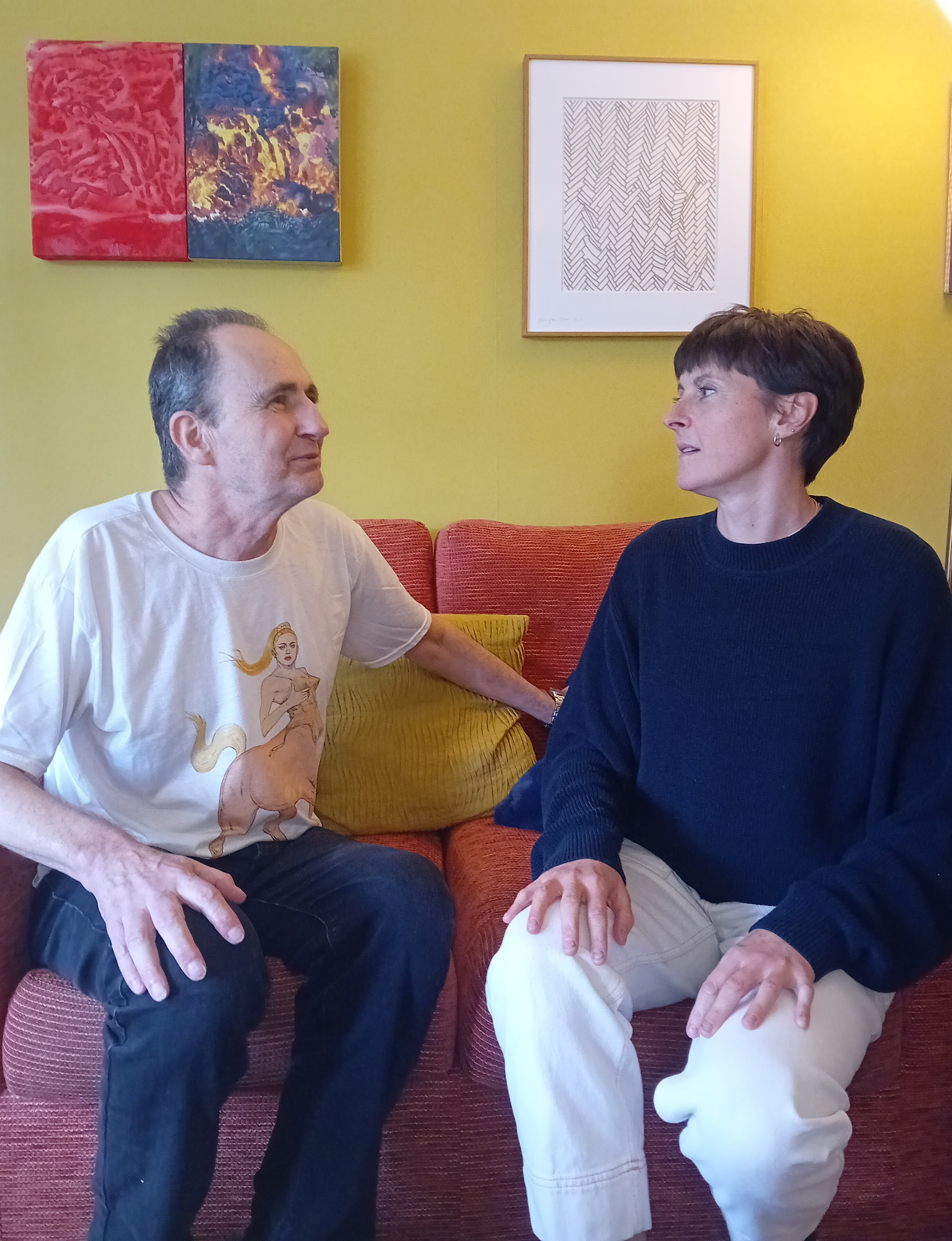
Emma on Paul
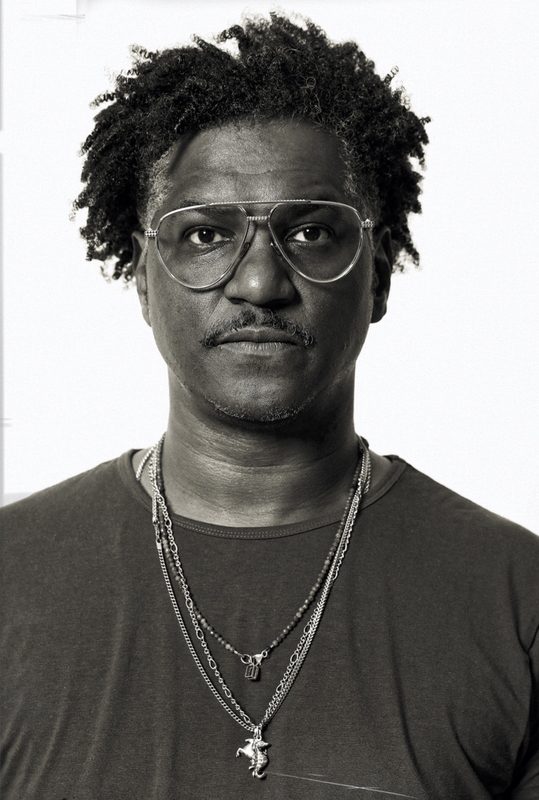
A freelance writer, curator and poet, Paul Carey-Kent has been described as an art addict. He is a peripatetic presence in the artworld, a stalwart, rooted in passion and commitment that cuts through the pretension and hierarchy. His energy and irreverent attitude lend a directness to his approach, and he’s become part of the fabric of the London art scene. He writes for FAD, Art Monthly, and Seisma magazine regularly, as well as many others, and interviews an artist a month for Artlyst, as well as writing a very illuminating blog, paulsartworld.blogspot.com. He was diagnosed with terminal cancer in 2022 – and responded by tracking his medical journey through words and images. One of Paul’s recent stints in hospital catalysed this interview, which is an extension of how our many conversations on art and life segue into the purpose of art, the art world and its complexities, and the significance of an imaginative attitude.
Did you grow up around art?
Around the arts more broadly, yes, but my mother and two brothers are musicians. She and my late father were both were head teachers, but his interests were more sporty than arty. I have wide musical interests, but missed the performance gene. Mum will readily regale you with the story of how keen I was, aged eight, to give up the violin, so wrecking her plans for a family string quartet! Rather, I loved to draw and write.
Did you ever want to be an artist?
Maybe I did… I might well have gone to art school had I not been pushed in a more academic direction. Timetabling wasn’t flexible in the 1970’s grammar school, so I couldn’t take art lessons: I was allowed to take my ‘O’ level without any lessons, but not to do ‘A’ level the same way. I’ve ended up with a BA in Politics, Philosophy and Economics; a professional accountancy qualification; and an M Phil in creative writing. I don’t regret that: it’s good to have different perspectives, and I have the typical visitor’s background of being a non-artist who has never studied art.
What is the first piece you remember as a child?
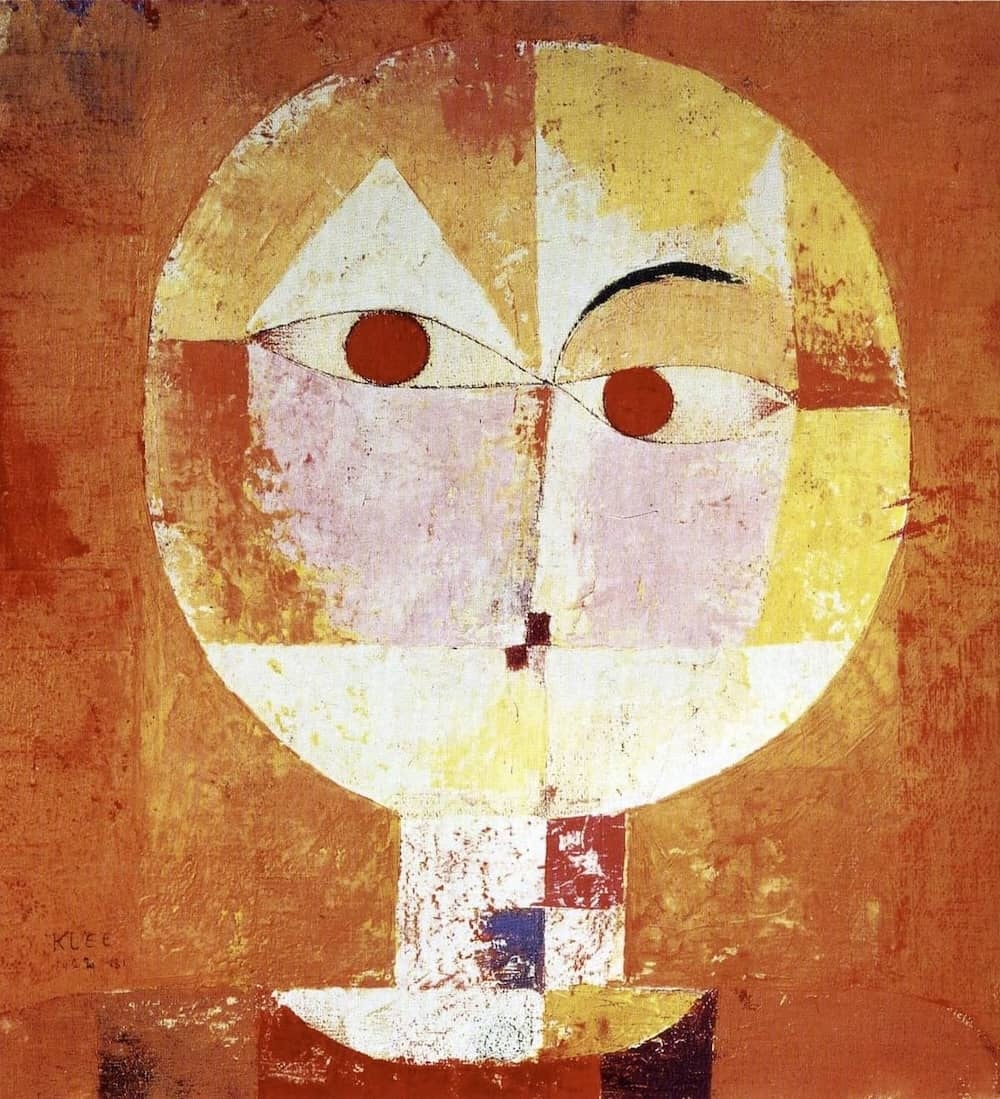
Botticelli’s ‘Mystic Nativity’ (c 1500) and Paul Klee’s ‘Senecio’ (1922) are the first works I recall hooking me – In 1970, I’d have been twelve. I’ve always loved the two Pauls, Klee and Nash. By the time I got the chance to decorate my own adolescent room, I’d ‘progressed’ to a reproduction of Dali’s ‘Metamorphosis of Narcissus’ (1937) on a backdrop of psychedelic wallpaper.
How did you become involved in the art world?
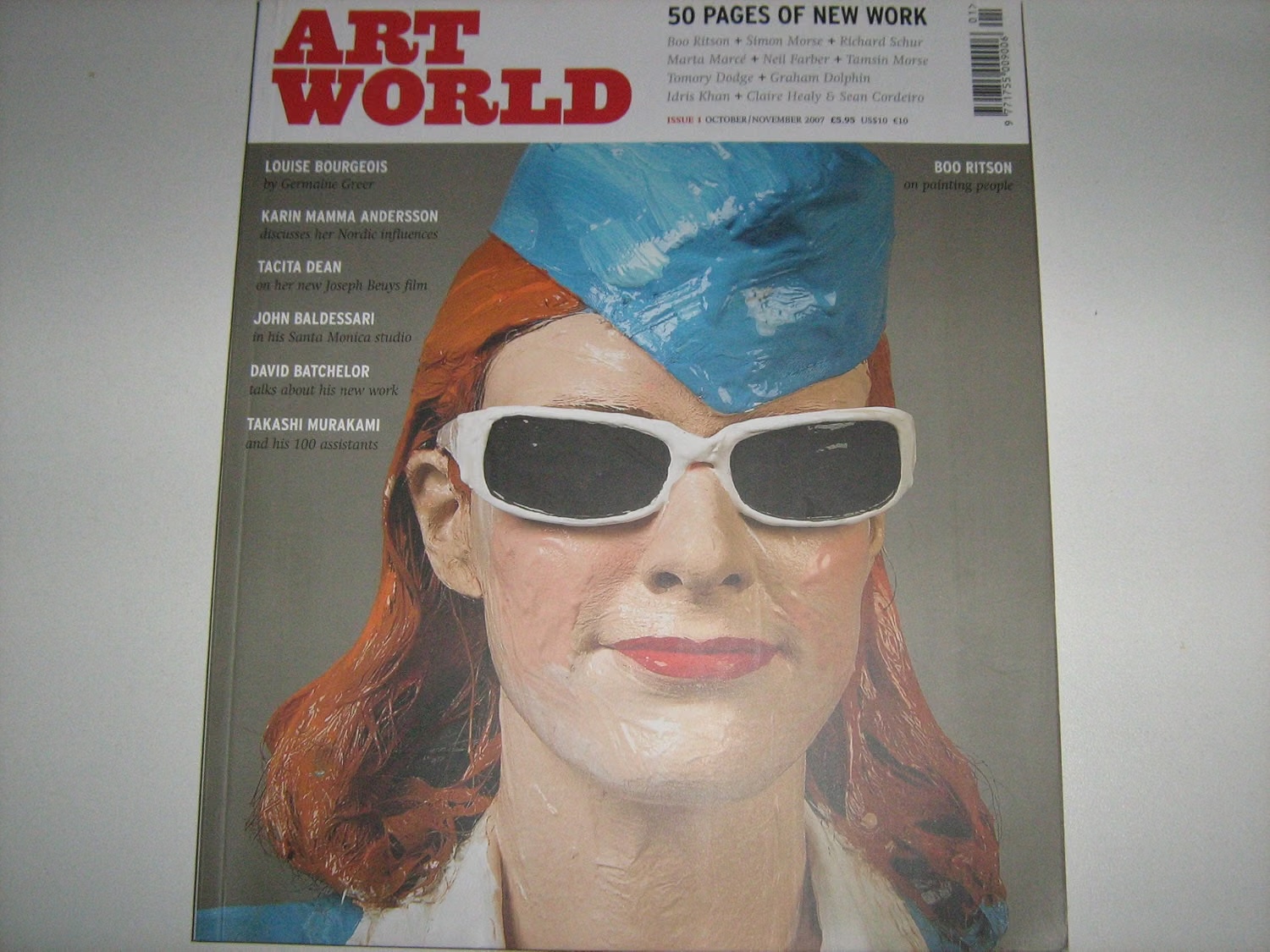
I always liked going to shows, but I had a busy non-London career and family life in the 1980’s, and was more involved in the poetry world in the 1990’s, so my heavy art attendance really comes from this century. That ramped up when my friend Vici MacDonald became Editorial Director of a new magazine, Art World, in 2007. Luckily, too, that coincided with secondment to a London job – actually, I overlapped briefly with Andy Burnham, advising him in my role as Financial Controller for Social Care at the Department of Health while he was the minister. I wrote a lot for Art World, found I liked it, and carried on writing about art after that – somewhat displacing my poetry until lockdown restarted that.
Can you talk more about Art World Magazine?
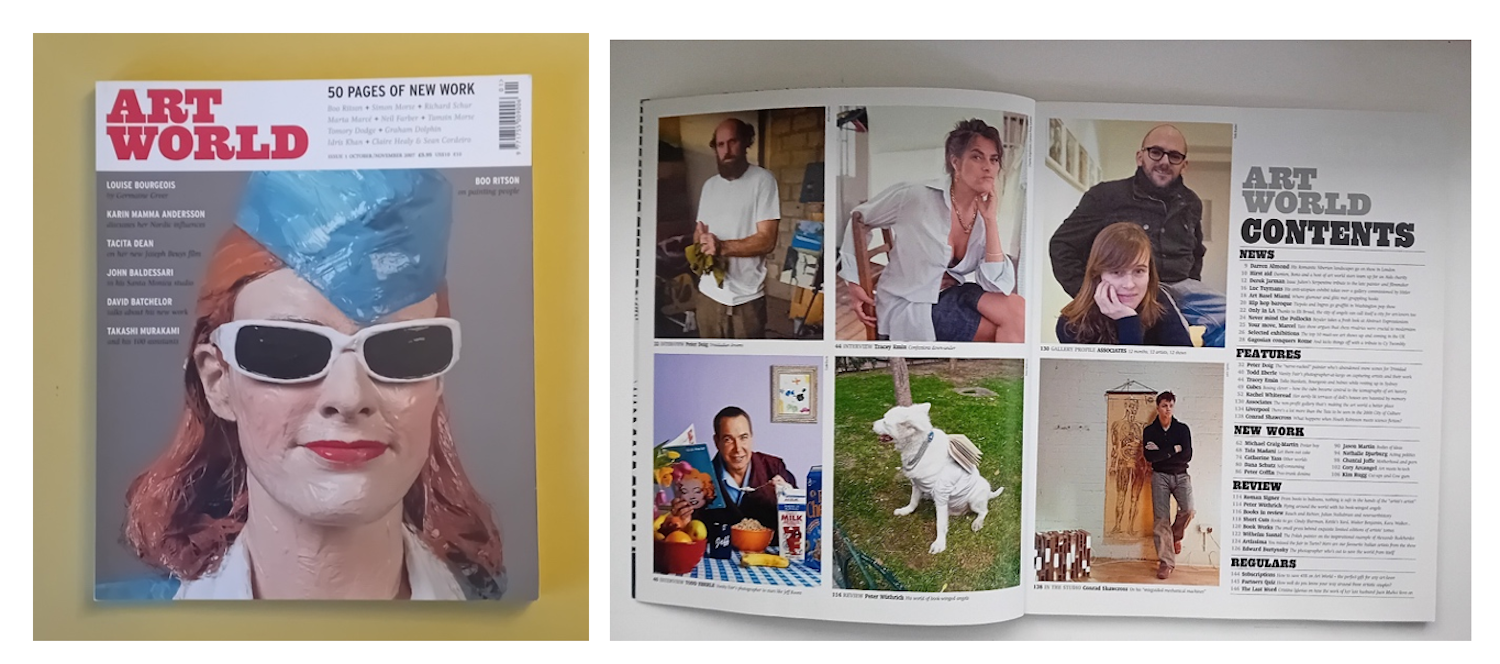
It was a handsome magazine with 14 bimonthly issues during 2007-09. It was founded by Steve Bush, a Briton who was already running a publishing business in Australia. The primary content was interviews with artists, along with copious images of new work, foregrounding their practices in a way which wasn’t being done anywhere else at the time. Art World was very popular, but part of its appeal was that there were hardly any adverts, and so unsurprisingly, it lost money and didn’t last long.
Who was the first artist you connected with when you started writing about art?
It was largely down to me that the striking cover artist for Issue 1 of Art World was Boo Ritson, who engaged in literally painting, then photographing, people. Her work was excellent, but she dropped out of the art world for a salutary reason – she found the market wanted her to keep repeating a successful formula rather than develop as she wished.
I might also mention my first exhibitions. In 2012, Maria Marshall asked me to curate her solo show in a food factory near her house. Then Christina Niederberger asked me to curate with her in a more orthodox gallery setting. I’ve done about five shows per year ever since, often collaboratively – including a second show with Christina last year.
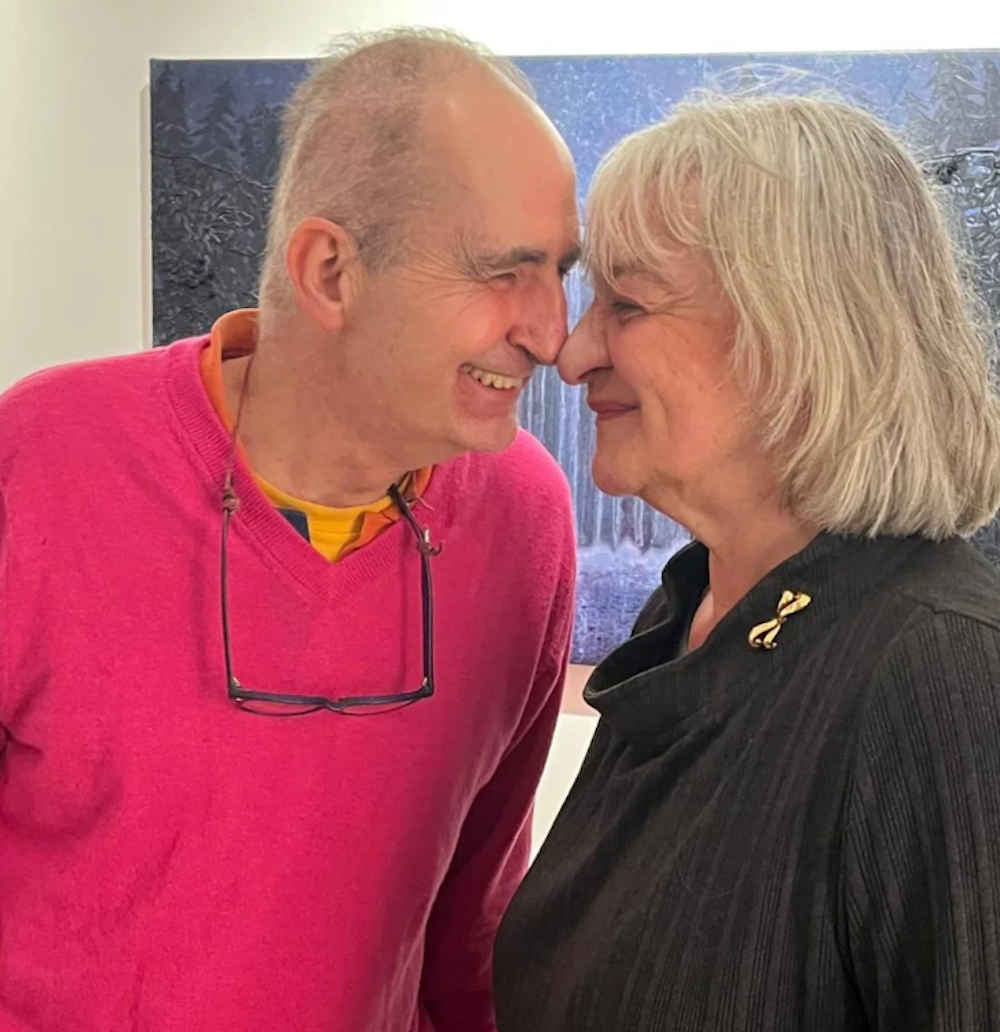
How would you summarise what you do now?
Art is, I suppose, my core activity – including visiting some 1,000 shows annually, the majority of those in London. All of which I do for a simple reason: I enjoy it. Yes, I earn money, but not a lot more than I spend on travel.
You keep quite busy, then?
I do seem to be naturally active and – when healthy – I don’t sleep much. My wife, Steph is a fantastic support and a large part of the reason my four-year cancer journey hasn’t slowed me down particularly. Doing things is what chills me – reading, writing, looking, thinking… About as zoned out as I get is playing tennis or online chess.
When people speak about you, they often say something like ‘he is everywhere!’ How so, especially when you live in the New Forest and had a full-time job until 2020?
Whenever I run into the London / Oslo artist Martine Poppe – in either city, as I’ve curated my biggest shows in Norway – she concludes that my tele-transporter is still operational! More plausibly, I do move fast and am good with public transport. It’s easy enough to cover a dozen shows with time to talk to the gallerists, then three or four evening openings, in a day. Add in more intense engagements, like trips to Art Basel, and the art mounts up.
You lead very generous gallery tours, can you speak about them and what you feel they offer?
That’s a slower-paced gathering of artist friends – exchanging views as you go adds a different dimension and is both a learning experience and great fun. I also take poets round galleries with my poet friend Tamar Yoseloff – which is differently illuminating.
What is the most times you have visited the same show?
Other than my own exhibitions for events etc., I think three is a reasonably frequent number: if you go to an opening event, then go back to see it properly, then go back to look again when you find you’re going to write about it.
The artworld seems full of do’s and don’ts, and the gallery scene can be quite unfriendly and intimidating or is perceived to be. How have you found it and how you managed to penetrate and navigate it?
People can be intimidated by commercial galleries, feeling that they are the preserve of the rich and that they don’t fit in. And some galleries don’t help themselves: you have to ring to get in – unavoidably, in some locations; when you do enter the gallerist may be somewhere apparently private; or information may seem to be lacking, especially in these days of QR codes. My experience, though, is that staff are invariably friendly if you express an interest in the work. That’s especially true of the smaller galleries, where you’ll often meet the gallerists themselves. Yes, they want to sell the art but almost all set up their businesses because they loved art and want to do well by their artists (after all, there are easier ways to make money). The key is to look, read, talk.
Any tips for sneaking in irreverently ‘behind the scenes’?
Once you know artists or gallerists you can be a little cheeky. It can be good to talk to the artist just before the private view starts. If you’re passing when the gallery isn’t officially open, no harm in checking in.
Your memory of artists and exhibitions seems encyclopaedic. Can you talk about how memories of these things are stored and how you access them if that’s possible?
I’m not sure I’m that good! I think it comes down to remembering things that interest you. It’s the experience, the overall concept, the feel of the work that stays with me, not the visual memory – in fact, I’m one of the 5% of the population who are aphantasiac – I cannot voluntarily form pictures in my ‘mind’s eye’, and I’m embarrassingly bad at remembering faces! I also have decent searchable records: if you asked me to list the best artworks I’ve seen dealing with optimism (as I did here).
You also know a lot of artists?
Yes… For starters, I’ve shown hundreds across my 50-odd exhibitions. And the main attraction of openings is to meet the artist – I’m less keen to attend if the artist is dead! That helps you decide whether they link an original language to worthwhile content, which is what I want.
Most artists would prefer a meaningful discussion of what you’re unsure about to an empty declaration that ‘it’s great!’ For my group shows, I like to set up events in which a few artists talk for five minutes each in front of their work. It’s always illuminating.
I’d add that the art community is very warm and appreciative: by way of illustration, 500 artists and gallerists took the trouble to send me a personal message of support prior to my most recent cancer operation.
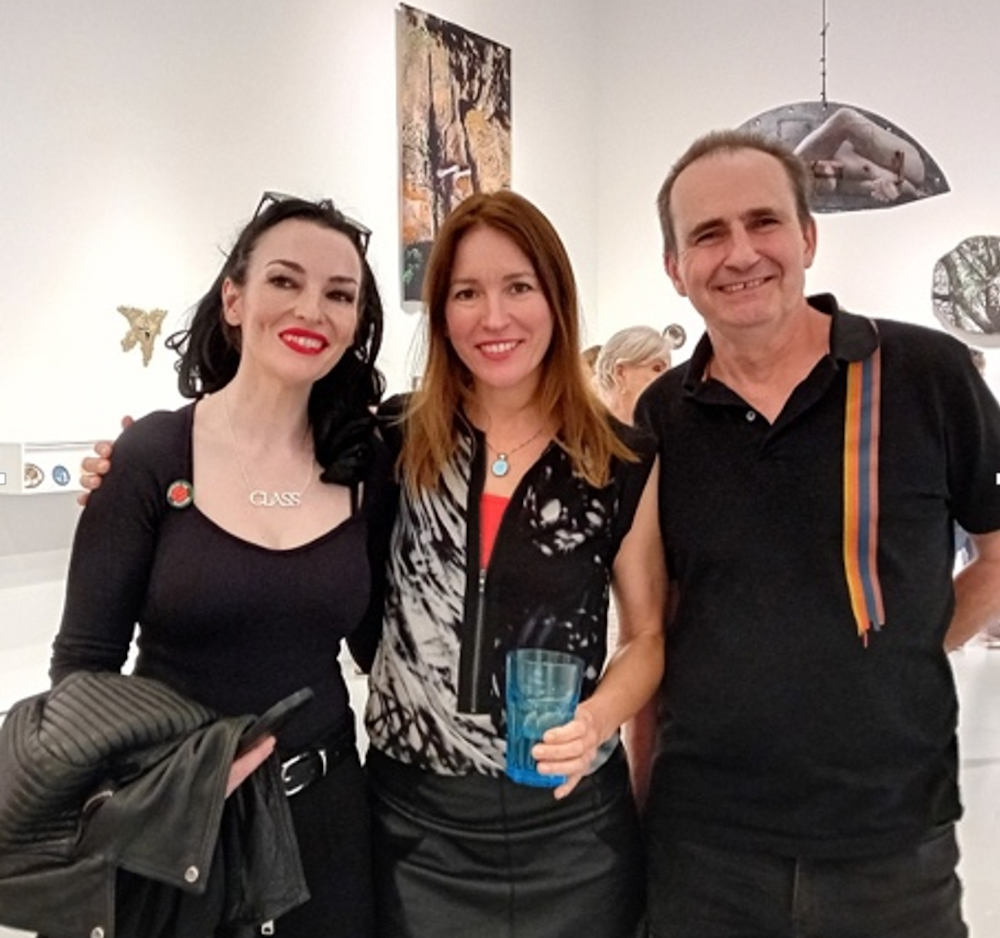
Is your network mostly in London?
Yes, but I travel regionally and abroad when I can. Indeed, I can imagine a nice European tour calling at the studios of artists I know. Say Levi van Veluw in Amsterdam, Marcin Dudek in Brussels, Jenni Brosinski in Berlin, Richard Schur in Munich, Laura Santamaria in Como, Beat Zoderer in Zurich, Kate Groobey in the south of France and American artist Ena Swansea when she’s in in Arles. Maybe I could do the world: add Wanda Koop in Winnipeg (a great art city), Stefana McClure and Jill Baroff in New York, Adeline de Monseignat in Mexico City (I wrote ‘The Book of Ladders’ with her during lockdown), Bharti Kher in New Delhi, Gordon Cheung in Hong Kong and Nasim Nasr in Sydney. Phew, sounds like fun…
Given you travel a lot for art, what’s your top destination?
The place I get back to as often as I can is Berlin. Once the wall came down in 1989, the city generated a lot of cultural energy, including plenty of alternative art spaces. And I like that it’s spacious, and its history – especially World War II and the Cold War – is very much present. Perhaps because there isn’t a Berlin Art Fair, the many excellent galleries and institutions have been unusually good at coordinating their activities – I’ve tended to get there annually either for the ‘Gallery Weekend’ at the end of April or the ‘Berlin Art Week’ in September. Both offer simultaneous openings of 50-odd new shows in an official programme, as well as plenty else. I like to wander around with a mixture of Berlin and visiting London artists…
What are the top artworks or shows of everything you have seen that are stuck in your head?
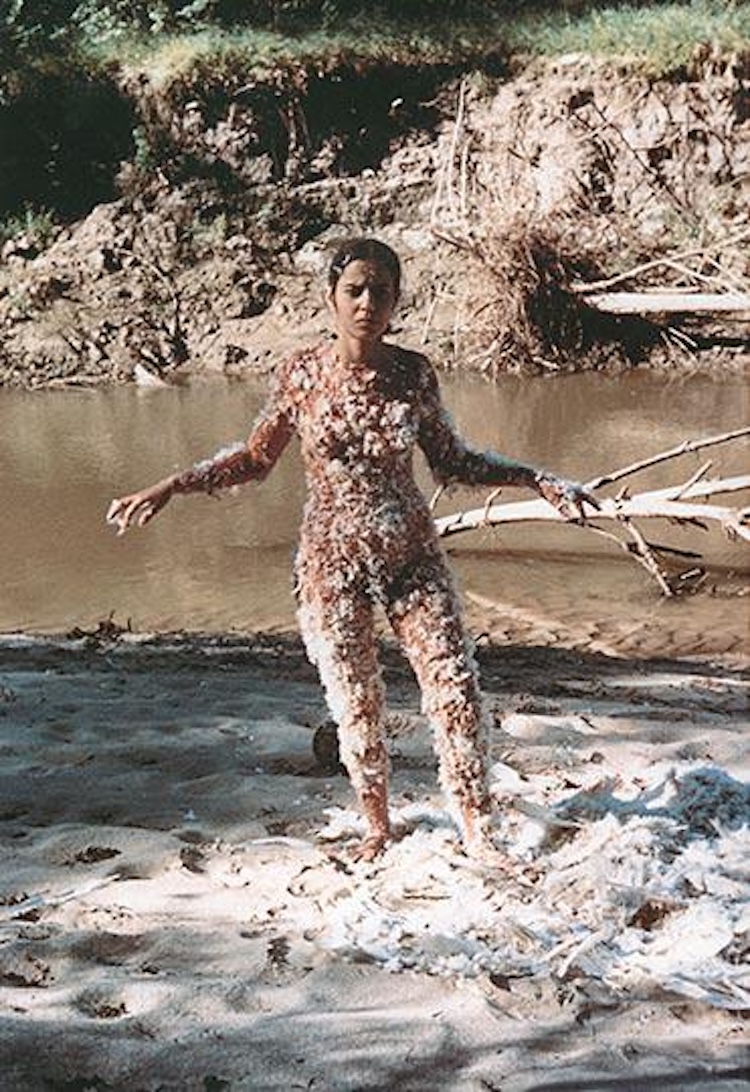
I’m a big fan of Ana Mendieta, and that stems from the first solo I saw from her, at the John Hansard Gallery in Southampton in 1999 (Director Stephen Foster ran a superb programme there when it was based at the University). Then came ‘Covered in Time and History: The Films of Ana Mendieta’ in Berlin (2018). And now her show at Tate Modern.
Perhaps the ideal museum show is one that pulls together the whole picture for an important artist whom you’d previously seen more fragmentarily. The Marcelle Broodthaers retrospective initiated by MoMA in New York was an outstanding example: I caught it in Dusseldorf in 2017.
There’s something to be said for the whole exhibition becoming a meta-work combining powerful content to new effect, and I’d say the masters of that over my viewing life have been Anri Sala and Pierre Huyghe, though Mark Leckey’s recent show in Berlin was also brilliant. And I look back favourably on Okwui Enwezor’s Documenta 11 in Kassel, 2002: the first giant survey of that sort that I saw – it had 117 participants – and still one of the best.
For sheer emotional hit, the initial viewing of Nan Goldin’s ‘Ballad of Sexual Dependency’ (1985) takes some beating, the more so as I was in New York. And while we’re in the camera zone, a shout-out to The Photographers’ Gallery’s recent retrospectives of Daido Moriyama and Boris Mikhailov.
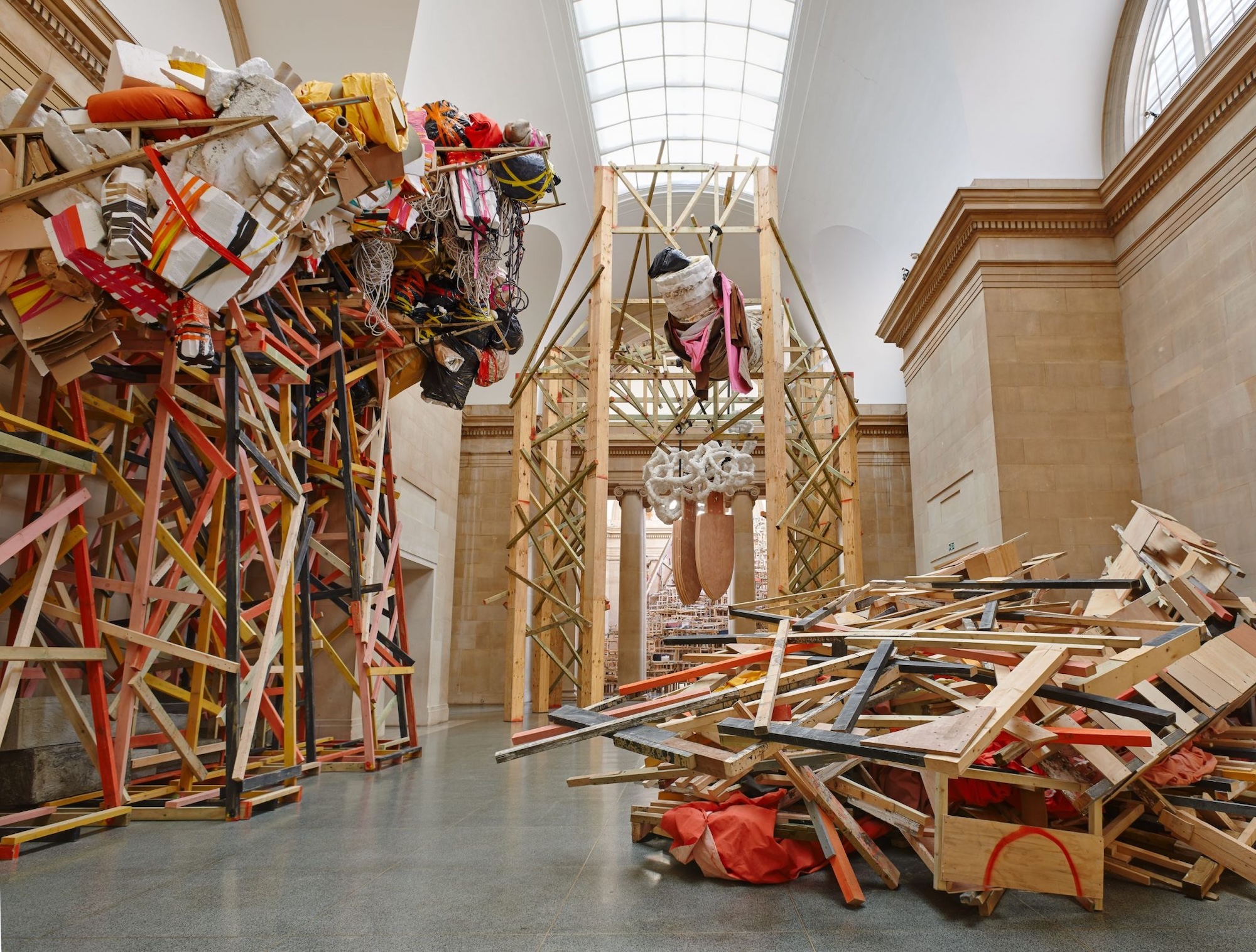
Somewhat more personally, two decades back I bought a small sculpture from Phyllida Barlow for £100 – she delivered it in a plastic bag, and we strolled round some galleries together. Fast forward not many years, and she had taken over the Hauser & Wirth Piccadilly space (2011) and the Duveen Hall at Tate Britain (2014) to memorable and spectacular effect.
Is there anything you’ve missed?
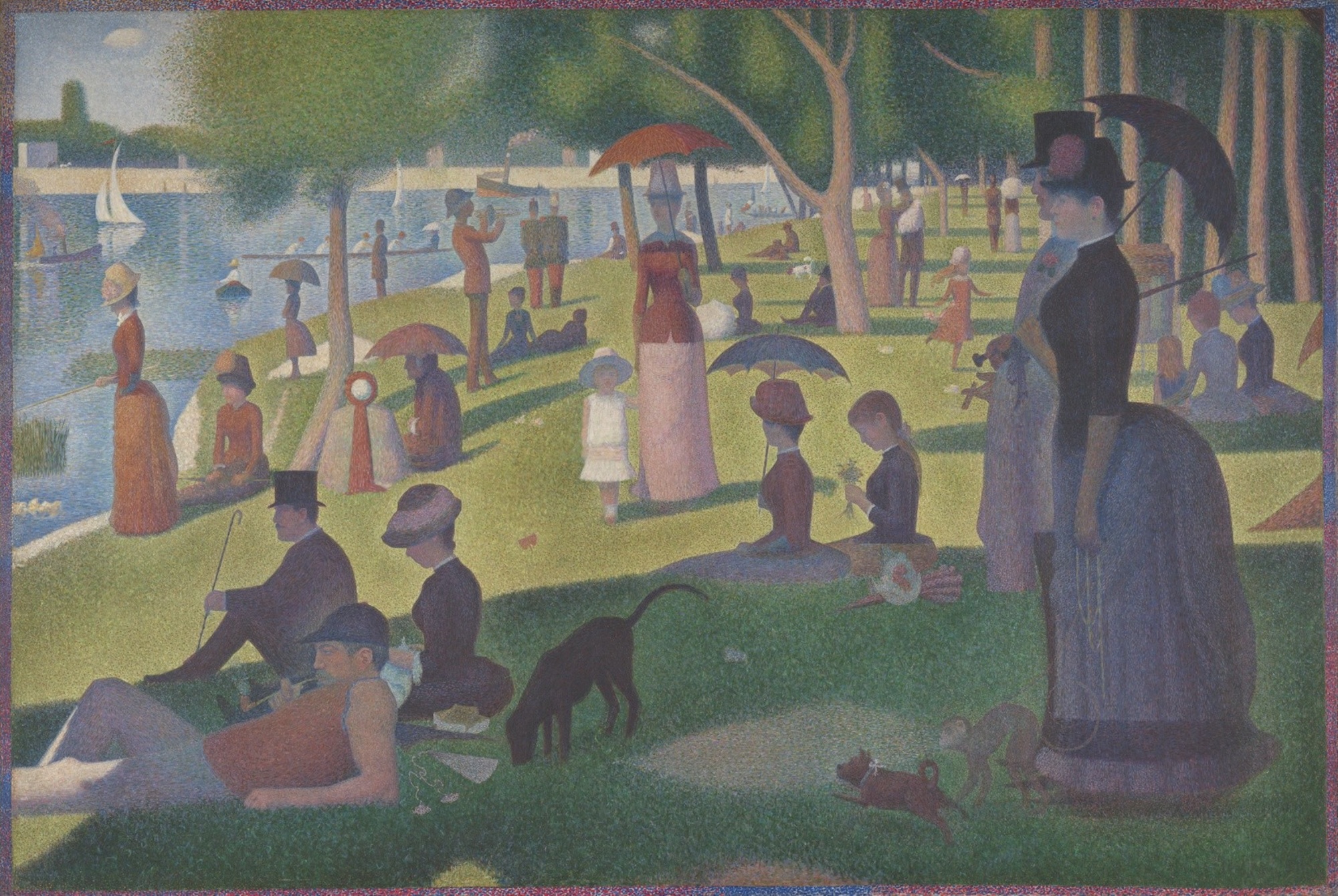
I’ve never got to Chicago. But from all I’ve seen of Seurat, and of ‘Sunday Afternoon on the Island of La Grande Jatte’ indirectly, I’m pretty sure that the world’s greatest painting is there. Perhaps the greatest painting I’ve actually seen is Titian’s ‘Assumption of the Virgin’ (1516-18) at the Basilica di Santa Maria Gloriosa dei Frari in Venice.
In hospital and through your illness, it struck me that you have found ways to reflect on it as a human, philosophical, even creative experience…
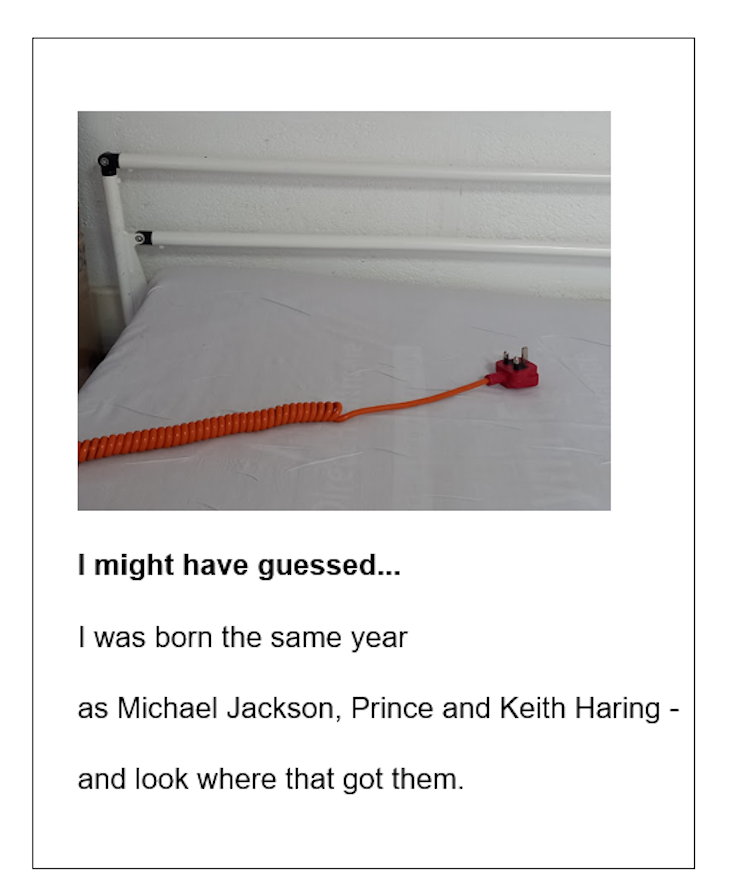
Any new experience is a potentially creative one for me. So, spending three months in hospital across four main stays over the last four years – after six decades without a worthwhile illness – has been novel and interesting. Especially as I haven’t suffered much, meaning I’ve been able to enjoy it. It’s also consistent with a vow I made when diagnosed with cancer: don’t live a medicalised life! Perhaps the other factor is that I find it easy to be positive. We can all say ‘don’t worry about something if you can’t do anything about it’, but most people worry just the same. For whatever reason, I just don’t. One of my artist friends – Nadège Mériau – has a simple explanation: I’m a reptile.
Was the art in the hospital an important part of the experience?
Thinking about art was certainly central, and I’m all in favour of how art can improve medical settings. But the art on show in Southampton hospital wasn’t too significant: it was the people – staff and other patients, and artists more remotely – who made the difference. And they, in turn, liked my activist approach, which kicked off in 2022 by my curating a show about kintsugi – the Japanese art of repair – from my bed, following the operation to repair me.
You live with lots of art. Why is this important?
I don’t think living with art is as significant as living a life in which I encounter art. I’m perfectly happy to have that other than at home: my drive is not to own art, just to experience it. That said, we do have a couple of hundred works and it’s certainly nice to have them around – especially when I’ve been unable to travel post-operatively, and as many works come with personal connections.
And is there something that you look at every day that feels significant?
I’m not sure there’s one work, but there are several of which I regularly find myself thinking: ‘Yeah, that’s good!’ Four things to like in art are attitude, beauty, wit and technique, so here are four you might pin primarily to those virtues in turn:
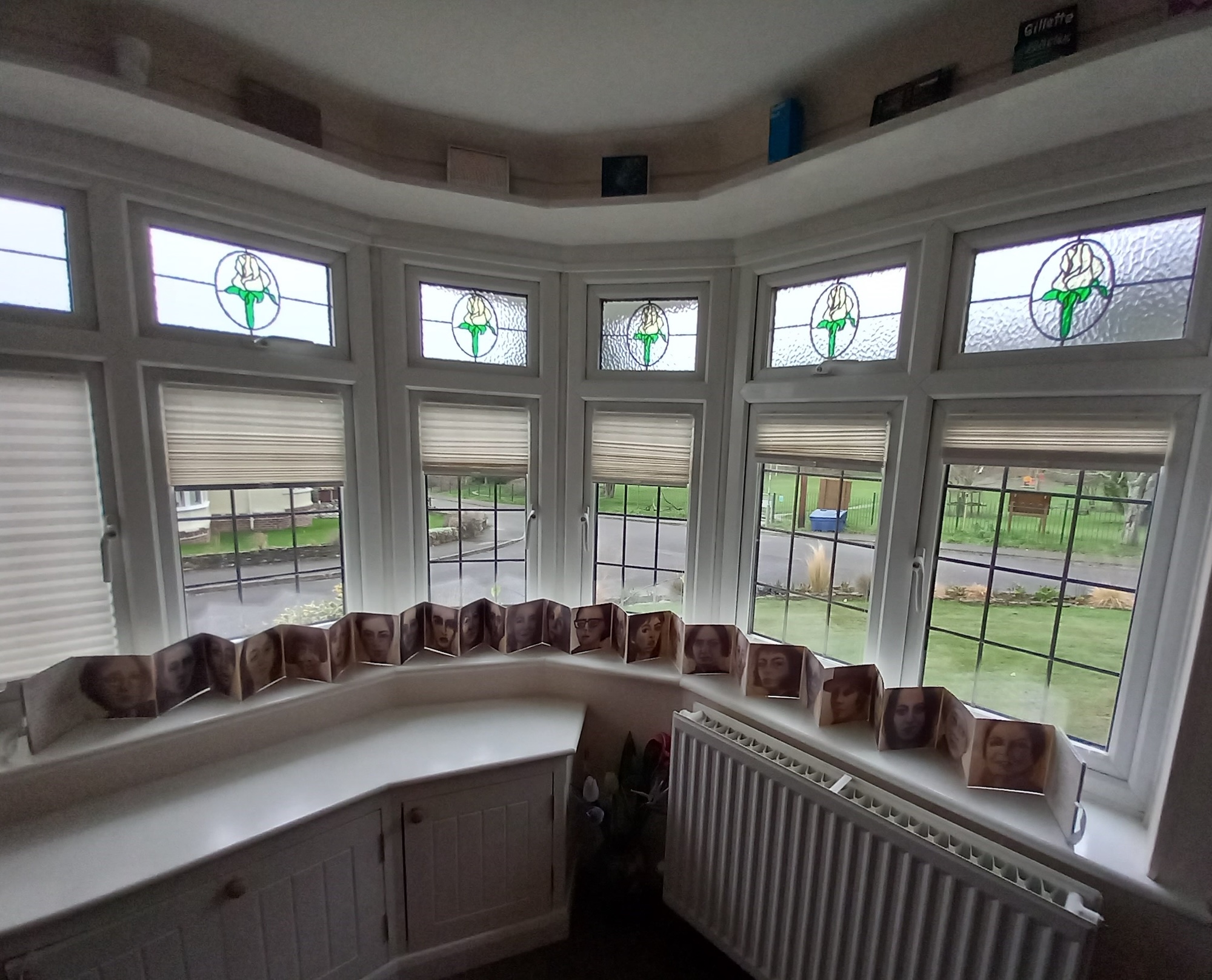
We have a fold-out Fiona Roberts with watercolour portraits of 26 female painters as a counter to the late German’s absurd claim that ‘women can’t paint’.
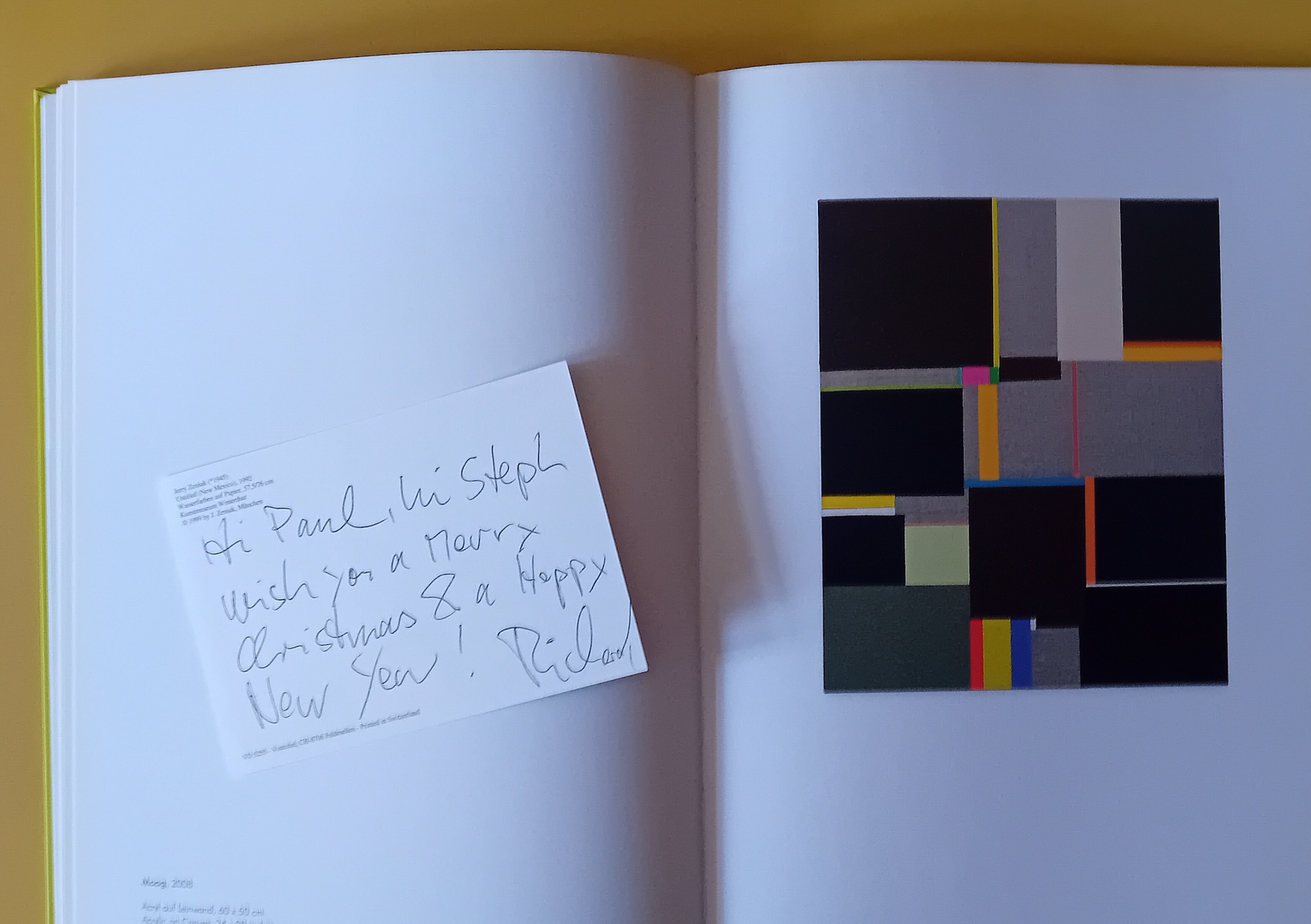
Munich-based Richard Schur has twice given me an elegantly constructed geometric abstraction when I wrote about his work for him, ‘Moog’ being the first. I discuss his work with respect to art history, place, architecture, seduction, formalism, emotion and wit before concluding that his serious play is with colour.
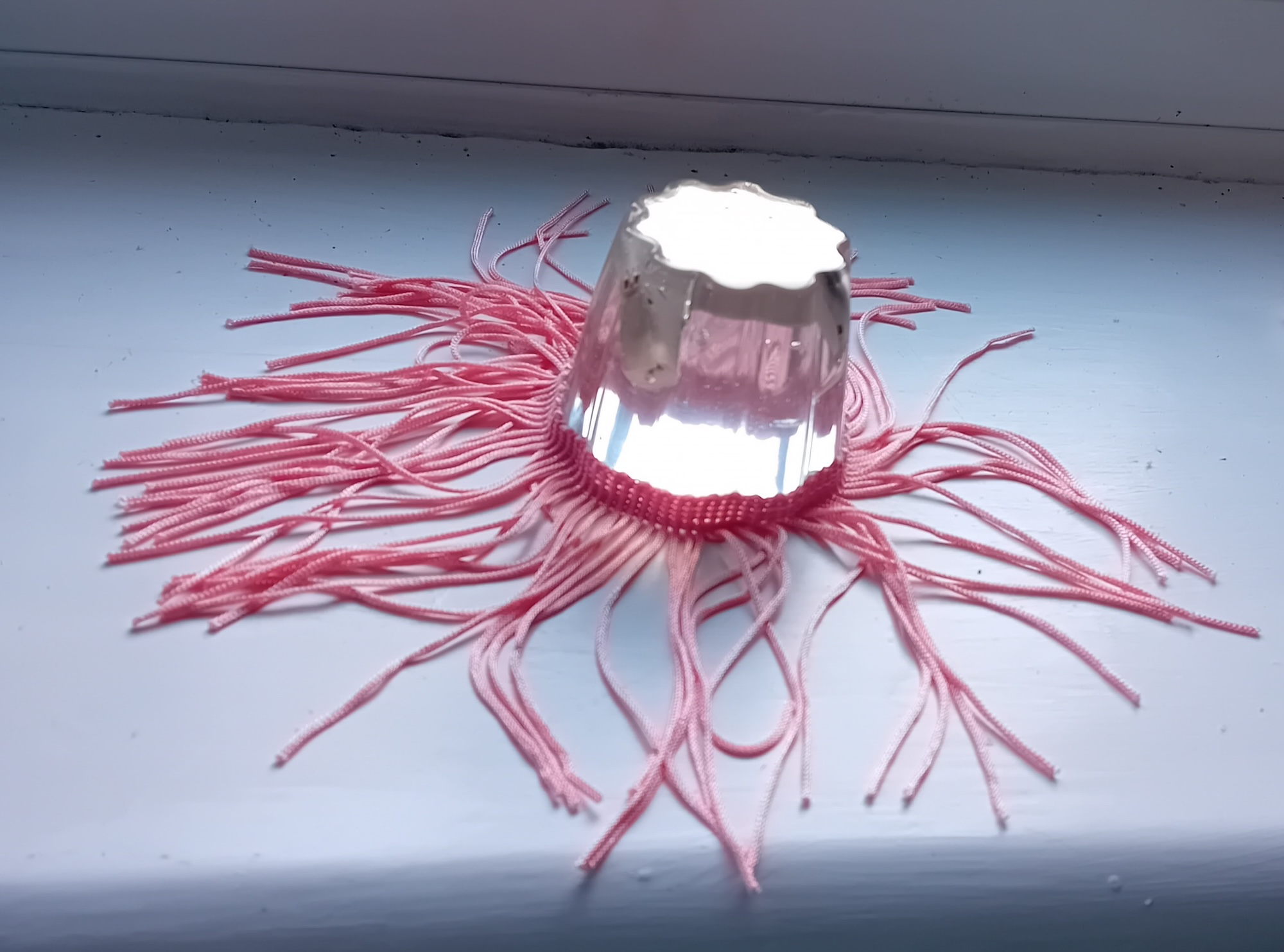
It’s nice to have ‘souvenirs’ from my shows. This is from one of the five editions of ‘An exhibition of SMALL things with BIG ideas’ I have curated with Yuki Miyake at White Conduit Projects. It’s a jellyfish, cast from a jelly mould with curtain trimmings as tentacles. Inside it is a deaf aid. A sort of domestic horror that, in Sadie’s words, ‘combines my fear of jellyfish with my greater fear of ageing and death’.
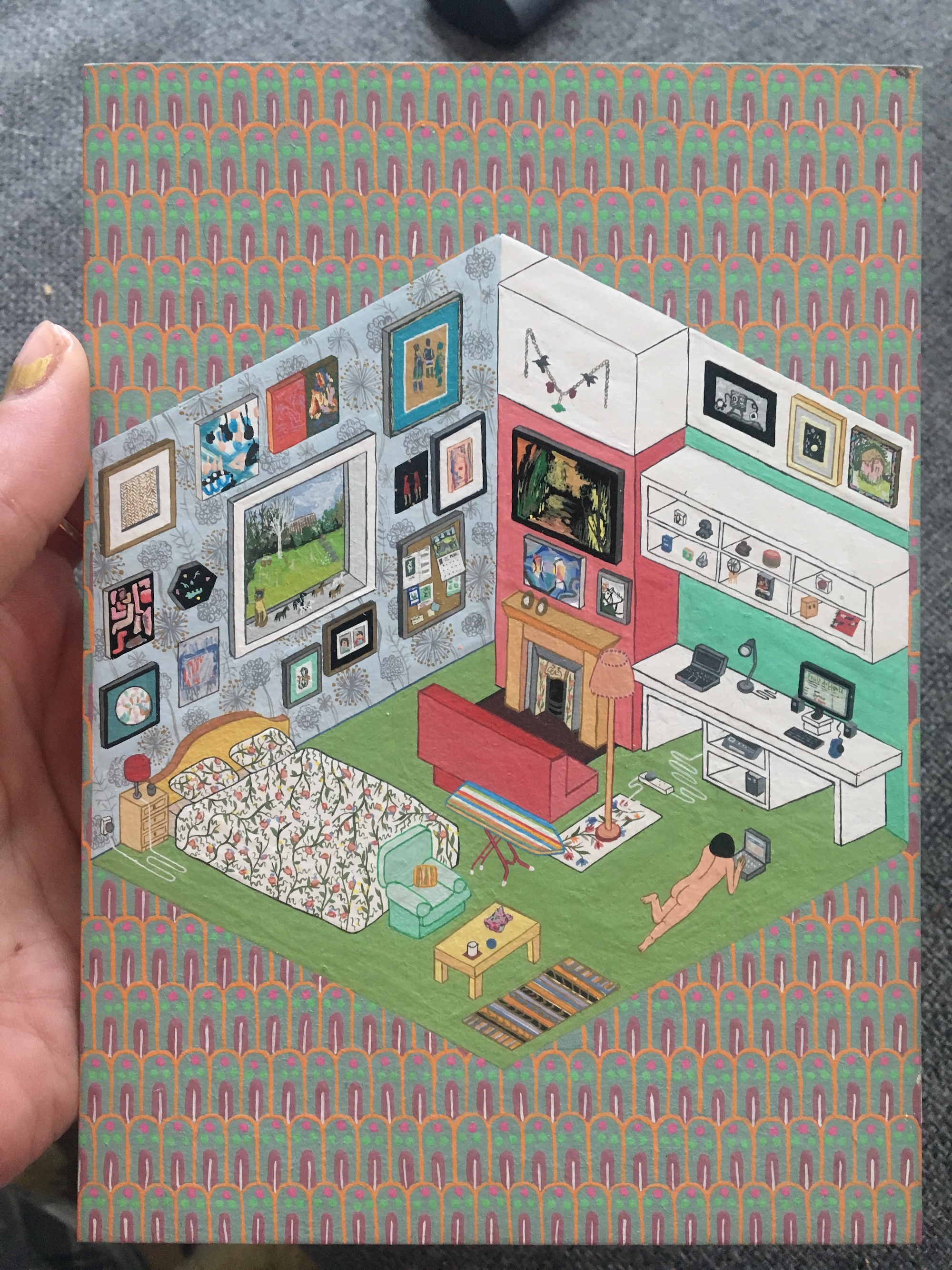
Visitors are always struck by our Paola Ciarska: it collapses into one schematised room how she saw our previous house, including the art in it, with dizzying detail given its scale – and you can still identify most of the works depicted, only now in their new locations…
How have your taste and curating changed over the years?
I’m not sure they have! Look back on my earliest group shows a dozen years ago, and they included for example Susan Collis, Nick Hornby, Liane Lang, John Smith, Nika Neelova, David Rickard, Danny Rolph, Appau Junior Boakye-Yiadom and Liv Fontaine – all artists I’ve followed and written about keenly ever since. Obviously new artists emerge, but I don’t find they displace the old ones, but build on them… I have become more collaborative, though: partly because I enjoy that, partly because it’s more practical – given that I could become problematically ill at any time.
Are you comfortable, then, with compromise – whether in co-curating, writing, or building and living with a collection?
Sure, that’s part of partnership or collaboration. The key is to remind yourself that an external viewer doesn’t know what there isn’t. The question isn’t what’s missing, but what’s there. Collaboration tends to improve that. More personally, Steph and I have some contrary instincts: we end up in a balanced middle position that often proves the right one.
How would you describe yourself and what you do in the art world?
People have certainly mentioned addiction in the context of my art viewing habits! As part of that I am, I suppose, a facilitator: I like to help artists I admire to make, show and gain recognition for their work. That might be by writing about it, including it in an exhibition, discussing their practice during a studio visit, helping with a statement or residency applications, whatever… All of which may sound generous – but is actually me just doing things I enjoy.
Do you have trusted art advisors?
Not really. I’m interested other people’s opinions, but I don’t really take advice. I’m rather narrowly focused on what I think and what I like…
Is art criticism dead?
Dead would be going a bit far, but it’s not what it was. Partly, perhaps, because it doesn’t pay. To illustrate, Britain’s top magazine, Art Monthly, pays £100 for an 800 word review. They won’t cover travel expenses, so my net earnings are £50 for a London review. That’s for the equivalent of a full day’s work once you’ve pitched the idea, attended the show, researched some background, thought, written, responded to any editorial questions etc. So, well below minimum wage levels – OK for me, as I’m a pensioner, but a problem if you actually need to make money.
That aside, there’s too much bland writing online, drowning out the better stuff. Too often the focus is on the artist, or the context, or the fashion, without the right depth of focus on the work. And it’s nearly all positive, often just parroting the PR: the entertainment and bite of bad reviews has become rarer. That’s partly down to the attitude of magazines. For example… I might not be going out on a limb if I’m unconvinced by most of the 21st century production of Gilbert & George, Damien Hirst, Antony Gormley, Marc Quinn and Anish Kapoor. I’ve offered to review shows providing chances to discuss that, but no takers.
Are there any current commentators who excite you? (RIP John Berger and Robert Hughes!)
Having said all that, there are! I’d say T.J. Clark remains from the Berger – Hughes league. And I pay extra attention when I see the names Mark Godfrey, Laura Cumming, Martin Herbert, Sacha Craddock, Adrian Searle (though he has just retired), David Trigg, Roberta Smith or James Cahill. For a political take, Peter Suchin and Dave Beech are interestingly provocative. Go to the Canadian magazine, Border Crossings, for exceptionally substantial interviews conducted by Meeka Walsh and Robert Enright. Jonathan Jones, Eddy Frankel and Waldemar Januszczak are perhaps the last ‘bad review merchants’ still standing: I like disagreeing with them. And Ben Luke is a brilliant expositor of artists’ ideas.
Who is the best artist you have interviewed?
I think you could go three ways on that.
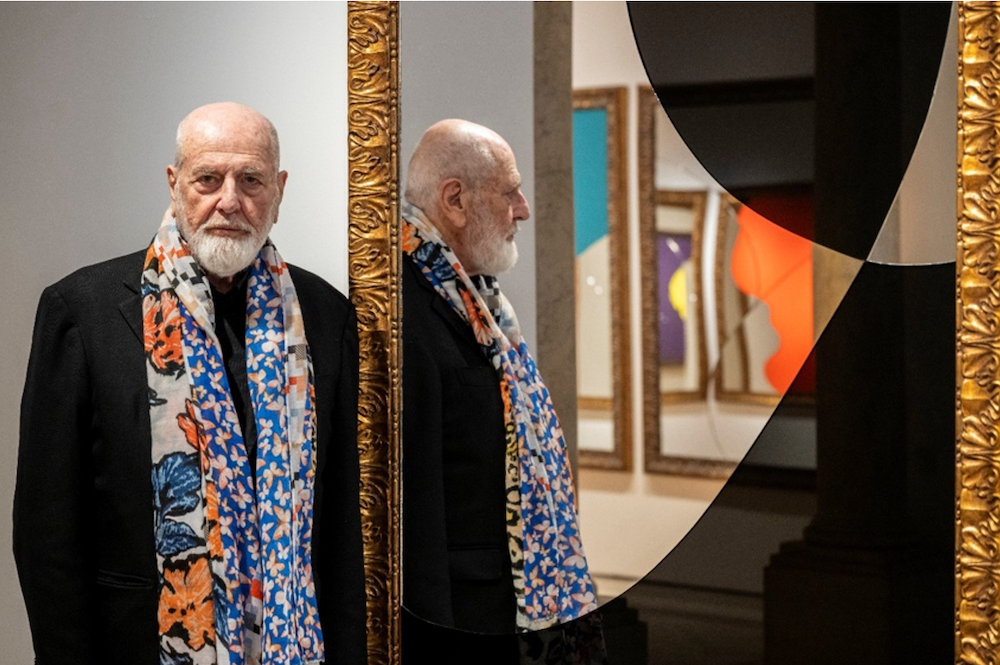
If you mean the level of the art, then probably Francis Alÿs, Shirin Neshat, Giuseppe Penone and Michelangelo Pistoletto – I’d say the last of those for how fresh his answers were at 91. You’d have thought he’d have had everything off pat, but no – he genuinely seemed to be thinking things through as he spoke, and when I looked back over previous interviews they were indeed new thoughts on matters such as AI.
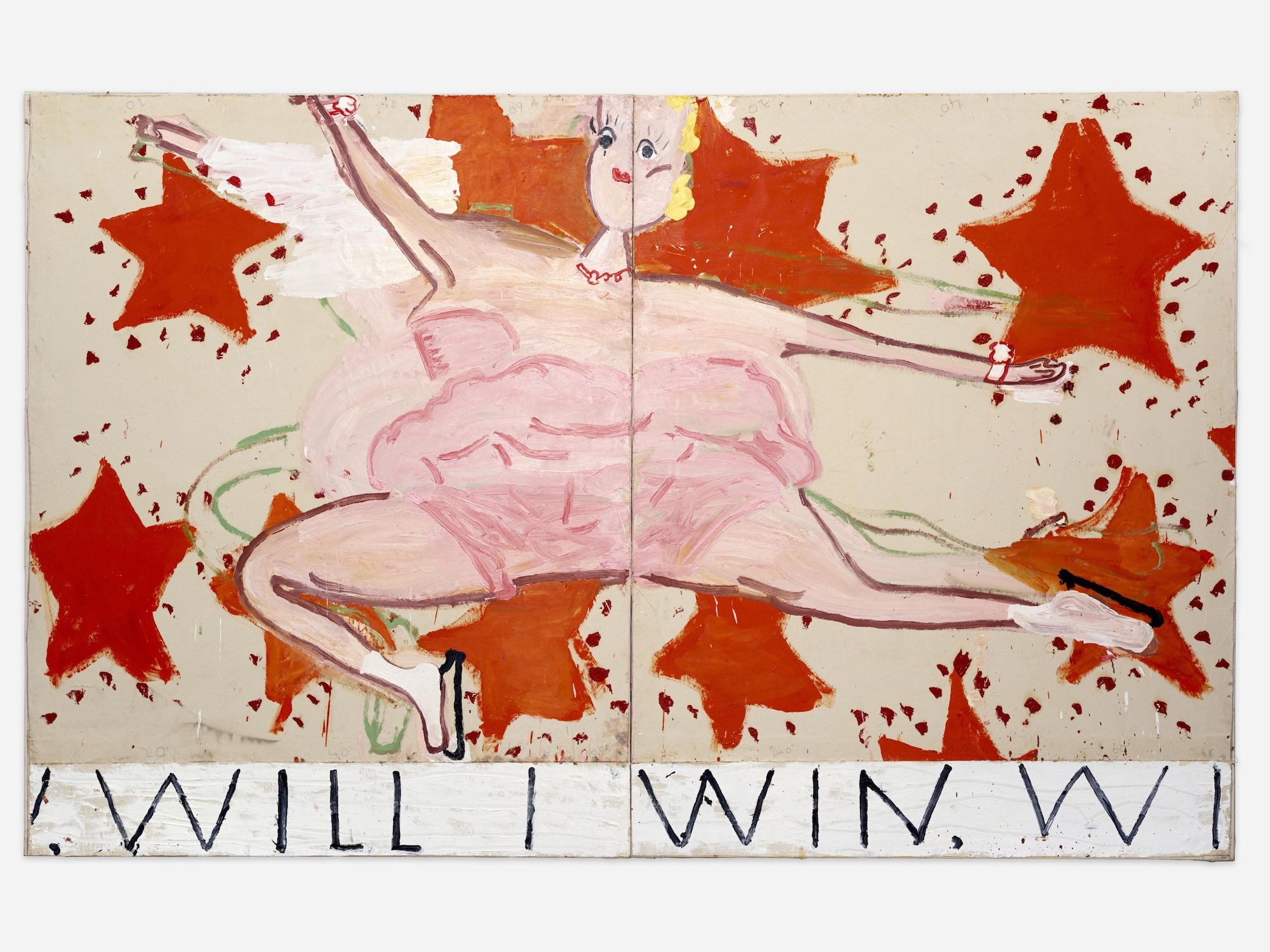
Or you could look at which interviews yielded the most substantial insights into an interesting practice. In that case I’d say talking to Prem Sahib, Darren Almond and Rose Wylie.
Or you could think about who’s been most fun to speak to, and among my 70-odd monthly Artlyst interviews, three have been with friends with whom I have also collaborated – Rosie Gibbens, Jyll Bradley and you.
When you’re not involved in the selection, do galleries show the right artists?
The correlation between artists I like and artists who get to be represented by a gallery is variable. It’s easy to suspect matters of fashion, marketability, and fitting the gallery’s demographic and self-image can matter more than the straight quality of the art. That makes sense – there are wider business considerations after all, especially in tough times. But it does mean there’s a lot of luck involved for the artists.
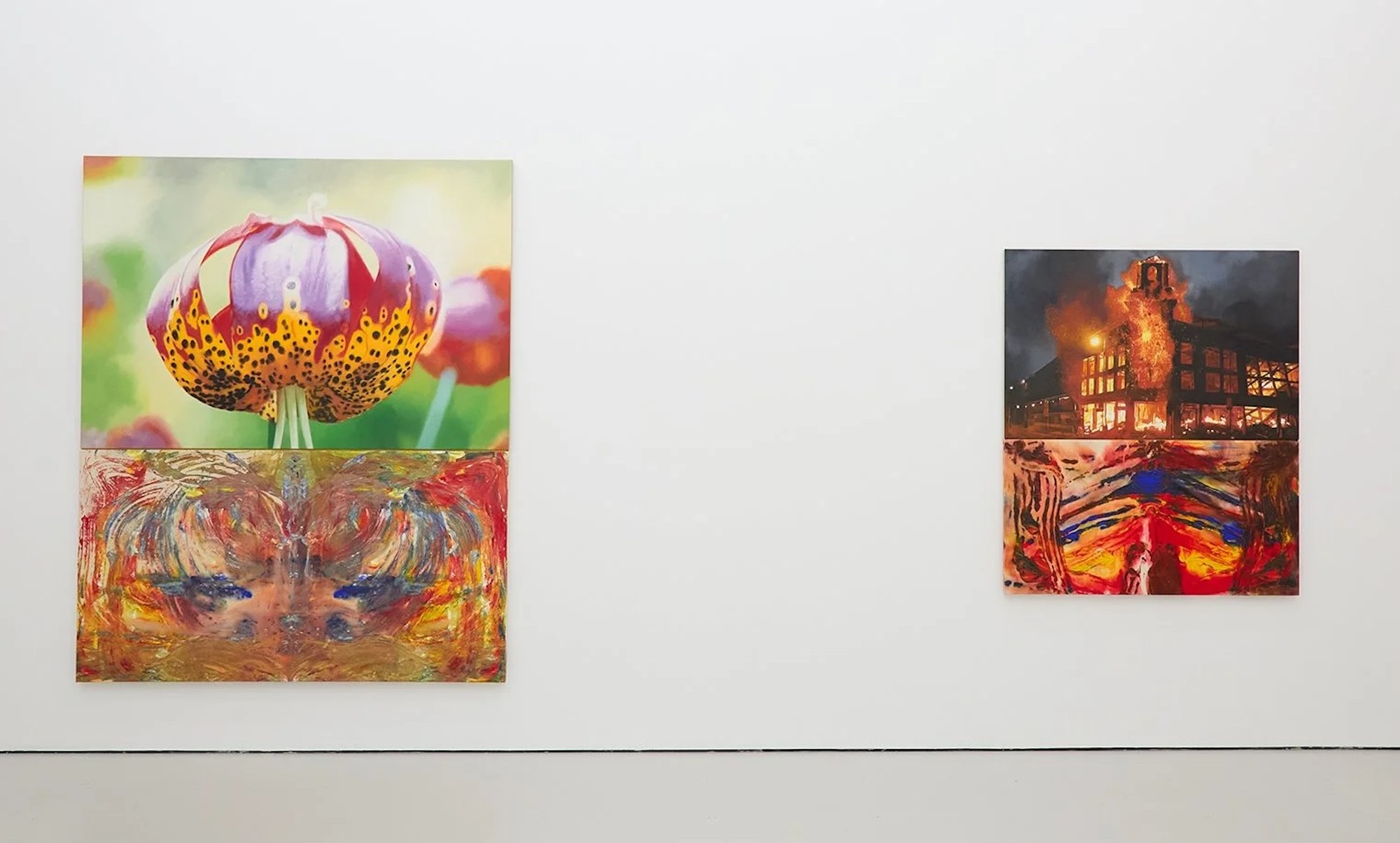
For example, I see plenty of rather tame figurative painting addressing predictable topical issues. On the other hand, I’ve shown the superior but unfashionable veterans, and I’ve highlighted one aspect of that through two ‘Advanced Contemporaries’ shows dedicated to artists over sixty who haven’t got a gallery but should have.
Go back to 2014-15, and ‘Zombie Formalism’ was the – short-lived – US market rage for young process-based abstract painters. I believe my exhibition ‘Show Us Your Process’ demonstrated that Britons had been pursuing comparable approaches for years without getting much attention.
Of course, galleries do represent plenty of good artists, but I trust myself to identify quality and interest independently of that.
How about the Turner Prize?
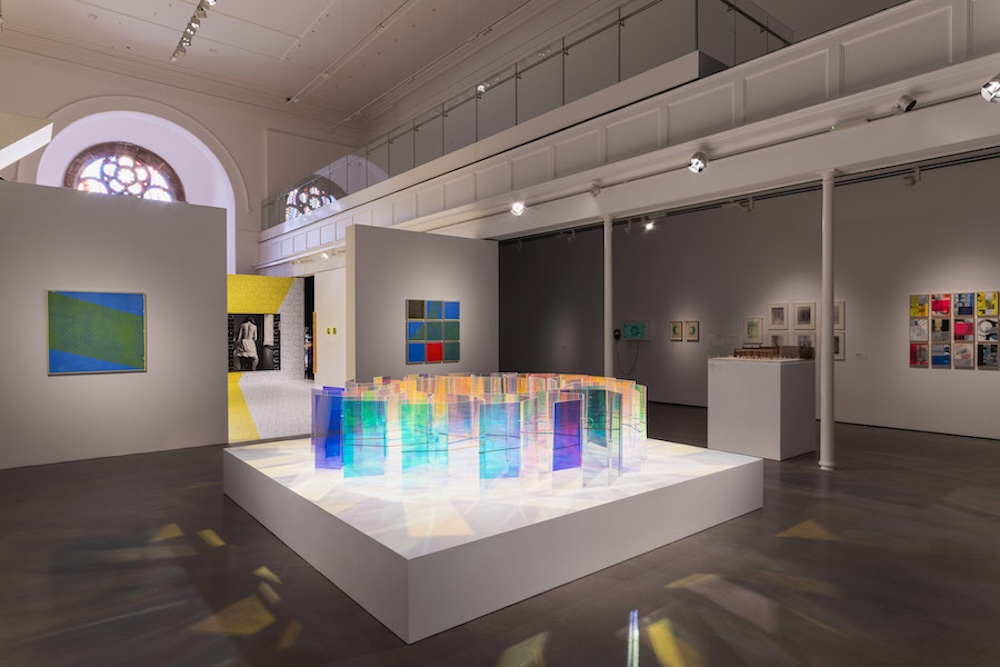
Don’t start me! It can be interesting, and historically has often been spot-on, but look across the 2020’s, and Ryan Gander, Troika, Alice Anderson, Jyll Bradley and Andy Holden have all had better qualifying exhibitions than most of the recent winners – and they haven’t even been shortlisted! My tip for wrongful omission next year is Quilla Constance – for her show this autumn at Nottingham’s New Art Exchange. All six, as it happens, are intellectually rigorous cross-media artists who have, over many years, tackled serious themes with a lightness of touch and a persuasively original use of materiality. Not, evidently, what the judges like.
Has the art world changed in the 20 years for which you have been fully engaged with it?
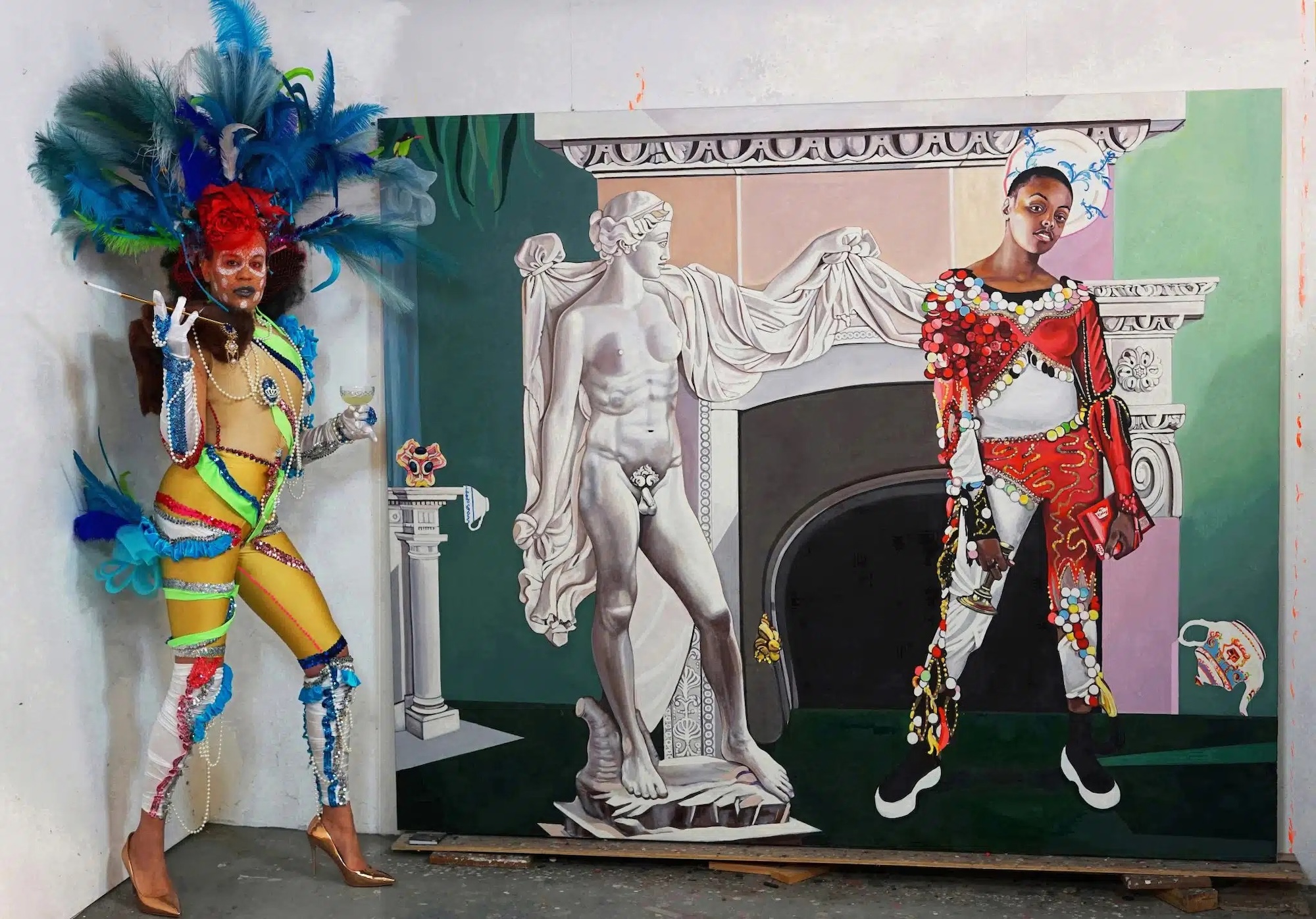
In too many ways to mention, of course… What hasn’t changed, I think, is how much interesting art is being made and how many chances there are to see it for real – as well as, less satisfactorily, online. London venues expanded tremendously in the period 1990-2005, and despite comings and goings, the level has remained constant with around 200 venues I want to visit regularly.
Are you hopeful?
Certainly, there are challenges – economic, technological, and state-of-the-world related. Yet I remain optimistic, as the best artists make work because they are driven to do so and they’ll always find a way. I look forward to them carrying on.
Where can we find your writing?
I am the only ‘Paul Carey-Kent’ in the world; I guess not many people called Carey have married someone called Kent. I’ve written consistently for Art Monthly and Border Crossings in print, plus Artlyst and Seisma (where art meets science) online. I’m also a bit over-productive on Instagram, which I essentially use to make notes about what interests me: my captions are equivalent to writing a fair-sized novel annually! But most of all I’ve written for the FAD Magazine site – you can still read my 650 weekly articles over 13 years there.
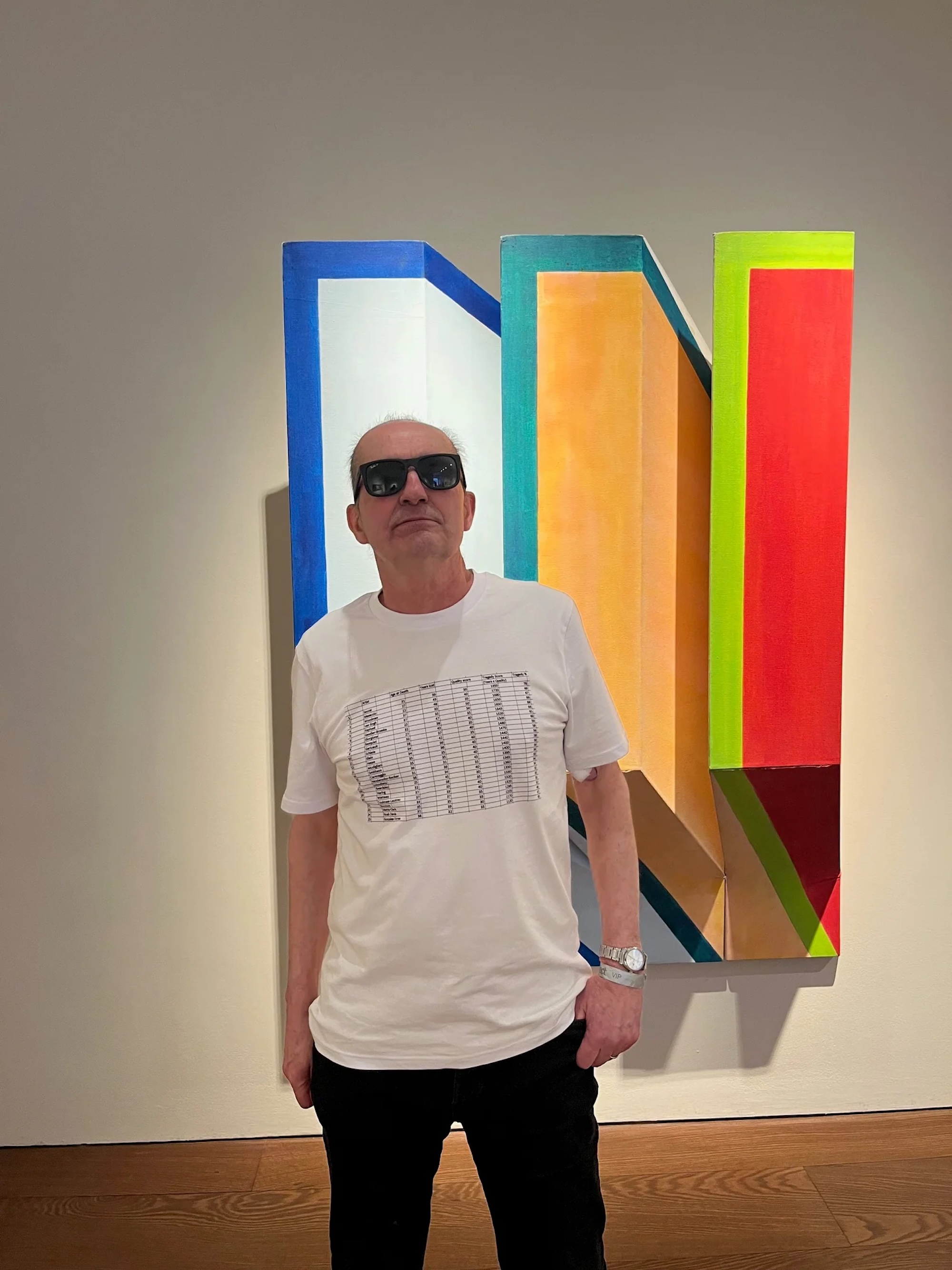
And owner Mark Westall has also printed my T-Shirt ‘Paul’s Index of Art Tragedy’; published my recent book ‘Paul’s Galleries To Go’; and is about to issue my cheerfully doomy book of photo-poems, ‘The Death Suite’.
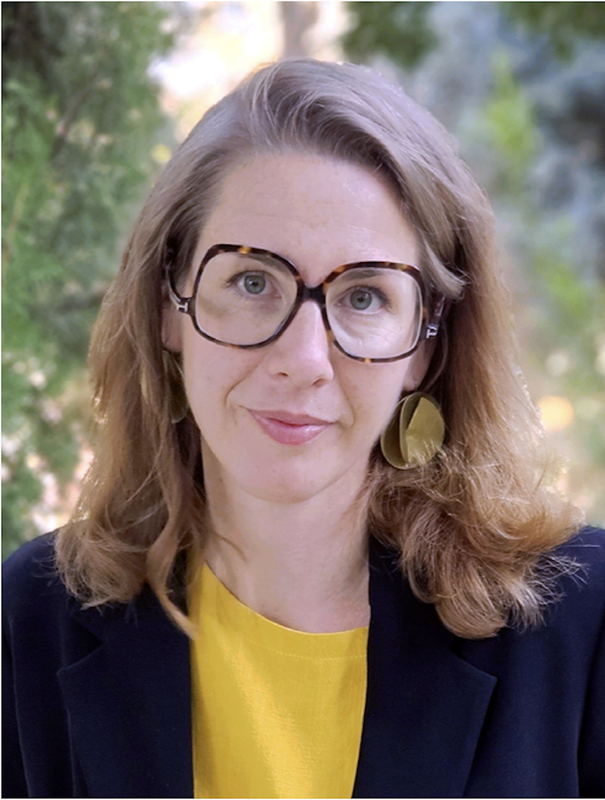
Paul on Emma
Emma Cousin is a brilliant artist who has been my most frequent collaborator. For example, I curated a show in her house in 2015; she was integral to my 2017 exhibition ‘Ears for the Eyes’; I reported from her studio for Elephant Magazine in 2018, the same year as I reviewed her first big solo show; you can hear us chatting for her lockdown podcast in 2020, when she also designed the T-shirt for my show ‘Ridiculous!’ and we co-curated a selection of artist animations for Amsterdam’s Ron Mandos gallery; my ‘Interview of the Month’ for February 2024 focused on her solo show at Niru Ratnam, and then she was involved in the conception of ‘Advanced Contemporaries’. In January 2027 we will jointly present ‘Holes, Positive’ at Soho’s GPS Gallery. So it wasn’t hard to talk to Emma. We’re both slightly excessive cultural omnivores, equally invested in images and words, who like art shot through with humour – even if it can be more fun when we don’t agree.