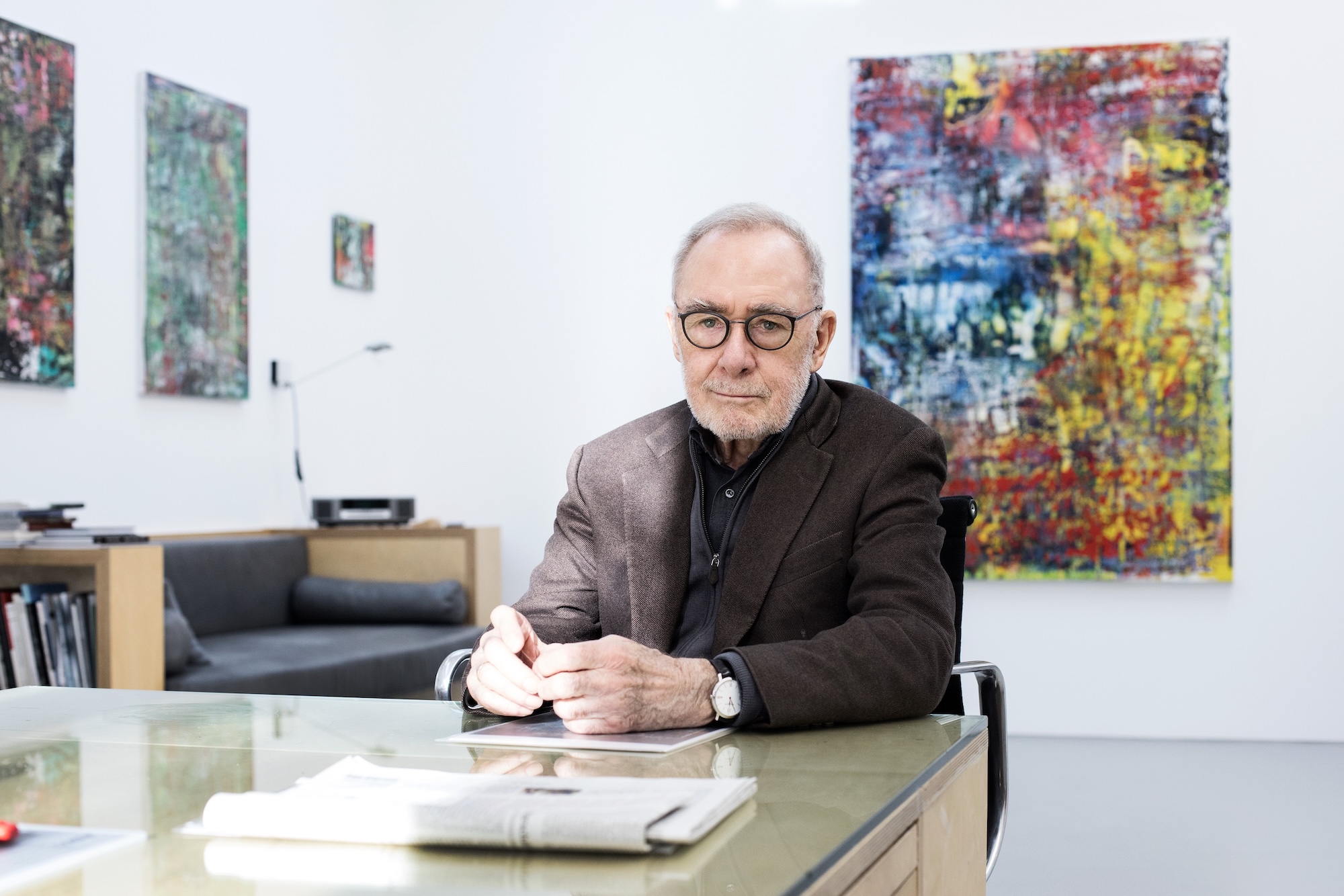
Qatar Museums is to build a permanent pavilion designed by Gerhard Richter in Doha, conceived by the artist as both a three-dimensional artwork and a space dedicated to a key body of his work.
Doha Pavilion: Gerhard Richter will be unveiled on 20th November 2026 in MIA Park, the public space surrounding the Museum of Islamic Art, ahead of the opening of the inaugural Rubaiya Qatar contemporary art quadrennial the following day.
Rather than simply designing a building in which his work will be displayed, Richter has conceived the hexagonal structure as an extension of his practice. Selldorf Architects has worked with the artist to realise the project, which brings together his Strip paintings, Mirrors and a specially designed Strip Tower within an architecture derived from the same visual system.
“Doha is the right place and the only place for my Pavilion,”
Richter said.
The idea dates back to Richter’s visit to Doha in 2013, two years after he began developing his Strip paintings. According to the artist, the city’s architecture and history prompted the idea for a pavilion that could bring together different strands of the project.
“My trip to Doha in 2013 came two years into developing my Strip paintings, and the city’s architecture and history sparked an idea for a pavilion that could unite the thematic threads of that body of work,”
Richter said.
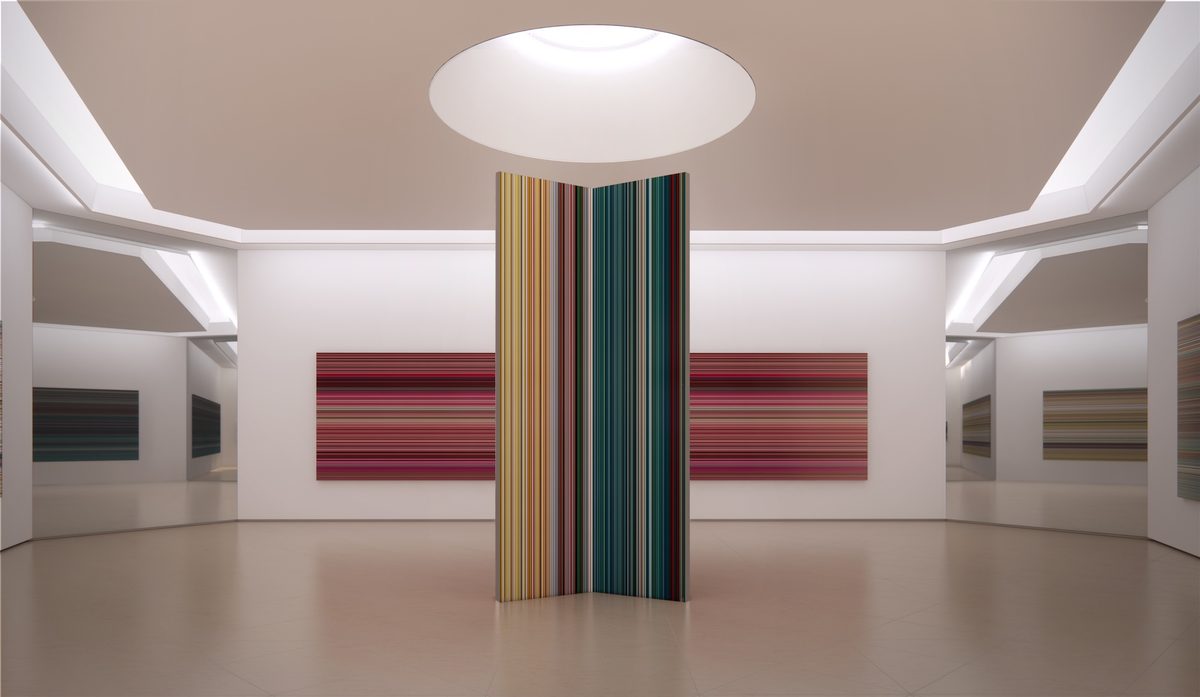
“The Pavilion’s exterior features decorative tiles based on the Patterns that first led me to the Strips. Inside, Strip paintings hang alongside Mirrors, and the Strip Tower is installed centrally within.”
The six exterior walls will be covered in repeating patterns related to Richter’s 2011 artist’s book Patterns. Their origins can be traced to a digital experiment begun in 2010 using his Abstract Painting (724-4) from 1990.
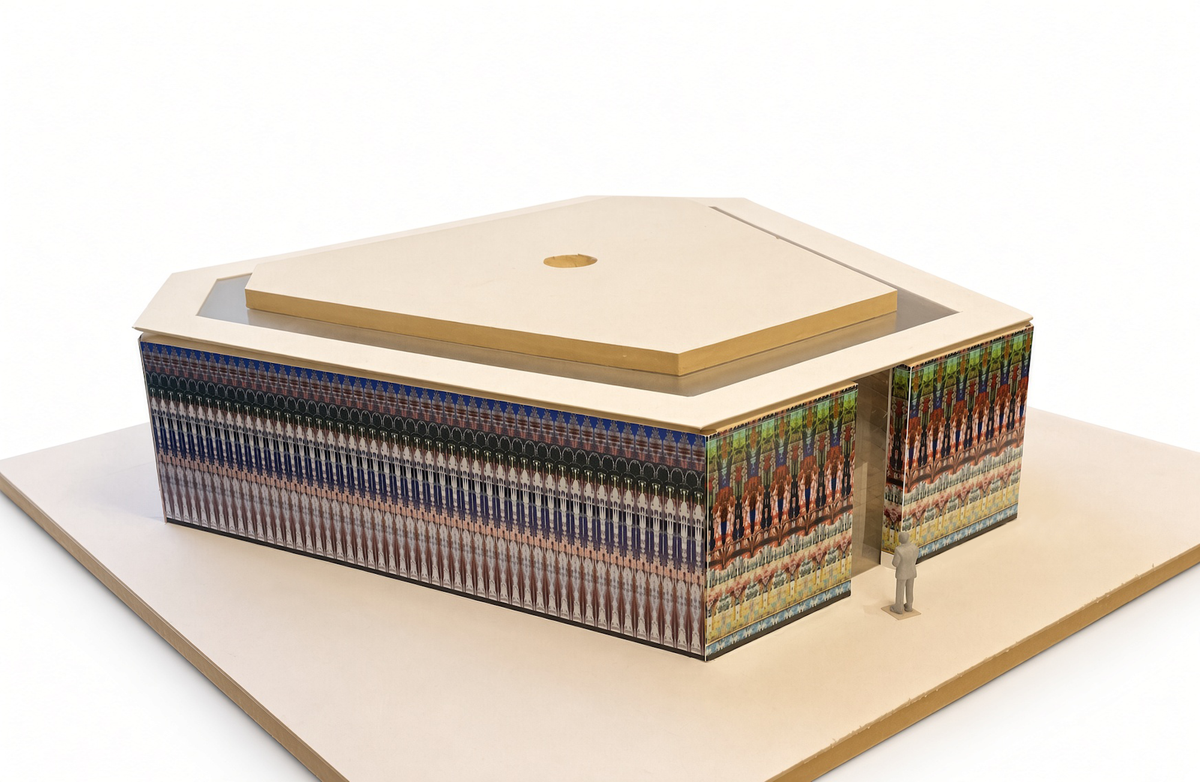
Richter divided a digital image of the painting into two vertical strips, then repeatedly subdivided it — into four, eight, 16 and onwards until reaching 8,192 strips. Each was mirrored and repeated to create horizontal symmetrical patterns.
For the Doha pavilion, those digitally generated compositions move from the surface of a painting into architecture. Qatar Museums also draws a connection between their mathematical construction and the repeating geometries found in Islamic art.
Inside, three large-scale Strip paintings push the process towards the limits of human vision. Each horizontal strip represents a slice of the source image just 0.08 millimetres wide.
At the centre will stand Richter’s tripartite Strip Tower, designed specifically for the pavilion and translating the paintings into freestanding sculpture.
Two floor-to-ceiling works from Richter’s long-running Mirrors series will occupy the pavilion’s narrower walls. Reflecting the paintings, sculpture, architecture and visitors themselves, the mirrors will continually alter the appearance of the interior as people move through it.
A stone sculpture, Brunnen (Well), will sit immediately outside the pavilion.
“It is an uncommon honour to assist Gerhard Richter in realising his vision for this project — a major addition to his endlessly probing and fascinating body of work — as well as a privilege to contribute to Doha’s extraordinary ensemble of contemporary architecture,”
said architect Annabelle Selldorf.
Qatar Museums Chairperson Sheikha Al Mayassa bint Hamad bin Khalifa Al Thani described the pavilion as an extension of Qatar’s growing programme of public art, saying Richter’s permanent project “enriches both our public artworks and the international cultural landscape.”
The pavilion arrives as Doha prepares to launch Rubaiya Qatar, a new international visual arts quadrennial running from 21st November 2026 to 30th April 2027.
Its inaugural edition will bring together more than 50 regional and international artists, 25 new commissions and six public art installations, with an emphasis on artists from outside the Western Hemisphere. Themes will include global ecology, the political and geographic importance of water and Qatar’s maritime heritage.
Projects will spread across Doha and beyond, including the newly renovated ALRIWAQ Arts + Architecture building, the Museum of Islamic Art, Katara QM Gallery and Mathaf: Arab Museum of Modern Art.
But Richter’s pavilion will remain after the quadrennial has gone — a permanent work in which painting, sculpture, architecture and reflection become parts of the same artwork.
About
Qatar Museums (QM), the nation’s preeminent institution for art and culture, provides authentic and inspiring cultural experiences through a growing network of museums, heritage sites, festivals, public art installations, and programmes. QM preserves and expands the nation’s cultural offerings, sharing art and culture from Qatar, the Middle East, North Africa, South Asia (MENASA), and beyond with the world and enriching the lives of citizens, residents, and visitors.
Under the patronage of His Highness the Amir, Sheikh Tamim bin Hamad Al Thani, and led by its Chairperson, Her Excellency Sheikha Al Mayassa bint Hamad bin Khalifa Al Thani, QM has made Qatar a vibrant centre for the arts, culture, and creative exchange in the Middle East and beyond. QM is integral to the mission of developing an innovative, diverse, and progressive nation, bringing people together to ignite new thinking, spark critical cultural conversations, and amplify the voices of Qatar’s people. Since its founding in 2005, QM has overseen the development of museums including the Museum of Islamic Art (MIA) and MIA Park, Mathaf: Arab Museum of Modern Art, the National Museum of Qatar (NMoQ), 3-2-1 Qatar Olympic and Sports Museum, ALRIWAQ Art + Architecture, and QM Gallery Katara. Future institutions include Dadu, Children’s Museum of Qatar, the Art Mill Museum, the Qatar Auto Museum, and the Lusail Museum.
Through its Creative Hubs and recurring festivals and biennials, such as M7, Fire Station, Liwan Design Studios and Labs, the Tasweer Qatar Photo Festival, and Design Doha, QM initiates and supports projects that nurture artistic talent and create opportunities to build a strong and sustainable creative infrastructure.
It is within this spirit of growth and ambition that QM proudly celebrates Evolution Nation, a campaign honouring Qatar’s cultural journey over the past 50 years, since the original founding of the National Museum of Qatar. Curated by Qatar Creates, Evolution Nation highlights both the nation’s cultural milestones and its bold aspirations for the future.
Animating everything that QM does is an authentic connection to Qatar and its heritage, a steadfast commitment to inclusivity and accessibility, and a belief in creating value through invention.
MORE: qm.org.qa