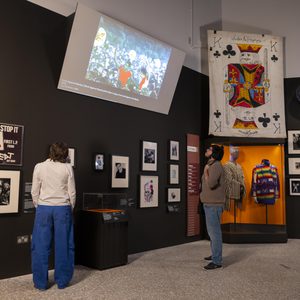
Ten artists gathering in a room in 1933, united only by their progressive politics. It was the genesis of the Artists International Association (AIA), dedicated to peace and the defeat of fascism. Through art, the AIA would go on to express a zeitgeist from the dark days of Hitler’s ruthless rise to the post-war wave of optimism celebrated in the Festival of Britain and beyond. The association’s first show was in 1934 at Charlotte Street, after the great British surrealist Paul Nash helped drum up participants. An epic exhibition called Comrades in Art: Artists Against Fascism, currently at Towner Eastbourne, charts the AIA story, and reveals a host of half-forgotten names amongst the best of 20th-century artists.
The 1934 meeting designer Misha Black had hosted in his Covent Garden flat included painters, illustrators and sculptors. Some were emigrés, some were communist party members. In the room was first-hand experience of both Nazi Germany and the Soviet Union. Earlier, while in Russia, Cliff Rowe (not the namesake contemporary artist) had communicated the germ of an idea to group together anti-fascist artists to Black. That may sound like a bad start to a project grounded in social justice, considering the truths about Stalin’s regime that subsequently surfaced in the West, but at the time Russia was seen as a bulwark against the rise of fascism. There, designers churned out stirring propaganda posters for the State Publishing House, and artists were embedded in industry to portray workers as patriotic heroes in the newly ascendant socialist realism style.
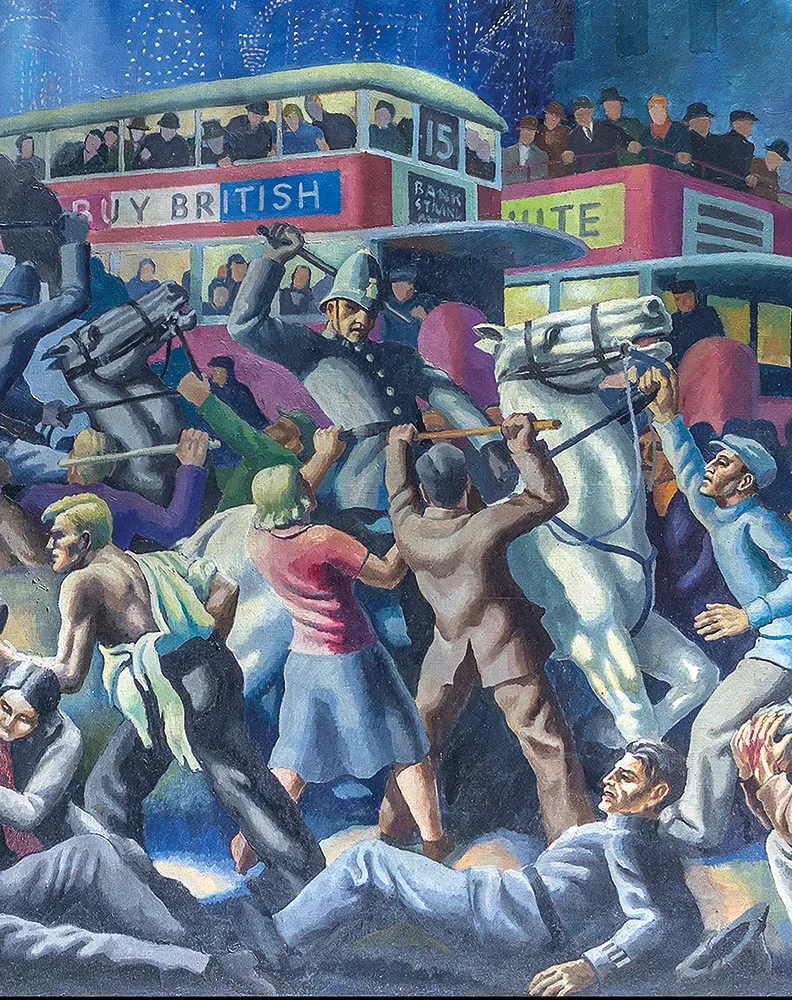
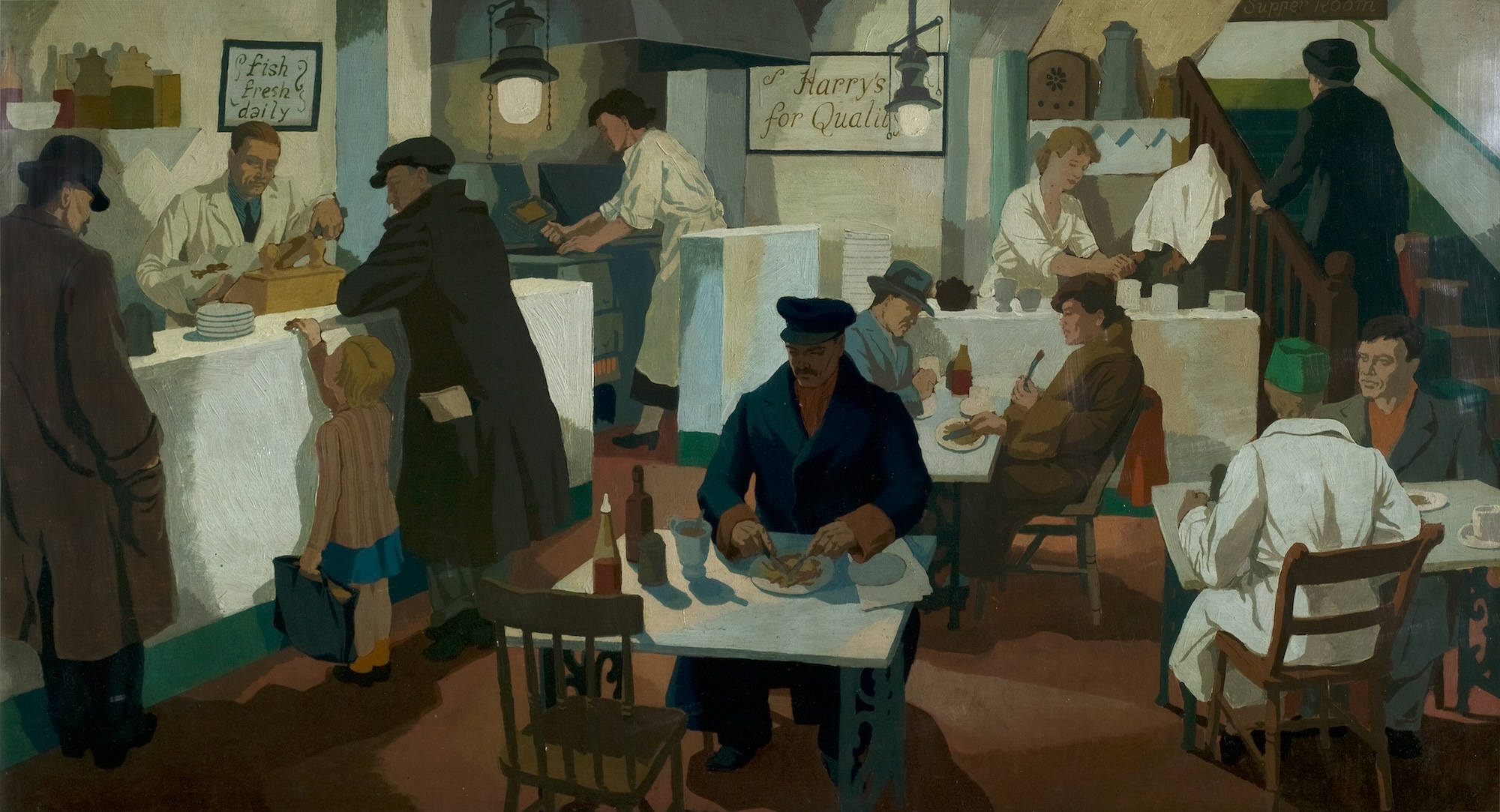
A striking highlight of the show is a half-size but nevertheless huge reproduction of Rowe’sThe Struggle between the Unemployed and the Police Forces (1933), which depicts the violent battles between hunger marchers and police, and was painted in Moscow based on newspaper coverage. Rowe also included Stalin himself eating British fish and chips in his painting The Fried Fish Shop (1936). Who else was at Black’s meeting?
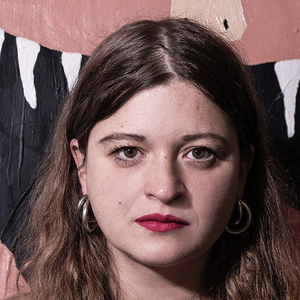
Lithographer Pearl Binder brought a unique, humanist vision. For example, in her late 1920s book illustrations, African tribesmen become almost pictograms yet convey a stylised dignity, as if anticipating Afro-futurism, while her 1930s drawings gently satirising London’s bohemian theatrical scene have a warmth and wryness that actually anticipates Beryl Cook. The show includes these and more, such as her lithograph of figures sleeping in Russian Railway Journey (1933). Peter László Peri had recently fled Berlin, where he had been a member of a German precursor to the AIA, the Assoziation revolutionärer bildender Künstler, which the Nazis suppressed. No less than three attendees were called James, one of them New Zealander James Boswell. He was appalled by Britain’s fossilised class system and called out the vested interests of the powerful in his drawings like Army, Press, Church (1935), while his poster proclaiming George V Silver Jubilee as ’25 Years of War Hunger (and) Unemployment’ was posted around London as the establishment gathered to commemorate it at St Paul’s that same year. It was a watershed year. The group officially named themselves the AIA, membership rapidly expanded, and its ‘Art Against Fascism and War’ exhibition in Soho Square included works from no less than 500 artists.
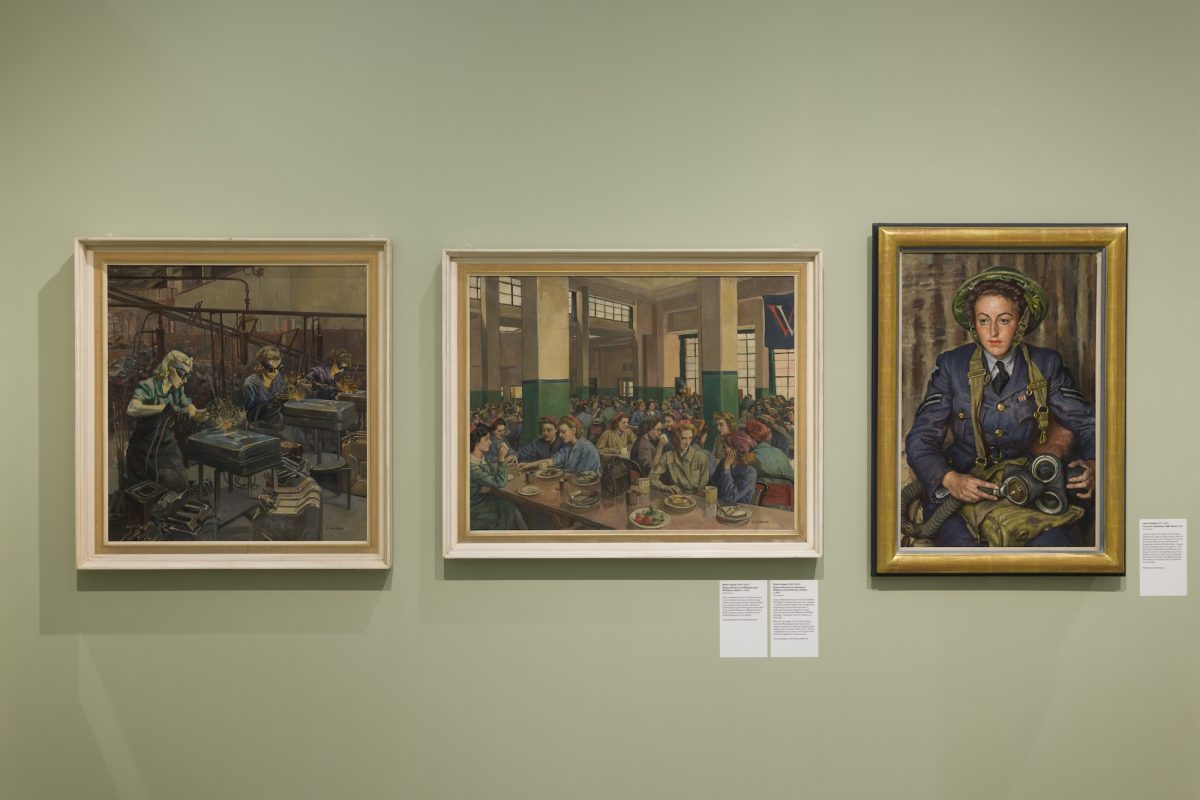
Not all AIA output was political, and it came in styles from neo-impressionism to geometric abstraction, constructivism and surrealism – but not futurism, associated with right-wing Italian politics. The Towner includes many portraits, landscapes and urban views in the subdued palette of greens, greys and browns characteristic of the time. On the other hand, heroic paintings in the socialist realism style and provocative posters which drew on early Soviet avant-garde propaganda art were implicitly highly political.
The AIA actively reached out beyond London and the cultural elite. It organised travelling exhibitions, established branches across Britain, and produced ‘Everyman’ prints that ordinary households could afford. It also participated in peace congresses abroad, supported refugees that had fled the Nazis, and sent aid to Spanish partisans during its civil war. Such activities continued into the Second World War from 1939. If there was a tension between pacifism and the struggle against fascism, it seemed to melt away when faced with fighting for national survival, especially from 1940 after France fell and the Blitz started raining death and destruction on British cities. The AIA’s activities chimed with the newly defiant spirit of the nation. One major exhibition, ‘For Liberty’, was staged on the bombed-out John Lewis site on Oxford Street in 1943.
The Towner has the most important collection of local, vernacular art by Eric Ravilious, who was active in the AIA and became an official war artist inside the RAF, but this exhibition shows only The Lifeboat (1936), one of his many seaside paintings. Similarly, while Nash became an official war artist (as he was in World War I), at Eastbourne we see only one of his enigmatic countryside paintings, rather than wartime masterpieces like Totes Meer or Battle of Britain that were never exhibited by the AIA. Graham Sutherland, who, like Nash, found strangeness in the natural landscape, also became an official war artist, and his dark wartime paintings do appear in the show, including Furnaces (1944). Both he and Rowe portrayed blitzed urban scenes, but Sutherland’s are mysteriously deserted, while in Rowe’s, life goes on. The surprise Blitz artist in Eastbourne is Clive Branson, with two surrealistic canvases with aerial dynamics and resilient street life.
A completely different revelation is the work of Ethel Gabain, who portrayed industry and workers, but far more naturalistically than the socialist realists. Women had replaced men in the factory, and her Women Workers in Canteen at Williams and Williams (c1943) is a gently joyous celebration of female camaraderie. Perhaps the saddest wartime picture in Eastbourne is Peri’s Nazi photographing hanged couple (c.1943), which captures the moment described in simple lines and watercolour.
The AIA’s central objectives had been achieved when peace came, but it remained political. For example, it collaborated on a major show with the engineers’ trade union, the AEU. Meanwhile, Misha Black proposed the Festival of Britain, and brought in AIA members to realise and contribute to the South Bank-centred 1951 national exhibition which embodied the optimism of a reborn, post-imperial modern Britain. In 1953, the AIA formally dropped political positioning, and with it its radical edge. Rowe’s last painting at the Towner show, Man with a Microscope (mid 50s), shows his work continuing to evolve is a striking experimental representational style that seems like a door to a high-tech future.
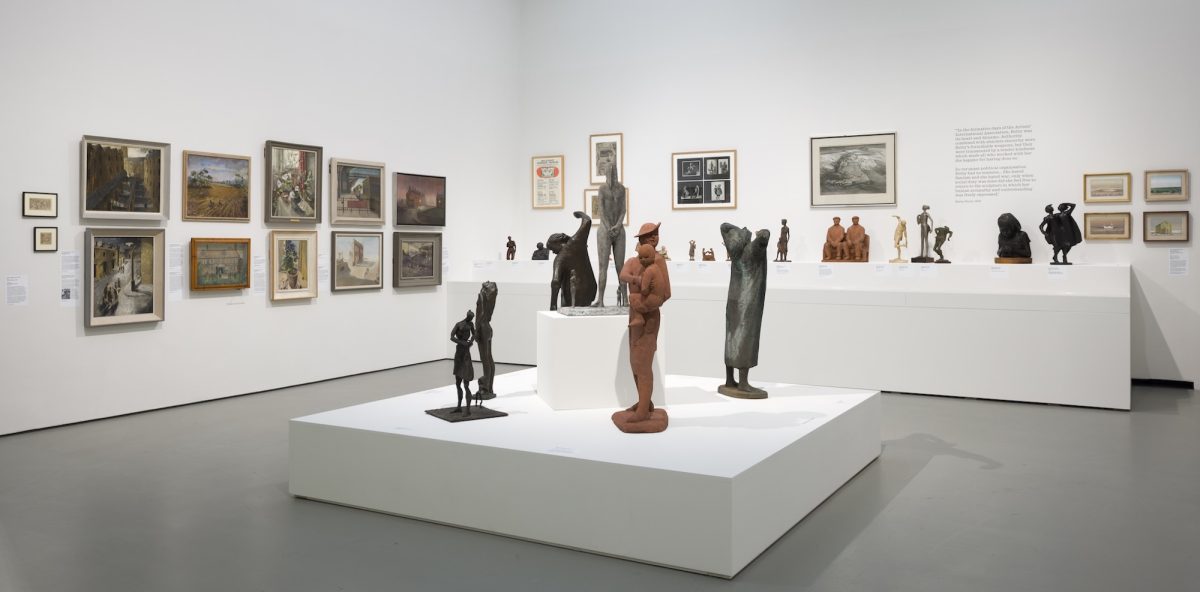
Comrades in Art is more than a history lesson; it is a stirring journey through artists’ eyes of three of the most tumultuous decades Britain ever had. Across a bewildering variety of styles, it is packed with masterpieces. (Unfortunately, almost no individual works were available for reproduction). The AIA deserves to be celebrated not just for the vast talent pool of its members, its public outreach and its progressive stance, but also its feminist dimension. From the very start, in which Pearl Binder played a key role, women artists were prominent and vocal. The AIA even held a Young Artists exhibition in 1949 featuring works only by women. Names like Binder, Gabain and the sculptor Betty Rea (with 19 works on show at Eastbourne) are ripe for reappraisal, along with men like the towering Rowe.
And there’s a final thing that makes this show essential (and well worth a fast rail journey from London). When psychopathic leaders threaten freedom, progressive artists should unite and organise as a common front. While the USA desperately needs such an artistic response now, it may not be long before countries like the UK need it too.
Comrades in Art: Artists Against Fascism -18th October 2026, Towner Eastbourne