The difference between being nude and being naked boils down to a small technicality. While a newborn baby is no doubt naked, they are not nude — they have never worn clothes. Nudity refers less to the exposed body itself than to the removal of something that was previously there. It infers an absence and, with that, constructed cultural associations: vulnerability, sexuality, and transgression. Yet these associations are socially imposed, and depend more on context than on law or even logic.
In the work of Viennese choreographer Florentina Holzinger, these assumptions are systematically dismantled. Nudity is ubiquitous in her work, but it is not exactly provocative. In fact, Holzinger’s nude bodies are not truly nude at all, though they might be exposed and relatively unclothed. Fitted with footwear, harnesses, and technical apparatuses, Holzinger’s nude bodies are fully equipped and ready for action. It’s a kind of uncanny nudity that’s slightly uncomfortable at first, like seeing someone stripped down to just their socks: somehow the opposite of erotic in its utilitarian nature and athletic aspirations.
Holzinger described the invitation from the Hermann Nitsch Foundation & Wiener Festwochen to perform at the late Actionist’s castle home and performance venue, Schloss Prinzendorf, as a “dream come true.” Taking place over the Pentecost weekend one year after the final instalment of Nitsch’s 6-Day Play, her performance inevitably invites comparison, not only due to the location but also a host of other qualities, including spectacle, shock value, and Viennese Actionist-adjacence. Moreover, both projects share a commitment to duration, immersion, and sensory excess.
An emphasis on physical capability is central to Holzinger’s work, which continually hovers at the threshold of what appears dangerous, painful or barely possible. Yet speaking with performers during and after the event revealed a striking contradiction. While the audience sees risk, the performers repeatedly spoke about care.
The experience lasts more than nine hours. It begins in Vienna at the Wiener Eislaufverein, where spectators queue beneath the beating afternoon sun before entering an arena that, in winter, serves as an ice-skating rink. It ends under the waxing moon at Nitsch’s castle. Between these two points unfolds a sequence of escalating stunts accompanied by an unlikely soundtrack: a harp quartet, a trombonist, drummer, and other live musicians.
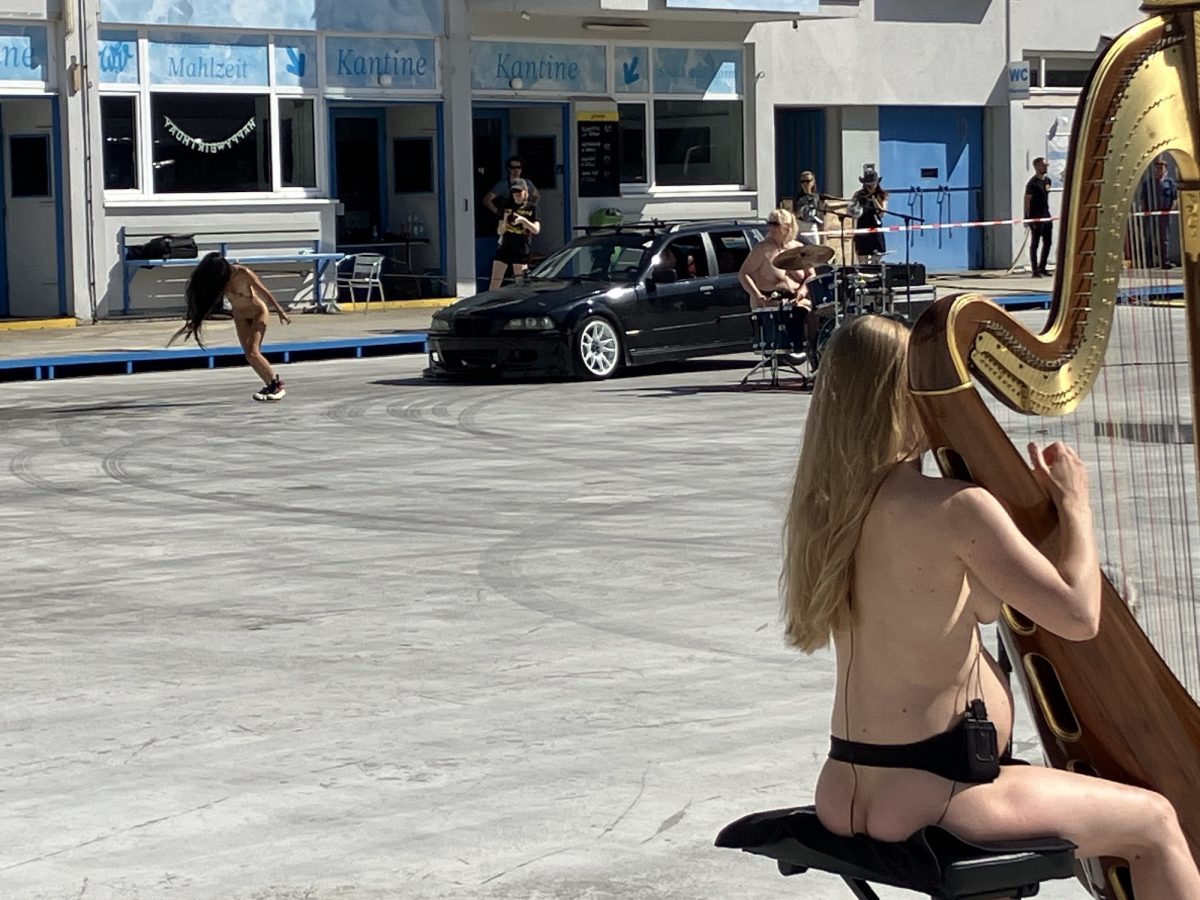
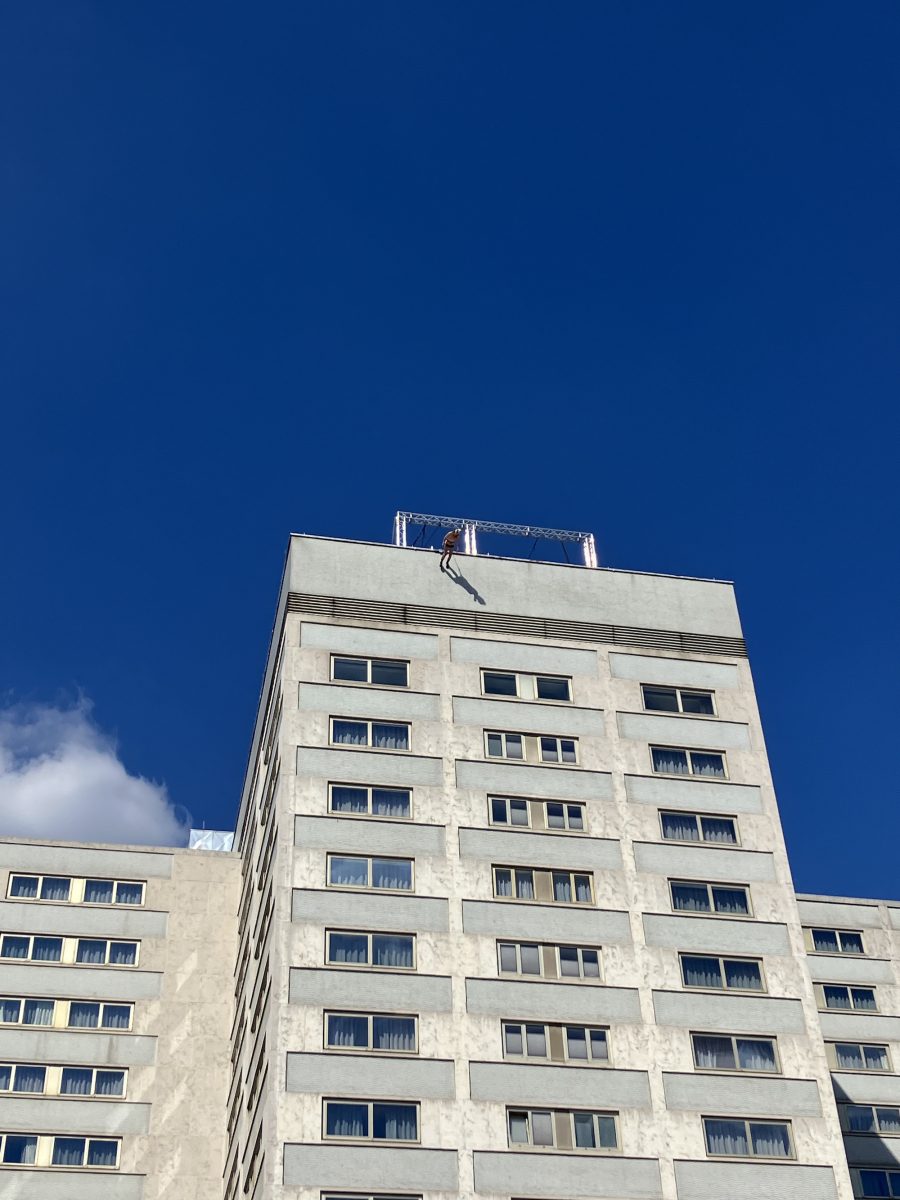
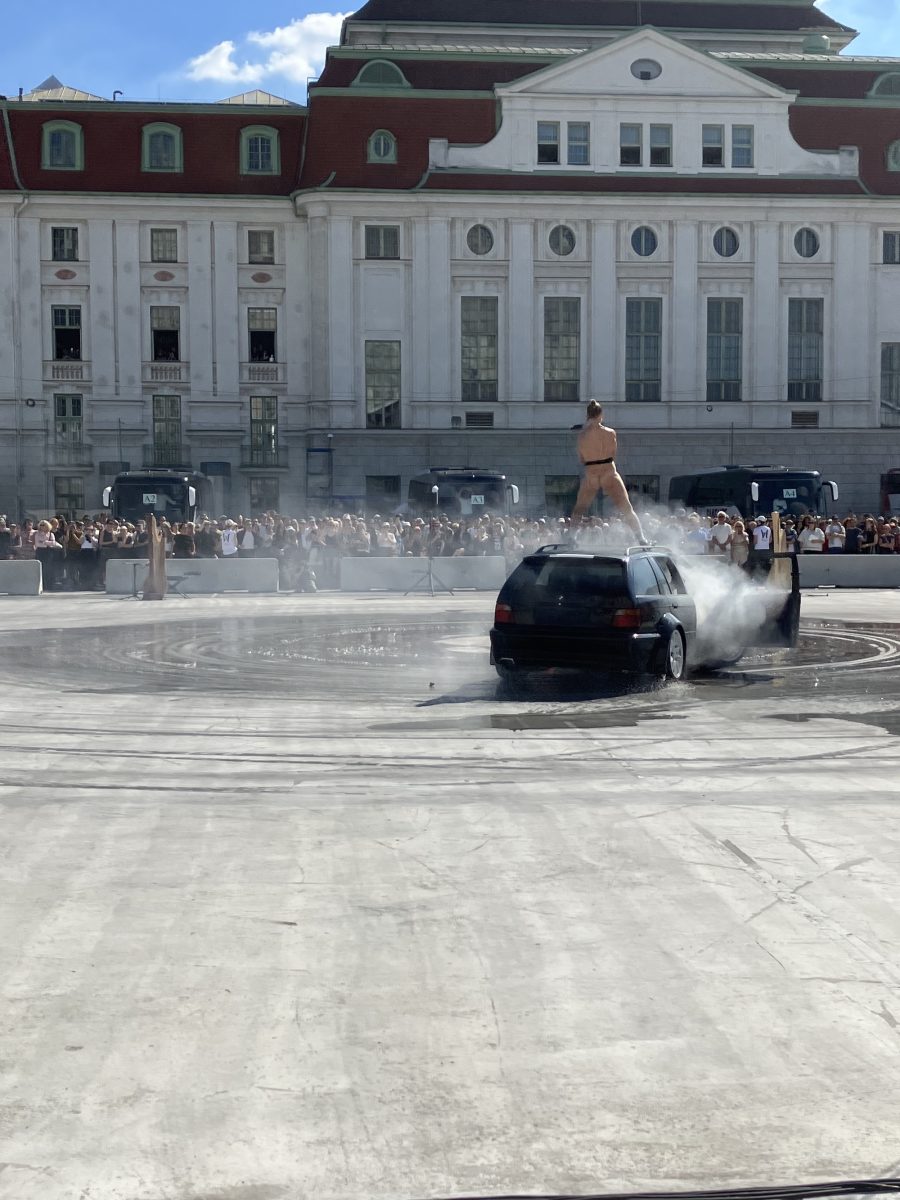
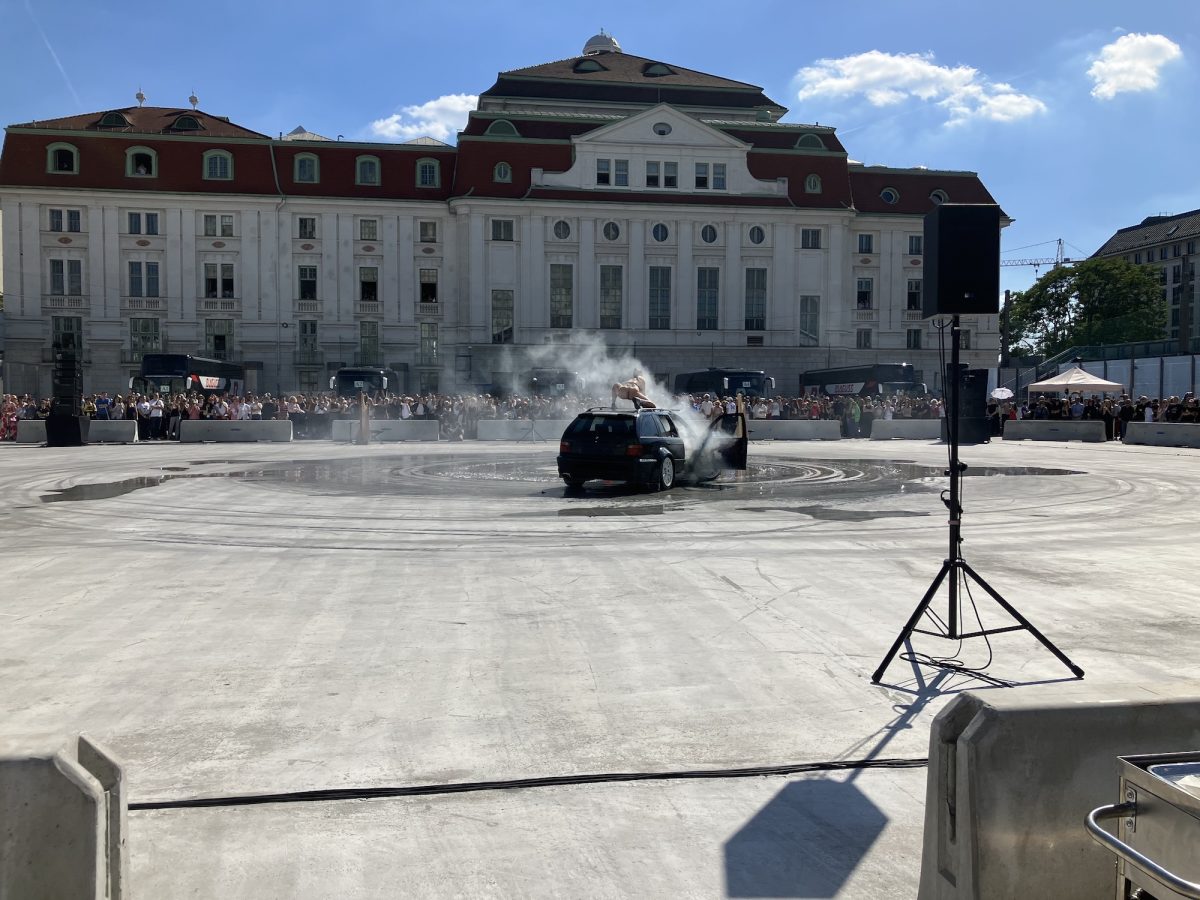
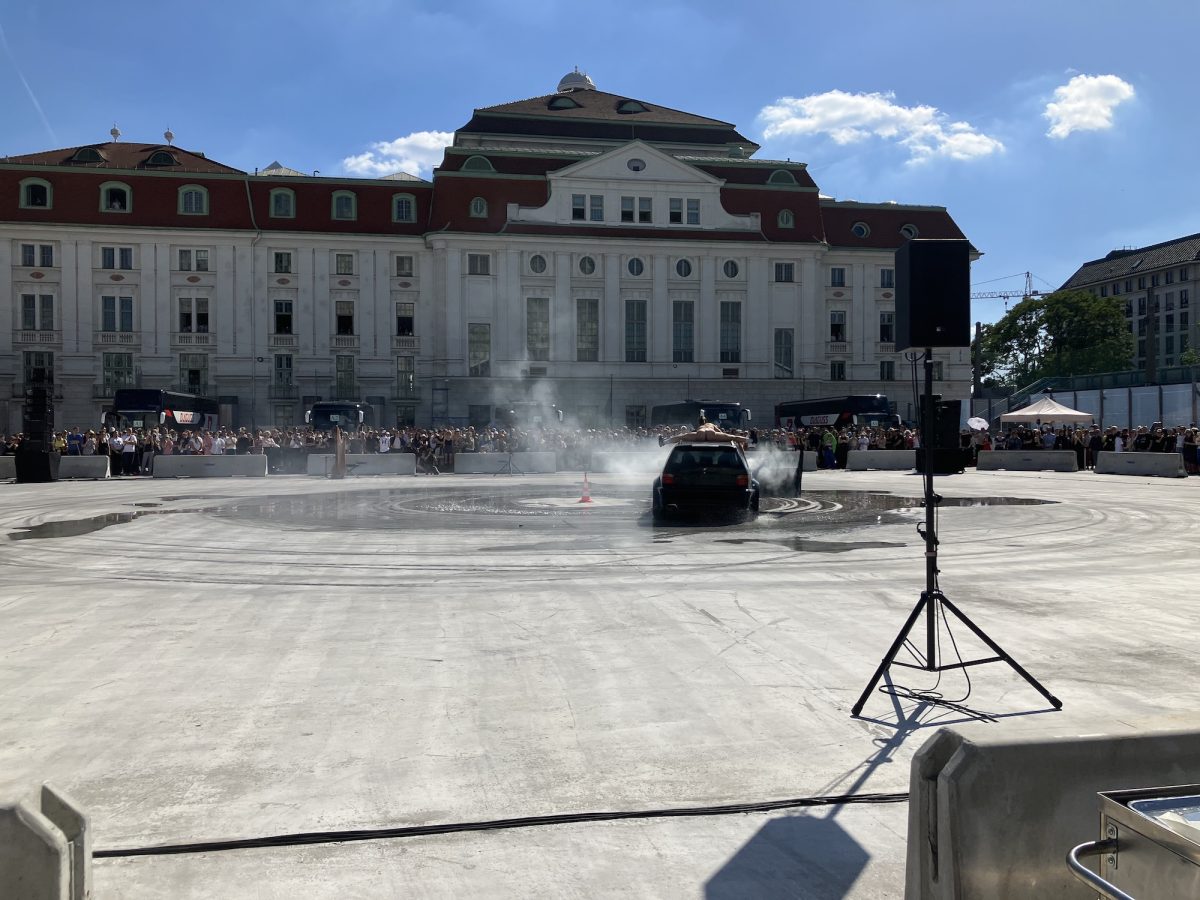
In Vienna, one performer casually walks down the side of the Hotel Intercontinental, Holzinger stands atop a car spinning repeated doughnuts across a puddle of water, and another performer pulls a vehicle with transmission in neutral using hooks inserted into the skin of her back, offering subtle foreshadowing for the suspensions that will occur later. The music lends the scene an unexpected elegance, prompting British performer Sophie Duncan to compare it to the 1990s television show “Jackass, but with nicer music.”
Bodies of different ages, physiques and presentations are treated with the same matter-of-fact visibility, disrupting the assumptions usually attached to nudity and who is qualified to perform it. This stands in particular contrast to Nitsch, whose final performance in 2025 did include a diversity of bodies, though it was consistently the youngest and fittest performers who were undressed.
In the end, what matters for Holzinger is not how these bodies look but what they can do. The performers appear not only comfortable in their birthday costumes, but capable. By the end of the day, we as the clothed spectators are the ones who seem strange — not only because we are wearing so much, but also because we are doing so little.
This emphasis on capability rather than transgression may mark Holzinger’s most significant departure from the historical Actionists. It would be reductive to call her an Aktionist outright, or to force a contemporary artist into the categories of a previous century. Nevertheless, certain continuities are undeniable: ritualised spectacle, endurance, blood imagery, religious iconography, and an interest in testing the psychological thresholds of both performers and audiences.
If you were to ask the Actionists why they pursued shock value as much as they did, they would have told you that they were criticising the far-right conservatives and the rise of fascism. While it does not necessarily mean that anyone has done this successfully, the precedent remains.
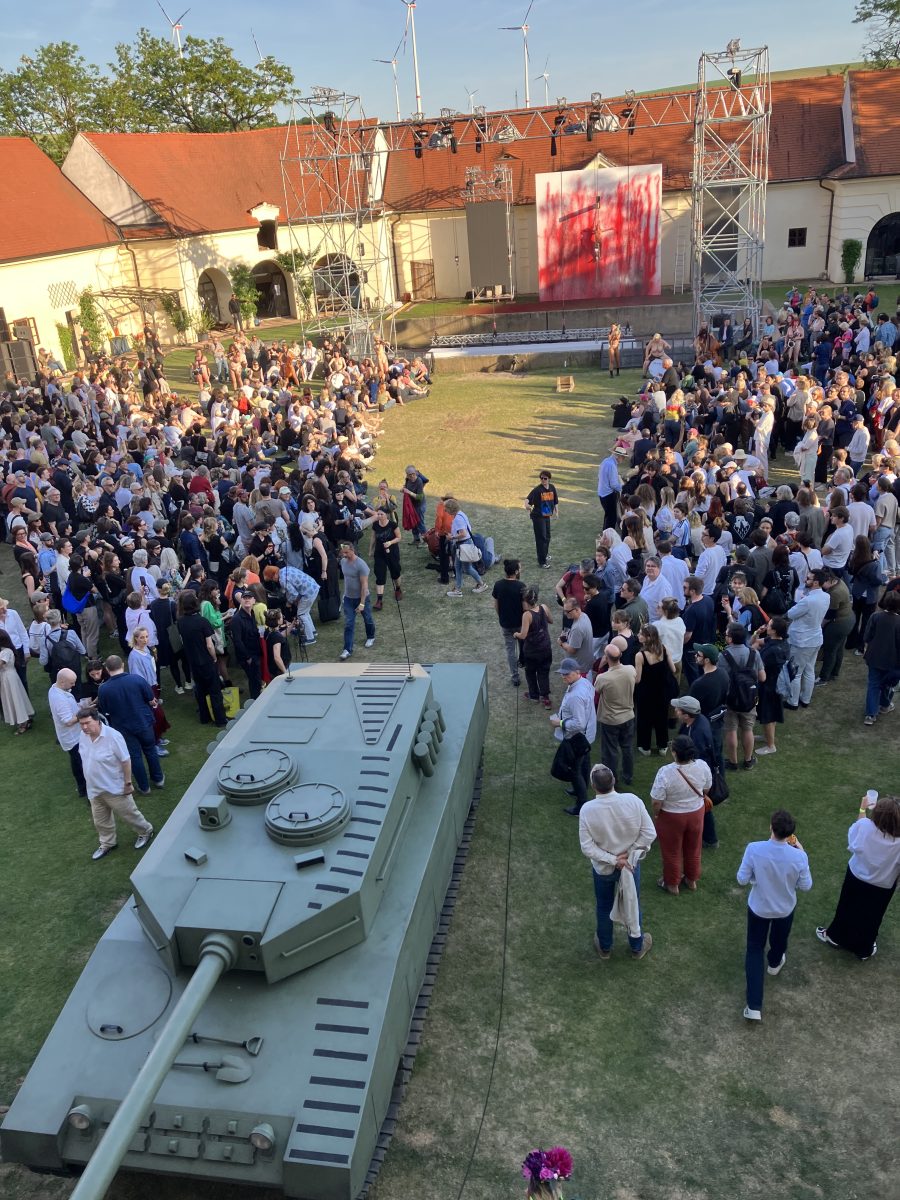
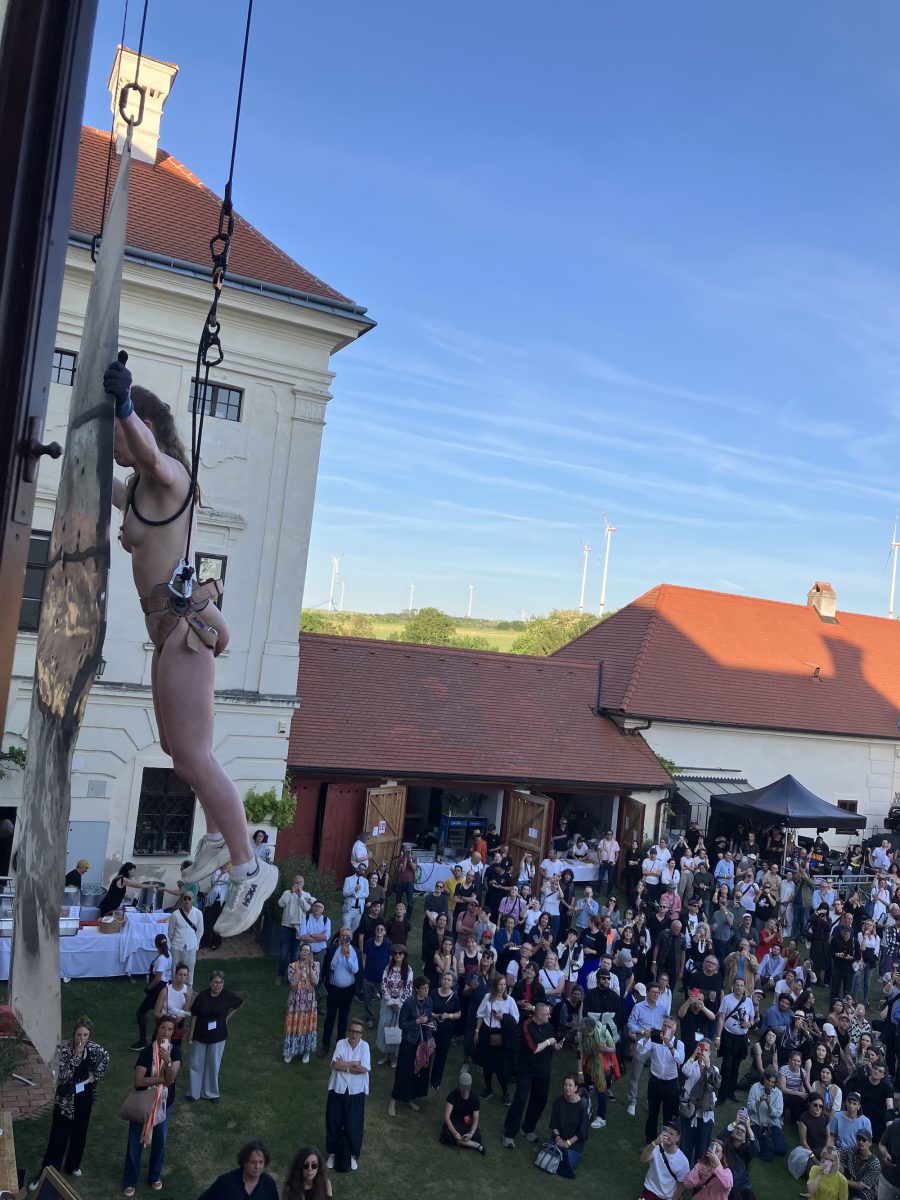
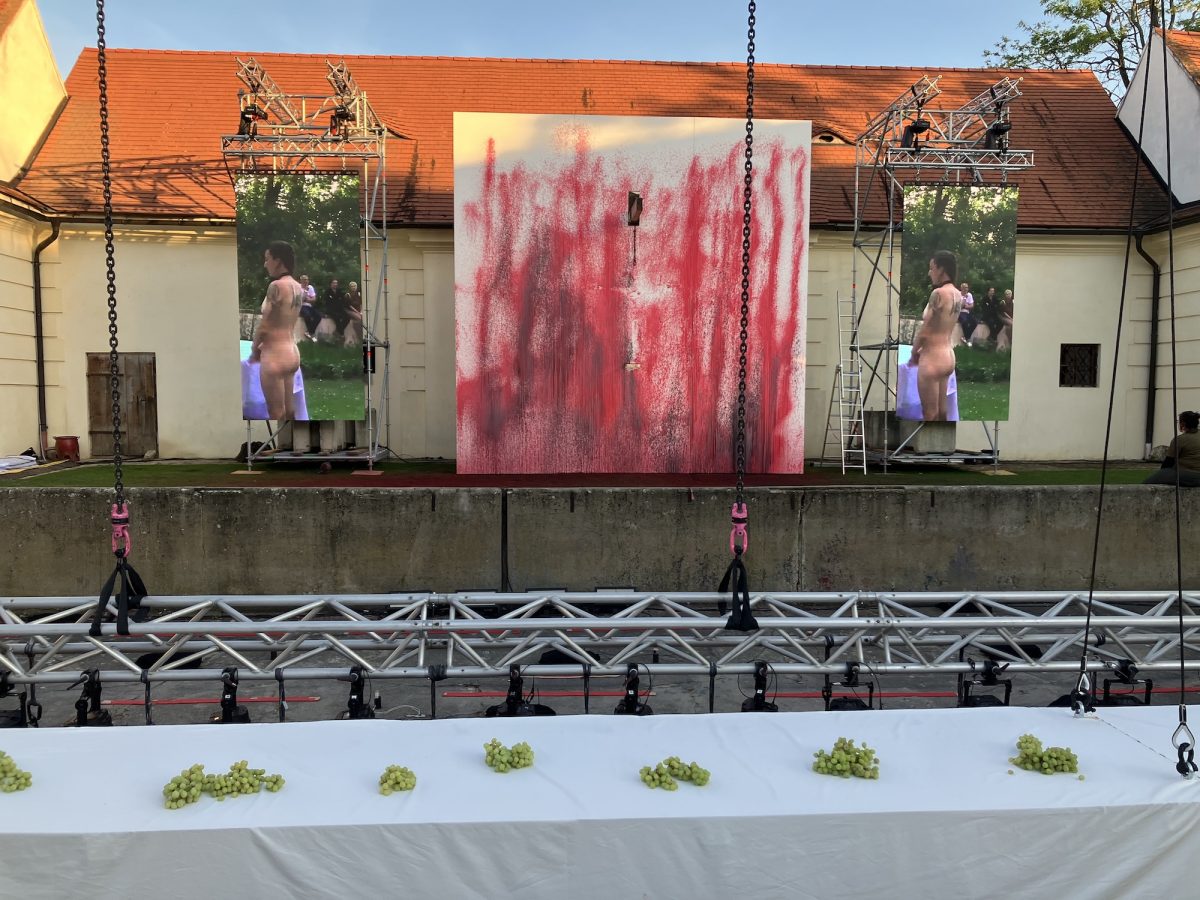
At Prinzendorf, these parallels also become impossible to ignore. Upon arrival at the castle, drones spray paint over a cruciform tableau while Duncan drives a monster truck across a plywood tank, destroying it beneath a giant NO WAR slogan. The gesture is direct where much contemporary political art prefers ambiguity. Performers described the company as politically progressive and engaged, framing the anti-war dimension as fundamental rather than incidental.
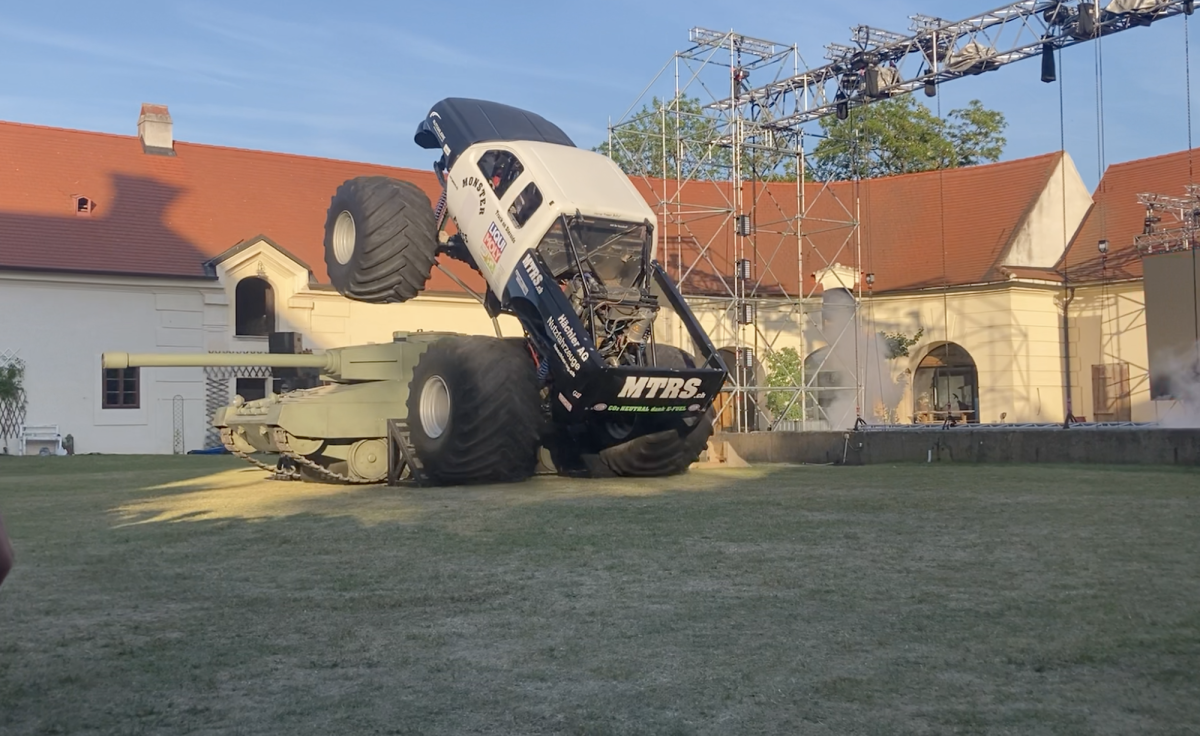
This is where the comparison with Actionism becomes especially interesting. While the original Actionists justified their use of taboo, bodily fluids and shock as an attempt to confront the authoritarianism that persisted in Austria after the Second World War, Holzinger’s work appears to inherit a related impulse while also transforming its terms. Rather than staging transgression as confrontation with a singular moral order, it distributes attention across multiple structures of power — military spectacle, gendered expectation, and the institutional logics that determine which bodies are allowed visibility, endurance, or risk. In this sense, the work can be read as carrying a distinctly feminist agenda, not in the form of explicit didacticism, but in its reconfiguration of whose labour, vulnerability and strength become central to spectacle.
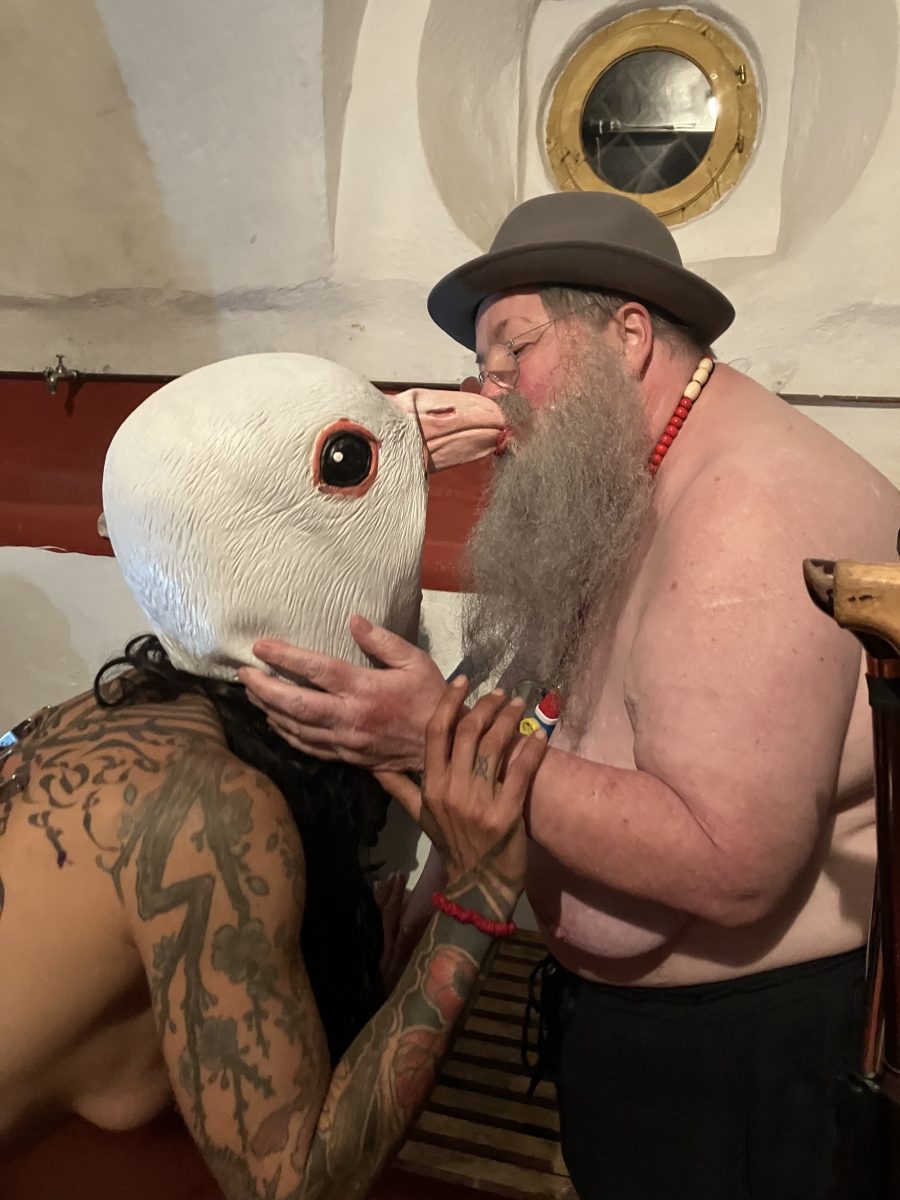
During a conversation with Bear Boy, a performance artist based in Düsseldorf, the conversation repeatedly returns to notions of trust, patience, and responsibility. During the casting for the roles, performers were selected not because of their physical abilities but because of their spirit. Cast as one of two Hermann Nitsch doppelgängers wandering the grounds, Bear Boy noted that limited mobility did not prevent participation. This generosity of casting means that the performance celebrates physical extremity while refusing to make extremity a prerequisite for belonging.
To that end, dangerous acts only become possible because of the enormous infrastructure of support beneath them. The audience witnesses suspension hooks, monster trucks and aerial stunts; but behind the scenes lies a collective commitment to ensuring that everyone can participate safely. As Bear Boy puts it, “that’s exactly the generous gift [Holzinger] gives to her performers. That you can be included. It’s the spirit that includes you and not your ability. She creates exactly this trustful situation.”
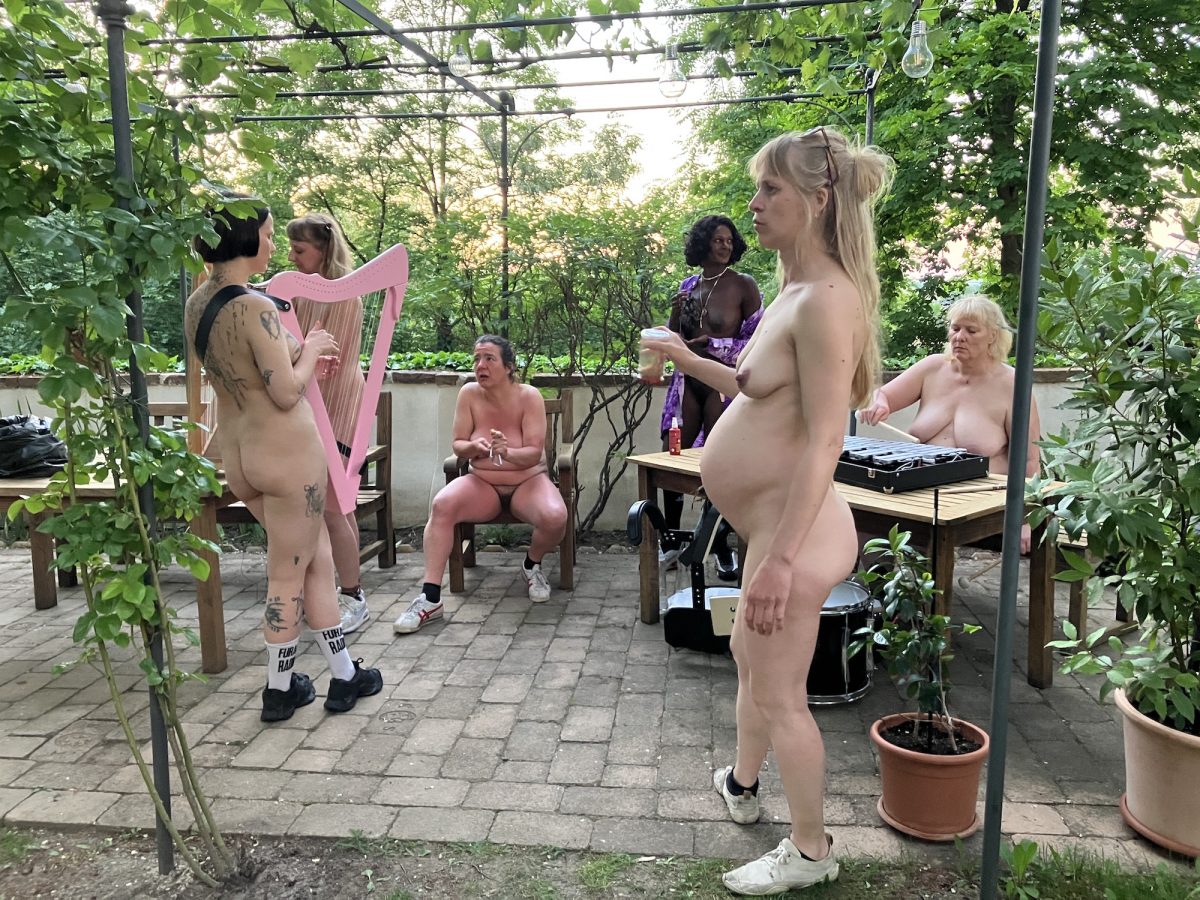
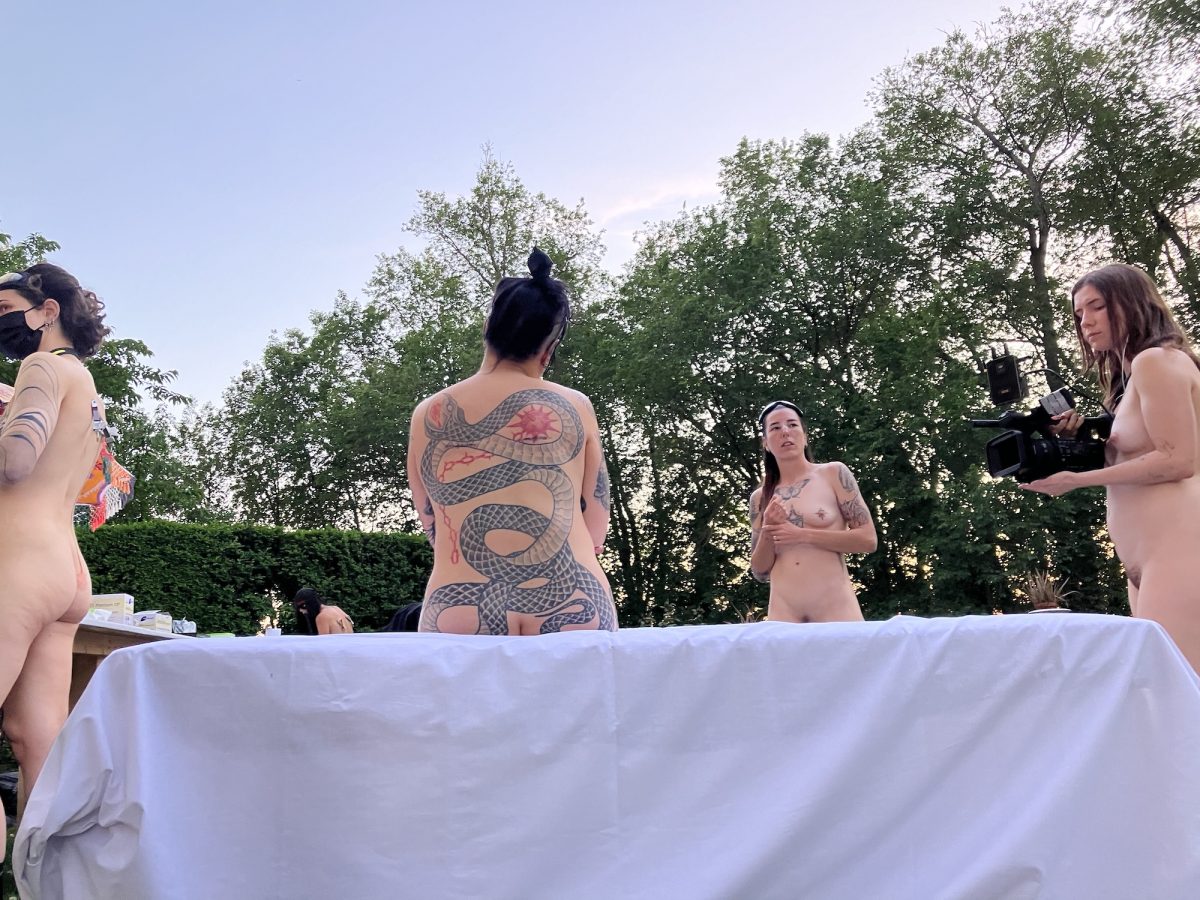
Bear Boy repeatedly described Holzinger less as a director issuing instructions than as someone who cultivates conditions for others to succeed. “She’s never over-curating anything,” Bear Boy explained. “She just creates the space in which everybody, every person, whoever he or she might be, can thrive.” For the performers, the atmosphere surrounding the production was defined by what was unanimously described as an atmosphere of “care.”
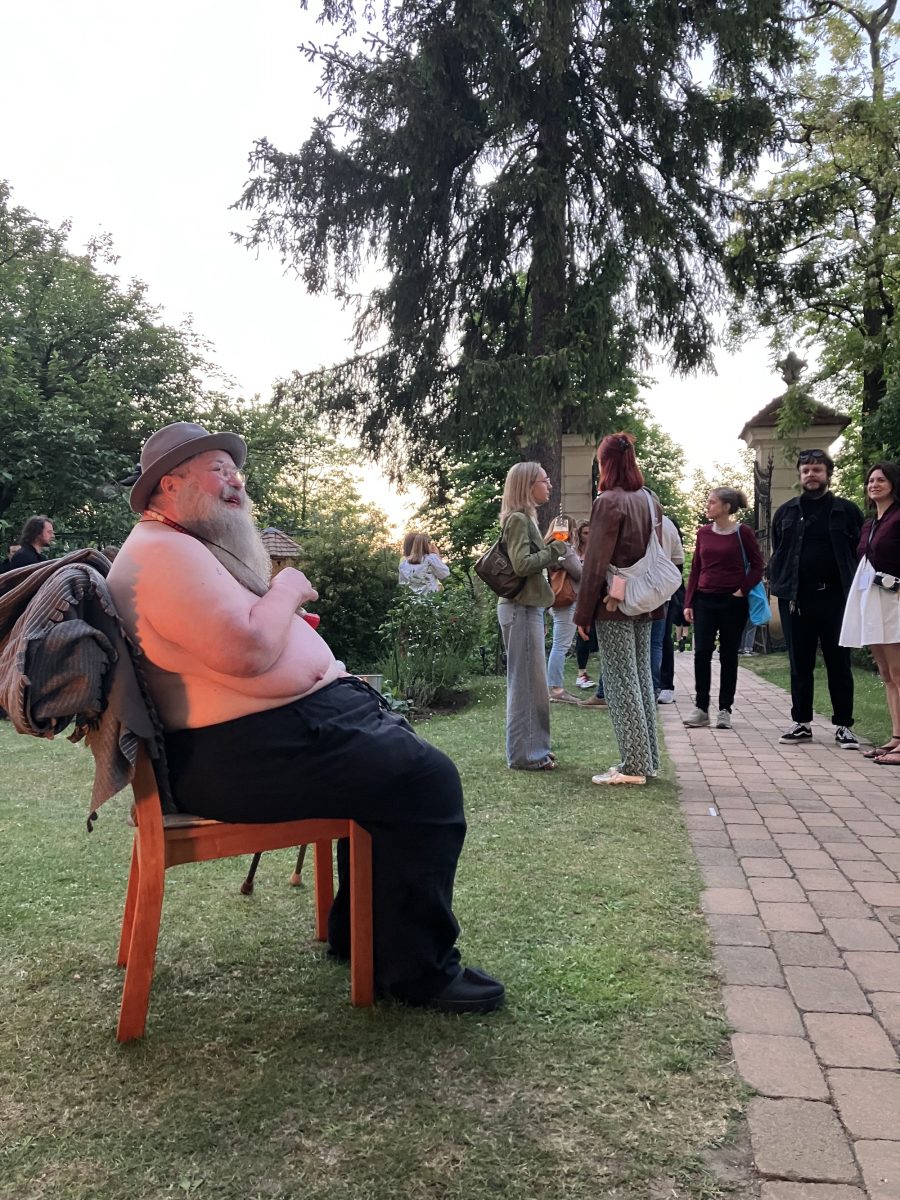
“Everybody looks left and right. What is the person next to me doing? Does anybody need any help? Is anybody hurt? What is needed?” Bear Boy credited this culture directly to Holzinger’s example, describing her as someone who leads without micromanaging.
As evening falls, Fibi Eyewalker descends from the sky by paraglider, dressed as a white dove carrying a white flag before a torchlit procession winds through the grounds. The jump is visible from the ground as well as streamed live on two large screens in the castle courtyard. Whilst mid-flight, Eyewalker apparently felt the call of nature, but did not want to shower urine onto the crowd below, and so waited until she had landed in a nearby field before finally relieving herself and calling out “peace on earth!” The audience understandably assumed it was part of the performance, especially given the nature of Holzinger’s current pavilion Sea World at the Venice Biennale.
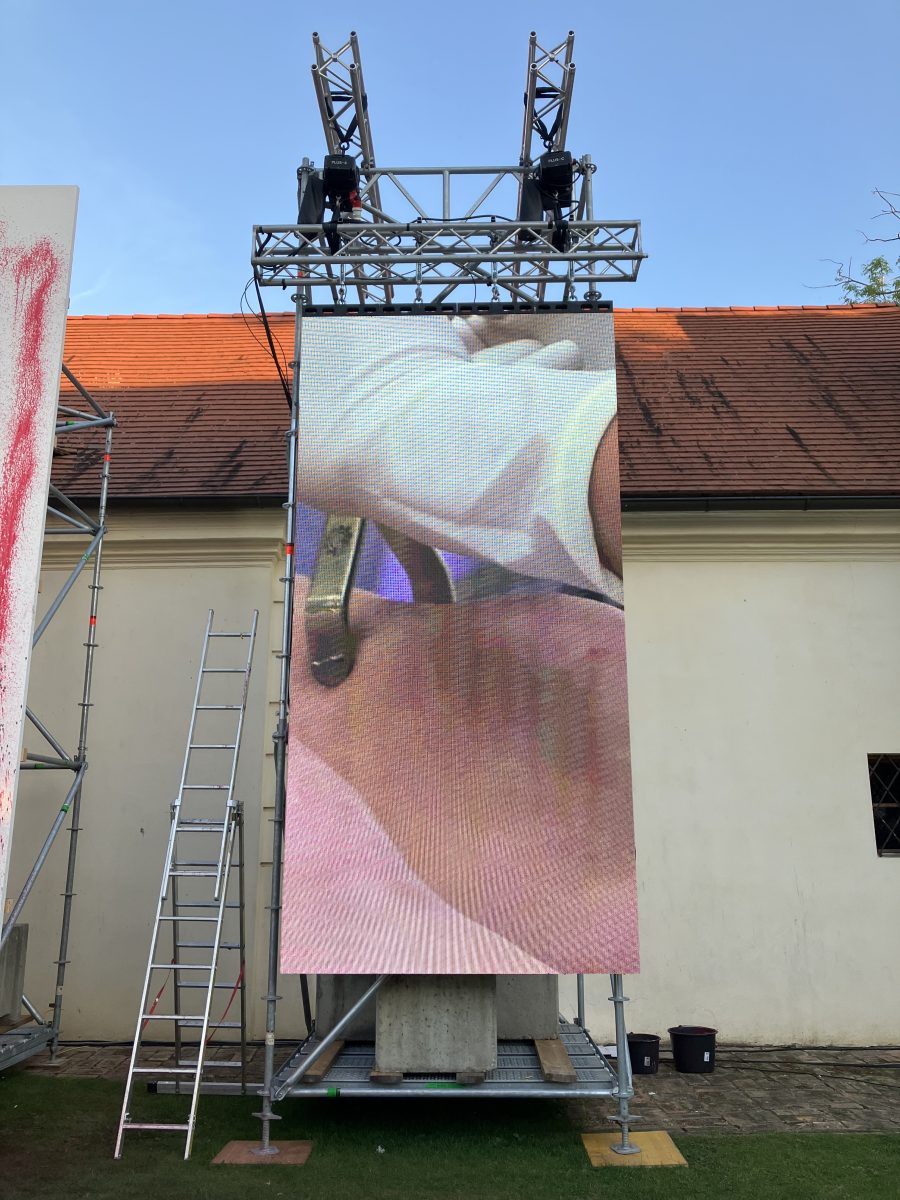
The evening concludes with a tableau resembling the Last Supper comprising thirteen performers suspended by hooks inserted into the skin of their backs. For hours, spectators had watched the painstaking preparation required to make the act possible, carried out with careful, methodical attention in the garden. The sight appears shocking, but by this point shock no longer feels like the point.
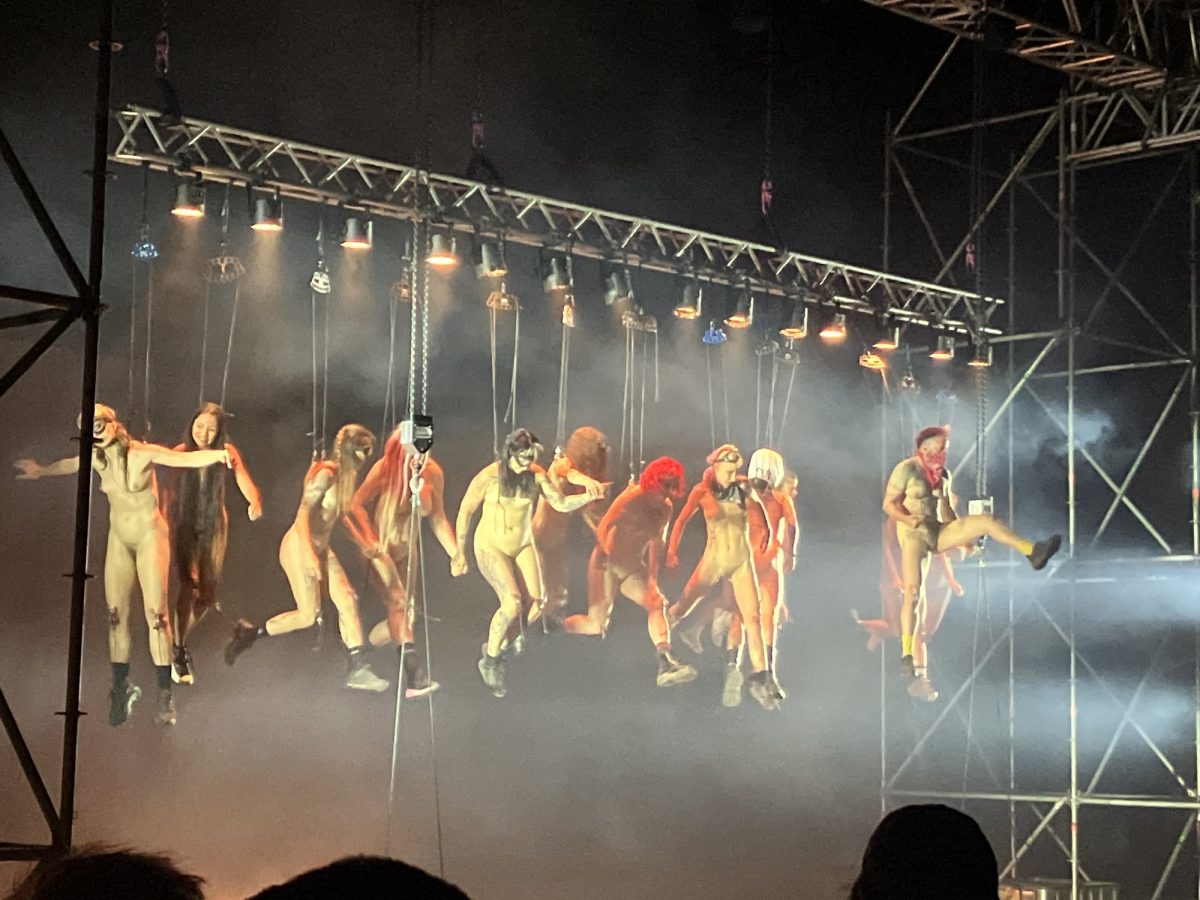
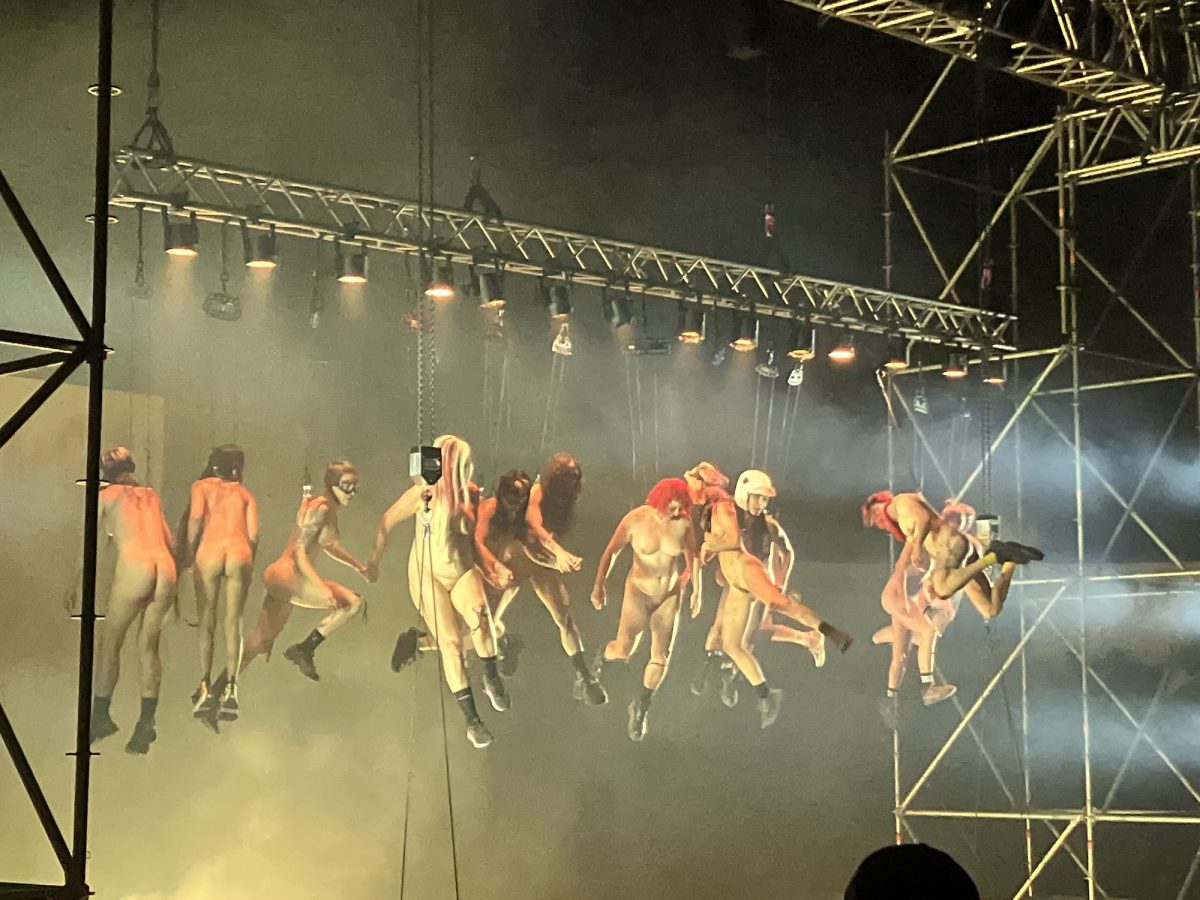
As the audience descends the castle grounds to board buses back to Vienna, what remains is an awareness of the collective labour required to produce such moments. For Holzinger, danger is inseparable from trust. We may have arrived expecting spectacle, transgression and excess. What we take home instead is something else: a temporary community built around mutual dependence, vulnerability, and care.
MORE: nitsch-foundation.com
Pfingstspiel Holzinger is a joint project of the Vienna Festival (Wiener Festwochen) | Free Republic of Vienna and the Nitsch Foundation
All photos © Camille Moreno