Devansh Soni is a lens-based artist from Ahmedabad, Gujarat, now based in Brighton, whose work moves between photography and moving image
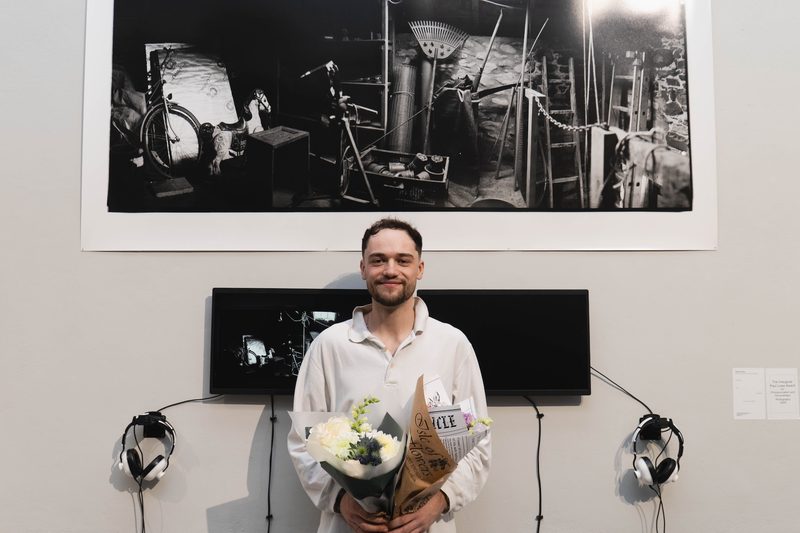
His debut solo exhibition, Between Horizons, presented at Gallery 40 in Brighton in July 2026, brought together photographs from western India and the Sussex coastline. Rather than setting these locations against one another, Soni looked for connections between them: an empty horizon, a lone figure, the changing light or the familiarity of standing beside the sea.
“Moving from Ahmedabad to Brighton for my Master’s was a big shift, and that experience of straddling two places, two ways of seeing, is really what pushes everything I make now,” the artist explains.
This sense of existing between two places runs through his photography, although it is not always immediately obvious. His landscapes are less concerned with documenting geographical locations than with capturing the emotional experience of being within them.
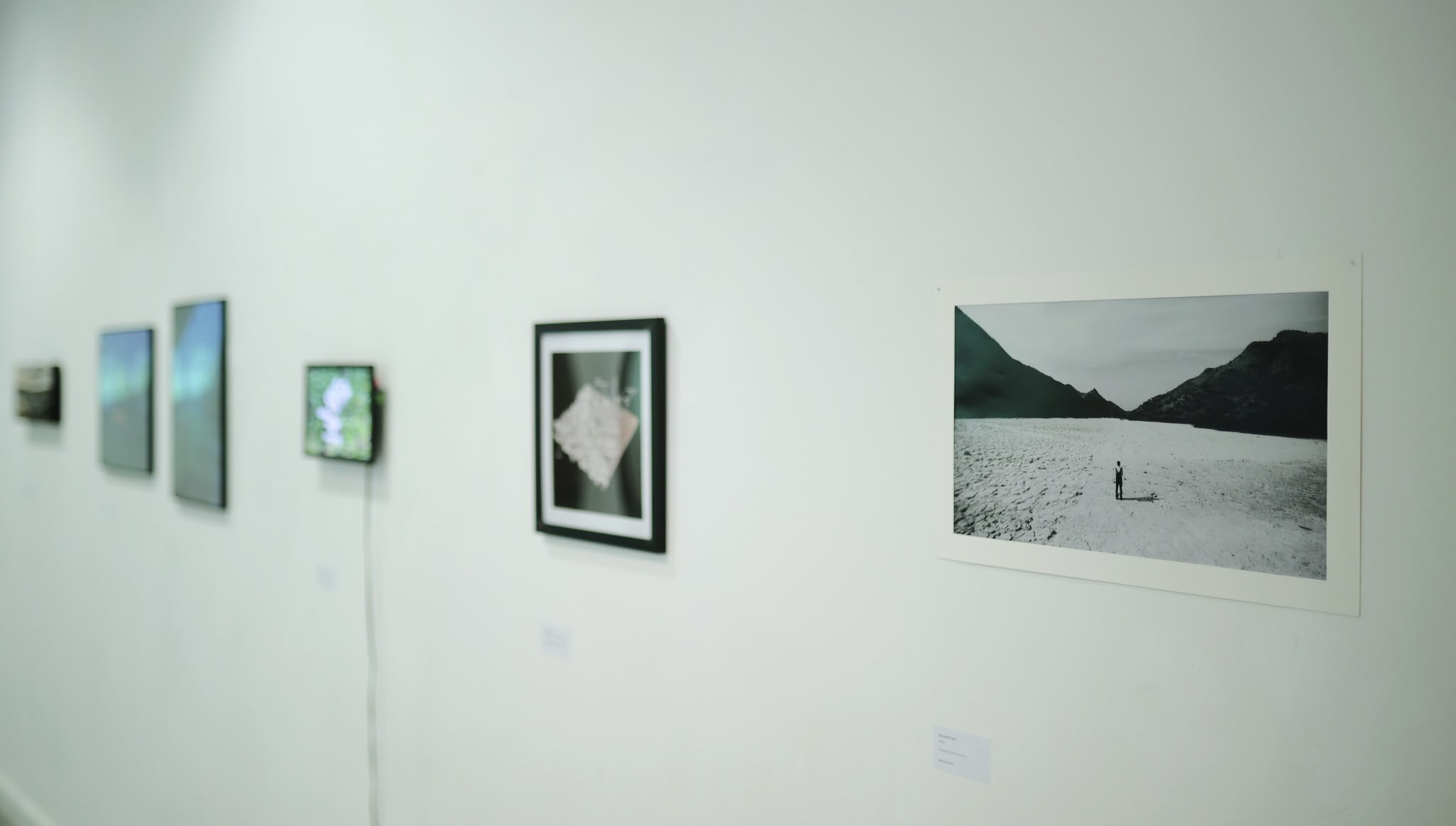
A small figure in an enormous world
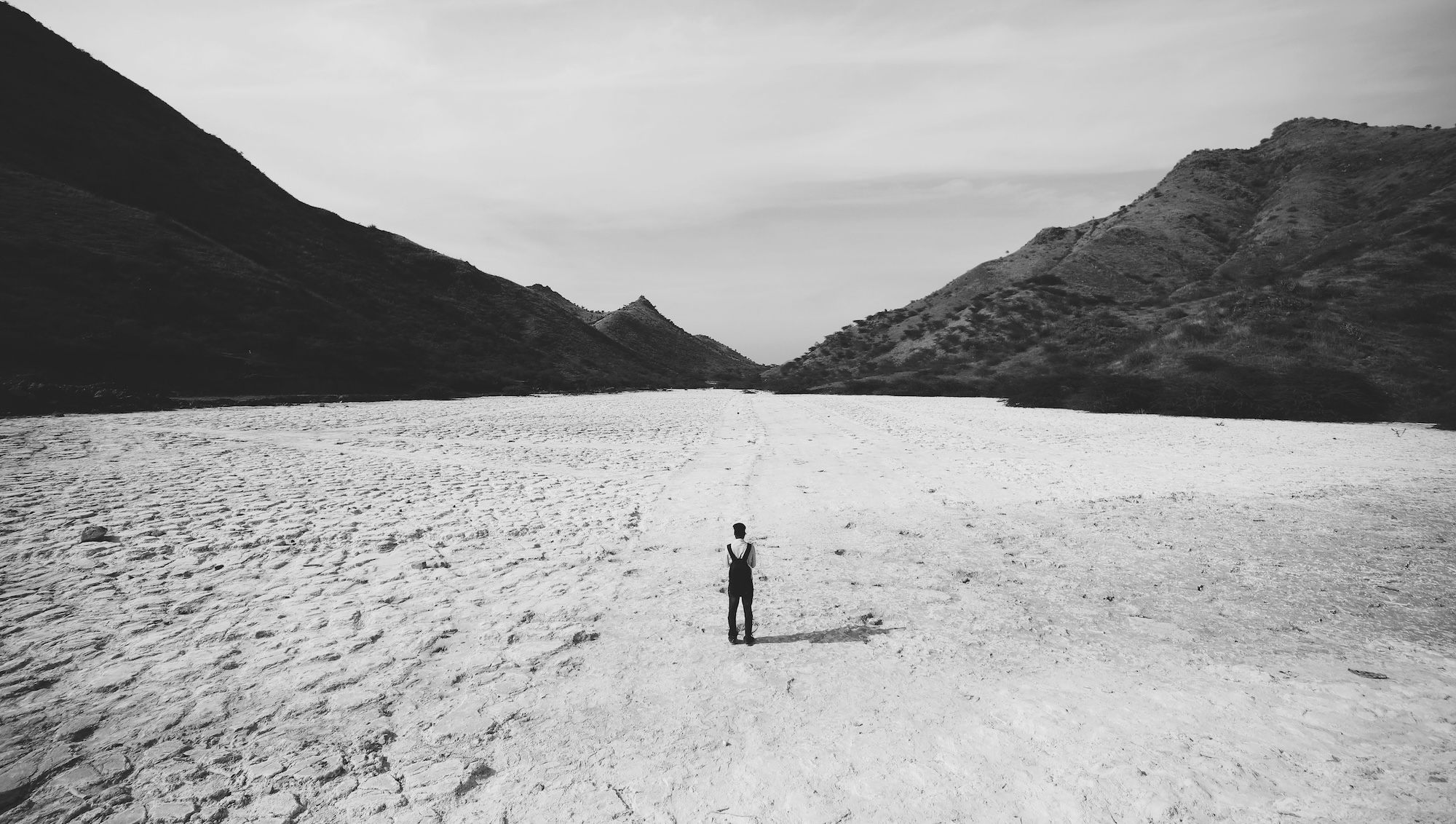
In Alone, two hills frame a broad expanse of pale, dry ground. Their slopes draw the eye towards the centre of the image, where a solitary person stands facing away from the camera. Wearing a white shirt and dark dungarees, the figure casts a long shadow across the cracked surface.
It is a carefully balanced composition. The hill on the left is almost completely dark, while the opposite slope reveals more texture and vegetation. Between them, the bright ground is marked by fine cracks and faint tracks that become increasingly visible as you look.
What initially appears to be an almost empty landscape gradually reveals its details. The figure gives the scene its sense of scale, but also introduces something more personal. We don’t know who this person is, where they are going or why they have stopped. Their anonymity allows the viewer to imagine themselves occupying that same space.
“I kept the human figures small against very large landscapes on purpose. When someone’s tiny against a huge, empty space, it doesn’t really matter where that space is: a desert or a beach reads the same emotionally. I wanted to show that solitude isn’t tied to a specific place; it’s something that travels with you,” Soni explains.
There is something particularly effective about this approach. By reducing the human figure to a small presence within a much larger environment, Soni shifts attention away from the individual and towards the relationship between person and place.
The image also carries a quiet environmental tension. The cracked earth suggests a landscape shaped by the absence of water, while the figure appears exposed within the enormous open space. Alone has also been selected for Flare, a photography journal concerned with the climate crisis, adding another context to the work without turning it into an explicit statement about a particular environmental event.
Between Gujarat and Brighton
Although Alone can be appreciated as a single photograph, its connection to Soni’s wider practice gives it another dimension.
In Between Horizons, he explored how the experience of migration can change the way we see familiar landscapes. Gujarat and Brighton become psychologically connected, with memories of one place influencing the experience of the other.
A beach in England might recall a landscape in India. A solitary figure standing against an open horizon might suggest distance, isolation or familiarity, regardless of where the photograph was taken.
Soni often works in black and white, removing some of the visual information that might immediately identify a location. This allows the shape of the land, the quality of light and the presence of people to take on greater importance. Elsewhere, he introduces colour to capture more intimate moments and the warmth of lived memory.
His earlier photographs, including Mumbai Morning Run (2026) and Where Sky Meets Sea (2026), demonstrate how different locations can produce surprisingly similar emotional responses. The sea, the horizon and the small human figure become recurring elements, connecting places that might otherwise seem unrelated.
There is, however, an interesting distinction between the wider series and Alone. Without knowing Soni’s personal history, the photograph speaks more immediately about solitude and the scale of the landscape than about migration itself. The connection between India and Sussex is something that becomes clearer through the surrounding body of work.
The composition is also relatively familiar: a solitary figure dwarfed by nature, carefully positioned within a dramatic landscape. Its near-symmetry gives the image an immediate visual appeal, although that same balance leaves less room for surprise.
Yet the photograph’s strength lies in its restraint. Soni doesn’t attempt to fill the scene with narrative or offer an explanation of who the figure might be. Instead, he allows the landscape to carry much of the emotional weight.
Finding a place between places
What makes Soni’s developing practice worth following is this interest in how landscapes can hold memories beyond their physical geography.
Moving between Ahmedabad and Brighton has given him two different environments through which to understand home, but his photographs suggest that the distinction is rarely as simple as one place being left behind and another taking its place.
Instead, there is an ongoing exchange between the two. Memories alter the way new surroundings are experienced, while distance changes the relationship with somewhere once familiar.
At Known Terrain, presented during London Design Festival from 12th to 15th September 2026, Alone offered a quieter perspective on the exhibition’s wider exploration of place, movement and transformation. Where other artists examined the structures and systems that shape our environments, Soni concentrated on the individual standing within them.
As his practice continues to develop across photography and film, there is an opportunity to bring the personal and geographical dimensions of his work into closer dialogue. Alone is a strong starting point: a visually simple image that invites a longer look, revealing how even the smallest human presence can transform the way we experience an enormous landscape.
About the artist
Devansh Soni is a third-generation lens-based artist and filmmaker originally from Ahmedabad, Gujarat, India, and now based in Brighton, UK. His practice explores memory, migration, identity and belonging through documentary and fine art photography. His debut solo exhibition, Between Horizons, was presented at Gallery 40, Brighton, in July 2026. His photograph Alone was subsequently exhibited in Know Terrain during London Design Festival 2026.