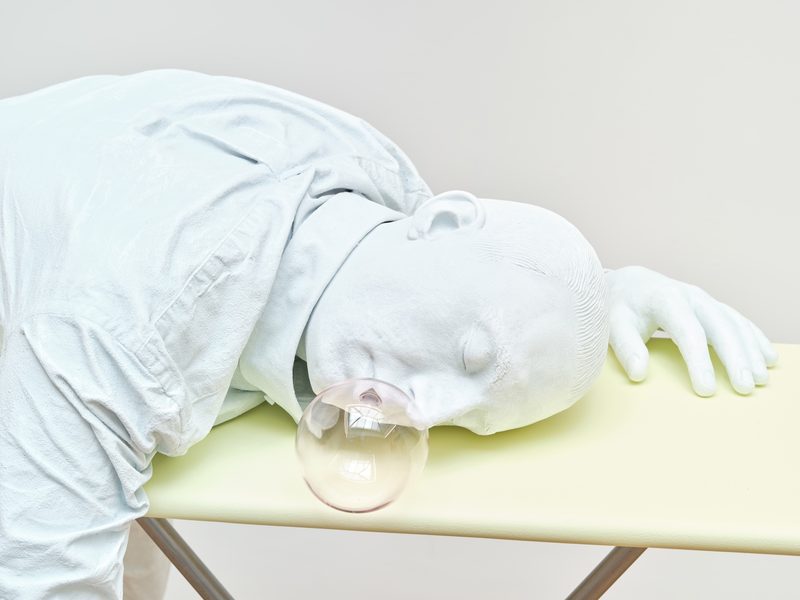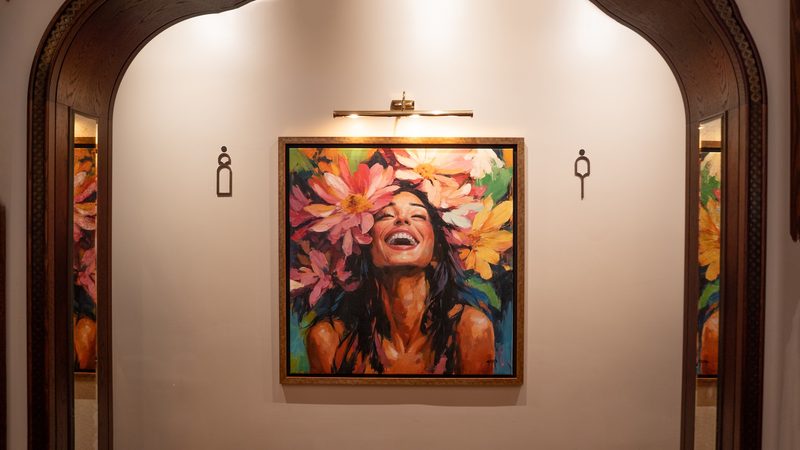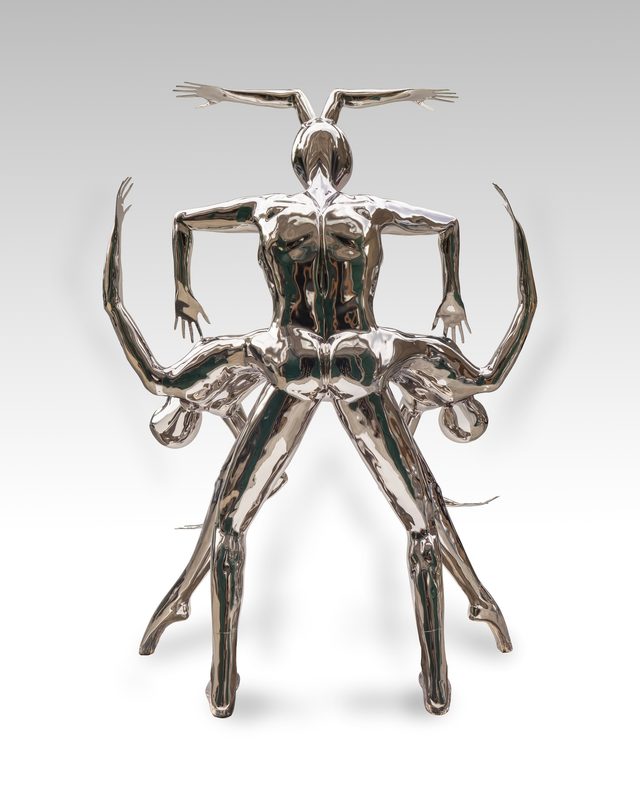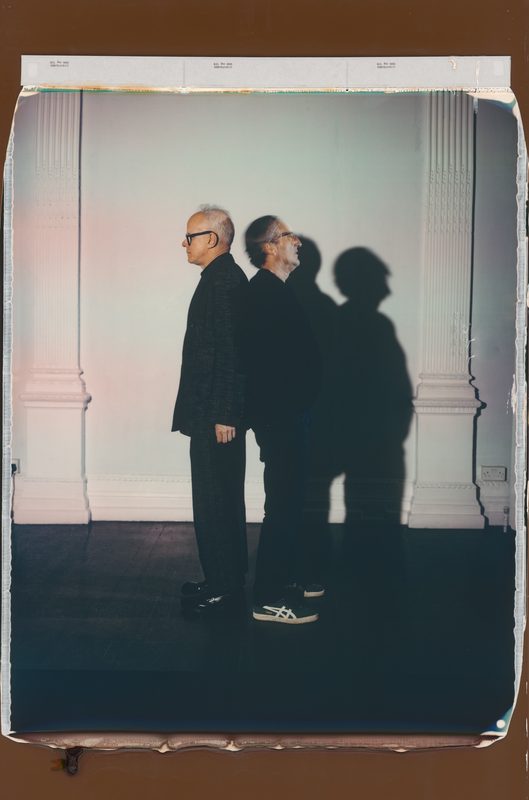
Huidi Xiang presents a major body of work consisting of seven sculptures and one drawing in her solo exhibition, the tail remembers, at YveYANG. As the artist keenly explains, the show is a reaction to capitalism’s need for everyone to make themselves useful within its machinery of desire, because the subject here is the tail — something with no productive application within human society.
Xiang inaugurates the exhibition with an elucidating poem:
“A tail is neither human
nor animal
It is a rehearsal
for becoming.
Perhaps every body
still carries
the memory
of a tail
…”
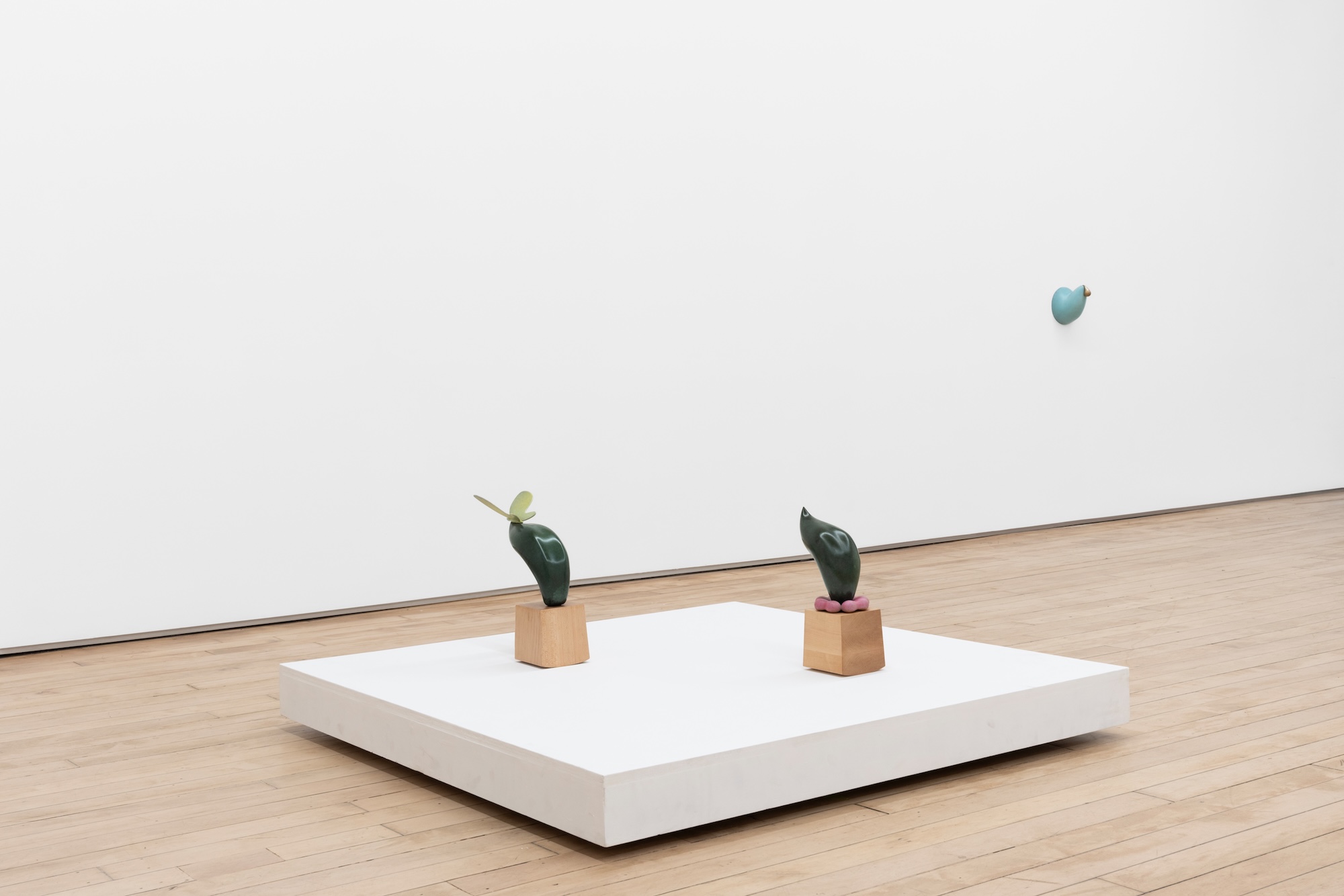
Xiang has studied cartoon and game characters, and the potency of the tail as a symbol capable of destabilizing established narratives around human productivity and the structures that empower capitalism. She has also made her sculptures as symbolic abstractions, framing the tail within minimalist compositions.
The level of perfection and reductive detail in these bronze works, which originate as casts from 3D-printed computer imagery, points to the necessary nature of labor in any aesthetic endeavor — and to art’s own marriage to the capitalist system.
The core idea in Xiang’s work is the metaphor of a time when the body had a tail. This does not refer to physical reality as narrated by evolutionary theory or biology. Rather, it is a symbolic rendition of alternate beings as seen in fairy tales, video games and Disney stories.
The tails all carry different personalities and traits.
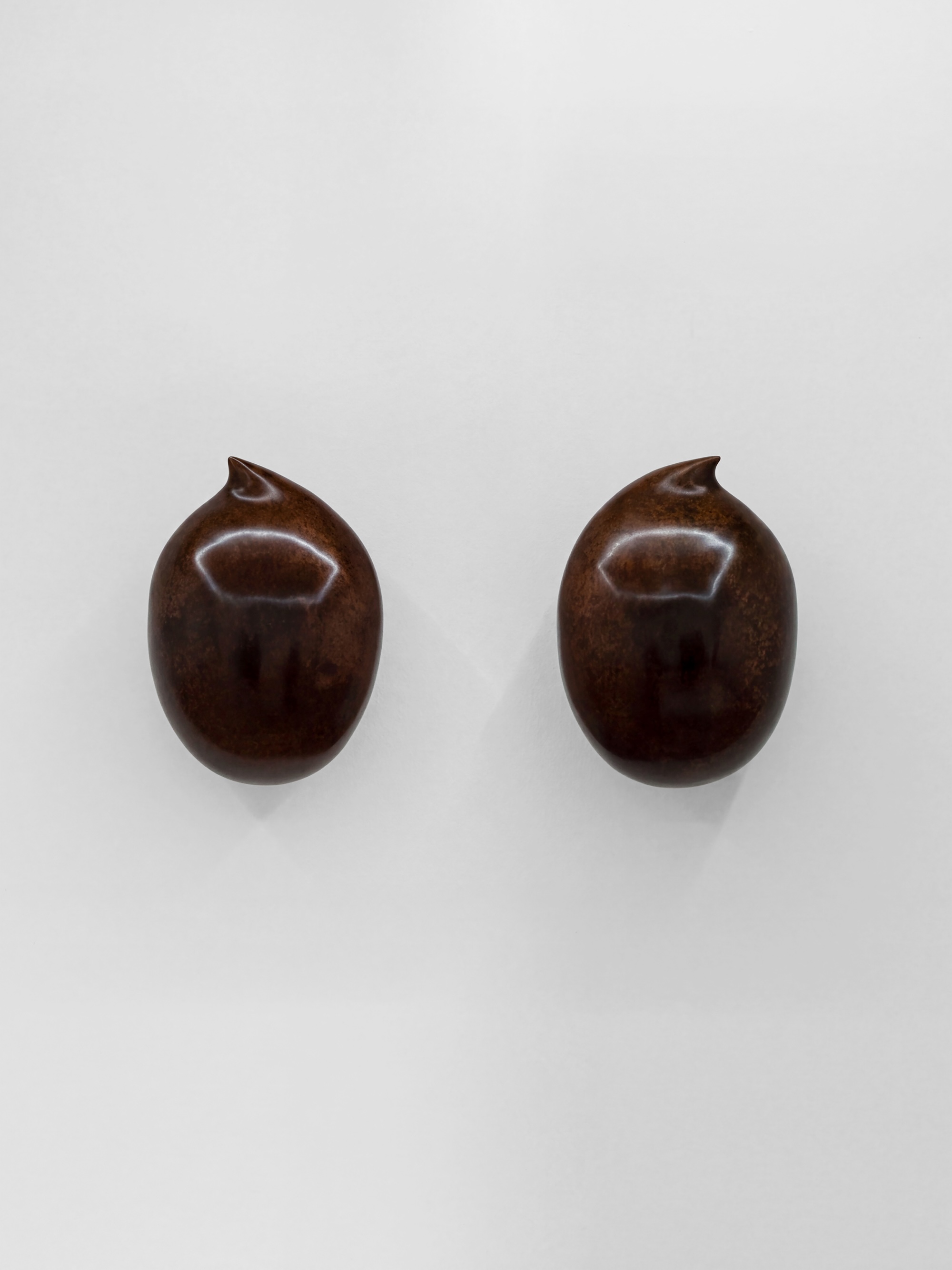
the tail of caprice (2026) appears as a symmetrical pair of heavy but highly rounded tails, depicting Bugs Bunny from Looney Tunes. The tail, which looks like a bun with a triangular accent poking from its edge, is presented as an identical pair, beckoning ideas of mirroring, symmetry and binary opposition in the universe.
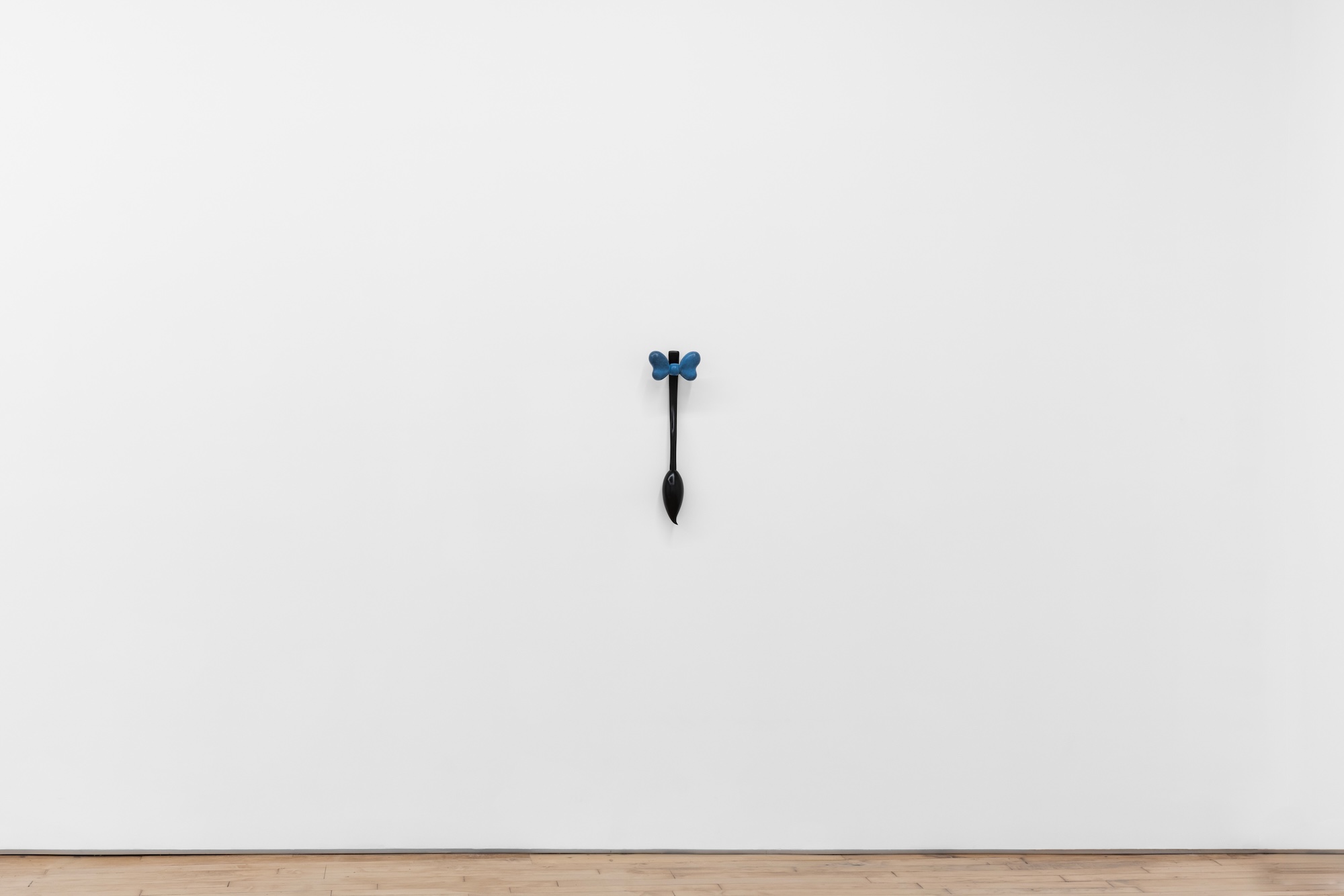
the tail of melancholy (2026), depicting Eeyore from Winnie the Pooh, manifests a fluid presence and aerodynamic design, like the forward segment of a supersonic airliner such as Concorde or a spy plane like the SR-71 Blackbird.
The blue ribbon at the upper end of the tail appears to serve as a pair of wings, providing lift to the entire assembly. As children, we dreamed in a Disney-esque fashion of having the wings of a butterfly or an angel and being lifted into the night sky, with fairies visiting the bedroom by the windowside.
While this vision might sound clichéd or juvenile, that fantasy or dream was very real and authentic for many of us as children, nurtured by Disney films and animations that permitted us to harbor such magical wishes.
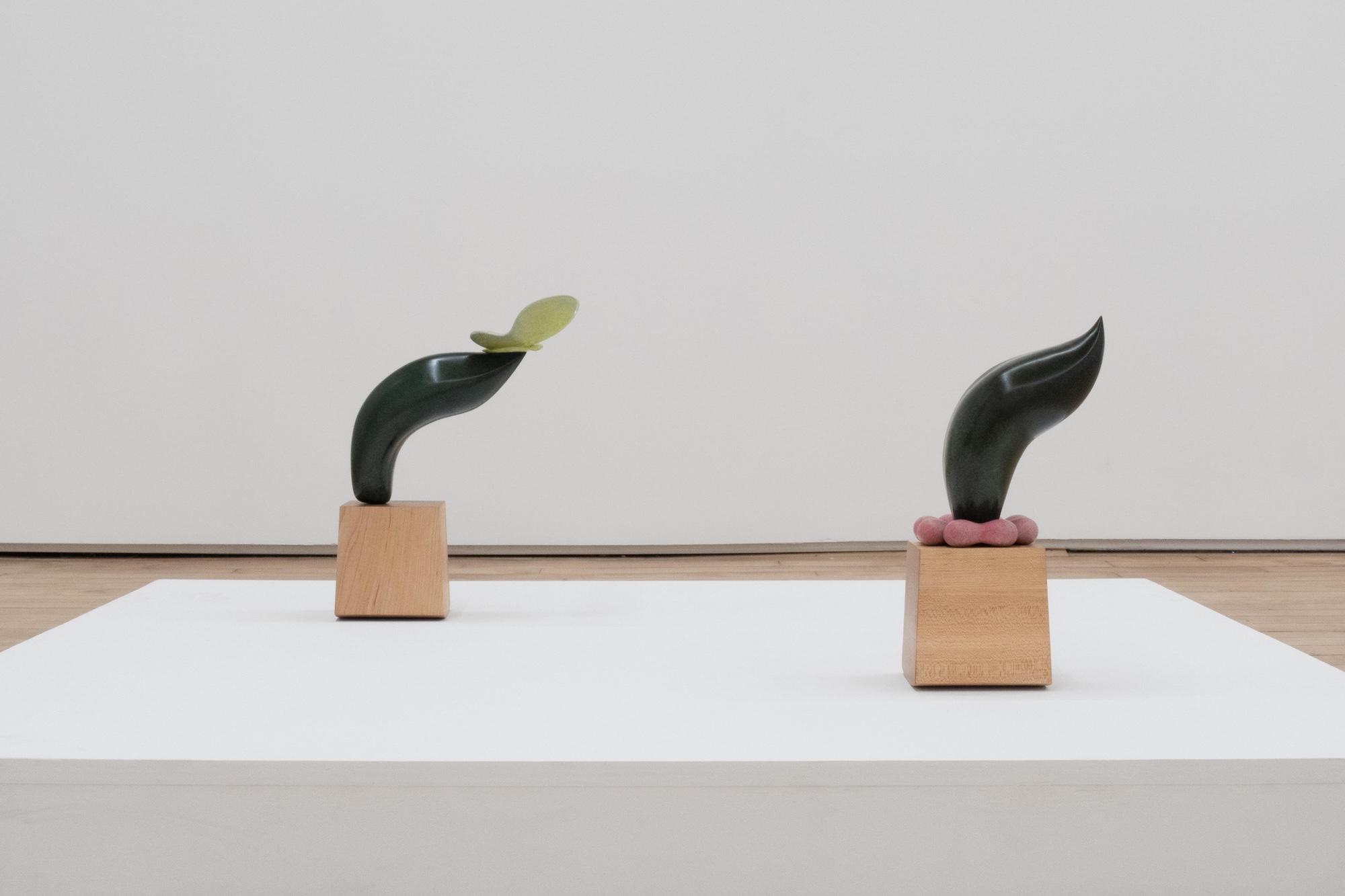
the tail of latency (2026) depicts the tail of The Ugly Duckling, with a teardrop accumulating at its end, as if the tail were an eye or a fountain of tears. It references the heartbreaking moment from Walt Disney’s 1939 film when the rejected young swan realizes that he does not fit in with the duck family.
The tear is a signifier carrying within it the meaning of its verb counterpart, to tear — to separate or rip apart physically or emotionally.
The tail is one of “latency” because there is a delay before The Ugly Duckling realizes that he does not belong to the duck family. The rhythm by which the tail perks up and slouches downward in the form of the teardrop follows the pattern of life from childhood, or immaturity, to adulthood, or maturity, through maturation and the learning of life lessons.
As a sage once said, to give birth to great art, one must suffer greatly. Perhaps the rhythmic curve represents the artist’s journey, rather than the hero’s journey, as illustrated in the myth of the tormented artist.
And this ties back to the idea that everyone must find utility for themselves within the capitalist machinery because the system rewards only a few while dealing punitively with the rest through stress, competition and inferior class or status.
The tail is seductive, disarming, expressive and liberating, and is carried mainly by non-human animals and half-animal mythical humanoids.
A mark of humanness is the lack of a tail, from a certain scientific or pseudoscientific perspective, because humans lost the tail almost entirely through the evolutionary trajectory, while monkeys and other primates lost it halfway or completely too.
A mark of humanness also signifies intellectual and cultural maturity. In a sense, humans have become the “adults” of the biosphere and the food chain. By asserting dominance over the rest of the biosphere, and by “cheating” with weapons — the latest of which include guns — humans have fallen into the paradigm trap that power is power, and domination grants us mastery over the animal kingdom.
A closer examination of these power dynamics reveals otherwise. The tiger is a sheep, while the rabbit is indeed the lion. This is because power relations are reversible: power carries weakness, while weakness carries power.
Ultimately, the tale of the tails is not really about the seductiveness and playfulness of Disney and Pixar characters. It is about power, domination and the subjugation of Mother Earth by a race of beings who do not have tails.
Those without the tail have masqueraded across Earth, pretending to be the “adults” and believing that trying to understand the stories and symbolism of animals places us in a “childlike” state of mind. We apply the same logic of domination and condescension to children as we do to animals, and vice versa.
We falsely believe that we have mastered nature through the power of language and reason, which animals with tails supposedly lack. We have traded our tails away to gain a sense of logical realism and the ability to manipulate reality through language and propagandistic imagery.
The tail, then, becomes a symbol of pure intent and existence. Those with tails are blessed with a life of existing purely in the moment, without the pretension of “adulthood,” whatever that may mean.
Huidi Xiang, the tail remembers, September 9th, 2026–October 31st, 2026 YvesYang