A body folds over an ironing board. Dashed lines stop short, arrows point towards something no longer there, and painted figures appear caught inside systems whose purpose is never completely explained.
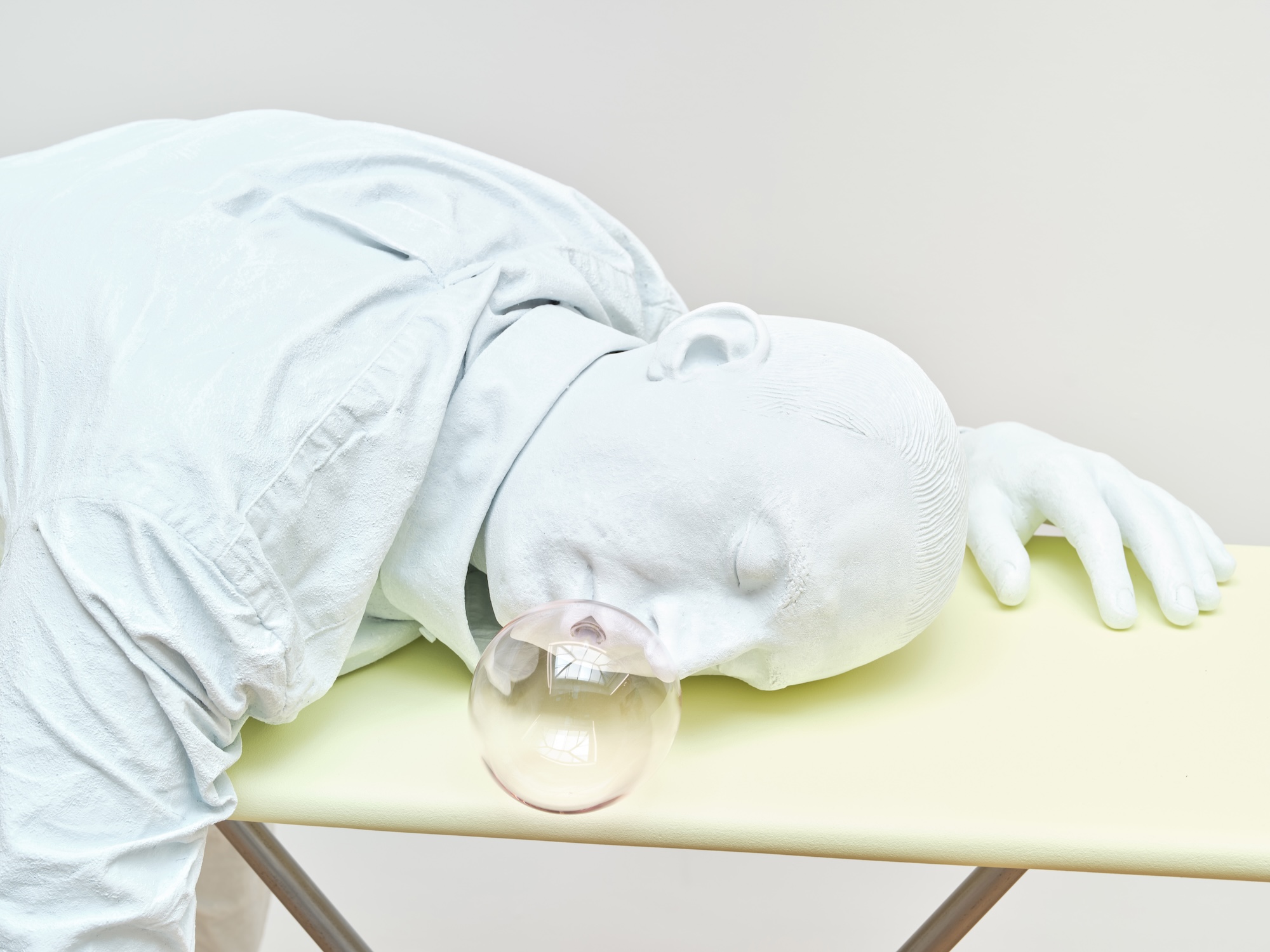
In Filippo Antonello’s Load Path, the Swiss-Italian artist brings together four paintings and a sculpture exploring weight, support and the strange structures we build around ourselves. The title comes from engineering: a load path is the route through which force travels through a structure until it reaches the ground.
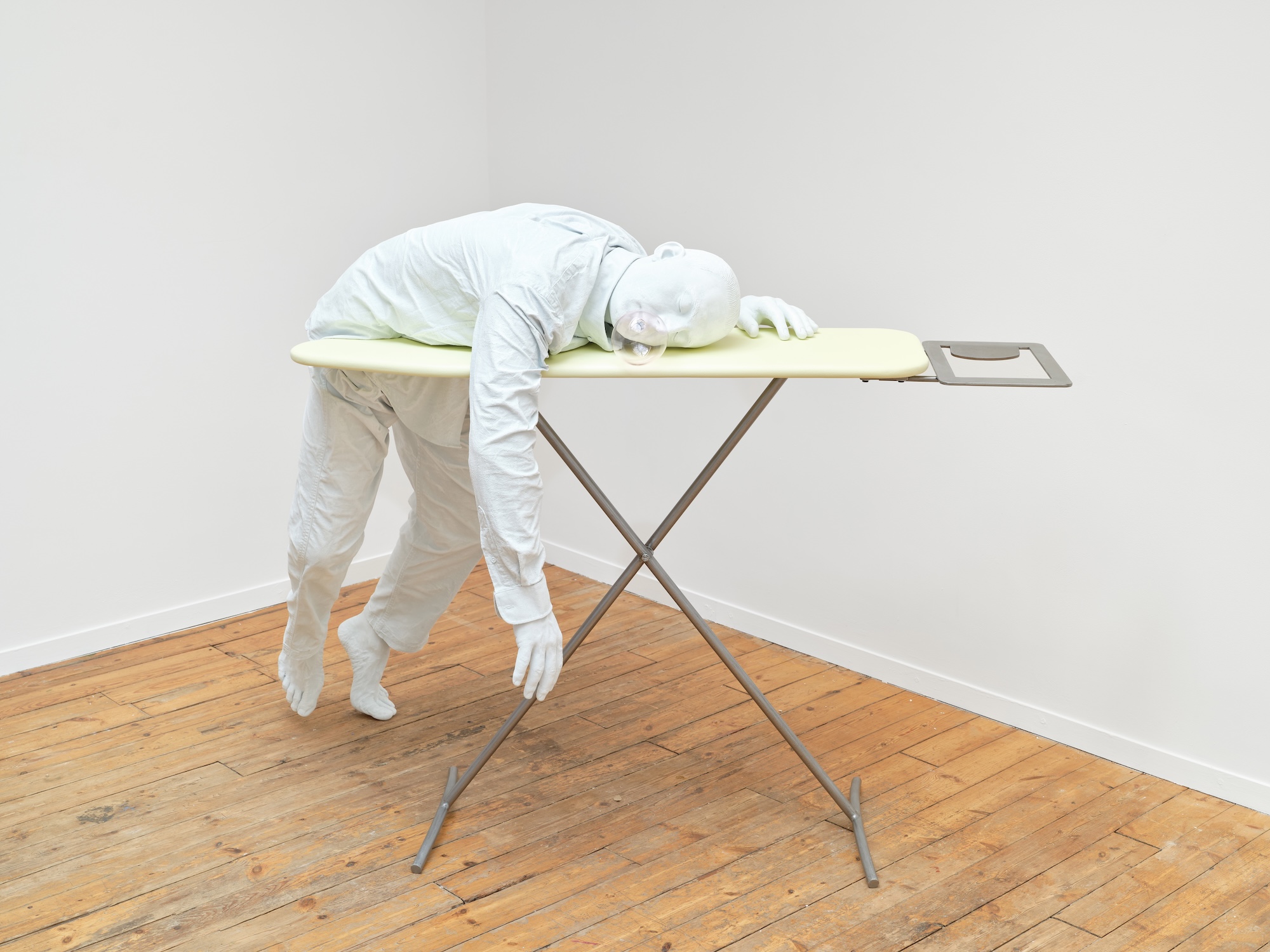
Antonello applies that idea to the body. Figures lean, bend and fold, becoming almost architectural as they interact with objects and frameworks that appear to support them while simultaneously determining their posture.
Across the paintings, diagrammatic marks, dashed contours, borders and arrows suggest instruction manuals or construction drawings whose labels have survived after their original function has disappeared. The systems feel recognisable, but their logic remains deliberately incomplete.
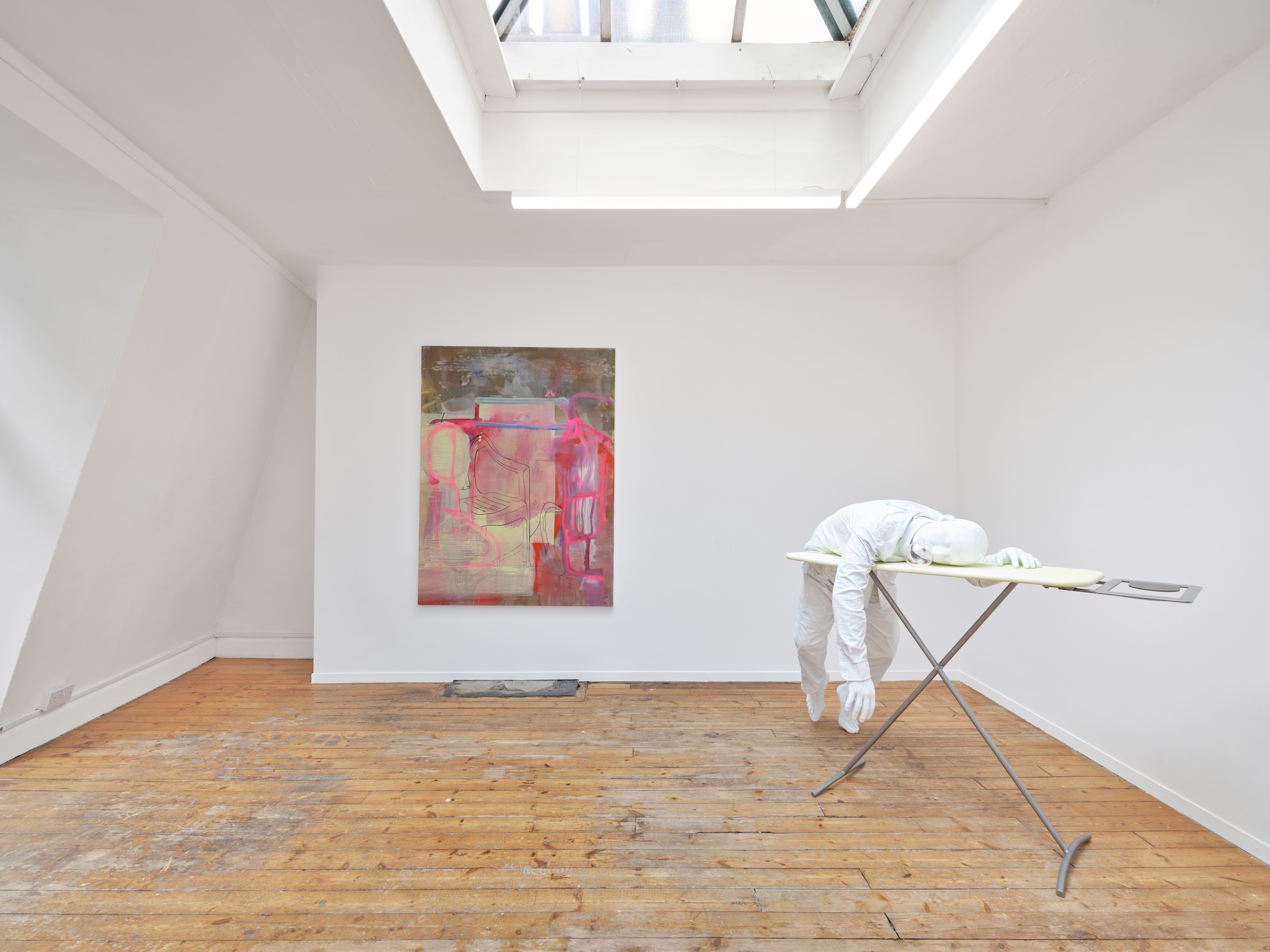
The paintings themselves have undergone a similar process. Layers of oil and acrylic are built up, scraped back and reworked, leaving earlier gestures visible beneath the surface like fragments of repeatedly revised instructions. Nothing quite resolves; things appear to fall into place without ever fully settling.
Works including Kind of Trial, Wall to Wall and Tenerwald move between loose painterly surfaces and precisely drawn bodies, while arrows, borders and graphic interventions interrupt the image. The result sits somewhere between painting, technical diagram and memory.
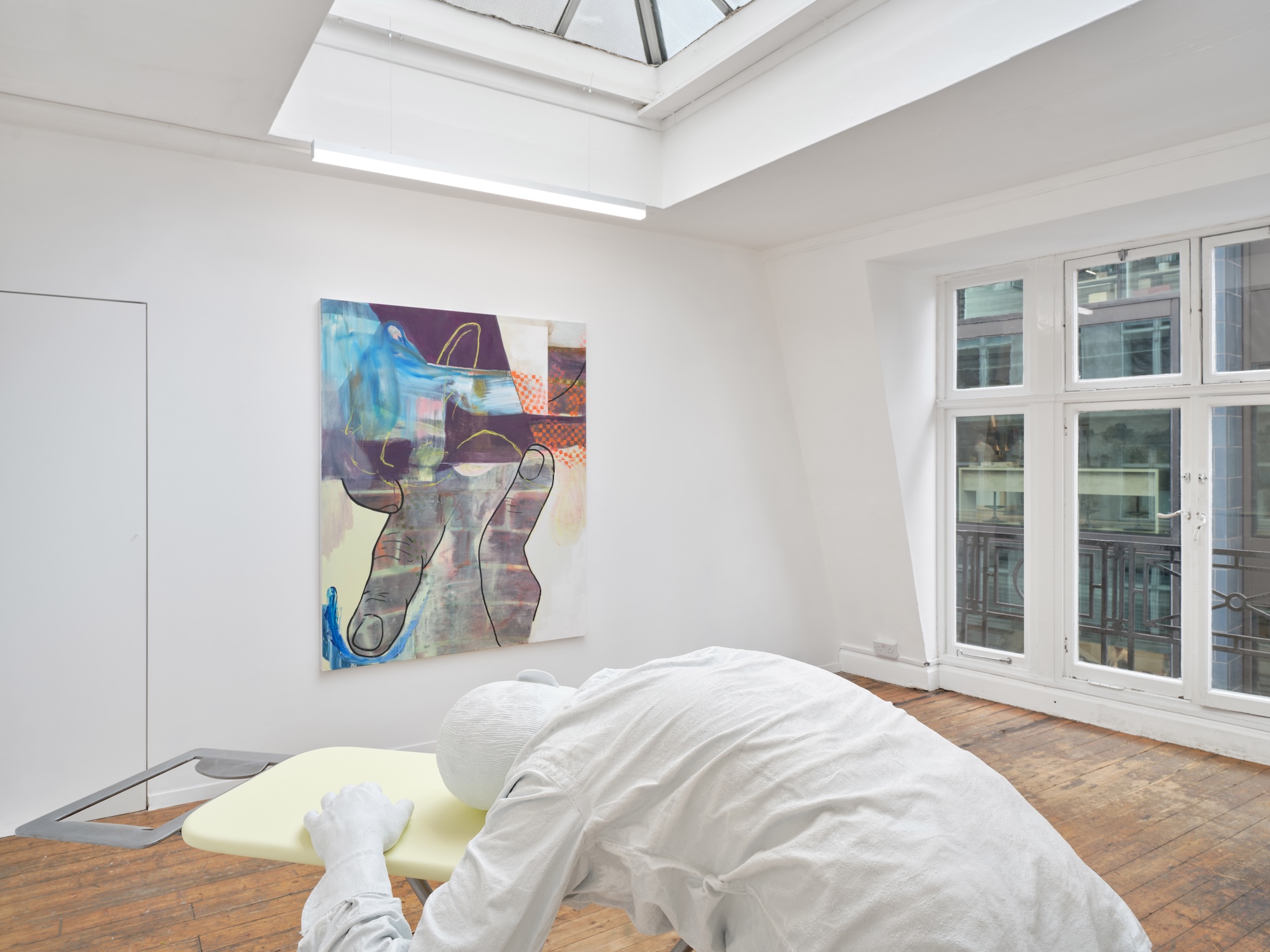
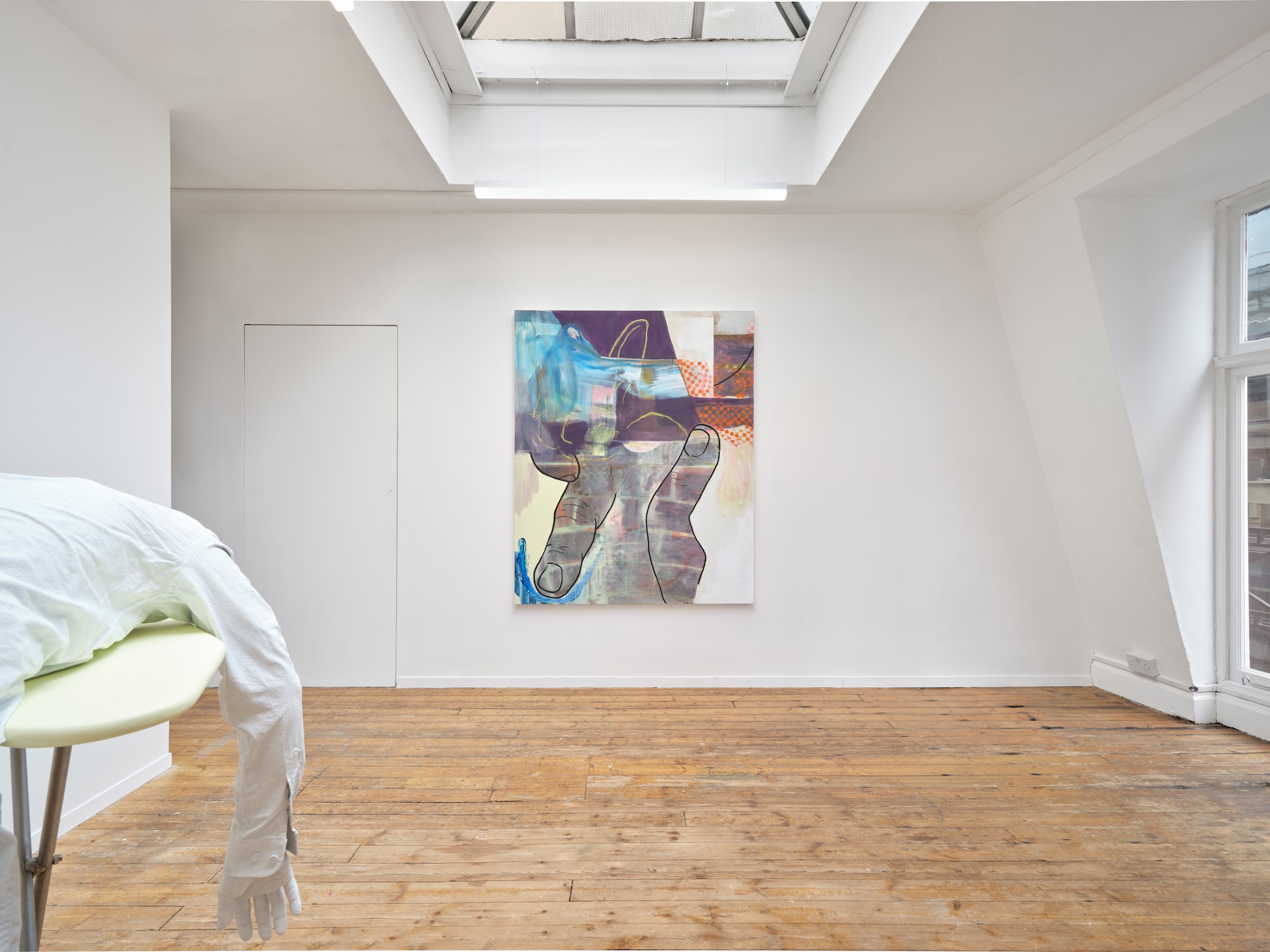
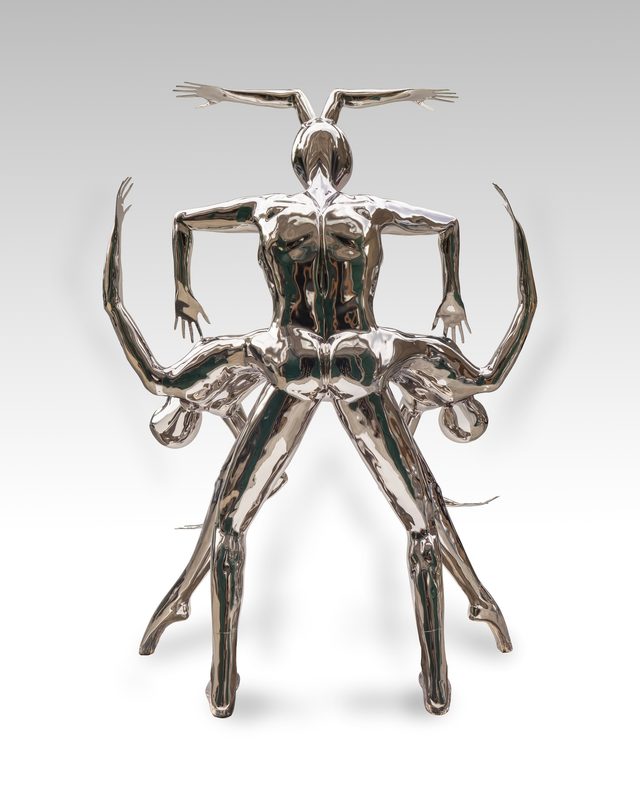
The sculpture pushes the idea further. A human figure collapses across an ironing board, turning both body and domestic object into structural components. There is something faintly absurd about it: the body needs the object for support, while the object is being asked to perform a job it was never designed for.
That instability runs throughout Load Path. Support becomes control, adjustment replaces resolution and the distinction between exerting force and being subjected to it begins to blur.
Antonello’s figures appear to arrange the structures around them, only to discover that those same structures are arranging them in return.
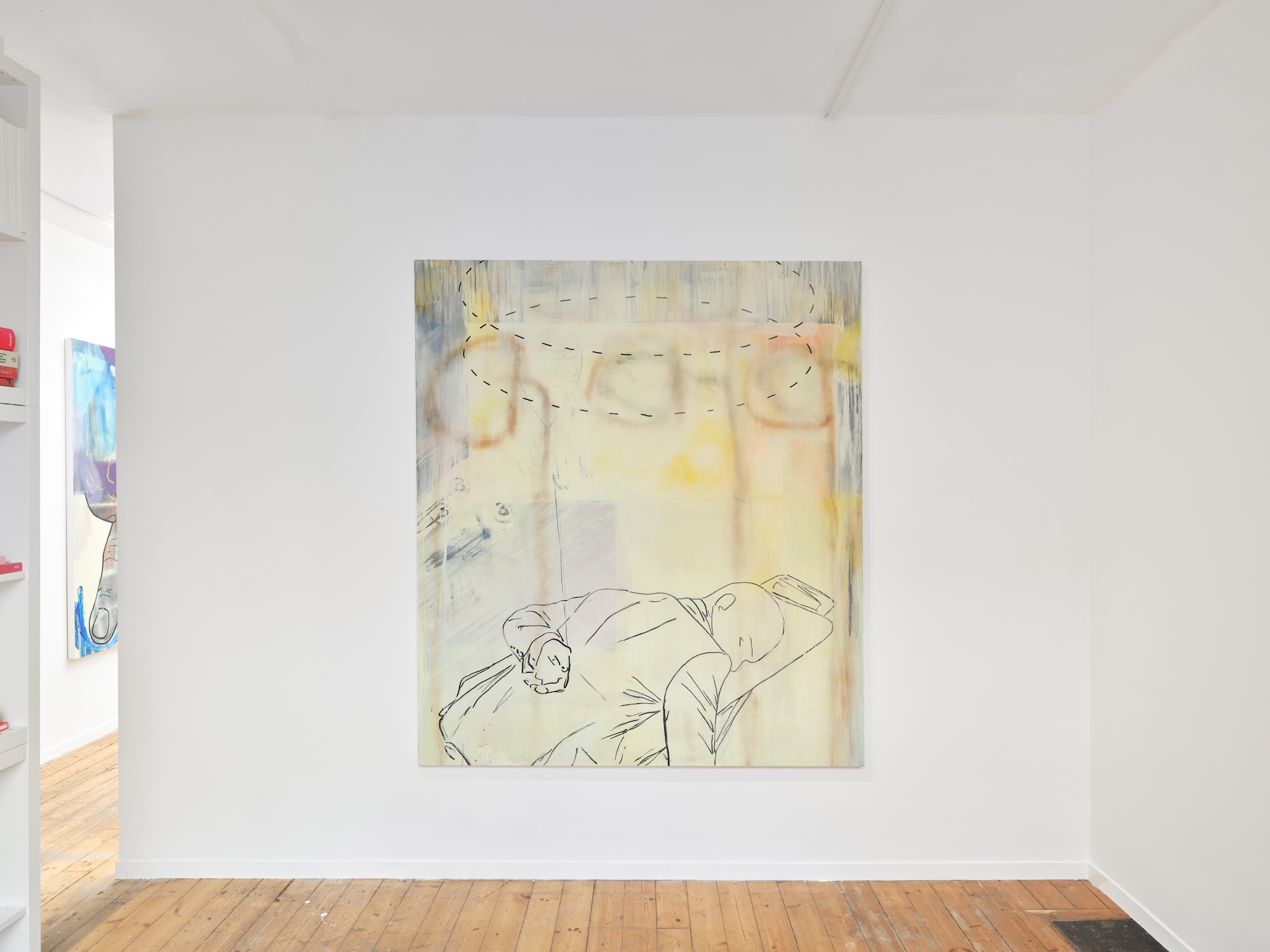
Filippo Antonello: Load Path, 17th September–
30th October 2026, Kearsey & Gold
About the artist
Filippo Antonello is a Swiss-Italian multidisciplinary artist whose practice moves between painting, photography, assemblage and installation. Working with image and object as unstable materials, Antonello creates works that explore memory, perception, loss and the tension between presence and absence. His compositions often feel deliberately unresolved, with images emerging, disappearing or shifting between abstraction and representation.
Born in Lugano, Switzerland, in 2002, Antonello studied History and Philosophy at the University of Amsterdam before completing an MA at Central Saint Martins in London. He now lives and works in London, where his practice has developed around experimentation with materials and the processes through which images are constructed, altered and erased.
Antonello is particularly known for working with unconventional surfaces including velvet, denim and corduroy, using materials such as bleach and ink to create chemical reactions within the fabric itself. Rather than simply applying an image to a surface, he allows destruction and transformation to become part of its production. Areas dissolve, fade and reappear, leaving works suspended between fragility and permanence.
His first solo exhibition, Aufheben, opened at Kearsey & Gold on Cork Street, London, in 2025. The exhibition explored the relationship between realism and abstraction, with paintings shifting between recognisable imagery and the physical properties of their materials. In 2026, Load Path at Kearsey & Gold brought together painting and sculpture at the scale of the human body, introducing diagrammatic marks, dotted lines and structural divisions into works concerned with how bodies and objects carry weight.
Across Antonello’s work, materials are active rather than neutral supports. Images are layered, displaced and partially destroyed, allowing meaning to remain in flux. The result is a developing practice in which painting becomes less about fixing an image than exploring what happens as an image breaks down, changes or begins to disappear.