MARUANI MERCIER has announced its representation of the Estate of Hermann Nitsch, building on a relationship with the Austrian artist’s work that has already included two major surveys of his practice.
Nitsch, who died in 2022, was a central figure in Viennese Actionism, the radical movement that emerged in Austria during the 1960s. His interdisciplinary practice moved across painting, performance, music and theatre, using intense physicality to confront established social and cultural structures.
At the centre of Nitsch’s practice was his lifelong Orgien Mysterien Theater (Orgies Mysteries Theatre), an ambitious attempt to create a total work of art bringing together painting, music, performance and ritual.
Drawing on the Wagnerian idea of the Gesamtkunstwerk, Nitsch sought to collapse conventional distinctions between artwork, performer and audience, creating immersive actions intended to engage the full range of human experience.
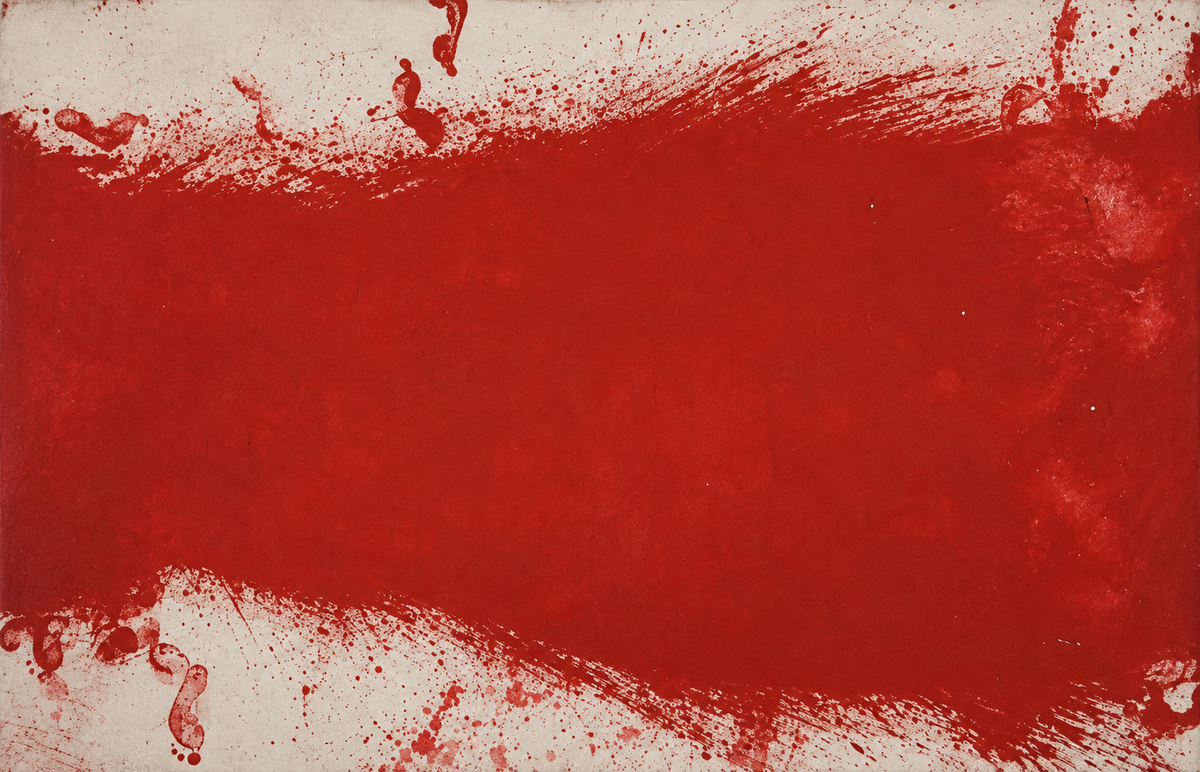
The performances — involving animal carcasses, blood, nudity and ritualistic actions — made Nitsch one of the most controversial figures of the post-war European avant-garde, while the paintings produced alongside and through his actions developed into a substantial body of work in their own right.
Founded in 1995, MARUANI MERCIER operates galleries in Brussels and Knokke and has developed its programme around established post-war and contemporary artists alongside emerging practices.
The representation of the Estate of Hermann Nitsch formalises a relationship that has developed over several years and follows two major gallery surveys devoted to his work.
About the artist
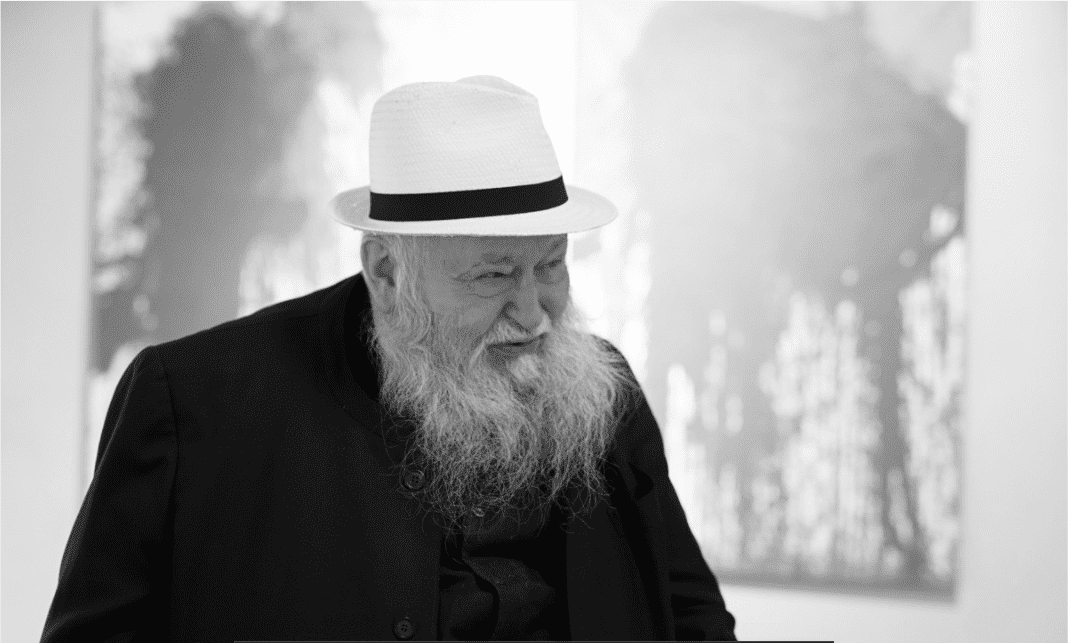
Nitsch’s radical approach to painting was inseparable from the physical act of its creation. His paintings were both the origin and result of his performances, carrying their intensity onto the canvas. Working with both oil and acrylic, he applied paint using unconventional tools as well as his hands, feet and entire body. Through these actions, Nitsch expressed an energetic, spiritual and deeply passionate vision that ultimately reflected a celebration of life and an exploration of the human soul.
Nitsch’s work has been the subject of major museum exhibitions and retrospectives throughout his career, including at the Stedelijk Van Abbemuseum, Eindhoven (1983); Städtische Galerie im Lenbachhaus, Munich (1988); Museum Moderner Kunst Stiftung Ludwig, Cologne (1992); Nationalgalerie Berlin/Martin-Gropius-Bau, Berlin (2006); Leopold Museum, Vienna (2011); Albertina Museum, Vienna (2019); and Musée de l’Orangerie, Paris (2023). His work is permanently represented at the Nitsch Museum in Mistelbach and Museo Hermann Nitsch in Naples. Nitsch is represented in major international public collections, including The Museum of Modern Art and the Solomon R. Guggenheim Museum, New York; The Metropolitan Museum of Art, New York; Tate, London; Centre Pompidou, Paris; and Pinakothek der Moderne, Munich.