Timur Si-Qin will open Pristine, Part I at Albion Jeune this October during Frieze Week, the first chapter of a new body of work developed through the artist’s ongoing engagement with the Peruvian Amazon.
The exhibition begins with a deliberately optimistic proposition: that the pristine still exists.
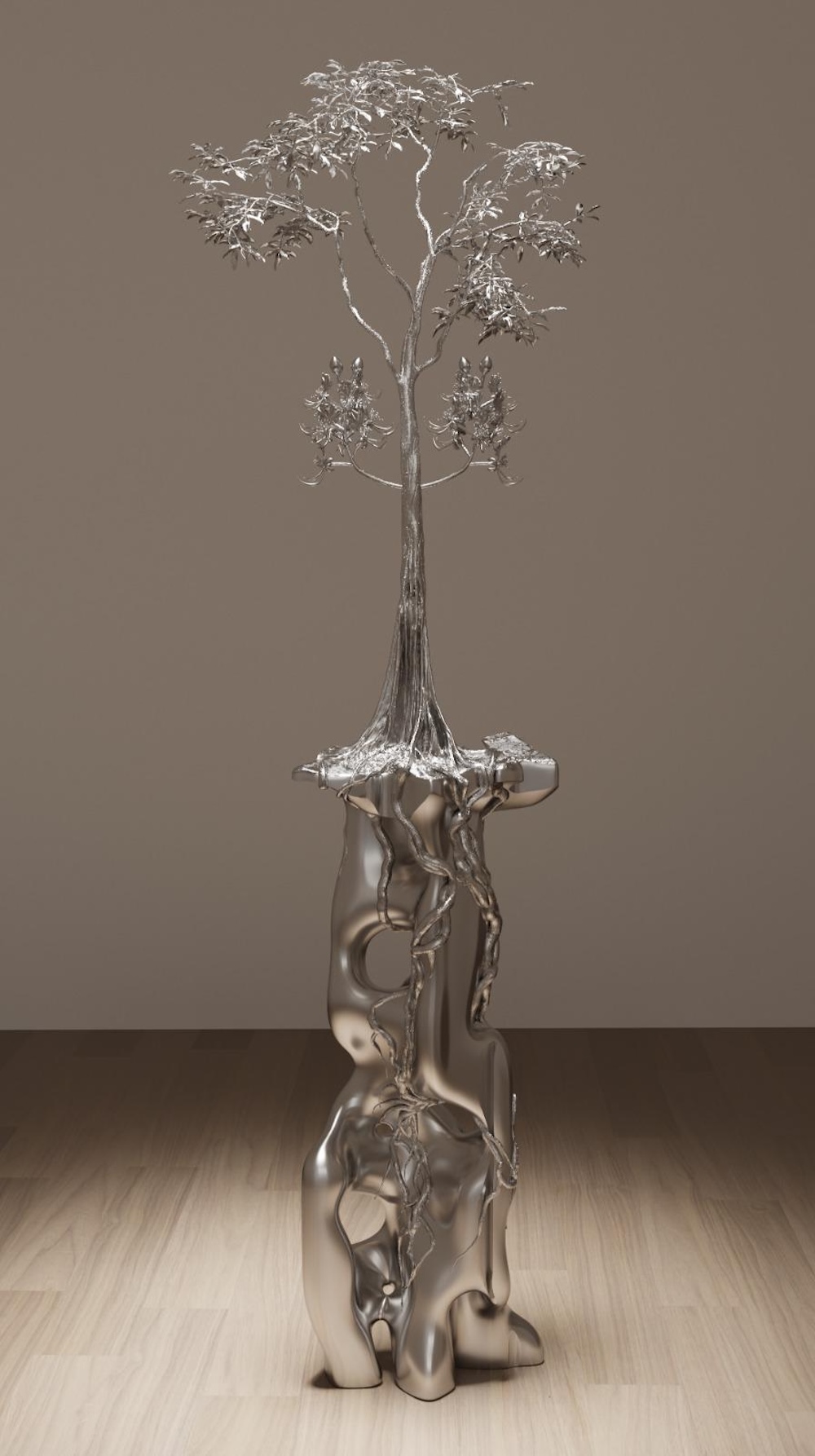
For Si-Qin, ecologically intact wilderness is not a fantasy or some lost Eden, but something that survives in the present — places where ancient relationships between species continue and where the complexity of the living world remains largely intact.
That idea takes physical form through new sculptures developed from close observation of particular plants in the Peruvian Amazon. Roots, trunks, leaves and other botanical forms are transformed into objects that carry traces of specific species and landscapes into the gallery.
There is something almost strange now about images of untouched forest. Their density and abundance can look too lush, too unfamiliar and too beautiful to seem entirely real. Pristine, Part I plays with that disconnect, asking what happens when environments we have come to imagine as disappearing become vivid, immediate and undeniable.
The exhibition continues Si-Qin’s long-running interest in developing a contemporary spirituality around nature. Rather than locating the sacred somewhere outside everyday life, his work finds it within living systems themselves — and in the recognition that human existence takes place inside a far larger ecological world.
Si-Qin’s practice has long moved between nature and technology, often using 3D-printed sculpture, light boxes, digital environments, text and virtual reality to question distinctions between organic and synthetic, natural and cultural, and human and non-human.
That thinking also feeds into New Peace, his ongoing project proposing a new secular faith in response to climate change, biodiversity loss and ecological instability. Across individual works, branding, imagery and ideas, Si-Qin treats spirituality almost as a kind of cultural technology — something capable of reshaping how we understand our relationship with the non-human world.
With Pristine, Part I, however, the proposition feels unusually simple.
Paradise is not somewhere else. Parts of it are still here.
The question is what we choose to do with what remains.
Timur Si-Qin: Pristine, Part I, 12th October–14th November 2026, Albion Jeune, London
About the artist
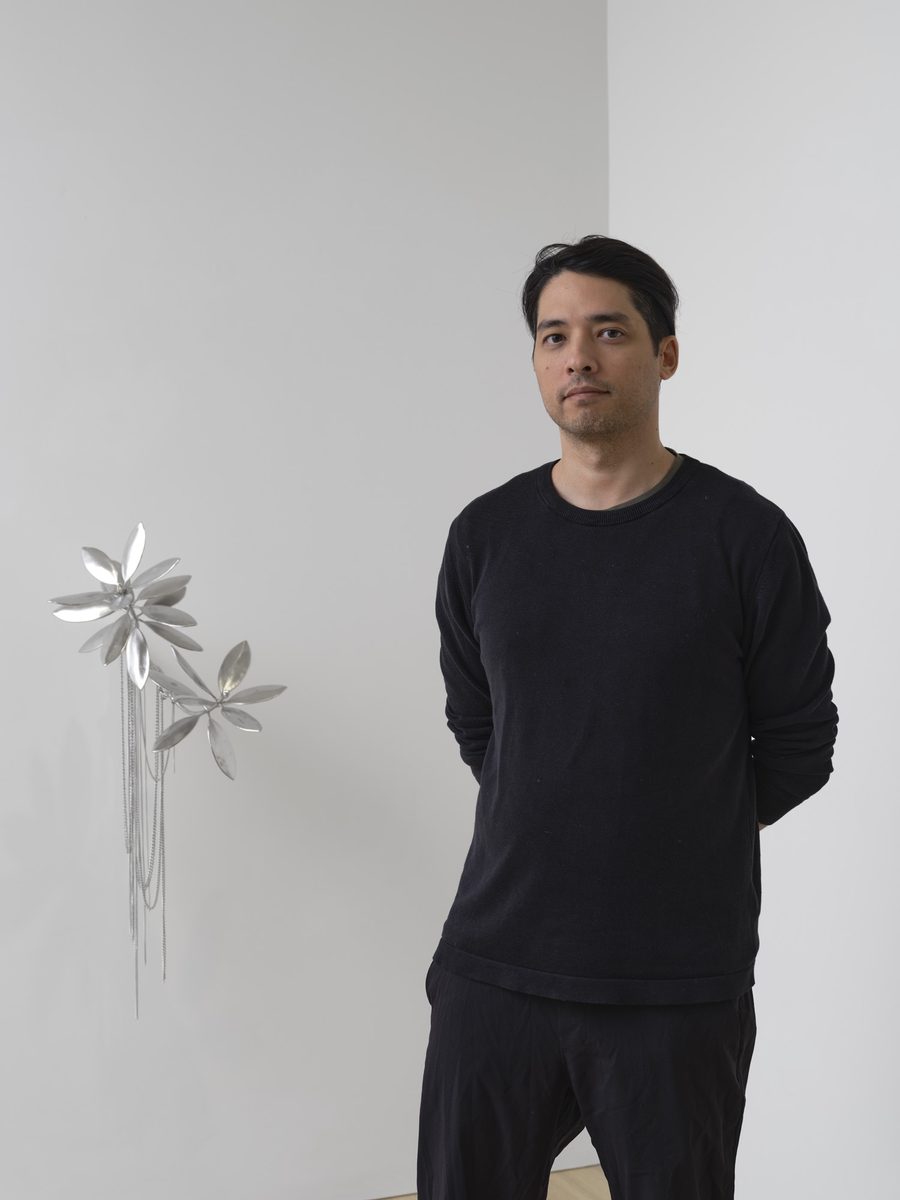
Timur Si-Qin’s (b. 1984, Berlin) interests in the evolution of culture, the dynamics of cognition, and contemporary philosophy, weave together to create a new kind of environmental art. Taking form through diverse media, installations of 3D printed sculptures, light-boxes, websites, texts, and virtual reality, Si-Qin’s work often challenges common notions of the organic versus the synthetic, the natural versus the cultural, the human versus non-human, and other dualisms at the heart of western consciousness. Drawing from disparate disciplines like the anthropology of religion, marketing psychology, and new materialist philosophy, Si-Qin regards spiritualities as cultural software, capable of deep behavioral and political intervention.
Recent solo exhibitions have been held at: Artspace, Syndey (2025); Magician Space, Beijing (2024); Société, Berlin (2023); Kunsthalle Wintherthur, Wintherthur (2023); von ammon co., Washington D.C. (2020); Spazio Maiocchi, Milan (2018); and Art Basel Hong Kong (2018), amongst others. Group exhibitions include Frieze Sculpture, London (2025); Société and Hauser & Wirth, Berlin (2025); Nationalgalerie der Gegenwart, Berlin (2023); Kunsthalle Winterthur, Winterthur (2023); Guandong Museum of Art, Guangzhou (2023); Museum Frieder Burda, Baden Baden (2022); The High Line, New York (2018), amongst others. In 2022, Si-Qin was commissioned by Meta to produce Sacred Footprint for the James A Farley Building, New York. Timur Si-Qin has also partnered with Albion Jeune and Art into Acres to support the permanent conservation of critical glaciers and high montane ecosystems in Peru, as part of the artist’s exhibition at Albion Jeune Trust the River.
Si-Qin’s long term meta-project is the proposal of a new secular faith in the face of climate change, global pandemics, and biodiversity collapse, called New Peace. Through New Peace individual works aggregate into a hyper-distributed, branded ecosystem of signifiers. Drawing from disparate disciplines like the anthropology of religion, marketing psychology, and new materialist philosophy, Si-Qin regards spiritualities as cultural software capable of deep behavioural and political intervention. New Peace is thus a new protocol for the necessary renegotiation of our conceptual and spiritual relationship with the non-human. New Peace is an artwork, a church, a brand, and a memetic machine.
Si-Qin looks forward to the publication of his first monograph in Spring 2027 alongside Albion Jeune Publishing, and
forthcoming institutional projects.