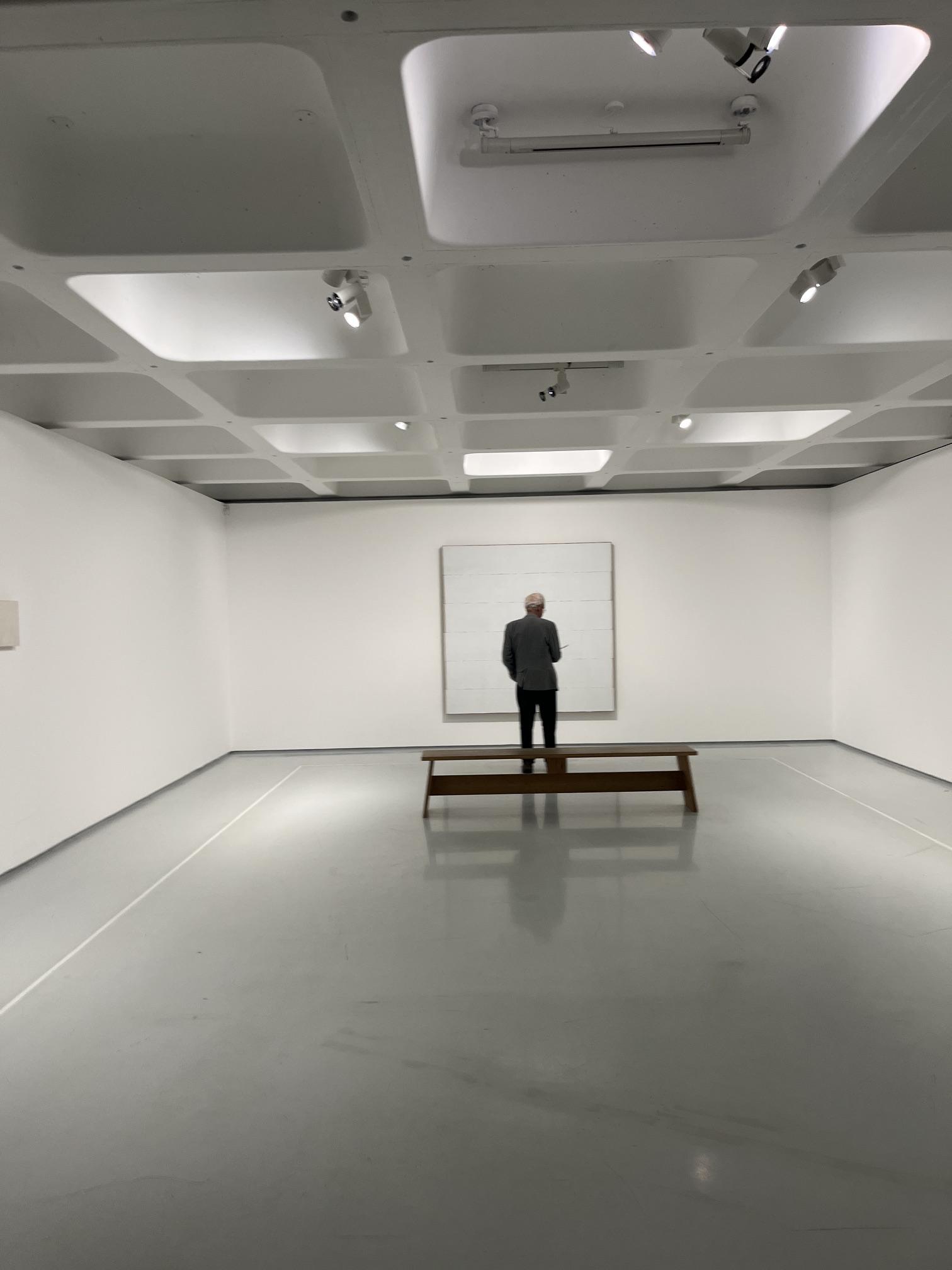
There is a point during Frieze Week when you stop needing more art and start needing somewhere to actually look at it.
Robert Ryman: The Real Thing at the Barbican might be the answer.
For me, it is easily one of the best exhibitions to see during Frieze Week — not because it shouts louder than everything else, but because it does the opposite. After the fairs, openings, dinners, crowds and endless visual noise, the Barbican becomes a place of calm. Its concrete architecture, generous galleries and sense of space feel almost purpose-built for Ryman’s paintings.
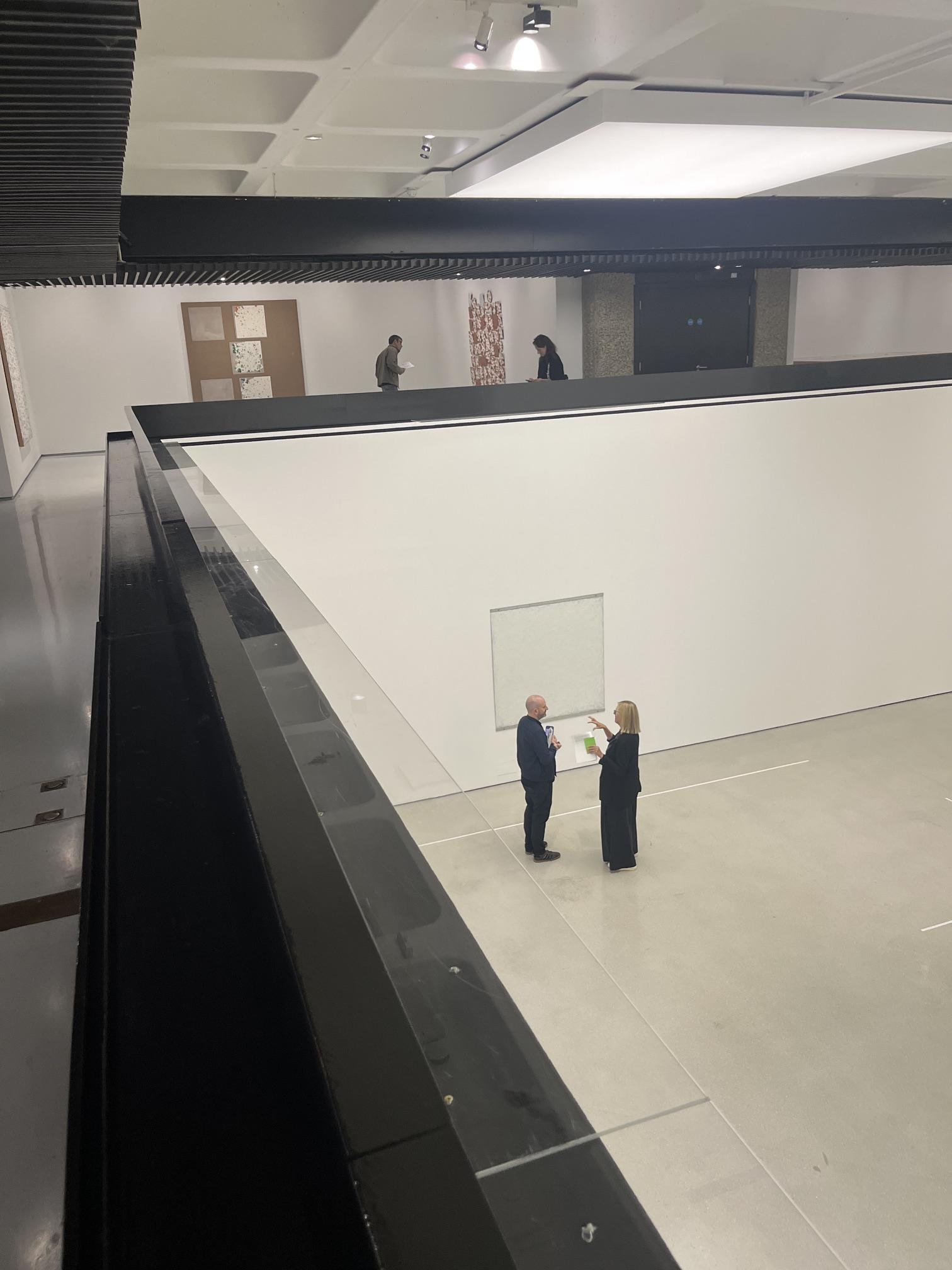
And these are paintings that need to be seen slowly.
The exhibition is the first major UK presentation of Ryman’s work in more than 30 years and brings together over 60 works spanning almost six decades, from the mid-1950s through to the 2000s.
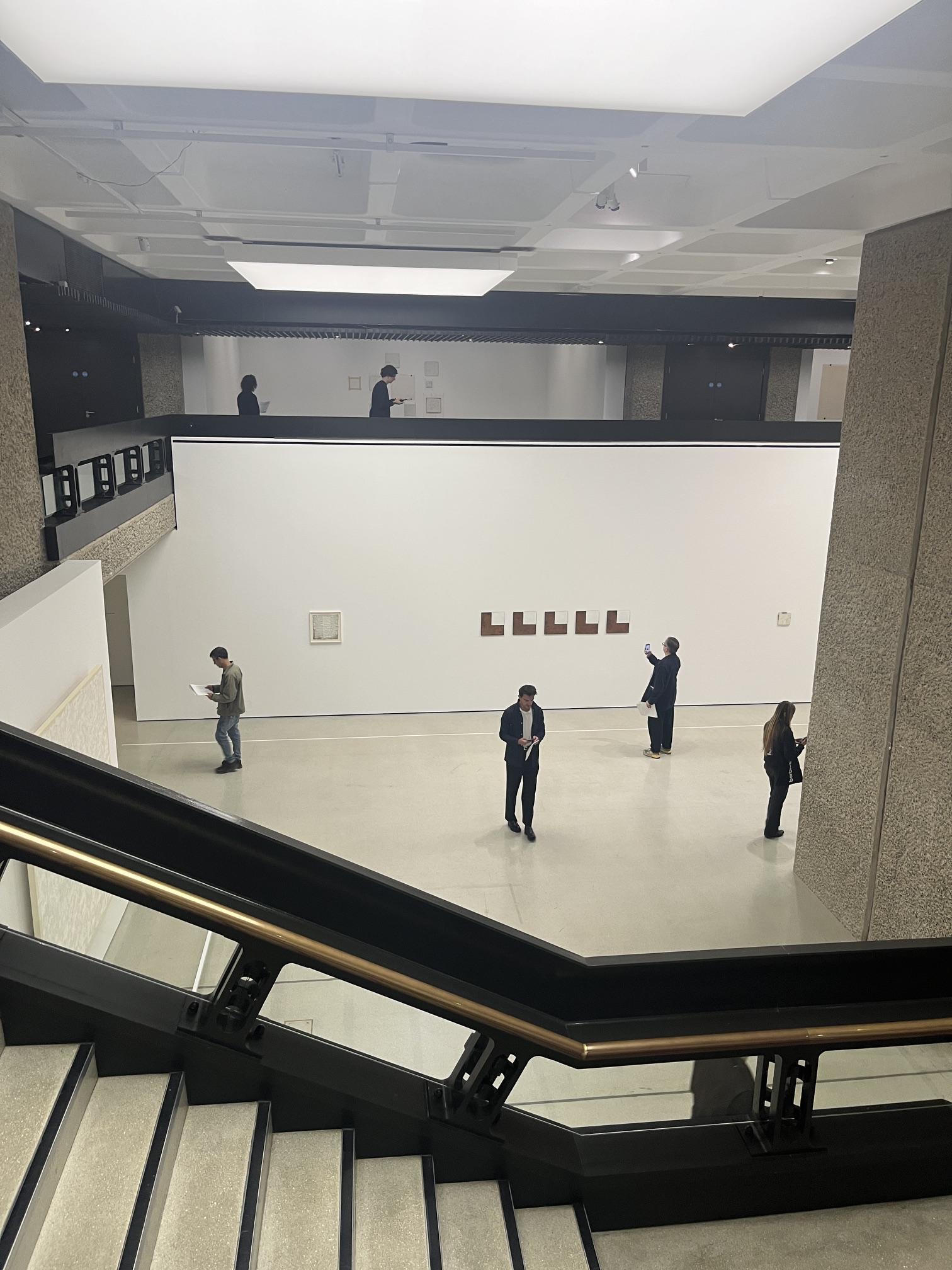
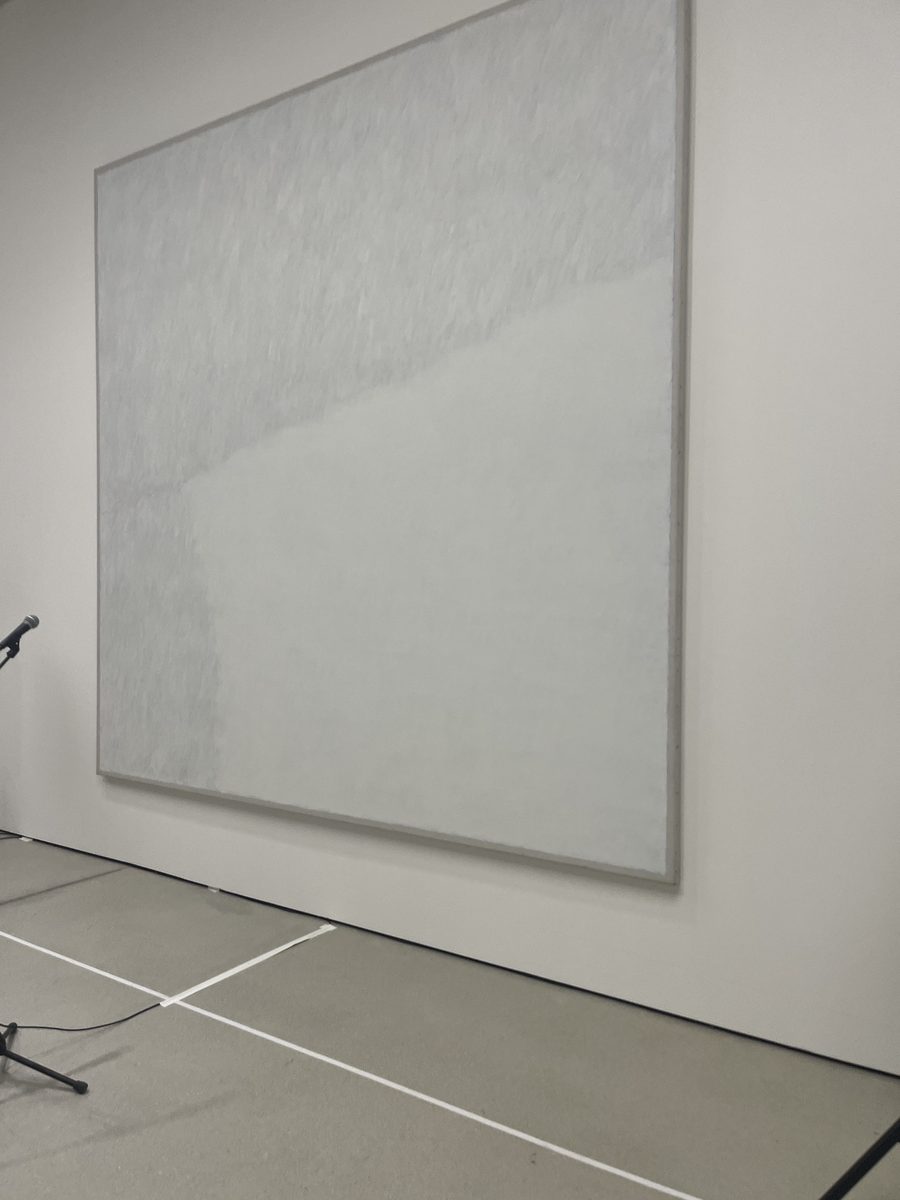
Ryman is often reduced to the idea of the “white painting”, but that description misses almost everything interesting about the work. White was never really the subject. It was a way of revealing everything else: the texture of paint, the edge of a canvas, the character of a surface, the way a work is fixed to the wall and the way light changes what we see.
Across the exhibition, oil, acrylic, enamel and epoxy appear on linen, cotton, steel, aluminium, fibreglass, Plexiglas, tracing paper and even coffee filter paper.
Ryman approached each painting almost like an experiment: what happens if paint behaves like this, on this surface, at this scale, attached to the wall in this particular way?
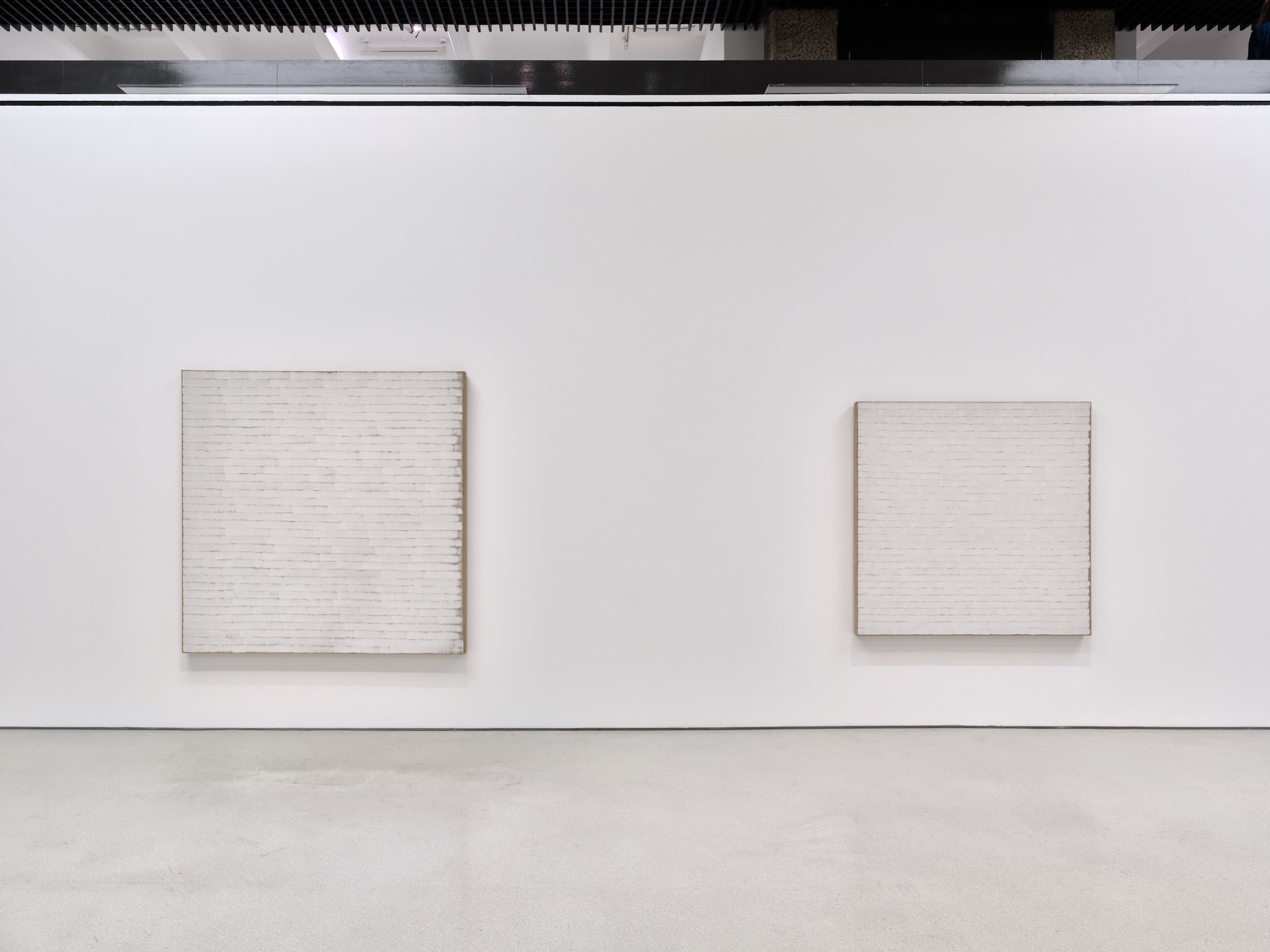
That sense of testing and looking runs throughout The Real Thing.
Before becoming a painter, Ryman moved to New York intending to become a jazz saxophonist, and music remained an important way for him to think about art. He believed a painting, like music, was something that had to be experienced directly rather than decoded or explained.
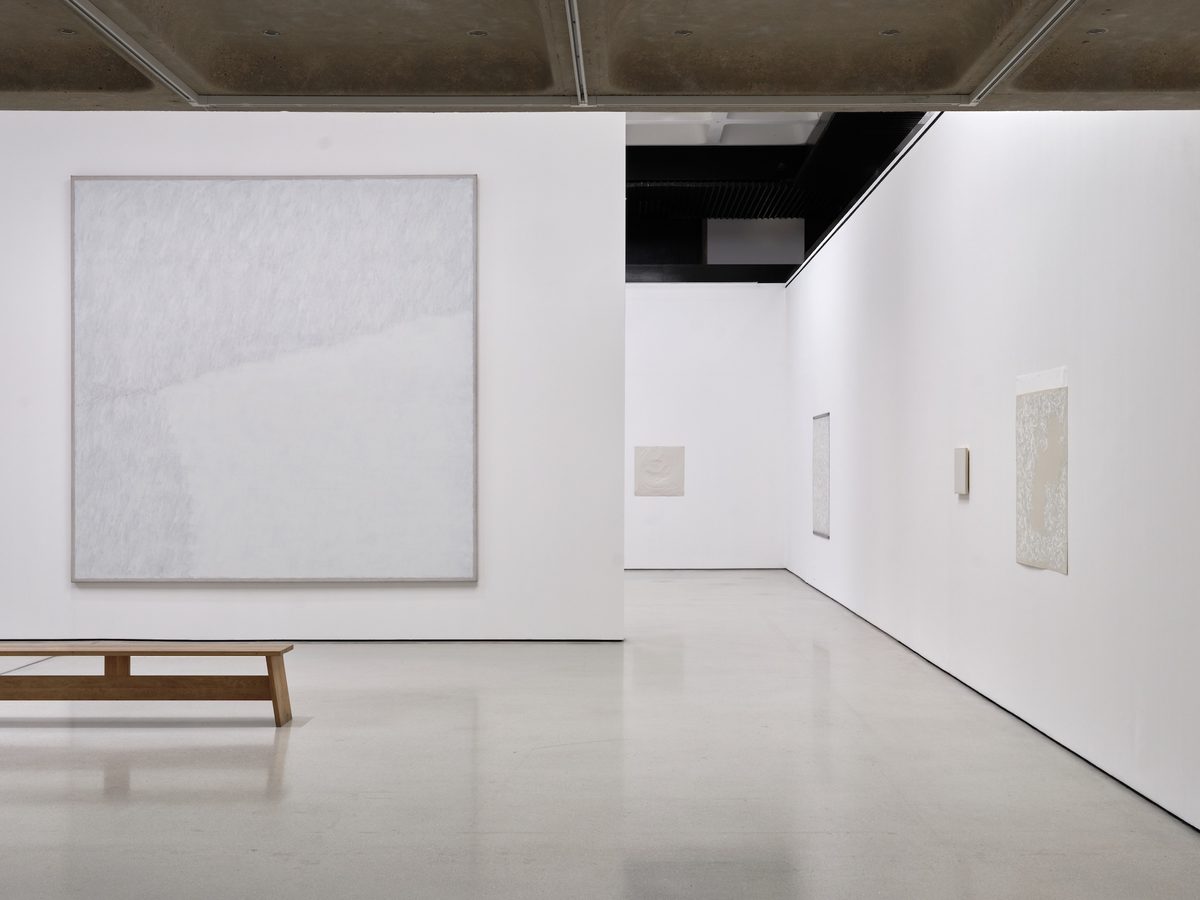
That idea is given its clearest expression in the exhibition’s central section, Experiencing Ryman, where works from different periods are hung together without wall text or interpretation. You simply enter the space and look.
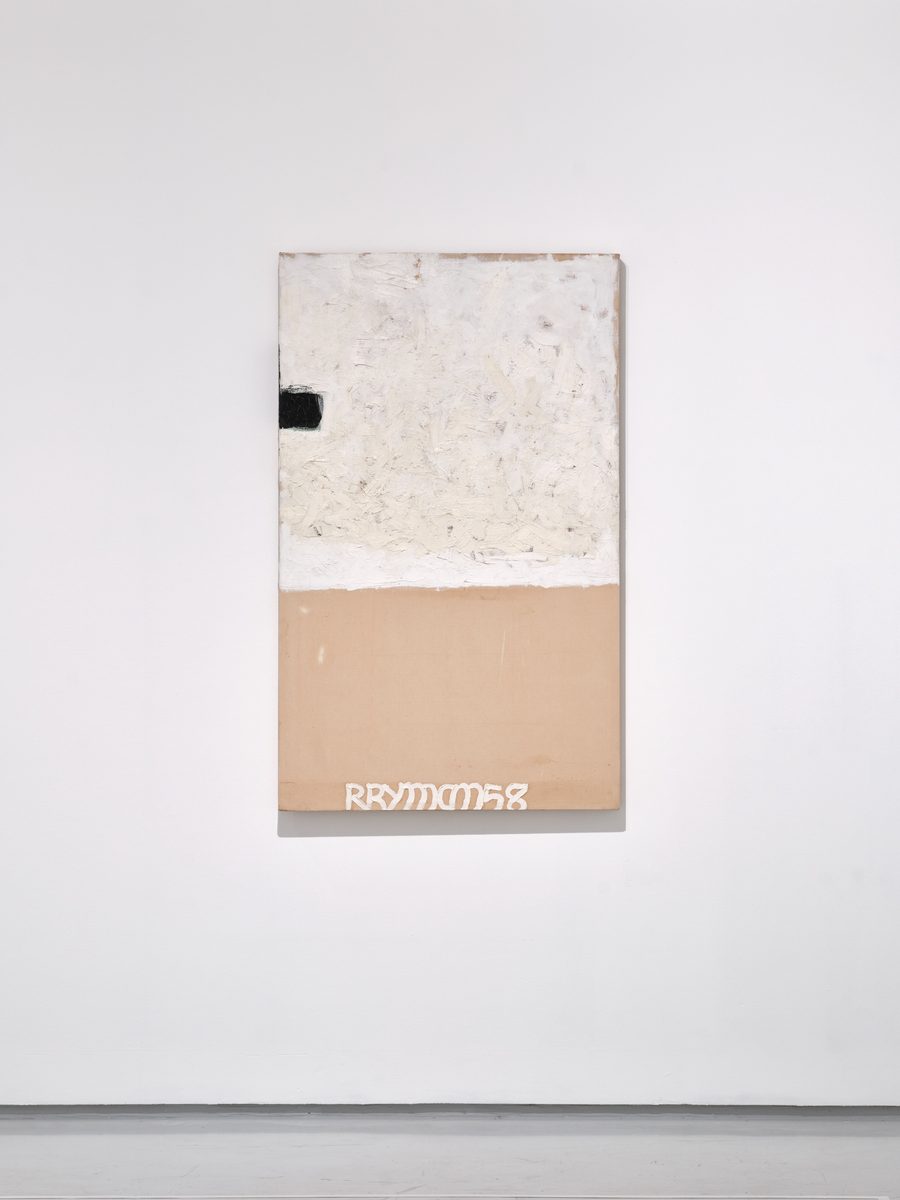
It sounds almost radical during Frieze Week.
The differences begin to emerge slowly: scale, gesture, surface, texture, translucency, the relationship between painting and wall. One of the centrepieces is Surface Veil II, around 3.65 metres square, painted unstretched on the floor of Ryman’s studio and shown in London for the first time since 1993.
Elsewhere, Standard (1967), a sequence of 12 painted steel panels, occupies its own room, while works from the Surface Veil series bring waxed paper, fibreglass, canvas and vinyl together. Even the screws, staples, tape and custom-made fasteners used to attach paintings to walls become part of the work.
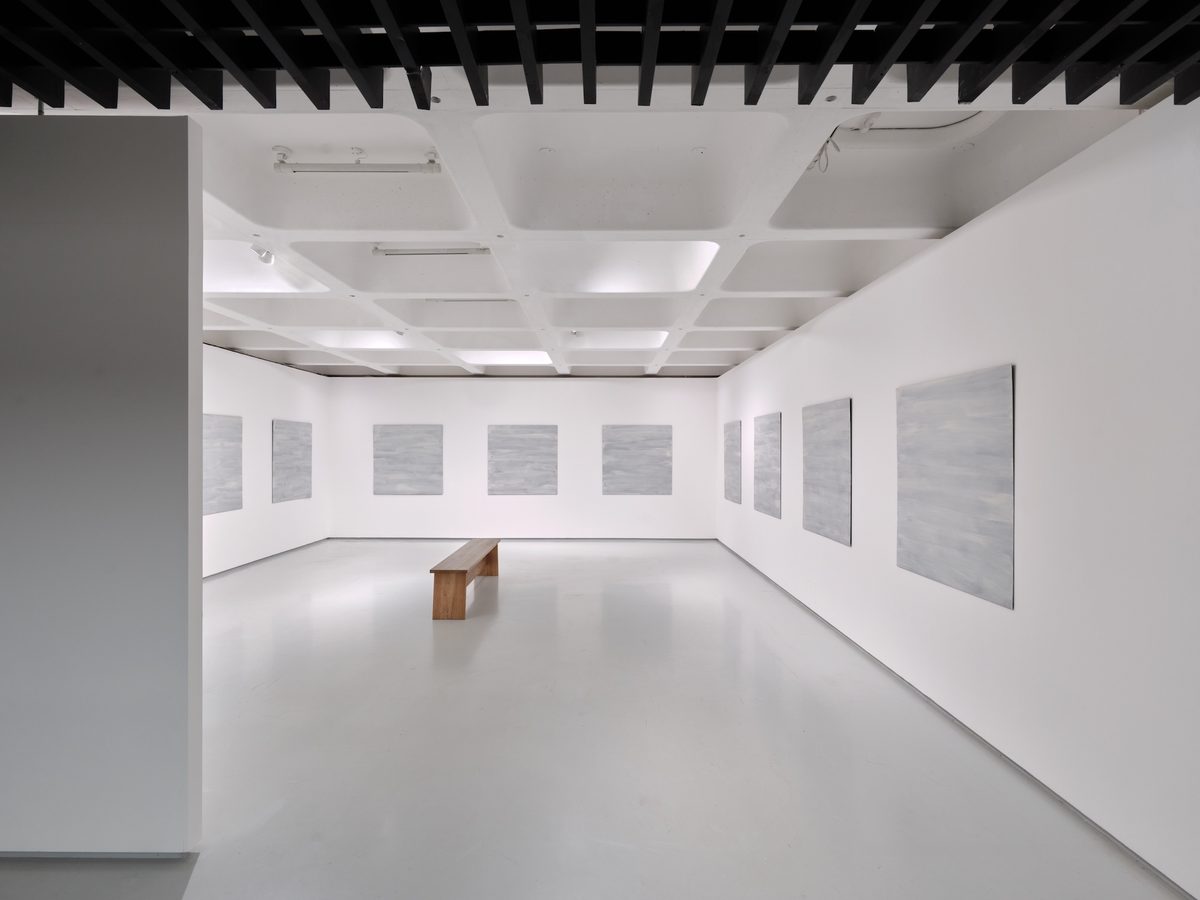
And then there are the moments that complicate the idea of Ryman as simply “the painter of white”. An early orange painting from 1955 sits within a practice that would eventually make white a tool for revealing subtle differences rather than erasing them.
The Barbican matters enormously here.
Ryman wanted paintings to exist as physical objects in real space, and the building’s Brutalist architecture gives them something to push against. Concrete, white walls, open sightlines and shifting light make the relationship between painting and architecture unusually visible.
It also gives the exhibition something increasingly rare during Frieze Week: room to breathe.
In a week built around seeing as much as possible, The Real Thing asks you to do something much simpler — stand still and look.
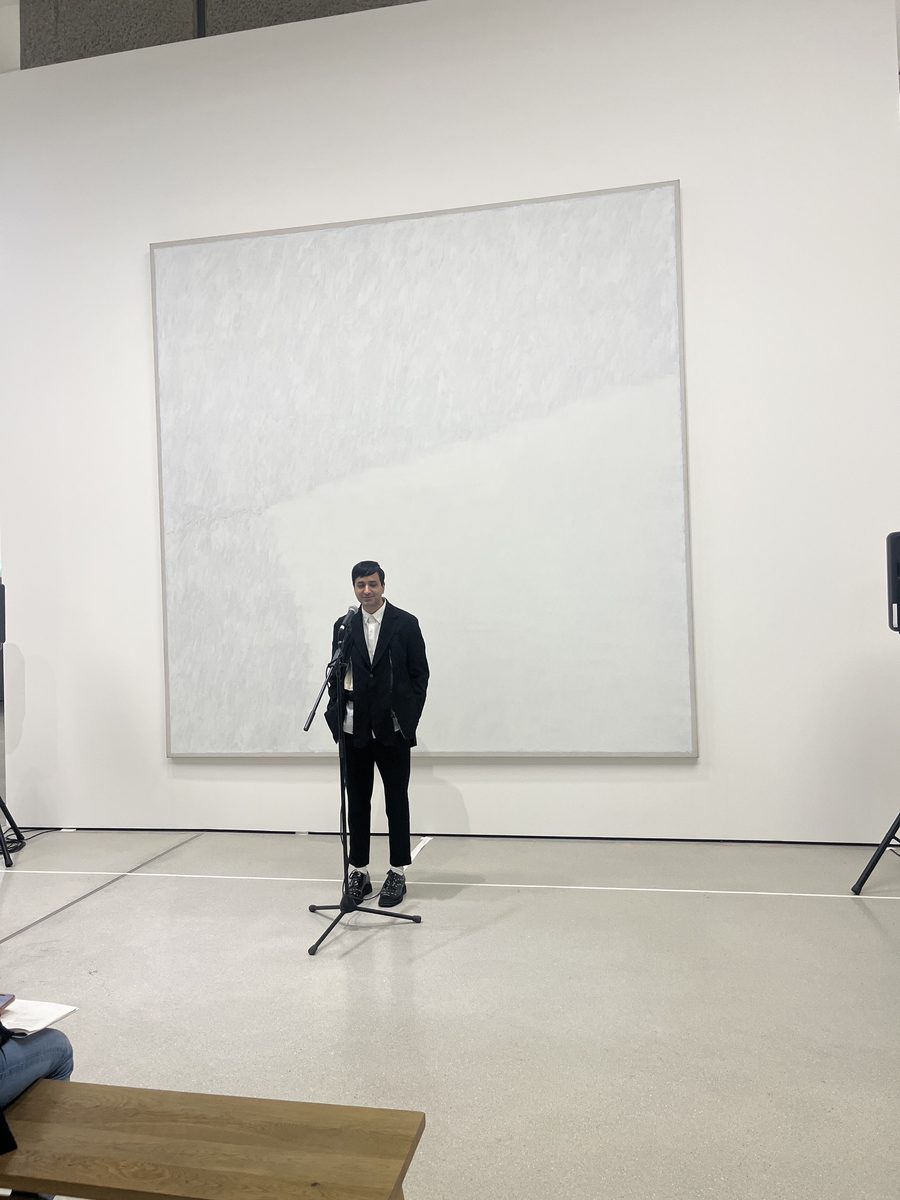
Ryman once said:
“You cannot understand painting by explaining something. You can only understand painting by experience.”
At the Barbican, that feels less like a statement and more like an instruction.
Robert Ryman: The Real Thing, 8th October 2026–28th February 2027, Barbican Art Gallery
Exhibition catalogue: The exhibition is accompanied by a new, 432-page publication designed by Studio Mathias Clottu and published by Pre-Echo Press, which documents a range of Ryman’s paintings. Edited by Wells Fray-Smith and Matt Connors, the book includes new scholarship from Darby English, Erica Cooke, Peter Osborne as well as contributions from influential writers,
artists and musicians like Caleb Azumah Nelson, Adam Caruso, Roni Horn, Richard Tuttle and Howardena Pindell. The book features never-before-seen archival material as well as a fully illustrated chronology by Amber Li, and pays special attention to Ryman’s studio and previous installations of his work. The book also includes a transcript of Ryman’s lecture on painting given at the Dannheisser Foundation, 1991 and his written text for Series (White), 2004.
Exhibition public programme To accompany the exhibition, a public programme runs from October 2026 to February 2027.
It includes a symposium, organised in collaboration with the Research Forum at the Courtauld Institute of Art, on 20 November; curatorial tours; and live jazz performances ‘Ryman in Rhythm’, co-produced with Barbican Associate Producer Serious and featuring alumni from Serious’ Take Five talent development programme. INFO: HERE