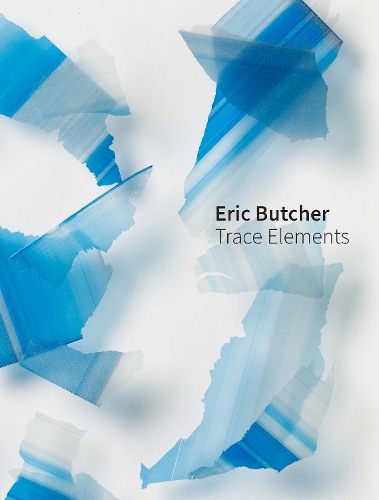
by Eric Butcher with contributions from Jonathan Watkins and David Batchelor. Unicorn Publishing, hardcover, 160 pages, £29
I wrote an essay for the 2020 monograph on Eric Butcher’s work, ‘Time Trial’. His work up to that point was a patient exploration of formal and modernist concerns, with a particular attentiveness to the conditions of display and reception – and deliberately distanced from current affairs. I described him as having been in the studio ‘for twenty years: isolated without distraction in a rural setting in Oxfordshire. Every day the same routine, the same basic materials and process. It sounds monastic, repetitive, dull, unchanging. Yet, as when looking back on life, you can be surprised by the stealthy occurrence of change’ – and his self-imposed rules hatched an incrementally progressing, yet surprisingly diverse, practice.
2020, however, saw Butcher make a more radical and dramatic move in the context of the Covid lockdown. He knew several doctors who were ‘literally saving people’s lives for a living’. Whereas, in his words, ‘I would go to the studio and push funny coloured bits of mud around a two-dimensional surface’. So it was that ‘confronted by the devastating impact of human behaviour on the planet, my former studio practice began to seem deeply problematic and self-indulgent. What was it that my work consisted of but taking precious resources and turning them into useless objects?’ That led Butcher to ‘subject my entire practice to a kind of forensic analysis. I physically and intellectually deconstructed what I had been making, to try and work out if there was anything of value. Was there anything here that I could legitimately, morally, take forward?’
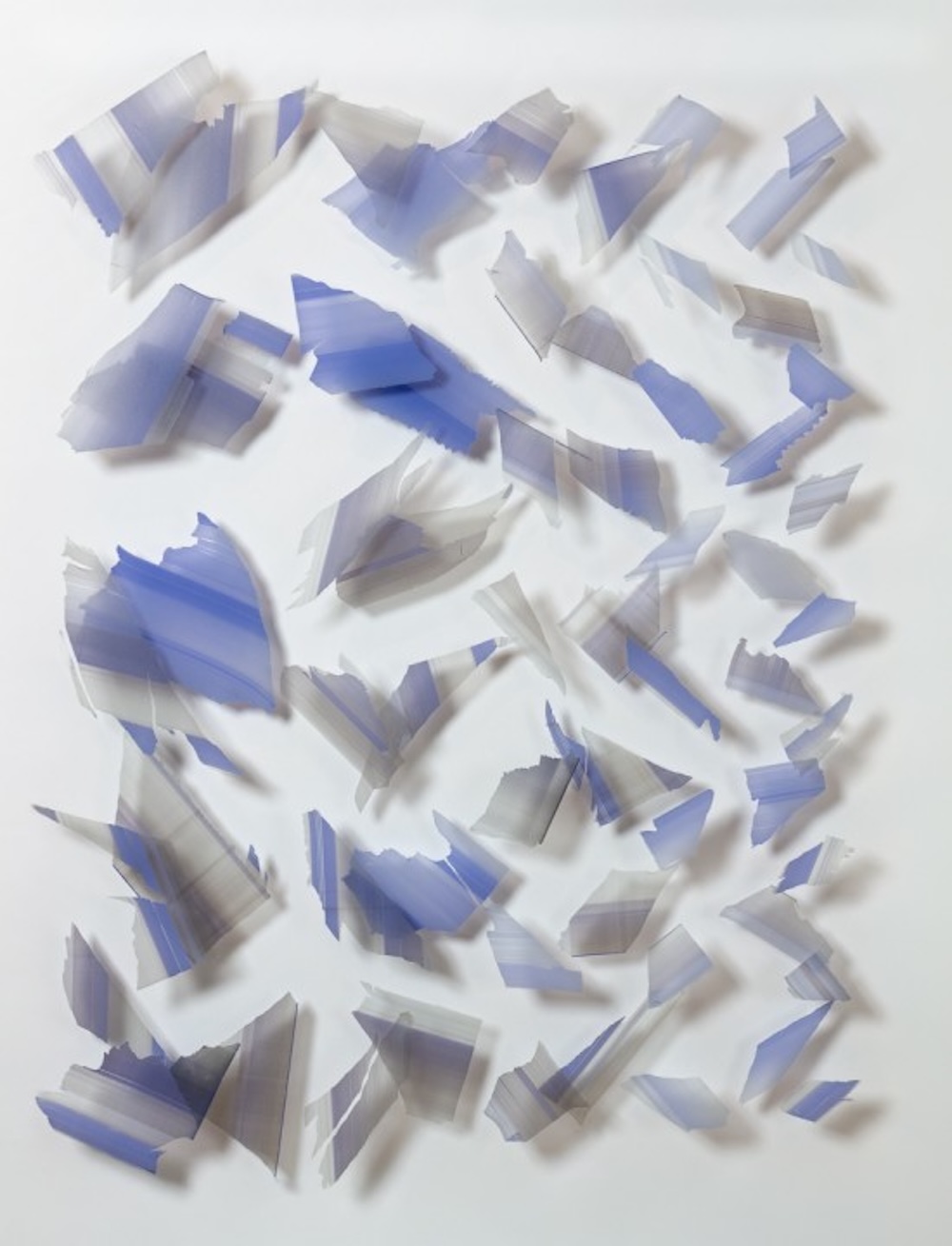
His answer was to use what was already in his studio, but bring in nothing new. He has three finite sources: a historic stock of art materials; old works he can deconstruct; and ostensibly non-art materials, such as packaging, which can be redeployed. Butcher will, for example, peel the skins of paint from their supports and categorise them for display according a basic taxonomy. He will draw out his current resources for as long as possible, being as frugal as he can, and once he has run out of materials will simply stop making art. The monastic approach remains, but the environmentalist parallels, and the consequent interaction with current affairs, are new.
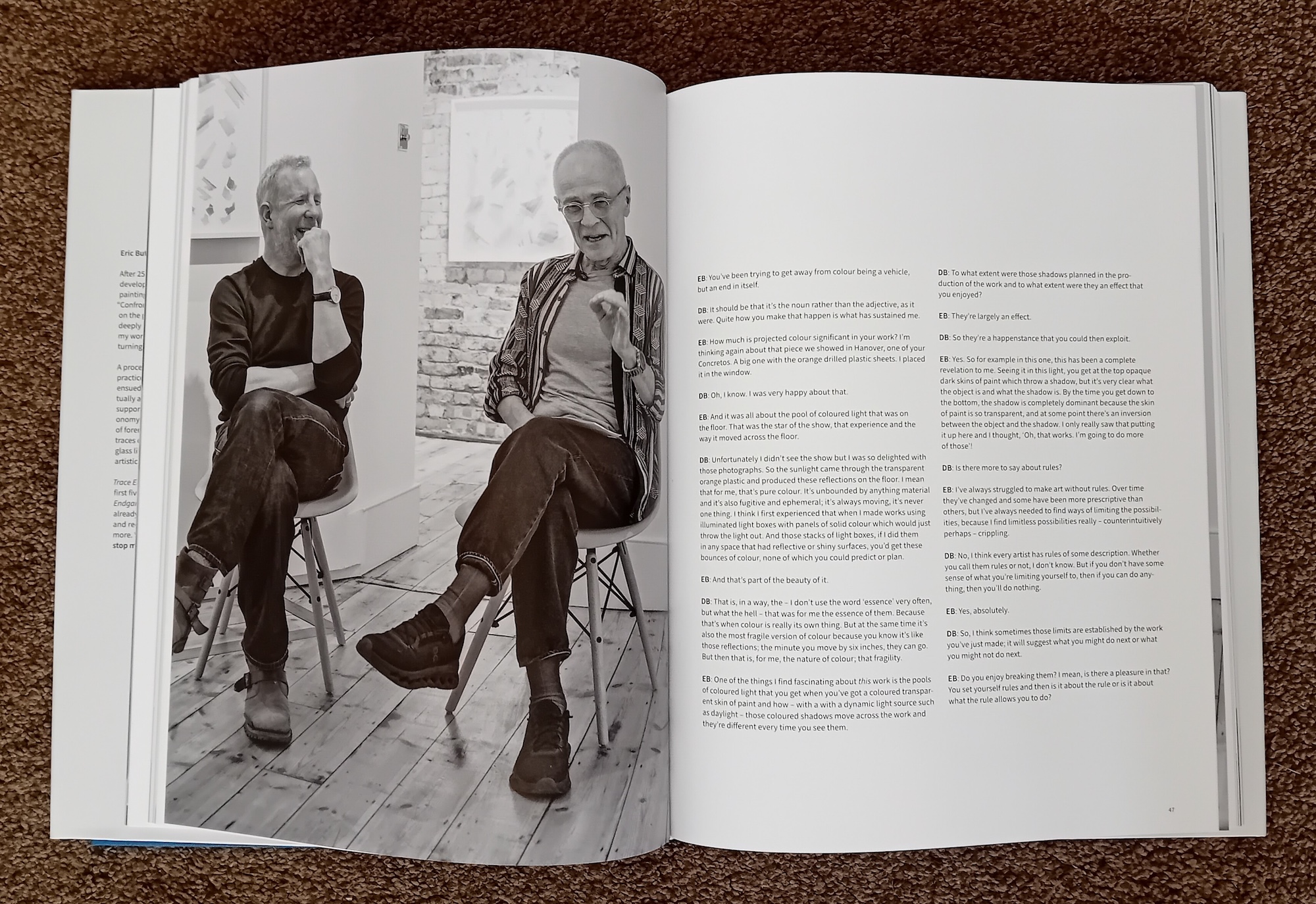
The results of Butcher’s shift were shown in his outstanding 2025 exhibition ‘Shadow Archive’ (you can read my review of that here). Now they are richly presented in a new book with an essay by the former director of the Ikon Gallery, Jonathan Watkins; an interview with the empathetic artist David Batchelor; and Peter Abrahams’ superb photographs of the work. Those images demonstrate that considerable beauty emerges from what Butcher terms his ‘Endgame’. Paradoxically, perhaps, he tells Batchelor that his vow of self-restriction has ‘actually reinvigorated my experience in the studio’. ‘Trace Elements’ allows us to share in his striking and timely conceptual project and its entrancing outcomes.
Paul Carey-Kent selects a ‘Gallery of the Month’, a ‘Show of the Month’, a ‘Work of the Month’ and a ‘Book of the Month’ for his weekly column in FAD. A collection of previous gallery columns, ‘Paul’s Galleries To Go’, is available from FAD Bazaar.