On Bin Fang’s xü, aha!
When I entered Bin Fang’s xü, aha!, the gallery didn’t look quite ready for visitors. Grey plastic still covered parts of the floor. A projector sat on a folding step stool. Cables threaded through a metal frame before trailing across the room. Ladders, bricks, wooden boards, exposed bulbs and temporary supports had all been left in place.
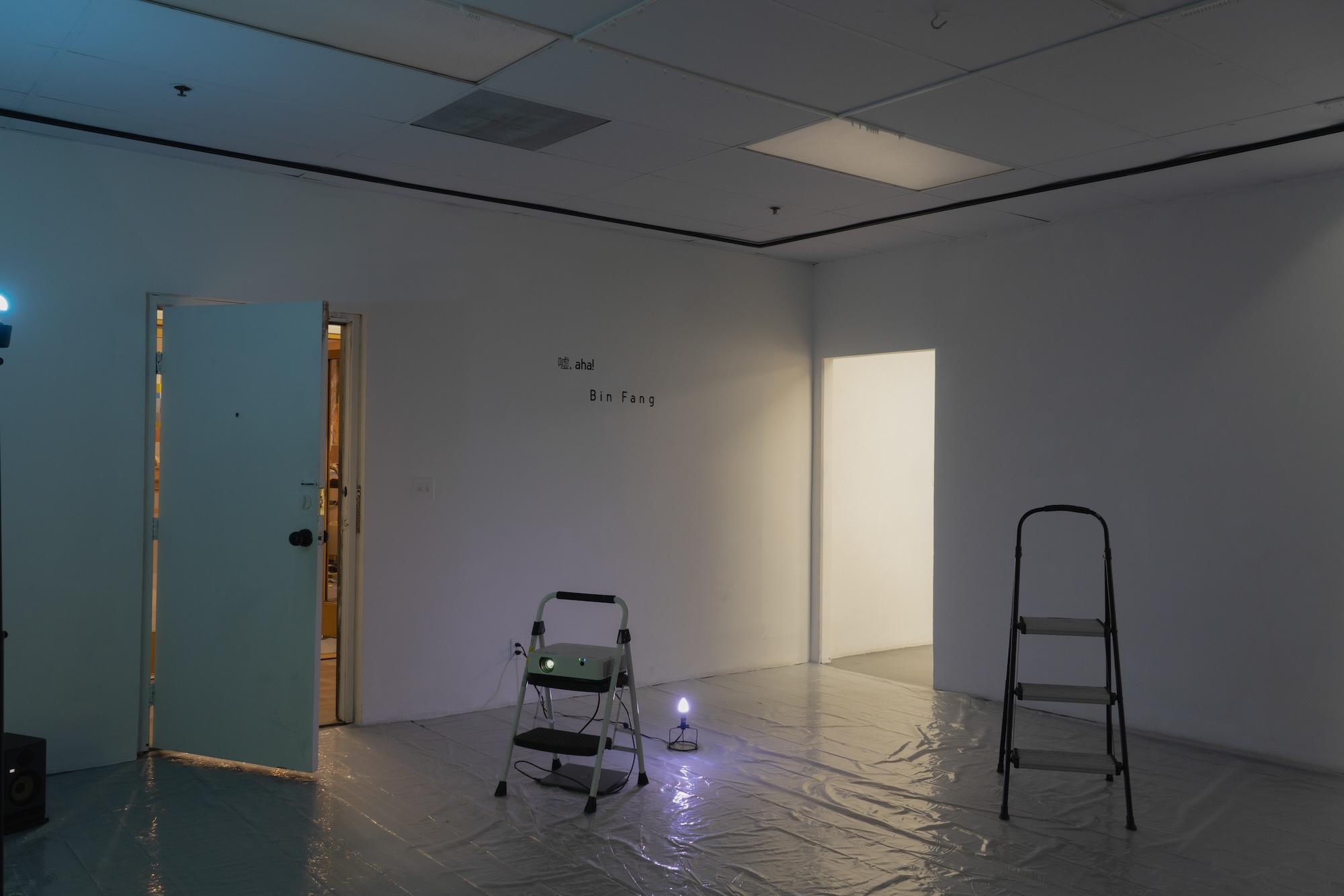
At first, it felt as though I’d arrived before the installation was finished. The longer I stayed, the less convincing that distinction became. The cables subtly altered the way I moved through the space. A folded, semi-transparent screen interrupted the projected image. Hanging lights and ladders divided the gallery into shifting lines of sight. What initially looked unfinished gradually revealed itself as the exhibition’s central idea: keeping labour, weight and adjustment visible rather than hiding them behind a polished finish.
Presented at 4C Gallery in Los Angeles and curated by Decheng Cui, xü, aha! brings together moving image, drawing, sound, light and installation. Nothing quite settles. Sound drifts towards an image without explaining it. Coloured light falls unevenly across plastic, fabric and walls. Everyday objects seem to hold memories, but never quite reveal them. The exhibition hangs together precisely because it resists easy resolution.
That resistance feels especially relevant today. We’re used to images arriving fully formed—sharpened, captioned, searchable and ready to circulate. Artificial intelligence has only accelerated that expectation, filling in missing information, correcting blur and transforming fragments into complete pictures. Images increasingly gain value through how quickly they can be understood and shared.
Fang moves in the opposite direction.
His moving images turn inwards. In a tiled bathroom, a hand pushes and pulls at a damaged door, leaving its cracks and misalignments unresolved. A bare foot briefly enters the frame. An arm passes close to the lens, throwing the image out of focus. The body is always close, but never fully revealed. It emerges through touch, interruption and duration rather than through a stable portrait.
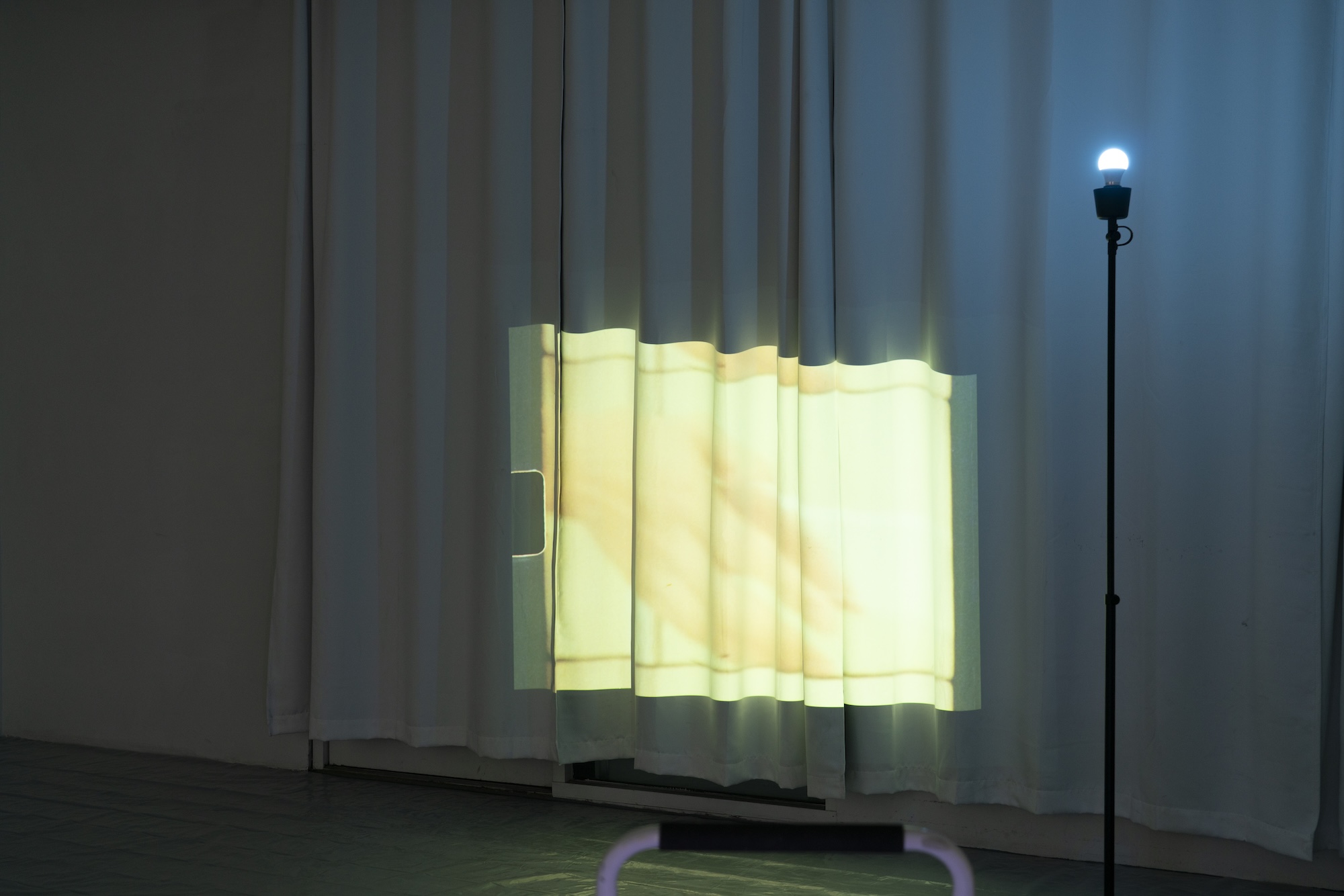
The grain and instability of these images do not simply express nostalgia for analogue film, nor do they suggest that imperfection is somehow more truthful. What matters is the limit they place on access. The camera comes close to a body without claiming to fully know it. The folded screen both receives the projection and conceals part of it, allowing the image to remain visible and withheld at the same time.
In a visual culture increasingly built around extracting faces, gestures, preferences, locations and personal histories, that refusal of complete access carries a quiet political charge. Not everything visible needs to become identifiable. An intimate gesture doesn’t have to become data. Fang’s images retain their emotional weight without ever giving us the complete story.
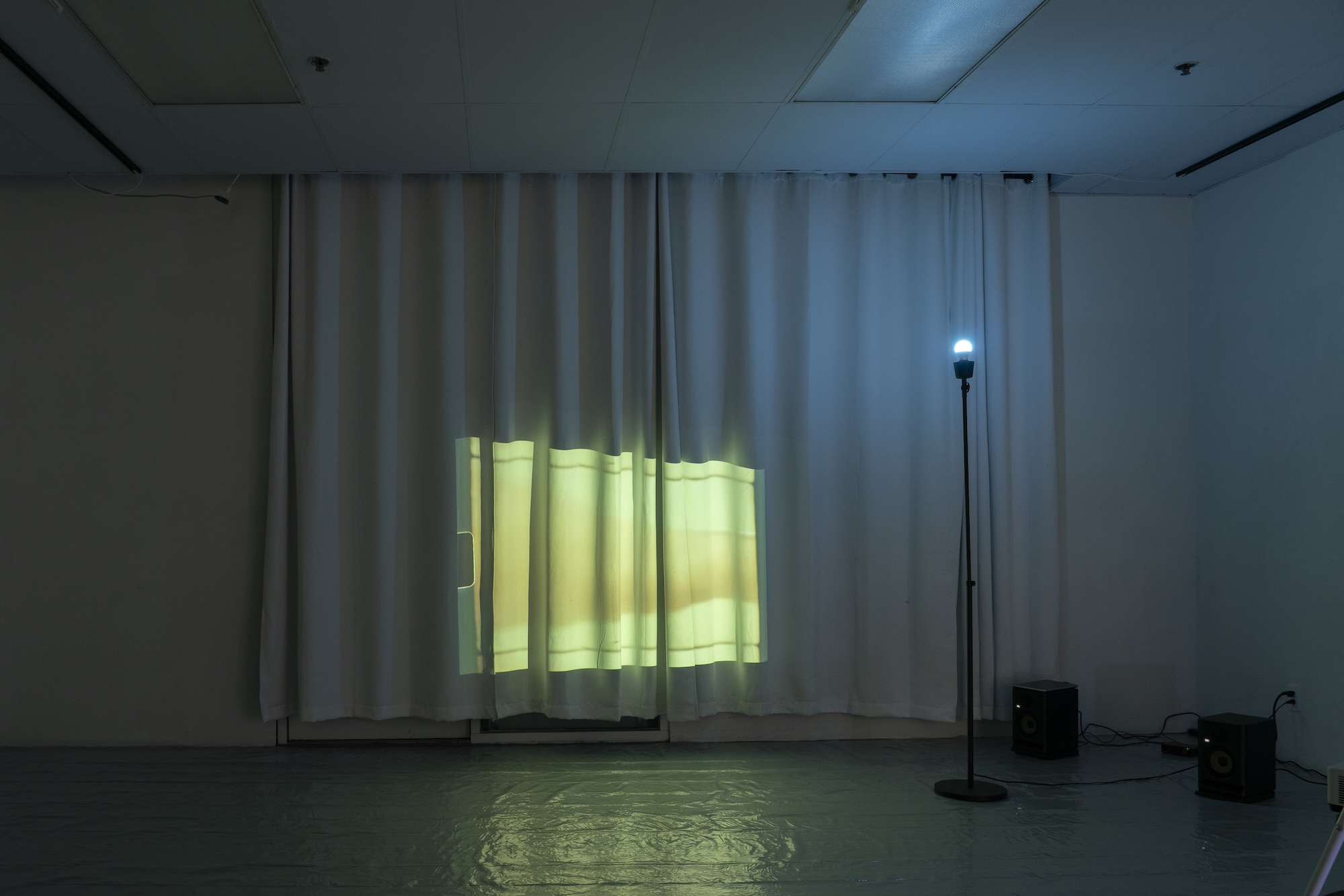
The sound work extends this uncertainty into the surrounding space. Footsteps, running water, rustling fabric, fragments of music and distant street noise seem to drift in from neighbouring rooms. Recorded movements occasionally overlap with those of visitors. Water suggests a bathroom that can’t quite be located; the sound of clothing briefly creates the impression that someone else is standing nearby.
The exhibition never relies on spectacle. Instead, it quietly reorganises your attention. I slowed down because I couldn’t work out where a sound began. I changed position because the folded screen withheld part of the projection. I became more aware of my own body simply because moving through the room required a little more care.
This creates a form of immersion very different from the seamless environments now common in contemporary exhibitions. Fang works through small sensory discrepancies: reflections make plastic resemble water; distant sounds invent absent rooms; projected colour stains surfaces without ever transforming them. The room and the body never quite synchronise. The experience is understated rather than overwhelming, yet it lingers long after you leave.
That restraint also distances the exhibition from the polished, event-driven language of large-scale installation. As immersive art becomes increasingly tied to entertainment, social media and immediate audience response, xü, aha! asks for a quieter form of participation. Rather than presenting a spectacular environment, it offers incomplete relationships that the viewer must negotiate. Attention develops through patience rather than stimulation.
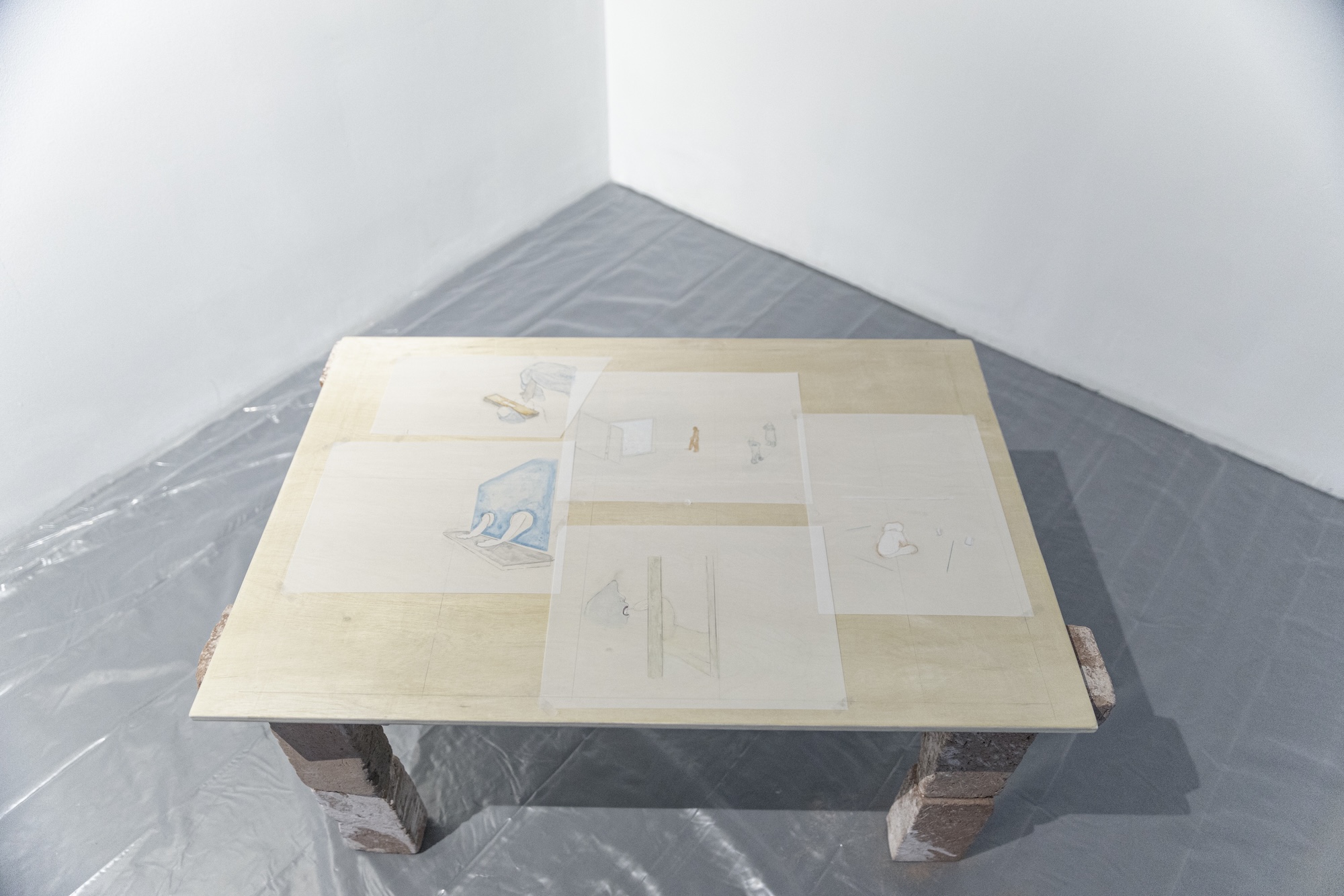
The exhibition also speaks to contemporary relationships. We have constant access to one another through screens, yet genuine intimacy can feel increasingly elusive. Fang doesn’t present communication as a cure for distance. Instead, he allows distance to remain part of intimacy, suggesting that care may depend on approaching another person without demanding complete transparency. Silence becomes not simply the absence of speech, but a form of protection.
Fang’s own experience of migration runs through the exhibition without ever becoming a fixed statement of identity. The title itself brings Chinese and English into conversation while refusing to define the relationship between them. xü can suggest silence, secrecy, caution or intimacy; aha evokes the moment of recognition. Together, they feel less like a declaration than an exchange between people.
That ambiguity matters in an art world that often asks artists to make personal histories immediately legible. Migration, family memory and cultural difference can quickly become recognisable content. Fang neither rejects these experiences nor offers them as an explanatory key. Instead, they remain dispersed across domestic surfaces, partial gestures, relocated sounds, plastic sheeting, shifting scales and provisional structures.
What feels genuinely forward-looking about xü, aha! isn’t technological novelty but its response to the pressures shaping contemporary life: the acceleration of images, the disappearance of labour behind polished surfaces, the expectation that identity should always be visible, and the growing difficulty of maintaining intimacy without turning it into performance. Fang responds by slowing the image down, limiting what can be seen and questioning how much of another person we should expect to know.
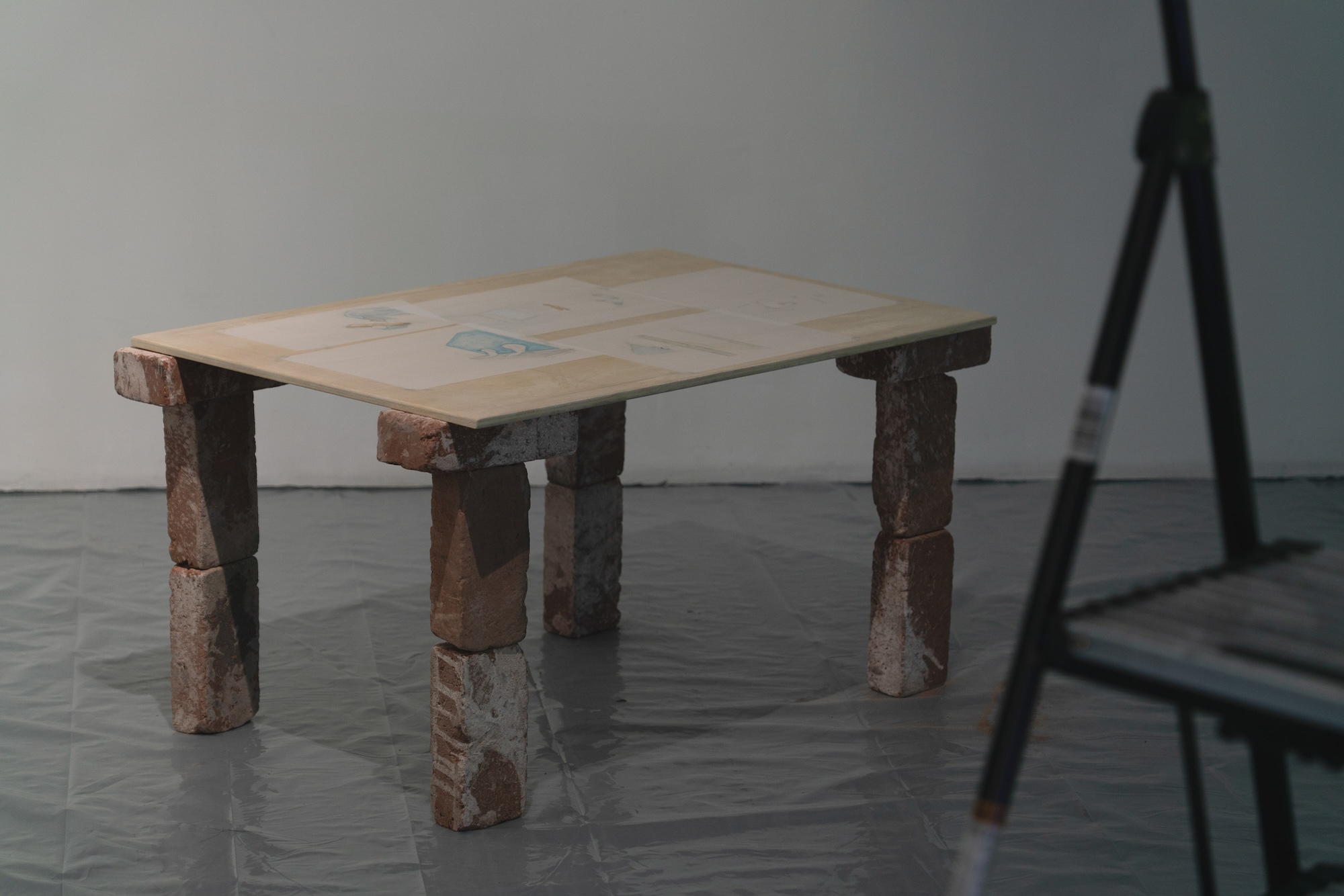
There is always a risk that exposed cables, grainy footage, bricks and temporary supports become another familiar contemporary art aesthetic. What keeps xü, aha! from slipping into that territory is its precision. Every fold, cable, reflection and interruption has a purpose. Nothing feels incidental.
I left the exhibition without the sense that it had delivered a complete statement. Instead, it quietly unsettled my expectation that a statement should ever be complete. At a moment when images are pushed towards clarity, identities towards readability and emotions towards instant communication, Fang leaves something unresolved between the work and its viewer. That hesitation doesn’t feel like a lack of meaning. It feels like the space in which an image, a memory—or another person—can continue to change.
About the artist
Fang Bin (b. 1998, Ningbo, China) is a multimedia artist working across language, video, installation, image, sound, and painting. His practice engages with labor, fragmented memory, and performance, often tracing ideas and materials from everyday life that are resisted or misread in processes of translation. Through a poetic treatment of space, Fang explores how the body, identity, culture, and perception are delayed, reconstructed, or misunderstood, revealing how experiences unfold with shifting rhythms within the viewer’s field of attention.
Fang received his BFA from Otis College of Art and Design in 2020 and his MFA from ArtCenter College of Design in 2025. He is currently based in Los Angeles. His work has been exhibited at Bolsky Gallery, Center for Book Arts, Wolford House, and 4C Gallery.