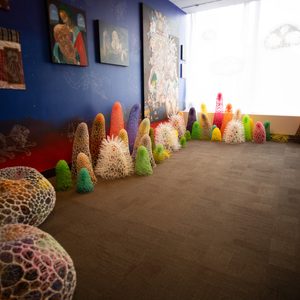
I met Idan Gilony at Alcova early this April, one of the collateral events of Milano Design Week, where he presented an immersive installation to launch a new fragrance collection for his design label, UY Studio. When I arrived, he was carefully adjusting the long branches surrounding the space, with a level of passion and care that immediately caught my eye.
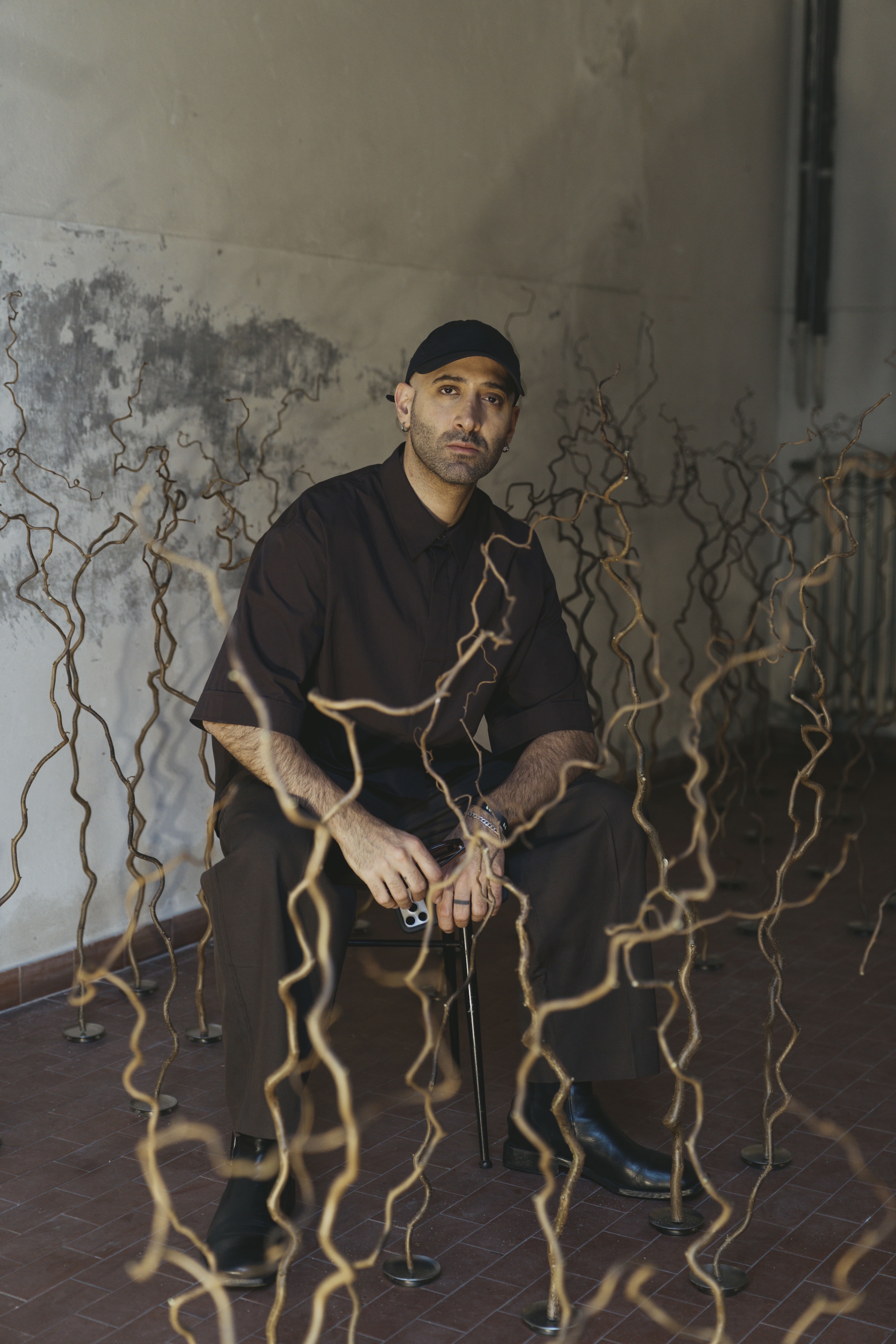
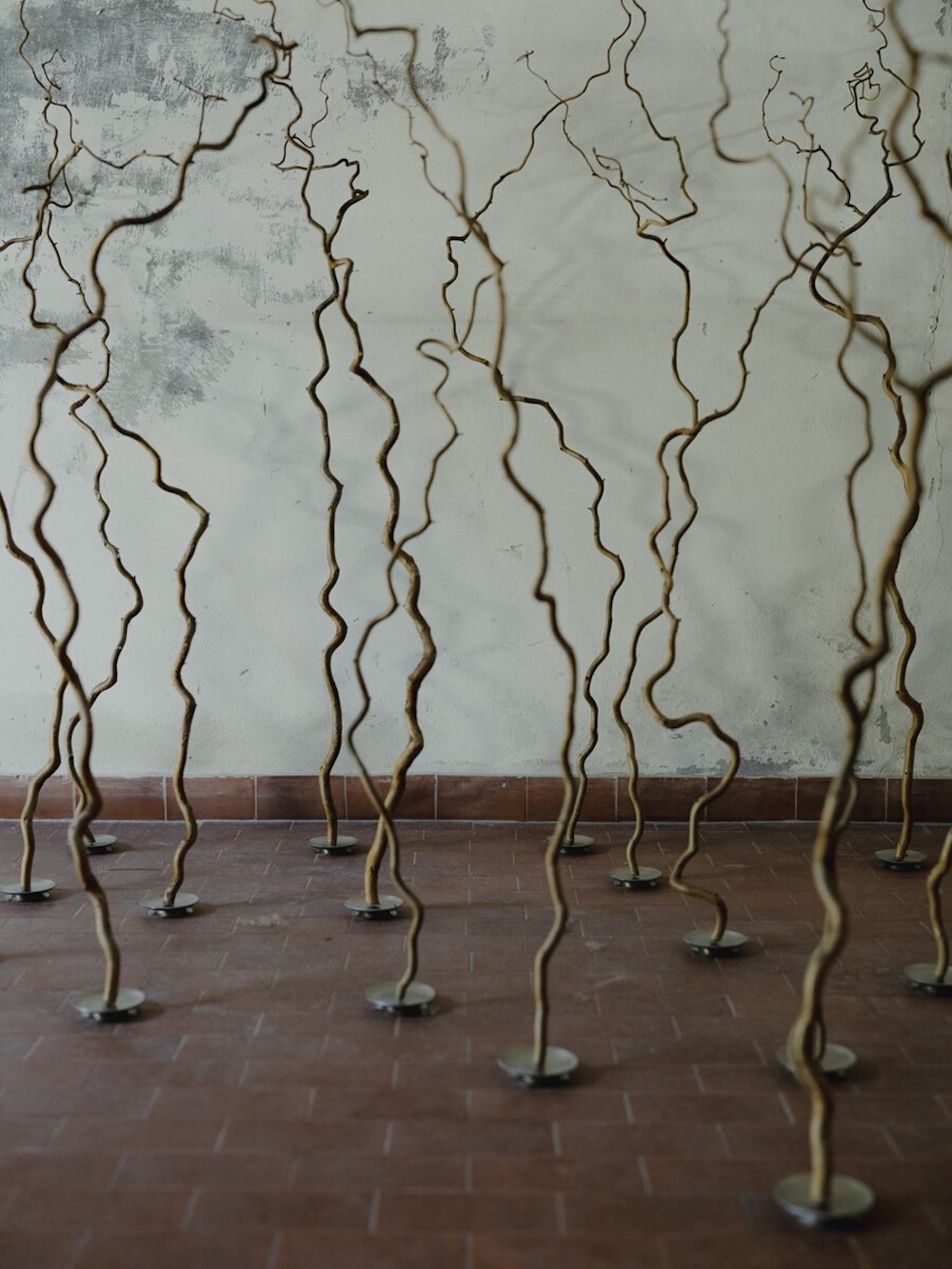
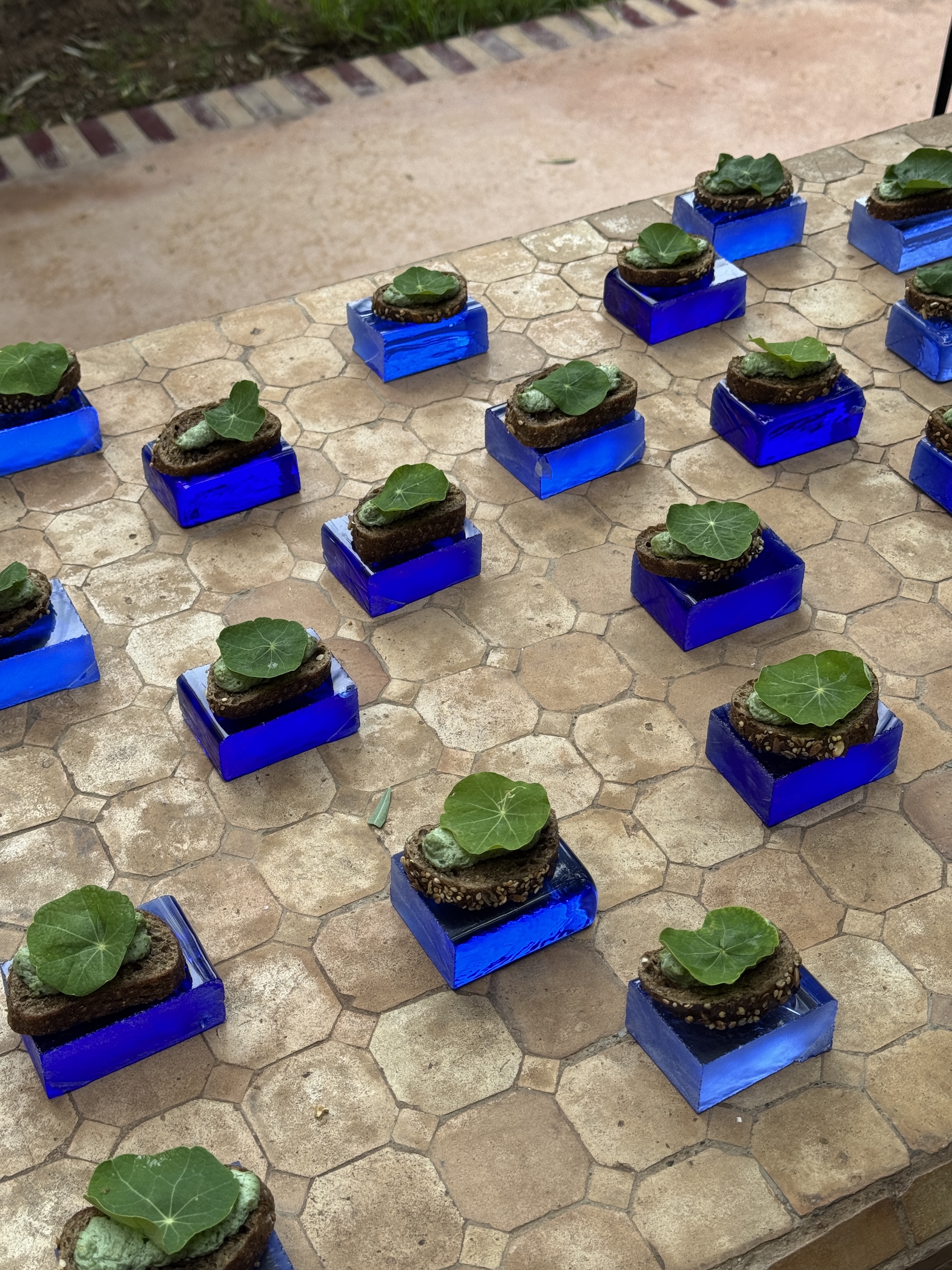
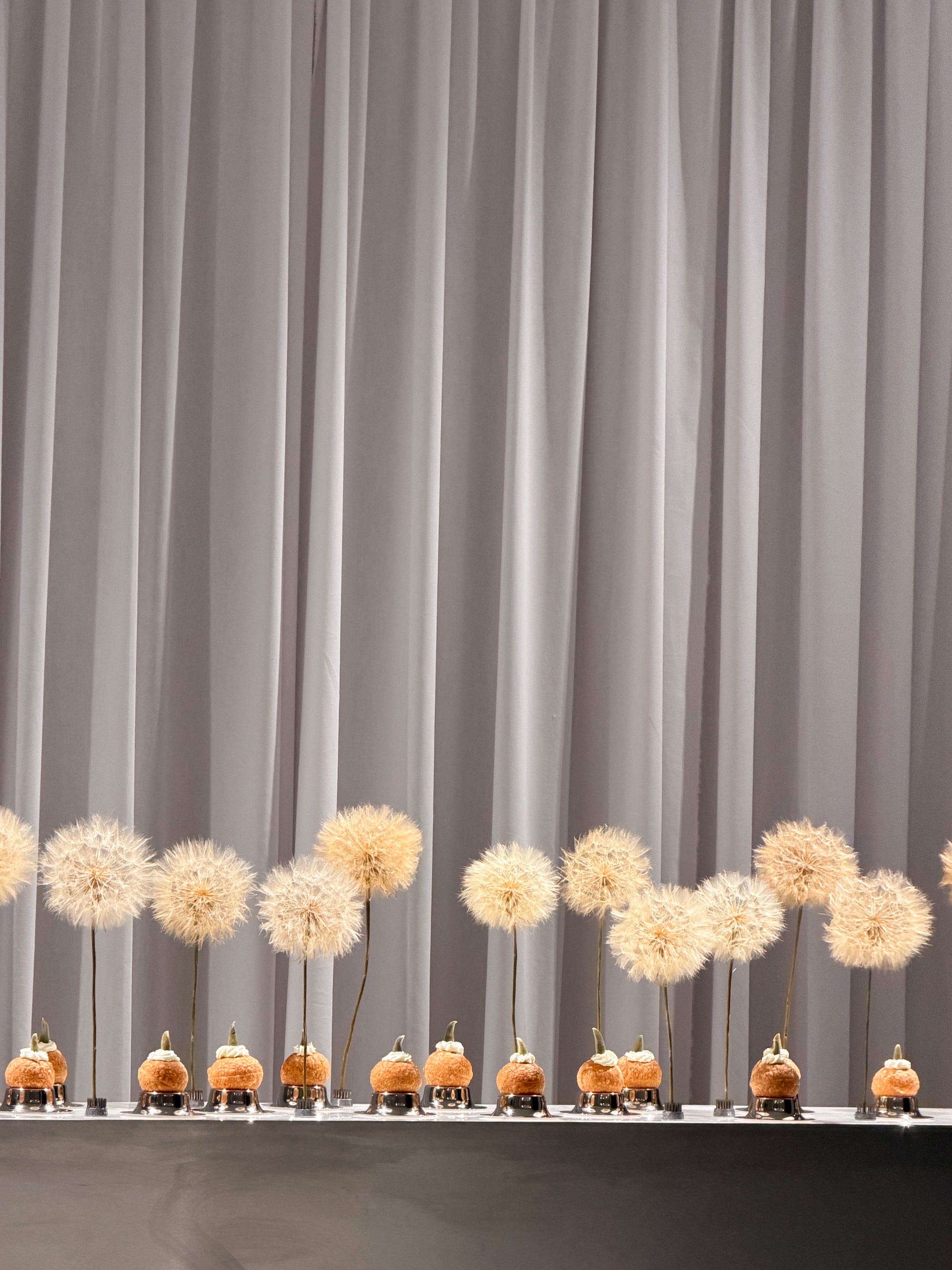
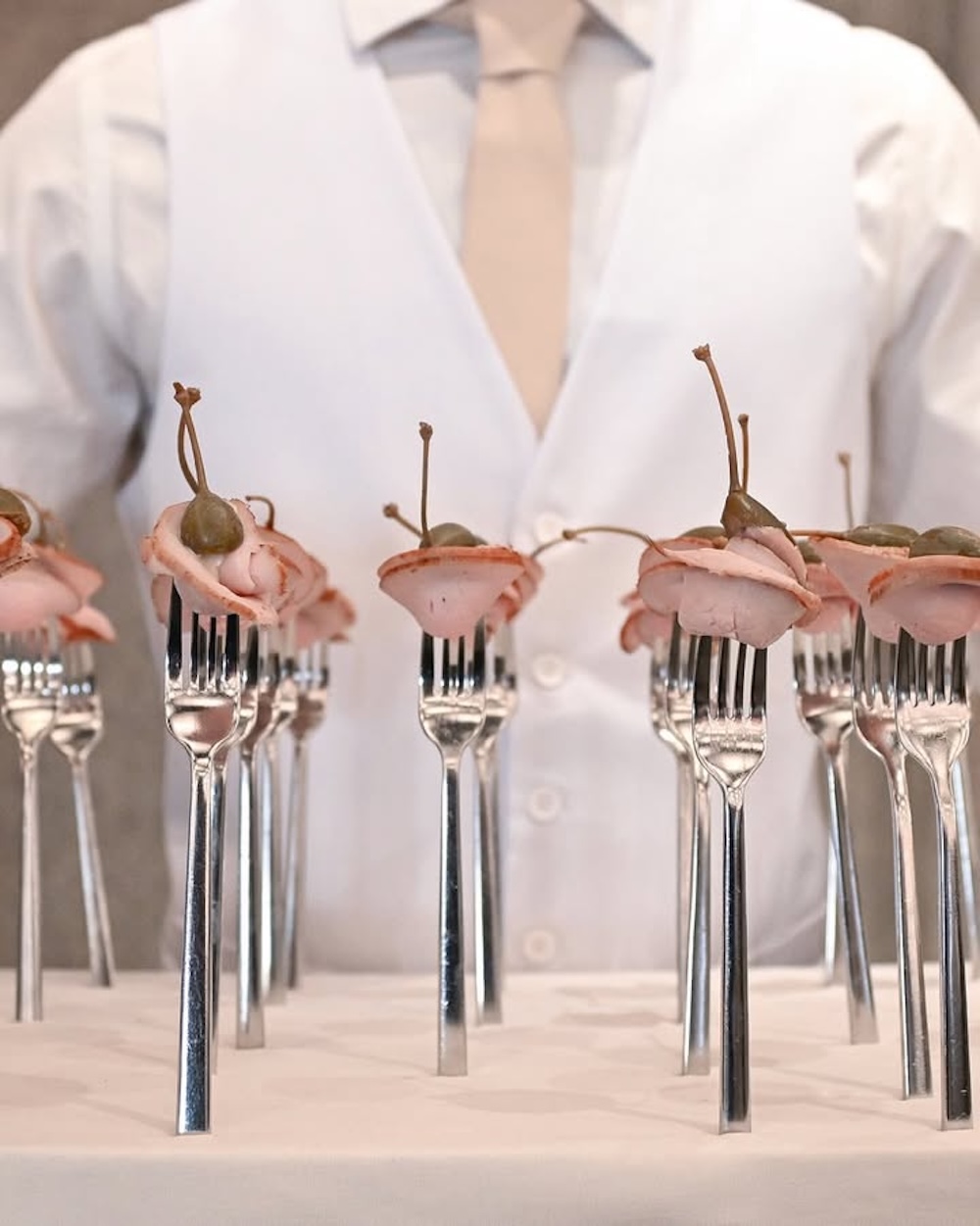
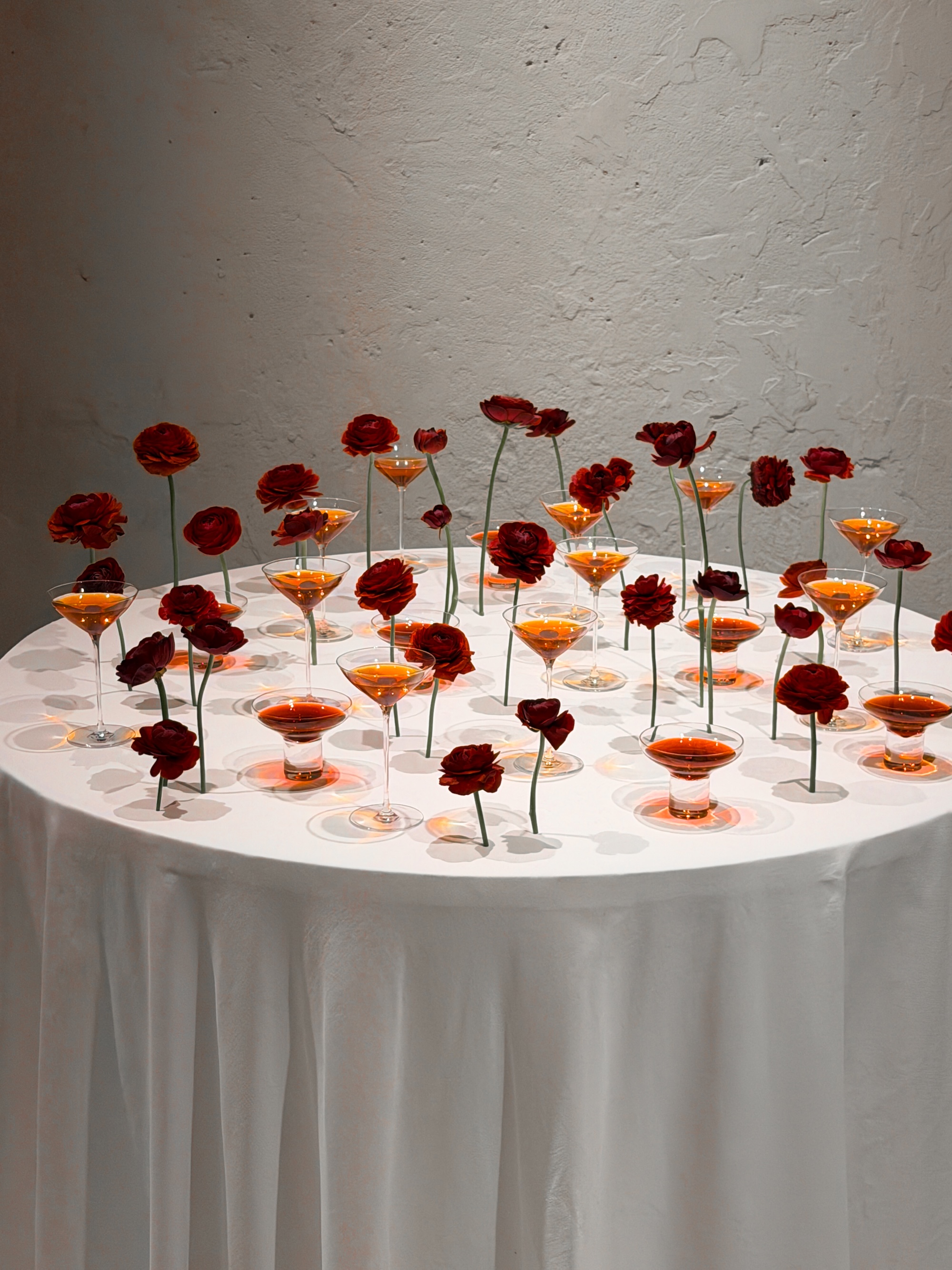
Gilony is everywhere famous for his meticulous installations where food, colour and unfamiliar botanical elements—things you might never expect to encounter on a dining table— come together in striking, unexpected compositions. He’s certainly a hybrid figure, moving fluidly between food, conviviality, fashion, and spatial design. Yet, he’s also incredibly coherent, guided by precise frameworks and a sound ethos. His choreographies unfold across bodies, scenographies, and shared moments, shaping a language of hospitality that is at once aesthetic and affective, precise yet disarmingly open.
In conversation with FAD Magazine, Gilony reflects on the radical softness of gathering, the afterlives of fashion thinking, and the quiet structures in which we come together.
You’re quite a personality now, and your foodscapes, with their incredible colours and aesthetic, are recognised around the world. How did it all begin?
I spent most of my career in fashion. I studied Fashion Design and then moved quite naturally into the industry, where I ran my own label. Then, during Covid, something shifted. I felt a strong need to maintain a sense of community, something that has always been important to me. So, I started hosting small dinner parties in my studio—initially just for friends and colleagues.
And then what happened?
These dinners became more and more popular. What began as gatherings of twenty friends at my studio quickly expanded, opening to the public and eventually hosting fifty guests at a time. I realised I genuinely loved hosting these shared experiences. It planted something in me.
By 2025, I decided to leave fashion entirely and focus on this new direction. I was really afraid! You know, I already had a stable career, and everyone around me kept telling me I was crazy. It took me almost a year to take the leap, but eventually I found the courage and did it.
In a way, I had to start again from (almost) zero. I left behind the glamour I had in fashion and returned to a kind of “beginner” state, self-funding projects and producing everything independently. But I didn’t abandon fashion entirely; it was important for me to maintain a connection to that world.
What is your relationship with fashion now, looking at it from a new perspective? What do you carry forward?
I think fashion is incredibly relevant to how we live and express ourselves. I feel deeply connected to it. Everything I learnt there—rhythm, pattern, scale—continues to inform my installations. In a way, I try to build a bridge between that background and a gastronomic experience.
At the same time, there’s a critical dimension. Fashion moves at a relentless pace—cycles of production, repetition, large-scale systems—and all of that remains embedded in how I think and work. Also, I’m increasingly attentive to sustainability. If a client asks me to use food purely as decoration, I won’t do it. I prefer to work with organic materials that have a life cycle—ingredients that come from the ground and return to it. Even when the result is aesthetic, there must be purpose.
Why food, then? What drew you to it as a medium?
My first food-based projects came from a desire to create a space that felt like the opposite of fashion’s unspoken motto: you can’t sit with us. Food does the opposite. It creates space. It says: you’re welcome here. This “come sit with us” kind of energy was incredibly refreshing.
Food sat in the right place emotionally, and over time it became a visual language for me, too. Luckily, I’m still relatively new to the field, which gives me a sense of freedom—I can still experiment, and above all, play.
I find this really interesting, because when we approach something new, we tend to read all about it, studying it obsessively (at least, this is what happens to me). But in doing so, we lose something. We leave out the spontaneity of first attempts, that freshness and productive naivety where new ideas emerge. Once you’ve learnt that you can only shape cannoli in a specific way, it just becomes harder to imagine doing it differently.
That’s exactly how I feel. There are so many cuisines I still don’t know, and that allows me to follow intuition rather than rules. I can play with shapes, colours, flavours… There’s no fear, and this really brings people closer to the work.
Not being formally trained as a chef also makes me question conventions. Sometimes chefs tell me, “you can’t do that,” and my instinct is simply to ask why. And occasionally, they realise that actually, you can. You can eat pasta from a glass, or drink from a fork.
Your work is highly visual, and I think it’s often the aesthetic that strikes first, especially in such an Instagram-driven field. But working with food inevitably brings in another dimension: taste. Where does flavour sit within your practice?
Coming from fashion, I’m used to thinking beyond the surface. A garment might look perfect on the outside, but what really matters is its structure—the stitching, the construction, the hidden details. The same applies to food. Appearance matters, of course, but flavour is equally important. For me, they exist on the same level. Often in gastronomy one is prioritised over the other, but I don’t see that as an option.
That said, this balance shifts depending on the context—the event, the brand, the audience. When I create a menu, I always start asking myself how the public wants to feel. I work closely with chefs, bringing references, narratives, and even psychological clues from which they develop a proposal, and then we refine it together.
Is this why your food is rarely, if ever, plated?
I’m deeply interested in performance art, where the fleeting moment takes centre stage. I try to incorporate that in my work as much as I can, transforming the audience into the performance itself. It’s fascinating to see how people behave around an installation, how they interact with it, unintentionally shaping it.
Yet, it’s always contextual. A performative installation only works if it aligns with the audience. If guests are in formal attire, for example, they may not feel comfortable engaging physically with the food, and that has to be respected.
What has been the most challenging project so far?
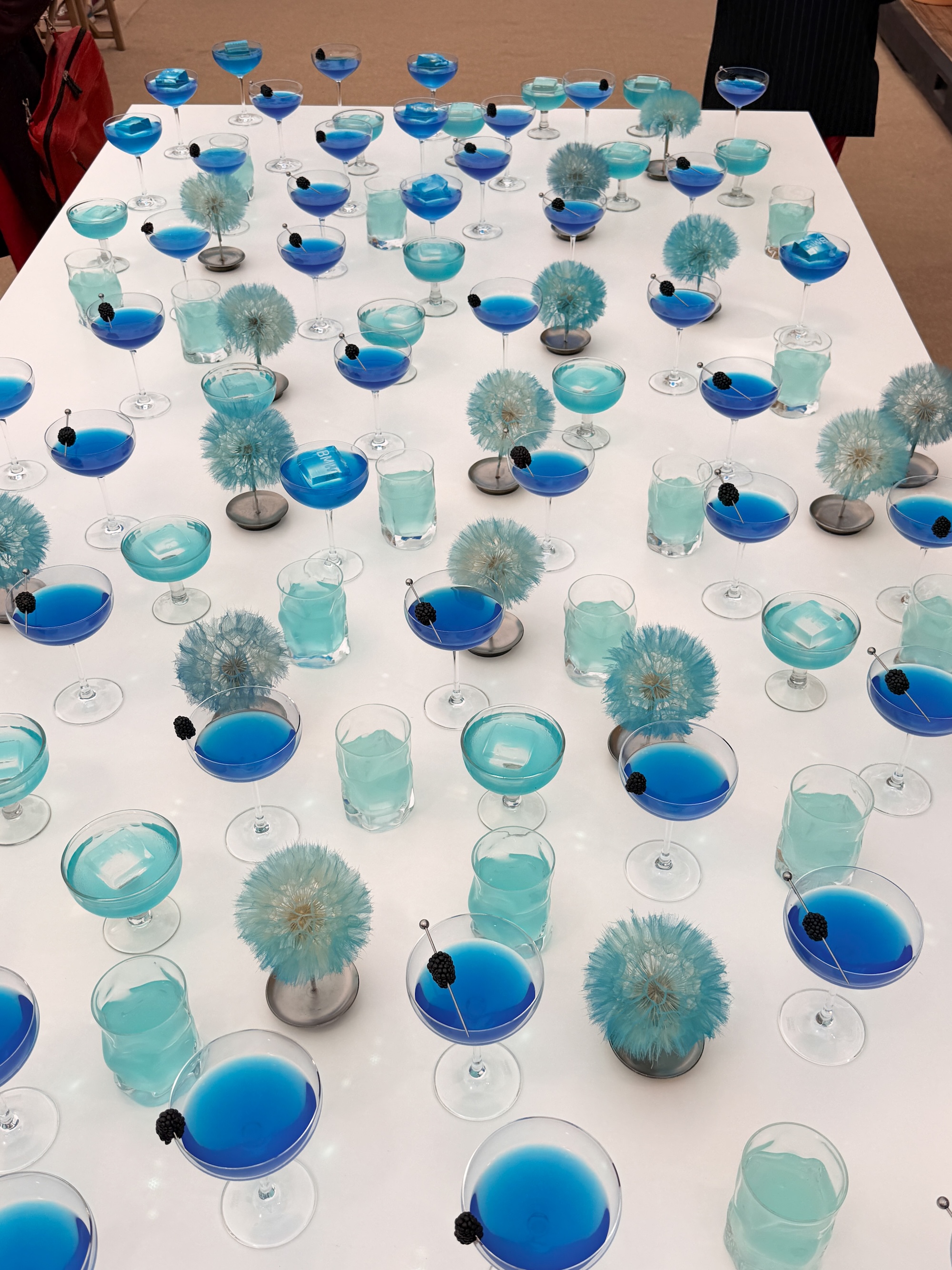
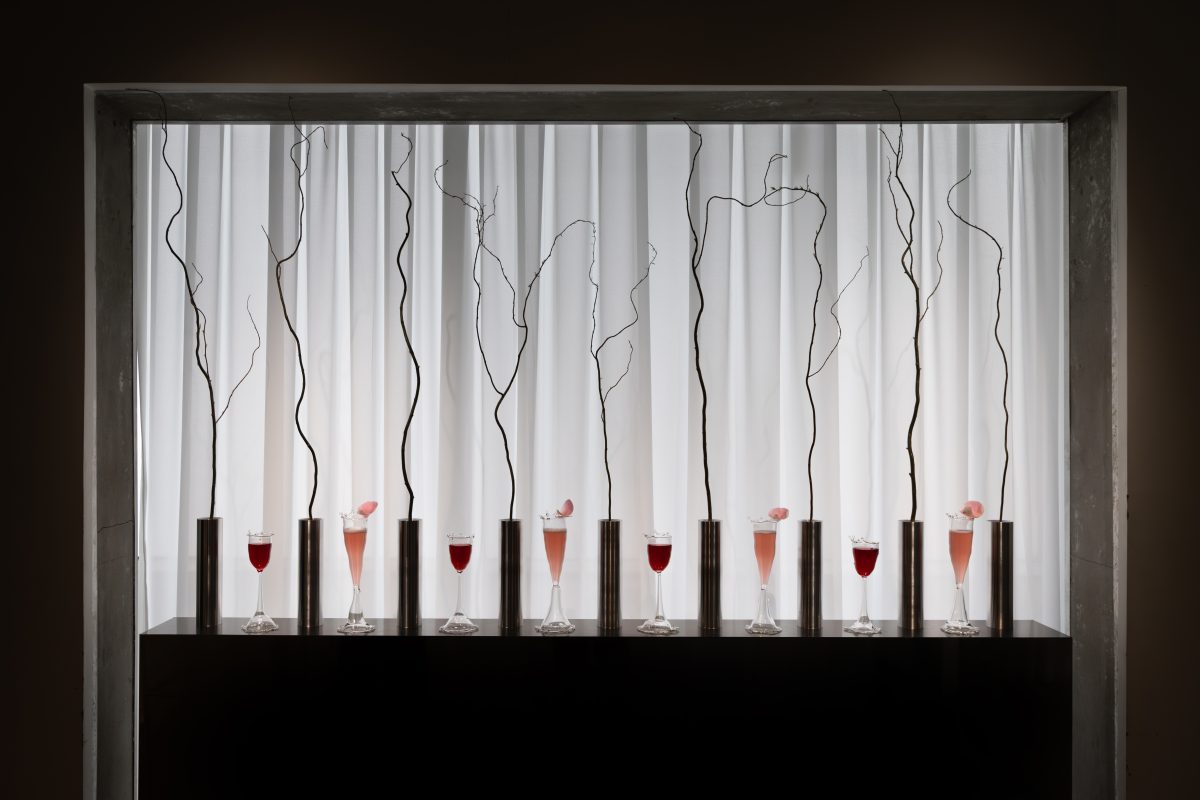
My pieces tend to focus on the repetition of a simple pattern, a single element or colour. Paradoxically, that simplicity makes it very difficult to control and maintain. It has to be perfect to work. At Cannes, for example, I worked with BMW on a project centred around my signature cocktail. We had only sixty minutes to execute it, and that level of precision under time pressure was extremely demanding.
This idea of perfection, repetition, precision makes me think of risk. What is your relationship with it?
I love taking risks. Of course I get scared, but I push myself. There’s a very specific feeling you get right before something happens, a mix of anticipation and fear, and I’m almost addicted to it. It’s cool, and scary, and motivating!
Because of that, even when things don’t go exactly as planned, it’s worth it. More often than not, something unexpected happens that is equally valuable. You perceive it from people’s reactions. Even if certain details aren’t perfect, if you didn’t get the flowers you wanted, you keep going, and the experience resonates.
It’s been incredibly inspiring talking to you. I think it’s important that your more philosophical side comes through: many people know your work mainly for its strong aesthetic and highly Instagrammable setups, but there’s clearly a lot more behind it.
That’s why I think it’s crucial to go beyond Instagram. Of course, the work is visually appealing, but what people remember is the experience—how it made them feel, not just how it looked.
A work cannot exist purely for its aesthetic value. If it doesn’t create a genuine connection, it doesn’t last. This awareness is essential to me. Without that, the work risks becoming empty, and you end up designing experiences that follow visual trends but that people are not validating or engaging with.
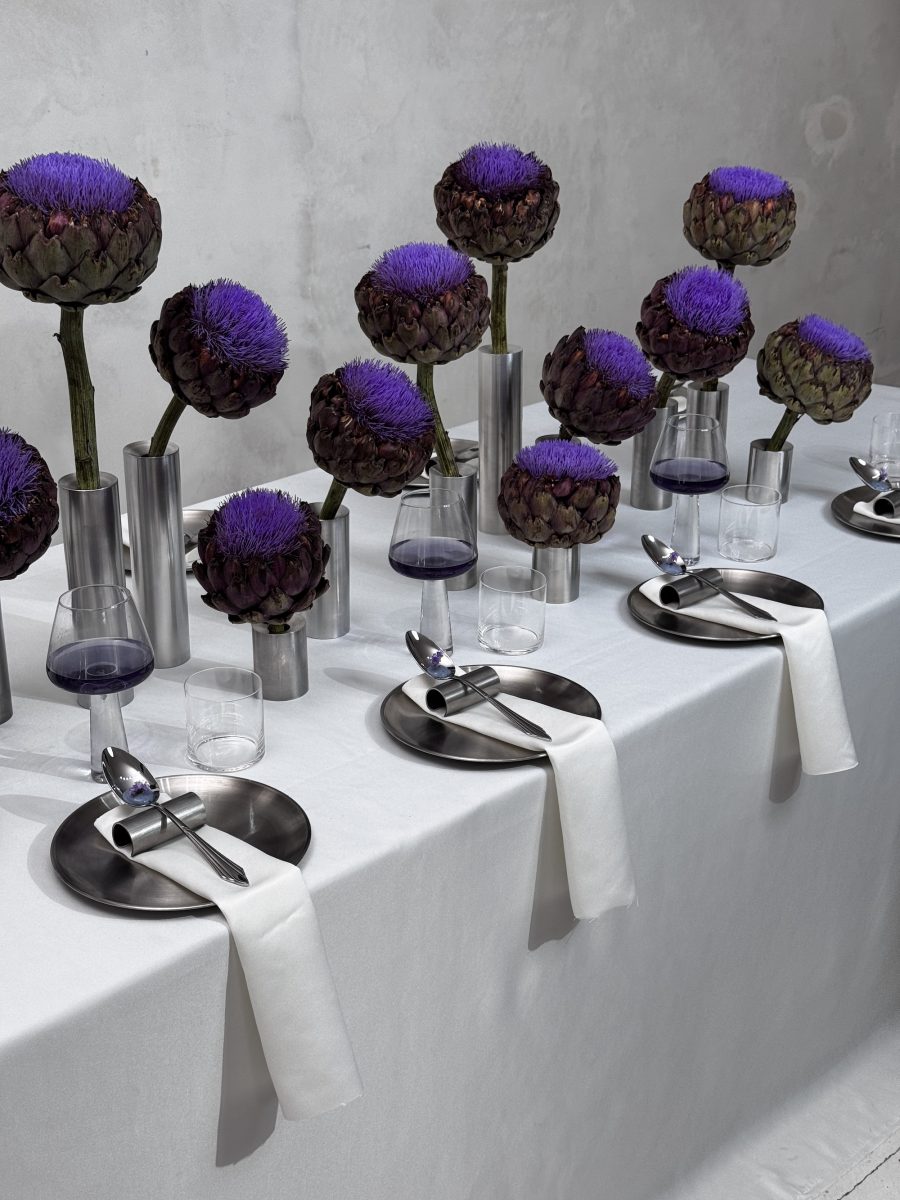
MORE: @idangilony