The Courtauld Gallery is set to present the first exhibition dedicated entirely to Barbara Hepworth’s use of colour, revealing an often-overlooked dimension of one of Britain’s most celebrated modern artists.
The Joseph Hage Aaronson & Bremen Exhibition: Hepworth in Colour brings together around 20 sculptures, 30 drawings and paintings, tracing Hepworth’s lifelong fascination with colour and challenging perceptions of an artist primarily associated with material purity and direct carving.
Best known for her abstract sculptures shaped by nature and the landscapes of Cornwall, Hepworth once reflected on the reception of her use of colour, saying: “In a way my colour has been accepted but never understood.” This exhibition aims to reposition colour as central rather than peripheral to her practice.
The exhibition explores Hepworth’s early experiments from the mid-1930s, when she and Ben Nicholson were active participants within the European avant-garde. Days before the outbreak of the Second World War, Hepworth left London for Cornwall, bringing with her a single sculpture — her first study incorporating colour. The Cornish landscape would become a catalyst for an entirely new visual language.
At the heart of the exhibition is a remarkable group of painted sculptures produced between 1940 and 1948. Hepworth later recalled:
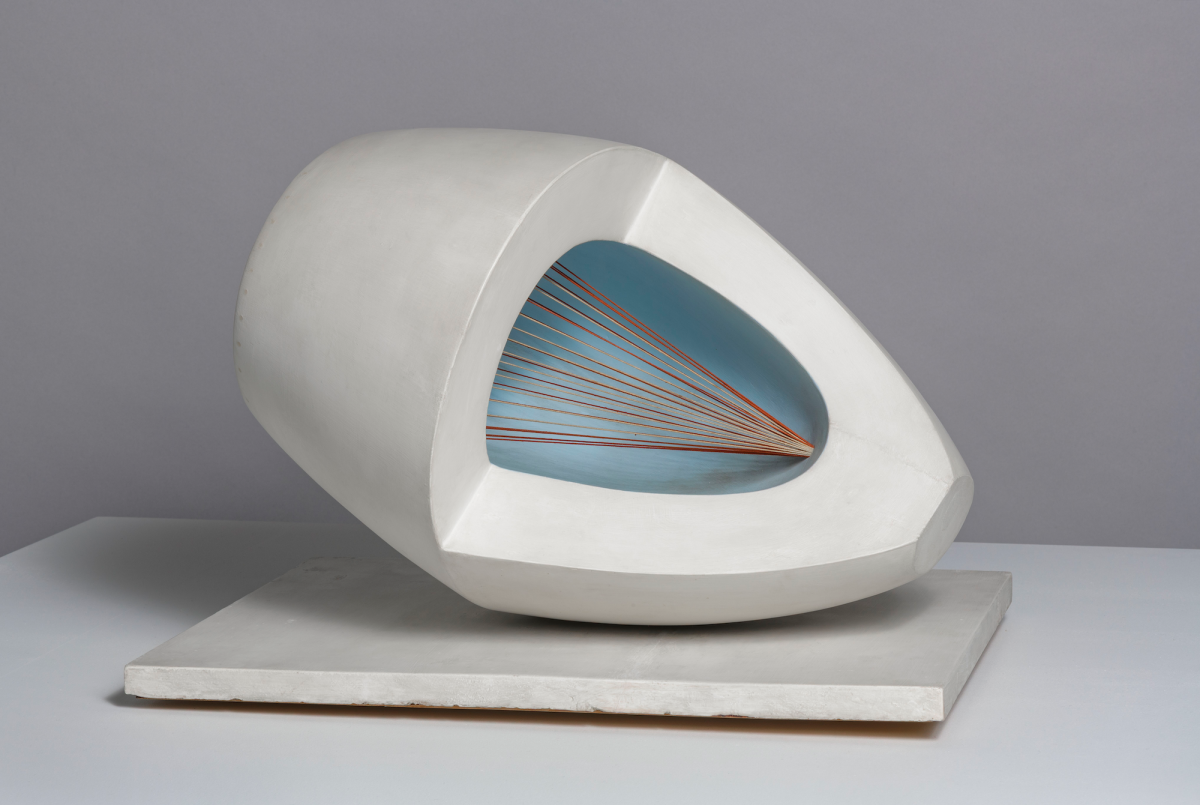
“I used colour and strings in many of the carvings of this time. The colour in the concavities plunged me into the depths of water, caves or shallows…”
Highlights include Eidos (1947–48) from the National Gallery of Victoria in Melbourne and Eos (1946) from a private Hong Kong collection, shown together in the UK for the first time since 1954.
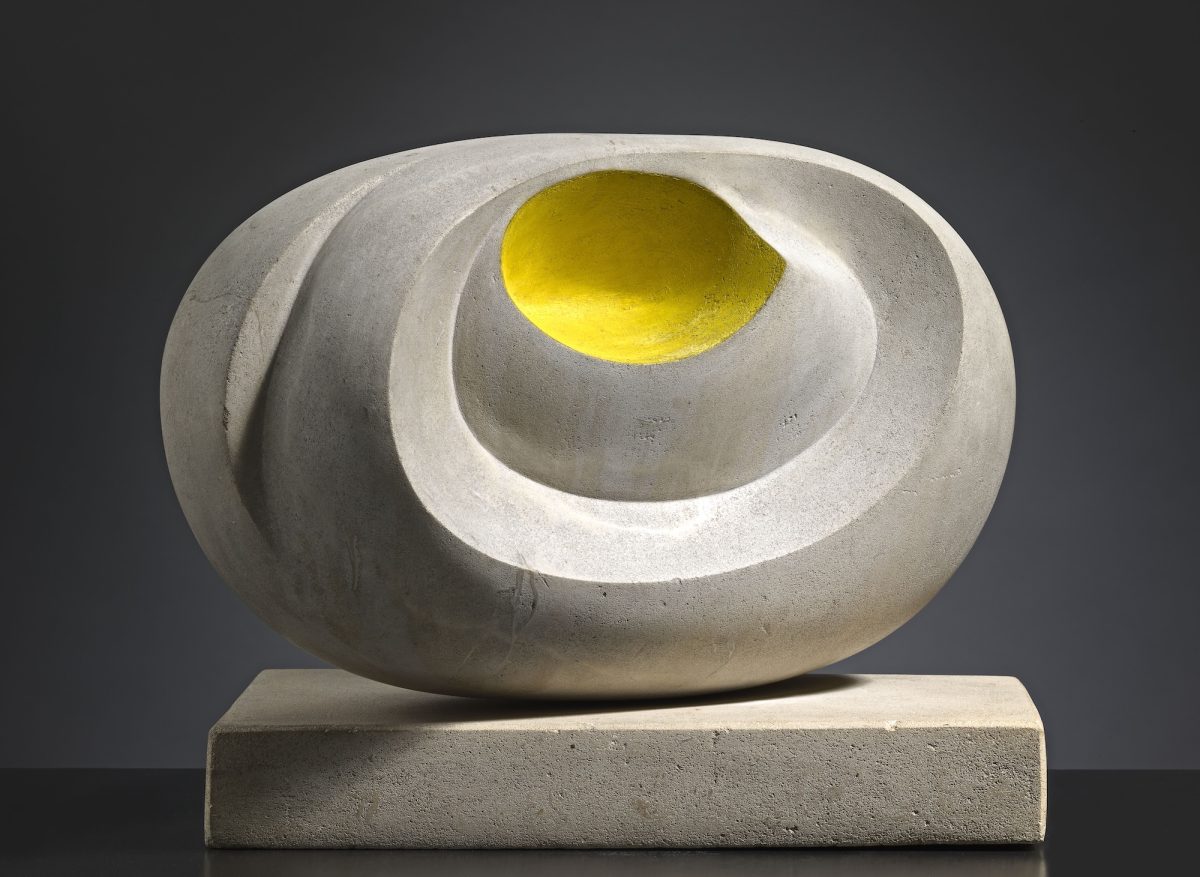
A major focal point will be Sculpture with Colour (Oval Form), Pale Blue and Red (1943), recently acquired for the nation by The Hepworth Wakefield following a £3.8 million fundraising campaign with Art Fund. The work marked a significant breakthrough in Hepworth’s practice, combining string and colour while introducing the pale blue tones associated with Cornwall’s skies and coastline.
Rarely exhibited and previously held in private hands, this marks the sculpture’s first London presentation since entering public ownership.
The exhibition will also reunite all six progressively larger versions of Sculpture with Colour (Deep Blue and Red) for the first time, alongside key works including Wave (1943–44) and Pelagos (1946), inspired by St Ives Bay.
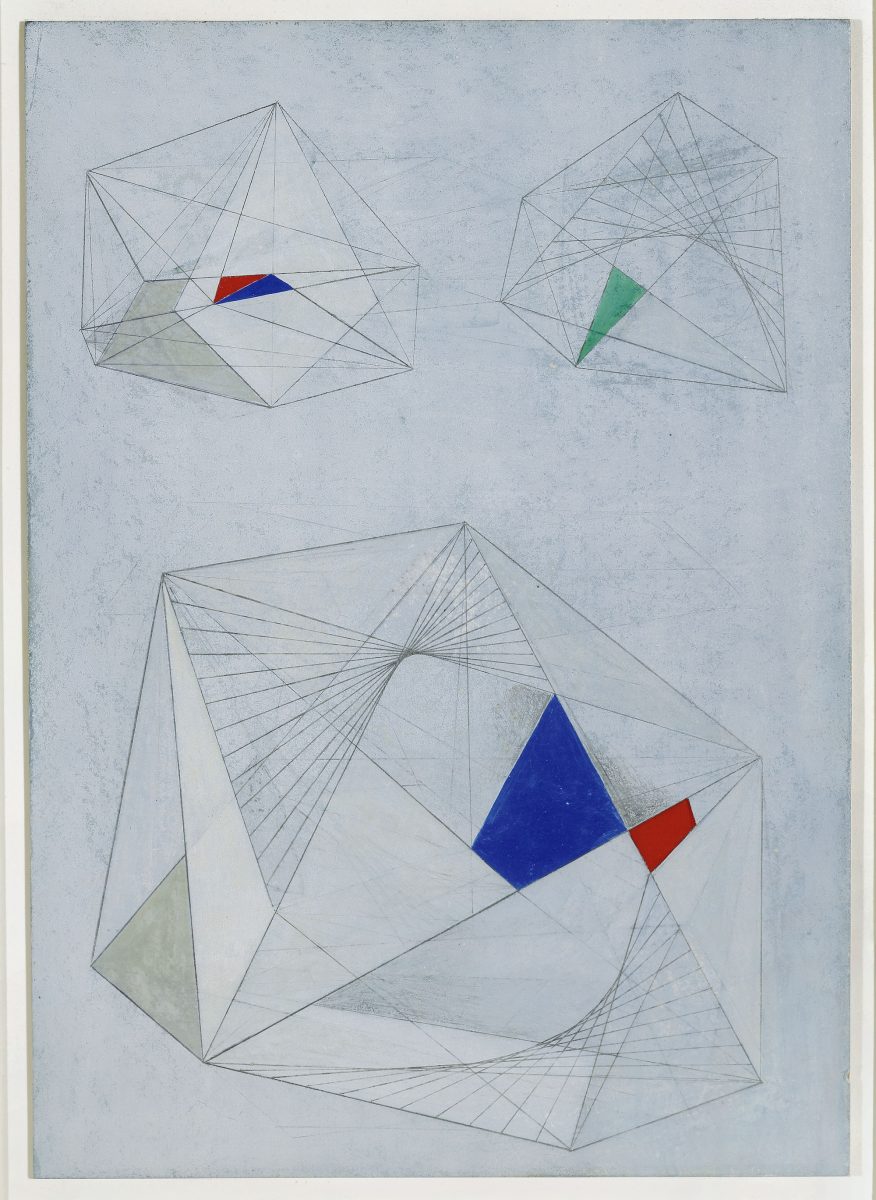
Alongside the sculptural works, visitors will encounter an extensive group of Hepworth’s wartime drawings. Created during years when materials and studio space were limited, these works became an essential means of developing ideas that would later emerge in three dimensions.
Hepworth recalled:
“In the late evenings, and during the night I did innumerable drawings… exploring the particular tensions and relationships of form and colour which were to occupy me in sculpture during the later years of the war.”
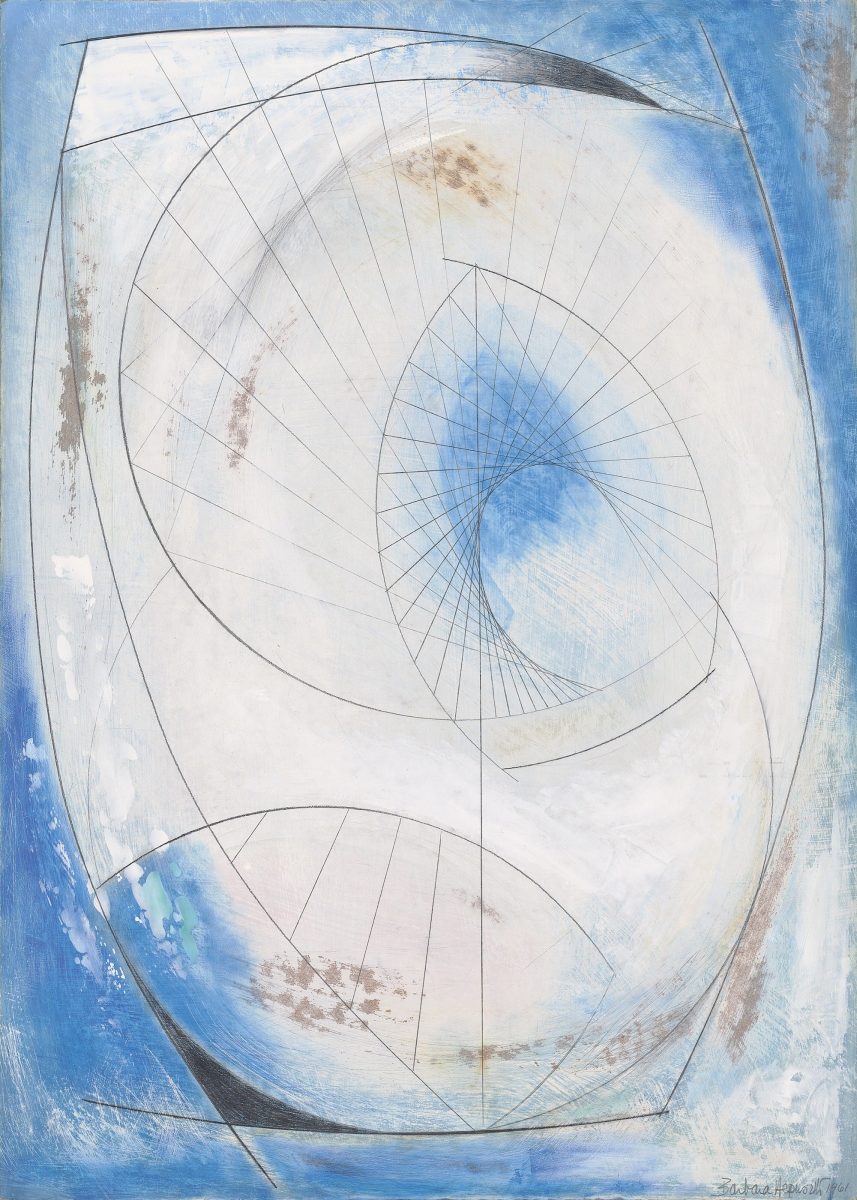
The exhibition extends into the 1950s and 60s, revealing how colour continued to evolve within her practice through paintings, patinated bronzes and painted marble works.
Complementing the exhibition, The Courtauld’s Project Space will display a selection of photographs by Paul Laib documenting Hepworth and Ben Nicholson’s shared Hampstead studio, offering a rare insight into the artistic environment that shaped both artists.
Rather than treating colour as an aside within Hepworth’s work, Hepworth in Colour reframes it as one of the defining threads running through her career.
Hepworth in Colour, 12th June – 6th September 2026, Courtauld Gallery