
“Many of the galleries in my country are not able to participate in foreign art fairs…”
Ali Güreli, founder of CI BLOOM, speaks, and the words hit home hard. The emerging spring art fair in Istanbul, positioned as a more elastic counterpart to Contemporary Istanbul in the autumn, arrives wrapped in familiar post-pandemic language like “renewal,” “dynamism,” and “reconnection,” but the reality it describes is far more immediate.
With inflation around 35%, shrinking institutional margins, and a tightening economic atmosphere in Turkey, compounded by regional instability — namely the orange guy’s “war” in Iran, which has further disrupted mobility and cross-border exchange — BLOOM emerges from a field of constraint. What sounds, at first, like optimism is a resolute recalibration of what is possible under pressure: a structure built inside limitation rather than despite it, and a higher dedication to art by extraordinary means.
The traditional fair format has been adjusted for new priorities: lower thresholds, reduced transport costs, and a reconsideration of entry points into what is otherwise an increasingly exclusive game to play. Its logic is straightforward: a more permeable point of entry for galleries into a structure that has quietly become expensive to join and even more costly in which to remain relevant. With its sleeves rolled up and exhibitor costs trimmed down, the fair makes visible the very conditions that usually remain implicit in that exclusion.
What BLOOM makes most apparent is that circulation can no longer be taken for granted: it is actively negotiated under precarious conditions, and pretending to be unaware of discrepancies just isn’t sexy anymore. That unevenness also echoes a current shift in the art world at large, where the centre itself is no longer singular. There is an increasingly clear drift toward a multipolar geography — especially toward Asia and its surrounding regions — where institutional attention, collector bases, and fair infrastructures are expanding in parallel rather than orbiting a single Western axis. Ask anyone after a season or two round the tents in Regent’s Park, and the appetite for something less samey is undeniable.
Istanbul sits in the middle of it all, as it always does. It connects Europe and Asia, but also more tangible things: established institutions and newer spaces, larger infrastructures and smaller, still-forming ones. At BLOOM, the old bridge trope describes a condition of circulation shaped by decentralisation, where the city sits within shifting, multi-directional flows rather than between fixed centres. Things pass through it constantly, and the fair is organised around that movement.
What the fair ultimately stages is a picture of managed complexity. Visibility is something produced within shifting constraints — financial, logistical, and geographic. BLOOM, in that sense, feels less like a snapshot of an art world and more like a diagram of both un- and re-artworlding.
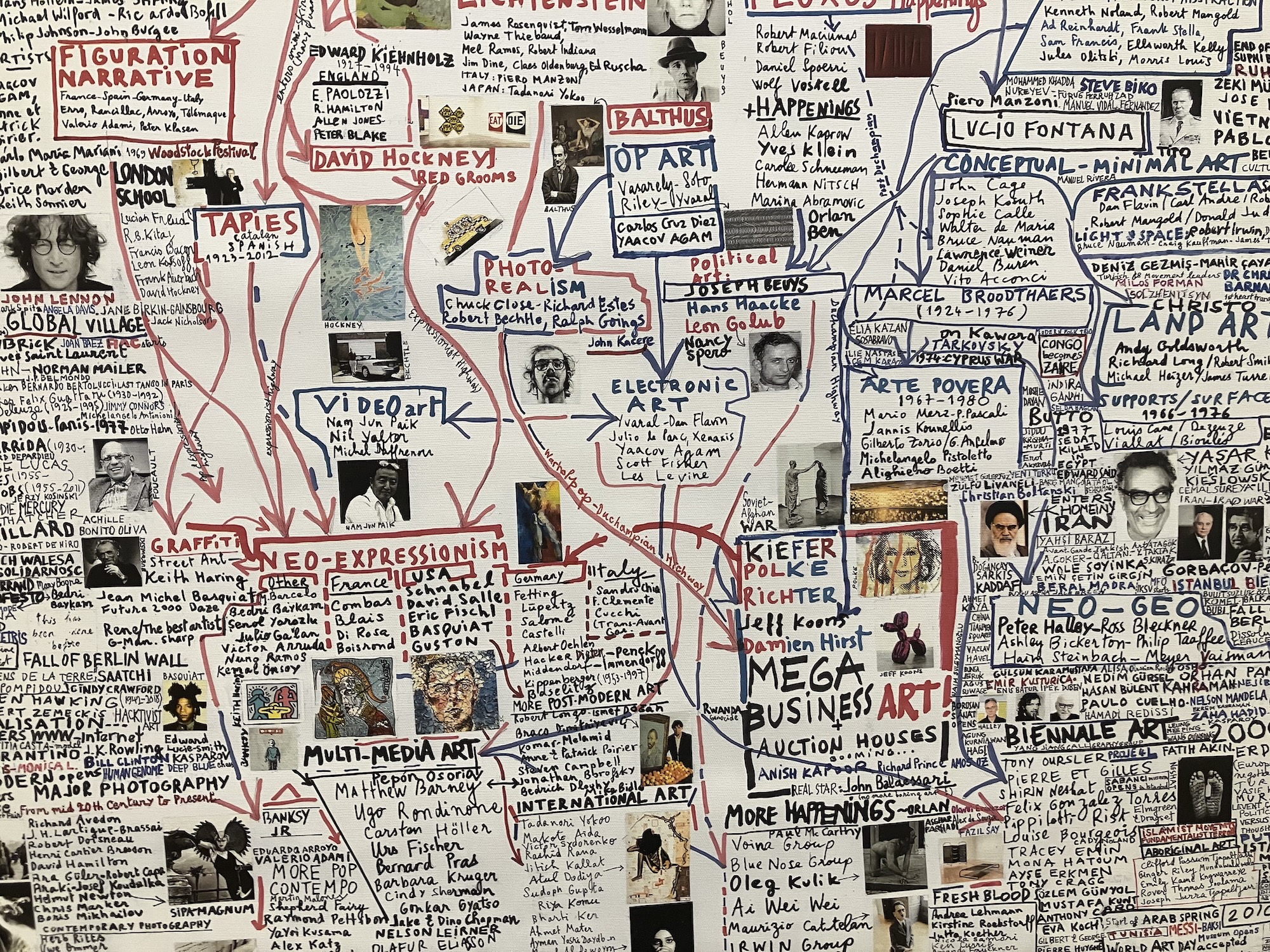
Many works on view engaged directly with this theme, beginning with a literal diagrammatic rendering from Bedri Baykam, whose Art History Map (Piramid Sanat) is conceptually reminiscent of Andrea Fraser’s Field of Contemporary Art Diagram. Both works attempt to render the art world legible, but they do so using opposing logics. Fraser presents contemporary art as a fragmented field of power structured by competing forms of capital. Her diagram replaces unified art history with relatively autonomous subfields — market, exhibition, academic, community, and activist — each producing its own criteria of value, experience, knowledge, or legitimacy. The field is defined through contradiction, hierarchy, and interdependence.
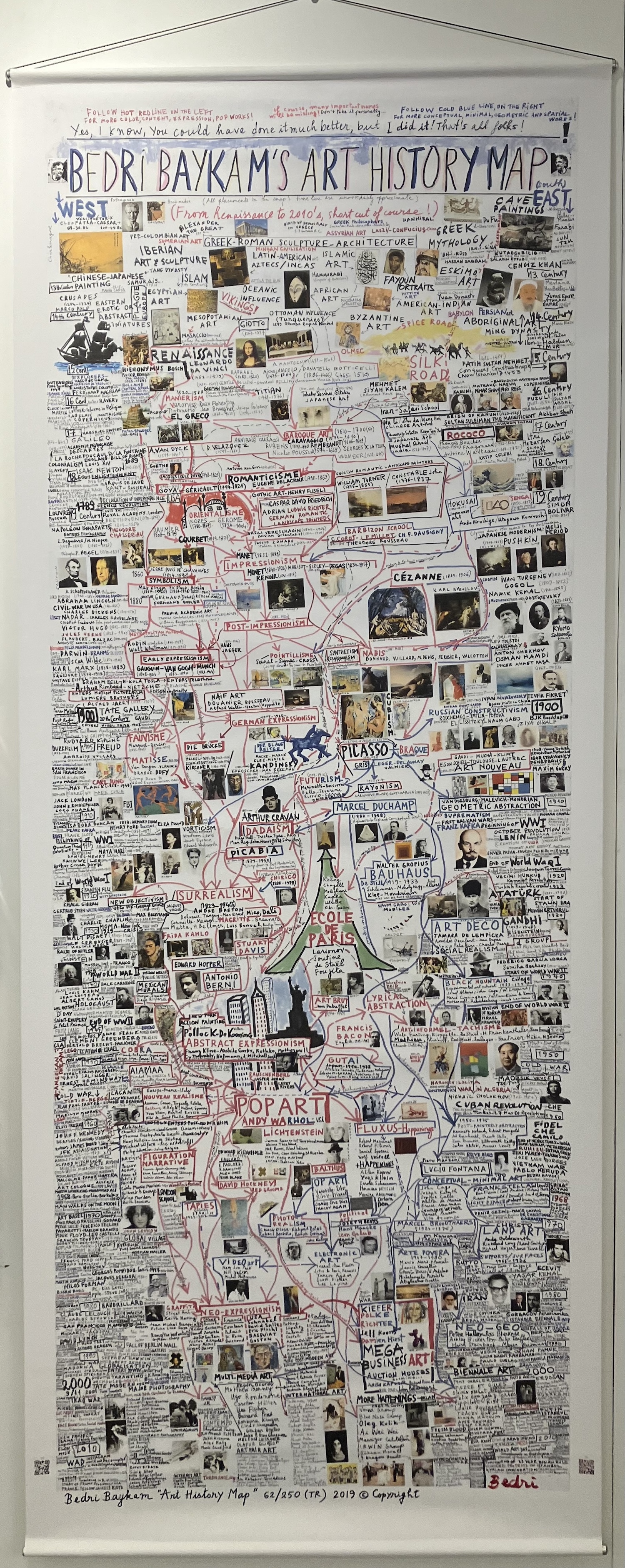
By contrast, Baykam’s map proposes a synthetic and continuous vision of art history organised across time and geography. Through vertical (chronological) and horizontal (cross-cultural) axes, it foregrounds simultaneity, influence, and connection between Western and non-Western figures, while stylistic “hot” and “cold” trajectories suggest variation within an overarching continuity. Where Fraser reads globalisation as intensifying fragmentation and reproducing structural inequalities, Baykam frames it as expanding interconnectedness and cultural integration. The map lets its viewer grasp major things lived simultaneously in different ends of the world, in almost all fields of experience.
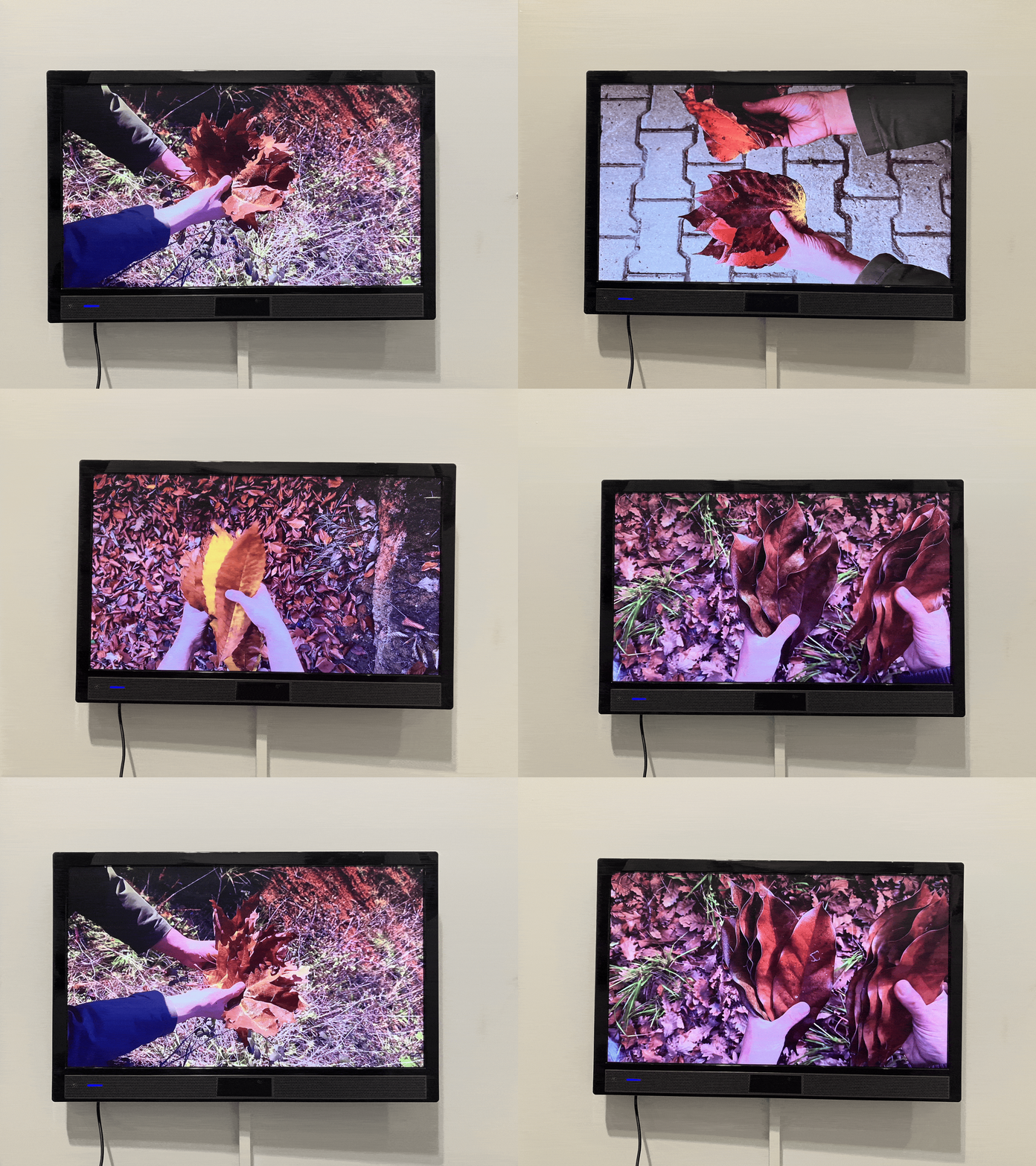
This tension between fragmentation and synthesis appears in Memed Erdener’s A Utopia of Poverty (ZILBERMAN), an 80-second video of hands counting leaves like currency reframes material deprivation through a quasi-mystical lens. Drawing on traditions associated with Christian Franciscans and Muslim Kalenderi mysticism, it suggests poverty not as failure but as a form of withdrawal from material ownership. The work destabilises economic logic by shifting value into ascetic and spiritual registers, where lack becomes a condition of meaning rather than absence.
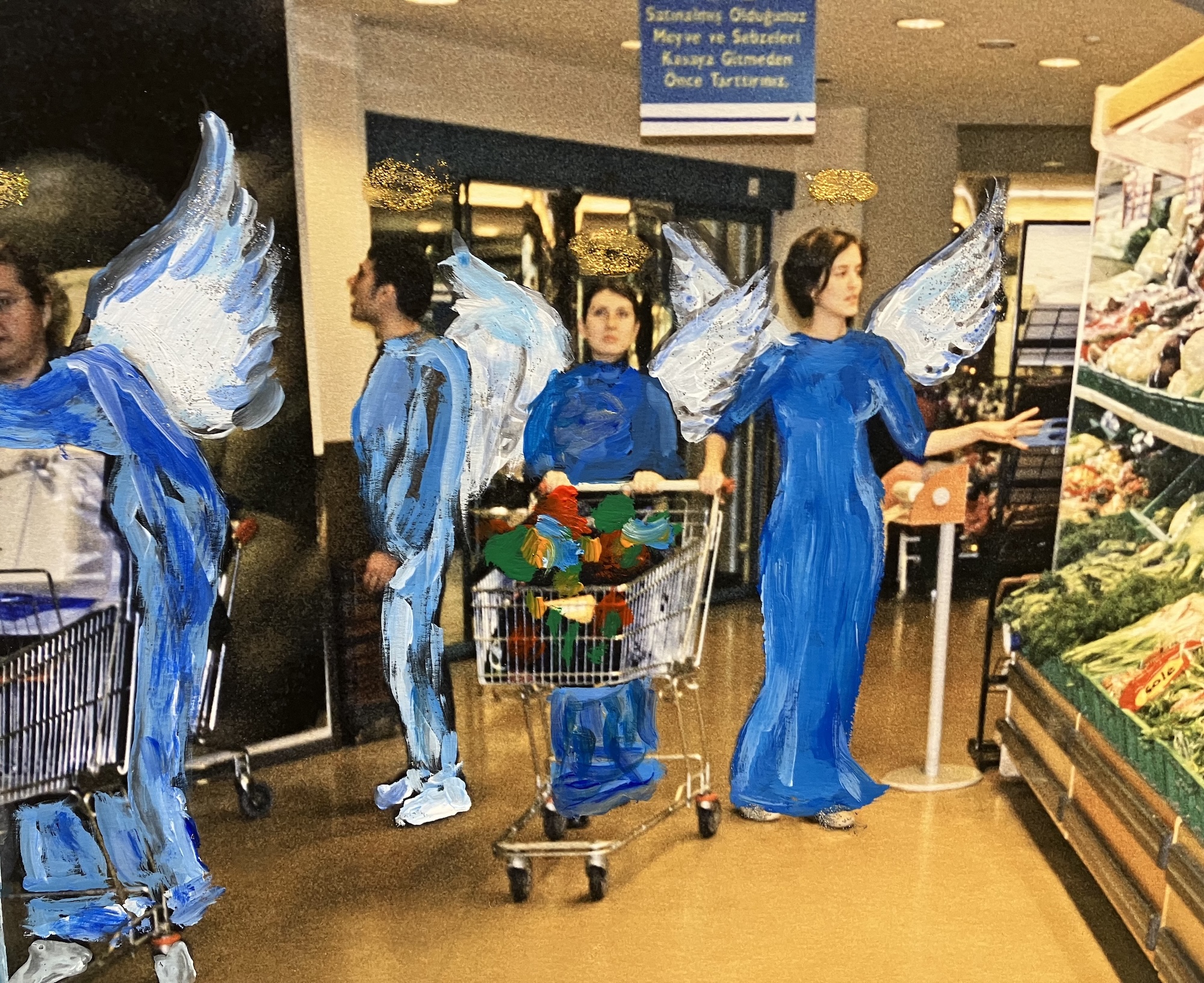
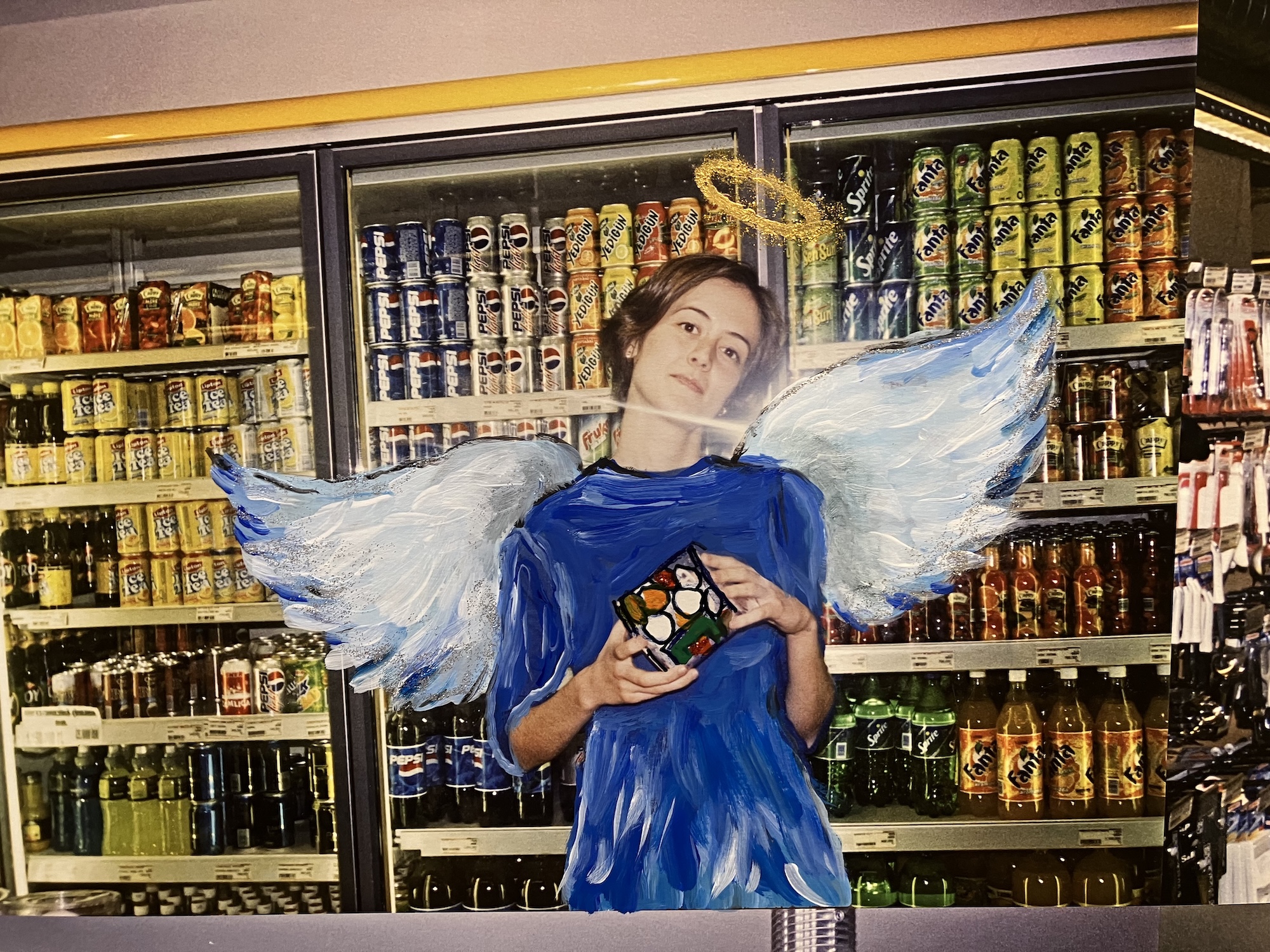
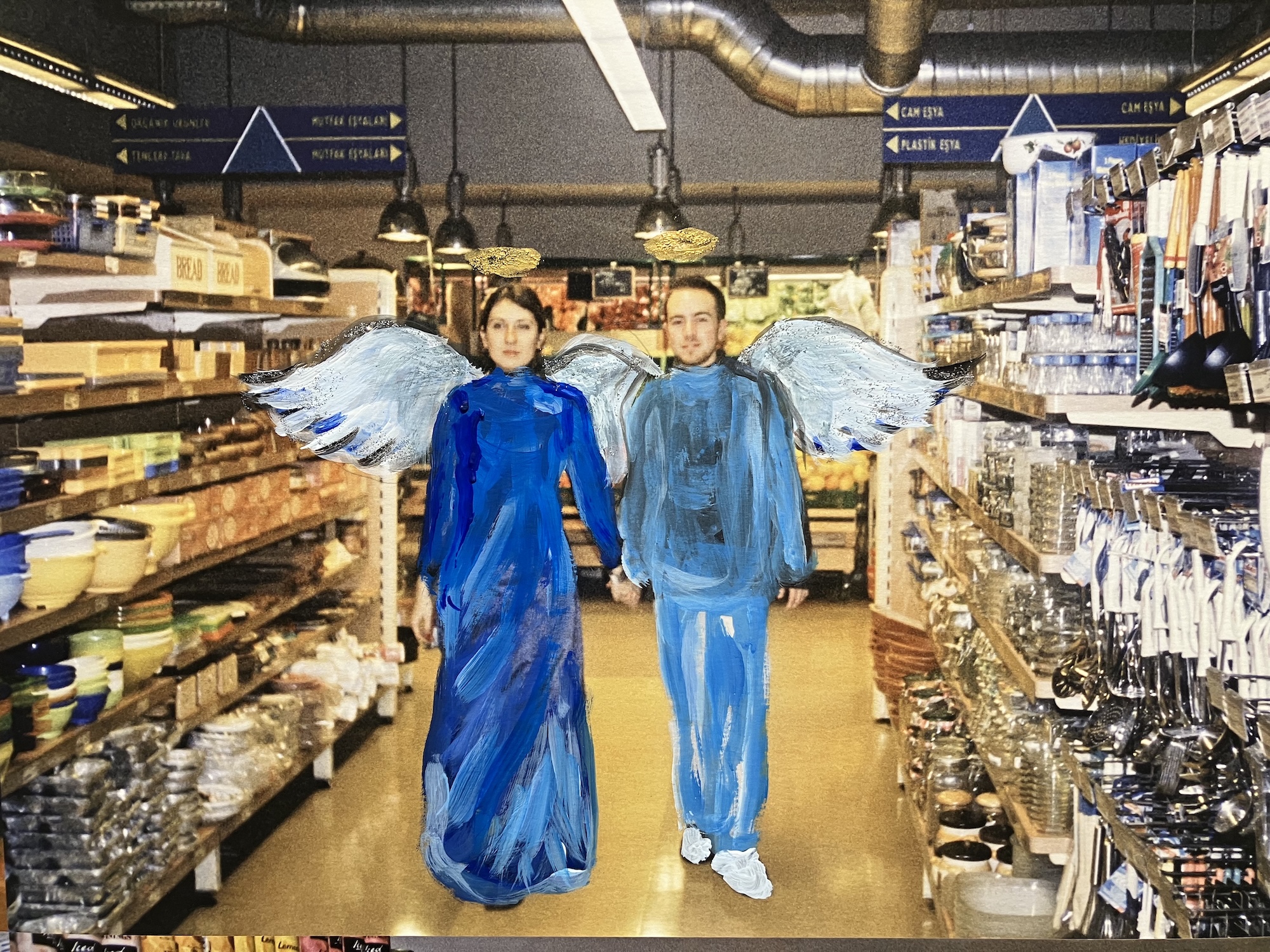
Similarly, Sena Basöz’s Heaven on Earth (ZILBERMAN) introduces a disjunction between idealised space and ordinary environment. Angels appear within the banal setting of a grocery store, collapsing sacred imagery into everyday infrastructure. The work’s “heaven” is not transcendent but constructed through fragile visual and material gestures, producing a tension between aspiration and circumstance. Rather than resolving into a utopian image, it stages the instability of meaning itself — how memory, emotion, and imagination briefly assemble spaces of repair within an otherwise ordinary and contingent world.
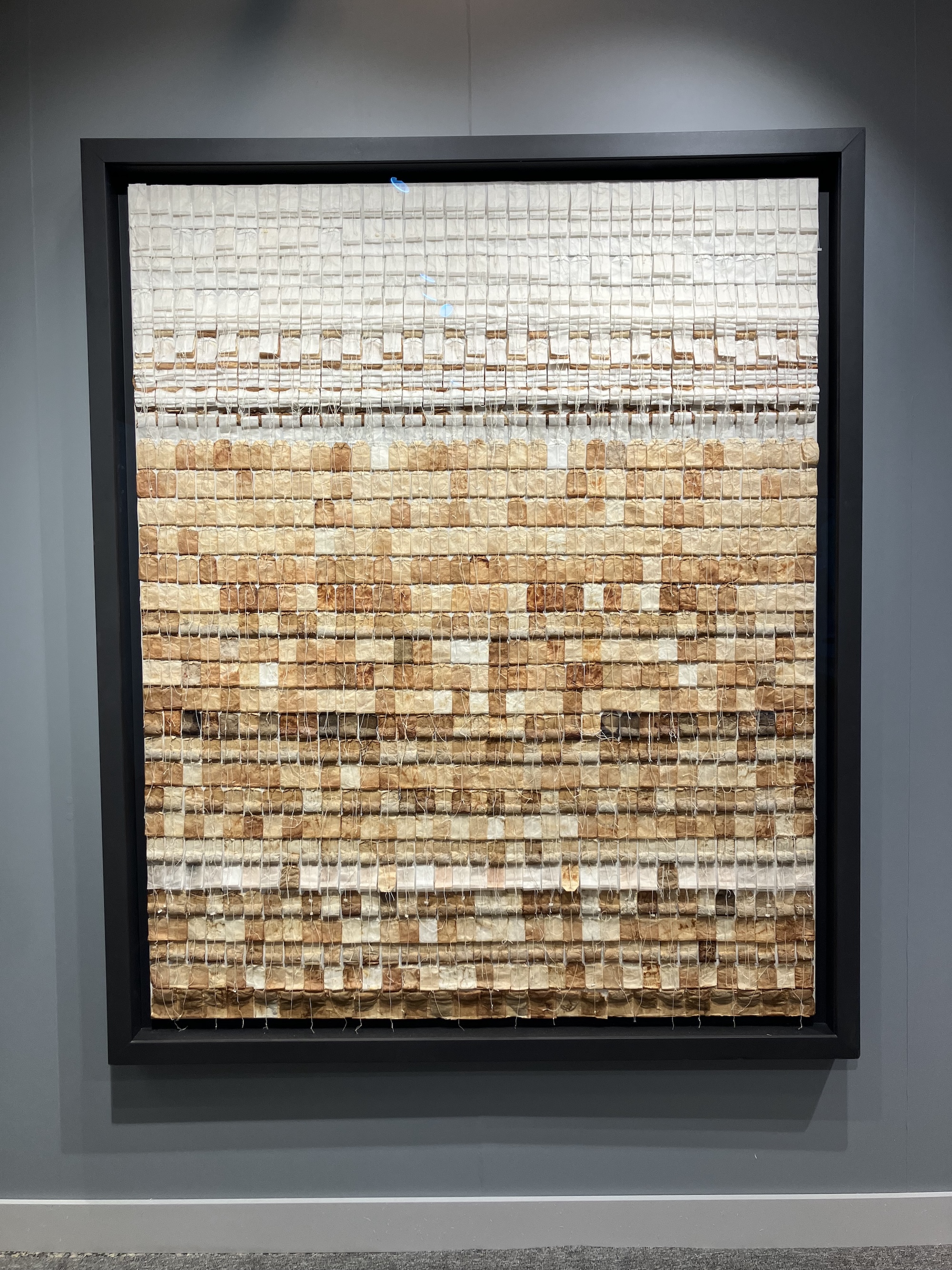
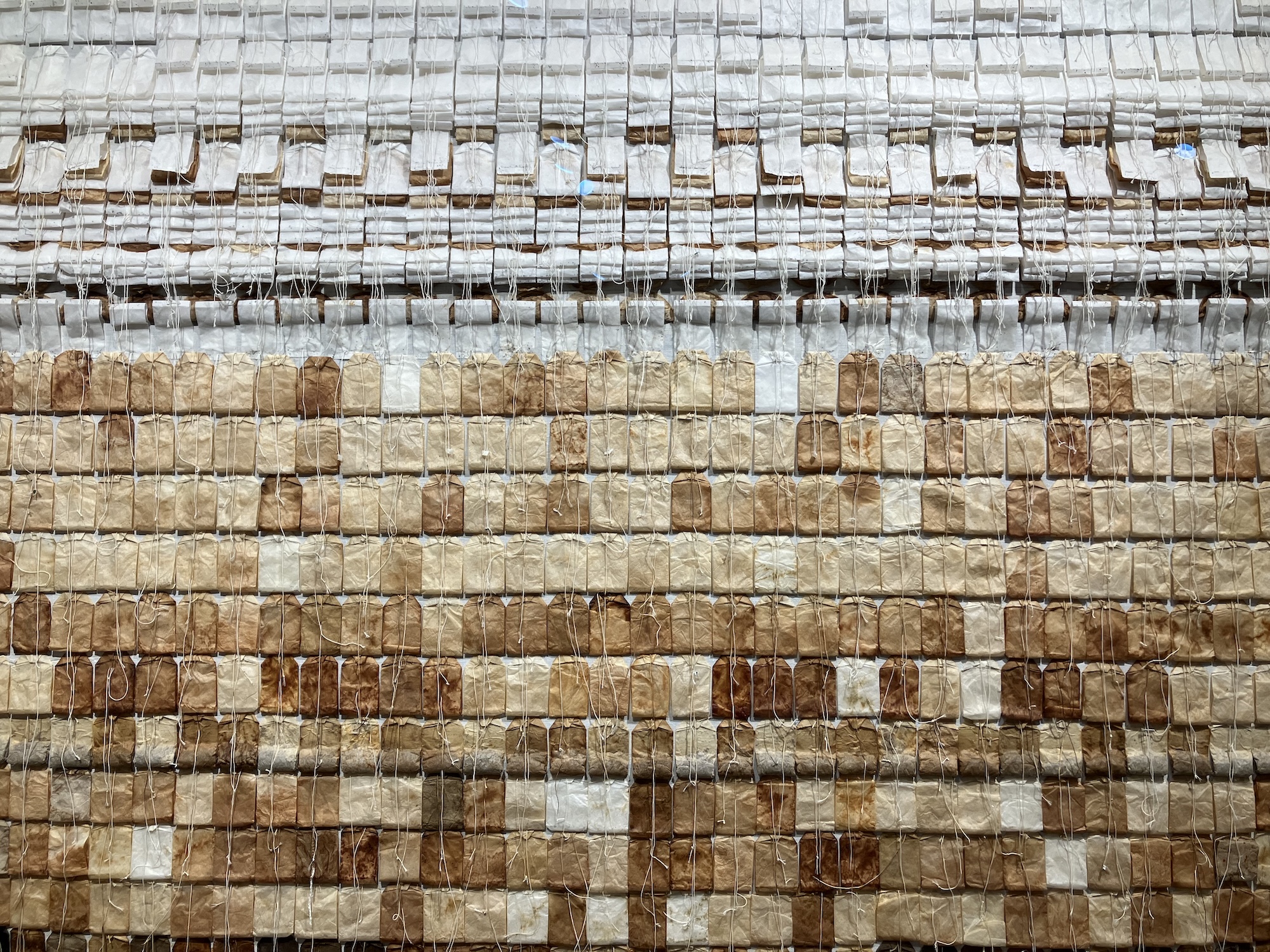
A related attention to the ordinary as a carrier of meaning appears in Armén Rotch’s tea bag works (Galeri 77), where minimal collages and installations transform an everyday commodity into both subject and material. The works unfold through repetition, texture, and restraint, shifting value away from spectacle toward subtle accumulation. Once a luxury object circulated globally, tea becomes in Rotch’s hands a trace of shared rhythms of use and consumption — breath-like, repetitive, and collective. Read through an Arte Povera sensibility, this reduction of means opens a quieter register of meaning, where modest materials carry historical and sensory weight.
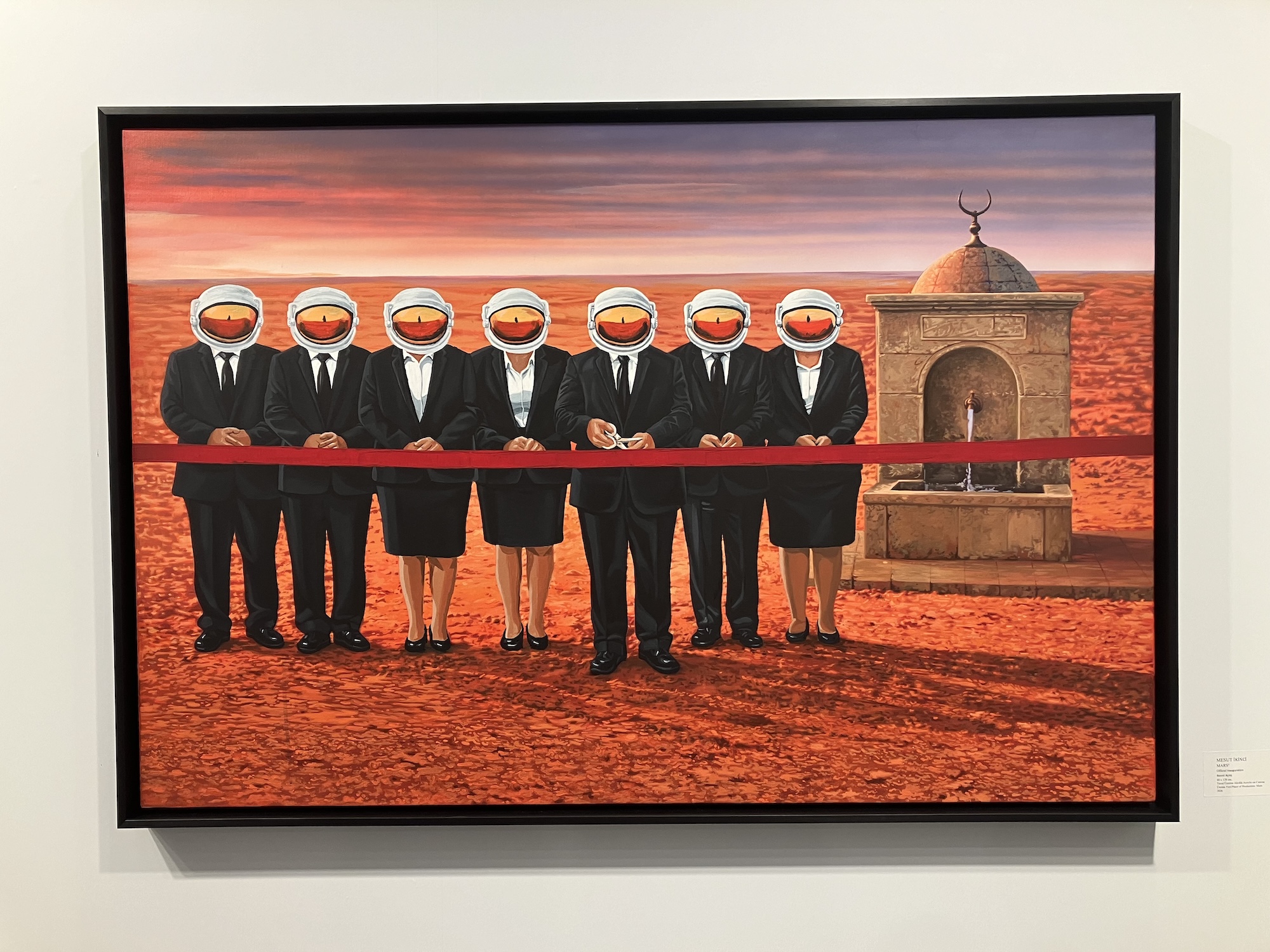
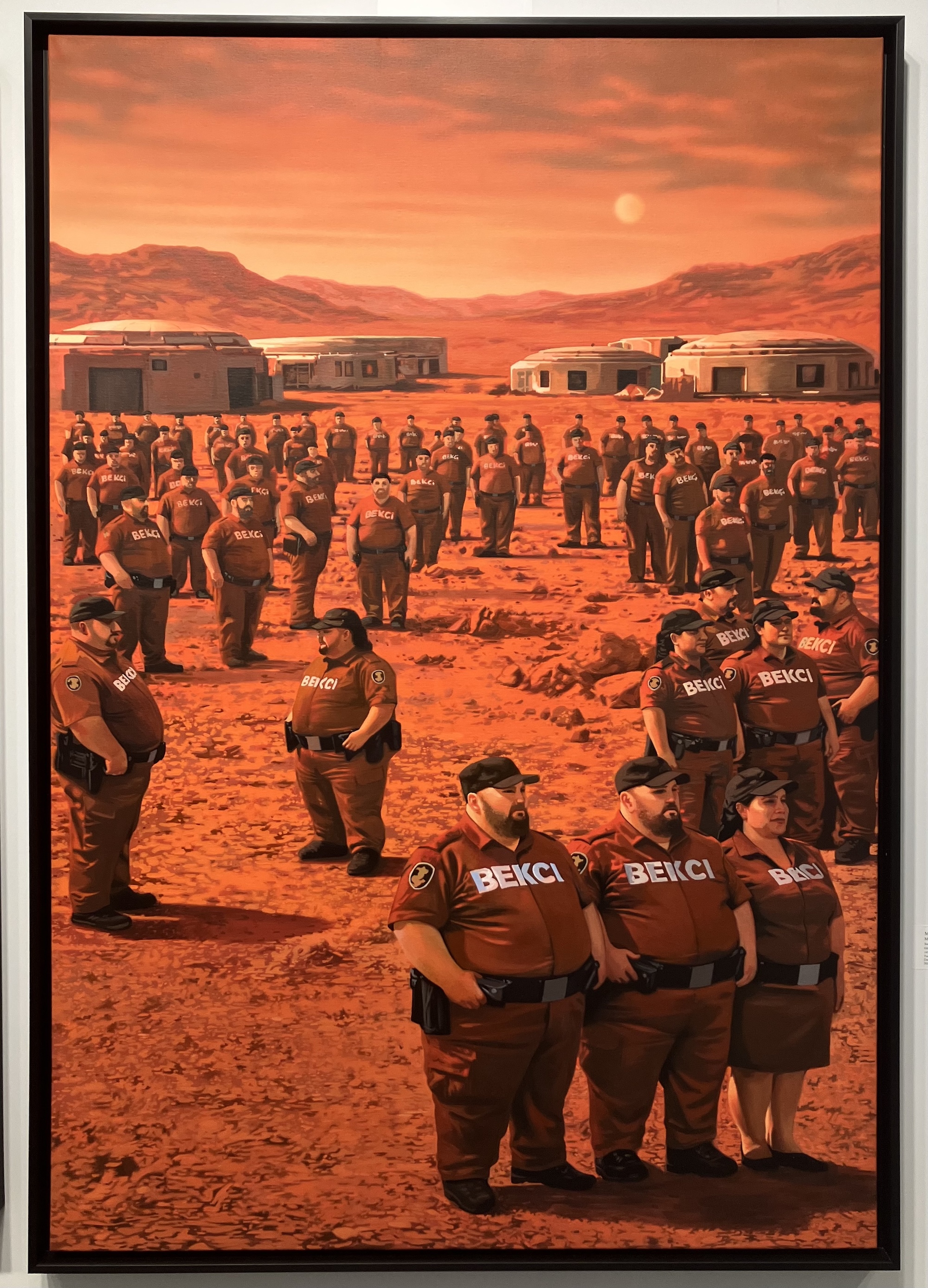
Mesut Ikinci’s paintings (DG Art Gallery & Project) extend this logic of instability into figurative scenes that remain recognisable but never fully legible. Bureaucratic and policing figures appear at the founding of Mars; an environments that feel familiar yet structurally unclear, where authority is present but its logic is withheld. Meaning emerges through repetition, erasure, and accumulation rather than narrative clarity, so that recognition is constantly undermined by ambiguity. What initially reads as documentary slips into something more suspended, where social systems are visible only as partial traces.
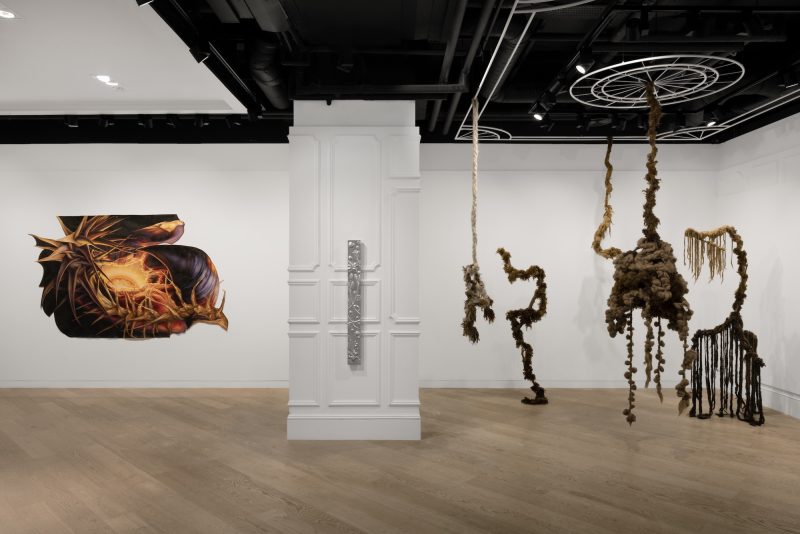
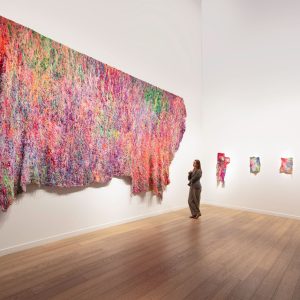
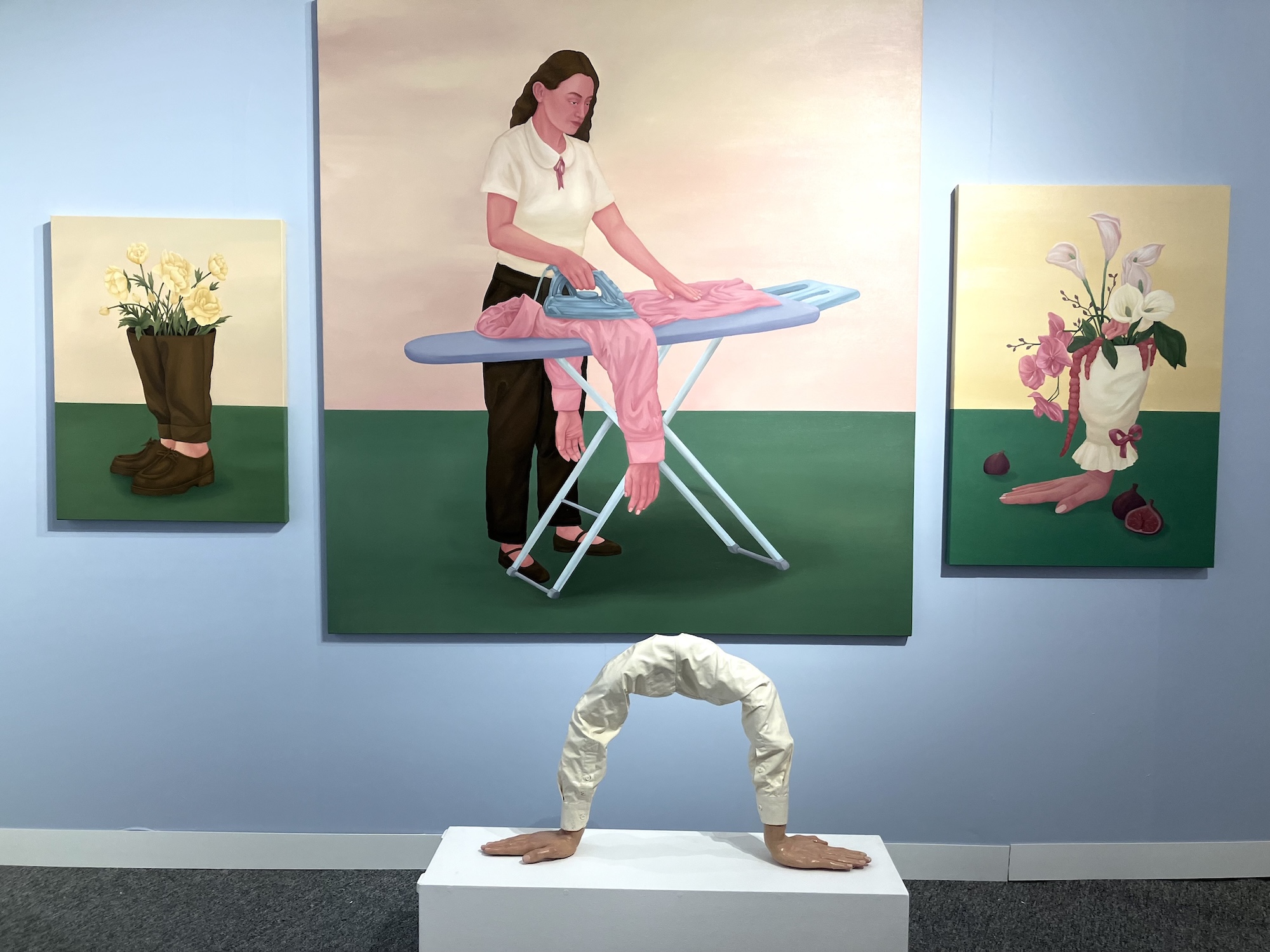
Ece Haskan’s installations (Martch Art Project) similarly operate through assemblage and fragmentation, bringing discrete elements into unstable relation. Disembodied, interlocking forms suggest systems of support that are never fully secure, as if identity and structure are held together only provisionally. Across shifting configurations, familiar motifs are pushed just beyond recognition, producing a space that hovers between coherence and distortion.
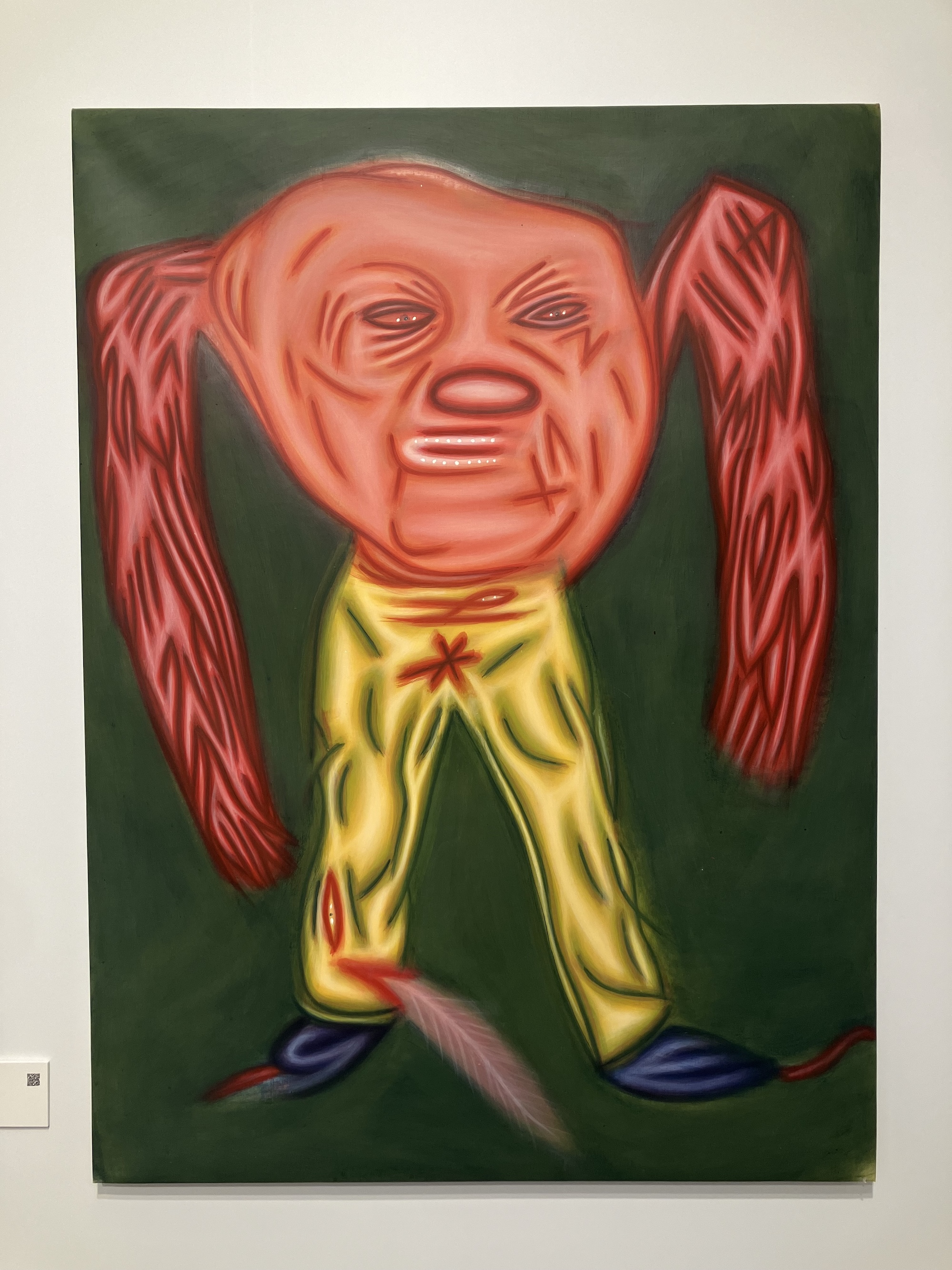
Güclü Öztekin’s (Dirimart) presents a non-identifiable figure that hovers somewhere between the human and the object, vaguely resembling a personified potato. The form is rounded, soft-edged, and ambiguous, resisting any clear anatomical or narrative reading. It suggests a body, but does not go so far as to confirm one. The effect is both slightly humorous and unsettling, as the figure feels familiar but refuses to resolve into a character or identity, instead existing as something in-between: part object, part person, and entirely unresolved.
Taken together, these practices articulate a shared condition: meaning is not delivered as a stable category or resolved image, but produced through proximity, fragmentation, and slippage. Whether through sacred imagery embedded in everyday space, humble materials elevated through repetition, or figures that resist full legibility, each work operates within a field where coherence is continually assembled and undone at the same time.
CI BLOOM 15th – 19th April, Harbiye, Tasksla Cd. No:8, 34367 Sisli / Istanbul