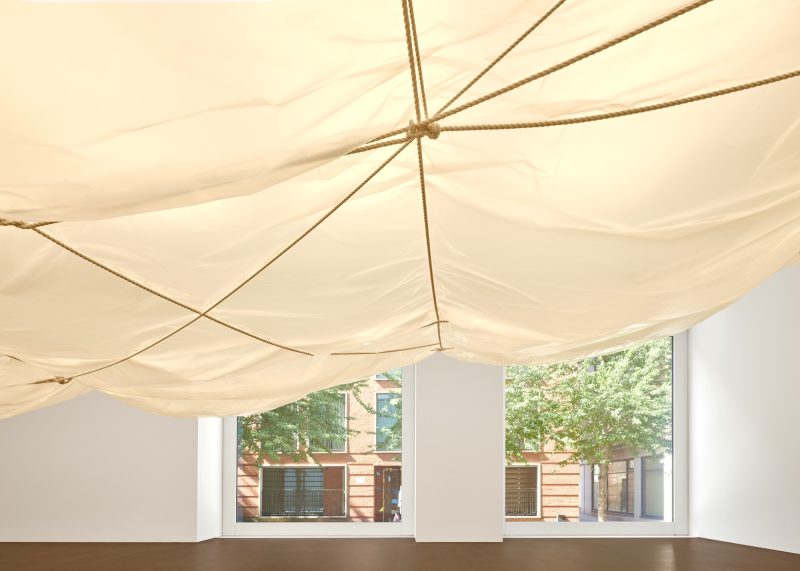
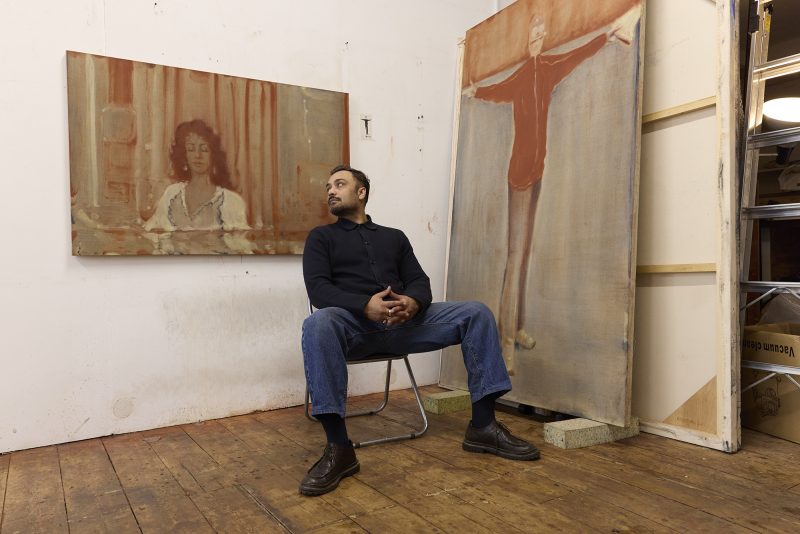
Gagosian will present a focused exhibition of late works by Francis Bacon this April, bringing three monumental paintings together for the first time at its rue de Castiglione gallery in Paris.
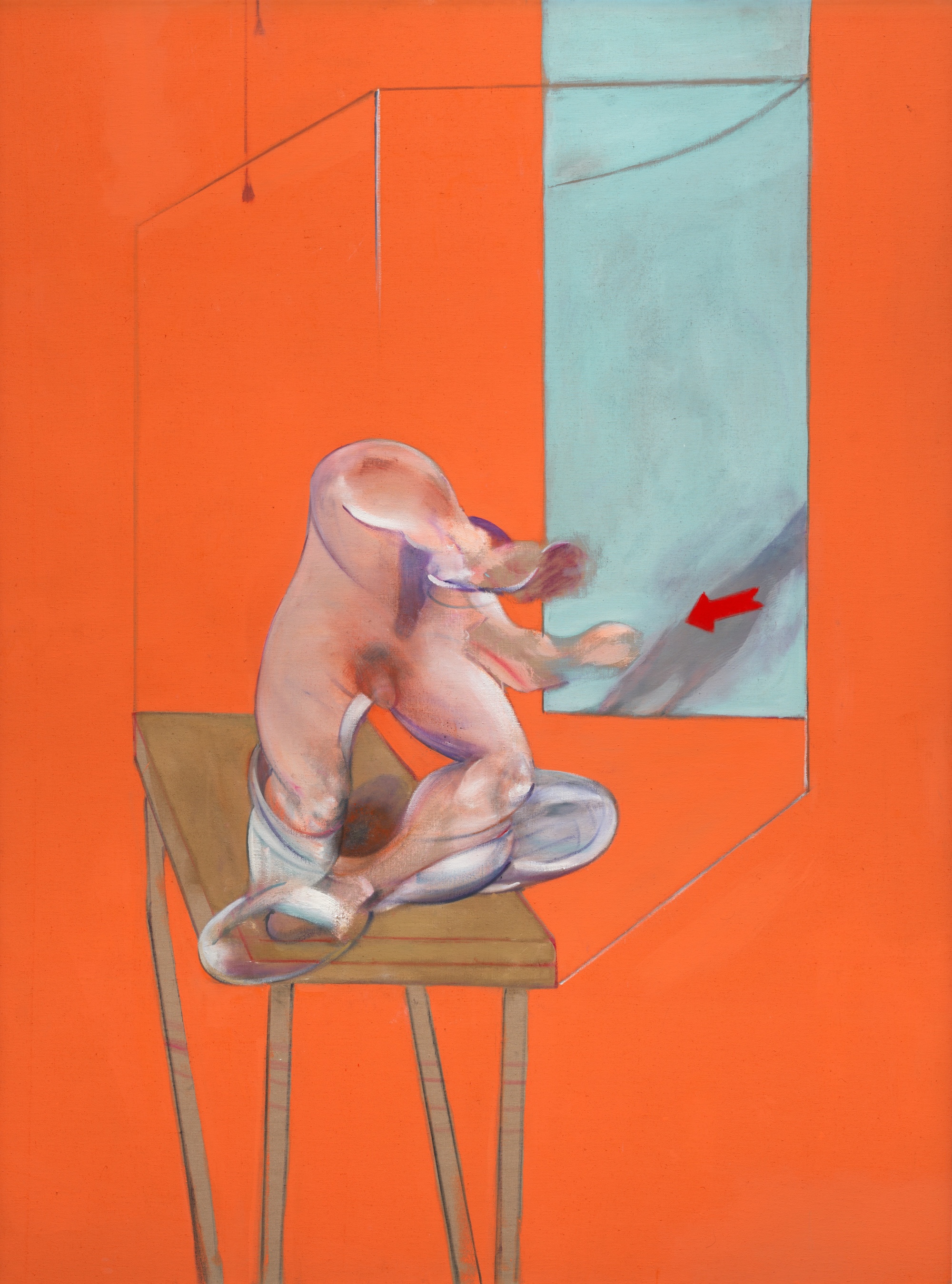
The exhibition centres on Study from the Human Body—Figure in Movement (1982), Study from the Human Body (1986) and Man at a Washbasin (1989–90)—works that distil the formal clarity and psychological charge of Bacon’s final period.
The presentation coincides with the thirtieth anniversary of Bacon’s landmark retrospective at the Centre Pompidou, reaffirming his long-standing relationship with the city, where he maintained a studio and lived intermittently between 1975 and 1987.
Across these canvases, Bacon pares his compositions back to what he once described as “a kind of shorthand”—stripping away excess to confront the body as a site of tension, distortion and sensation. Figures appear suspended within skeletal architectural frameworks, set against saturated colour fields that oscillate between seduction and unease.
In Study from the Human Body—Figure in Movement (1982), a fleshy, truncated figure—often read as a distorted wicketkeeper—occupies a stark, stage-like plane. Rendered against a cadmium orange ground, one of Bacon’s defining chromatic signatures of the early 1980s, the figure’s malformed shadow is mirrored behind it, marking one of the artist’s final uses of reflection as a destabilising device.
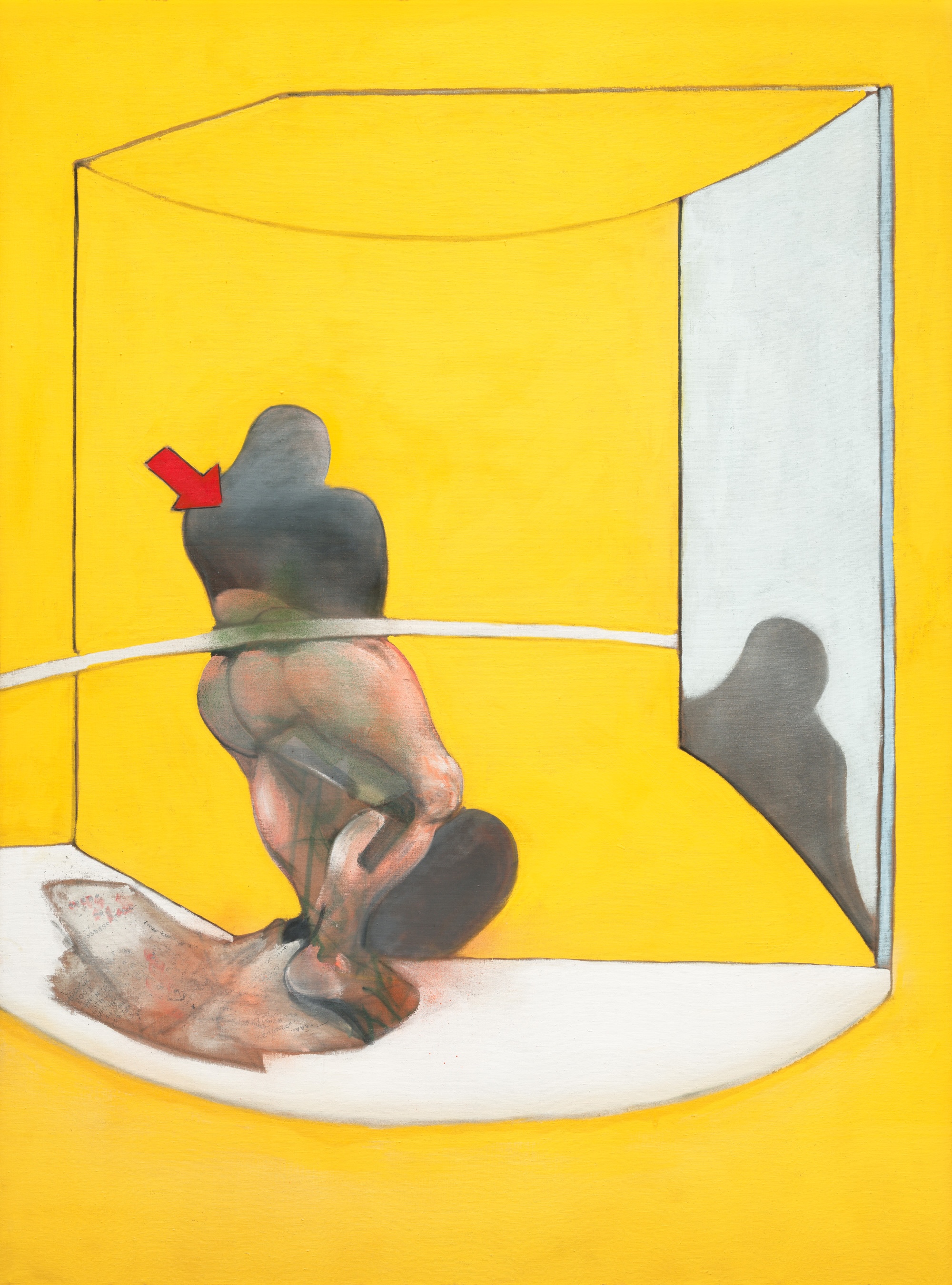
A similar doubling unfolds in Study from the Human Body (1986), where the figure and its reflection are set against a rare field of luminous yellow. The effect heightens both immediacy and estrangement, the body appearing at once present and dislocated within its own environment.
By contrast, Man at a Washbasin (1989–90) shifts into a quieter, more introspective register. Returning to a subject first explored in 1954, Bacon introduces a muted grey palette that deepens the psychological weight of the scene. The hunched figure—legs splayed in a pose drawn from Eadweard Muybridge’s Man Shadow Boxing (1887)—suggests a body caught in private ritual or aftermath, often read in relation to the death of his partner George Dyer in Paris in 1971. The sculptural handling of the figure also recalls Bacon’s engagement with Auguste Rodin, particularly in its sense of instability and flux.
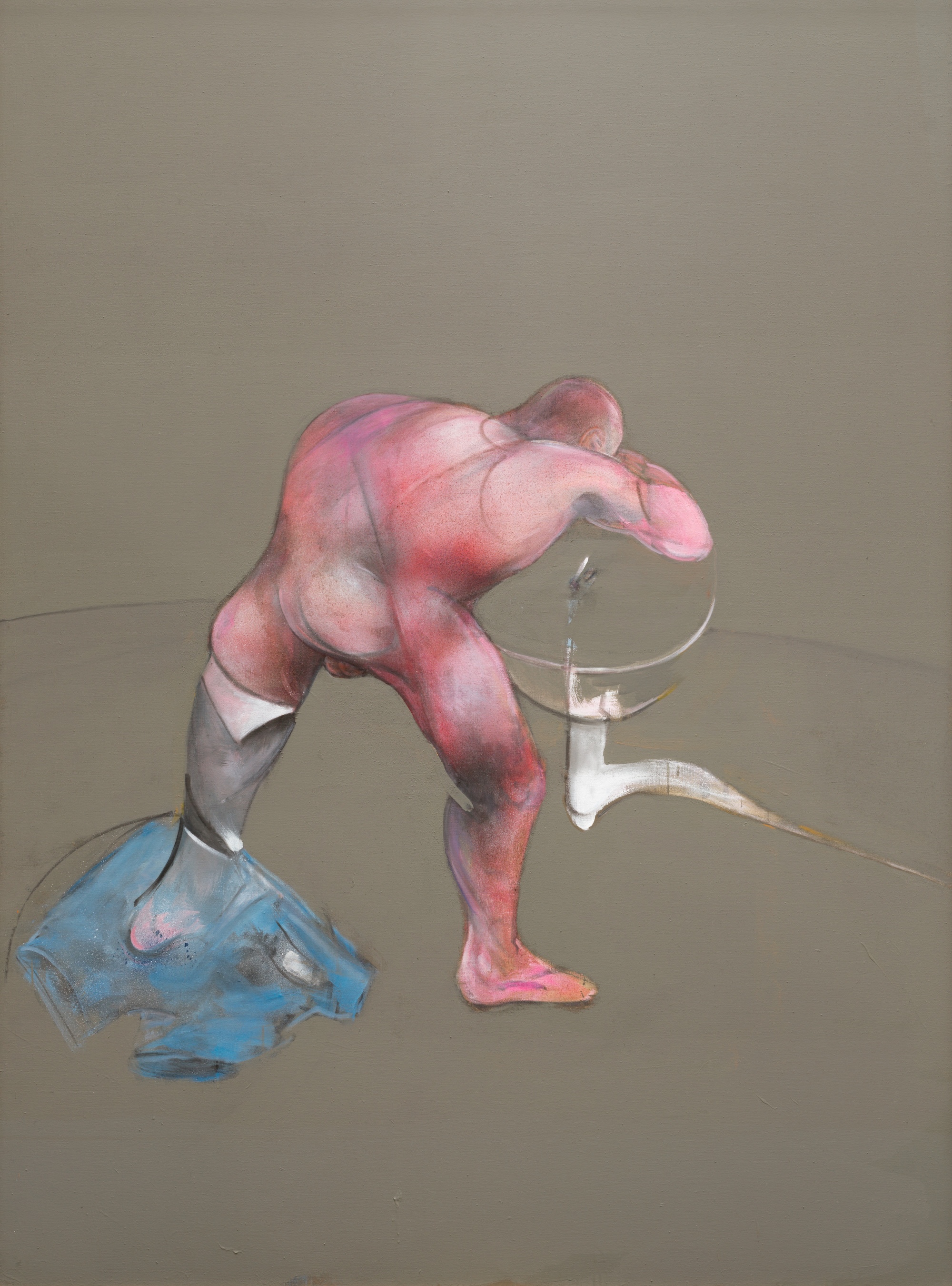
Rather than depicting movement directly, these works register its residue—what remains after action, emotion, or force has passed through the body. As Gilles Deleuze observed, Bacon’s painting
“does not represent violence, it makes visible the violence of the forces exerted on the body.”
Seen together, the three paintings suggest a late practice marked not by reduction but by renewed intensity. As art historian Richard Calvocoressi has argued, Bacon’s final works reveal an imagination still evolving—finding ever more concentrated combinations of colour, structure and form.
In Paris, this forthcoming presentation offers a rare opportunity to encounter that late vision in its most distilled and uncompromising form.
FRANCIS BACON, April 11th–May 30th, 2026, Gagosian, rue de Castiglione, Paris
About the artist
Courtesy Gagosian
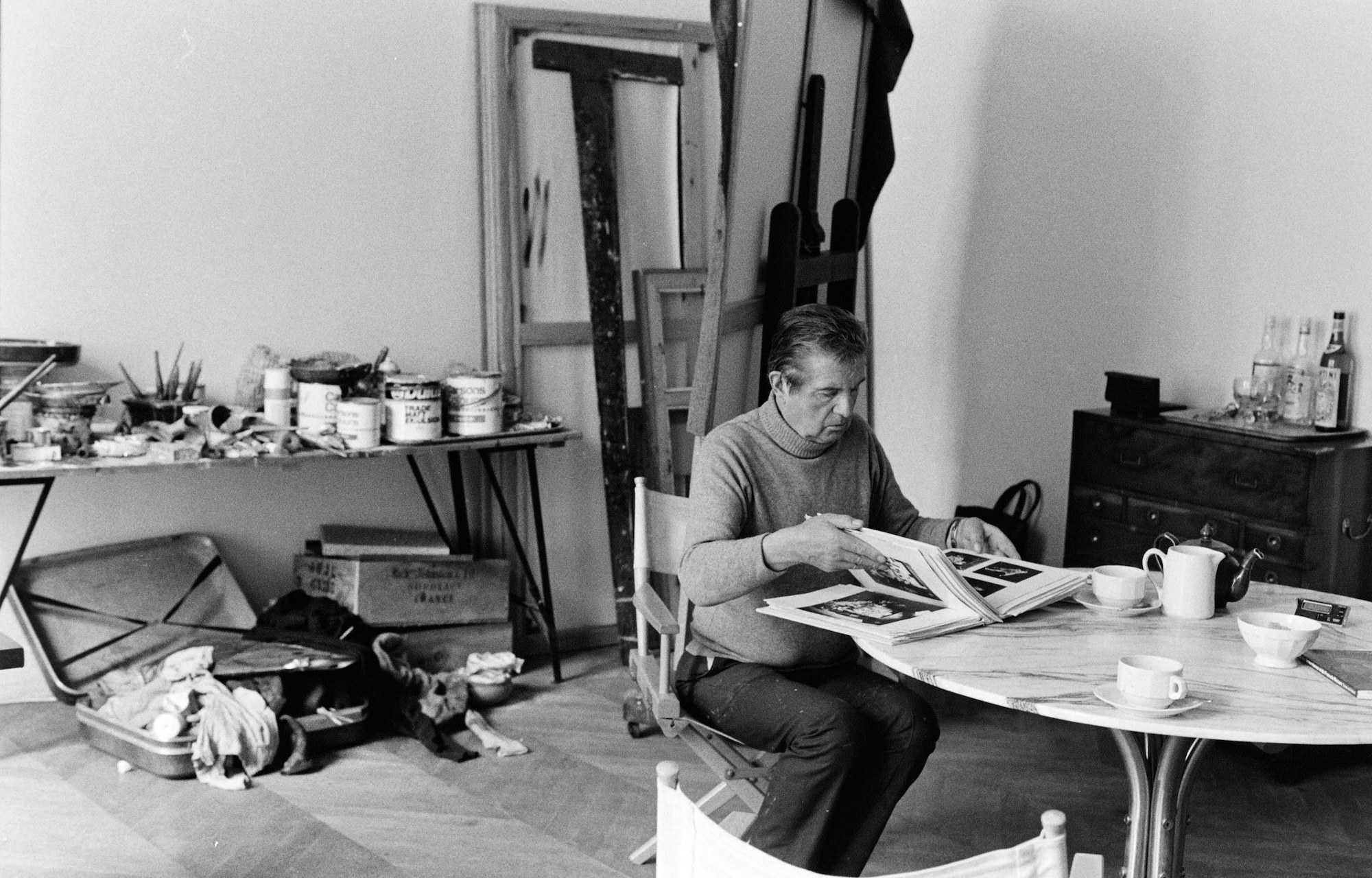
Francis Bacon (1909–1992, Dublin, Ireland) was an Irish-born British painter known for intense, emotionally charged figurative paintings. Francis Bacon’s work focused on the human body, often depicting distorted figures, screaming faces and isolated subjects set within stark, geometric spaces. His paintings explored themes of violence, mortality and existential anxiety.
Bacon developed a distinctive visual language using loose brushwork, smeared paint and blurred forms to convey movement and psychological tension. Influenced by photography, film stills and art history, he frequently reworked images of portraits, crucifixions and the human figure. Francis Bacon’s compositions often place figures within cage-like structures or empty interiors, emphasising isolation and vulnerability.
Francis Bacon exhibited internationally and is widely regarded as one of the most important painters of the 20th century. His work has had a lasting influence on contemporary figurative painting, particularly in its exploration of the body, emotion and the darker aspects of human experience. MORE