Contemporary film photography is no longer confined to a niche subculture. It is steadily evolving into a fully fledged industry where photo labs are increasingly expected to do more than simply process negatives. Today, collaboration, a rethinking of scanning practices, and deeper involvement in shaping the final image are becoming part of the role.
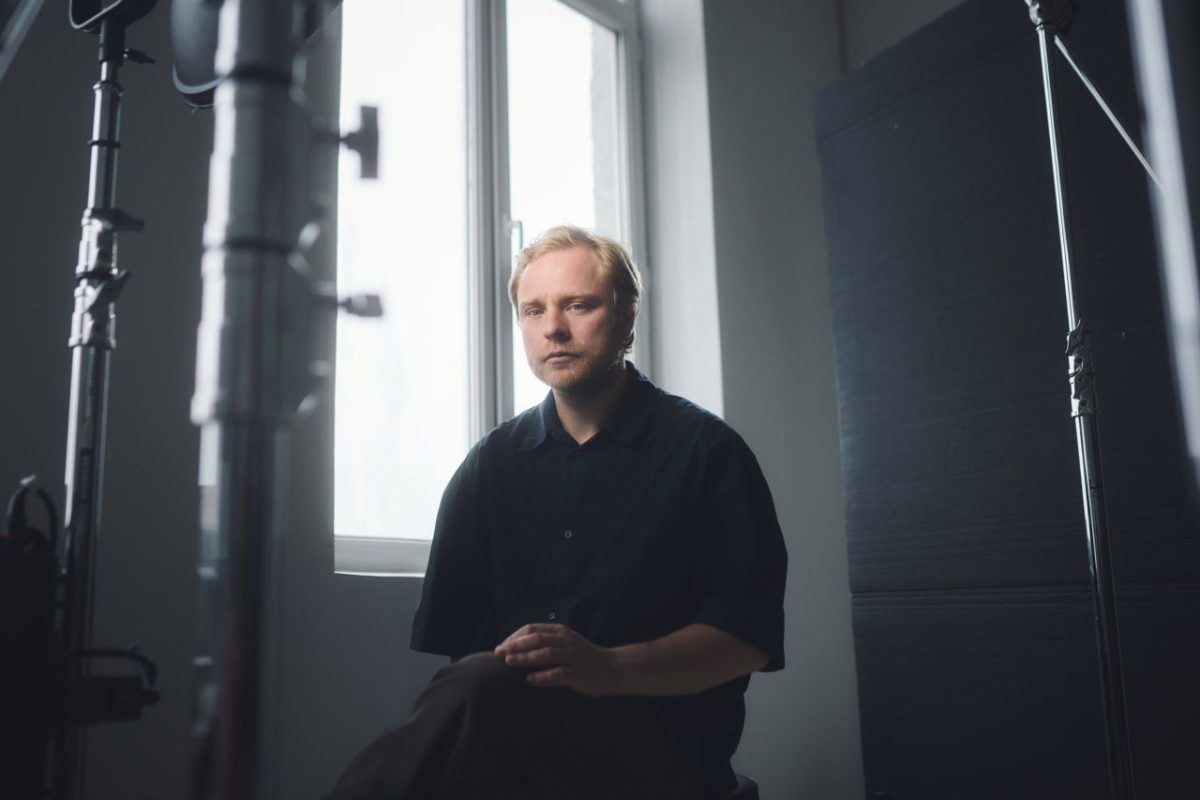
Aleksei Komoza, co-founder of the international photo-lab network Karmir Film Lab and a researcher of analogue photography, operates at the intersection of technological innovation and artistic practice. Under his leadership, the company has introduced new approaches that push film workflows toward an entirely different level.
Through his work, Aleksei Komoza consistently advances an understanding of film photography as a complex professional process, where shooting is only part of the equation. Equally important are the methods of scanning, the interpretation of the image, and the handling of material after development. He has introduced a range of original solutions in scanning and post-production, positioning the lab not simply as a service provider but as both a technological and creative partner. Komoza’s projects span commercial, artistic and archival photography, contributing to a redefinition of what a contemporary photo lab can be and how deeply it can participate in shaping the photographic outcome.
Karmir Film Lab was founded in 2020 in Yerevan, Armenia. Until 2022, the lab developed as part of the independent production studio Black Dot Film. During this period, the team worked across shooting, processing, scanning and post production at the same time, gaining rare hands-on experience of the full professional film workflow. This practice allowed them to build a deep understanding of how exposure, development and scanning influence one another and shape the final visual result, a principle that later became central to the lab’s methodology.
In 2022, Karmir Film Lab shifted to a service-driven model as part of Aleksei Komoza’s development strategy, opening the lab to a broader audience. About a year and a half later, a second location opened in Belgrade. Today, the network includes two operating labs, and Karmir LA is currently being prepared ahead of its Los Angeles opening.
A key focus of Karmir Film Lab’s work has become film scanning. Aleksei Komoza notes that many photo labs still rely on equipment developed in the 1990s, primarily designed for speed. These systems inevitably compress the dynamic range of film and impose their own colour interpretation, making them less suitable for complex commercial projects, exhibitions and installations. At the same time, photographers’ expectations have shifted noticeably in recent years.
Working with motion picture film gave the Karmir team a clear understanding of the differences between cinema scanners and traditional photo lab systems. This led to the idea of adapting cinema scanning principles to the needs of photography. Under Aleksei Komoza’s direction, the lab developed its own channel-by-channel sampling software, allowing for log scans with an extended dynamic range and more accurate rendering of highlights, densities and tonal transitions. These technologies became the basis of the PRO Scan mode and laid the foundation for the lab’s collaboration with professional photographers.
Building on this approach, Karmir Film Lab developed a research-driven practice focused on creating its own method of film scanning. Under Aleksei Komoza’s direction, the team works with professional medium-format monochrome digital sensors without a Bayer colour filter. This approach makes it possible to achieve a level of detail and precision comparable to cinema scanning.
The method has also evolved through work with archival materials. At Karmir Film Lab, multispectral scanning is used, including infrared illumination. This approach allows for a more precise analysis of densities, film damage and complex areas within the image. The technique is applied in collaboration with local archives and the National Cinema Center of Armenia when working with their photographic collections.
According to Komoza, the current focus in both commercial and art photography lies in a collaborative search for colour. Film sets the direction, but the final result is almost always shaped through dialogue between the lab and the author. From the beginning, Karmir Film Lab positioned itself as a space where this exchange could happen. Post production is structured along two paths: scanning followed by digital colour work, and analogue printing using an enlarger and hand processing. Today, scanning has become the main field for experimentation, where the interpretation of the negative and the search for a final visual language take centre stage.
Large-scale fine art printing has become a separate focus within the lab’s practice. At Karmir Film Lab, prints can reach up to 61 centimetres in width and up to 12 metres in length, making it possible to produce both traditional exhibition formats and large installation-based projects.
In 2025, Karmir Film Lab became a partner and sponsor of the Yerevan International Photo Festival. As part of the festival, more than 400 photographs were printed at the network’s Yerevan lab, including works by internationally recognised photographers such as Newsha Tavakolian and Anush Babajanyan.
As art director of Karmir Film Lab’s film stock line, Aleksei Komoza focuses on rethinking the culture of film respooling, a practice that previously existed mainly within enthusiast communities and largely outside the professional photographic industry.
Building on Aleksei Komoza’s ideas, the Karmir Film Lab team systematised this practice and transformed it into a stable, repeatable production process, implemented in a factory setting and designed for consistent results and professional use.
Starting with motion picture films without a remjet layer, the lab also developed branded respools, including rare black-and-white stocks and colour aerial film originally produced for aerial photography. The aerial film, in particular, gained wide recognition for its distinctive sharpness, contrast and rich image character.
The next stage of development will be Karmir LA. The project is conceived as a new wave photo lab that brings together processing, next-generation scanning, post-production and archival work within a single professional space. According to Aleksei Komoza, lab culture is now entering a new phase in which developing independent technological solutions and engaging more deeply with the image itself becomes essential. The innovations introduced by Komoza and Karmir Film Lab in scanning, post-production and material-based practices are becoming part of this broader shift.
In Los Angeles, the team plans to bring together the practices they have developed around analogue culture into a single space, creating a lab where analogue and digital do not exist in opposition but complement each other, expanding the visual language of contemporary photography.
MORE: @karmir.film