In 2026, Compton Verney will bring a rare constellation of Dutch and Flemish Old Master drawings from the Royal Museums of Fine Arts of Belgium to the heart of Warwickshire — many of them never before seen in the UK.
Bruegel to Rembrandt: Drawing Life, Sketching Wonder brings together 64 works by 50 artists, including exceptional and little-known drawings by Pieter Bruegel the Elder and Rembrandt van Rijn. Many of the works are so fragile they are rarely shown publicly, making this exhibition an unusually intimate encounter with some of the greatest draughtsmen of the 16th and 17th centuries.
Travelling from Brussels, the selection includes works by Rubens, Jordaens, Avercamp and Jacob van Ruisdael, with 50 drawings never before exhibited in the UK and five that have never left Belgium. Ranging from finely worked watercolours and detailed ink studies to quick, searching sketches, the exhibition reveals drawing as the most immediate of art forms — a way of looking over an artist’s shoulder across five centuries.
These works capture a world at once familiar and distant: a sleeping spaniel, a woman fixing her earrings, tangled bedsheets, quiet moments of leisure, local landscapes and imagined far-off places. Together they trace how Dutch and Flemish artists moved increasingly towards realism, drawing directly from life as they grappled with a rapidly changing world shaped by religious upheaval, political tension, migration and colonial expansion.
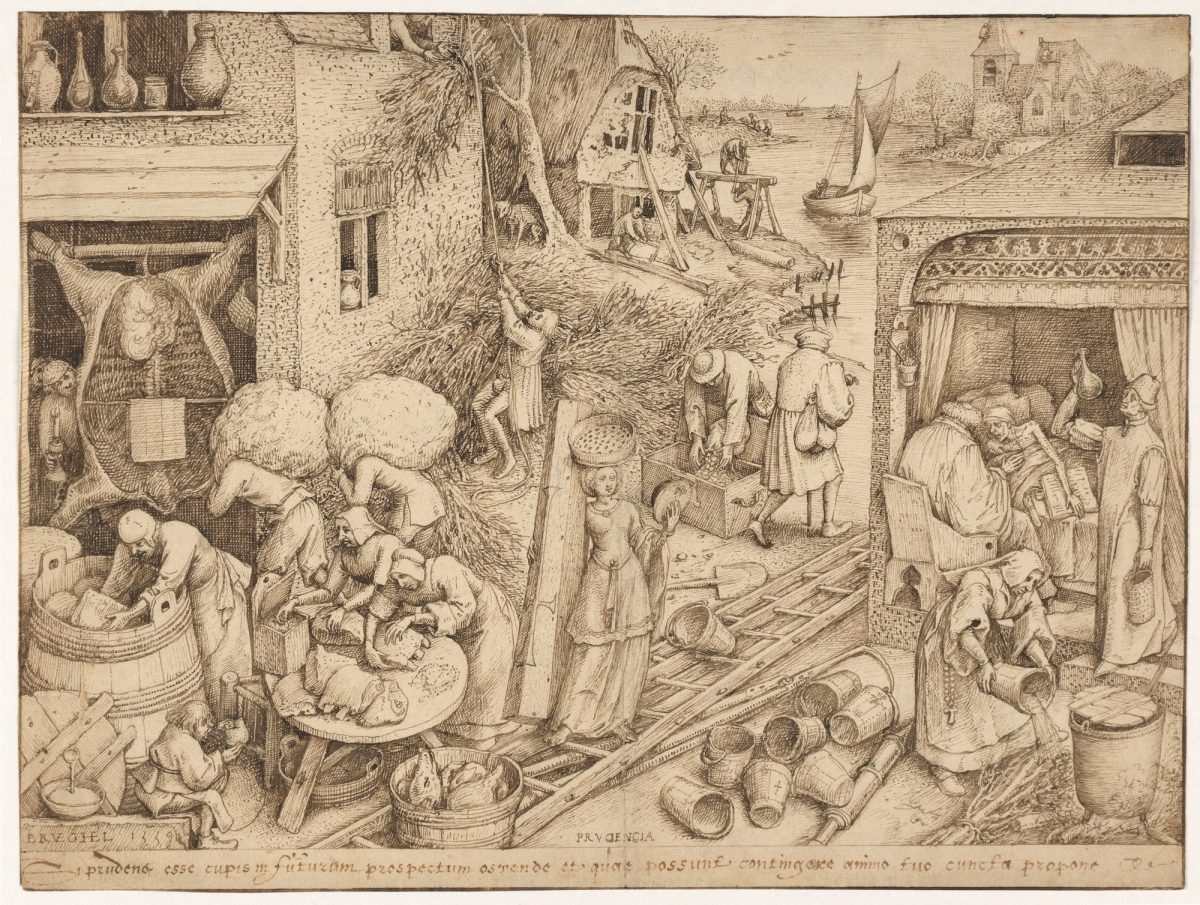
Among the exhibition’s centrepieces is Bruegel’s drawing of Prudence from his celebrated series of the Seven Virtues. Rich in detail and observation, it marks a shift from his earlier Bosch-like fantasies towards the everyday life of peasants preparing for uncertain times — storing food, repairing buildings and gathering firefighting tools. The drawing will be shown alongside two related Bruegel prints from the Ashmolean, offering rare insight into how his images circulated.
Another highlight is a double-sided sketch by Rubens, with one side preparing a religious scene and the other a mythological subject — a vivid glimpse into his habit of reusing paper to capture ideas as they arrived. Nearby, a drawing after Tintoretto shows Rubens confidently “improving” the original, underscoring drawing’s role as both tool and testing ground.
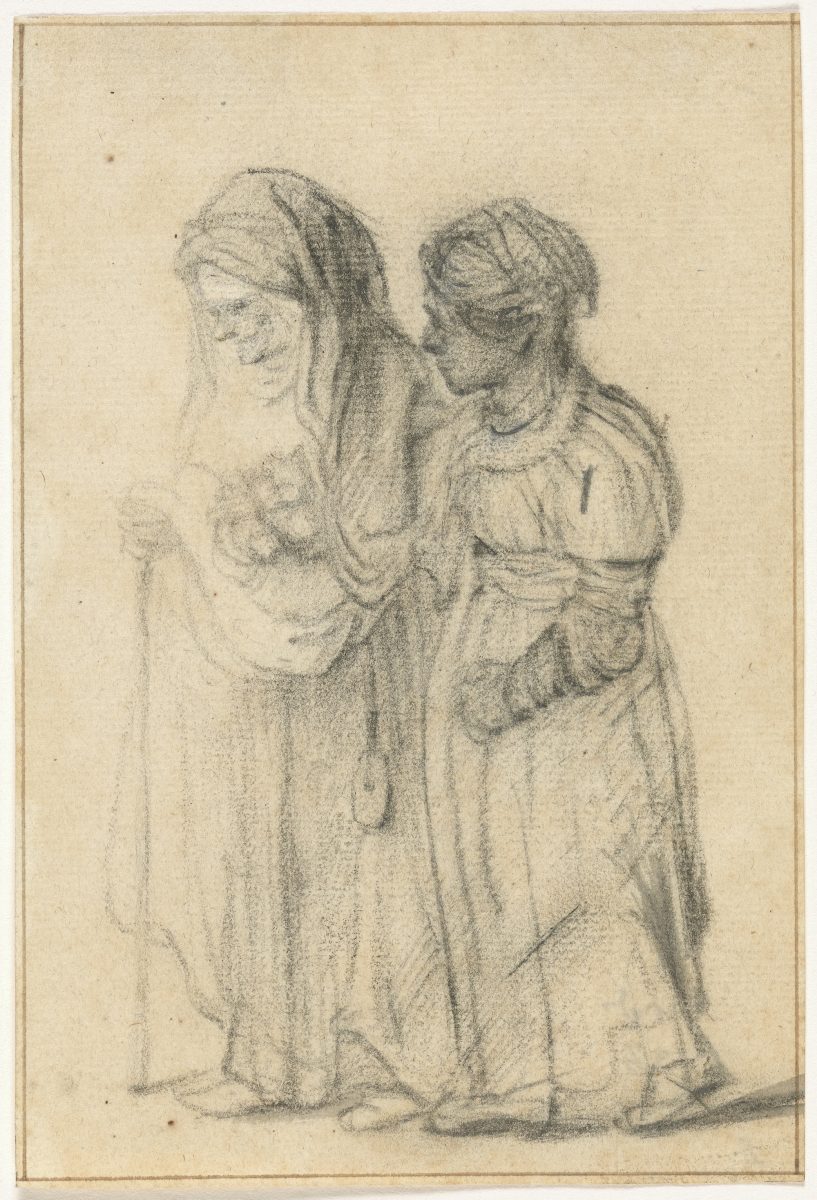
Rembrandt appears through two sparingly drawn yet deeply expressive tronies, alongside a tender scene of an elderly woman walking with a younger companion — works that blur the line between observation and memory, raising questions about when the artist drew from life and when he worked from the rich archive of his imagination.
The Brussels drawings are complemented by paintings, prints and works on paper from major UK collections including the National Gallery, the Royal Collection Trust, the Ashmolean, Dulwich Picture Gallery and Sir John Soane’s Museum. These include Gerbrand van den Eeckhout’s Rebecca and Eliezer at the Well (1661, National Gallery), reunited for the first time with its preparatory drawing from Brussels; Frans Post’s A Village in Brazil (1652, Royal Collection), shown alongside his rare drawing of enslaved labourers at a sugar press; and luminous natural studies by Maria Sibylla Merian, charting insects in Dutch Suriname.
A radiant early Aelbert Cuyp painting from Dulwich is paired with a contemporary drawing, while a beautifully illuminated 16th-century Flemish Book of Hours reveals how devotional life and everyday observation intertwined across the Netherlands.
Together, these works form a layered portrait of a period in flux — where faith, politics, trade and imagination collided — and where drawing became a vital way to understand, test and record a changing world.
“Bruegel to Rembrandt reveals the magic of drawing, as both an artistic tool and a means of storytelling.”
explains Curator Jane Simpkiss
“Equipped with just ink and chalk, these artists captured life in all its beauty, struggle and complexity during a period of extraordinary social, political and religious change. Look closely and you’ll see not just technical brilliance, but the imagination behind each stroke. Often combining elements from the real world, with imaginative details based in history or fantasy, these drawings offer fascinating artistic interpretations of a changing world, while taking us on an incredible journey into the minds of the Old Masters.”
Bruegel to Rembrandt is supported by the Tavolozza Foundation. With support from the Delegation of Flanders to the UK and Ireland and VISITFLANDERS.
About
Compton Verney is Britain’s leading art space in a park. We’re home to six world-class art collections, a programme of exciting exhibitions, a sculpture park and a café – with acres of gardens and meadows to explore and enjoy. And all of this in a Robert Adam house, set in a Capability Brown landscape. We’re a space where all sorts of things can happen. We’re a charity that connects people with art, nature and creativity. And we do this by being collaborative, sustainable, bold, inclusive and fun. With so much going on here, and with such a warm welcome, we offer our visitors a day full of joy. @compton_verney