
On October 13th this year, YDP (Yan Du Projects) opened its inaugural exhibition, Duan Jianyu: Yúqiáo, marking the artist’s first major solo presentation in the UK in over a decade.
Featuring twenty new paintings and a group of sculptures, the exhibition showcases Duan’s recent explorations of narrative form and symbolic displacement. The title derives from the classical motif of yúqiáo (“the fisherman and the woodcutter”), a pair of reclusive figures that has appeared repeatedly in Chinese literati painting and philosophical writings since the eleventh century. Traditionally, they are depicted as sages standing at a remove from worldly affairs—symbols of a transcendent relationship to nature, history, and time. Duan, however, does not merely reiterate these lofty associations; instead, she seeks to dismantle the unity and coherence that tradition has imposed upon them.
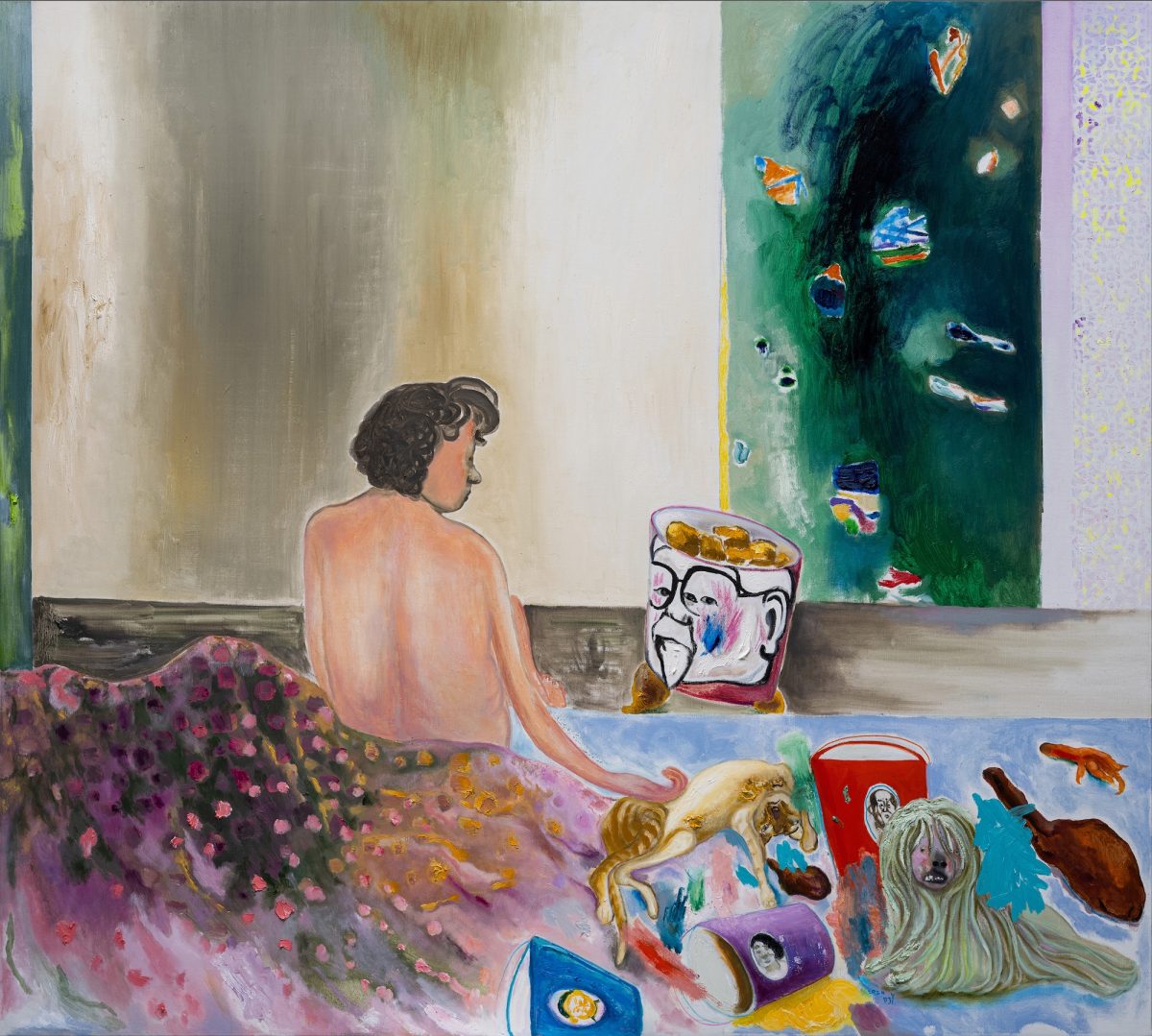
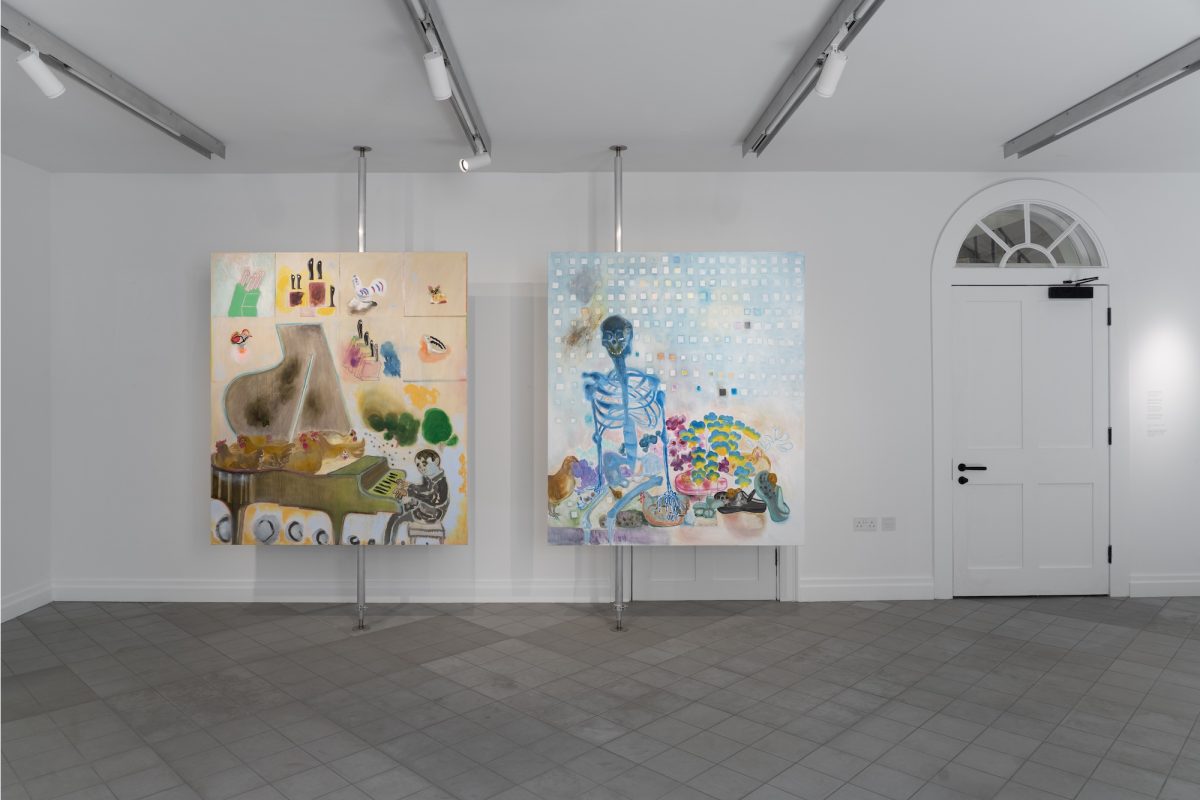
Stepping into the gallery, I was immediately struck by Duan’s sweeping brushwork and her vivid, leaping yet remarkably harmonious use of colour. As someone who also paints, I was stunned by the looseness and vitality of her surfaces. My first impression was: the artist paints with freedom—there is a boldness, even a heroic spirit—yet she also handles her materials with remarkable sensitivity. The exaggerated contrasts of colour, the precise yet economical modelling, the composition, the lively expressions, the intentionally crude and playful strokes, the quirky figures, even the KFC tucked into a pair of slippers—all these details pull you deeper into the work. I seemed to feel her focus and the momentum of her painting process. Looking at her work was exhilarating; I felt entirely seized by that energy.
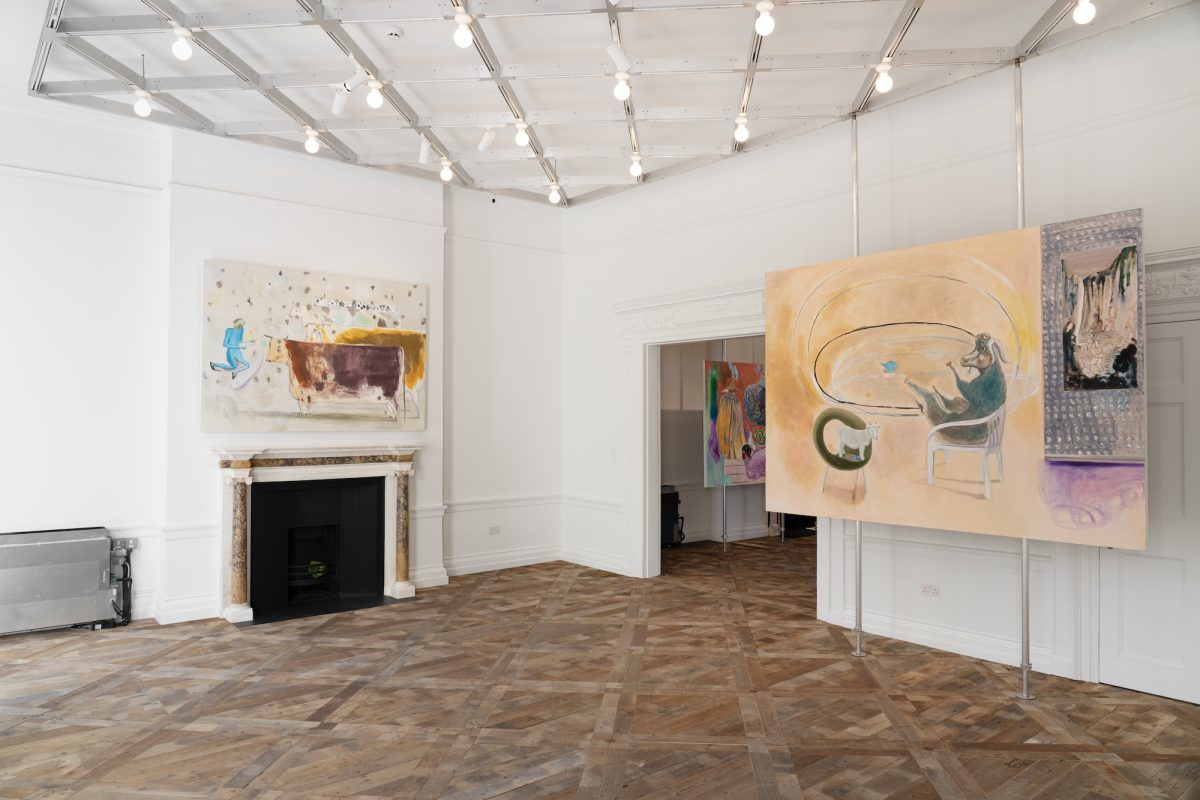
Looking more closely at the content, figures morph between goats, cows, wuxia heroes, a black cat detective, and the artist herself. In the traditional readings cited by the exhibition, the fisherman and woodcutter symbolise timeless withdrawal and wisdom. Yet Duan emphasises their overlooked mundanity. The two fishermen whisper to each other as if delivering commentary on history—much like ordinary people do in everyday life, speculating, chatting, gossiping. She relocates these figures into familiar daily scenes: everyone becomes a form of yúqiáo. Enter the world—eat, sleep, perform ordinary tasks. Exit the world—see through everything, transcend the dust. Duan expresses our collective roles with humour and casualness, revealing hidden narrative drift, contradictions, and psychological tension.Her Yúqiáo series retains the flavour of literati painting, yet it rewrites the archetype into a flexible contemporary visual language. It carries the wisdom of Chinese classical painting—perspective need not be “correct,” as long as the body’s movement is conveyed. In interviews, Duan notes that in Peking opera, a character can turn in place twice to signal travel between cities. Such devices, she says, belong just as naturally to painting. She also mentions that she once wanted to be a writer, and that some works of literature stunned her with their imaginative forms. But literature, theatre, painting—why must they differ? Painting, too, can adopt these expressive strategies. Perhaps this is what draws me so deeply to her work: a form of expression fused entirely with the soul.
Across three floors of YDP, Duan’s imagery moves through pastoral landscapes, cluttered domestic interiors, and anachronistic cityscapes, reflecting the fractured rhythms of contemporary life. The exhibition opens with Yúqiáo No.1 (2023): an elderly goat teaching a young one in a misty landscape—a humorous yet pointed reworking of the classical master-disciple trope. Here, authority and gentle resistance coexist. In No.2, the woodcutter descends not from a mountain retreat but from a childlike, line-drawn hut, approaching his monkey bride and newborn son. Folk imagination, social-media imagery, and domestic life collapse into a single composition, transforming the traditional yúqiáo from a recluse into someone burdened by family obligations and modern absurdity.
On the first floor, Duan continues her strategy of iconographic displacement, drawing from Hong Kong wuxia fiction, socialist realist aesthetics, and her long teaching career. No.4 and No.5 summon grassroots martial-arts heroes, while No.6 reimagines the yiyu funerary figure from ancient tomb sculpture. Her treatment places these motifs in unresolved tensions—between myth and materiality, academic training and vernacular imagery. In No.7, her field photographs of goat herds in Mizhi and Suide become the basis for a diptych where goats question their shepherd about fate, while goat droppings vibrate to the rhythm of his singing.
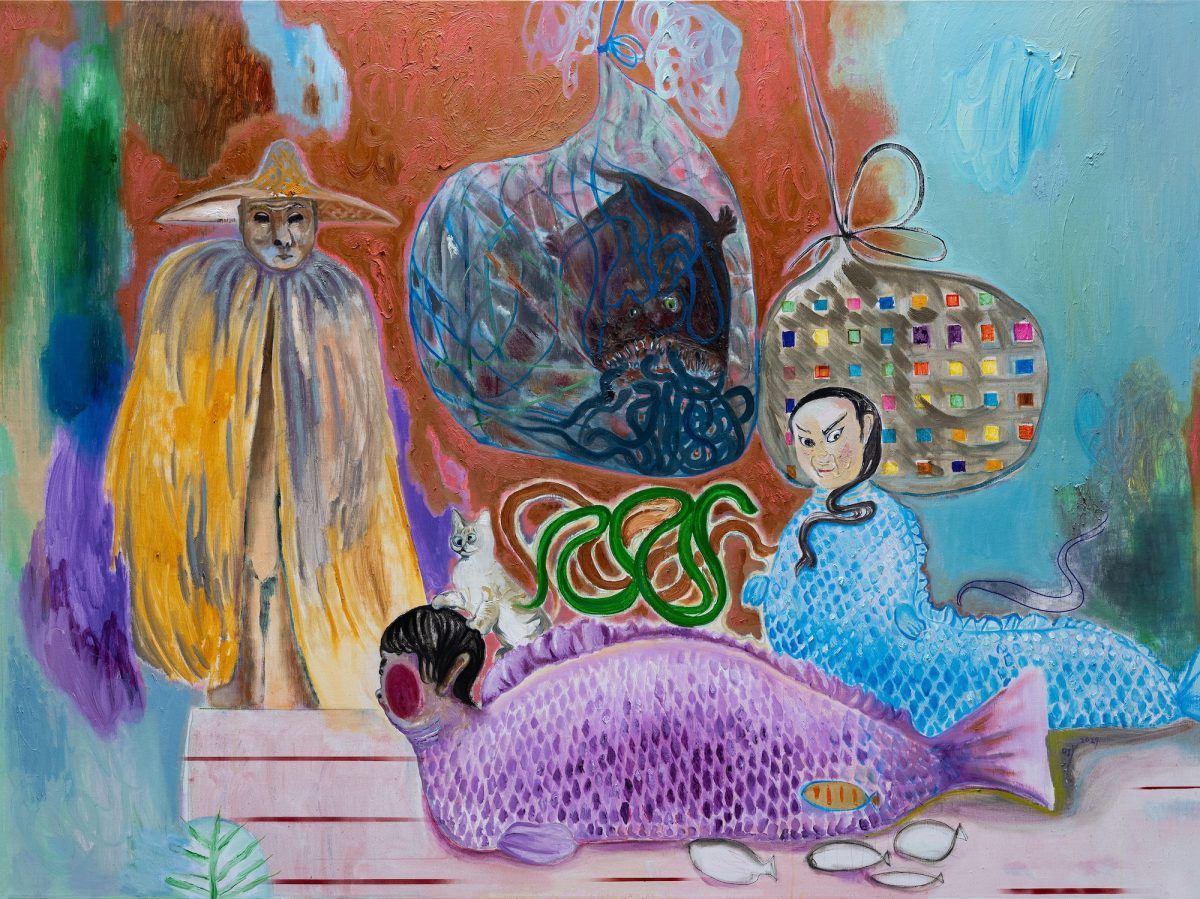
The lower-ground floor presents the most surreal and self-reflective works. No.11 juxtaposes live hens with KFC × Crocs shoes, turning consumption into an aesthetic spectacle that unsettles the boundary between bodies and commodities. No.17 features a female figure engraved on a Swiss Army knife, referencing Neolithic forms while pointing to latent violence in contemporary life—the knife oscillating between a passive object (dao) and an active blade (ren). The series concludes with No.20, in which Duan paints herself in a chaotic domestic environment strewn with fast-food remnants and a painting within a painting. Here, the classical recluse intersects with the modern homebody—humorous, exhausted, navigating the clutter of survival.
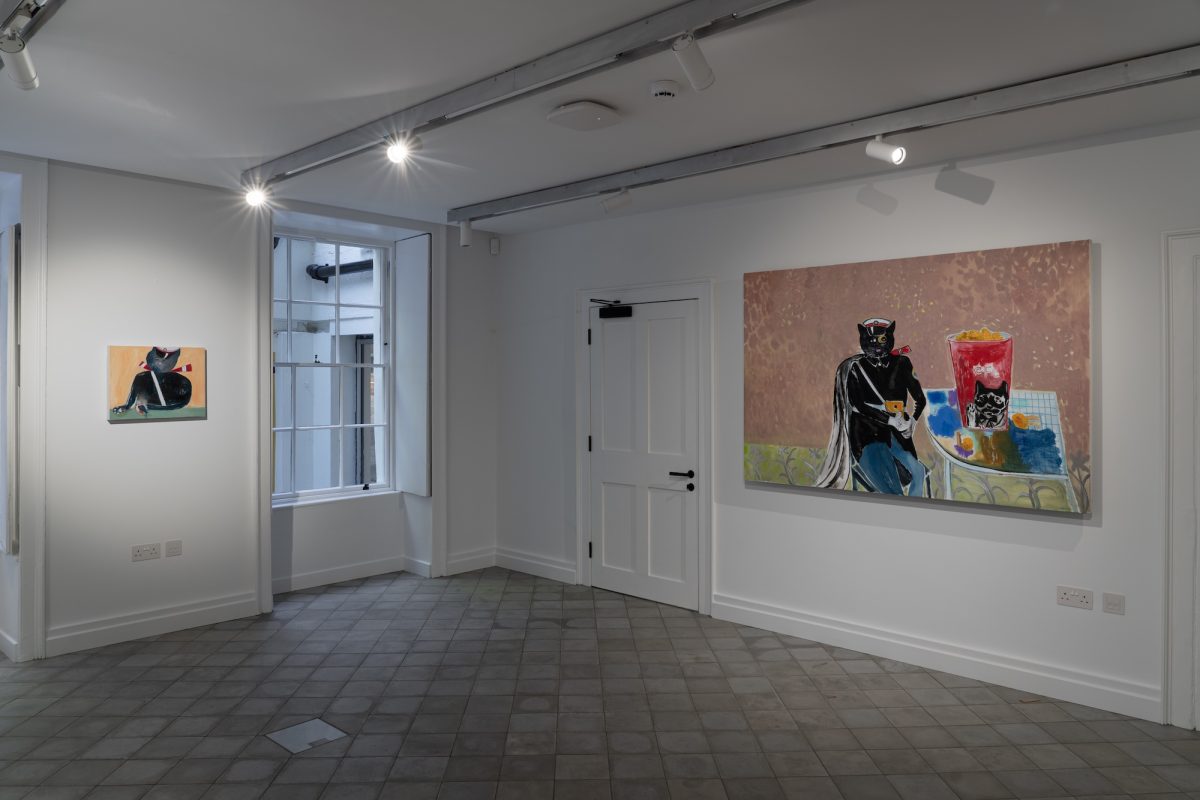
Throughout the exhibition, Duan develops a visual language that appears childlike yet is compositionally rigorous—both nostalgic and contemporary. She juxtaposes Chinese and Western traditions, high and low aesthetics, the sublime and the banal. Patterns from 1980s hotel menus, fish on dinner plates, chickens on pianos, the smiling face of KFC’s Colonel—all become components of her strategy of deliberate disjunction. What emerges is a fragmented, humorous, non-linear narrative reflecting the “fractured global reality” of our time.
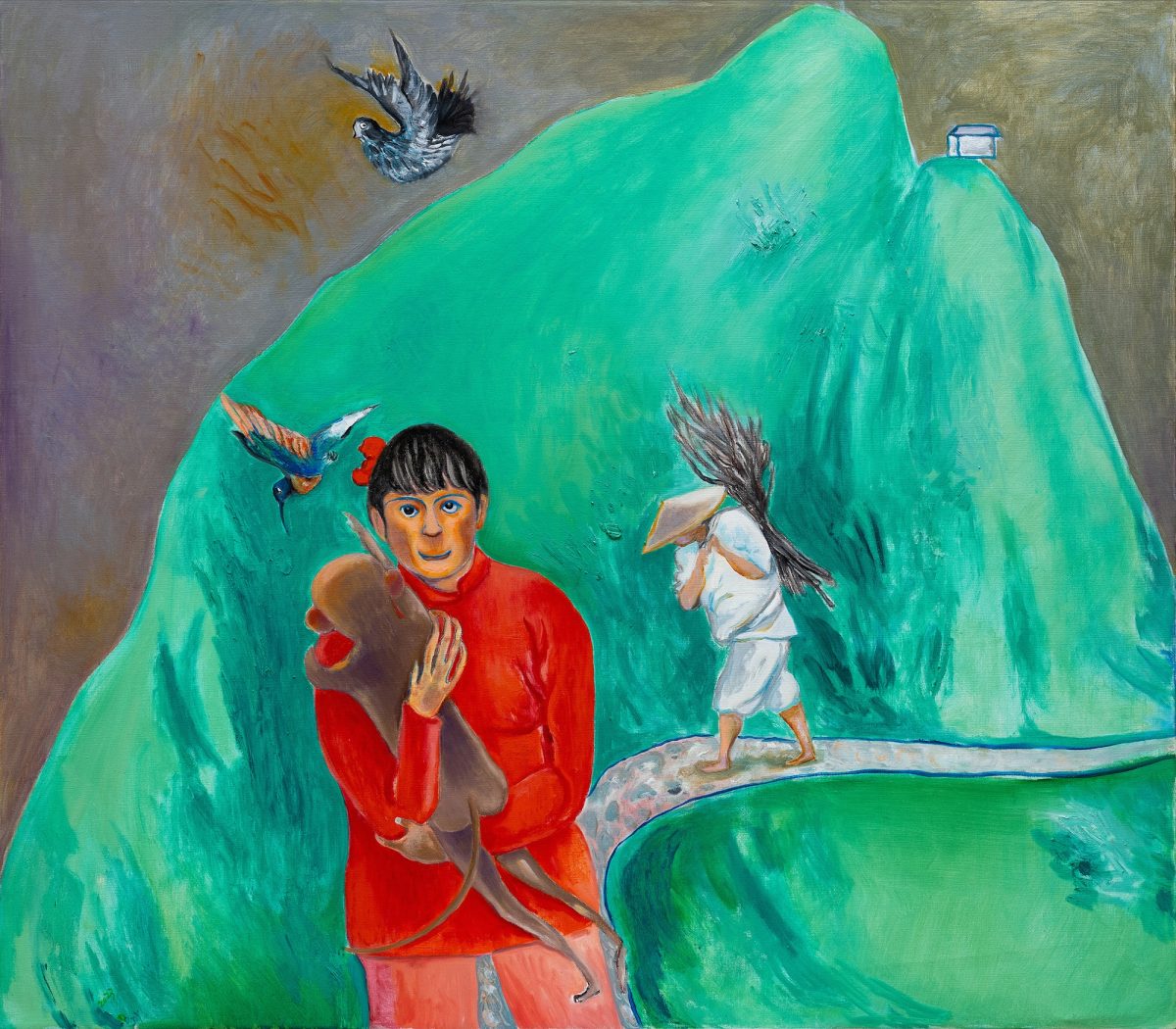
In Yúqiáo, Duan reveals the multiplicity of these figures’ contemporary afterlives: storytellers in the shape of goats, wuxia wanderers in contradictory landscapes, office workers or detectives in urban sprawl, or the artist herself seated in a room of disorder.
For young artists of my generation, Duan’s work is profoundly inspiring. A few days later, I revisited the exhibition with a friend who had never heard of her. After walking through the show, she said, “I feel this woman must be incredibly bold.” Good artwork, like the fisherwoodcutter archetype itself, inhabits both the worldly and the transcendent: spirited, androgynous, vigorous, unruly. Beneath the paintings’ swift, unhesitating strokes lie decades of persistence, accumulation, discipline, and the most sensitive, honest responses to life.
After leaving the exhibition, I thought of Duan’s comment in an interview: that materials and values matter equally in painting. Perhaps life is the same—logic and social structure on one side, sensibility and the soul on the other. How to merge them in an everyday existence? Perhaps yúqiáo suggests that living is itself a continuous practice. Wisdom arises not from distance, but from daily experience—from humour, absurdity, and the fragile yet vivid state of being alive in the present moment.
Duan Jianyu, Yúqiáo 14th October – 20th December 2025, YDP
YDP is a London-based project space for Asian and Asian diasporic contemporary art. Born as a personal project of arts philanthropist Yan Du, YDP is part of her overarching vision to facilitate transcultural dialogues. @ydp_space