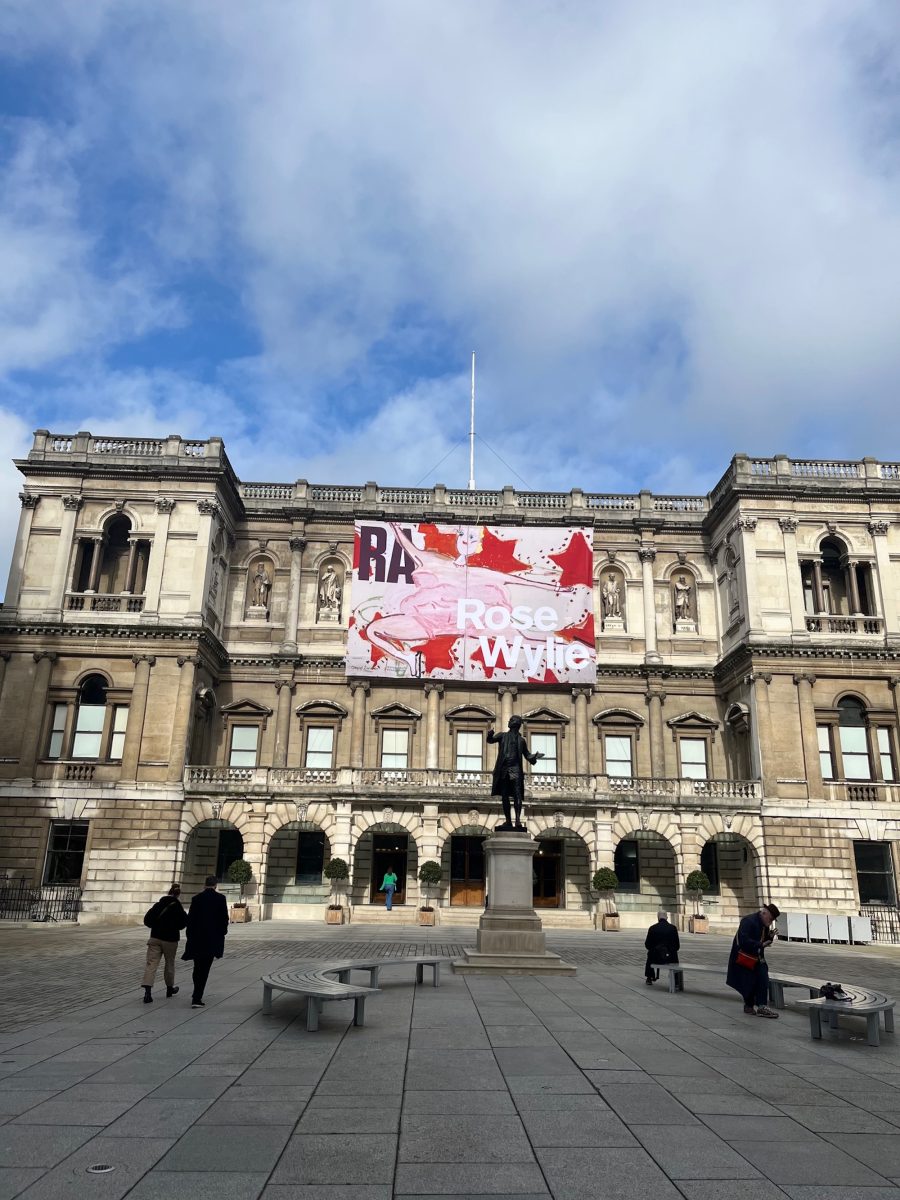
The Royal Academy of Arts presents the largest survey to date of British painter and Royal Academician Rose Wylie, bringing together more than 90 works spanning decades of her singular practice. Bold, direct and unmistakably her own, Wylie’s paintings draw freely from art history, cinema, literature, celebrity culture, current affairs and the details of everyday life, collapsing high and low into a visual language that feels both ancient and immediate. Alongside iconic works, the exhibition includes new paintings and previously unseen drawings.
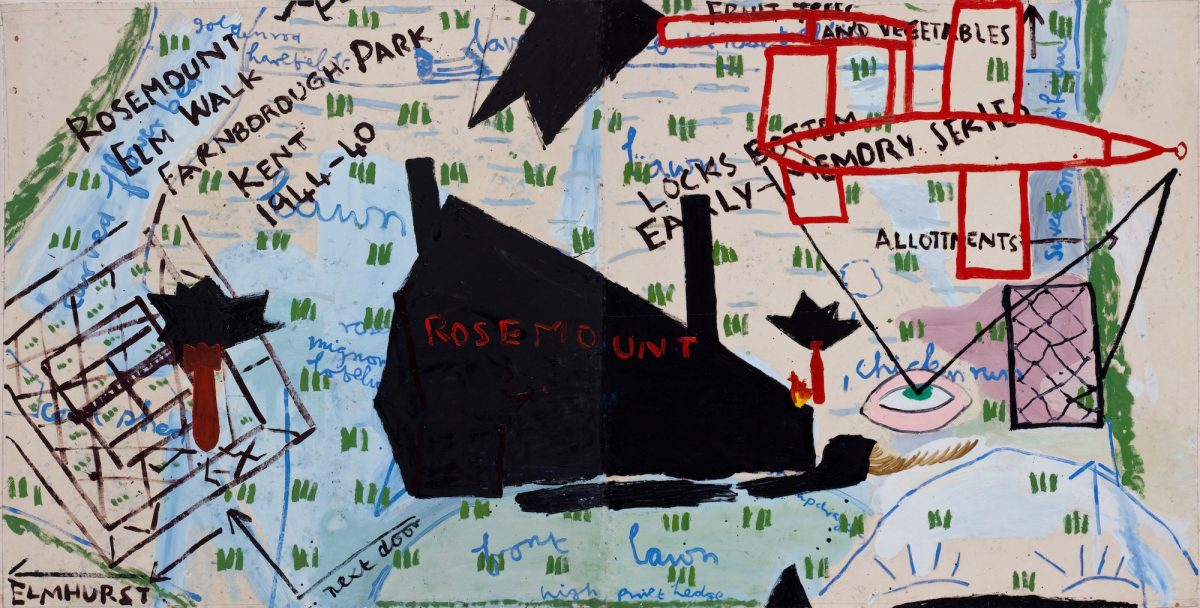
A painter of contemporary experience in the broadest sense, Wylie treats memory, observation and imagination as equal sources. Her work moves from the personal to the public: from childhood recollections of the Blitz to the quiet drama of a summer evening with friends. Early sections revisit family life and wartime London through paintings such as Rosemount (Coloured) (1999) and Wing Tips and Blue Doodlebugs (2022–23), where domestic scenes collide with the lingering threat of aerial attack.
After studying anatomical drawing and figurative painting in the 1950s, Wylie stepped away from art to raise a family, returning fully to painting in the mid-1980s. Working from her home studio in Kent — where she still paints today — she developed the large-scale, immersive canvases that brought her late but decisive recognition. The exhibition includes Room Project (2002–03), a breakthrough series populated by cats, paper dolls, Olympic swimmers and the artist herself, conjuring a playful, densely layered world that feels at once autobiographical and theatrical.
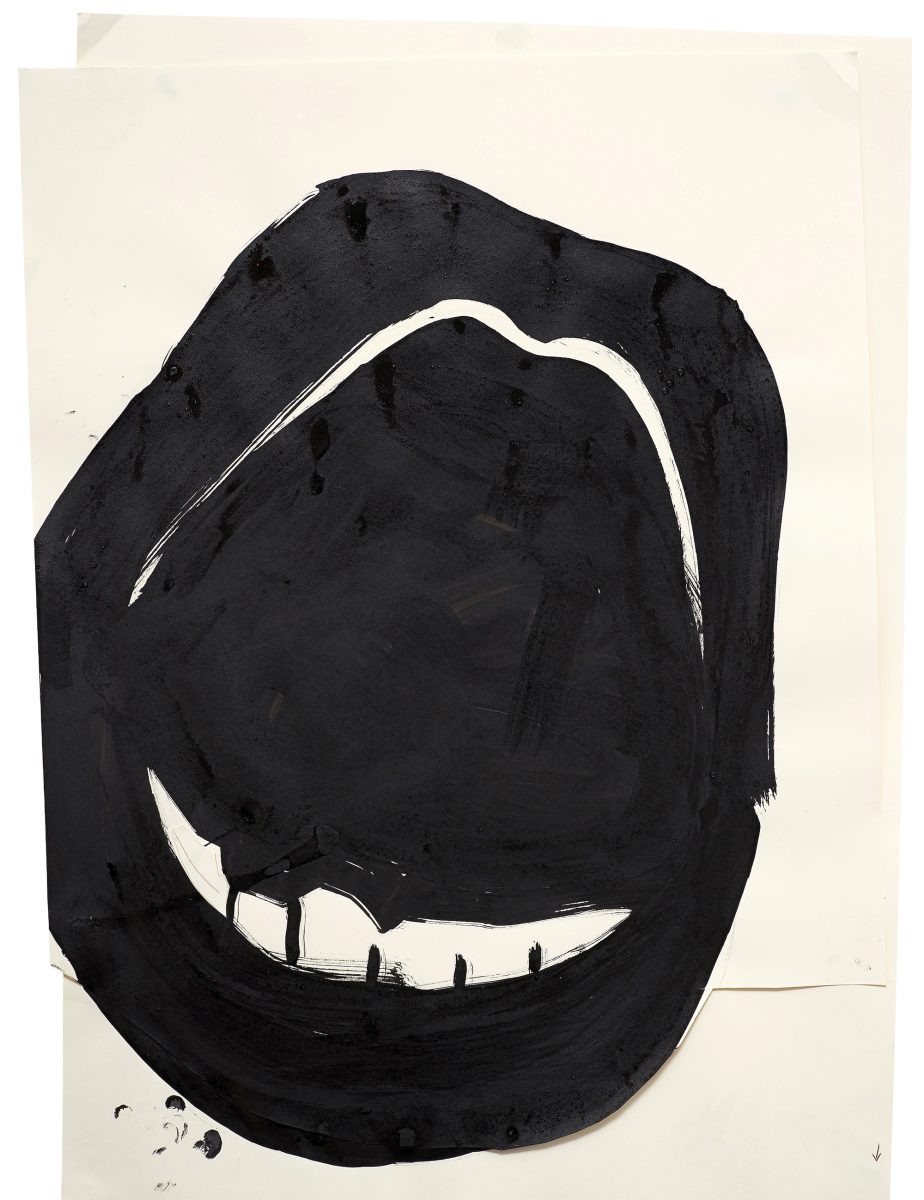
Drawing underpins everything. Wylie sketches daily, building an extensive reservoir of images that may resurface years later in distilled form. Works on paper such as Bottom Teeth, Self-Portrait (2016) demonstrate this direct, searching approach. Motifs migrate from sketch to canvas, often accompanied by handwritten text or unexpected juxtapositions that disrupt narrative certainty.
Cinema is another persistent influence. Paintings from the Film Notes series translate remembered fragments of movies — camera angles, close-ups, incidental details — into flattened, graphic compositions. In works such as Kill Bill (Film Notes) (2007) and Natural Born Killers, Long-shot (Film Notes) (2018), the mechanics of filmmaking become painterly devices, capturing the way images linger in memory long after the plot has faded.
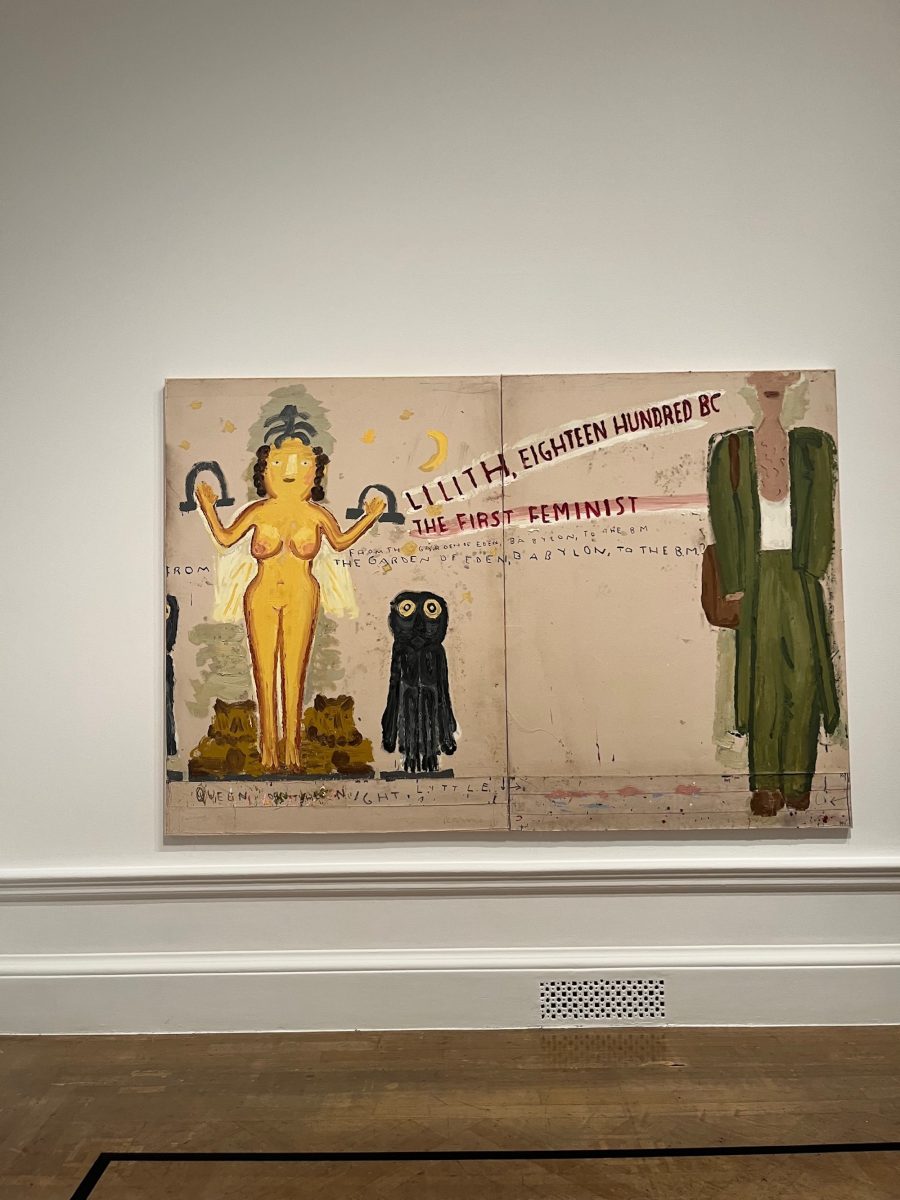
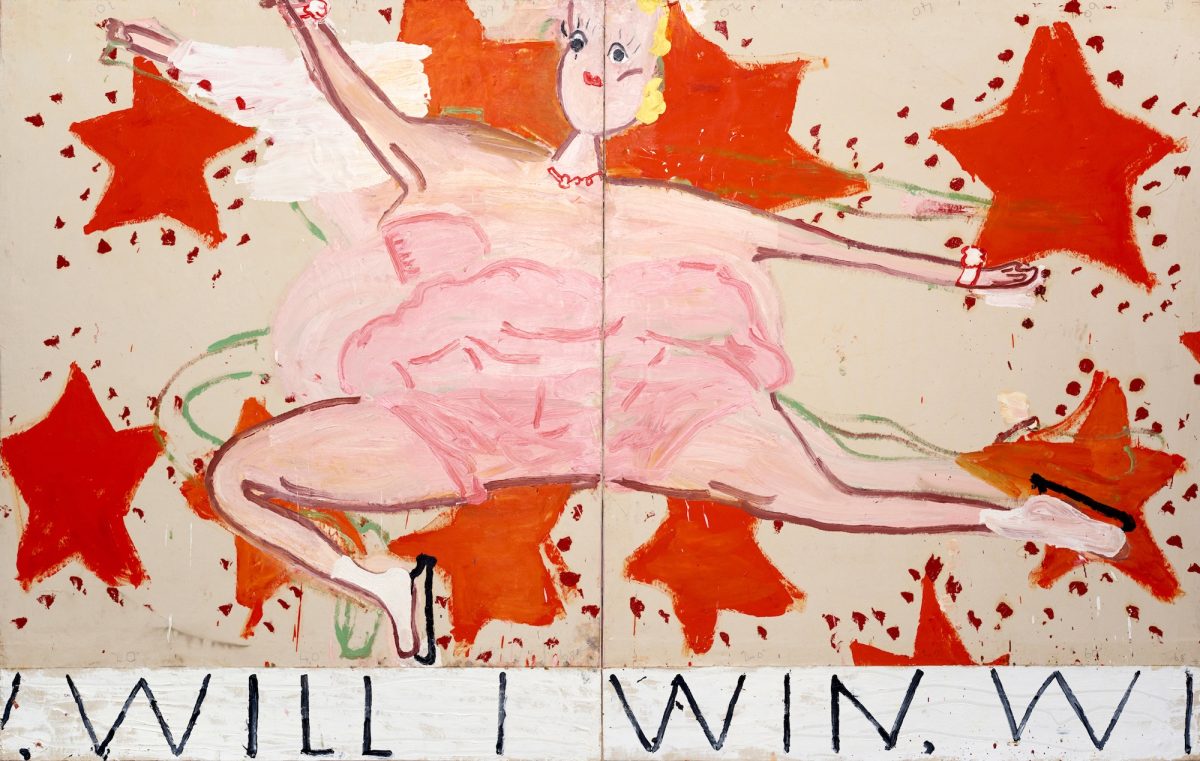
Wylie also draws on newspapers, television and the internet, responding less to content than to visual impact. A Babylonian artefact, a sports photograph, a red-carpet figure — all become raw material. Paintings such as Black Strap (Red Fly) (2011) and Pink Skater (Will I Win, Will I Win) (2015) reflect a world saturated with reproduced images, filtered through the artist’s idiosyncratic sense of scale, colour and humour.
Equally important are her immediate surroundings: the objects accumulated in her home, her garden, her cat Pete, neighbours and visitors. Everyday life becomes a kind of visual diary — meals, conversations, fleeting impressions — transformed into paintings that feel casual yet intensely considered.
The exhibition concludes with four monumental monochrome animal paintings in saturated ginger, black, blue and red. Made by applying paint directly with her hands, these works foreground process as much as subject. Thick, visceral surfaces record the physical act of making, pushing the image beyond representation toward something rawer and more immediate. Recognition remains, but meaning resides in the transformation itself — the painting as event rather than depiction.
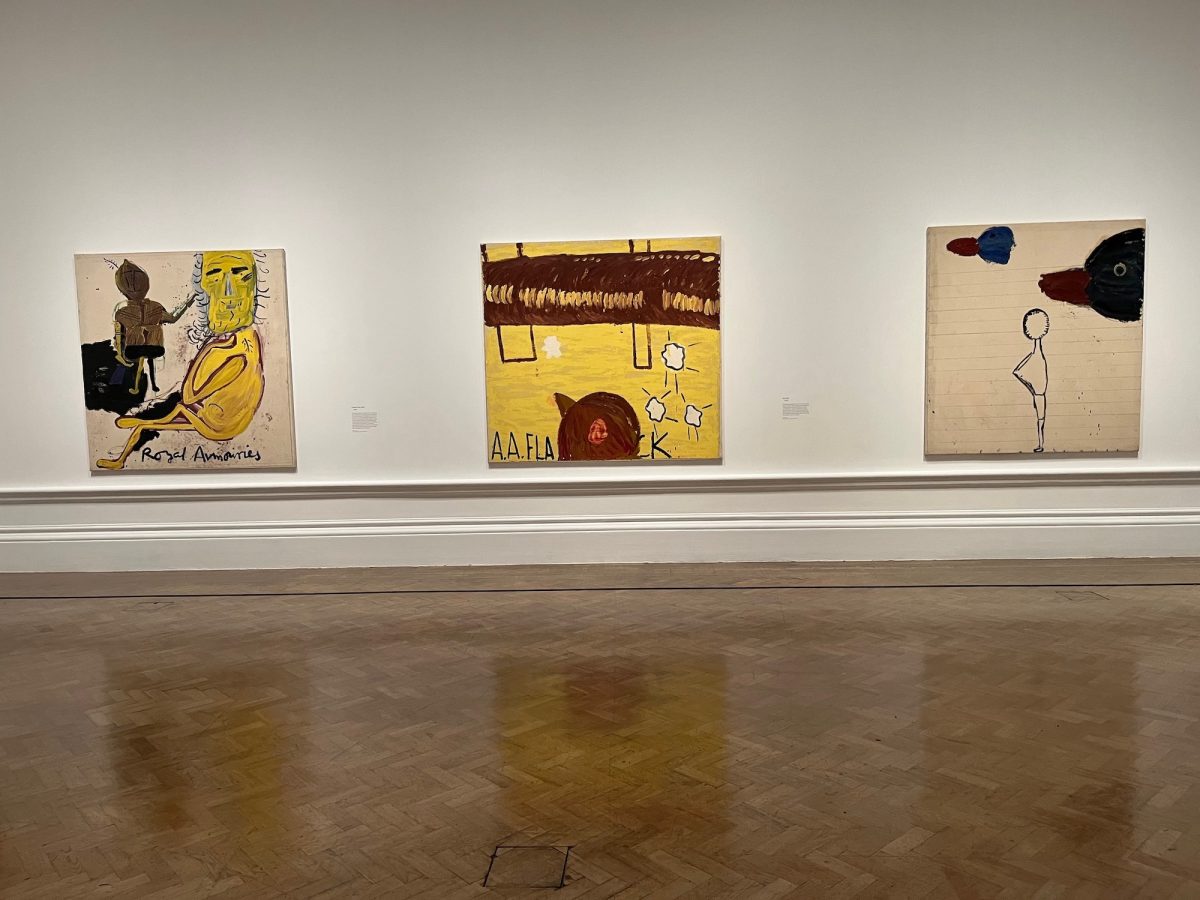
Across six decades, Wylie has developed a practice that resists hierarchy, embraces contradiction and insists on the primacy of looking. The picture comes first; everything else follows.
Rose Wylie: The Picture Comes First, 28th February – 19th April 2026, The Royal Academy of Arts
Admission From £21; concessions available; under 16s go free (T&Cs apply); Friends of the RA go free. 25 & Under: 16 to 25 year olds can access a half-price ticket (T&Cs apply). Tickets Advance booking with pre-booked timed tickets is recommended for everyone, including Friends of the RA. Tickets can be booked in advance online (royalacademy.org.uk) or over the phone (0207300 8090).
Organisation The exhibition is organised by the Royal Academy of Arts, London. It is curated by Katharine Stout, co-founder of the Drawing Room and independent curator, with Tarini Malik and Colm Guo-Lin Peare at the Royal Academy of Arts. Accompanying Publication The exhibition is accompanied by a fully illustrated catalogue with texts by Katharine Stout, cofounder of the Drawing Room and independent curator; Jennifer Higgie, novelist and screenwriter; and Frances Morris CBE, formerly Director of Tate Modern.
About the artist
Rose Wylie (b. 1934, Kent, UK) creates exuberant, large-scale paintings that combine childlike directness with sharp observational wit. Her works often depict scenes from popular culture, everyday life and art history, rendered with deliberately loose drawing, flattened perspective and bold, unmodulated colour. Figures and objects appear awkward, oversized or off-balance, embracing imperfection as a form of expressive freedom.
Wylie’s approach rejects polish in favour of immediacy. Words, symbols and images coexist across expansive surfaces, arranged with an intuitive logic that feels spontaneous yet carefully judged. Beneath the apparent simplicity lies a sophisticated understanding of composition, rhythm and visual humour.
After decades working largely outside the spotlight, Wylie gained major recognition later in life, bringing renewed attention to painting as a space for play, memory and personal narrative. Her work radiates confidence and independence, demonstrating how painting can remain fresh, irreverent and deeply human without conforming to prevailing trends.