A bright blue lamppost in the gallery feels like it’s been brought in off the street and given a fresh lick of paint. Look a little closer and you’ll see tiny people at the base and within the lamp. That’s when the light goes off in your head: this is a maquette for something meant to be at least one hundred times bigger. It’s a surreal, otherworldly artwork and a nod to artist Karl Singporewala’s other life as an architect, where mini figures are used to demonstrate scale when constructing architectural models.
The figure at the top represents the artist, and the four lower down represent his four children. It references the lamppost from the Narnia novels he used to read with his children, as well as the distance that now separates them, since he no longer lives with them. These themes of both family connections and estrangement, as well as nods to his architectural practice, recur throughout his survey show, which brings together works spanning his artistic career to date.
The other subject layered throughout the show is references to Singporewala’s Parsi heritage, Parsi being the term for the Zoroastrian community in India. It’s why the SOAS gallery is the perfect place for this show, as he has recently been made a Fellow of SOAS University of London and the Shapoorji Pallonji Institute of Zoroastrian Studies. This has developed into a new research-focused artist residency and has allowed the curatorial team to loan historical items from institutions such as the British Museum and the V&A, as well as from private collections, including pages from a historical epic similar in style to Dante’s Divine Comedy, with representations of heaven and hell.
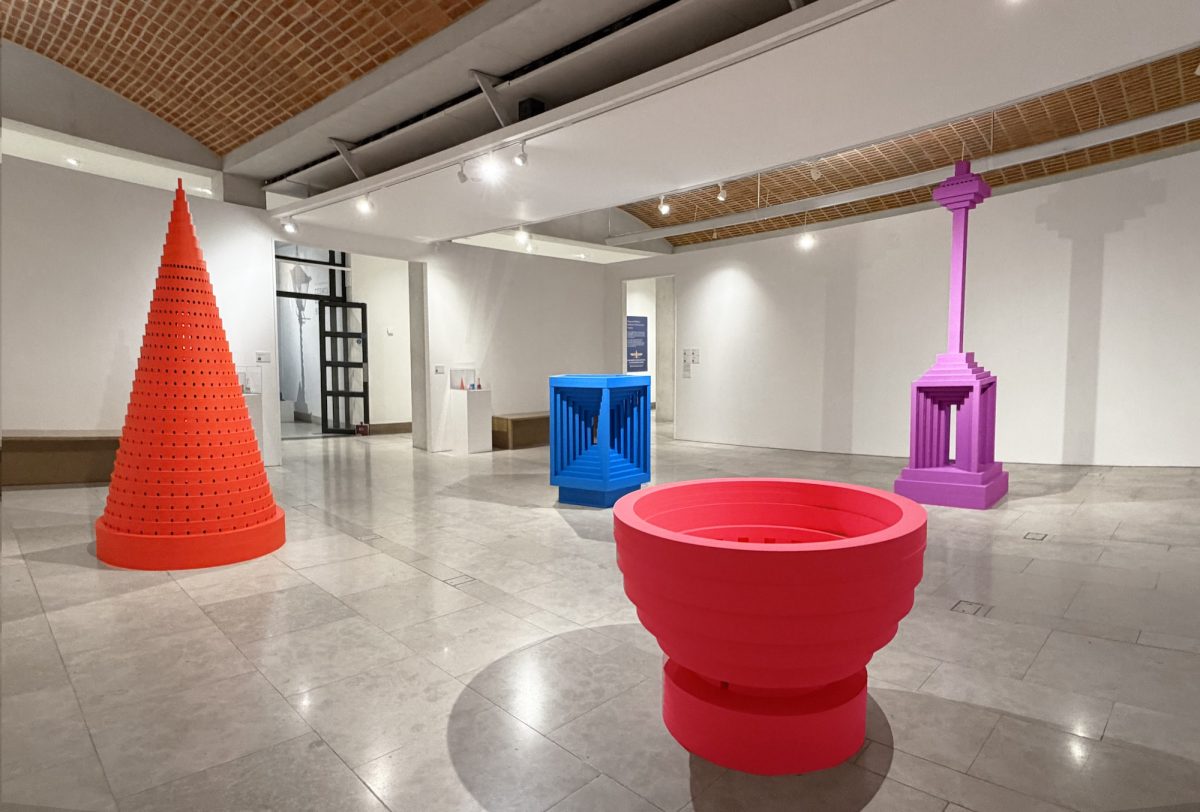
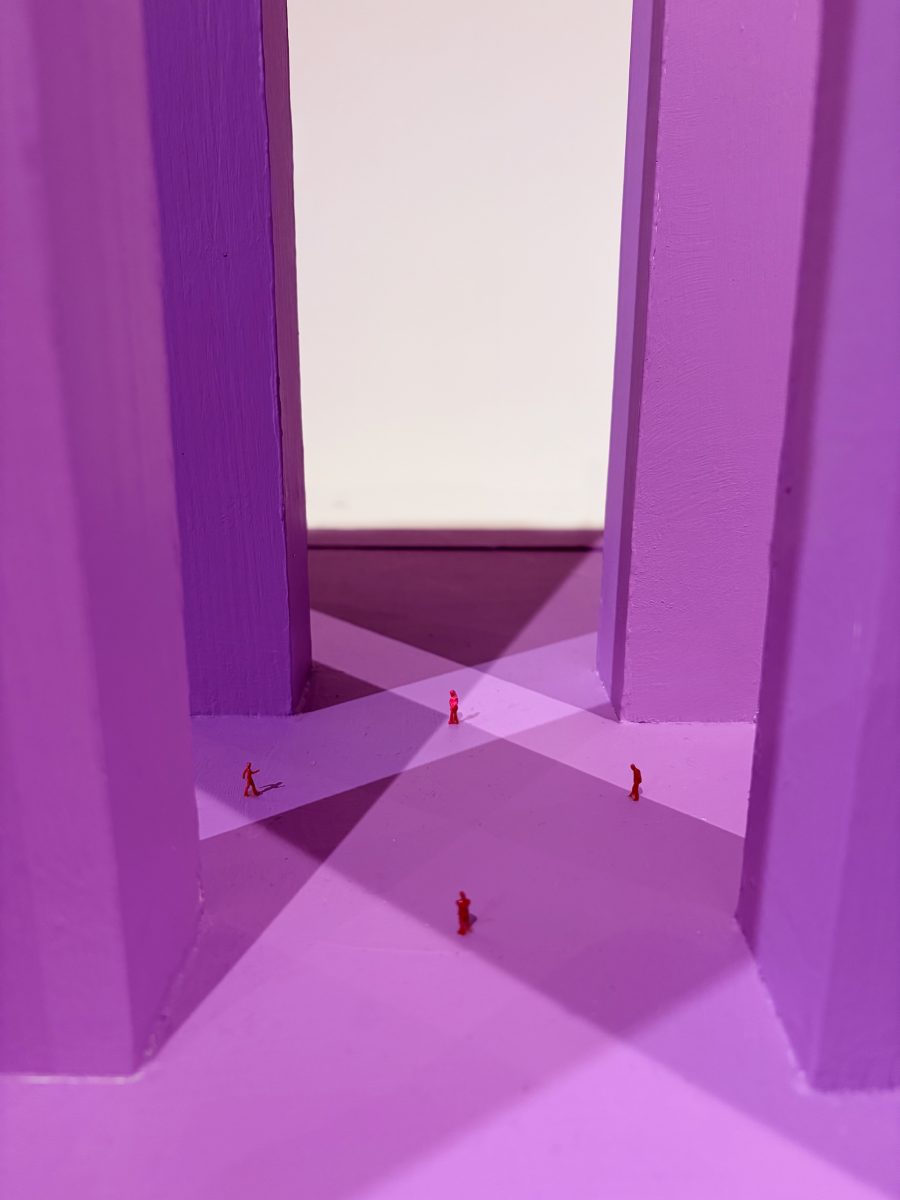
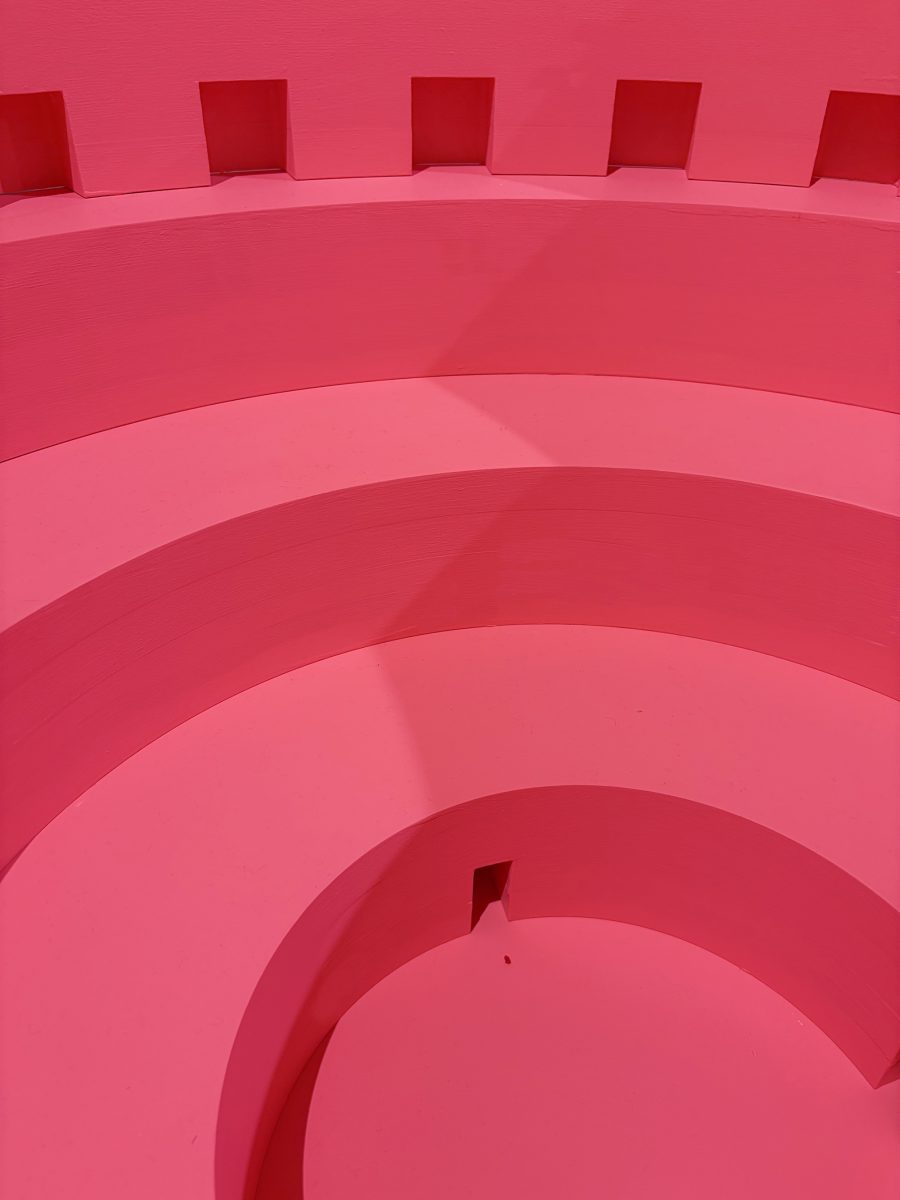
His own family history is represented through a collection of Ses, silver trays holding auspicious items found in all Parsi households. The Ses from his great-grandparents, grandparents, parents, and his own home are on display. He’s then created a more colourful, modernist approach to a Ses ‘for the next generation’, before scaling it up to create four large sculptures in the central room of the gallery. However, his use of perspective is evident once more: if you look closely, tiny figures can be found in all four works, suggesting that, if they were constructed to scale, they would be four monumental buildings.
Some of his smaller-scale models and maquettes link back to the Parsi towers of silence, where dead bodies are taken to be consumed by vultures as part of the religious practice, and a cast of the ancient Cyrus cylinder from the British Museum faces off with one of his own conical works. In homage to the destruction of the UNESCO World Heritage Site of Palmyra, he recreated a destroyed arch from miniature figures, soon after the original was knocked down.
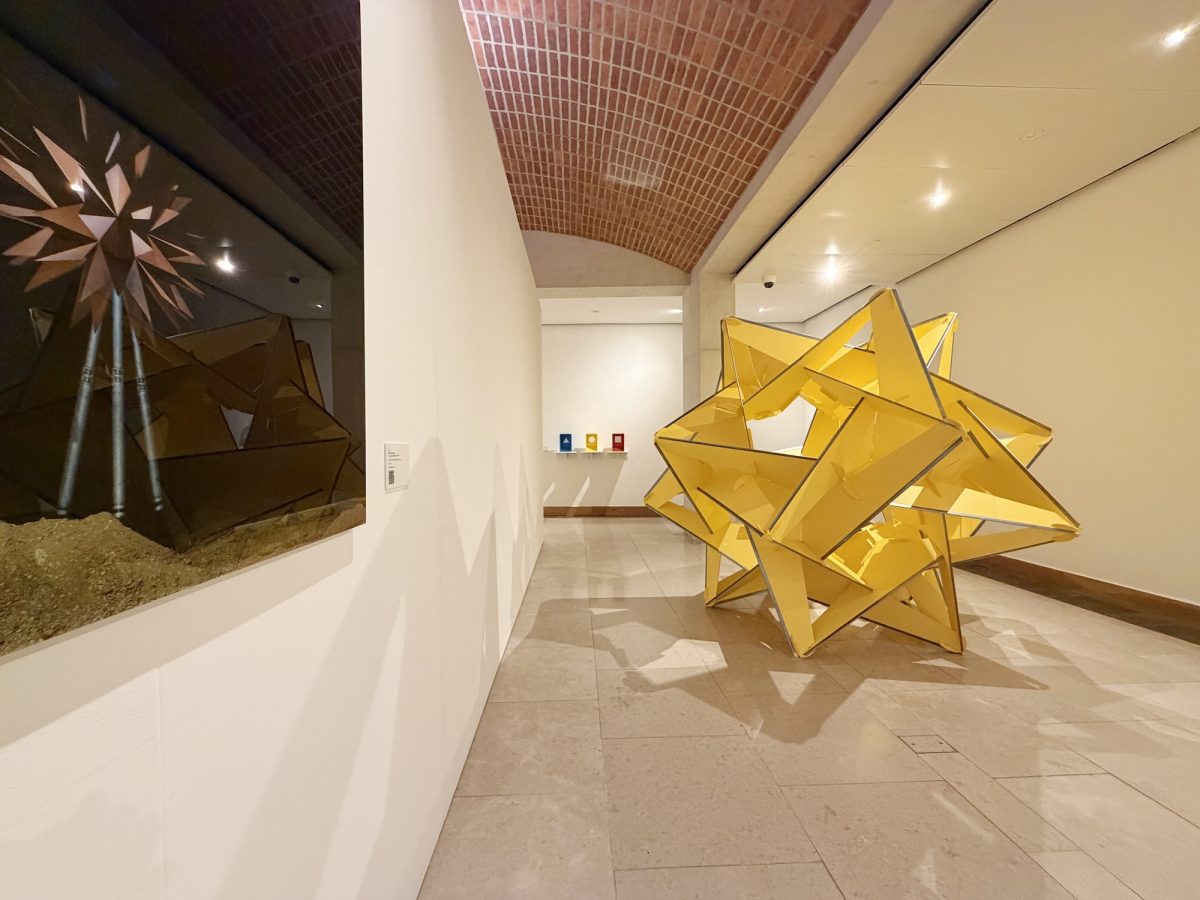
He has also included paper models, made from Indian cotton rag, that look far stronger than you would expect, including one that references the Tower of Babel sitting atop a wedding cake stand. There is a large C-type photograph, taken by Judith Jones RWA, of his first public commission, a 6-metre-tall ball of spikes near Gatwick Airport, and a mixture of large and small sculptures and works on paper, all linked to his fascination with stars and stellated geometry.
Each piece has a story, and a print of an Italian mosaic featuring the three wise men may feel at odds until we learn that the magi mentioned in the Bible were likely Zoroastrian priests. It also ties back to Singaporewala’s schooling at a Roman Catholic school and his later return to reconnect with his Parsi heritage.
While the artist has been exhibiting for years, this is Karl Singporewala’s first large-scale solo exhibition, so he has loaned works from past collectors to ensure we see the full depth and evolution of his practice. It’s a great combination of art and architecture, filled with personal stories, and we hope it’s the first of many solo exhibitions to come.
Karl Singporewala: Cosmos, Memory, Scale is on at SOAS Gallery, London, until 13th December. Entrance is free, and it is a selling exhibition.
All images are copyrighted and courtesy of the artist.