On October 21st, as the eyes of the art world were turning from Frieze London to Basel Paris, frieze magazine kicked off its countdown of ‘The 25 Best Works of the 21st Century’. Whittled down from a sea of nominations from 200 art world experts – artists, curators, critics, museum directors and the like – the 25 shortlisted artworks were said “to capture the spirit, anxieties and ambitions of the century so far”, ultimately suggesting “what defines great art in our time”.
I had reservations about frieze’s list – I felt the commercial outlet was making a monetisable intrusion into the formation of art history. Essentially a branch of the entertainment industry (note: earlier in October the Frieze umbrella, the magazine and art fair chain, was acquired by the newly formed holding company MARI, a global events and experience company that also owns a number of tennis tournaments and a ticketing platform), I worried that the list would boast nothing but big bright bull-shit – the hot air of Olafur Eliasson or pretty pots by Grayson Perry; stuff that generates clicks on social media. Further, given the magazine’s incestuous relationship to the art market, via the Frieze art fairs, I feared a sea of blue-chip sponsored content – again, colourful bull, appearing to bolster art world spec-u-lection, to riff on Kenny Schachter’s view of the contemporary collecting practices. This is to say, I worried that rather than detailing the most poignant artworks of our epoch, those that will come to shape the course of art’s histories, this ‘Best of’ would be little more than a marketing ploy, positioning frieze as the hegemon of the art world.
Day by day, as I watched the countdown progress on Instagram, I wasn’t sure if my anxieties were being alleviated or simply put on ice. 25 to 21: the start was strong, moving from Thomas Hirschhorn’s Gramsci Monument (2013) (number 25), via Christian Marclay’s The Clock (2010) (23), to Doris Salcedo’s Shibboleth (2007) (21), formally groundbreaking artworks which infuse social engagement and social critique – nothing blue chip (I doubt even Jay Jopling could sell a crack in the floor). This trend continued from number 20 to 10, with most of the featured works having some sort of sociopolitical commitment and/or directly challenging the infrastructure of contemporary life: Harun Farocki’s Serious Games I–IV (2009-2010) (20) and Jeremy Deller’s The Battle of Orgreave (An Injury to One is an Injury to All) (2001) (14) formally fuse social research, political antagonisms and a reinvention of media, whilst Camille Henrot’s Grosse Fatigue (2013) (19) and Anne Imhof’s Faust (2017) (12) refract the gruesome nature of our increasingly spectacular age. Now well and truly into the flow of things, my perspective on the list shifted from eye-rolling disdain to wide-eyed suspense. What would be next? What would be number 1!?
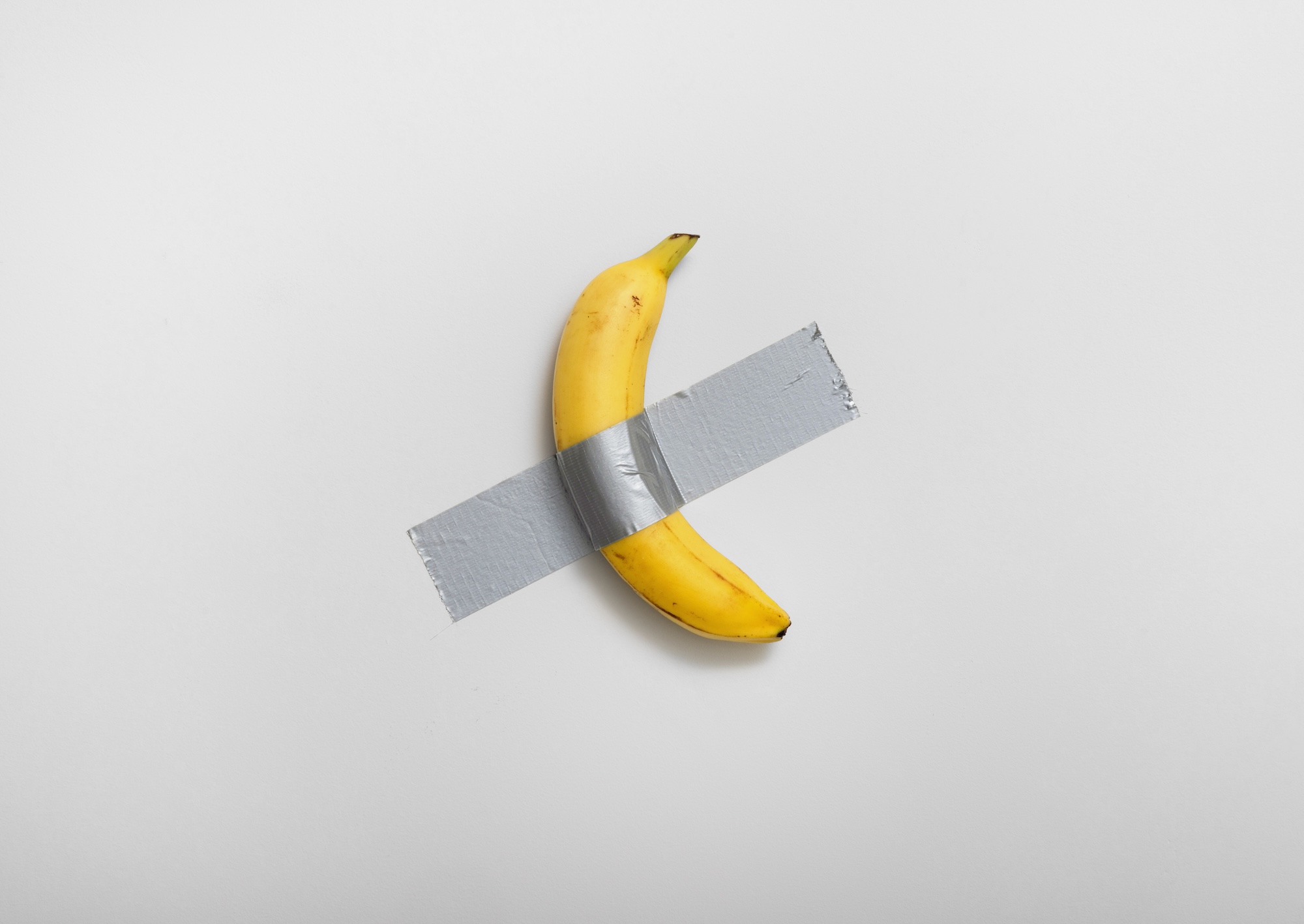
I am a massive fan of number 9 on the list, Francis Alÿs’s When Faith Moves Mountains (2002), seeing that work here felt exciting – right. Those in positions 8 through to 3 left me feeling more meh-ish. Whilst I agree that artists such as David Hammons (8), Danh Vo (5) and John Akomfrah (4) should feature on any list of great artists – artists who are in themselves vital to developments in art – the selected works were rather vanilla – the respective artists have done better, perhaps not in this century yet. Personally, I would have inserted Steve McQueen’s Ashes (2015), Meiro Koizumi’s Portrait of a Young Samurai (2009) and Maurizio Cattelan’s Comedian (2019) here.
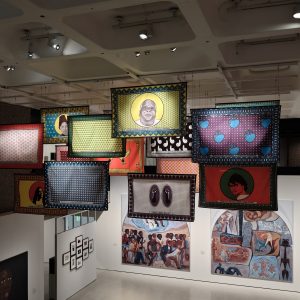
Number 2 on the list, Arthur Jafa’s Love is the Message, the Message is Death (2016), needs no introduction, nor should anyone have any questions about why this work of art deserves this placement – well one question would suffice: why not number 1? Love is the Message not only “capture[s] the spirit, anxieties and ambitions” of a social body but formally composes these qualities of life in a way that cuts into the core of a viewer – caught up in the “ultra-compressed detente between agonizing violence and unstoppable joy”, to quote Claire Bishop’s blurb of the work in list’s accompanying feature, it is impossible not to feel complicit in the way Black bodies are vilified and consumed.
Undoubtedly, my worries about frieze’s list were wrong. Each artwork, in its own unique way, says something vital about the state of the world today, conveying this coherently through a precise use of artistic form – often, through various means of social engagement, through film, or installation-like sculpture. To me, the list reads as a log of any great works I would have hoped to glimmer in an academic textbook. More so, somewhat reflective of the ever-increasing synergy between contemporary art and everyday life, on the frieze website, we have the added bonus of reading about each work and its importance in a totally accessible way – without the elitist citations vital to the writings of 20th century art history, a la Hal Foster and his Freudian attachment.
I was shocked by frieze’s list topper. Not because this artwork doesn’t deserve the number 1 spot, it resolutely does, but because I had never heard of this specific piece. (As an aside, my ignorance here reminds me that, as with life, history is continually in the making, constantly in need of agents actively recording its subtle progressions.)
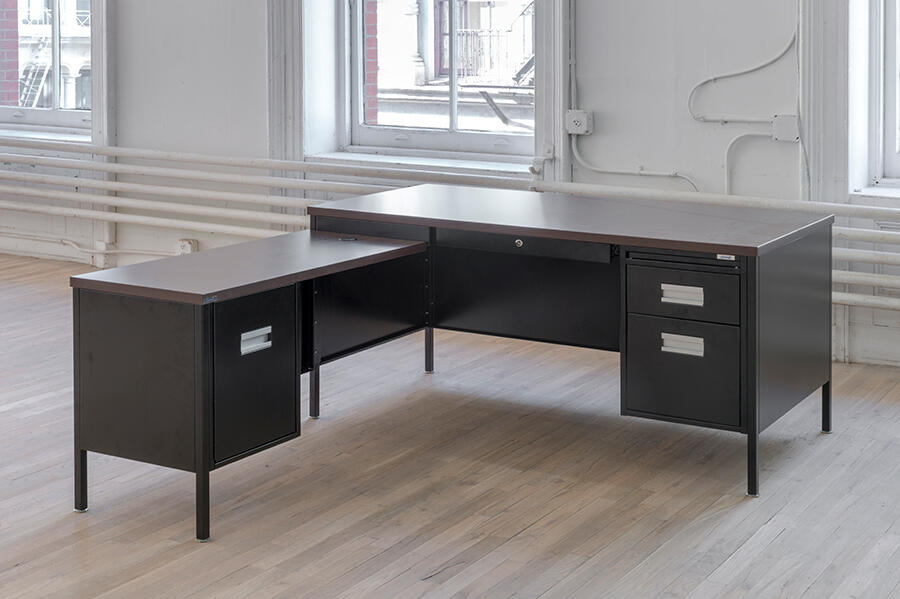
Cameron Rowland’s Attica Series Desk (2016) (number 1!) appears as an “unremarkable office desk”, to quote frieze’s senior editor Terence Trouillot. Black powder-coated steel with a deep walnut laminate, the L-shaped desk was crafted by incarcerated labourers at the Attica Correctional Facility (a maximum security prison just outside of New York) and purchased by Rowland from a Corcraft catalogue (Corcraft is an “industry program within the New York State Department of Corrections and Community Supervision”, to quote their website, which essentially ‘employs’ incarcerated individuals to produce furniture that is then sold to government offices across New York state). An utterly base use of the Duchampian readymade, Rowland’s Attica Series Desk directly points to the way carceral systems proffer from and perpetuate the vilification of human beings through practices like indenture (to note, Corcraft pays their workers between $0.16 to $1.25 an hour, well below any livable wage). More so, in reference to the bodies that buy Corcraft’s products, the artwork makes clear the structural connections that lie between carceral systems and the political management of civic life – state administrators literally make their living off the imprisonment of their fellow citizens.
When I started writing this text, my view towards frieze’s list was critical, based around the question ‘what role does this arts entertainment brand have in shaping what’s important to our art history?’ At a time when governmental support of the arts globally is plummeting worryingly fast, when art history and ‘critisisum’ seem more concerned with their own academic crises than the coalface of artistic work (to generalise), frieze appears to be playing an active role in both the preservation and production of our art history whilst it is still in the making – the fact that the countdown was entertaining should perhaps be seen as reference to how the making/telling of art history itself needs to adapt to better suit our times.