Prints tend to be somewhat disregarded compared with their big sibling, painting. But they have their separate merits in addition to affordability, including the way they can more easily operate as a group. Historically, I’d say Goya’s ‘Disasters of War’, 1810-20, and Picasso’s ‘Vollard Suite’, 1930-37, are the gold standard, but I recently came across works from more recent British series that drew me in. Examples from both these large editions are a frequent presence in fairs and galleries, but it’s easy to pass on by because you have already seen them – yet how fully have you looked?
David Hockney’s set of 39 prints, in an edition of 400, cover six tales from those collected by the Brothers Grimm in the early 19th century. ‘They’re fascinating, the little stories’, says Hockney, ‘told in a very very simple, direct, straightforward language and style, it was this simplicity that attracted me. They cover quite a strange range of experience, from the magical to the moral.’
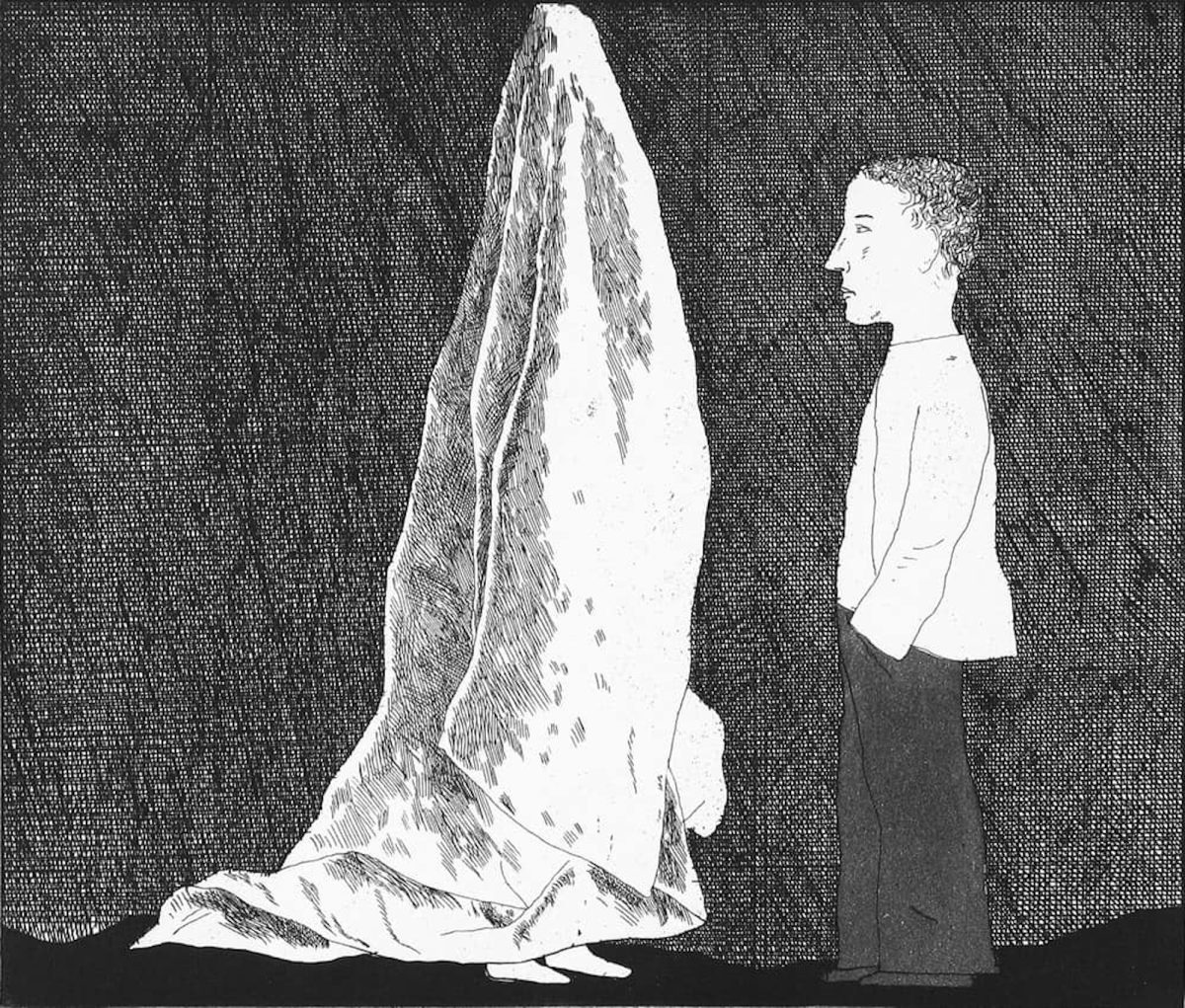
‘The boy who left home to learn fear’ complains that others ‘are always saying, “It makes me shudder!” It does not make me shudder. That must be a skill that I do not understand.’ So he sets out, determined to learn how to shudder. That leads several people to set up scenarios designed to frighten him into understanding what is it is to be afraid. All are in vain, of course. First up is a sexton, who appears at midnight as a figure in white. The boy, unfazed, threatens to throw the apparent ghost down the stairs. The sexton, thinking he couldn’t mean it, ‘made not a sound and stood as if he were made of stone’. Then he was, indeed, thrown down the stairs.
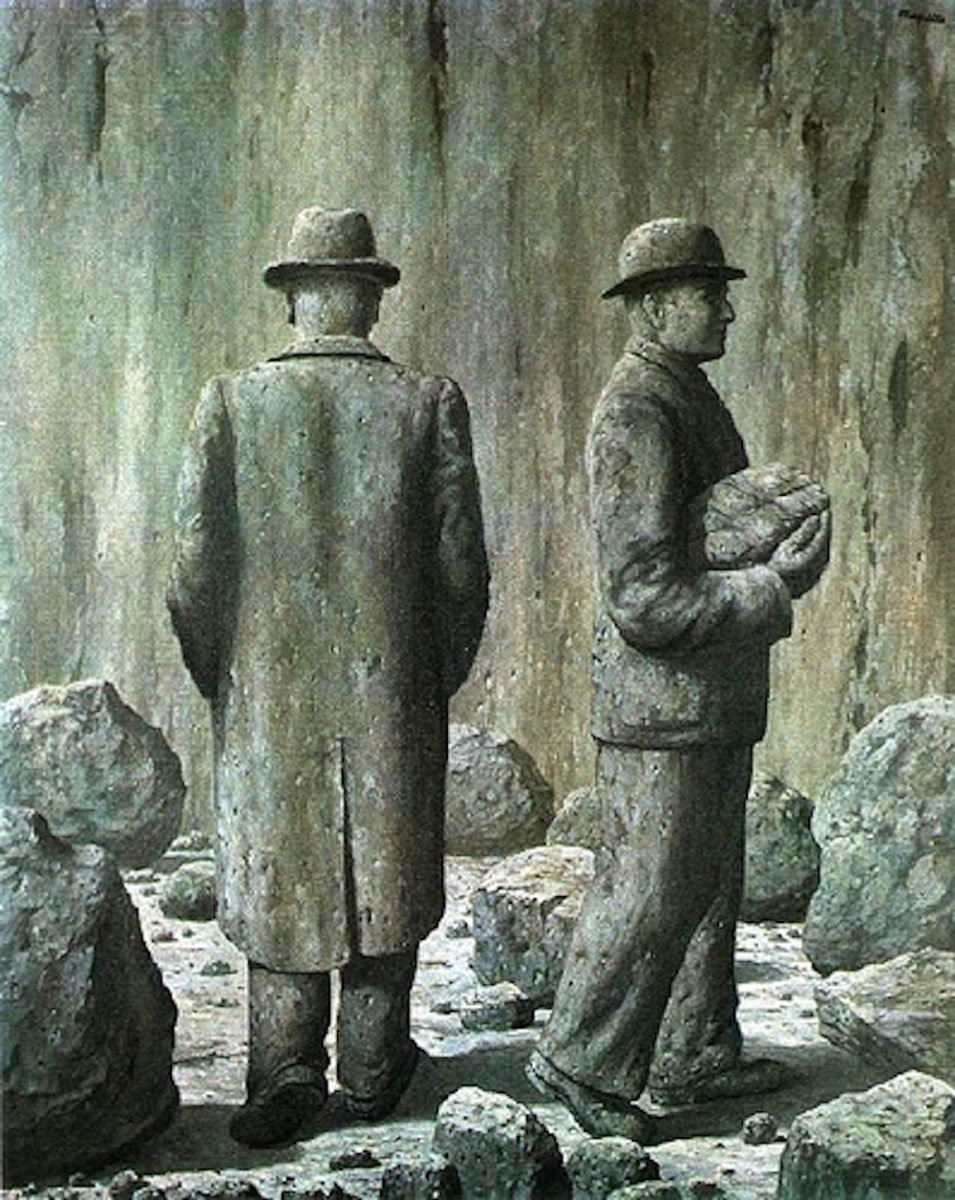
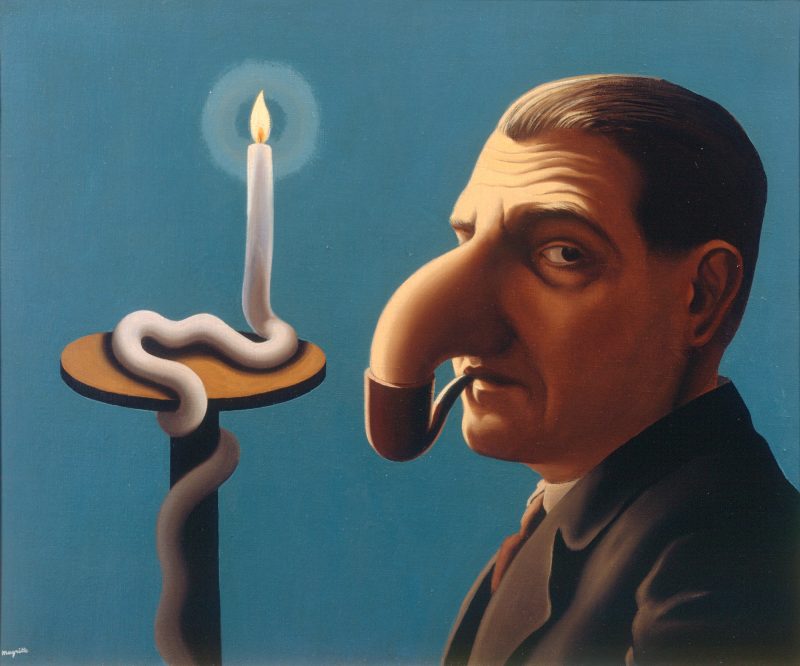
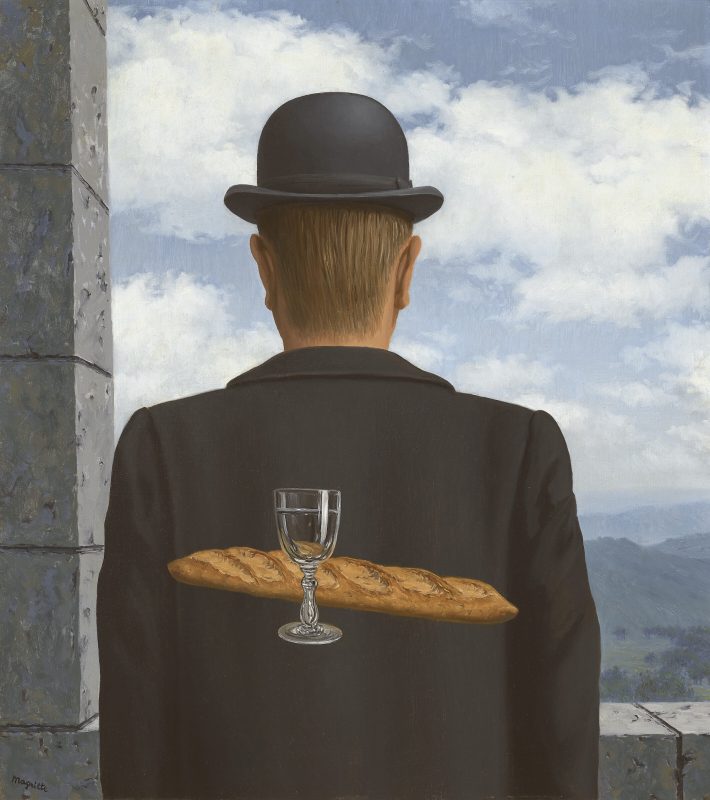
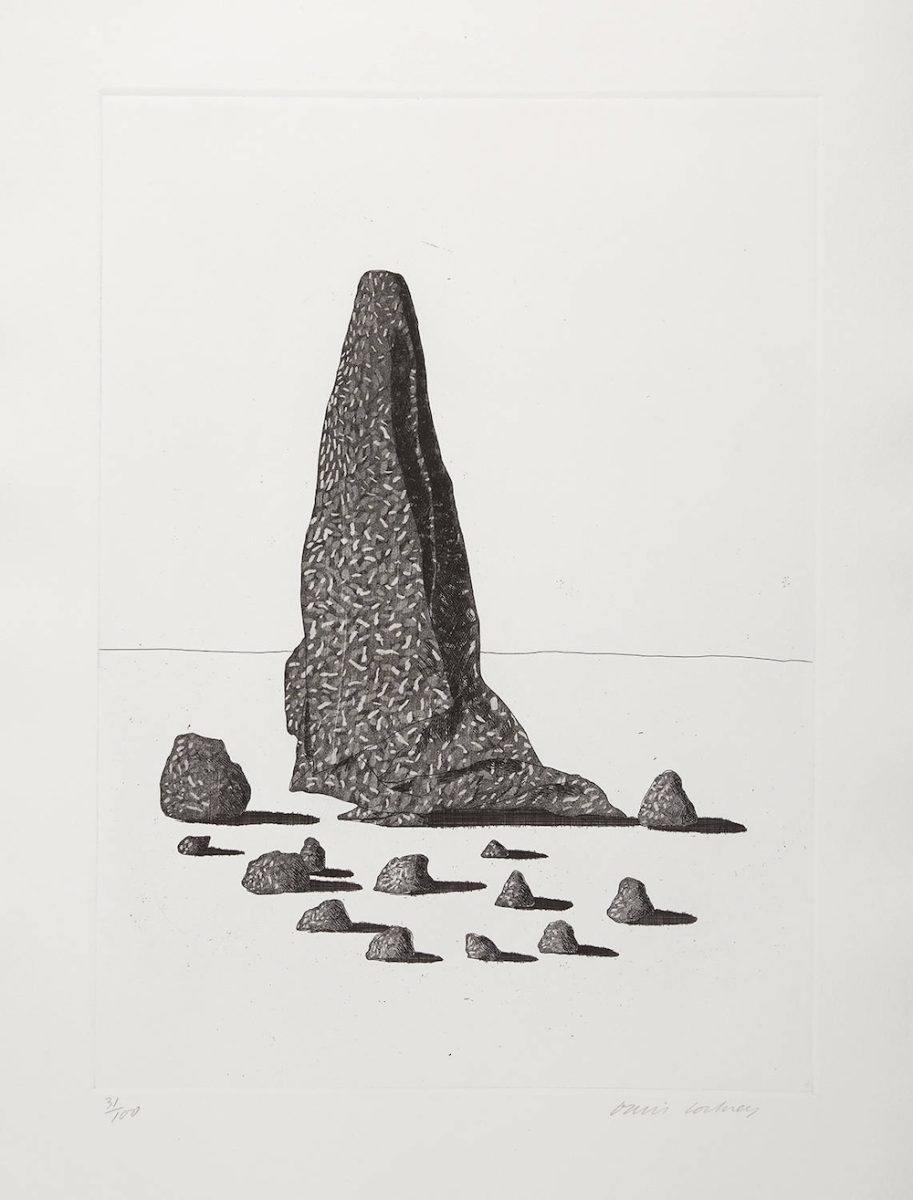
First Hockney shows us the sexton-as-ghost in the traditional white sheet garb. He then moves onto the appealing phrase ‘stood still as stone’. That reminded him of those paintings in which Magritte made everything of stone. ‘And I thought’, explained Hockney, ‘that’s a nice idea, I’ll just have everything … so it looks like stone.’ The sexton, then, is petrified in the geological way; in contrast to the boy, who fails to be petrified in the fearful way. Both also show the general virtues of the etchings: stark, somewhat abstracted, monochromes with powerful use of negative space emphasise the surreal and darkly psychological aspects of the tales – and contrast, incidentally, with the colourful naturalism of Hockney’s contemporaneous paintings.
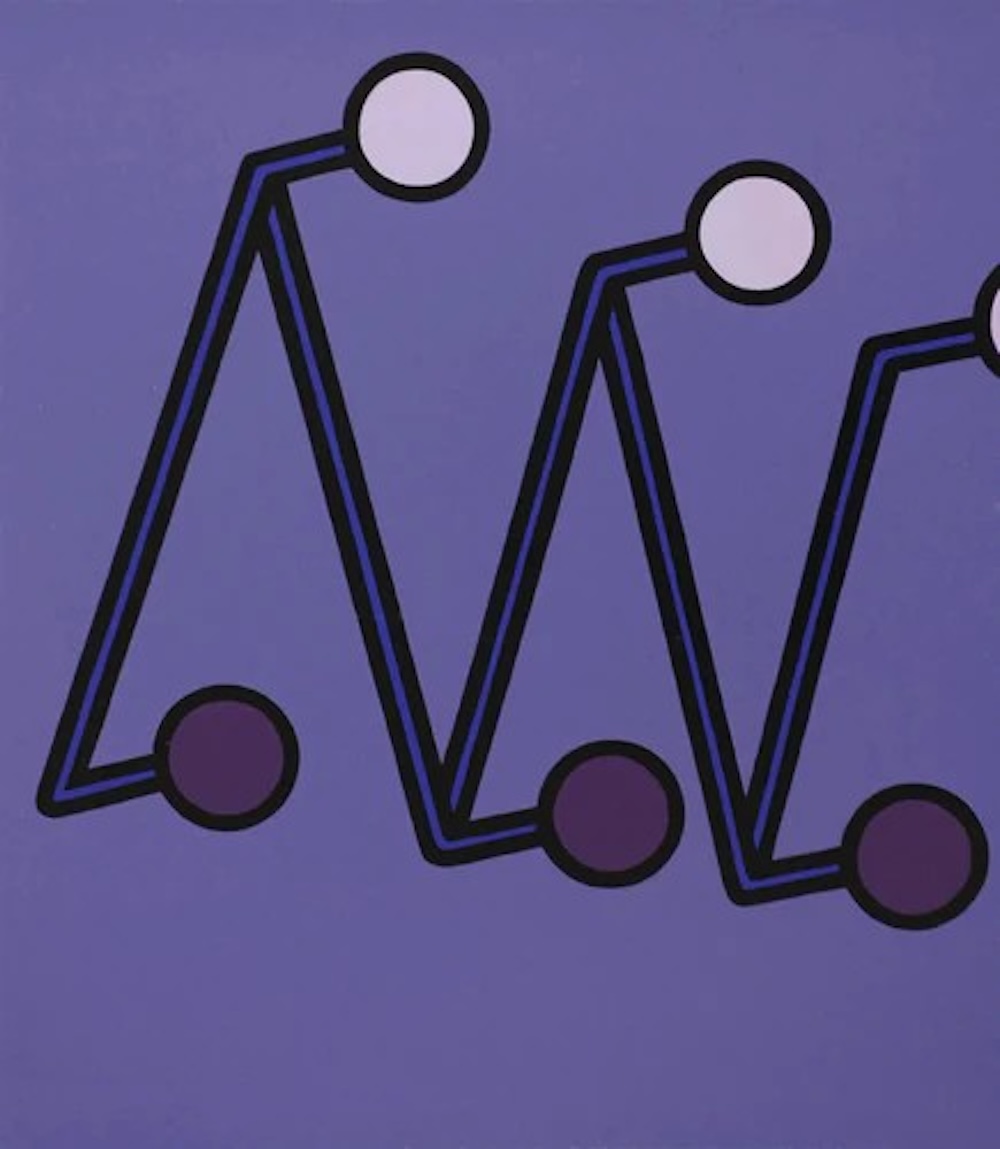
The overall edition for Patrick Caulfield’s 22 screenprints after Laforgue is 560. He was introduced to Laforgue’s poetry by a fellow student at the RCA in 1962, via the college library copy of the 1958 translation from the French by Patricia Terry, which supplies his titles. Caulfield admired the poems as ‘wonderfully concise, both romantic and ironic’ – not a bad description of his own paintings. He saw his responses as ‘not illustrations but complementary images… I tried to imagine what Laforgue might have been looking at when he thought of the poems’.
‘Last Poem IX’ begins with its speaker fantasising in self-dramatising manner about how women who attract him might feel comparably about him: ‘O! if one of Them, some fine evening, would try – / Blind but to drink at my lips, or die!…’ He goes on to imagine what such a woman would say to him: ‘… I know perfectly well my destiny is bound / (Oh, I’m quite used to it already!) / To following you until you turn around, / And then to tell you everything you are!’. So it is that ‘Thus she would come, escaped, half-dead, to my door / And roll on the mat I had just for that purpose put there.’
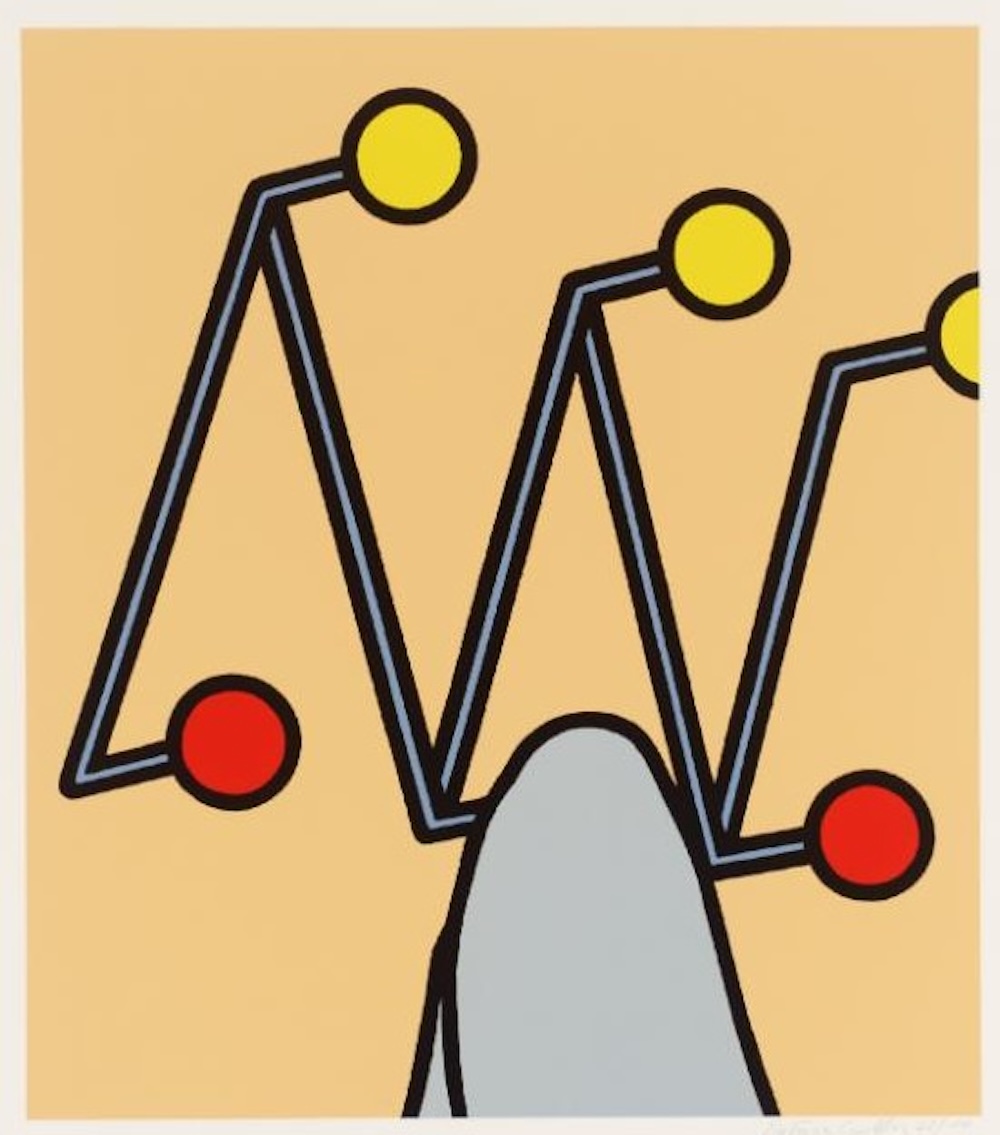
Caulfield pairs the opening line with a crepuscular view of a wall-mounted coat rack; and the concluding fulfilment of the speaker’s wish with what might be the same rack, this time in bright colours and with what could be a garment hanging from it. Does that represent his arrival in a sunnier world in which his visitor has just taken off her coat? Or is it just that time and the light have moved on, and nothing much has – in reality – changed? Either way, as is typical of the series, Caulfield crisply isolates an object from its surroundings to emphasise as a mutely witnessing thing.
Prices vary depending on signatures and particular editions etc., but you can plausibly pick up single prints from these two sets for a thousand pounds or so – probably the cheapest way to get a top quality Hockney or Caulfield.