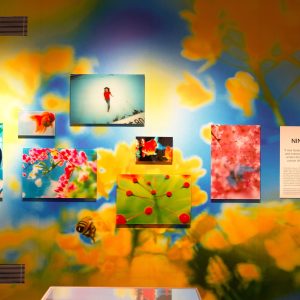
The tough part of being an artist has always been to get your art into a gallery to showcase your art to the world and attract art collectors.
This tedious modus operandi has changed for the better because of digital tools and online platforms that have become available to artists over the last years.
As an independent artist, it is now possible to build a supportable career on a global scale at the drop of a hat, or rather the click of a mouse.
1. Introduction—The New Era of Art Sales
Over the last years the world of art has been modified through technology and has entered a new era.
It’s no longer necessary for artists to work towards exclusive personal exhibits and wall space at a gallery because of the availability of social media feeds and global online marketplaces.
These incredible changes have removed the barriers that prevented established artists as well as emerging ones from selling their art to a wider range of interested art lovers and collectors.
Artists can present their work to collectors and enthusiasts directly through platforms like Saatchi Art and Etsy as well as Instagram.
This new process eliminates the need for agencies that require commission and no longer requires having to fight for space in the spotlight at galleries.
Building a following has become easier than ever before.
2. The Rise of Multi-Platform Selling
Artists are realizing that they can spread their wings with their online presence because of the many platforms that have become available.
There is no need to limit their presence and opportunities to showcase their art to just one marketplace either.
The avenues an artist can take are numerous; some shoppers use lifestyle-focused platforms, some are simply scrolling through social media, and then there are the more sophisticated buyers that browse through curated fine art.
This allows artists to effortlessly reach a widespread audience through what is called cross-posting or multi-platforming.
Artists can ensure a consistent and professional presentation without including platform-specific branding through platforms like Facebook Marketplace, Etsy, and eBay by listing the same art on all these platforms simultaneously.
The chances of making a sale increase with each platform that is added, offering artists different and unique audiences.
If this is done manually, it can be difficult to manage all the listings across the chosen platformers.
To illuminate this headache, many artists simplify the process by making use of automation tools.
3. Maximizing Exposure Without Losing Time
It’s reasonable to expect that more time is needed to maintain and update each listing of each platform.
Precious time that could be better spent creating new artwork could be wasted by manually changing prices, editing descriptions, and uploading images across platforms.
Thankfully there are digital tools available, like cross-listing software and automation bots, that are essential for independent artists to solve these problems.
Various platform listings can be updated or duplicated through the use of these tools.
To automate tasks like relisting or promoting work and thereby freeing up precious hours, some artists have opted to make use of a free Poshmark bot to assist them.
When art is sold on a platform, it is automatically marked as sold on all other platforms too when using tools like an inventory management system that syncs listings in real time.
Artists can consistently promote their work without needing to be online all the time by making use of social media scheduling apps like Buffer or Later.
Artists can focus on their artistic skills while automation handles the logistics for them.
4. Case Study Examples
Here are examples of artists that make use of the multi-platform approach, which helps us to understand the impact digital tools are having.
Case Study 1: Mia Rodriguez—Painter and Printmaker (California, USA)
This artist noticed that her sales had leveled off after a few months since starting her career by selling her prints on Etsy.
By making use of a spreadsheet to keep track of listings, she began marketing her art on Fine Art America as well as Facebook Marketplace.
Her sales finally started increasing, and within three months, they went up by 40% after implementing a free cross-listing tool.
Case Study 2: Daniel Osei—Digital Illustrator (Accra, Ghana)
It was not possible for Daniel to convert likes into sales when he only relied on Instagram to promote his illustrations.
While he started automating posts with a content scheduler, he also moved to listing digital downloads on Etsy, Redbubble, and Gumroad.
To manage the repetitive posting tasks, he used a free Poshmark bot to relist art bundles weekly on his secondary print-on-demand store.
His visibility doubled, which resulted in generating a passive income from digital products now funding his new studio.
Case Study 3: Zoe Chen—Mixed Media Artist (Toronto, Canada)
The inquiries from Instagram and listings on multiple marketplaces became overwhelming to keep up with for Zoe.
She decided to invest in an inventory sync tool that automatically updated her stock levels across three selling platforms.
This has enabled her to increase her output of new artwork and to spend half as much time on admin work.
This has also allowed Zoe to enjoy her creative process again, and the digital tools she is using are equal to having a virtual assistant.
Depending on each artist’s medium, audience, and goals, these examples call attention to how they can customize their strategies.
Artists do not have to sacrifice personal connection with their buyers; they simply have to find a system that supports their productivity.
Without having to sacrifice personal connection with buyers, artists can concentrate on finding a system that supports productivity.
5. Conclusion – The Future of Selling Art Online
The future is looking bright for artists who embrace digital tools and keep up with the ever-changing technology.
We are dreaming of virtual reality showrooms that allow collectors to “walk through” online galleries from anywhere in the world offered by AI-driven pricing tools.
To help artists reach a wider audience with less effort, more automation features will likely become standard in the near future.
Artists are no longer tied to geography, gallery representation, or traditional business models and enjoy fewer barriers with smart tools managing their sales.
Supported by a growing ecosystem of tech solutions designed to amplify their reach, artists can use the time to shape their careers on their own terms.
It’s the perfect time to harness these tools and expand your creative horizons.
Something as simple as a free Poshmark bot could be the change that frees up your time, boosts your visibility, and refuels your creativity.