It begins, as many transformative exhibitions do, with a metaphor. In Celestial Pabulum at Lychee One, curator Valerie Conghui Wang takes Remedios Varo’s Papilla Estelar (1958), a surrealist depiction of a woman grinding stardust into porridge for a captive moon, not merely as aesthetic touchstone, but as epistemological blueprint. The show unfolds as a poetic, psychospiritual journey, one in which the body, cosmos, and trauma intertwine through the hands of five artists whose practices blur the boundary between inner myth and collective dream.
Valerie Conghui Wang, whose curatorial background bridges Eastern philosophy and global aesthetics, doesn’t simply assemble artworks — she constructs a cosmology. Under her direction, the gallery becomes a chamber of quiet, charged rituals. Each work functions as an offering, or perhaps a divinatory tool: a celestial spoonful of survival.
The exhibition is notably female in its voice, yet refuses essentialism. Rather, Valerie identifies a shared lineage in the participating artists’ practices — what she terms a “spiritual alchemy.” This is not mere metaphor: the artworks seem to transmute affective residue into form, reconstructing the immaterial through texture, pigment, and mark-making.

Qian Qian, The State of Affairs /ZETA DECAY (left two works), 2024, 56x76cm, pastel pncil and acrylic on archival board
Qian Qian’s works, rendered in watercolor, pastel pencil, and acrylic, feel like fevered maps of emotional entropy. In ZETA DECAY and The State of Affairs (both 2024), bodies disintegrate into atmospheres, their edges soft but never vague. They whisper of memory’s atomic structure — trauma recollected not as narrative but as molecular persistence. Valerie’s curatorial framing of Qian as a practitioner of “ecomythicism” is especially incisive, allowing viewers to read these works as ecological systems of feeling rather than representational scenes.
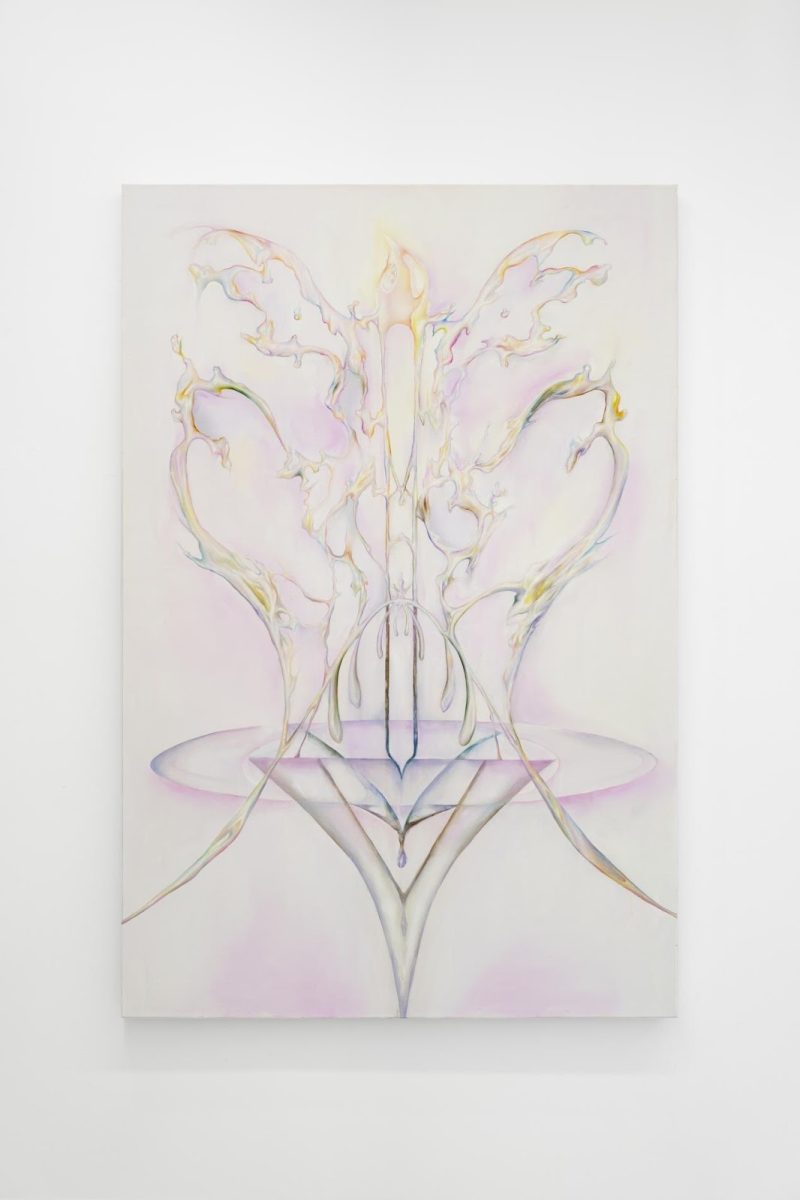
Lau Yee Vanessa Fong’s The Egg Is The World (2024) literalizes the exhibition’s metaphysical leanings. A cosmic shell cracks open on linen, revealing not clarity, but sediment — time layered and forgotten. Drawing on Buddhist cosmology, Vanessa’s painting is a quiet revelation, positioned by Valerie as “not rebirth, but fragments of forgotten time.” Here, the curator’s insistence on fragmentation as both method and meaning becomes crucial; we’re not promised transcendence, only trace.
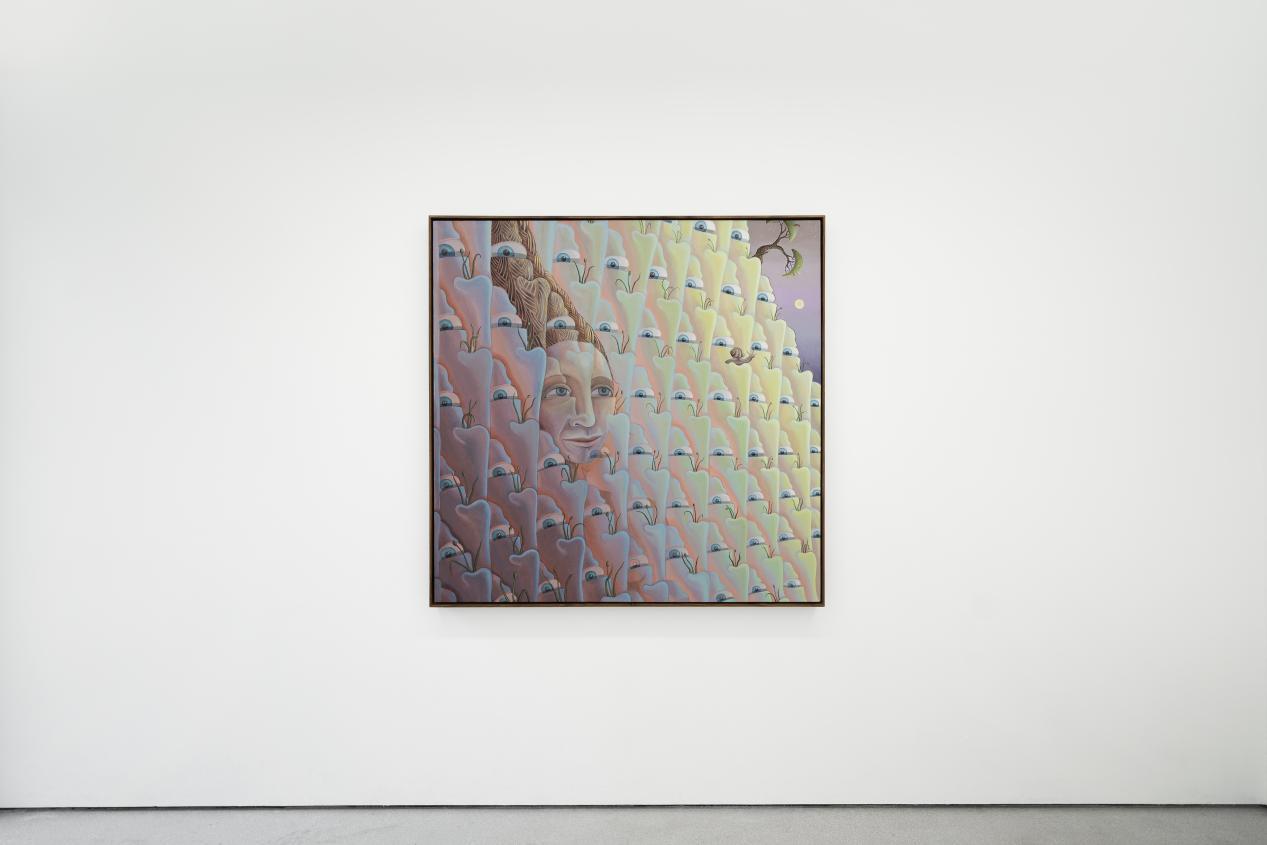
The Surrealist influence persists in Marlene Steyn’s Moon Grazing (2022), where looping, serpentine figures collapse into one another with dreamlike density. Yet under Valerie’s gaze, Marlene’s tangled bodies are less fantastical than methodological — enacting what she calls “soft resistance,” a mode of persistence that’s fluid, embodied, and non-linear.
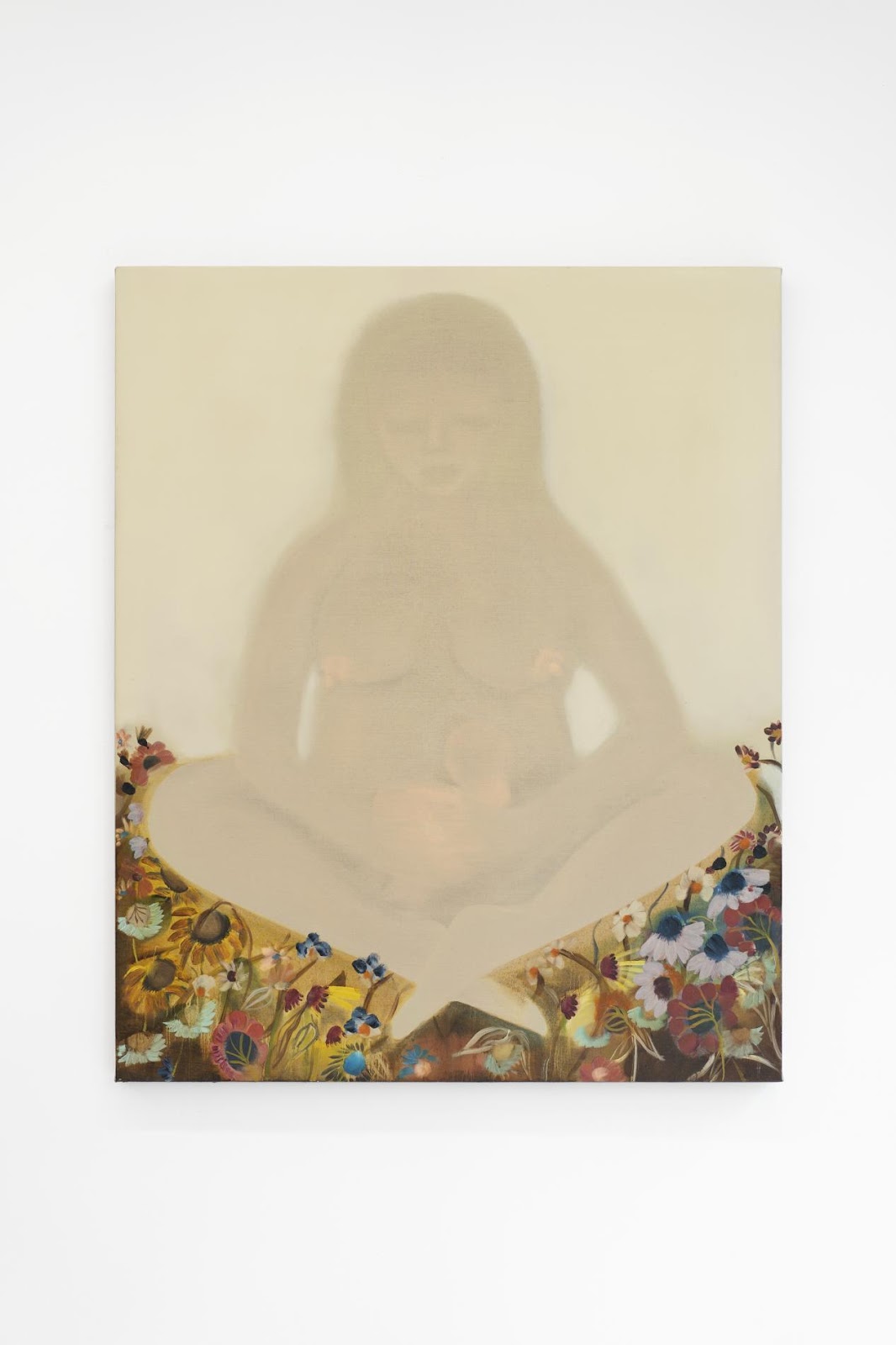
A different affect prevails in Diane Chappalley’s Our Own Space and Time (2025), a meditation in muted earth tones and figural stillness. Human forms lie suspended between soil and skin, statuesque yet alive. Valerie foregrounds Diane’s evocation of ritual and rebirth, suggesting that her figures do not inhabit time but carry it, as one might a relic.
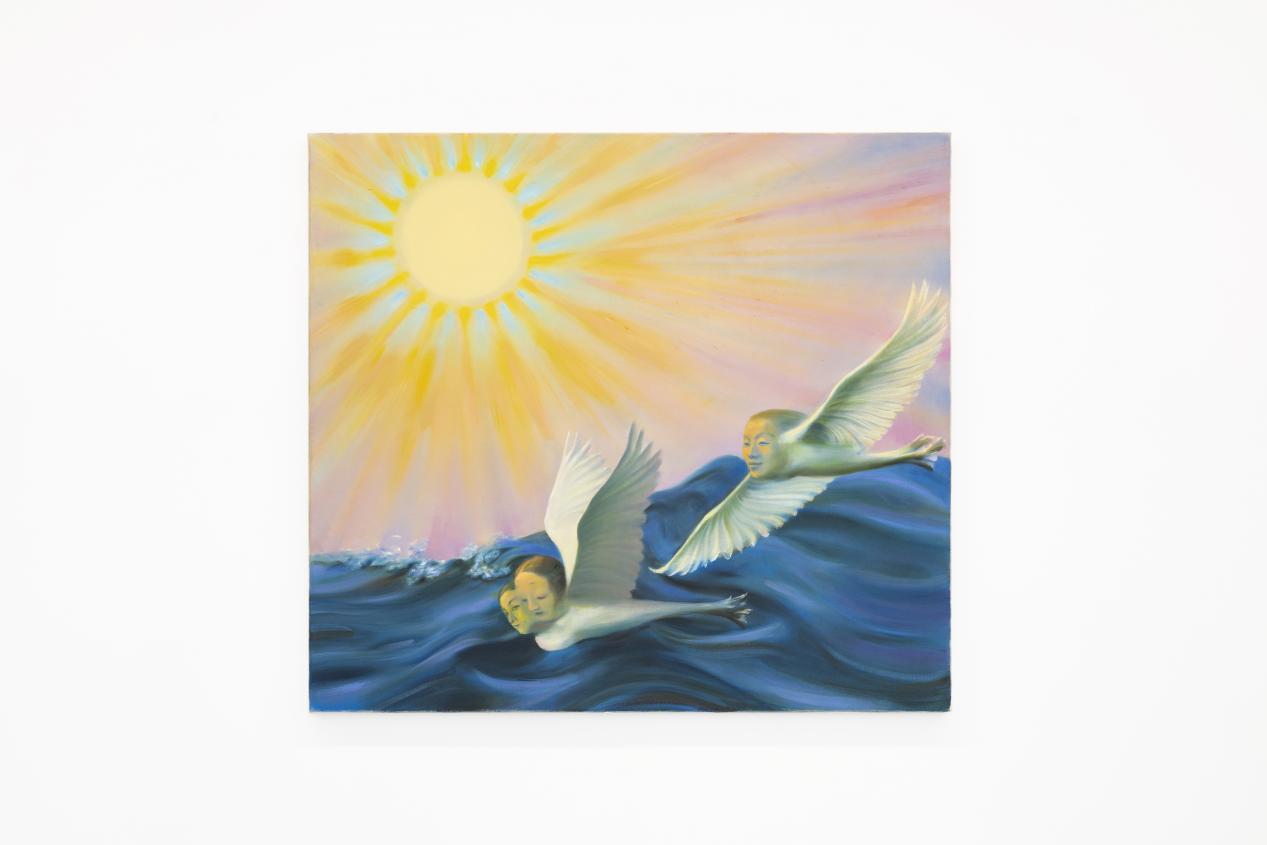
Finally, Lian Zhang’s To the Unknown Shore (2025) offers a near-epic scale of painterly ambiguity. Her brushwork resists fixity — solid yet blurred, serene yet charged. Valerie links Lian’s work to diasporic tension and symbolic metamorphosis, situating her within a broader critique of Asian female identity and its aesthetic codification. Lian’s visual language, neither wholly Eastern nor Western, resonates with Valerie’s own curatorial preoccupation: how can images hold contradictory truths without collapse?
It is tempting to describe Celestial Pabulum as otherworldly, but that would miss the point. What Valerie conjures is not an escape into the astral, but a redirection of vision — a soft but steady focus on the internal, the symbolic, the half-remembered. These are not escapist dreams but “deep mappings of reality,” as the curator herself writes. They chart not geographies but psychologies; not destinations, but conditions of being.
Valerie Conghui Wang’s curatorial voice is unusually present — not overbearing, but architectural. Like Varo’s protagonist, she grinds together diverse symbolic ingredients into a nourishing whole. The exhibition becomes less a group show than a séance of sensibilities — interconnected, yet singular. And in this gathering of quiet intensities, this exhibition offers us not resolution, but sustenance.
About The Curator
Valerie Conghui Wang is the Director of Bao Foundation and the Director of Zhi Art Museum, specializing in global curatorial practices in Eastern aesthetics and Asian art. She holds a Master’s Degree in Aesthetics from the Philosophy Department of Peking University.
She was a senior reporter at China Central Television, a specialist at Sotheby’s and Christie’s, and then the founding Director of Zhi Art Museum. Through case studies and retrospective exhibitions, she explores the global impact of Asian art. She has curated important exhibitions such as Fantasy Luis Chan: A Retrospective Exhibition (2018), Wei Ligang: Universality (2019), and The Art of Escape: Gao Yu (2023). She also initiated the Open East: Asia Museum Forum (2019) to advance the re-narration of Asian art within the international context.