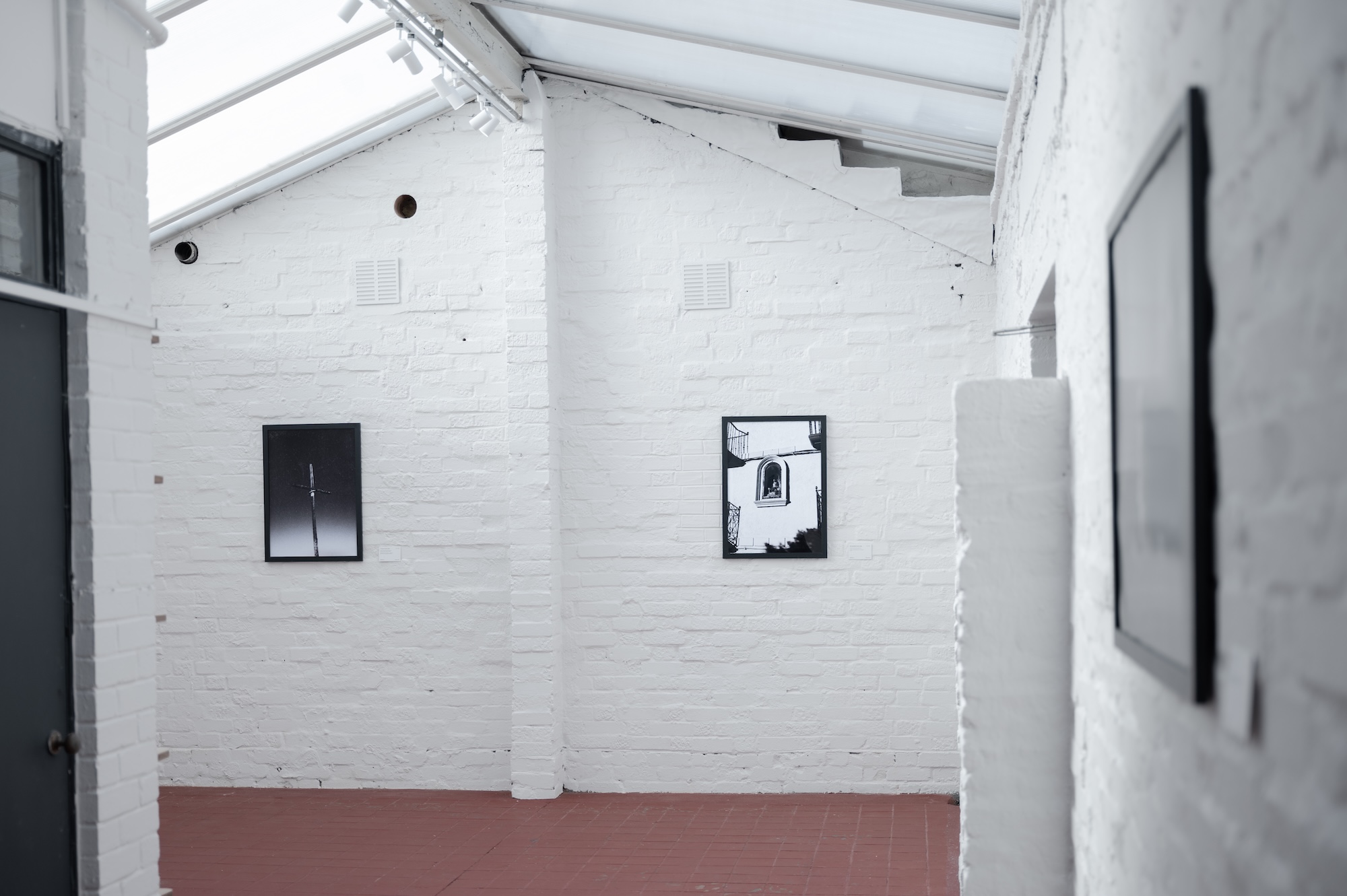
In Zesheng Li’s solo exhibition The Thin Place at Apsara Studio in London, photography is not about representation or narration, but rather a form of summoning. It summons those ambiguous states that exist between reality and the hidden, the earthly and the spiritual, the manifest and the ephemeral—thresholds known in Celtic tradition as “Thin Places,” where the boundary between worlds grows permeable. In this exhibition, Zesheng Li transforms ‘space’ into a perceptible fold of consciousness through his works, constructing a ‘spiritual geomorphology’ map through photography, allowing us to cross visible boundaries and enter the forgotten yet still resonant zones within the images.
Over three years of photographic exploration and wandering, Zesheng Li has established a spiritual topographical map of sacred imagery between the pilgrimage routes in Spain and the rural pastures in Wales. Within the non-explicit dimensions of these visuals, he transforms ‘seeing’ into ‘perception’ and spatial experience into an inquiry into the essence of existence. Though his works appear to belong to the realms of the everyday, nature, and animals, they constitute the three fundamental dimensions of Zesheng Li’s photographic language: afterimages, concealment, and gaze.
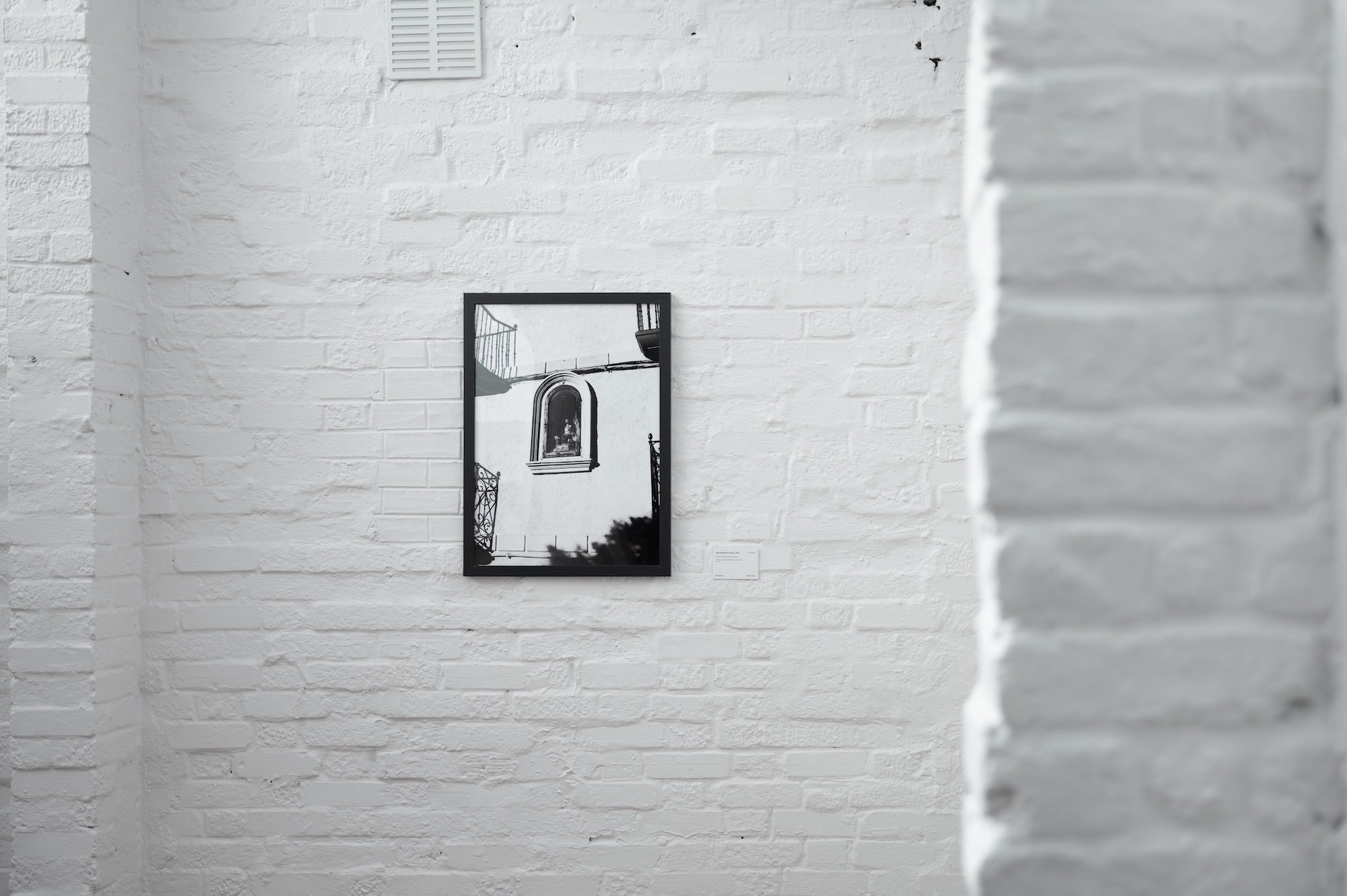
In works such as I’ll Keep Coming (2022), the artist focuses on religious objects that have lost their efficacy—faded crosses, worn-out shrines, and neglected balcony statues of Jesus. These “sacred objects” no longer exist as the core of faith, but rather as buoys of cultural memory, akin to Georges Didi-Huberman’s “flashback images.” They are not memory itself, but reminders of how memory once existed. Zesheng Li does not sanctify them or imbue them with excessive symbolic meaning, but instead chooses to observe, amidst the weathering and erosion, how faith slowly sinks into the soil, becoming a faint, subtle noise within the everyday landscape.
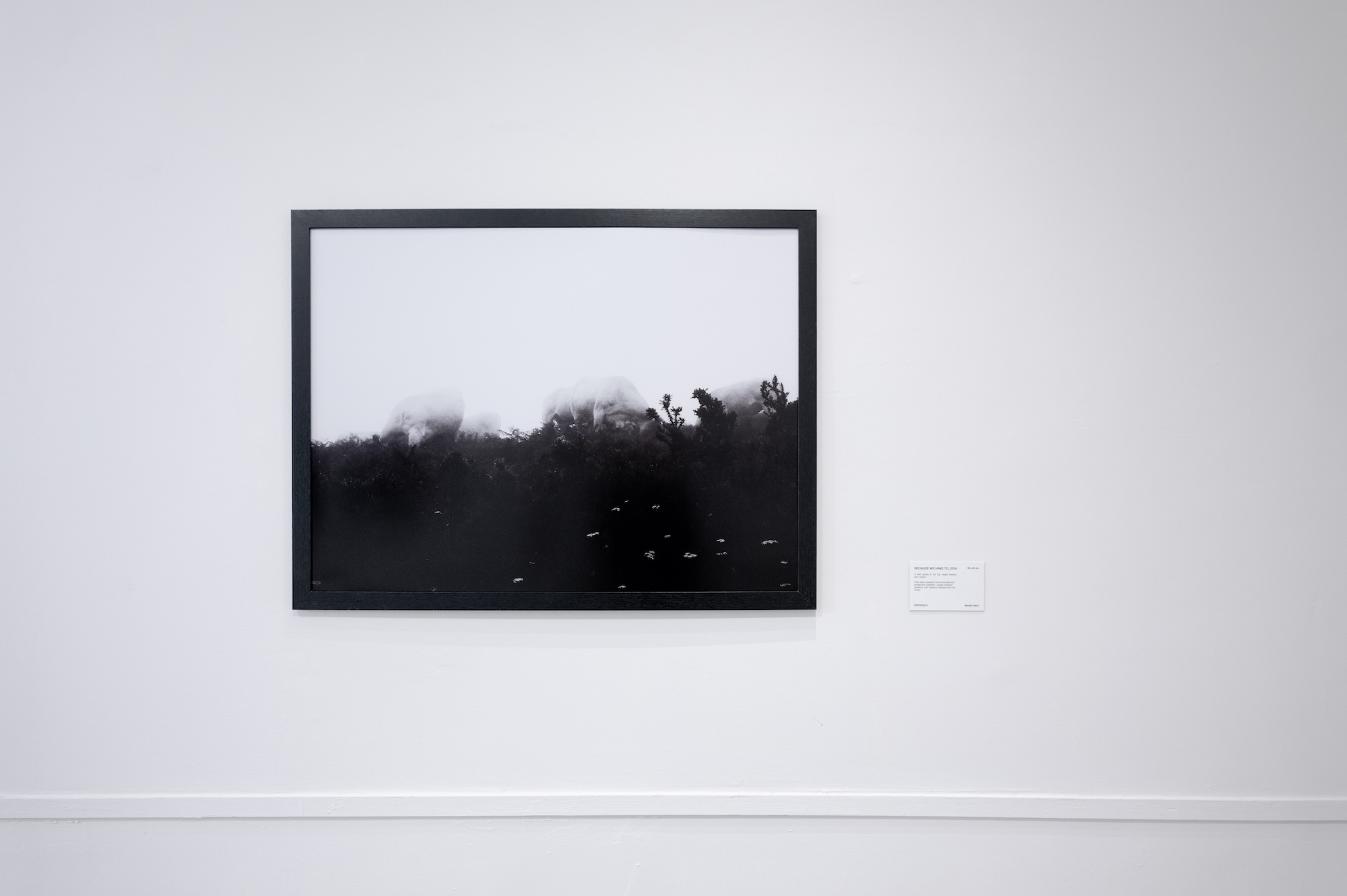
”The fog membrane” is at the core of Zesheng Li’s visual poetics. As he says, fog is not merely a weather phenomenon but a metaphorical device for the spirit. It does not obscure the world but reveals the limits of perception through its ambiguity. In the work BECAUSE WE HAVE TO (2024), a flock of sheep moves slowly through the fog, their heads bowed and forms blurred, as if disappearing beyond the depth of field, yet their collective physicality draws the viewer’s gaze. This handling of the tension between ‘appearance and disappearance’ brings to mind the ‘paused moments’ created by Bill Viola in his video works—perception is slowed down in the blur, and the generation of meaning thus becomes delicate and fluid.
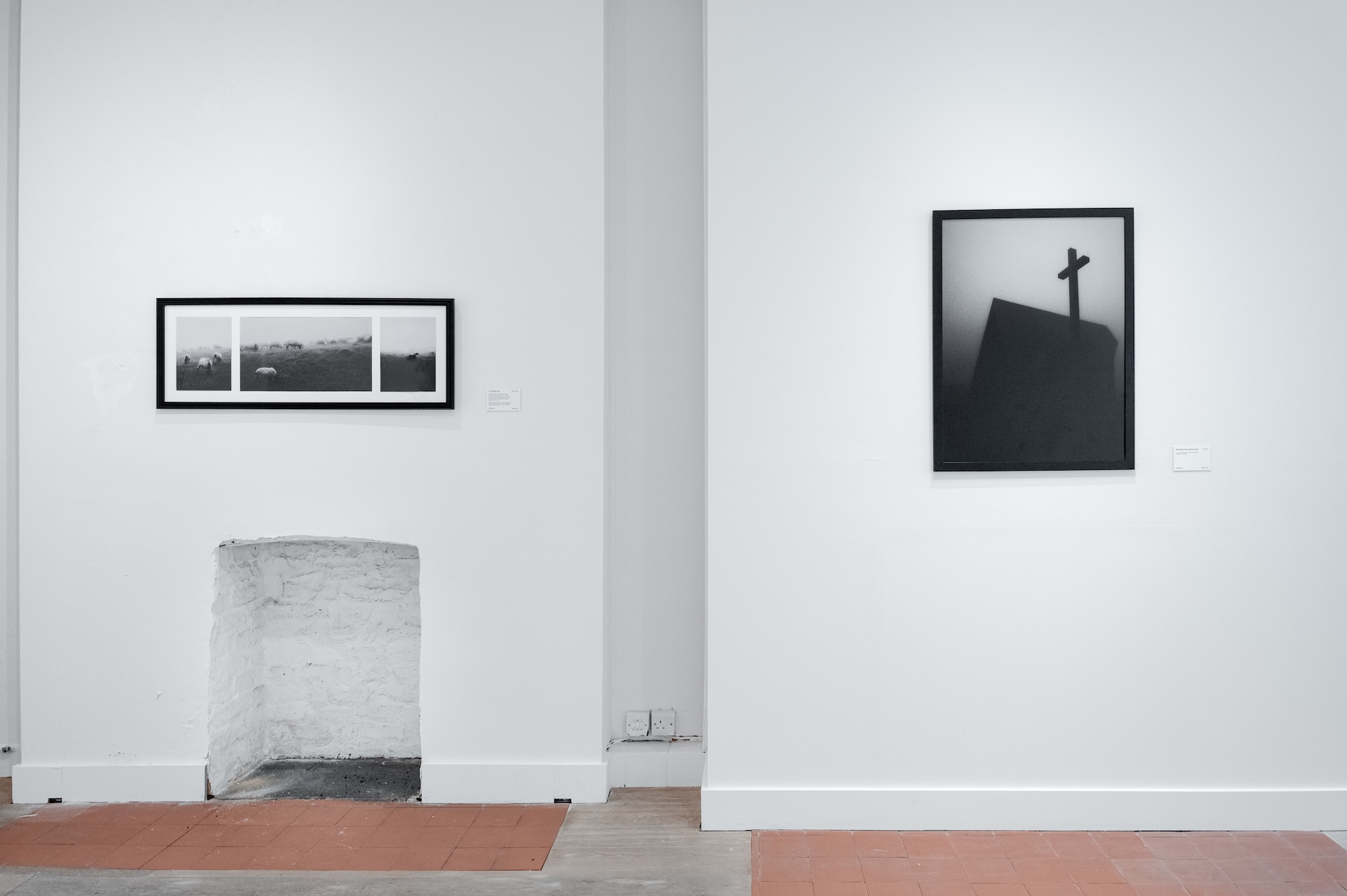
In the wide-format work I, US, THEM (2023), Zesheng Li introduces the ethical dimension of individual experience into the image. The collectivity of the sheep and the artist’s narrative form an intertwined exercise in identity. In his creative notes, Zesheng Li mentions that ‘changes in pace are the product of emotional relationships.’ This seemingly casual remark touches on the fluid state of modern identity. The artist’s approach in the work establishes a foundation for social observation without slipping into critical narrative, instead preserving a poetic open space. Here, we seem to hear Donna Haraway’s call for ‘interspecies intimacy’: ‘They are not our mirror images, but the unavoidable others we coexist with in reality.’
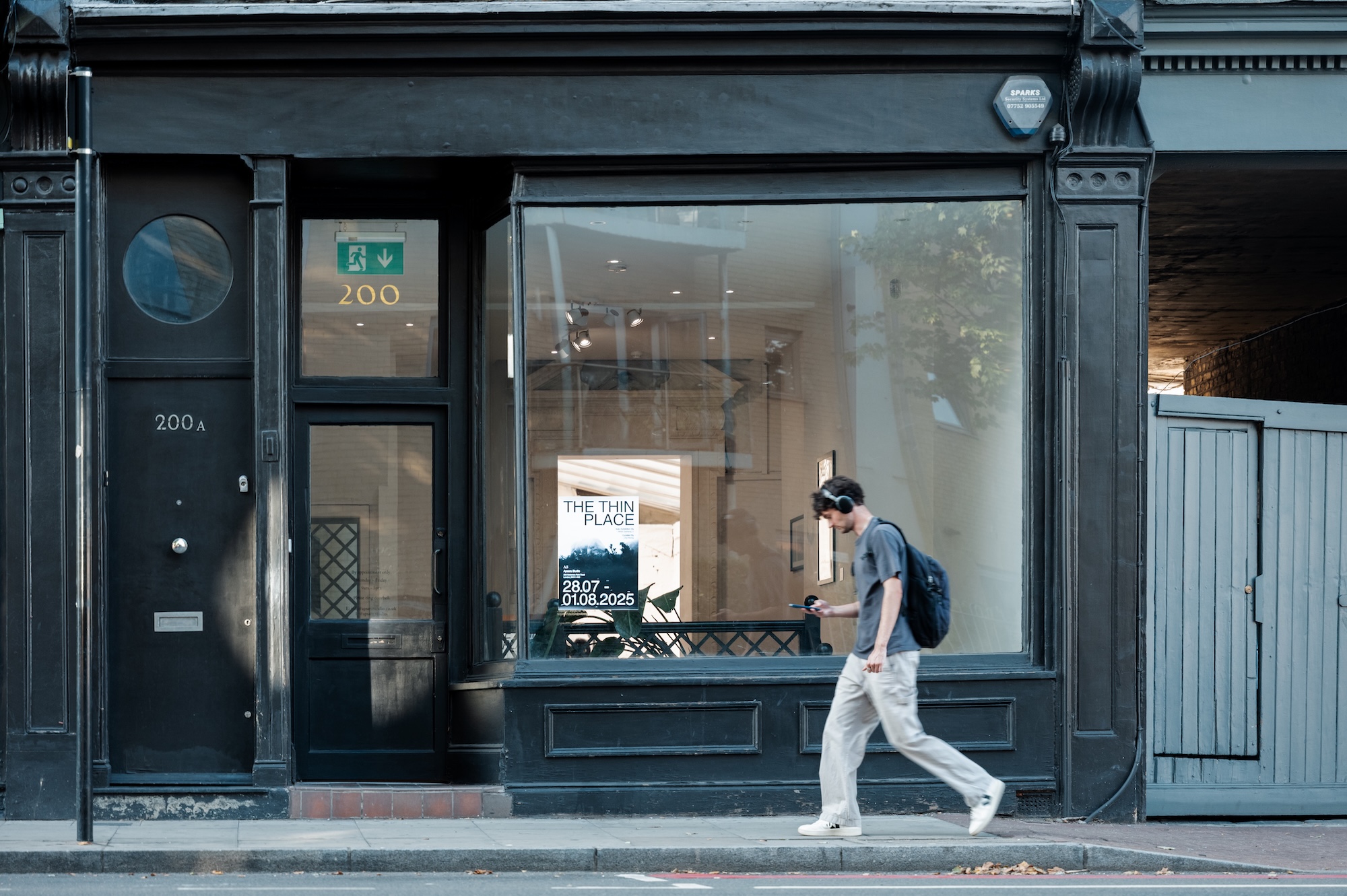
As a Chinese photographer living in London, Zesheng Li does not dwell on the writing of identity, but instead uses walking, gazing, and image construction as a path to explore the ‘potential spiritual dimension.’ He rejects the rapid generation of images, choosing instead to experiment with waiting and coexistence in photography, using images to record those ‘unfolding events.’
For Zesheng Li, photography is no longer about image production but the exploration of the terrain of the subconscious. His works, through the yielding of form and the delay of meaning, construct a silent yet powerful world—a ‘thin place’ that is still dissipating but has never truly departed. Here, spirituality no longer clings to specific religions but transforms into an ethics of observation, a way of listening to the world’s self-narration through the fog.