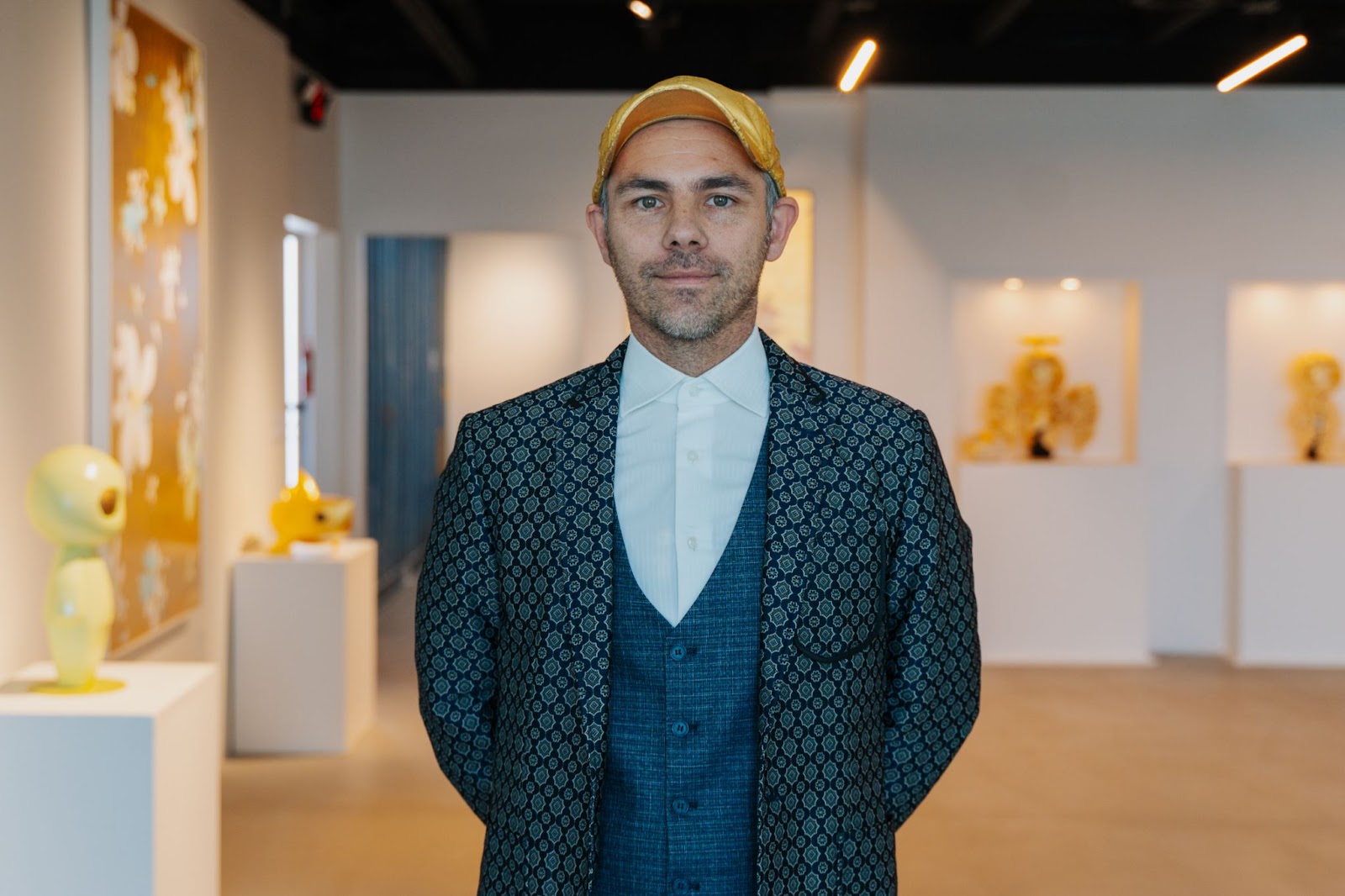
Gold catches the light and stops you in your tracks. Where does your mind go when thinking of this precious metal? Is it imagining gold bars and coins as the ultimate display of wealth, ornate jewellery, the prestigious reward to athletes in trophies and gold medals, or the medieval altarpieces covered in gold leaf? In Johnathan Schultz’s hands, this ancient symbol of wealth becomes a mirror reflecting our fractured world back at us.
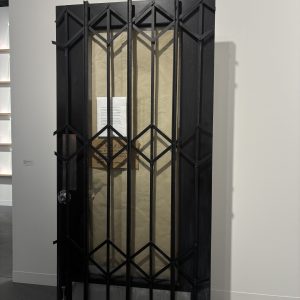
Artist Johnathan Schultz was born in South Africa. He is now based in Las Vegas and opened an eponymous gallery in Miami in 2022. His practice is influenced by the legacy of Nelson Mandela, whose values of resilience, struggle, and human dignity resonate throughout his work. He has made work using salvaged metal from Robben Island, where Mandela was imprisoned , and Schultz published his manifesto ‘The Gilded Truth: Manifesto of Unyielding Defiance’. It’s a philosophical and visual articulation of his mission as an artist to defy aesthetic conventions and confront socio-political constructs through art.
He is asking us to reconsider our relationship with precious materials and the broader structures that govern the world. He uses gold as a material to draw our attention to the inequalities around us and the simple elements of life that we’ve lost as we’ve embraced technology. It’s particularly fitting given that Schultz is from South Africa, a country that’s a source of many of the world’s most valued materials.
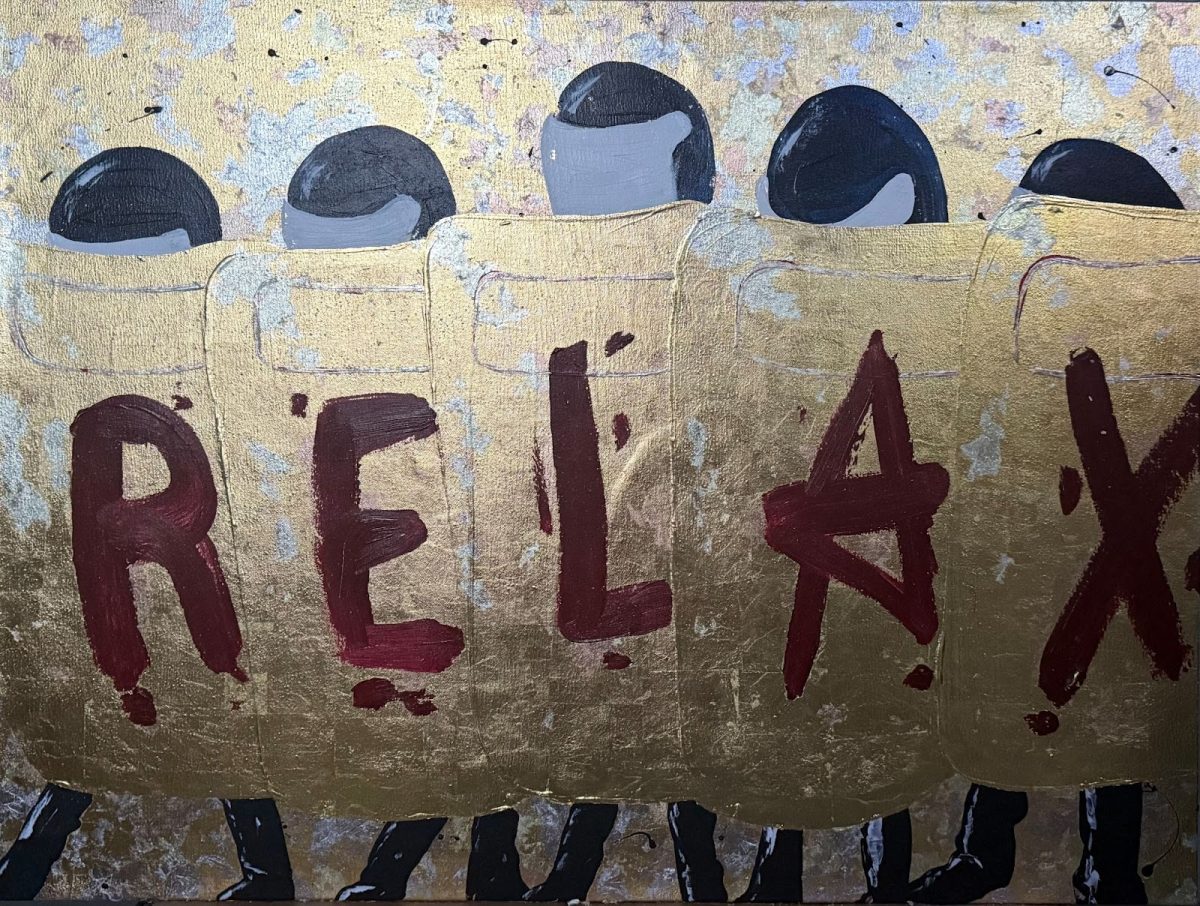
His riot shields gleam with the word “relax” etched across their surfaces, a cruel irony that cuts to the heart of modern power structures. We’re told to see the police as protecting us, yet the riot shields can also be agents of wealth inequality, protecting those in power and helping them hold onto their wealth. We are reliant on the justice system to protect us, but it can also oppress us at the same time. The work is asking us why we’re told to stay calm while inequality burns around us.
An oil barrel is marked “safe for human consumption”, sitting beside a jar of cooking oil labelled “unsafe.” It’s a visceral reminder that we live in an age where truth has become as malleable as the gold leaf on a medieval altarpiece. Schultz forces us to confront the uncomfortable reality: oil runs through the veins of our civilisation, from the plastic wrapping our food to the synthetic fibres we wear. We want to step away from it, but we’re stuck in the convenience that modern society affords us.
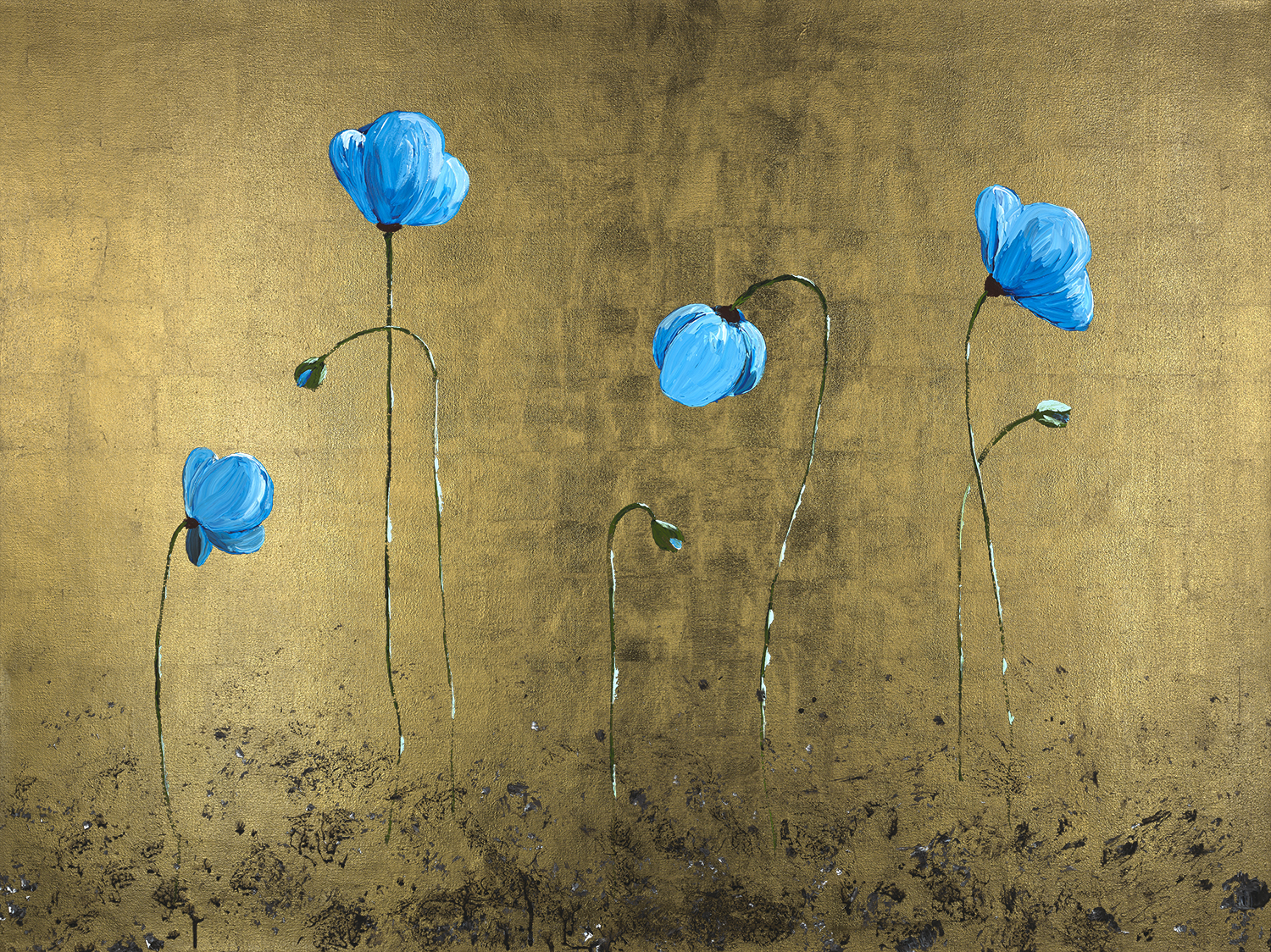
His poppy paintings carry this same duality. We think of them as flowers of remembrance, honouring fallen soldiers. Yet they are also the source of opium, the foundation of an addiction crisis that continues to devastate communities. One flower, two truths. Beauty and destruction grow from the same stem.
The empty swings in his paintings don’t just cast shadows on the ground – they cast shadows on our collective memory. These aren’t nostalgic scenes; they’re crime scenes documenting the theft of childhood by screens. The chains creak with the absence of laughter, a haunting reminder of what we’ve traded for the sake of connectivity.
Even his solitary tree carries weight. It’s not wild, but a city tree, pruned and positioned for our viewing pleasure. Schultz shows us nature as we’ve redesigned it: controlled, contained, and stripped of its untamed spirit.
Schultz doesn’t offer easy answers because easy answers don’t exist. His work lives in the uncomfortable space between progress and loss, between safety and oppression, between connection and isolation. Each piece asks the same fundamental question: What have we gained, and what have we lost?
More information on the artist may be found on his website and Instagram.
All images are the copyright of the artist. Works pictured are titled ‘Never Forget’ and ‘Relax’.