Somers Gallery is pleased to present Latent Relics – a duo exhibition of new works by artists Dylan Doe and Jack Evans, curated by Jessica Wan.
The exhibition will transform the gallery into a speculative domestic space: a home of relics from an imagined future inviting audiences to consider our relationship with technology and value systems – how it shapes our experience, becomes an unconscious extension of ourselves, and mediates our understanding of the world.
Bringing together 13 new and unseen works spanning painting, sculpture, and installation, Latent Relics sees both artists elevate mundane objects and moments to monumental status, inviting viewers to find meaning in the ordinary. In an age defined by ephemerality and excess, the exhibition speaks to our culture’s tension between constant consumption and the search for authentic meaning and asks, what will remain of us? What do we choose to preserve, and what quietly slips away?
Unfolding as a staged environment, the exhibition presents itself as a home rendered just slightly o. Works are positioned with quiet intentionality – above a mantelpiece, at sink height, beside a bed – while familiar domestic cues like books, display shelves, and surfaces populate the space. At the entrance sits Into The Valley, a site-specific sculpture resembling a kitchen island, constructed from moisture-resistant MDF. Its three carved cabinet doors form an elongated triptych depicting Yosemite National
Park — an image drawn from one of Evans’ own holiday photos, deliberately taken at a viewpoint that mimics the default Mac desktop background. At once counter, terrain, and altar, the island sits in quiet isolation — evoking rituals of gathering while hinting at something more sacrificial. In the back storage area, Doe presents an ambient collage sound piece shaped by his musical background and intuitive studio practice.
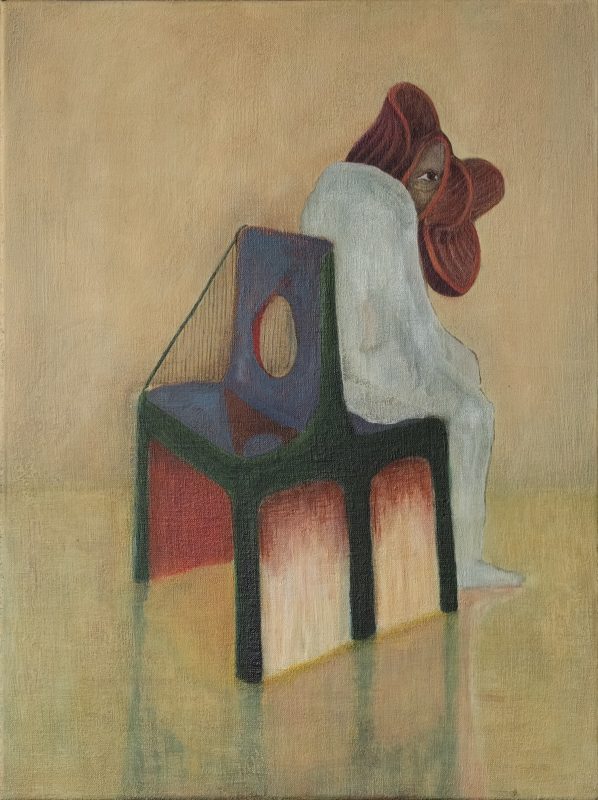
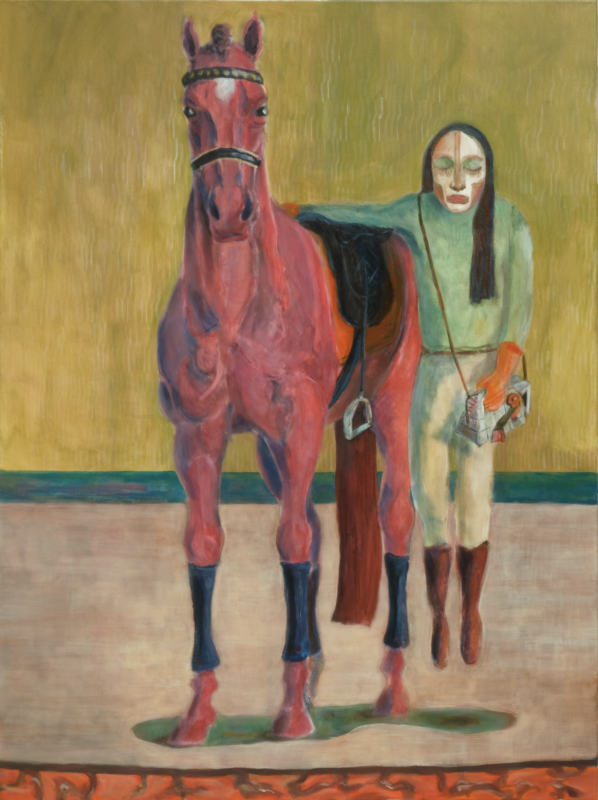
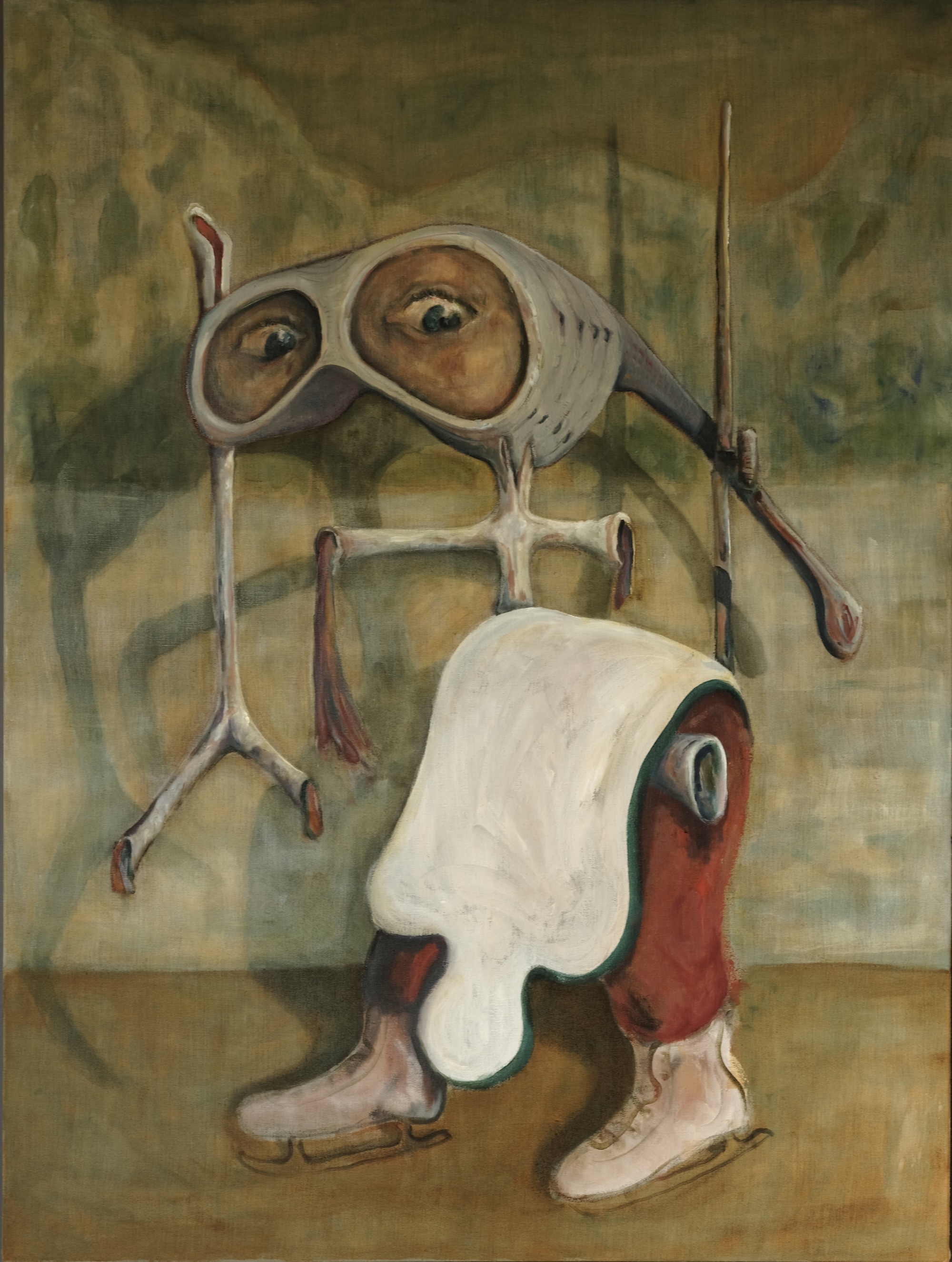
Doe’s paintings flicker between diorama and still-life, anchoring strange hybrid forms – part flesh, part machine – into raw, painterly space. Drawing from the likes of Louise Bourgeois, Philip Guston and Minoru Nomata, his work presents speculative objects that feel both familiar and strange. Blending mechanical design processes with domestic sensibilities, Doe incorporates influences from his background in design and music, producing compositions that suggest post-human hybrids – objects that exist between the organic and the manufactured, the uncanny and the familiar. A recent shift from acrylics to oils allows him to work more deliberately, letting each layer unfold over time.
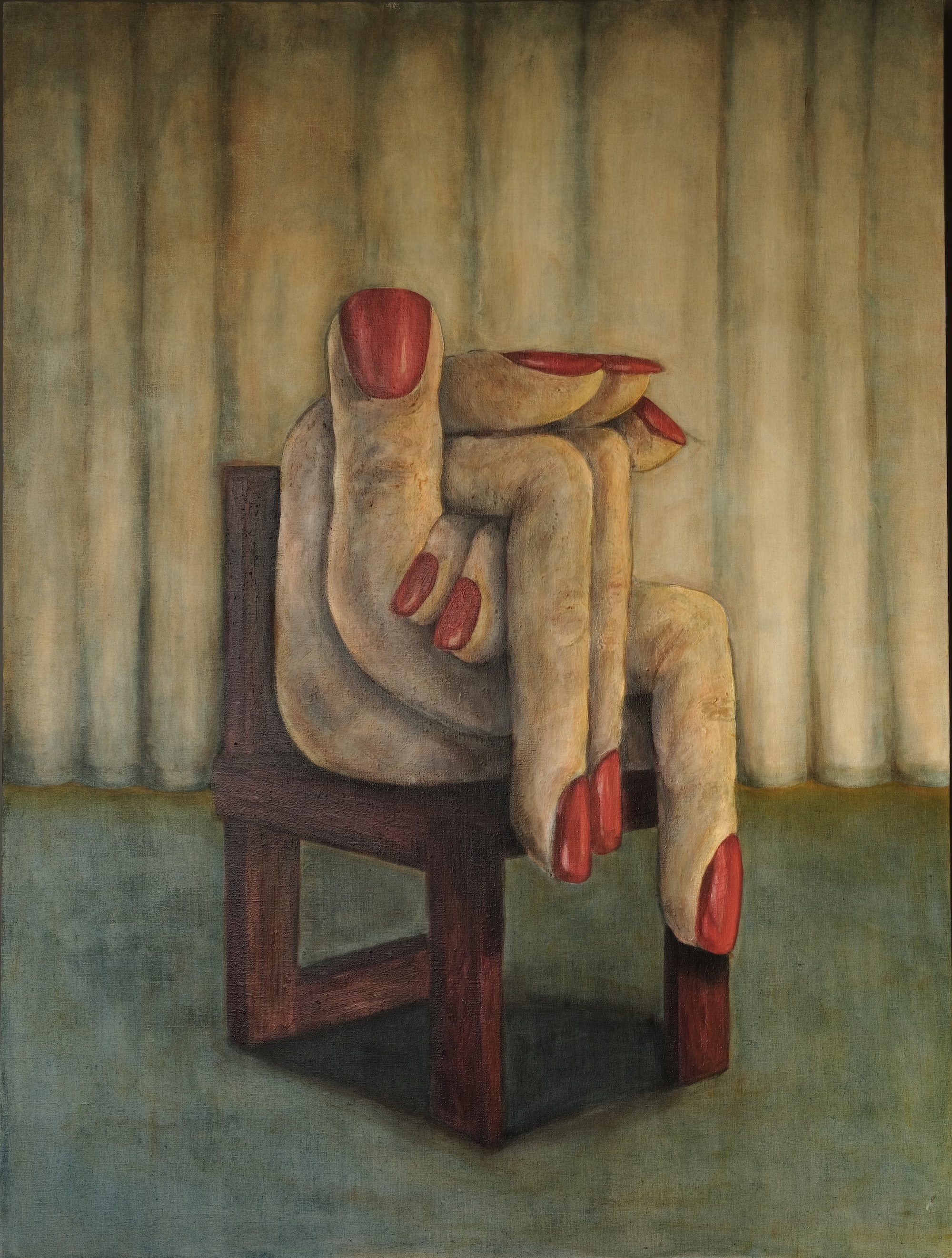
Balancing spontaneity with structure, each painting contains an absurdist tension and a surrealist dream-like quality. In Extrusion (Hair), he depicts what appears to be human hair – the most primal and intimate of bodily materials – being processed through an ambiguous mechanical apparatus. Hand (Rietveld) suggests the post-human without surrendering to pessimism, a holding gesture toward beauty and self-expression persisting even as the body itself undergoes radical transformation. By subconsciously extracting industrial elements from their functional contexts and reframing them within aesthetic parameters, the work reveals the hidden poetry in technological systems that typically operate invisibly around us.
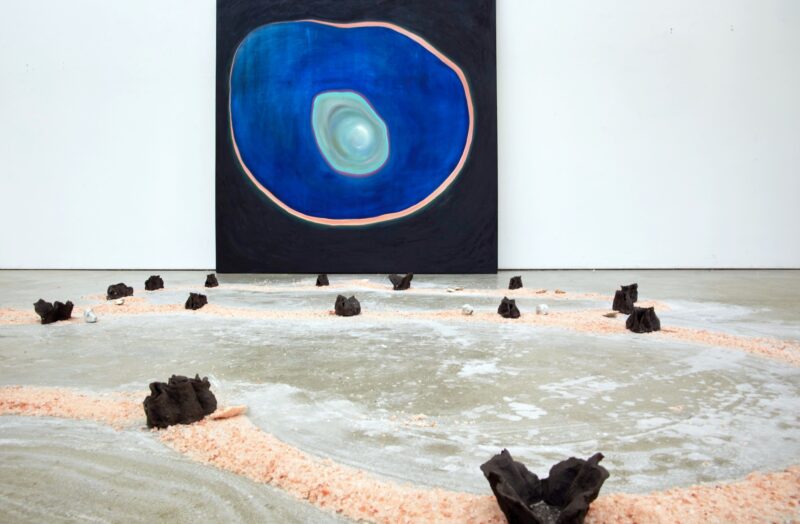
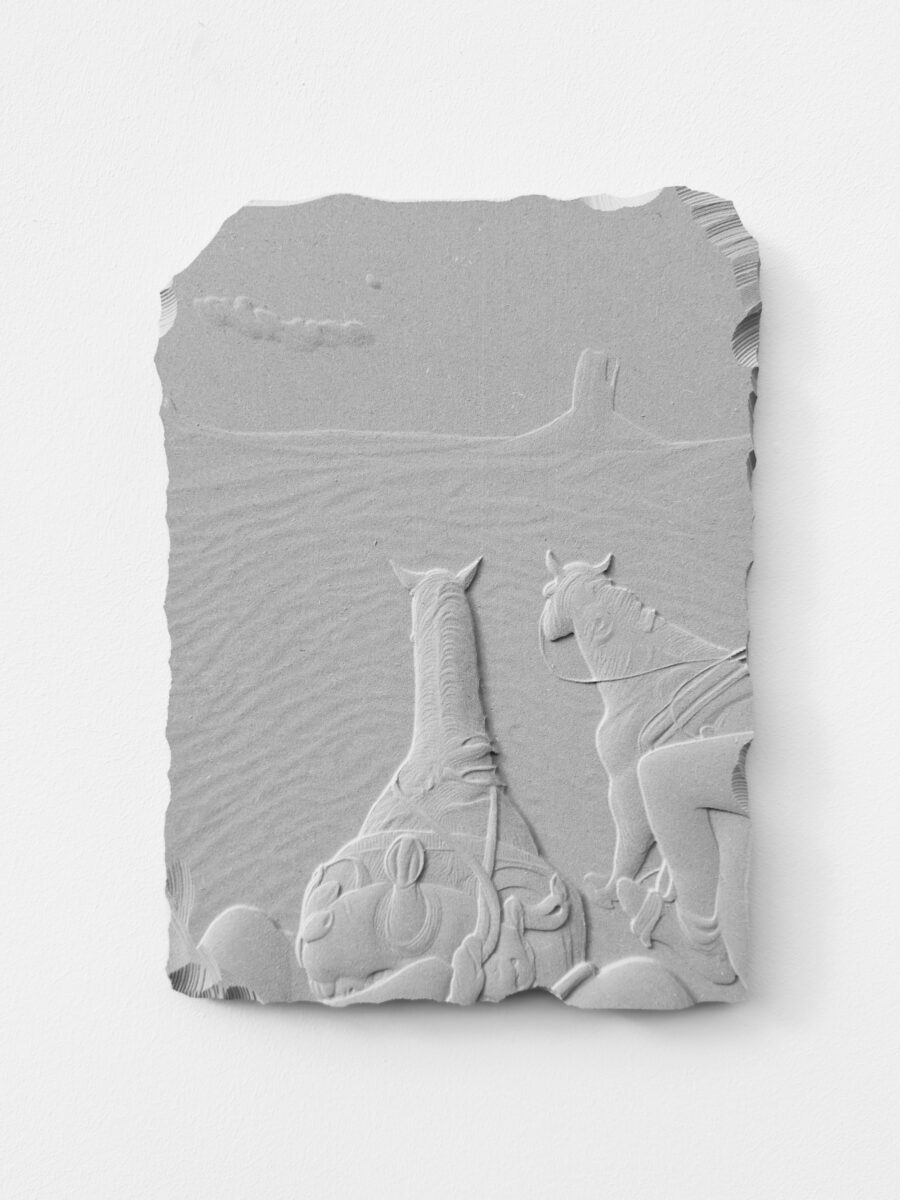
In contrast, Evans’ sculptural works which draw from the likes of Mike Nelson and Stephen Shore, often begin with unconscious iPhone images – photographs taken instinctively, without artistic intent – which he reinterprets as carved surfaces and cast forms. By turning these digital snapshots into tangible works, he explores how our devices have become extensions of our consciousness, creating what he calls ‘digital slippage’ – a space where technology captures moments we ourselves barely register.
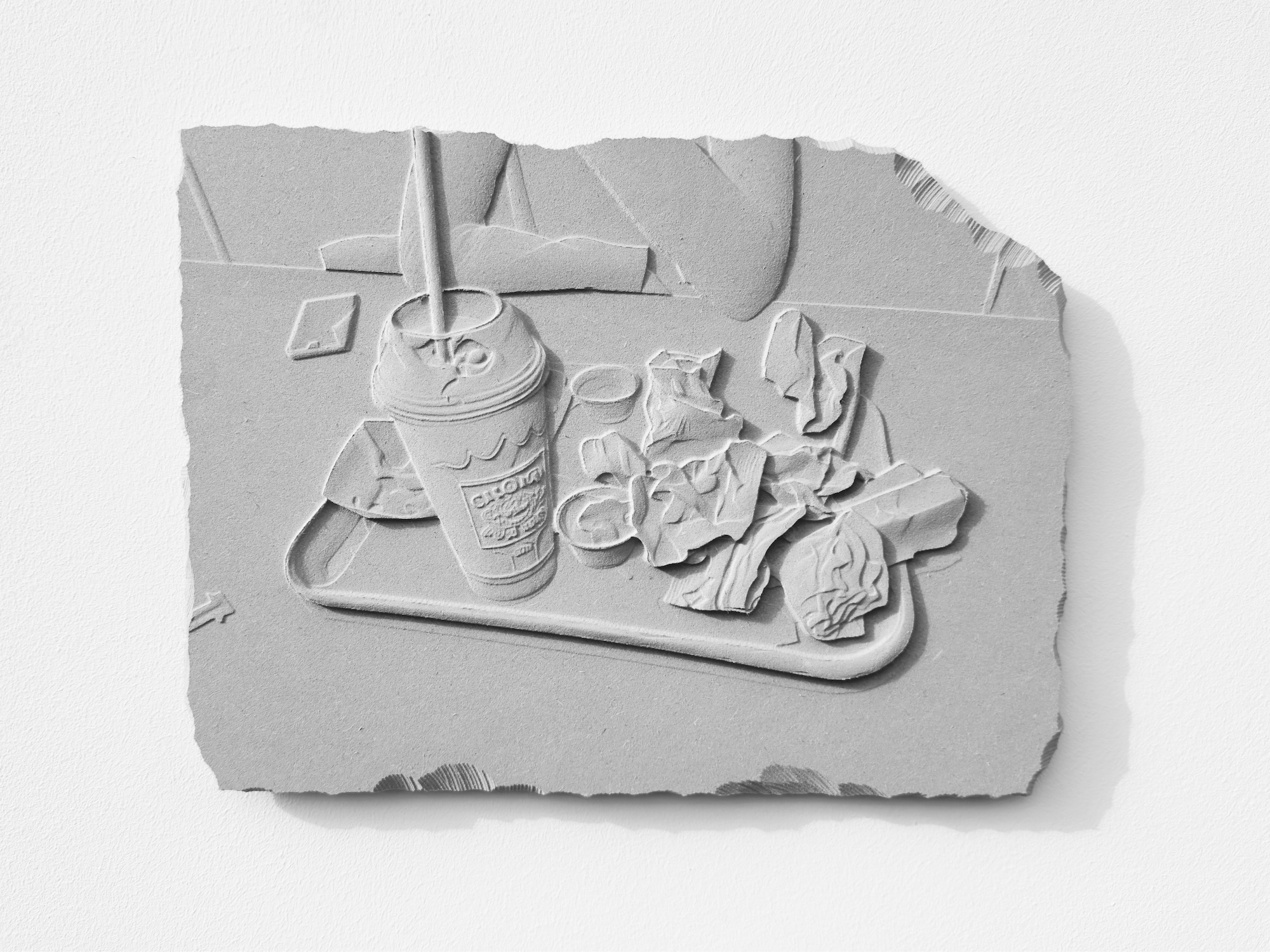
By materialising these unconscious digital gestures, Jack questions whether our devices know us better than we know ourselves. Working with materials such as aluminium, cast iron, and for the first time, Valchromat, Evans creates pieces that feel unearthed rather than made, relics of a present moment viewed through the wrong end of time. “Nothing is quite as it seems,” says Evans. “Why is there a Yosemite scene carved into a kitchen counter? Why is there fast food trash next to classical forms? What are assault rifles doing on a table in a domestic setting? I want people to leave with questions, not answers”.
Together, Evans’ use of materials that mimic antiquity – yet deliberately resist tradition and Doe’s evocative hybrid forms propose not simply a rejection of technology, rather a more conscious relationship with our tools, one that acknowledges both their power to preserve and their tendency to reshape our perception. The domestic space becomes not just as a physical setting but a psychological landscape: a repository of memories, habits, and unconscious interactions. Latent Relics invites us to consider how future generations might read the relics of our time – both the objects and the traces of life they hold.
Speaking of the exhibition, curator Jessica Wan said:
“The title Latent Relics encapsulates the exhibition’s exploration of everyday objects transformed into vessels of meaning through preservation and contextualisation. Like Jack’s collection in the narrative, these works exist in a state of suspended animation, waiting for viewers to unlock their significance. It bridges the personal and universal, suggesting these preserved fragments contain hidden truths about humanity, technology, and memory that might someday be understood in new contexts. At its core, Latent Relics challenges viewers to confront the power dynamics of our digital age, where corporate
platforms claim ownership of our memories and algorithms dictate our attention. By reimagining what deserves preservation, the exhibition transforms the forgotten fragments of daily life into monuments of resistance against the increasingly automated relationship we have with both objects and memories.”
Javier Calderón, Founder and Director of Somers Gallery also said:
“We are thrilled to present this thought-provoking exhibition, curated by Jessica Wan after a long series of conversations. Doe and Evans represent a new generation of artists whose work resonates with the questions that define our time.”
Latent Relics, 8th May – 7th June 2025
Somers Gallery
Private View + Special Edition Launch Thursday 8th May 2025, 6PM-8PM
Closing Celebration coinciding London Gallery Weekend Saturday 7th June 2025 Brunch Club: 12PM-3PM Closing Party: 3PM-6PM
About the artists
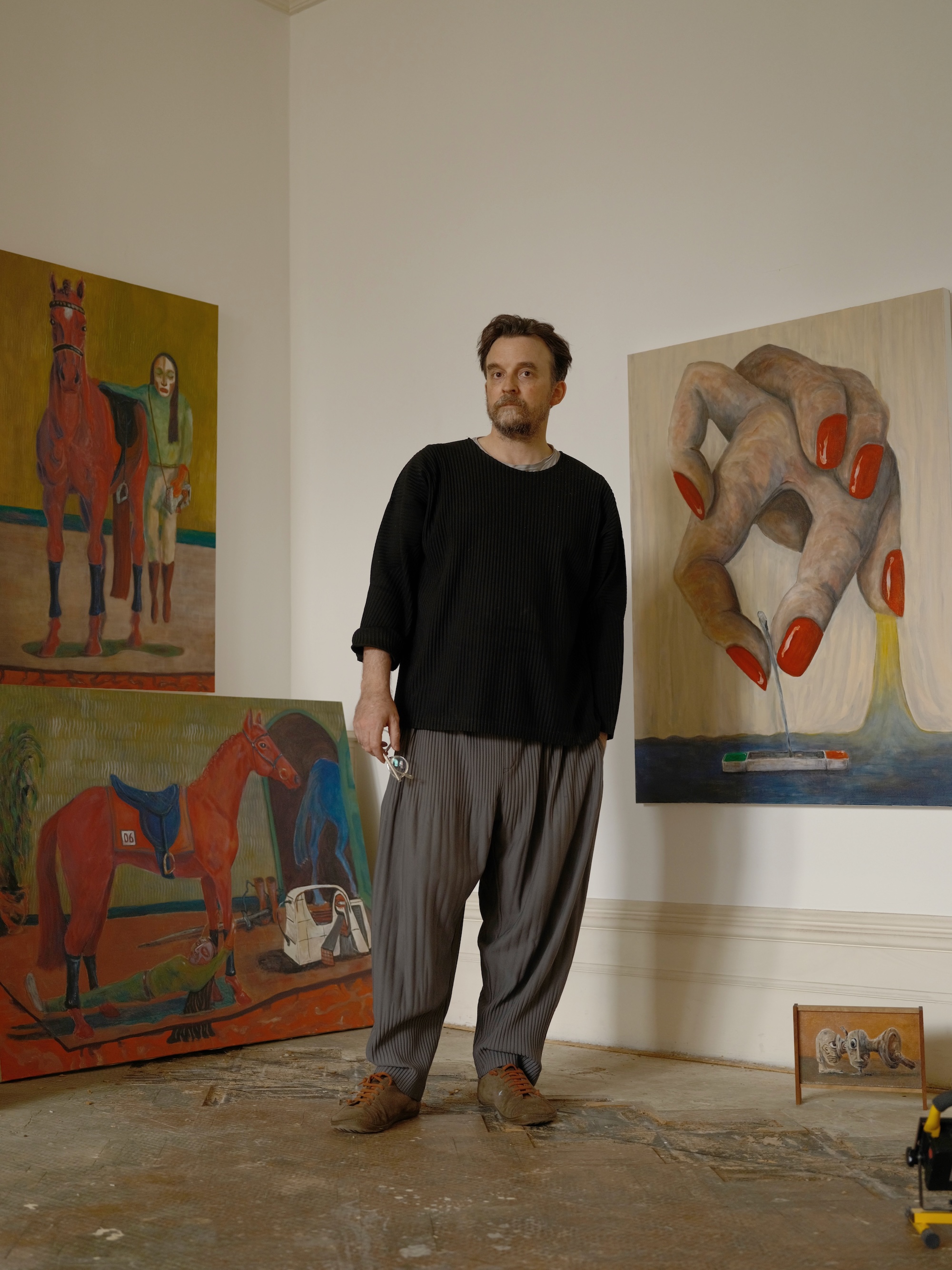
Dylan Doe is a London-based painter and musician whose work explores contemporary life through themes of chance encounters, compulsions, hybrid forms, and devotional objects. Embracing ambiguity, his paintings collage disparate elements, transforming the familiar into the uncanny. With a focus on anonymity, surveillance, and human relationships in the digital age, Doe’s intuitive approach reveals a deep engagement with post-humanist ideas—examining how the body evolves in relation to the objects and technologies it creates, and speculating on the merging of organic and inorganic forms.
Doe holds a bachelor’s degree in History from the University of Manchester and was awarded an AHRC scholarship for his Master’s at the Cambridge School of Art. He also completed postgraduate education at the School of Design, Goldsmiths University. His debut exhibition, Still Spinning, took place at Albert Hall Mansions in October 2024. @dylan.doe
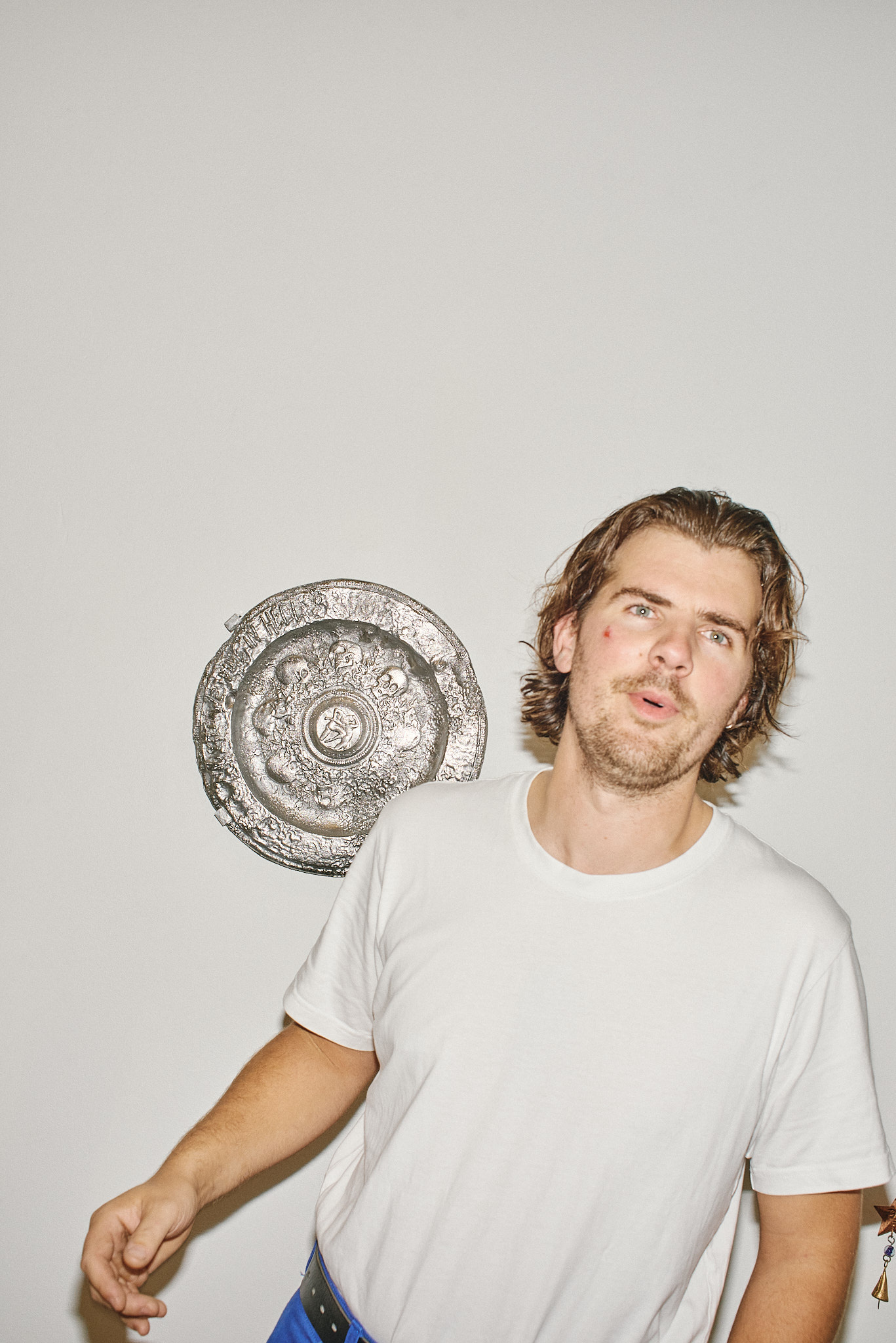
Jack Evans (b. 1992, Mansfield) is a London-based artist whose practice explores themes of materiality, narrative, and cultural critique. A graduate of Central Saint Martins (2015) with an ERASMUS exchange at the École Nationale Supérieure des Beaux-Arts de Paris, Evans’ work has been exhibited widely across the UK and internationally.
His first solo exhibition, Fear of the Dark, was presented at Soup Gallery in 2023. Recent exhibitions include GBA 2024Winners Exhibition at the Royal Society of Sculptors, CURE3 Fundraiser at Bonhams, and Niby przypadkiem Accidentally on Purpose in Warsaw. He has also participated in significant group shows such as Summer Exhibition 2020 at the Royal Academy and Bold Tendencies 2020 in London. His work has been featured in FRIEZE, Tzvetnik, KUBA Paris, and FAD Magazine. Evans was awarded the RSS Gilbert Bayes Award (2024) and The Arts Club Award (RA Summer Exhibition, 2020). He has held a residency with Thorp Stavri at Two Temple Place and has delivered artist talks and workshops, including at The Art House Open Lecture Series at the University of Worcester. @jackevans