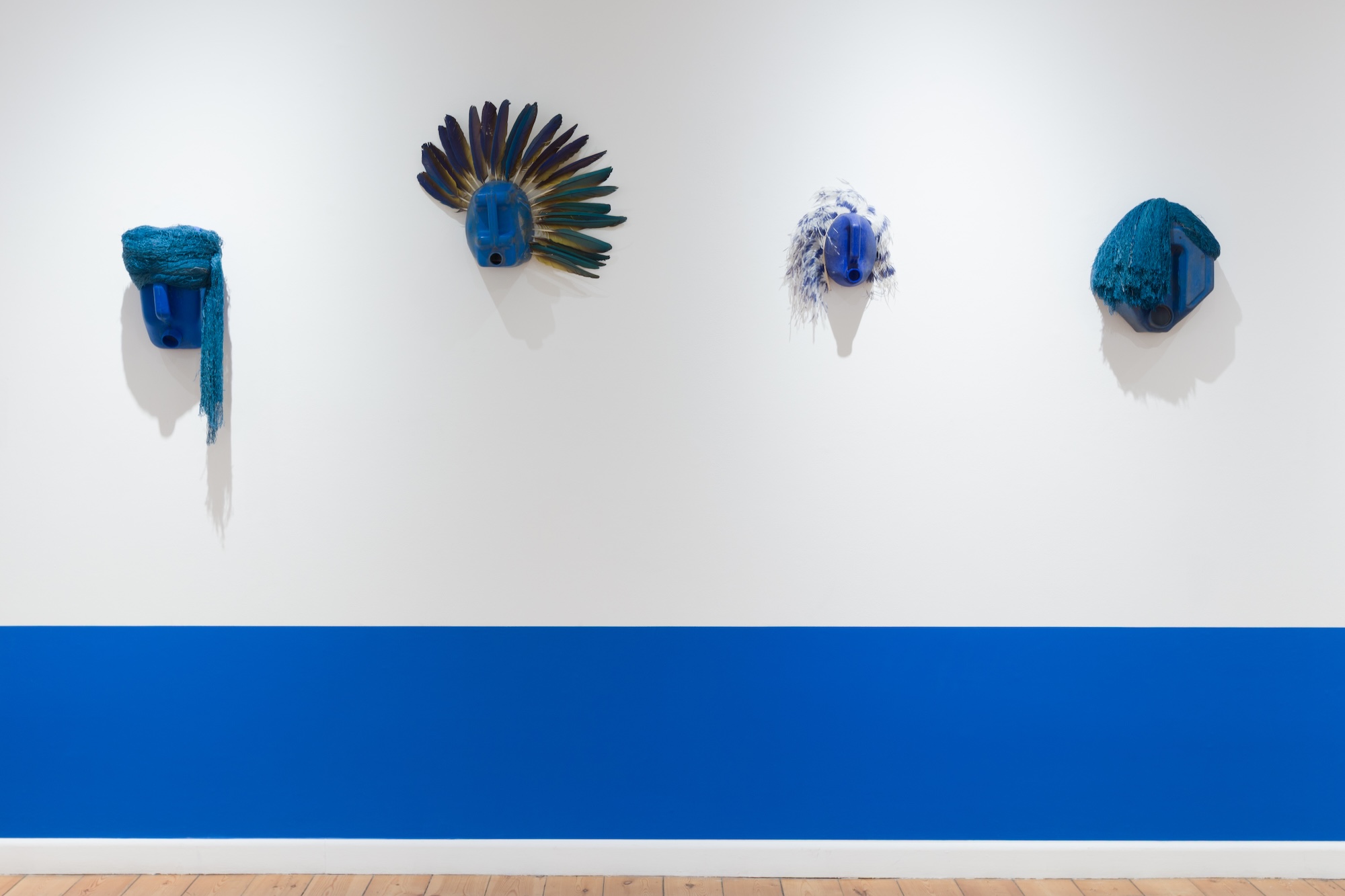
With My Blue Period, Romuald Hazoumè releases a new set of masks that form the latest chapter in the artist’s long-standing narrative. Approached from a European angle, the title immediately conjures comparisons to Pablo Picasso, his blue paintings and African-inspired sculptures. Hazoumè works with deliberately humble material to allude to stolen African artefacts whose true value far exceeds that of their components. For him, the exhibition title is not related to personal grief, nor to the shared melancholy of Blues music.
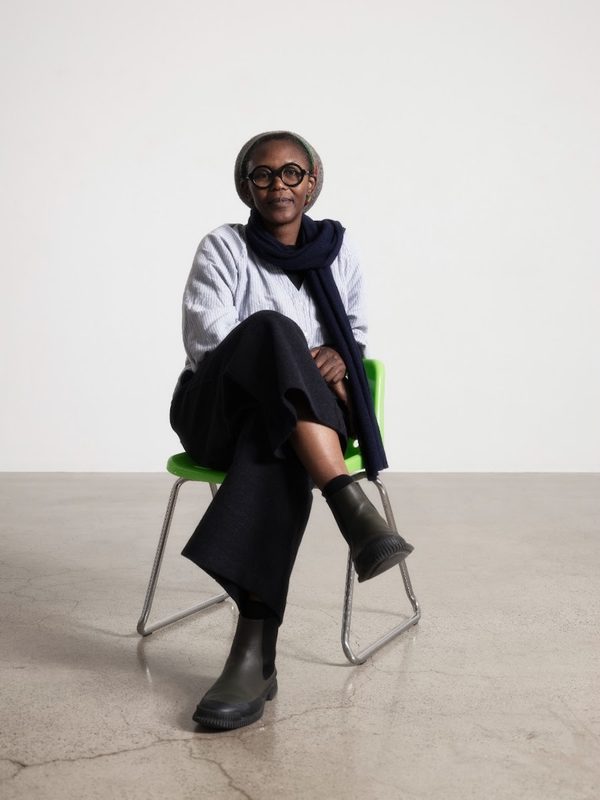
Romuald Hazoumè is regarded as one of Africa’s leading visual artists, receiving international recognition for his monumental installations at documenta and the Venice Biennale and his La Bouche du Roi held in the permanent collection of the British Museum. What unites all these works is the way in which they translate the complexities of global geo-politics into striking works of art that transcend geographical borders, generation gaps and language barriers. They are also particularly memorable for their material vocabulary. Hazoumè’s sculptures are informed by found and salvaged objects, in particular the plastic petrol cans with which the artist is widely associated.
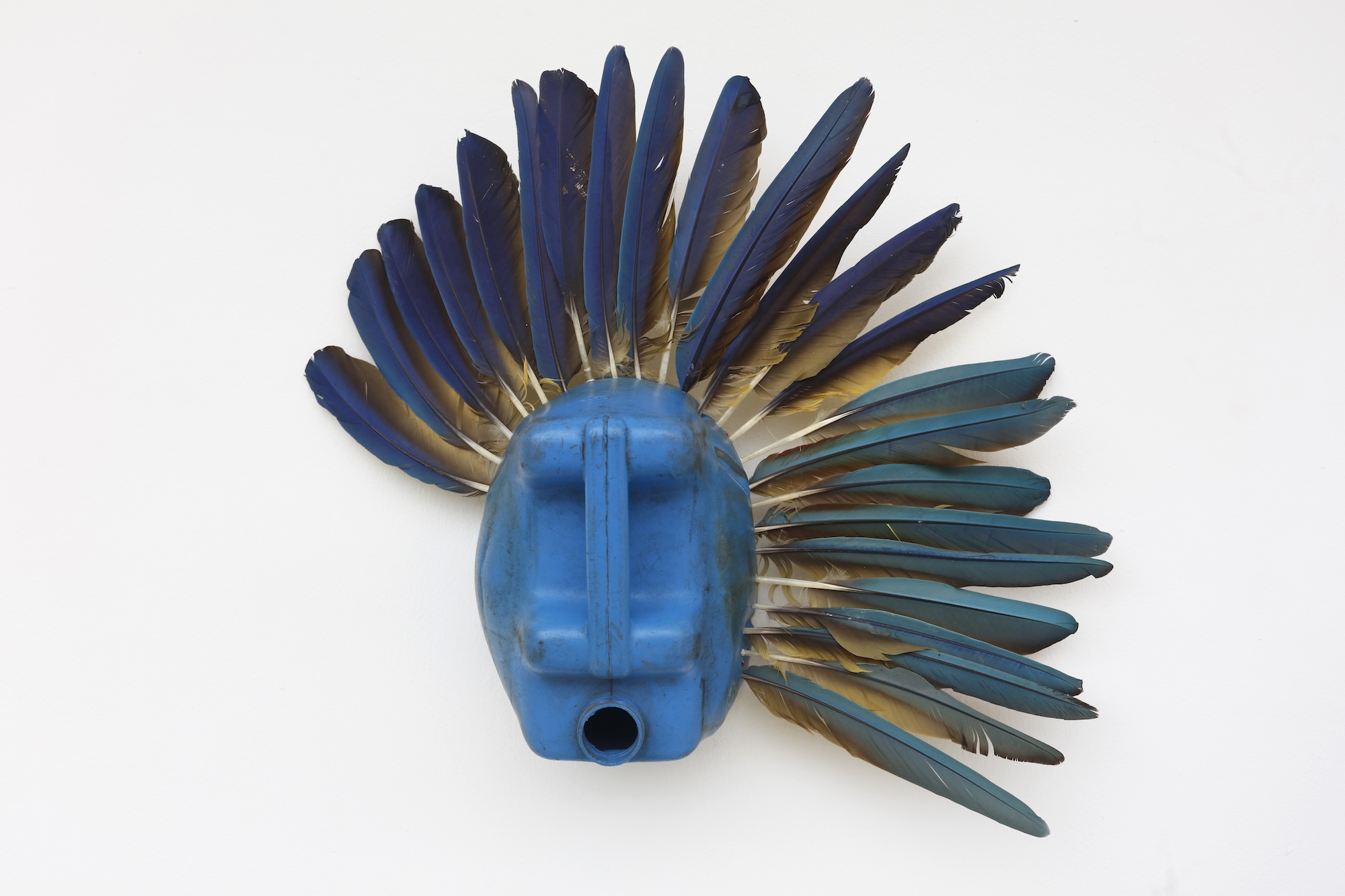
The canisters act as building blocks for iterations of migrant boats, slave ships or ancient temples and, most importantly, they represent shared human experience: grouped together they illustrate the entanglement of historical events and the challenges faced by people today; displayed as individual masks, they emphasise the personal cost of inequalities and conflicts.
In the widest sense, Romuald Hazoumè’s masks are inspired by the masked spirits of his direct ancestors. He follows the Yoruba and iFá traditions in the Porto-Novo region, now part of the Republic of Benin, a small West African nation with a rich past – not to be confused with the Benin Empire, which is located in southern Nigeria. According to Hazoumè, the spirits not only survived French colonisation and the transatlantic slave trade, but also multiple coups d’état, Marxist-Leninism, as well as the extractive capitalism that arrived hand in hand with democracy. Yet his masks should not be mistaken for sacred objects.
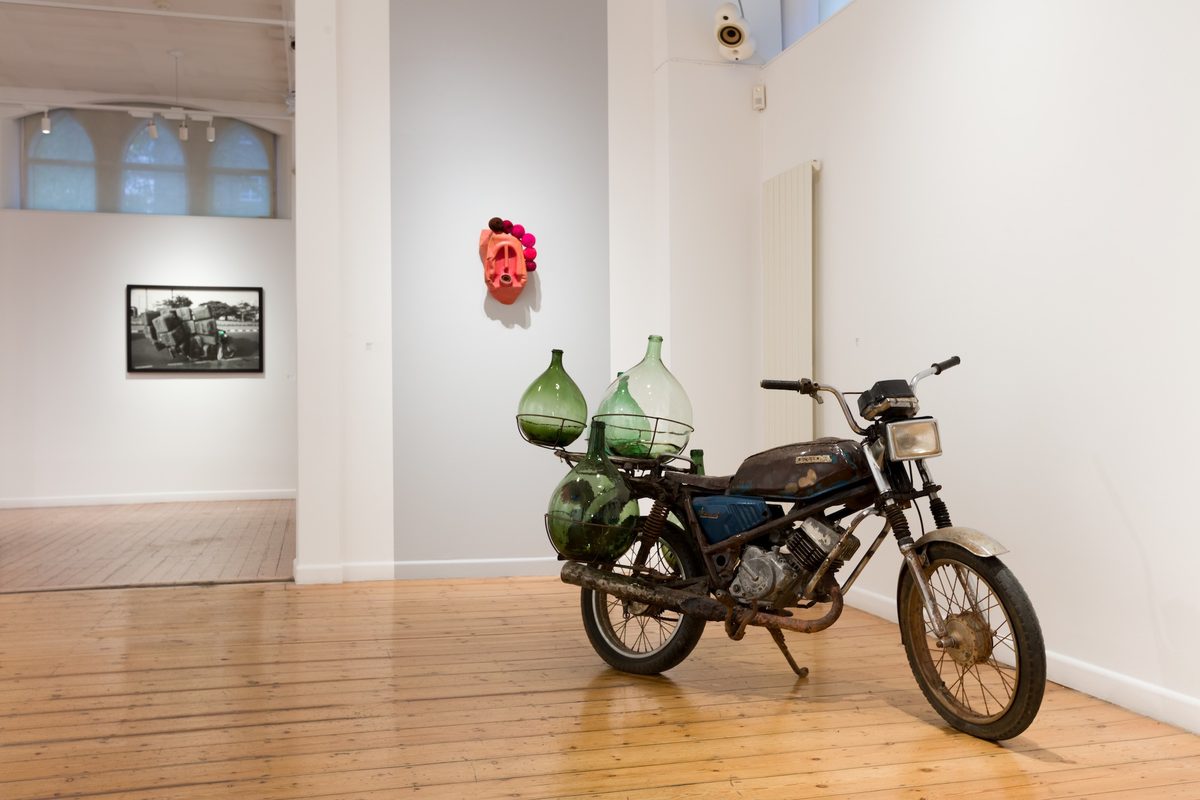
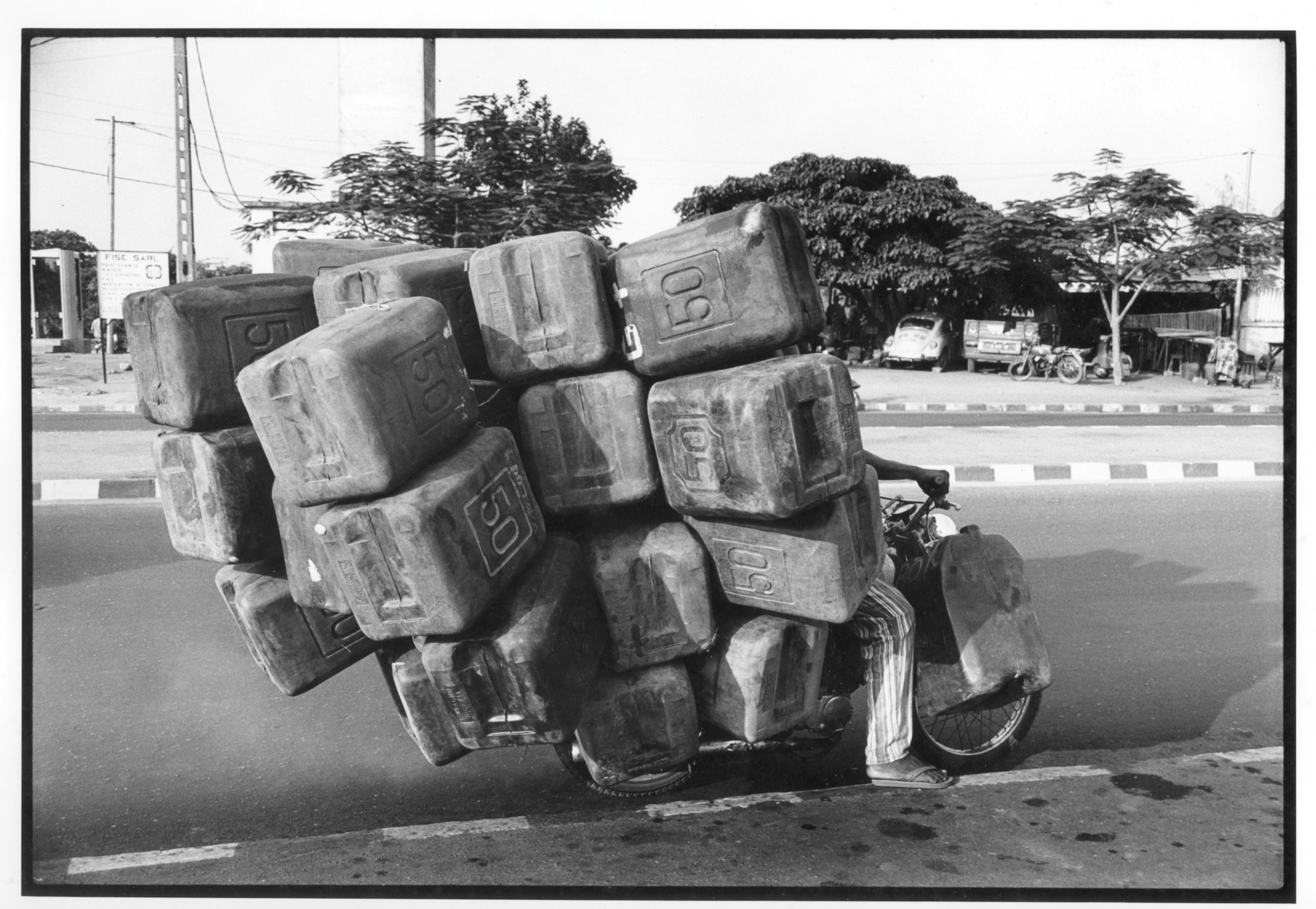
The used plastic containers constitute a direct link to ‘kpayo’, the black market petrol smuggled from Nigeria. As with previous projects, the masks are contextualised with the help of photographs and actual vehicles used by the smugglers. Rather than carrying the ubiquitous jerrycans, the rusty motorbike exhibited as part of My Blue Period is loaded with demijohns, which are increasingly used to carry the less dangerous, but no less precious, cargo of fresh water. A symbol for what’s to come, with water rights already a source of conflict, and access to water synonymous with access to life.
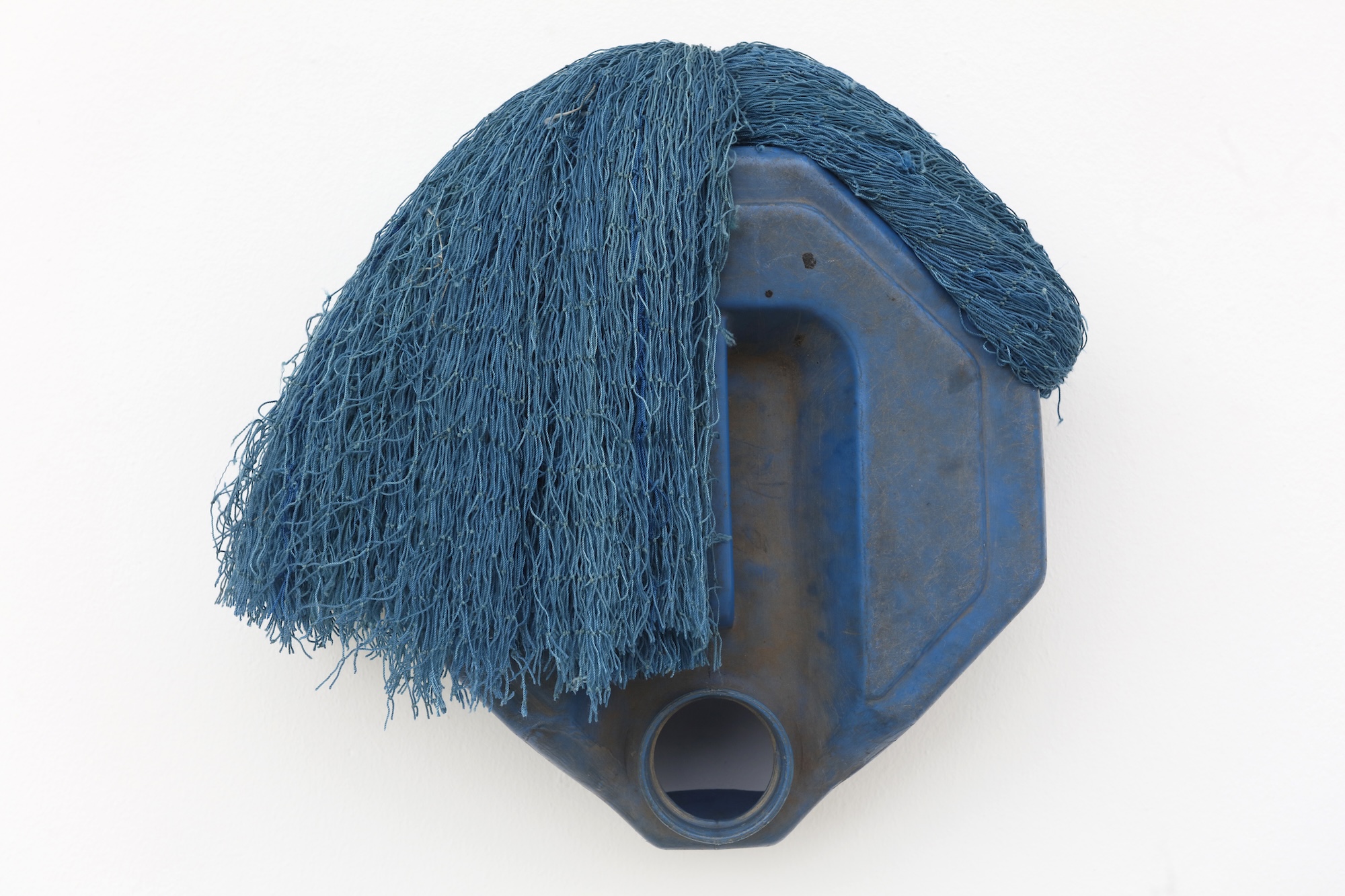
The thinking behind the masks defining Hazoumè’s ‘blue period’ is multi-faceted and possibly best approached via the works’ titles. The earlier masks in the show are male and address issues of migration and environmental concern, even though the references embedded in their individual names are not all immediately obvious. ‘Thal’, for instance, is named after the Austrian village where Arnold Schwarzenegger grew up before living the ultimate American dream as bodybuilder and Hollywood star to politician and climate campaigner. Its hairstyle, loosely resembling another Austrian-born figure, a subtle warning of history in danger of repeating itself.
Both visual and linguistic hints are more obvious in ‘Autlan de Navarro’ which shares its name with a Mexican mining town and sports a feather headdress linking the aboriginal inhabitants and their post-colonial descendants with the lasting consequences of environmental destruction. Turban-wearing ‘Chennai’ and ‘Kongo’, adorned with a feather headdress, expose the links between migration, extraction, IT-focused economies and climate breakdown through their namesakes’ histories.
The majority of the masks in the exhibition honour the women who bear the brunt of the endless conflicts and wars sanctioned by men. Hazoumè looks for hidden faces and traces of the memories the canisters hold and assigns each a wishful name similar to those chosen by parents the world over: Grace and Mercy, Hope, Joy, Love and Peace in Arabic and Hebrew, Ukrainian and Russian, Swahili, Bantu and Yoruba. Yet despite their beautiful names, they are the victims of war and conflict-related violence: Nadiya, the grief-stricken Russian widow who lost her sons in Ukraine; Amal, the mother who was killed by a sniper in Gaza; Leila, the young woman sentenced to death by Iranian police; or Rehema, who was raped by M23 rebels in Goma.
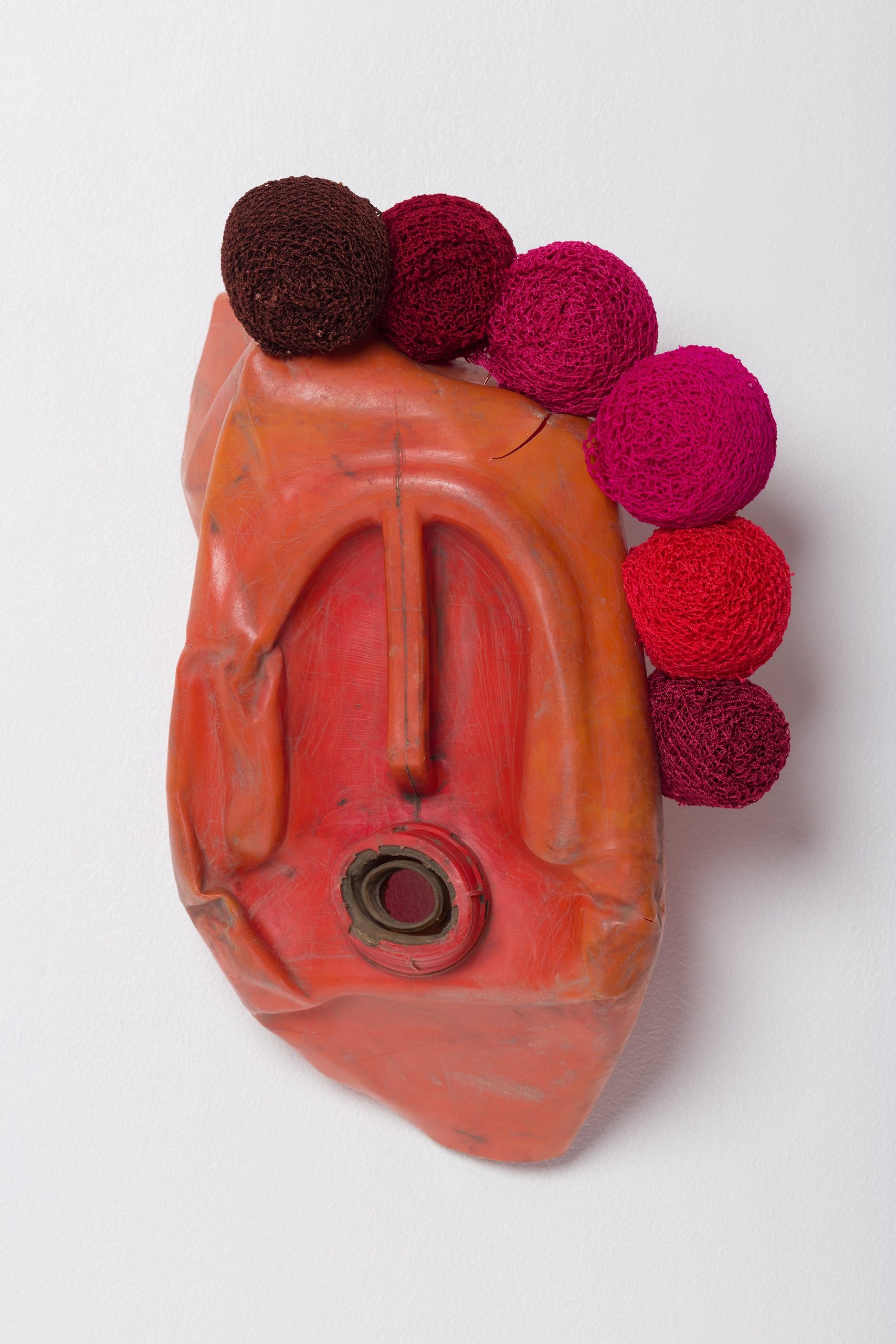
As international ‘red lines’ keep getting crossed, the ‘white lines’ of peace seem to have moved out of reach. This is where Hazoumè introduces the idea of a ‘blue line’ as a space for meditation and healing to enable conversation. He defines his role as artist in terms of the Yoruba tradition of travelling artists known as ‘aré’ who used to move between kingdoms and communities to transmit culture, share stories and drive creative and intellectual exchange. Consequently, Hazoumè considers it his duty to tell the truth without taking sides or taking any fixed position.
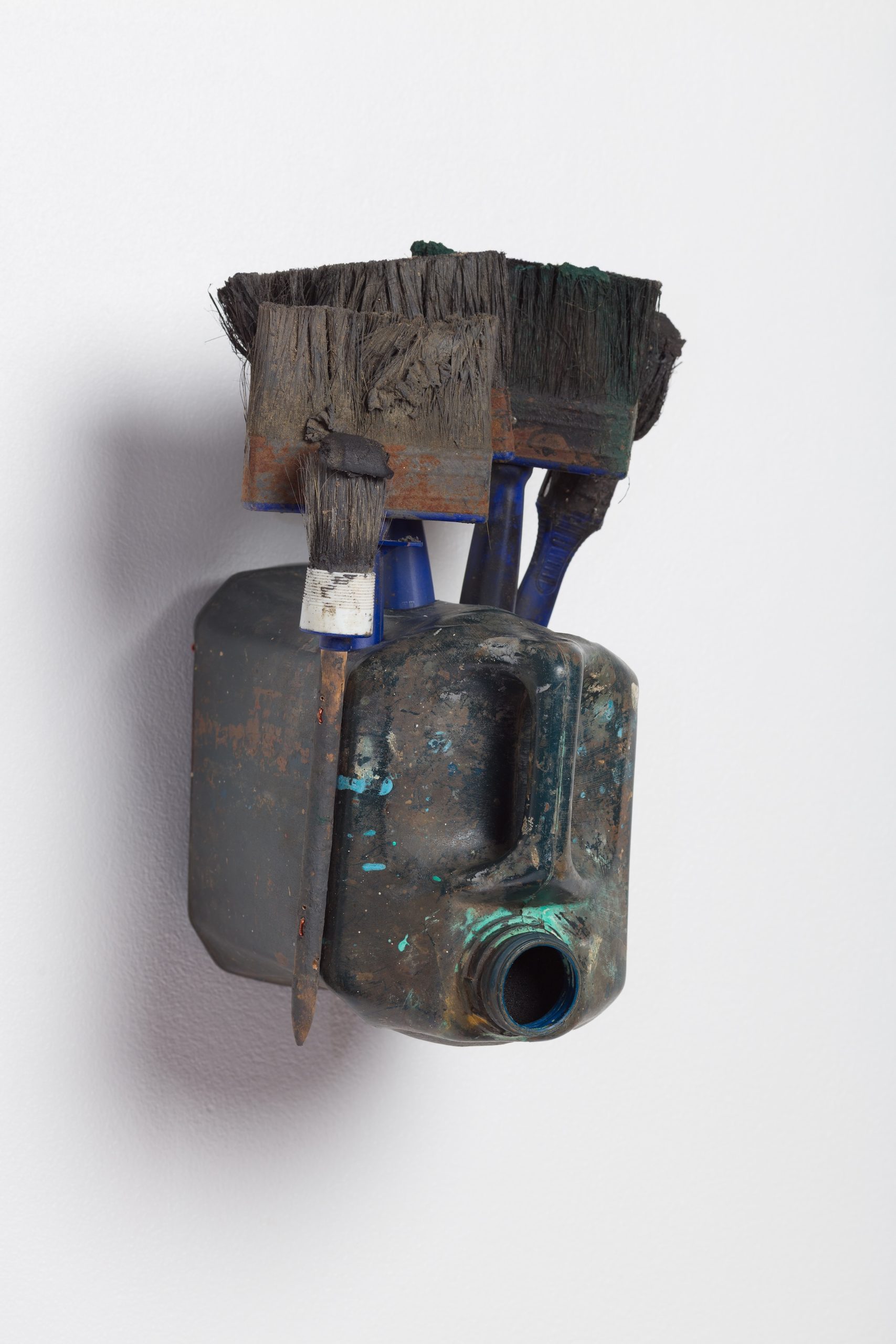
The central mask in My Blue Period is a paint-splattered dark blue canister decorated with matted and frayed paintbrushes. Its name, ‘Soulagée ’, is a play on the French phrase ‘elle est soulagée’, which implies an end of women’s suffering, and Pierre Soulages, ‘the painter of black and light’. Romuald Hazoumè thus presents ‘Soulagée’ as the mediator between both sets of masks, who shines a light on the endless loop of war and inequality to pave the way for change.
Romuald Hazoumè, My Blue Period, 8th October – 21st November, October Gallery