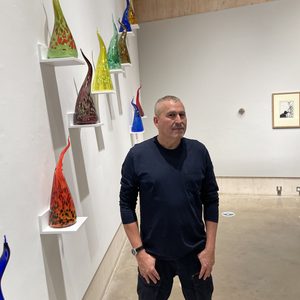
Cypriot artist Andreas Stylianou brings Extinction Point to THE TAGLI next week, opening 17th November, a new solo exhibition spanning ceramics, aluminium, shaped canvases and neon that asks a deceptively simple question: why do we decide some things are rare, and what makes that rarity valuable?
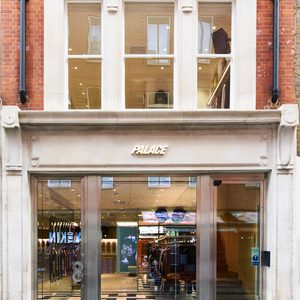
Running for just six days at the gallery’s Great Titchfield Street space, Extinction Point considers the “point” as both mark and moment — something carved, excavated, recorded, created or reached. At its centre is the distinction between rarity in the natural world, where it can arise through evolution, chance or geological events, and scarcity manufactured by culture through systems of classification, circulation and desire. Trading cards, animation, historic “firsts” and extinction itself all enter a body of work concerned with things that can happen only once.
The circle appears repeatedly as an image of both beginning and ending. Extinction becomes the ultimate endpoint: an animal becomes extinct only once; a volcano ceases to be active only once. Yet Stylianou is equally interested in beginnings. As he tells writer Jessica Wan in her accompanying essay Holding On: “For there to be an extinction point, there needs to be a creation.” For Wan, the volcano embodies that ambiguity — dormant or active, apparently still yet always containing the possibility of eruption.
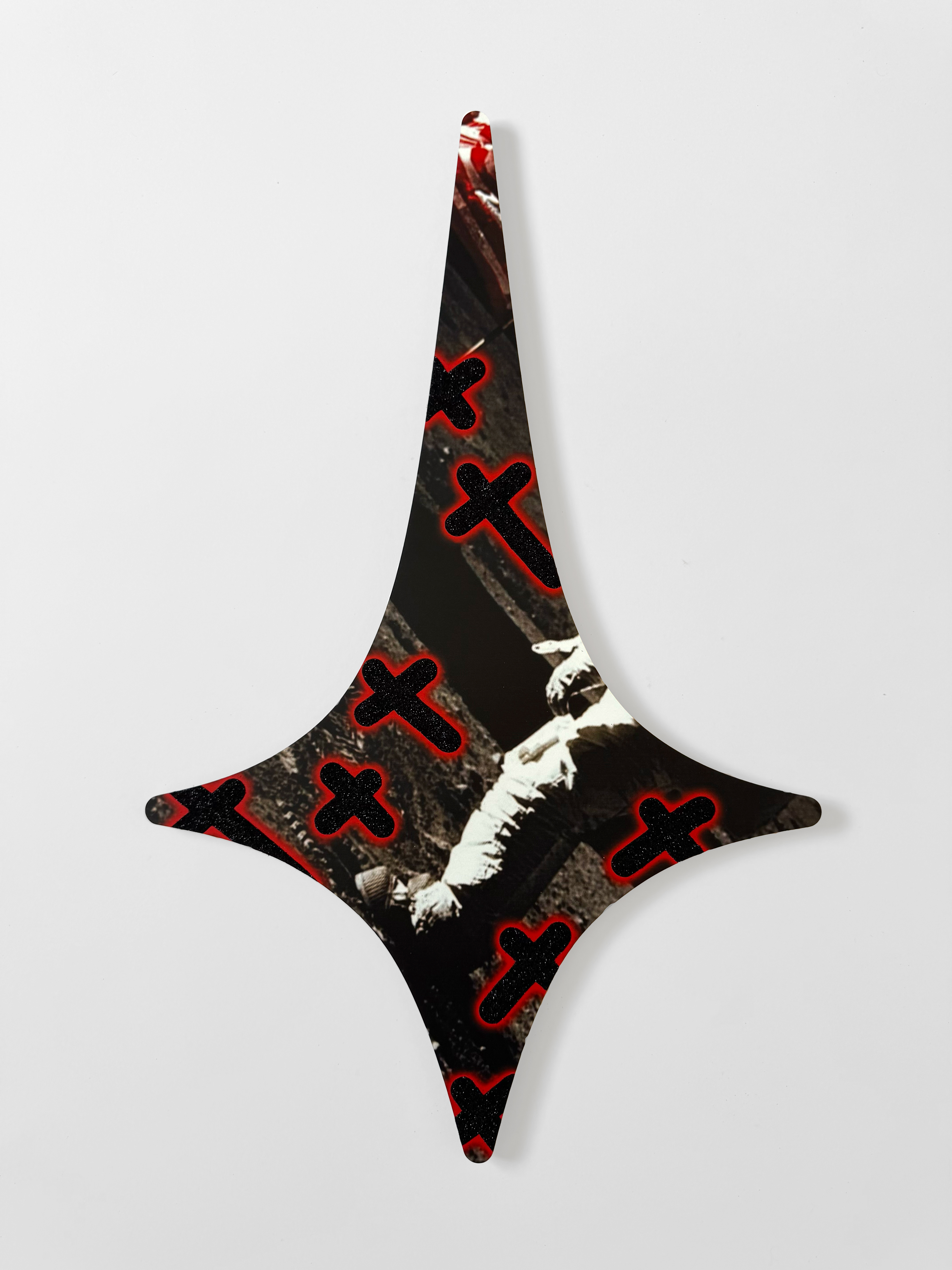
The exhibition’s metal works look towards cultural events that claim the status of the first: the Moon landing, the first full-length animated film and the emergence of trading cards. Stylianou is interested not simply in these historic moments but in the systems that subsequently assign value to them. In Swirl Premium, for example, a tiny holographic swirl isolated from a Charizard trading card becomes the subject. The visual difference may be almost negligible, yet within a collector’s market it can significantly increase a card’s value. Rarity becomes something engineered, classified and desired.
Another aluminium work, Selective History, uses an early Greek Disney comic cover. Although the American edition predates it by around two decades, the Greek version has become more sought after. In her essay, Wan connects this to a larger question about the construction of history and which versions of events acquire cultural value, invoking Walter Benjamin’s call to read history “against the grain”. Stylianou’s appropriation of the Donald Duck image is playful, but it also asks how an image can remain physically unchanged while the cultural framework around it alters what we believe it to mean.
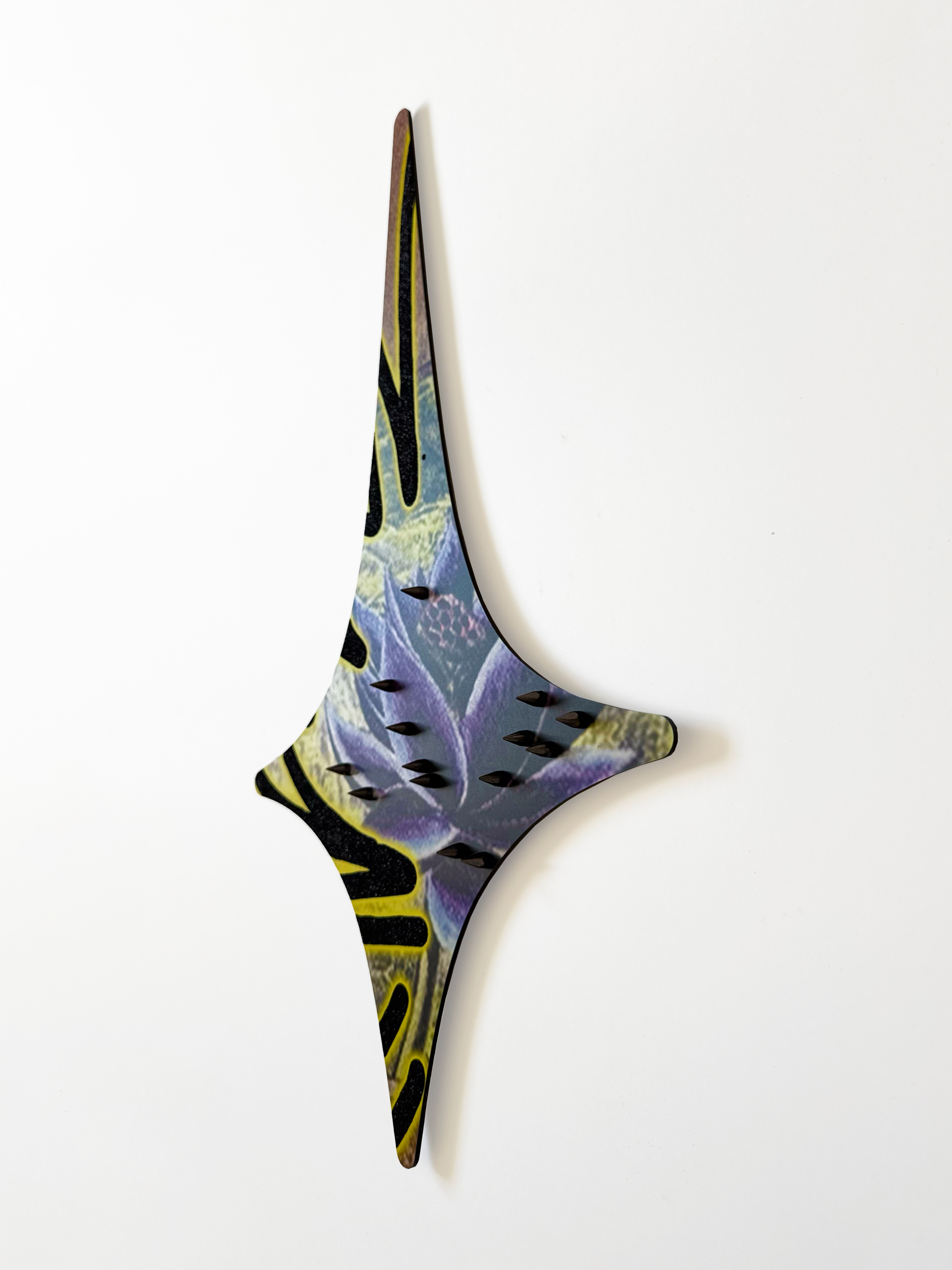
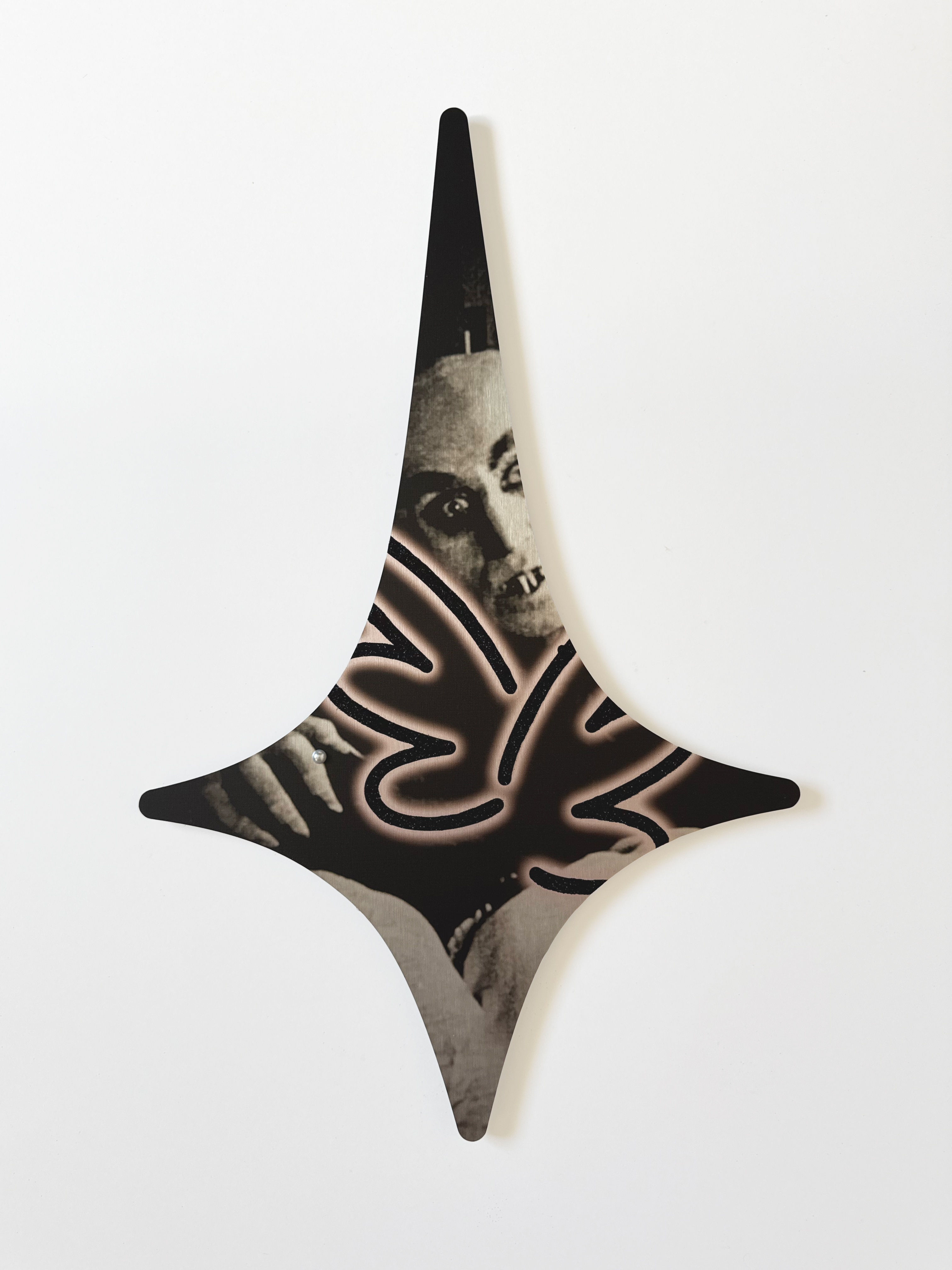
Pop culture runs through the exhibition, but not simply as nostalgia. Comics, animation, gaming and mythology operate as systems of world-building, containing their own rules, hierarchies, symbols and economies. Stars, circles and diamonds migrate between trading-card iconography and patterns found in traditional Cypriot lace, while Stylianou’s shaped canvases use digitally designed diamond forms to determine how paint moves through the work. The result connects an apparently contemporary visual language back to a much longer history of shaped painting, from altarpieces and tondos through Mondrian’s lozenges and Frank Stella’s shaped canvases.
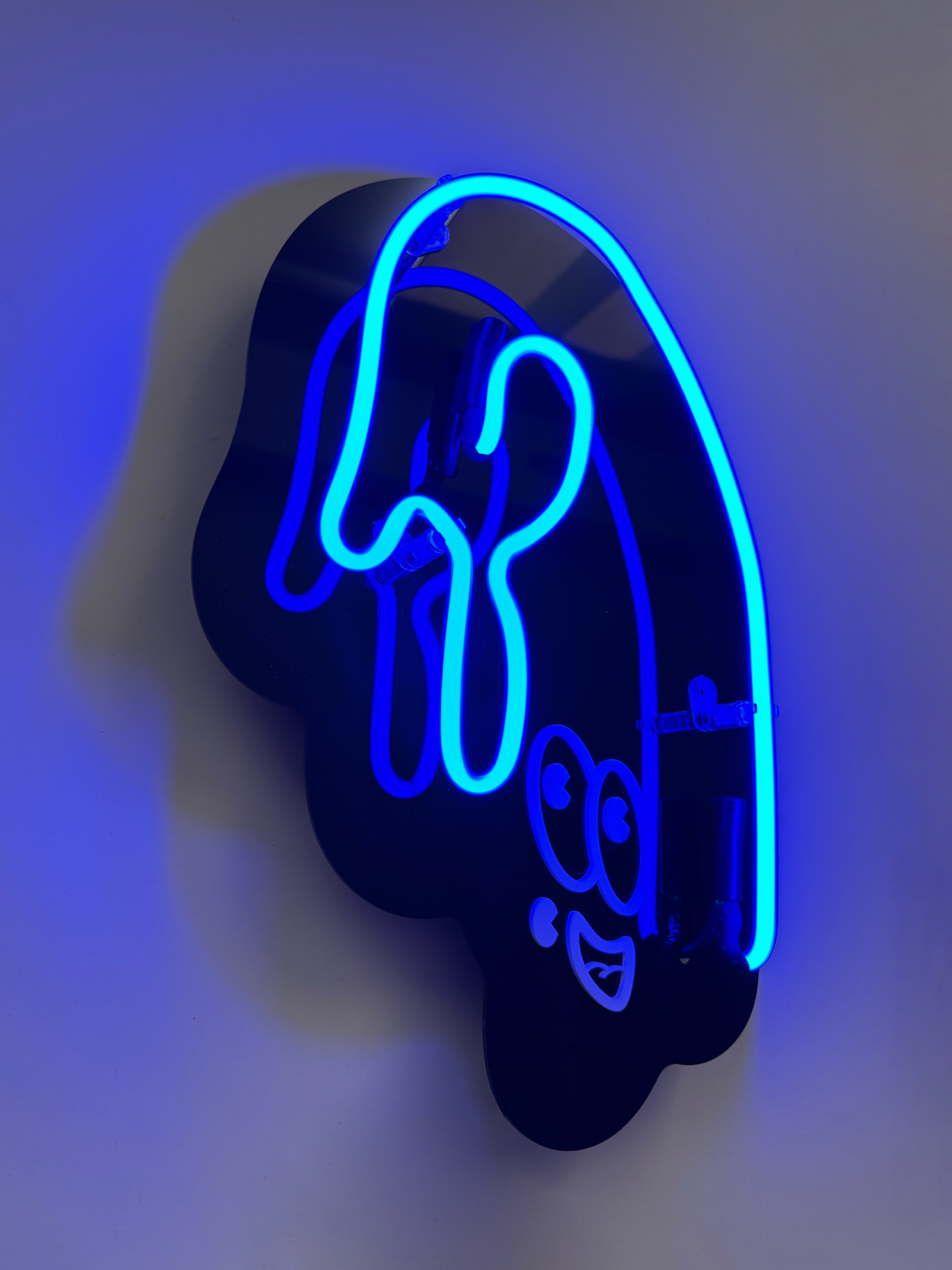
The neon works take a darker turn. Thorned vines and bubbling foam borrowed from animation glow with the seduction of cartoon imagery, using brightness and colour to disguise something more threatening. One strand of this thinking comes from a childhood memory: Stylianou’s mother brought home silkworms as pets and he watched their transformation, only to discover that they had died in their box. Over time, he began imagining the bodies as jewel-like objects. “We comfort ourselves through something horrific,” he tells Wan. Her response gets close to an important tension running through the exhibition: “Sometimes, beauty does not undo horror; it simply offers a way to live alongside it.”
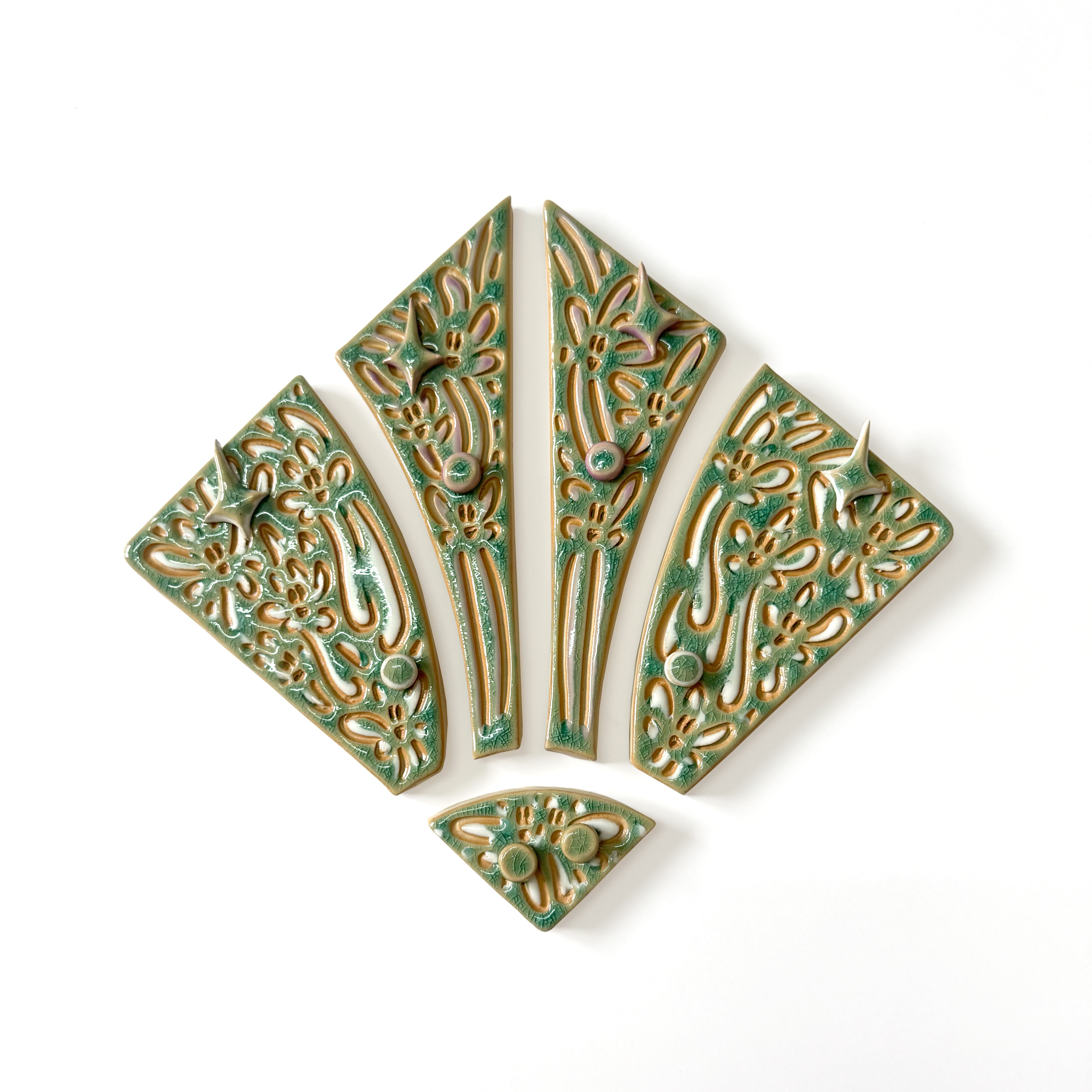
That tension between disappearance and preservation brings Extinction Point back to the act of collecting itself. Museums, archives and collectors can appear to preserve history, but inevitably they preserve only what has survived or what somebody has decided is worth keeping. “In a museum, we see what has survived,” Stylianou observes. Everything else — lost objects, forgotten lives, failed versions and histories that were never recorded — remains outside the frame.
Ultimately, Extinction Point is less interested in rarity as a property than in rarity as an idea. A butterfly, a trading card, a historic event or an artwork can become precious because it survives, because it is the first, because it cannot be repeated — or simply because a system has told us to want it. Stylianou’s exhibition sits somewhere between those possibilities, asking what we choose to hold on to and what disappears when we look elsewhere.
Andreas Stylianou: Extinction Point, 17th–22nd November 2026, THE TAGLI
Art Opening: 17th November, 6PM–9PM
About the artist
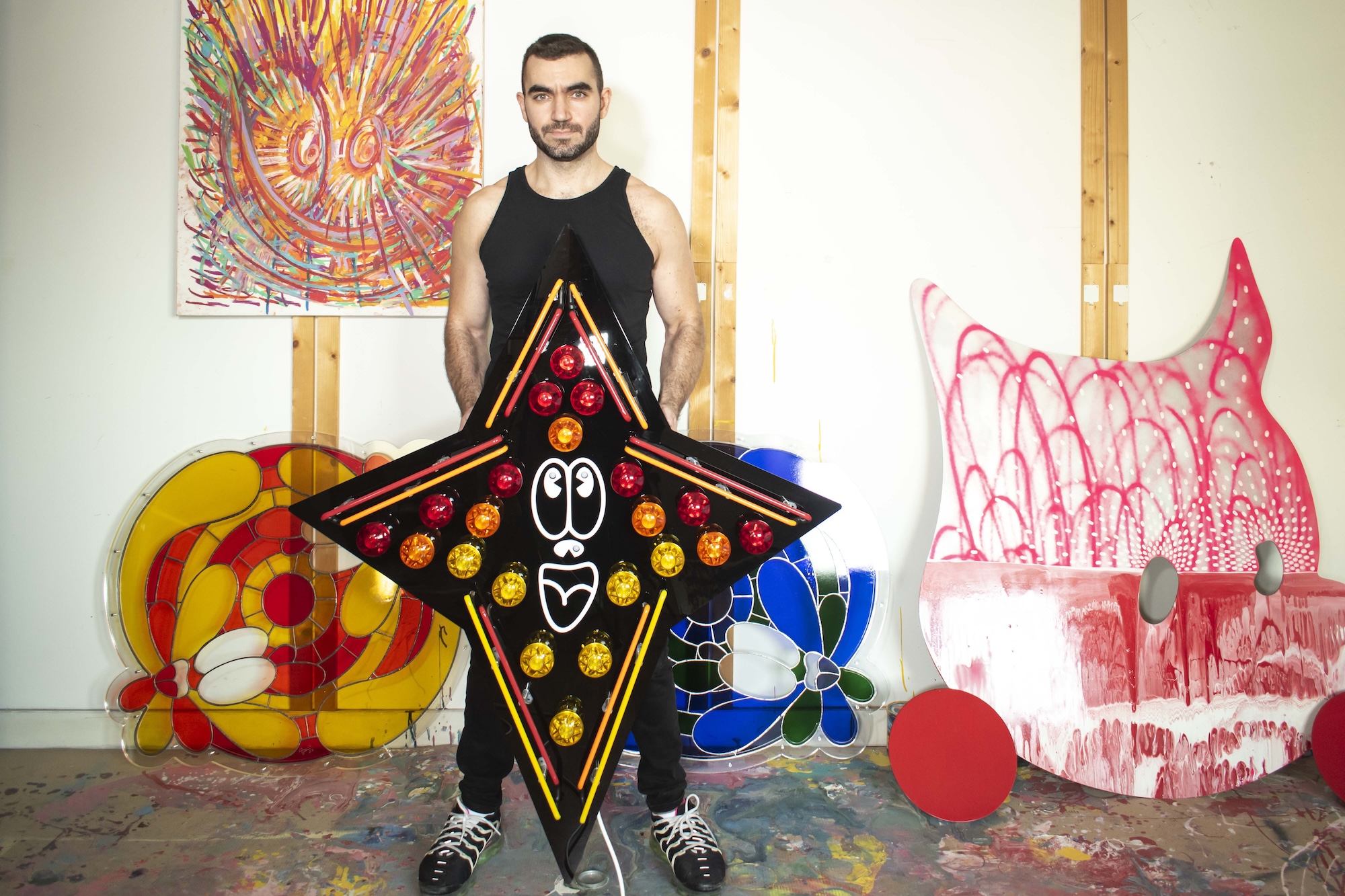
Andreas Stylianou (b. 1990, Nicosia, Cyprus) is a contemporary painter and sculptor. He studied at the Architectural Association in London and went on to earn master’s degrees from the Royal College of Art in London and IE Business School in Madrid.
His artistic practice explores a variety of mediums to bring a previously dormant world to life. His work evolves through a succession of pieces that express biographical narratives through reimagined cultural archetypes, vibrant colours, and techniques informed by his architectural background. Through composition, intuitive mark-making, and meditative painting techniques, his artworks capture the essence of the self in relation to time, intersecting with a retrospective examination of contemporary pop culture.
He has presented his work extensively, with solo exhibitions in Cyprus, the USA, the UK, Canada, and Hong Kong, alongside participation in international group exhibitions across numerous countries, including Italy and Germany.