Before going, I had a question. The bridge is in Paris, and the installation has already been taken down, so what was JR going to show in a New York gallery? A model of the installation? Photographs?


Once I stepped inside, the question went away. Perrotin hasn’t moved the Paris installation to New York, and it doesn’t just lay out the traces of how it was made, either. What hangs here are photographs of the installation, alongside preparatory drawings and collages built from layers of different materials. They’re connected to Paris, but in the gallery you meet them as works in their own right.
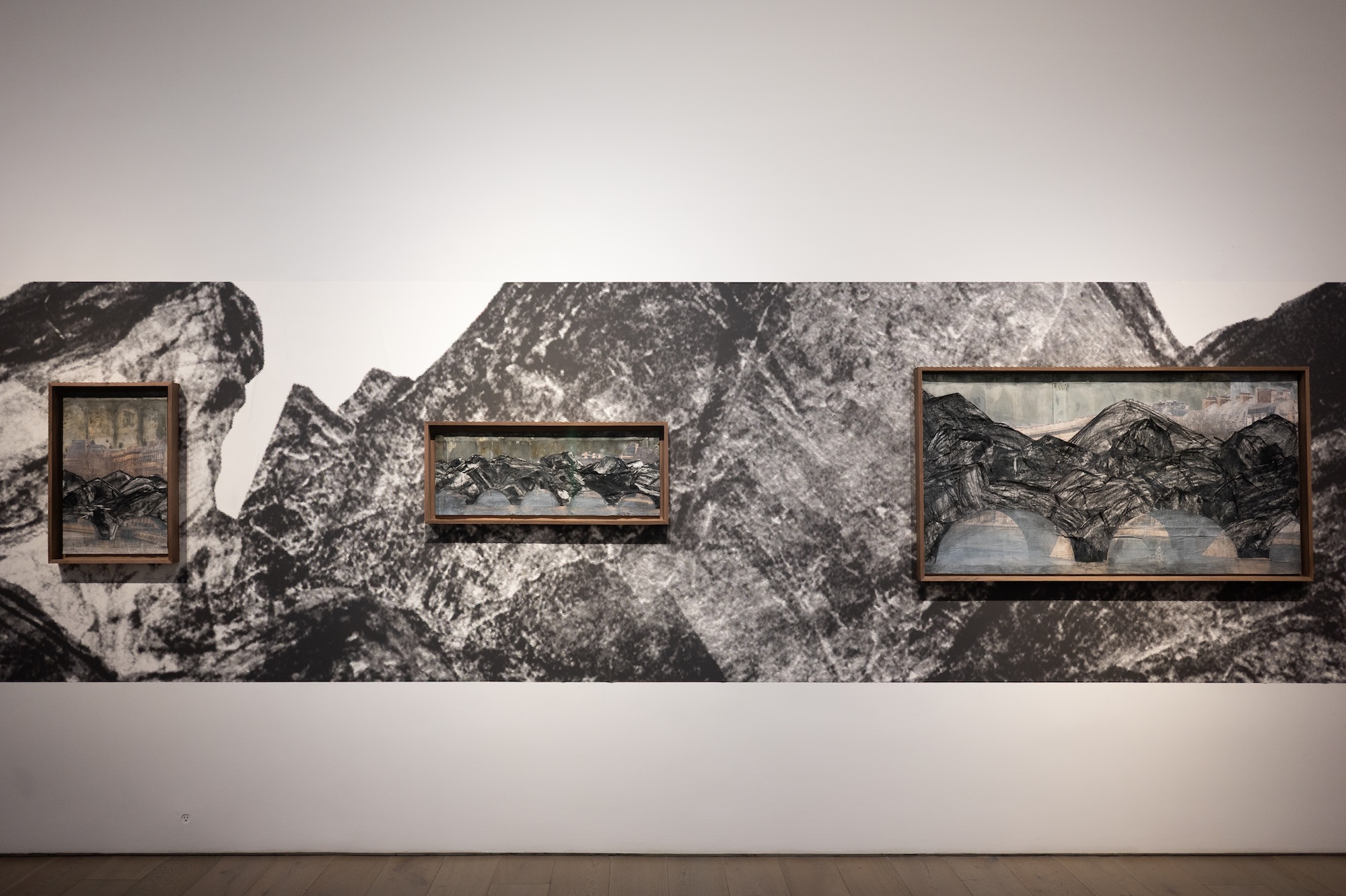
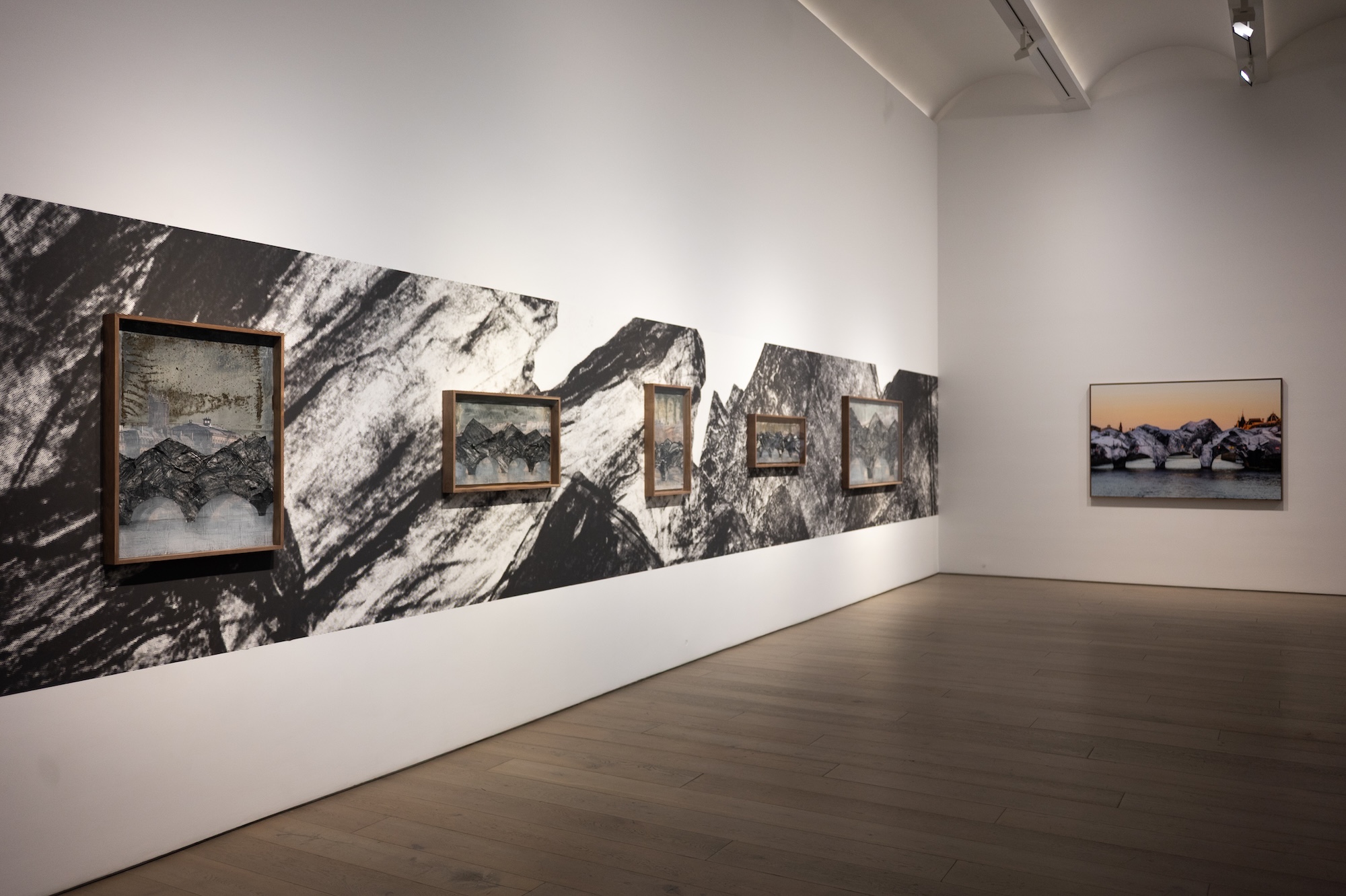
JR’s Paris installation, La Caverne du Pont Neuf (2026), was conceived to mark the 40th anniversary of Christo and Jeanne-Claude’s The Pont Neuf Wrapped (1985). That anniversary fell in 2025, and the installation itself went up the following year. The 1985 piece wrapped the bridge in soft, shiny fabric, allowing its silhouette to emerge gracefully. JR, by contrast, covered the bridge in fabric printed with a rock pattern. Inflated with air, the fabric rises into a huge, stony mass that almost conceals the bridge’s familiar outline. A raw, almost prehistoric landscape appears in the middle of the city.
The first thing I noticed was a long black-and-white image pasted along one wall, like the ridge of a rocky formation, with drawings hung over it. Against that backdrop, the bridges roughly sketched in charcoal looked like part of the rock. Up close, the material came into view: the drawings are mounted on zinc. The artist talk answered my question about it. JR said the plates once covered Paris roofs, and some had been up there for 80, even 100 years.
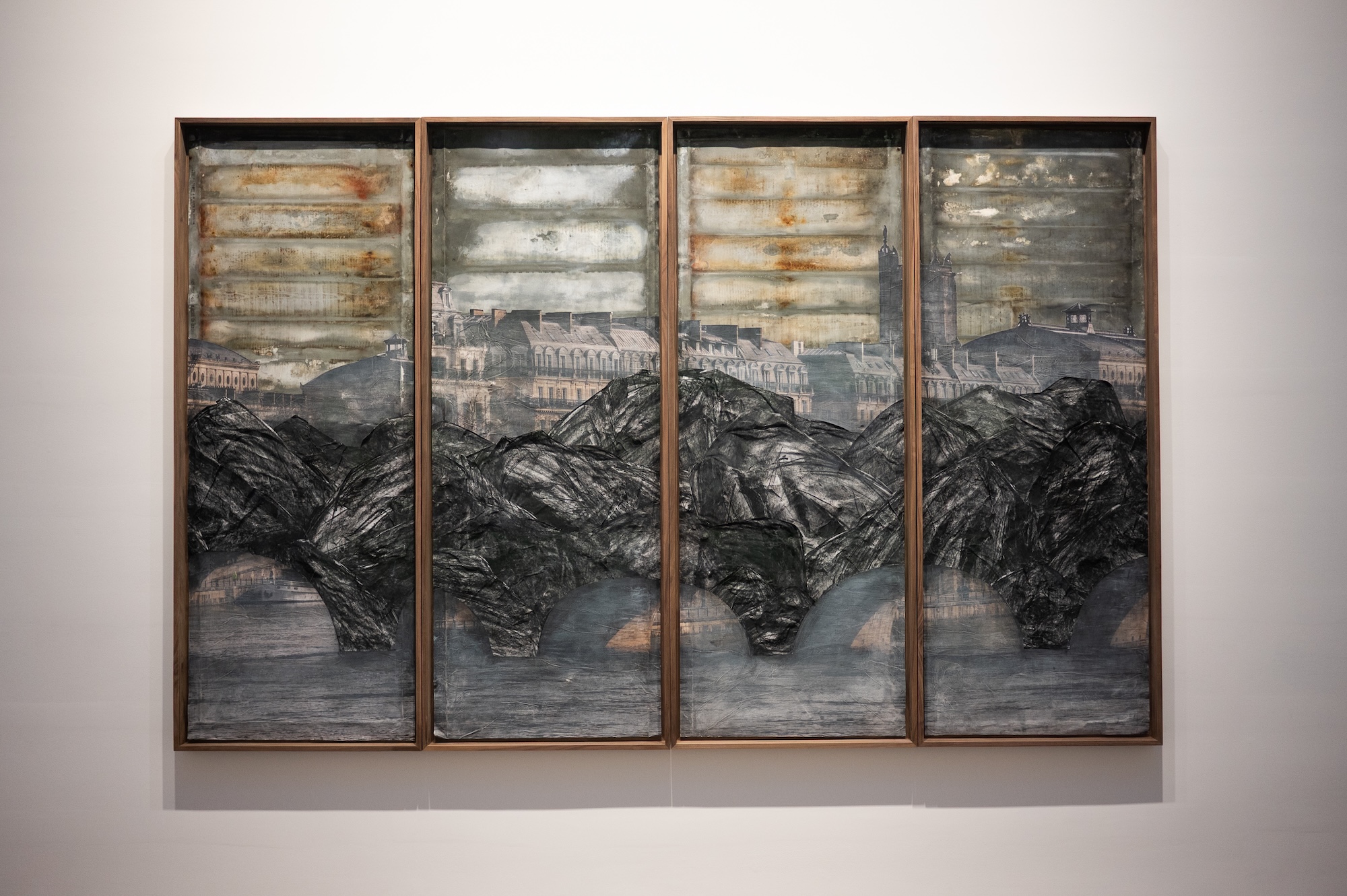
The drawings made the strongest impression on me, and the four-panel Esquisse #53, quadriptyque, which hangs facing the long wall, most of all. Like the others, it has a zinc base with a paper print of Paris buildings pasted on top. Over that, paper bearing a charcoal drawing of the bridge has been crumpled and piled up into a rocky form. The stains and weathering of the zinc recall an old roof, and the buildings of Paris show faintly above it. The charcoal juts out in relief from the printed cityscape. The zinc carries decades of weather, while the charcoal marks are new, so an old roof and a newly made bridge share one surface. The crumpled, layered sheets cover the bridge much as the printed fabric did on the Seine, until its outline disappears into a rough, rock-like mass. JR doesn’t recreate the installation. He brings another place in Paris, and another layer of time, into the drawing.
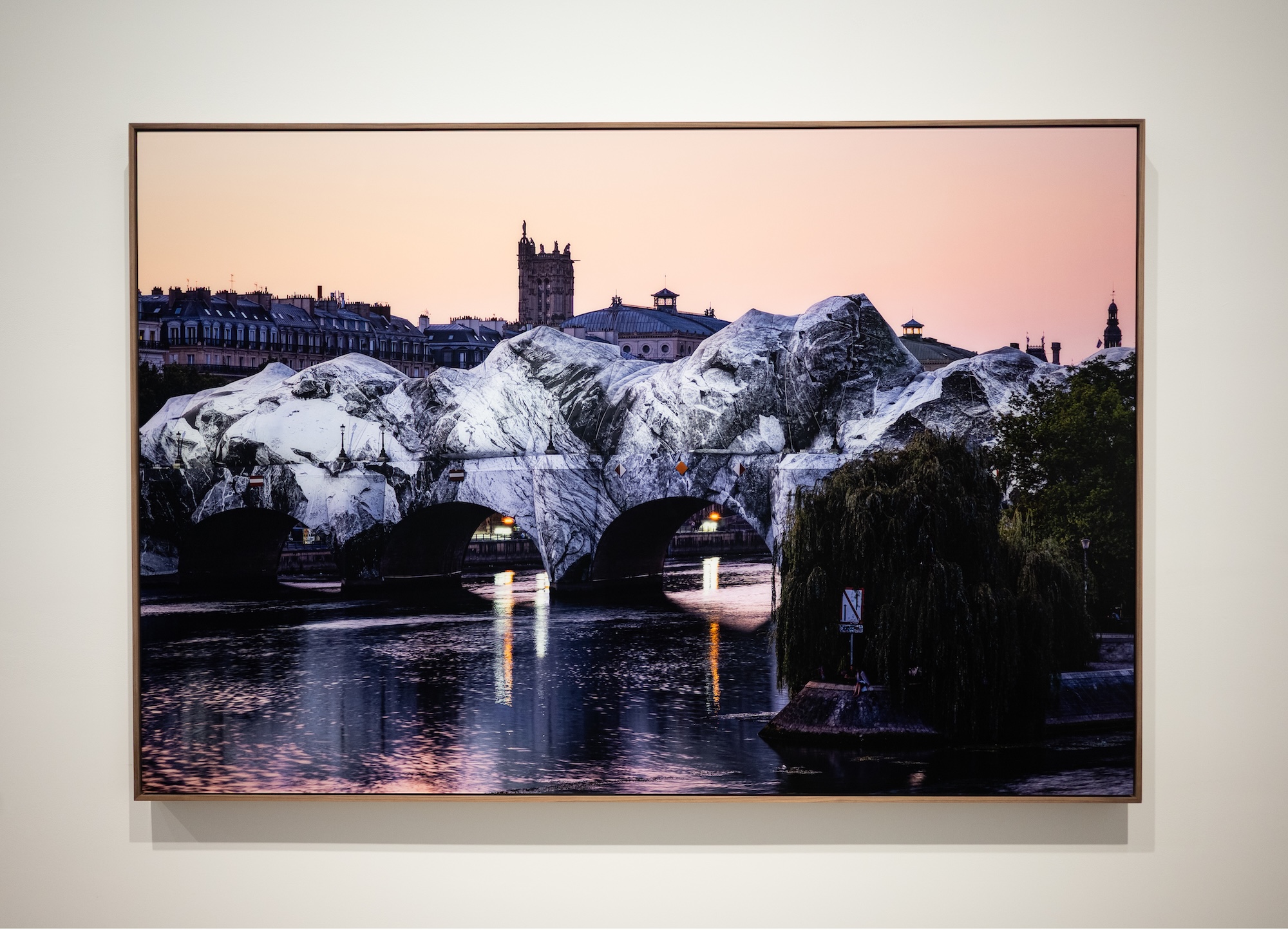
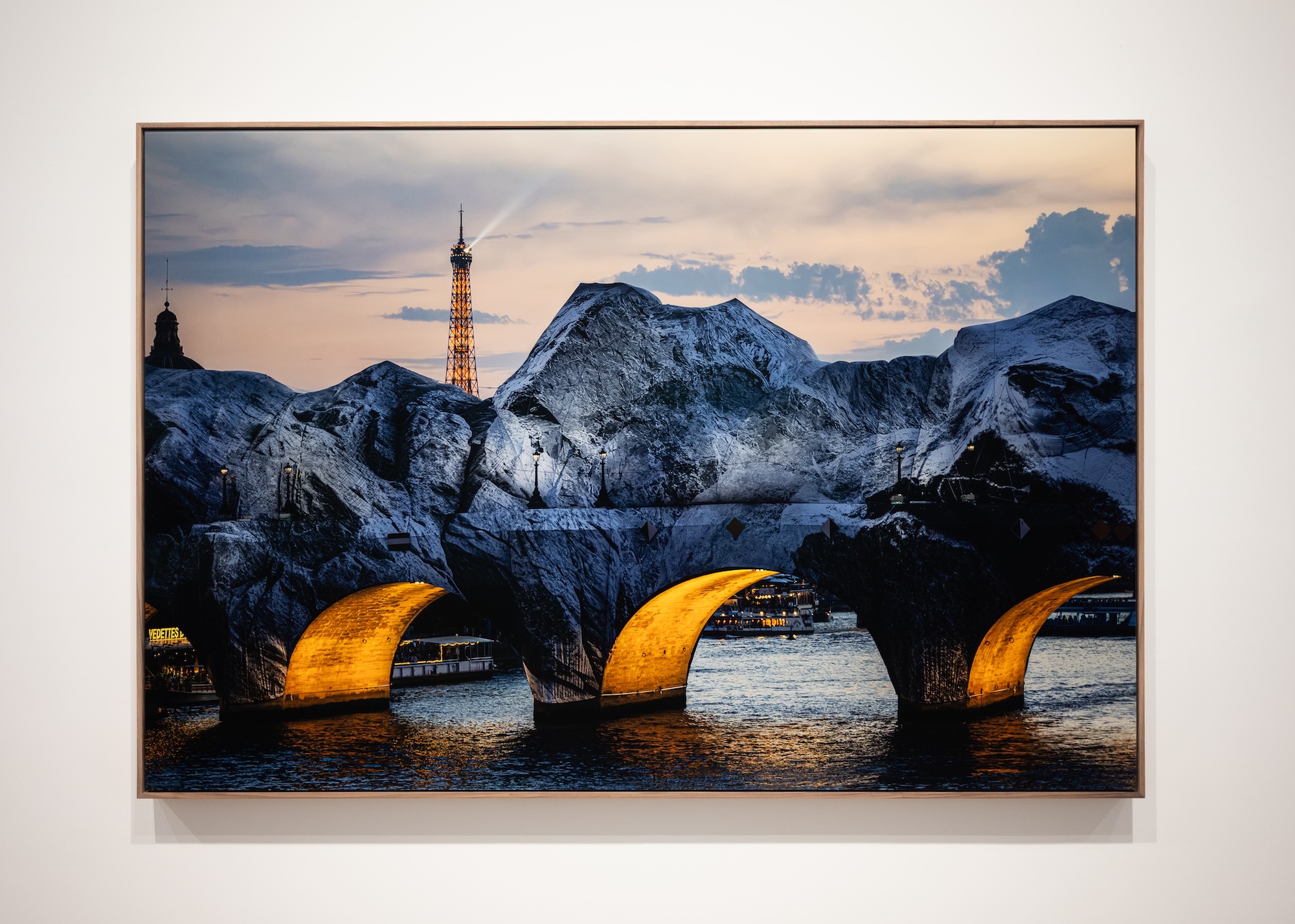
The photographs, unlike the drawings, show the installation as it actually stood. But they were more than simple photographic records. Each title records when the picture was taken, and the mood changes with the date and time. In 23 juin 2026, 06h41, a rocky bridge sits under a pink dawn sky. In 20 juin 2026, 22h41, the arches glow gold under a deep night sky. With a beam from the Eiffel Tower cutting through the dark, the image reads more as a night landscape than a record. If the drawings rebuild time and space through materials and images, the photographs hold on to the light and atmosphere of a moment when the vanished installation still existed.
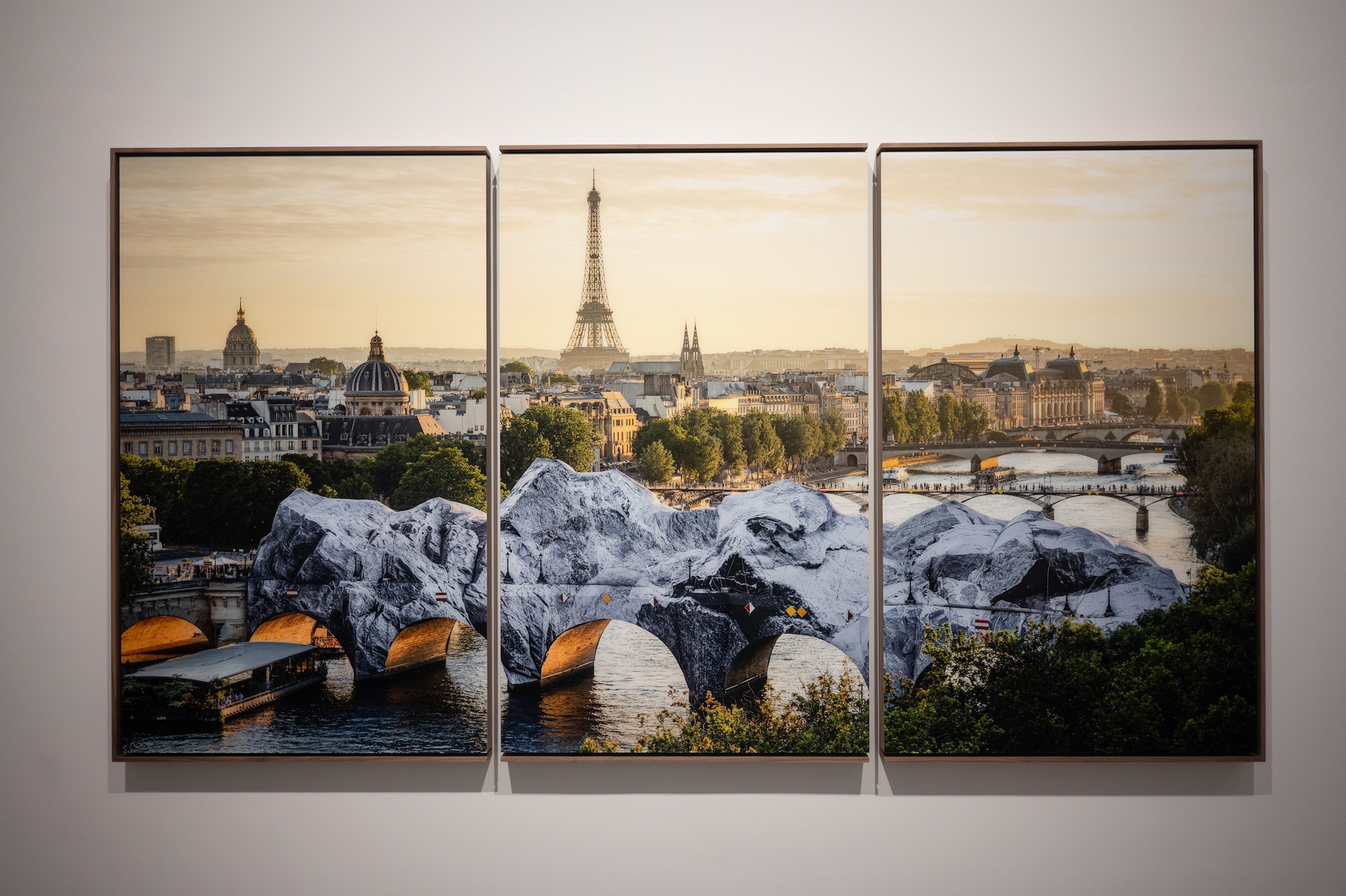
Not all of them work equally well. The three-panel 16 juin 2026, 20h37 is less successful. The wide view of Paris overwhelms the installation, making the rock-like bridge look small, and I couldn’t tell what the division into three panels added. The other photographs turn the installation into a landscape, but the triptych stays closer to a beautiful record.
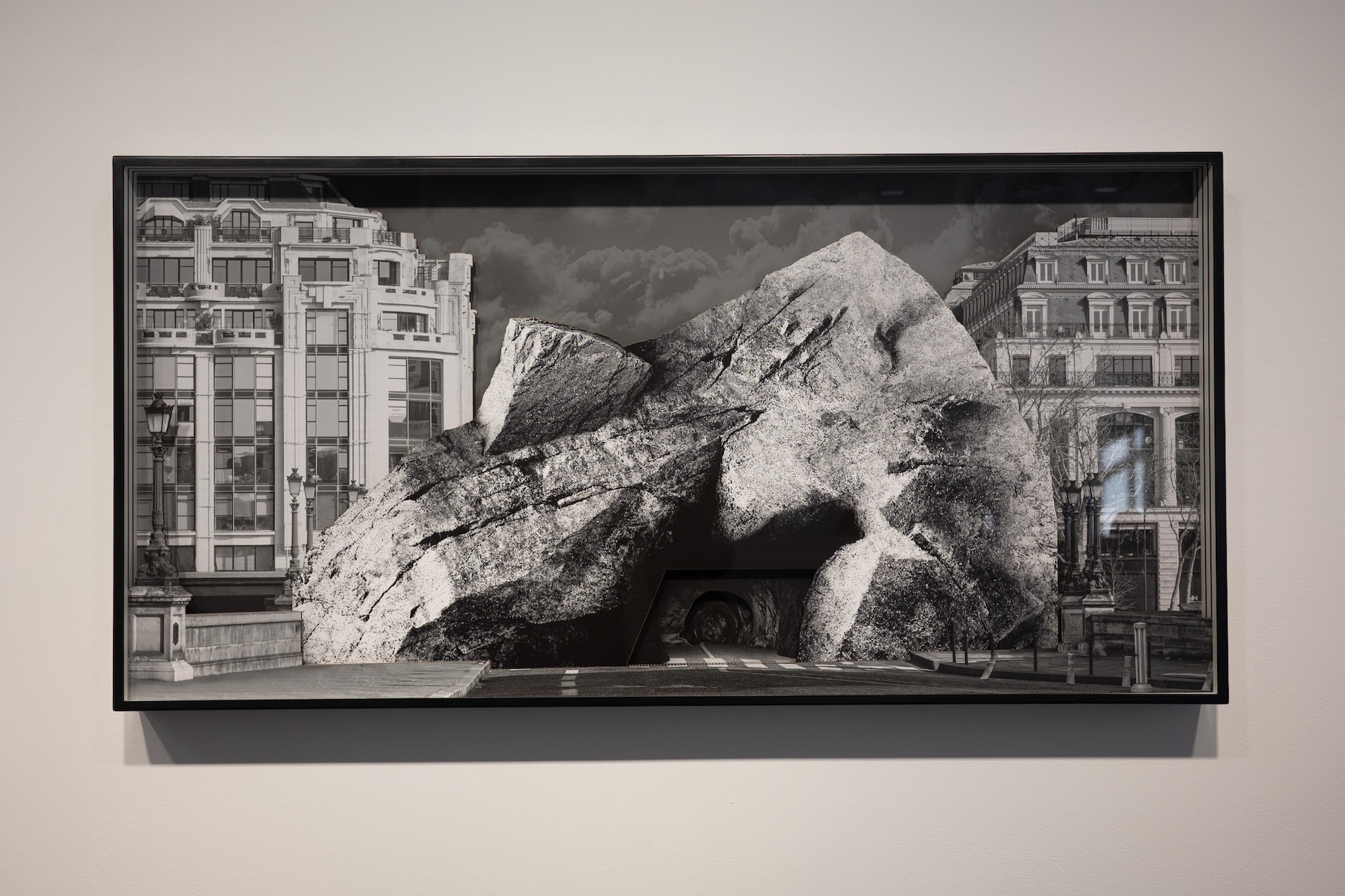
Two works sit a little apart from the photographs and drawings: the three-dimensional collages Dé-composition #4 and #5, hung near the entrance. #5 stood out because it’s the only work that shows the cave’s entrance rather than the whole bridge. A huge rock-like form sits among Paris buildings, with a dark opening beneath it. To me it looked less like a way into a cave than a door to an unknown world, and I imagined walking through it and coming out in Paris instead of New York. As the title suggests, the familiar city and bridge are taken apart and reassembled into something strange. Layers of laser-cut cardboard, steel, and Plexiglas create real depth, and the dark tunnel pulls the eye inward.
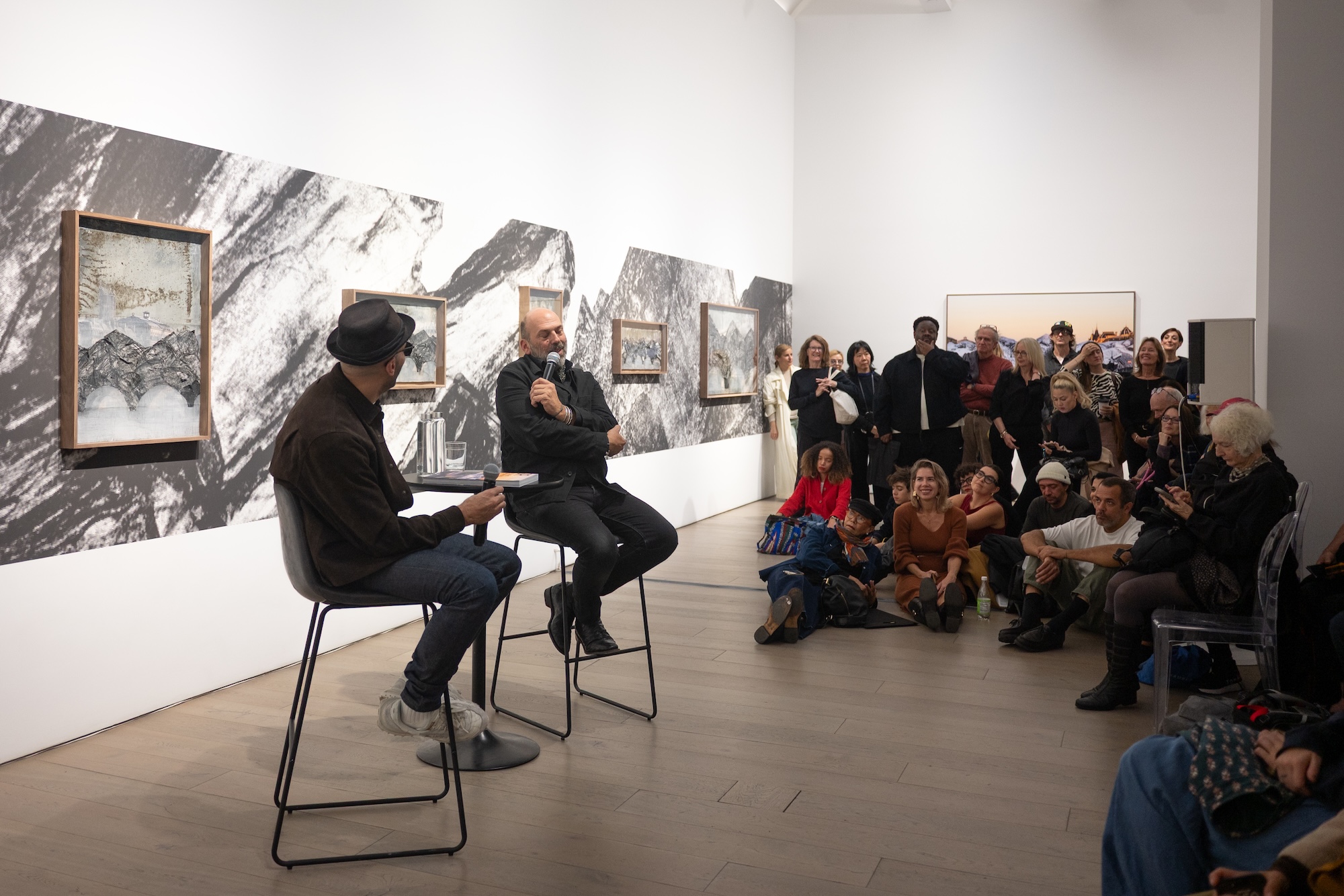
At the artist talk, JR and Vladimir Yavachev—Christo’s nephew and project director of the Christo and Jeanne-Claude Foundation—discussed how the Paris installation was conceived and built. The New York works came up too, but the conversation focused more on the Paris installation, which I found disappointing. Still, learning that visitors could walk through the 120-meter cave in Paris gave the college’s dark opening a stronger sense of reality: it evoked a space that people had actually entered. What I heard helped me read the New York works more richly without making the two places one thing.
The New York works remain photographs, drawings, and collages separate from the Paris installation. Most of the photographs transcend documentation, becoming works of time and light, while the charcoal drawings on zinc and the three-dimensional collages recompose that memory through their own materials and forms. The achievement of the exhibition lies not in bringing the Paris installation to New York, but in making new works from its memory and allowing viewers to imagine the vanished installation anew.
JR, La Caverne du Pont Neuf, October 28th — December 19th, 2026, Perrotin New York