At Space ZeroOne, MacGuffin: Five Korean Artists and Five Writers from Art Omi pairs five visual artists with five writers. Artworks prompt texts, which return to the artists as material for further responses. The title invokes a cinematic device that sets a story in motion. Here, the interest lies in what each participant selects from another’s work — and what that selection produces. The texts remain in development, but some consequences are already concrete.
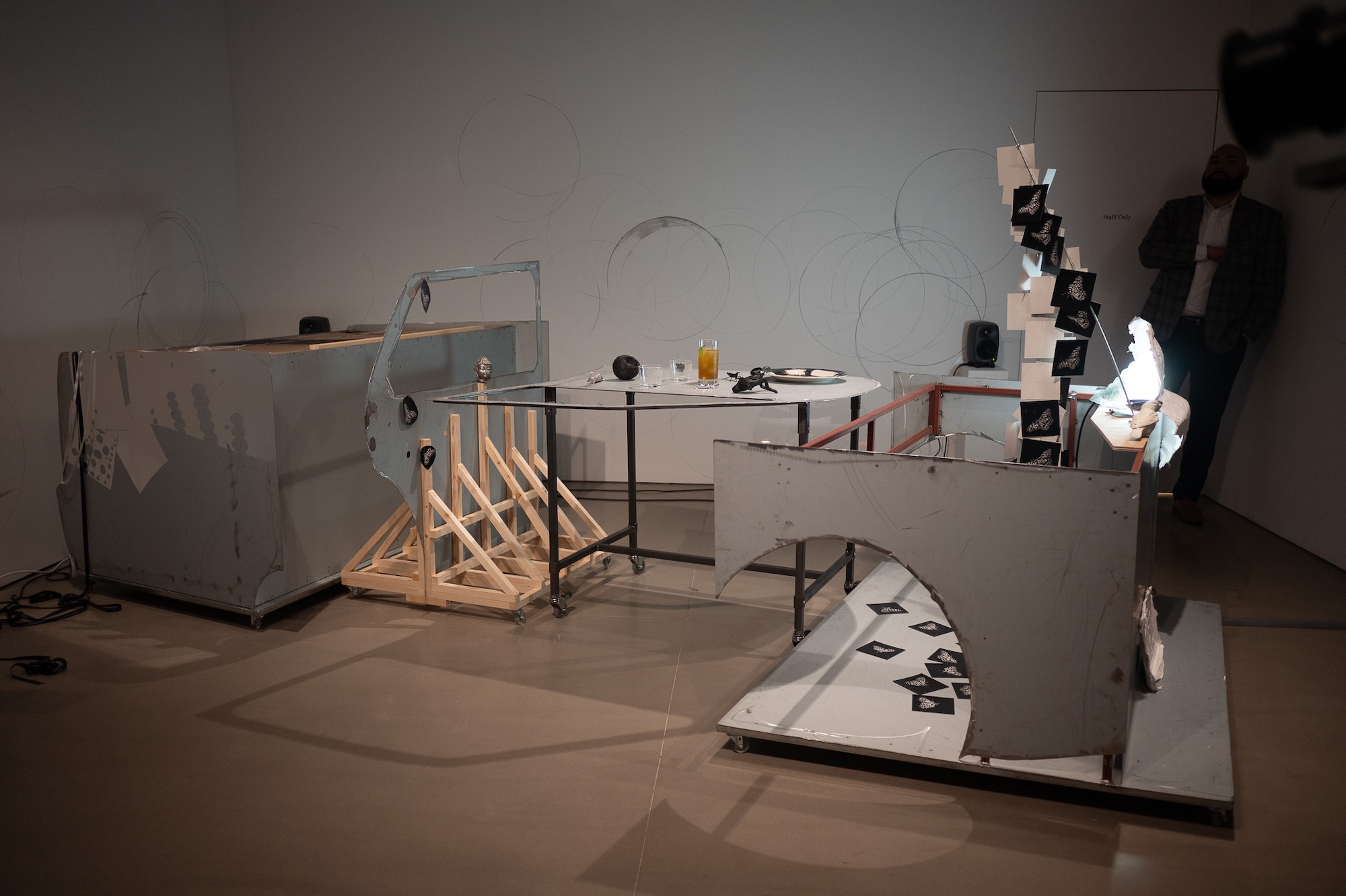
Goyoson’s opening performance brought the exchange into action. As Matilda Lin Berke read Lisa Brennan-Jobs’s text, Ian Ha acted on Goyoson’s behalf, moving a large sculptural structure evoking a car, with door-shaped panels. Its position and direction changed; lights went on and off. When Ha raised a glass to propose a toast, Matilda raised hers. With the manuscript and microphone on her lap, she reached across the sculpture to touch glasses with him.
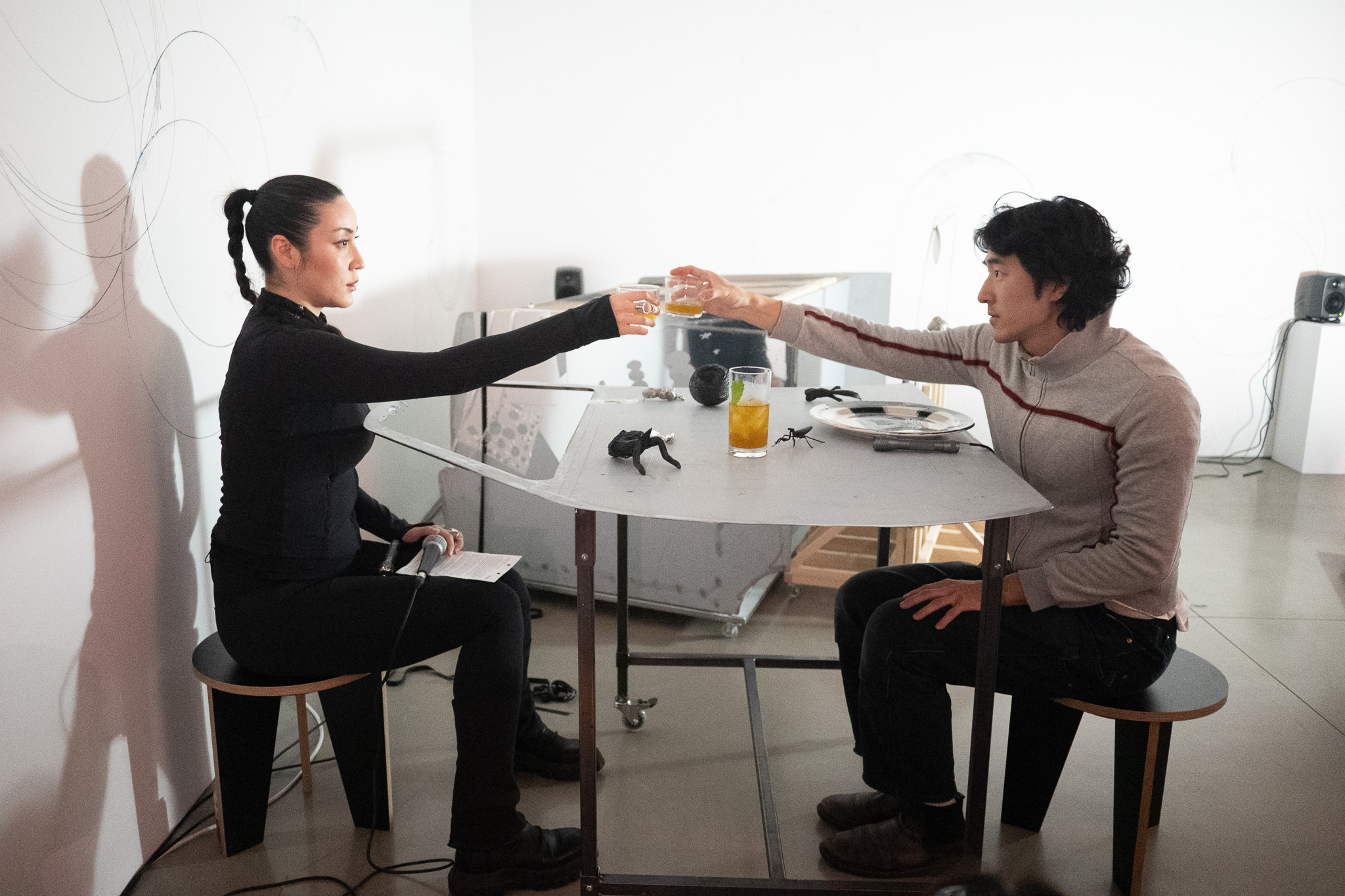
Goyoson explained that Brennan-Jobs’s writing had prompted him to compare their memories of their respective fathers. He wanted to explore differences in recollection and parental relationships through movement and sound. Another person’s account gave him a new approach to a subject he had long pursued.
He had hoped that his movable sculpture would change through his collaborator’s choices. The toast made the reader’s and performer’s mutual response visible. Yet watching the encounter did not make clear how far the participants’ choices determined the sculpture’s arrangement or movement. The interaction was tangible; the extent of their agency remained less apparent.
Edward Gauvin’s poem responds to Dongho Kang’s unoccupied interiors and everyday objects. In Shoes, footwear sits at a threshold before an empty corridor. In Dog, a black animal stands at the far end of another corridor. Gauvin gives objects voices, asking how long a room has been empty and imagining them orbiting their owner’s habits.
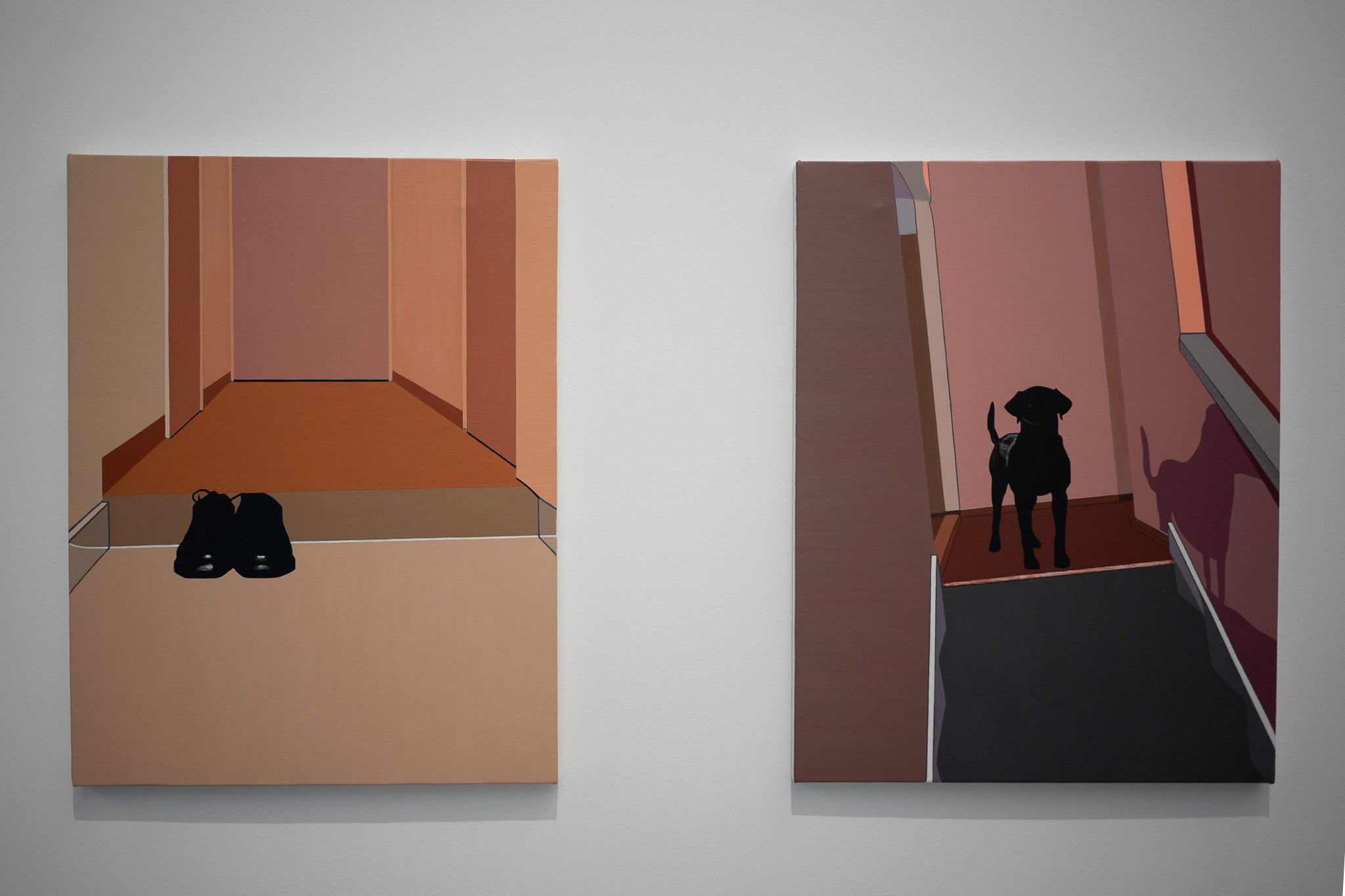
These lines make absence feel inhabited by routines and expectations. Yet the poem also selects an emotional direction: its association between dogs and longing encourages that reading of Kang’s animal. The painting leaves the feeling open. This is a productive difference between the works, as Gauvin develops a possibility without exhausting the image.
Jongwan Jang found recognition in Jordan Kisner’s opening description of a boy exploring at night. Leaves shine in moonlight; familiar trees become strange columns. Jang, who enjoys nighttime walks, said the writing articulated sensations he had struggled to express. His paintings’ deep green worlds provide a visual point of contact with Kisner’s story.
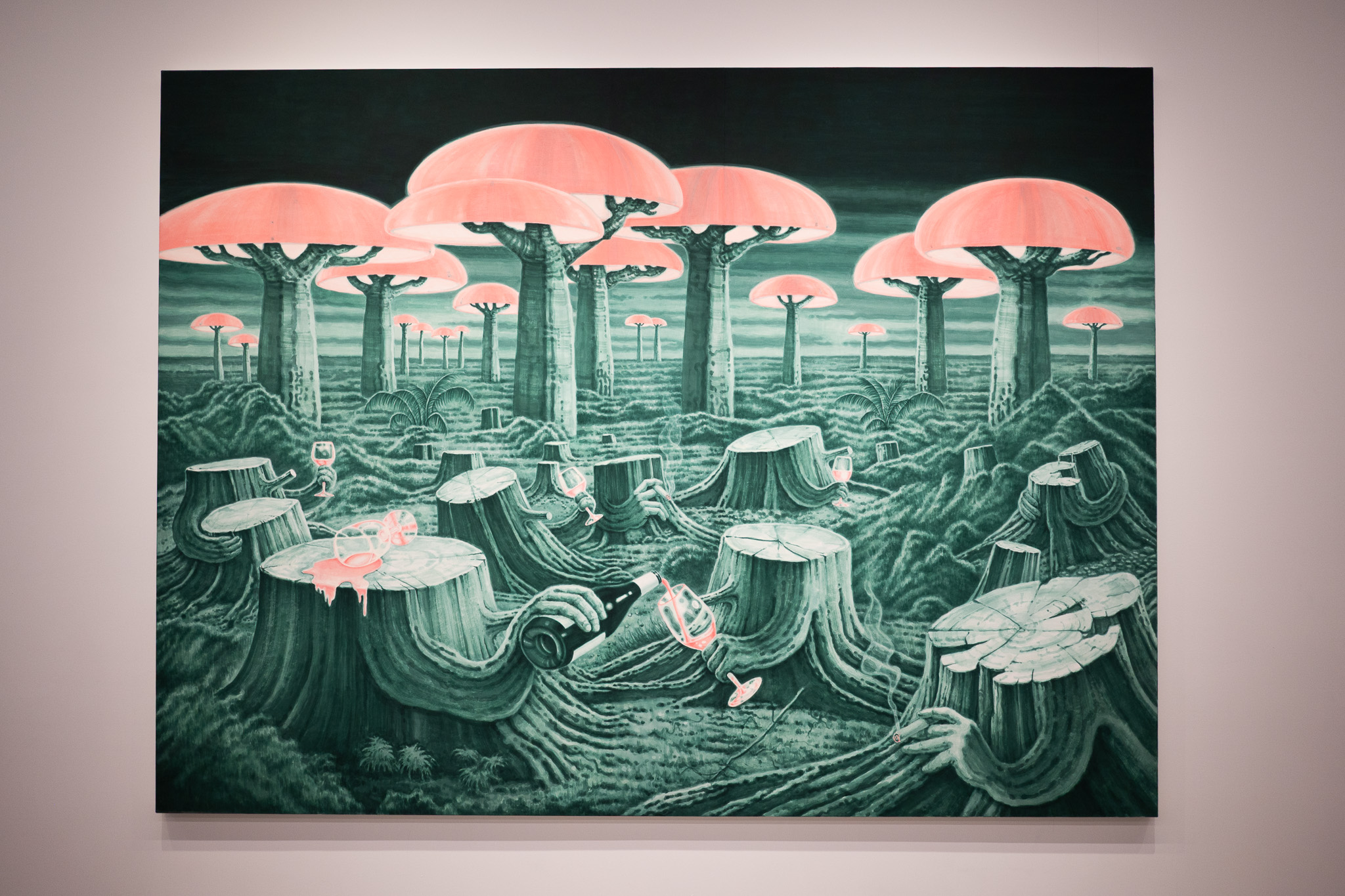
The writer takes that encounter elsewhere. The boy becomes a soldier and rediscovers the night through goggles that render it intensely green. The final passage calls this vision a beautiful weapon. Kisner’s narrative has its own turn and consequence, while Jang’s reported response centres on recognition. The exchange’s demonstrated effect here is a clearer articulation of an existing sensibility, rather than a documented change to a painting.
Ha’s own work is paired with Nadia Owusu’s The Crossing, which moves between dreaming and wakefulness, memory and premonition. Ha said the collaboration prompted him to try a form resembling an open book. He welcomed Owusu’s response to his broader painting practice but did not expect the writing to put a full stop to his work. His account keeps the response provisional; it does not yet establish where further influence will lead.
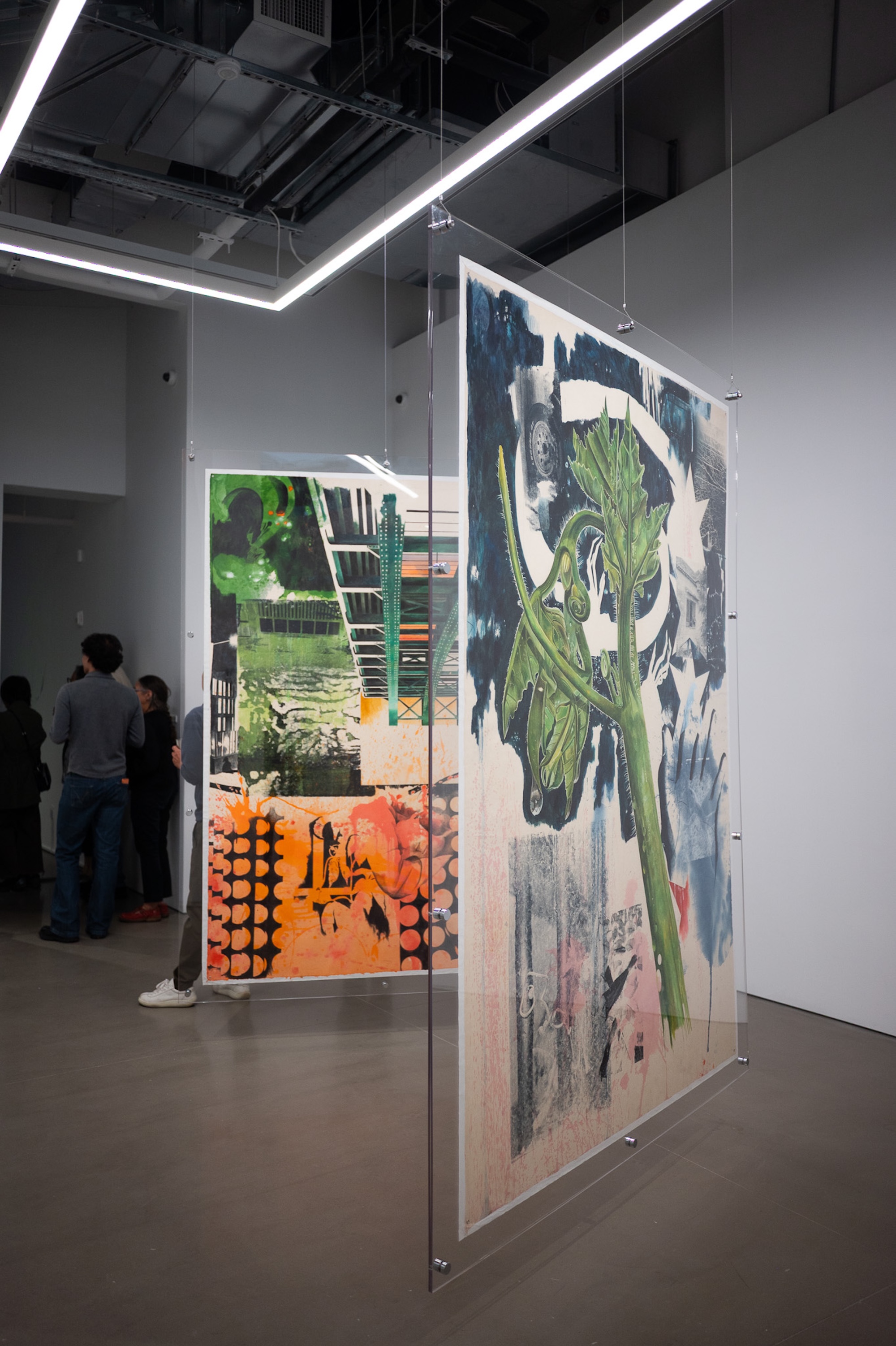
Jenny Jisun Kim’s collaboration with ’Pemi Aguda provides the clearest evidence of writing changing an exhibition decision. A translator as well as an artist, Kim explores forms and letters at the edge of legibility. Circles recur across her paintings, sometimes overlapping or disappearing beyond their edges.
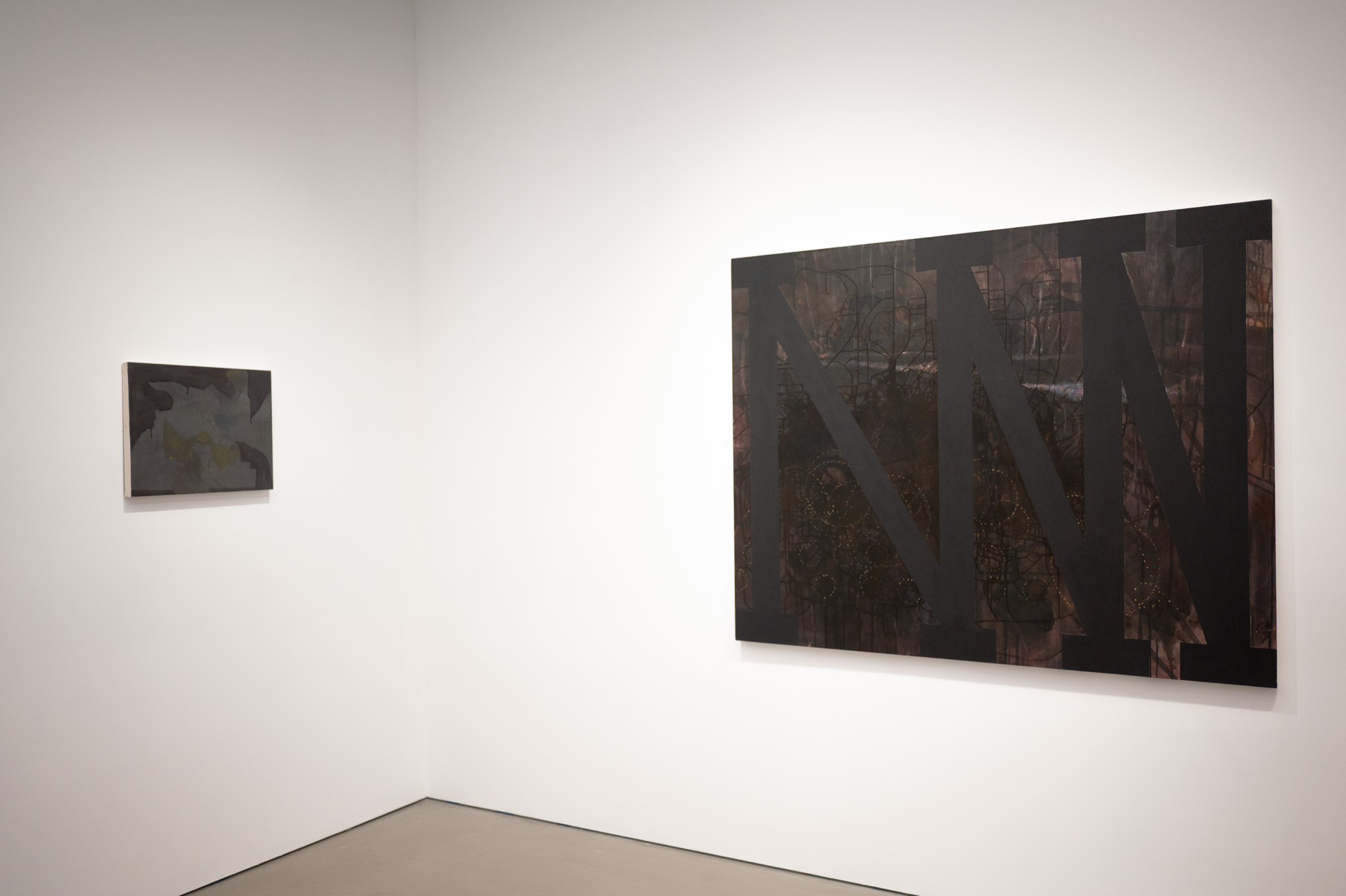
Aguda writes about a woman seeking entry to a smaller city within a larger one. She circles a stone wall without gates, expecting repeated circuits to grant access. But she forgets her starting point, and the circle becomes an infinitely long line.
Kim had planned to hang her paintings in a straight line at the same eye level. The story prompted her to consider inside and outside, then change the works’ sequence and height. Two small paintings were staggered, one higher and one lower. She wanted the circles to suggest movement into and out of the wall.
The altered alignment gives the installation variation beyond the individual canvases. It does not reproduce the woman’s journey: Kim selects a spatial relationship and works through an existing motif. This makes the exchange convincing as a creative process, although the placement alone cannot communicate the story that prompted it. Kim then told Aguda about the installation, feeding that decision back into the developing text.
MacGuffin is strongest where an influence becomes an observable choice. Kim’s hanging gives the exchange tangible form; Jang’s recognition describes a different, less visibly measurable effect. The project reveals these distinctions rather than proving that collaboration improves every work. Its achievement so far is to expose how another person’s creation enters a practice selectively — sometimes changing its arrangement, sometimes changing the language through which an artist understands it.
MacGuffin: Five Korean Artists and Five Writers from Art Omi, October 8th–December 19th, 2026, Space ZeroOne