For a few days each September, Berlin goes into art overdrive. August is over, there’s a chill in the air, and winter is basically coming. Once upon a time, art fairs would colonise the biggest, half-clean warehouses they could afford. Today there’s still Positions at the airport, alongside a new festival format, Hallen, now in its 7th edition. Otherwise, it’s more of a citywide concurrent happening whose borders don’t really exist. The week is ultimately about the new season, and a new excuse for the same old question: how art can help us even when shit hit(s) the proverbial fan.
This year, the strongest message was diaspora. Which diaspora? All of them. Wandering, belonging, sheltering: again and again, the exhibitions returned to the question of what happens when movement is no longer entirely a choice — when leaving means losing something, and starting elsewhere means figuring out what can be preserved. The romantic language of the vagabond only goes so far here. What remains is the more practical work of keeping: protecting what should not be lost but couldn’t fit into a duffel, making shelter where you can, holding something inside your heart which you can no longer hold in your hands, and finding others who recognise the particular strangeness of having come from somewhere else.
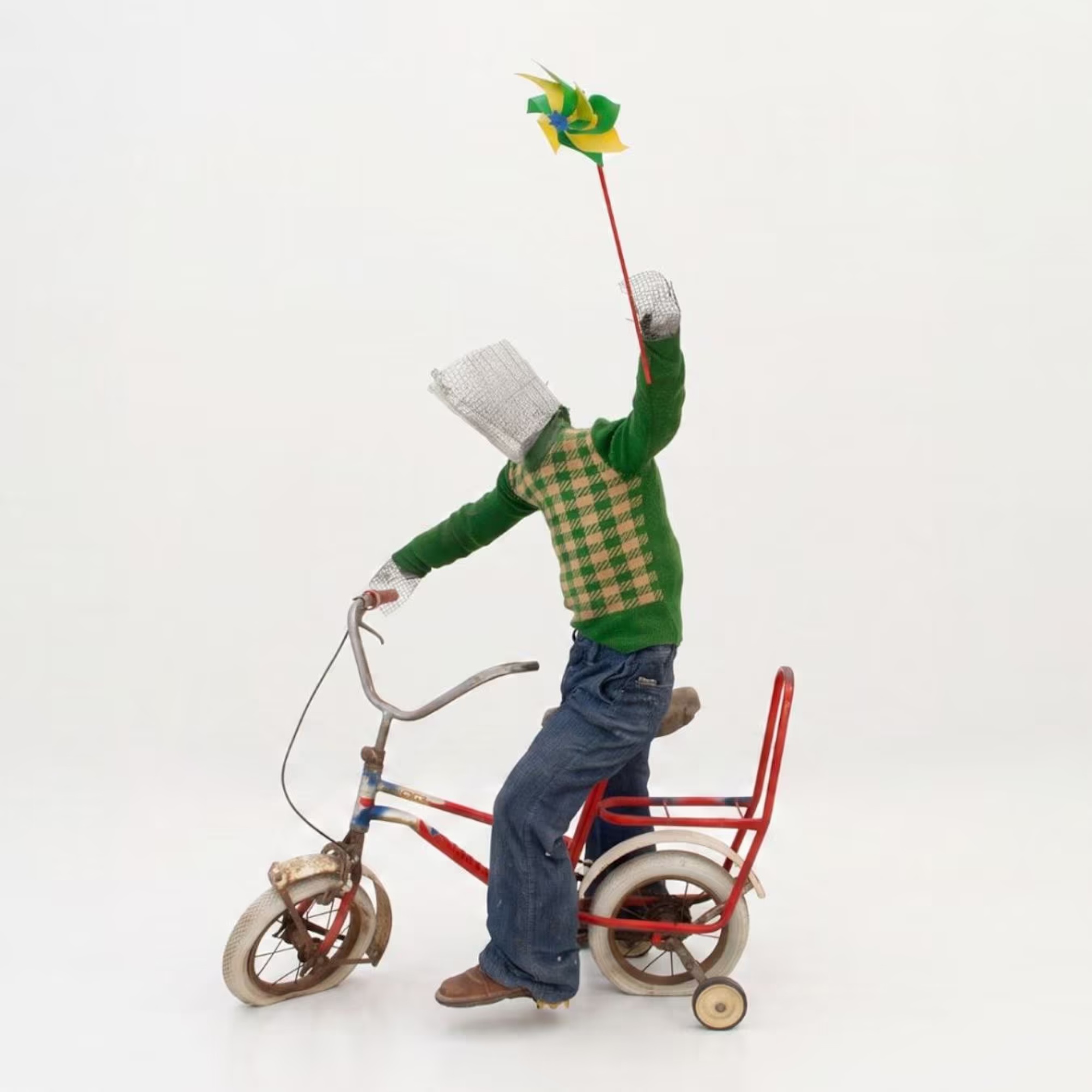
At Gropius Bau, Vlassis Caniaris’s Kind (child), 1980, is part of the exhibition Kreuzberg: Art and Migration since 1960. Part of his broader engagement with the experiences of Greek migrant families in Western Europe, this particular work centres on a child with a bicycle whose flat tyres make it impossible to ride. Placed alongside a small windmill and other childhood objects, the contrast between the bicycle’s promise of movement and its inability to go anywhere offers a poignant and painful tension between innocence, freedom, and displacement.
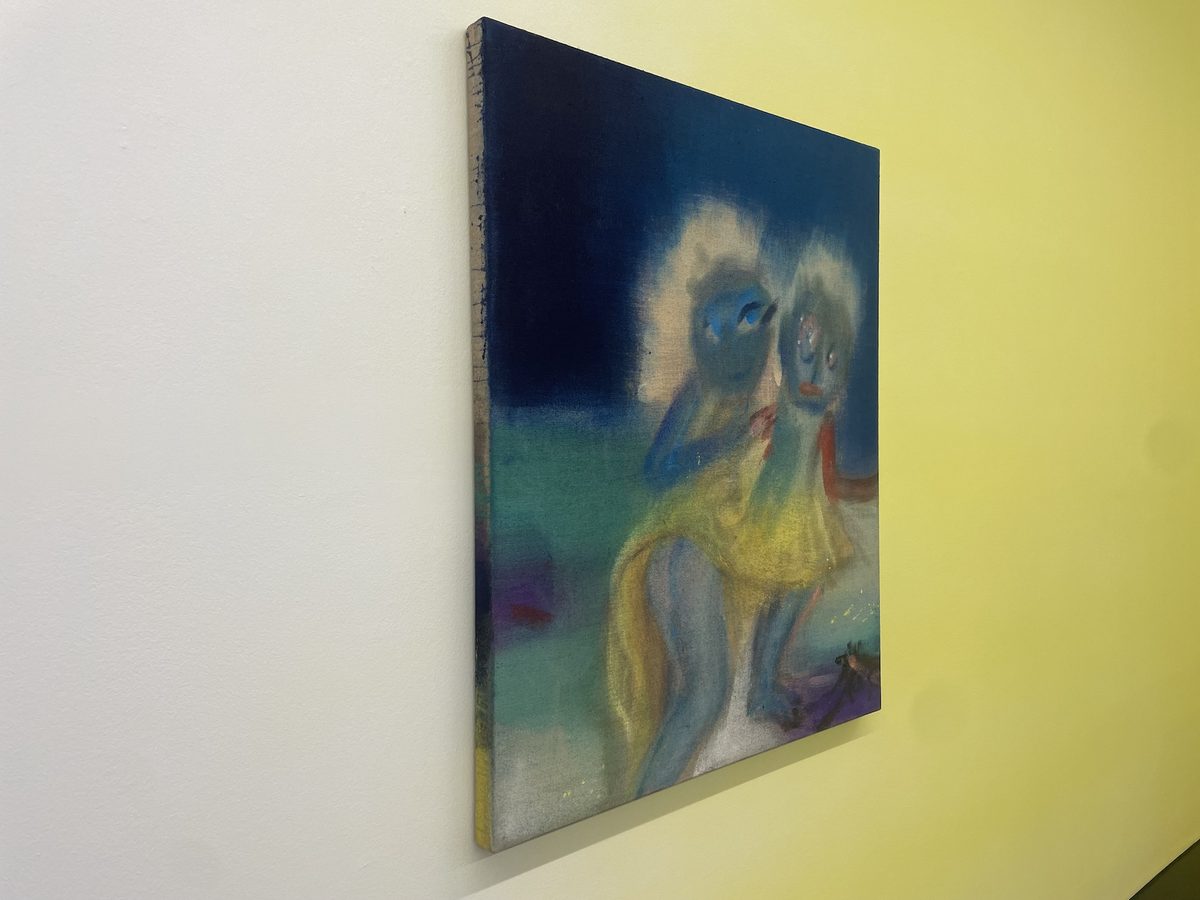
At Contemporary Fine Art Berlin, Leiko Ikemura’s De Sensu traces a journey across continents which becomes inseparable from the artistic language she eventually develops. Born in Japan, she was conscious that she would not be able to “pave [her] path as a woman and as an artist” if she stayed there. Driven by left-wing idealism, by her twenties she wanted to go to Cuba, but instead found herself in Francoist Spain. Learning Spanish and studying art in Seville from 1973 to 1978, she later moved to Switzerland in 1979, and to Germany in the 1980s, eventually settling in Cologne, where she recalls competing with the boys in a male-dominated art world without ever feeling entirely accepted. It was later, during a stint in the Swiss Alps and at what she describes as a low point, that she began to find a more idiosyncratic artistic language.
By 1991, Ikemura was settled in Berlin, where she became a professor of painting at what is now the UdK. Her work has continued to move between cultural worlds, drawing on Japanese traditions, European painting, Catholic imagery and surrealism. Her Usagi figures, developed in response to the Fukushima disaster, give this hybridity a darker charge: the rabbit, usually associated with fragility and innocence, is fused with a human body marked by the vulnerability of a world altered by ecological catastrophe. Yet the figures are also strangely resilient, holding destruction and the possibility of renewal within the same body.
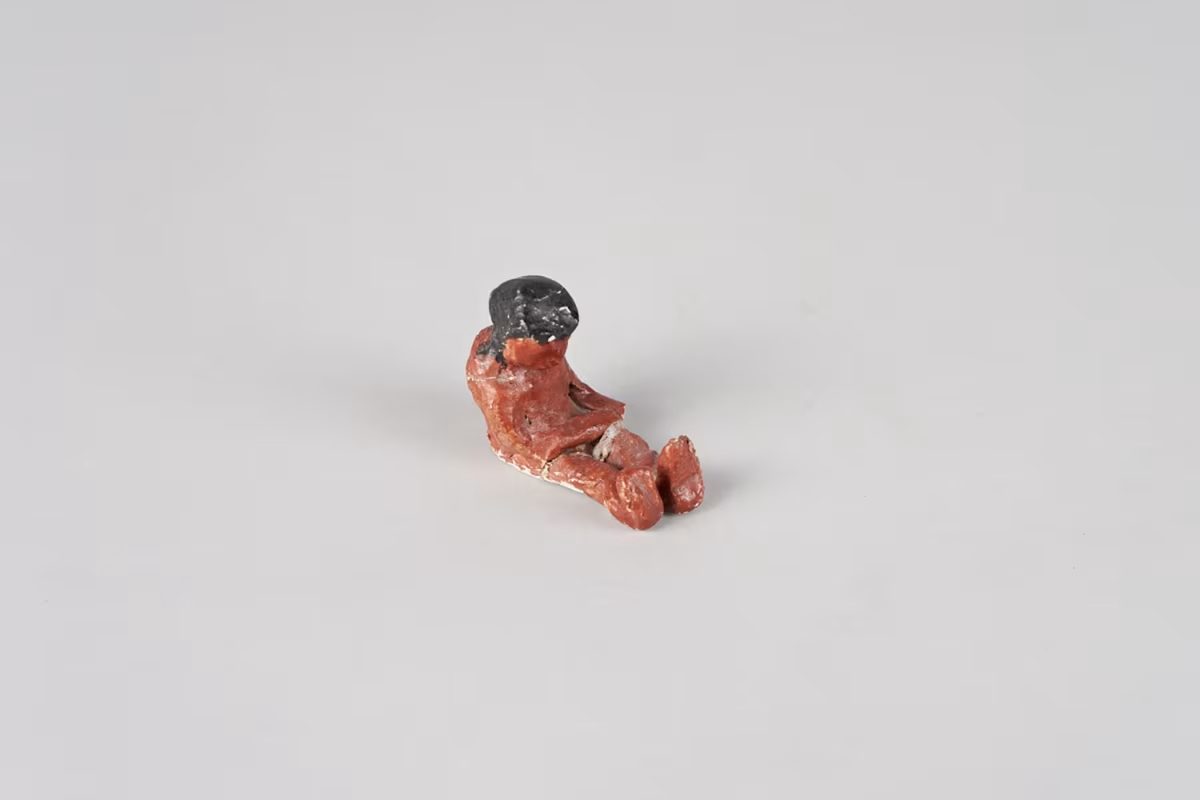
At Humboldt Forum, the highlight of Mirae kh Rhee’s exhibition Hand-Me-Down is the Wunderkammerkori, which reimagines a cabinet of curiosities as a living, incomplete archive shaped by migration, kinship, inheritance, and care. South Korean-born and adopted and raised in the United States, Rhee works between Germany, South Korea, and California, bringing her own diasporic experience to questions of how objects move and acquire meaning. Drawing on Samuel Quiccheberg’s 1565 taxonomy of museum organisation, Rhee invited an international network to contribute objects through a custom accession system, reworking categories for the present day. The resulting collection asks what gets preserved, collected, and how objects acquire value as they move between people, places, and generations.
The collection traces the complicated journeys behind these objects — including acts of concealment, transmission, and survival. Shaped by the artist’s diasporic perspective, it also draws on transnational feminist and decolonial thinking to question the unequal histories through which European museums have collected and displayed things from elsewhere (sometimes appropriated under questionable circumstances). We are left with an opportunity for a new way of thinking about knowledge and inheritance, where an object’s meaning lies in more than just the thing itself, but also in the people, relationships, and histories that have gathered around it.
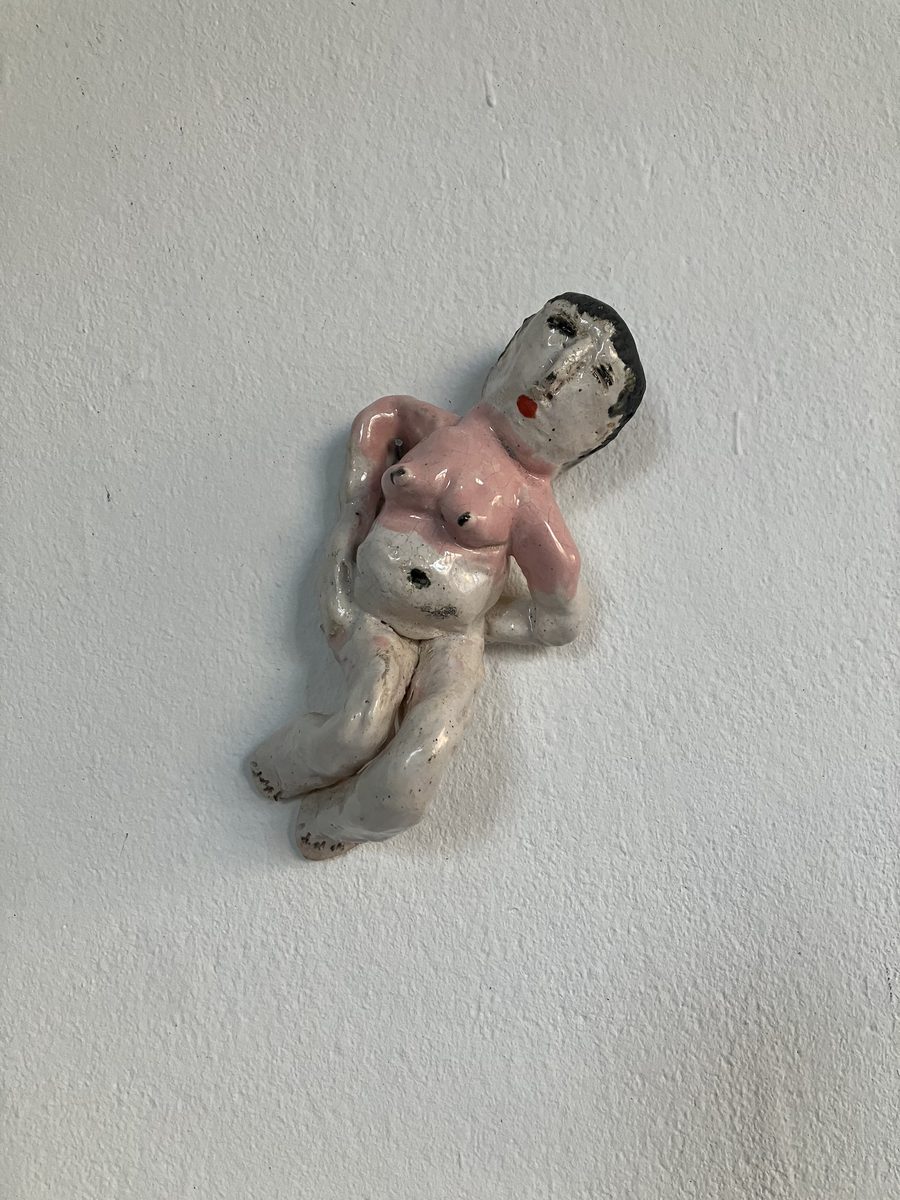
On that note, Mae Nan Guk Juk’s Diasporic Memories Formed in Clay at Galerie Wedding explores diasporic memory through a series of ceramic objects rooted in Korean-German family histories. Among them are ceramic German-Korean dictionaries, turning these essential tools of translation into objects that can be inherited, remembered, and even worshipped. Another figure, with its uncanny, bodily presence, recalls the object in Rhee’s Wunderkammerkori, linking the exhibition to a wider question of how people and histories become preserved through things.
The ceramics are accompanied by films of Hopp interviewing members of his family, bringing voices and personal memories into conversation with the objects. Together, the works trace what gets passed between generations when a family has moved between countries and languages: it isn’t exactly an archive, but fragments of experience that survive through speech, objects, and the act of cherishing. In the exhibition, clay becomes a way of giving physical form to memories that might remain intangible otherwise.
Astro y Fe is a popup exhibition at neurotitan that turns the gallery into a mechanism for relief. Here, artworks move beyond representing a crisis to becoming part of a material response to it, with the exhibition functioning as a temporary infrastructure of solidarity to connect artists in Venezuela and the diaspora to resources and networks for relief and rebuilding following the earthquake in Venezuela in June 2026.
Inside the exhibition, Valentina Alvarado Matos’s space was adapted for her Super-8 film, a kind of broom-closet-cum-screening-room that is itself all kinds of disorienting. levantamiento de una isla works through the small, tactile gestures of trying to make a territory from afar: maps are redrawn and layered, a ceramic form is turned like an atlas, clay is kneaded and broken apart, landscapes built and rebuilt by hand.
The film’s bird sounds are transcendent, drifting in and out of intensity and placing you somewhere else entirely, pulling you in and out of the room until waves arrive and, for a moment, it feels as though you have sleepwalked onto a beach. Then there is the tiny window through which you watch it, leaving you suspended between prisoner and prison guard, inside and outside. It becomes an apt architecture for a work about reconstructing a place from fragments — holding onto what can be carried while knowing that something has inevitably been left behind.
Born in Maracaibo, Venezuela, Alvarado Matos moved to Barcelona in 2014, where she has developed a practice spanning analogue film, ceramics, collage and installation. Her work has also moved between Caracas, Barcelona, Toronto, and Berlin, reflecting the diasporic experience at the heart of her practice: how memory, landscape, and a sense of belonging shift as places are encountered from elsewhere.
In Instrumentalizados, Alessandro Balteo-Yazbeck takes apart the visual language of Venezuelan modernism, rebuilding its geometric forms with worn-out T-shirts and trousers. Draped over warped frames and geometric volumes, the clothes resemble ghosts of fragmented human figures, stopping short of ever becoming a body.
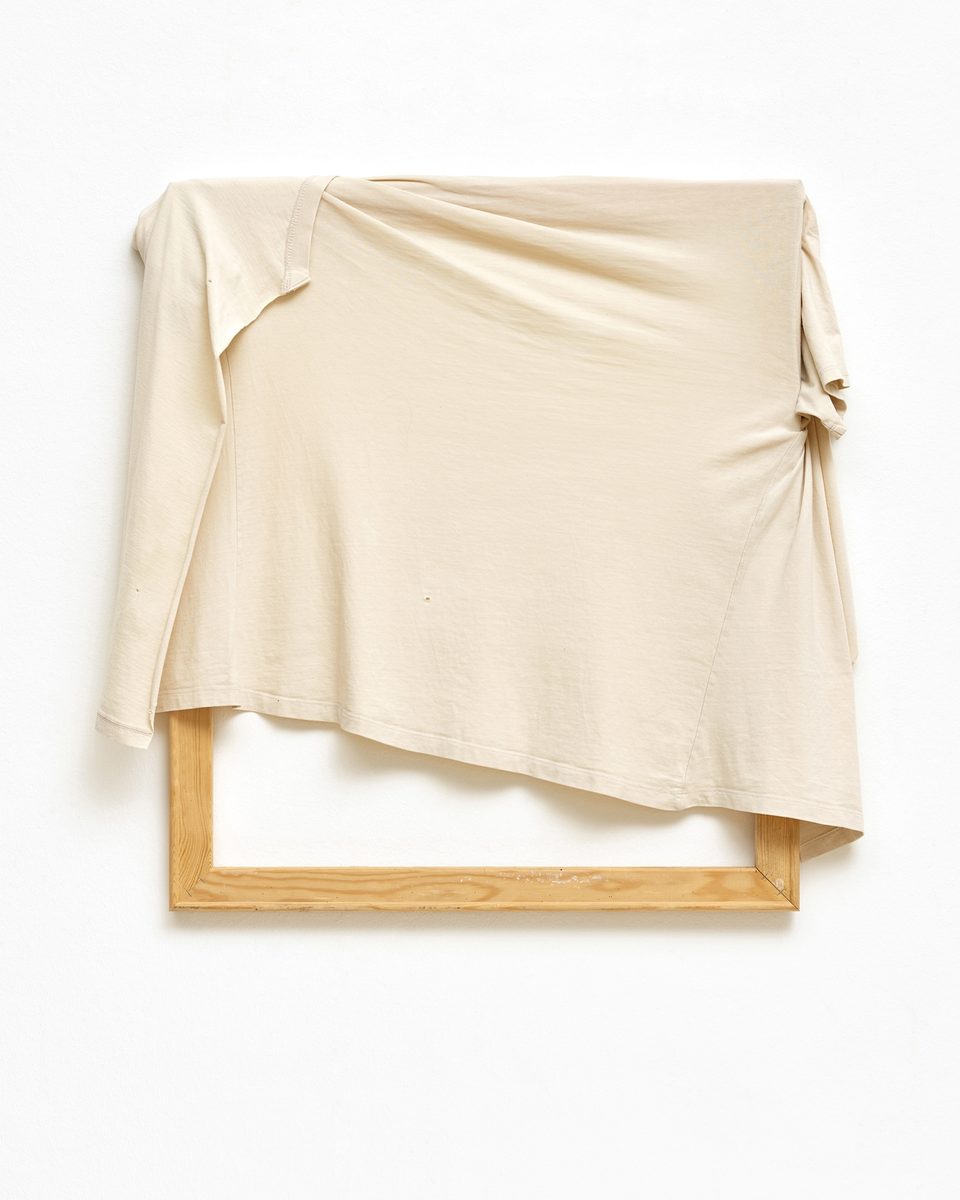
The works connect the remnants of Venezuelan modernism to the remnants of human lives, asking what happens when people are reduced to signs, categories and instruments of power. This extends to those displaced by such systems — refugees, diasporas and political prisoners — whose suffering can itself become material for cultural consumption. The result is a collision between geometric utopia and its human debris, where the promise of order gives way to absence, displacement and loss. It takes a lot of effort to look this effortless.
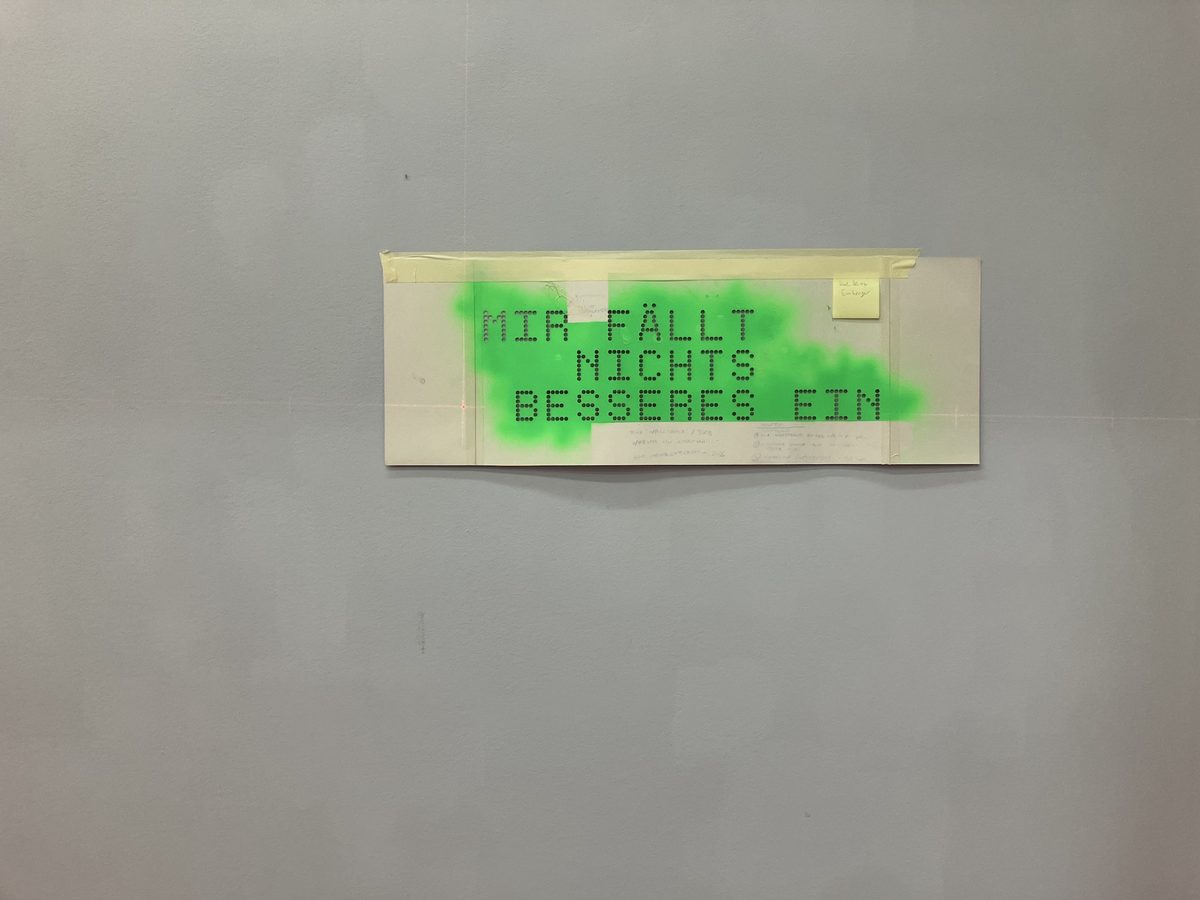
Born in Caracas in 1972, Balteo-Yazbeck moved his practice to New York in 2000 before settling in Berlin in 2010. His own trajectory between Venezuela, the US, and Germany adds another layer to a practice preoccupied with the political forces that shape how people, images and ideas move between places.
At Sprüth Magers, Jean-Luc Mylayne’s dizzying, colossal photographs bring the viewer into the company of birds. Fleeting, solitary figures are caught between departure and arrival. Meanwhile, different areas of the image register with different paces and regions of focus, causing a kind of instant vertigo.
Mylayne and his partner Mylène have spent decades relocating themselves in order to follow birds across different landscapes and photograph them. Often spending months in a place, the photo itself is testament to a process of learning the rhythms of new places, returning to the same spot until a bird becomes accustomed to their presence. The images condense an extraordinarily prolonged encounter into a single solitary bird suspended in a vast landscape. At this point, the photographers themselves have acclimated so much that they have almost become invisible behind the camera.
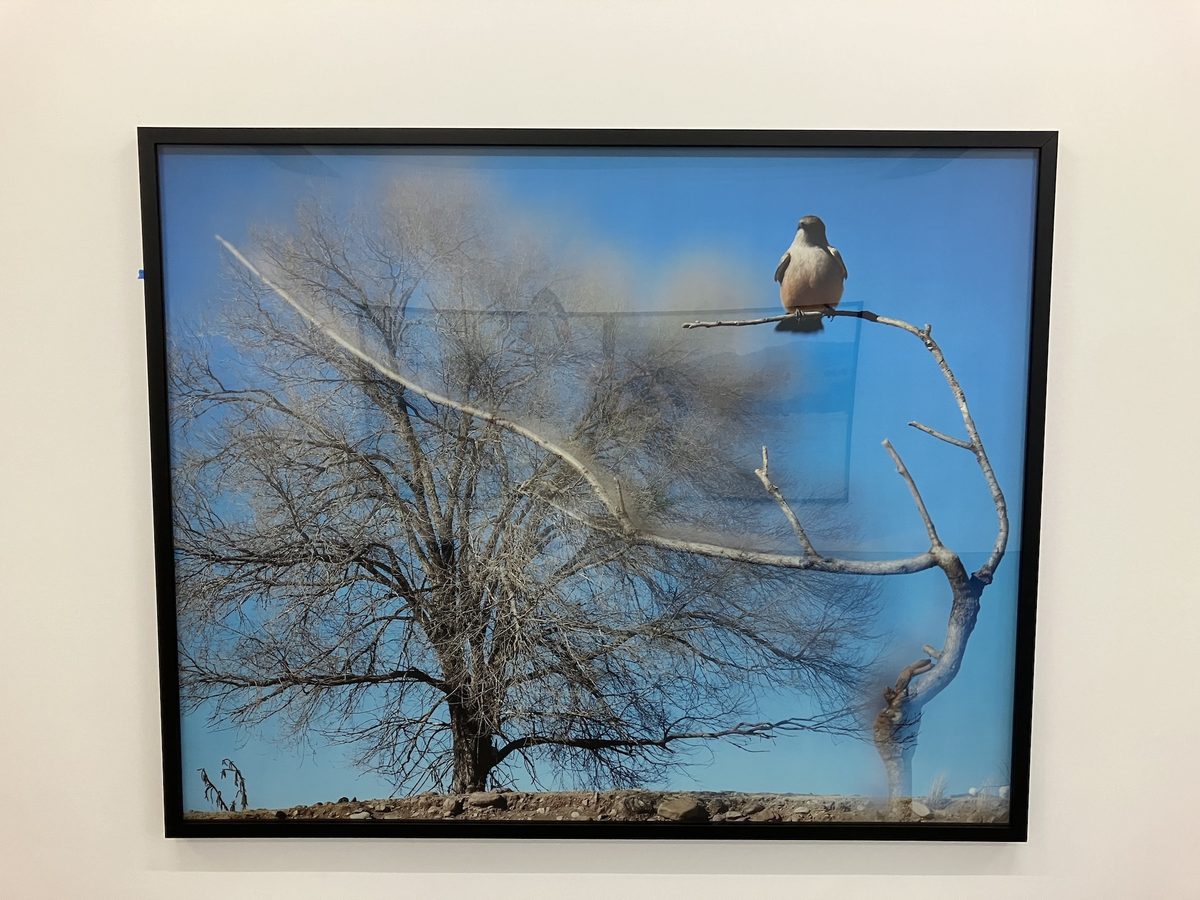
Mylayne’s solo exhibition Reflection brings together works conceived largely during a residency in Marfa, Texas, where they were drawn to the intense blues of the water and sky, and sometimes also the birds themselves. The images turn the act of looking into a form of slow companionship, asking what it might mean to share a world without ever quite occupying it in the same way.
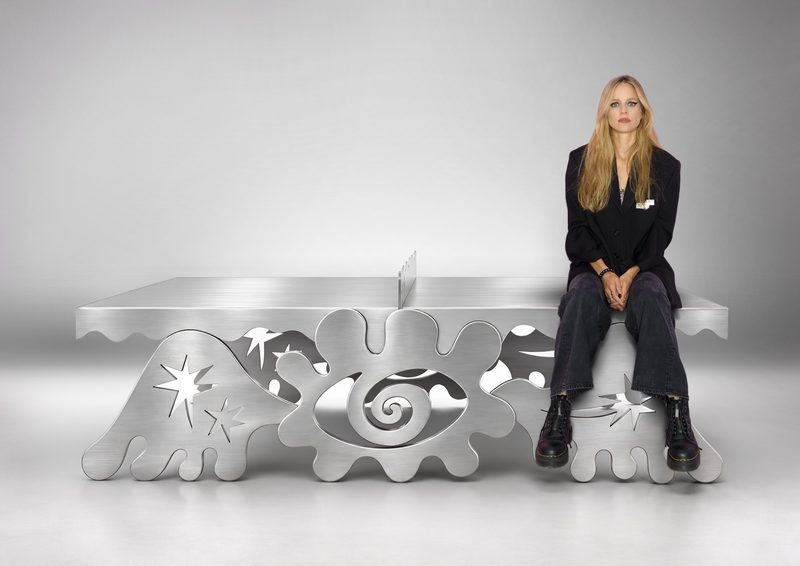
Kerim Seiler’s The Title Comes Last at SEXAUER begins with a series of ink drawings, or Holotypes, that immediately recall Rorschach tests. Their mirrored forms seem to hover between inner and outer selves, biological diagrams, psychedelic illustrations, and things dredged from the imagination. Looking at them feels less like interpreting an image than it does producing one in the mind’s eye: an ass becomes a landscape, a Thanksgiving turkey wears a bikini, a world atlas is reconfigured according to the topography of memories passed down through generations, and a Furby appears to speed towards us in a convertible Volkswagen. At least that’s what I saw, and maybe that reveals something about me.
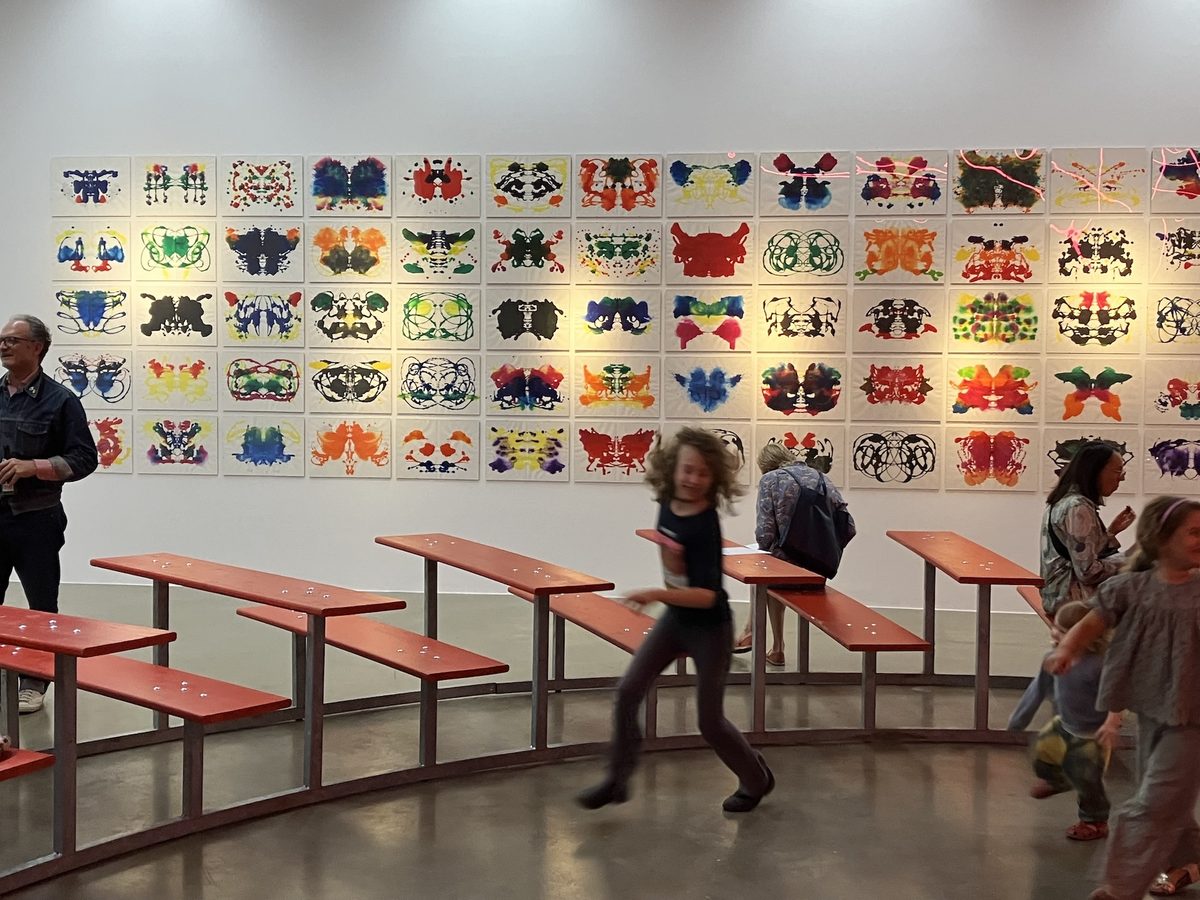
Seiler’s own trajectory between Bern, Geneva, Hamburg, Cairo, Zurich, and Berlin lends another resonance to these structures, which have a capacity to be somewhere without actually belonging there. They can be moved, reassembled and made to negotiate each new architecture, carrying traces of previous places with them. There is something apt about this for an artist whose work has continually moved between contexts: the structures look as though they could stay forever, but could just as well be gone tomorrow.
Ivana de Vivanco’s Refuge (2025) is a house-shaped sculpture made from painted canvases, conceived amid the ecological and social devastation caused by lithium extraction in Chile’s Atacama Desert. A recurring snake motif stands as a symbol of protection, while a soundtrack inside the house gives it an inhabited, immersive quality — not to mention a place to rest, recuperate, or escape. Its fragile walls make the house feel less like a permanent structure than something carried between places, with the traces of one landscape and its histories folded into another.
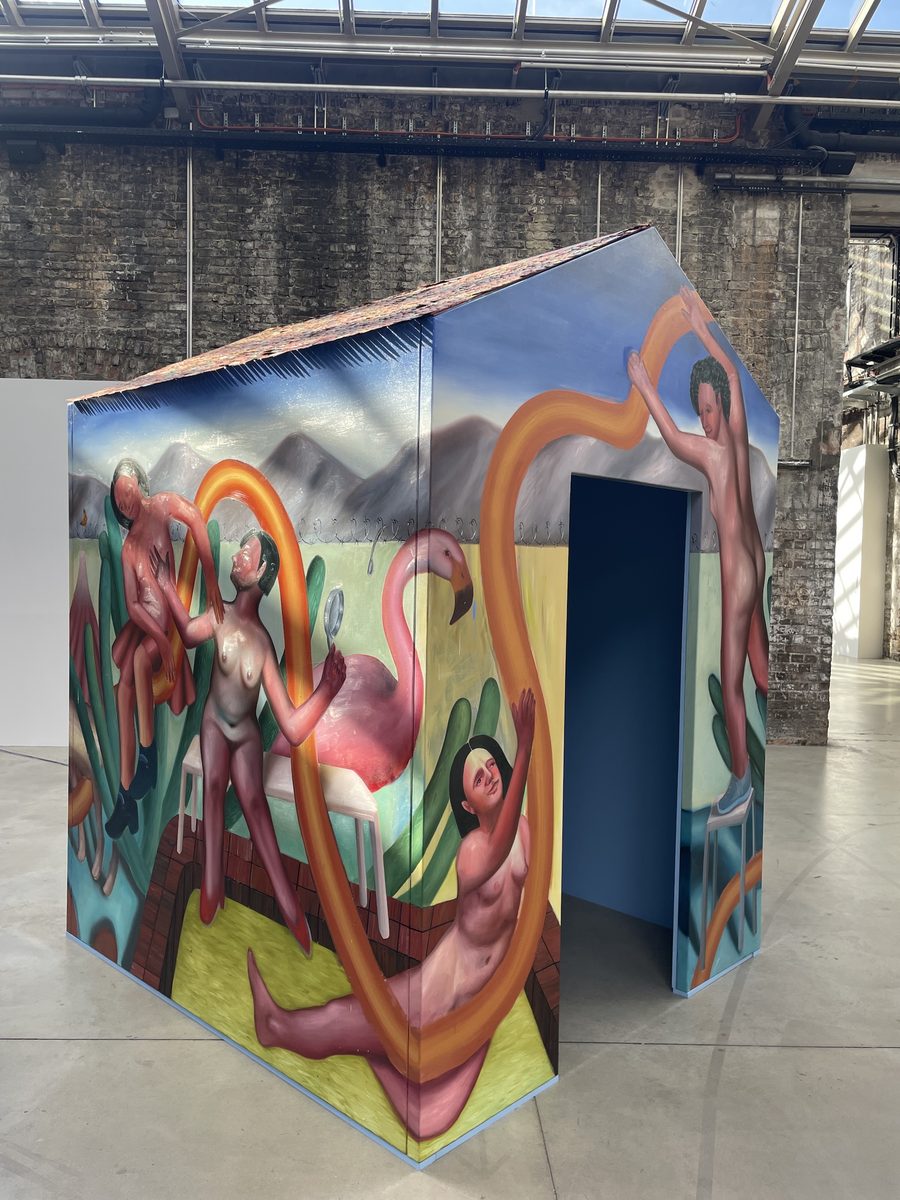
Born in Lisbon to a Peruvian mother and Chilean father, de Vivanco grew up between Chile, Ecuador, and Peru before moving to Germany in 2013. Her own movement between Latin America and Europe gives the idea of refuge another resonance: a home shaped across places, memories, and distances, rather than fixed to any one landscape.
And finally, Wallpaper transforms the Deutsche Künstlerbund’s project space into an evolving, participatory artwork installation, beginning with the question: Why do I make art? The project looks at the moment before a work takes shape: the idea, image, doubt, impulse or question that sets something in motion. The 26 participating artists offer very different answers, from investigations into physical and emotional responses to visual stimuli, to questions of authorship, language, perception, and the relationships between humans, animals, and plants.
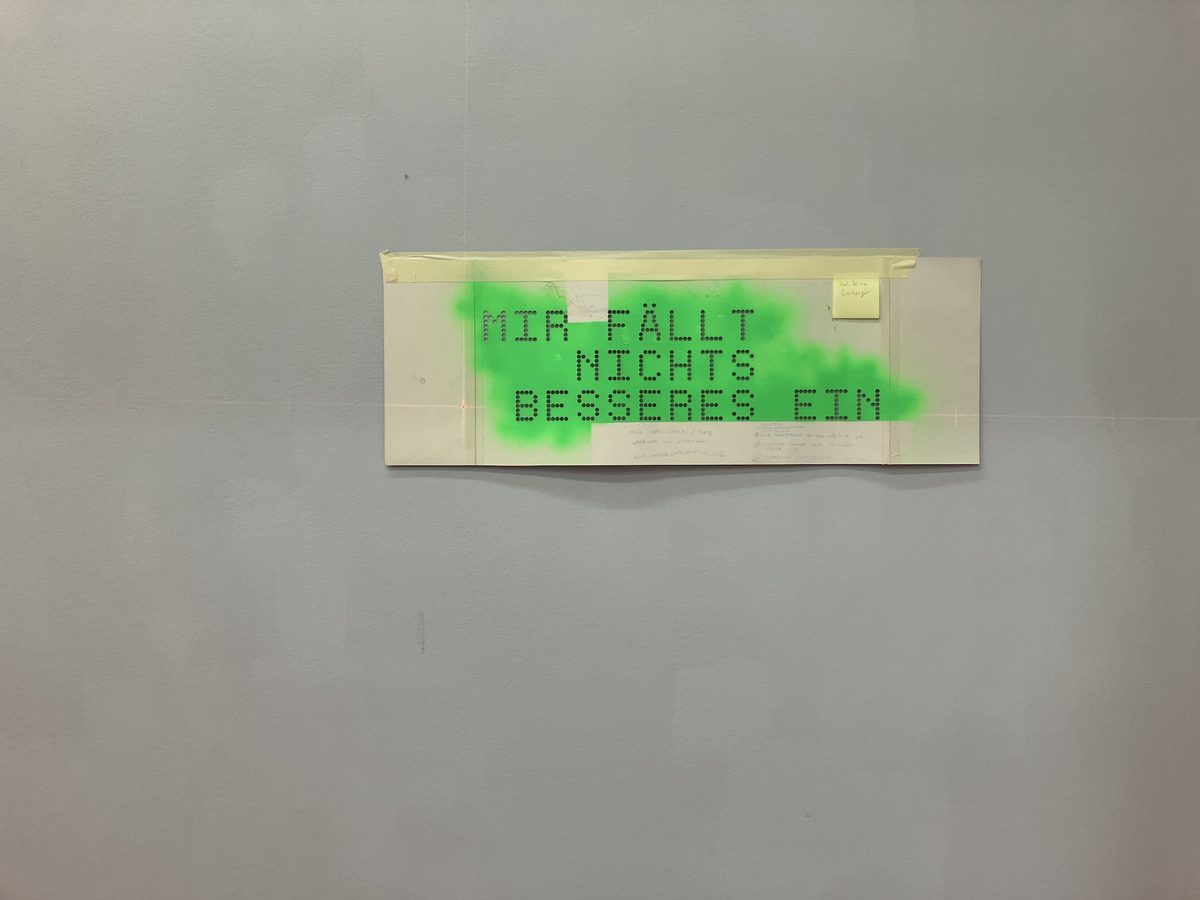
The installation itself follows a logic of becoming. Over the coming months, works will be added directly to the walls, overlapping and forming new constellations with what is already there, which started with bare walls on opening night. A work can change simply because something else appears beside it, while the overall composition gradually becomes something no single participant fully controls. It becomes a collective work about artistic freedom, but also about what happens when individual perspectives leave their original contexts and enter into relation with others — a process of arrival, encounter, and continual reconfiguration.
Categories
Tags
- Alessandro Balteo-Yazbeck
- Berlin
- Berlin Art Week
- Berlin Art Week 2026
- contemporary art
- Contemporary Fine Arts Berlin
- Diaspora
- Galerie Wedding
- Gropius Bau
- HALLEN
- Humboldt Forum
- Ivana de Vivanco
- Jean-Luc Mylayne
- Kerim Seiler
- Leiko Ikemura
- Mae Nan Guk Juk
- Migration
- Mirae kh Rhee
- Sprüth Magers
- Valentina Alvarado Matos
- Vlassis Caniaris