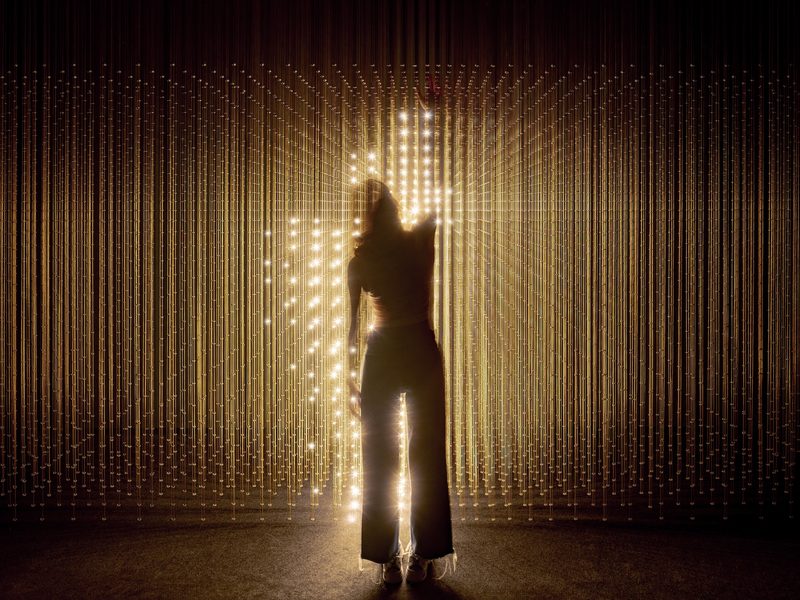
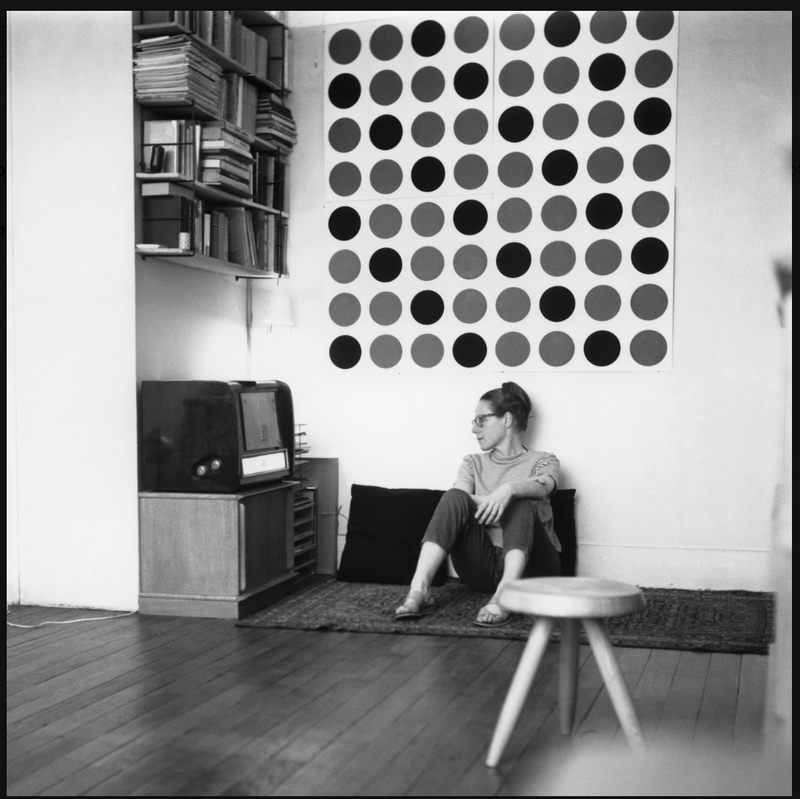
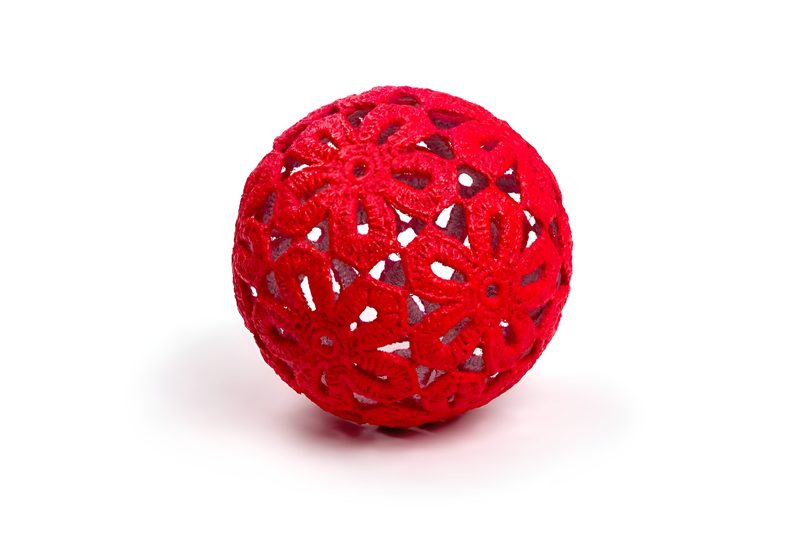
Softwear, a new group exhibition opening at No Show Space in London this September, brings together five artistic practices to explore the intertwined histories of textiles, computing, code and gendered labour.
Softwear is an apexart International Open Call Winner 2026-27. The proposal was submitted by curator Kira Wainstein, and chosen by a jury of 805 international voters. The exhibition will be the first time an apexart Open Call Exhibition has been programmed in London. apexart is a New York-based educational arts institution that has served as an important incubator for curators and creatives for over 30 years.
Curated by Kira Wainstein, the exhibition takes as its starting point a connection that reaches back more than two centuries: looms were effectively running on binary code long before computers existed.
In 1804, the Jacquard loom introduced punched cards that could programme complex images into fabric. The same principle would later become fundamental to early computing, yet its origins lay not with scientists or engineers, but with weavers.
Softwear follows this relationship between making and computation through work by Crystal Bennes, daniela brill estrada & Monica C. LoCascio, Charlotte Johannesson, Steph Linn and Shannon Swinburn. Together, their works examine the often overlooked manual — and frequently female — labour underpinning technological development.
That history stretches from women working as so-called ‘human computers’, manually solving mathematical problems, through Ada Lovelace’s first published computer programme in 1843 and the all-women team who programmed ENIAC a century later.
At the centre of the exhibition is a series of works that collapse distinctions between textile production and digital technology.
Charlotte Johannesson’s Guardian? (1984) dates from the period after the pioneering Swedish artist traded her loom for a computer. Johannesson began making political tapestries during the 1970s before co-founding Digital Theatre in Malmö in 1981, described as Scandinavia’s first digital arts laboratory.
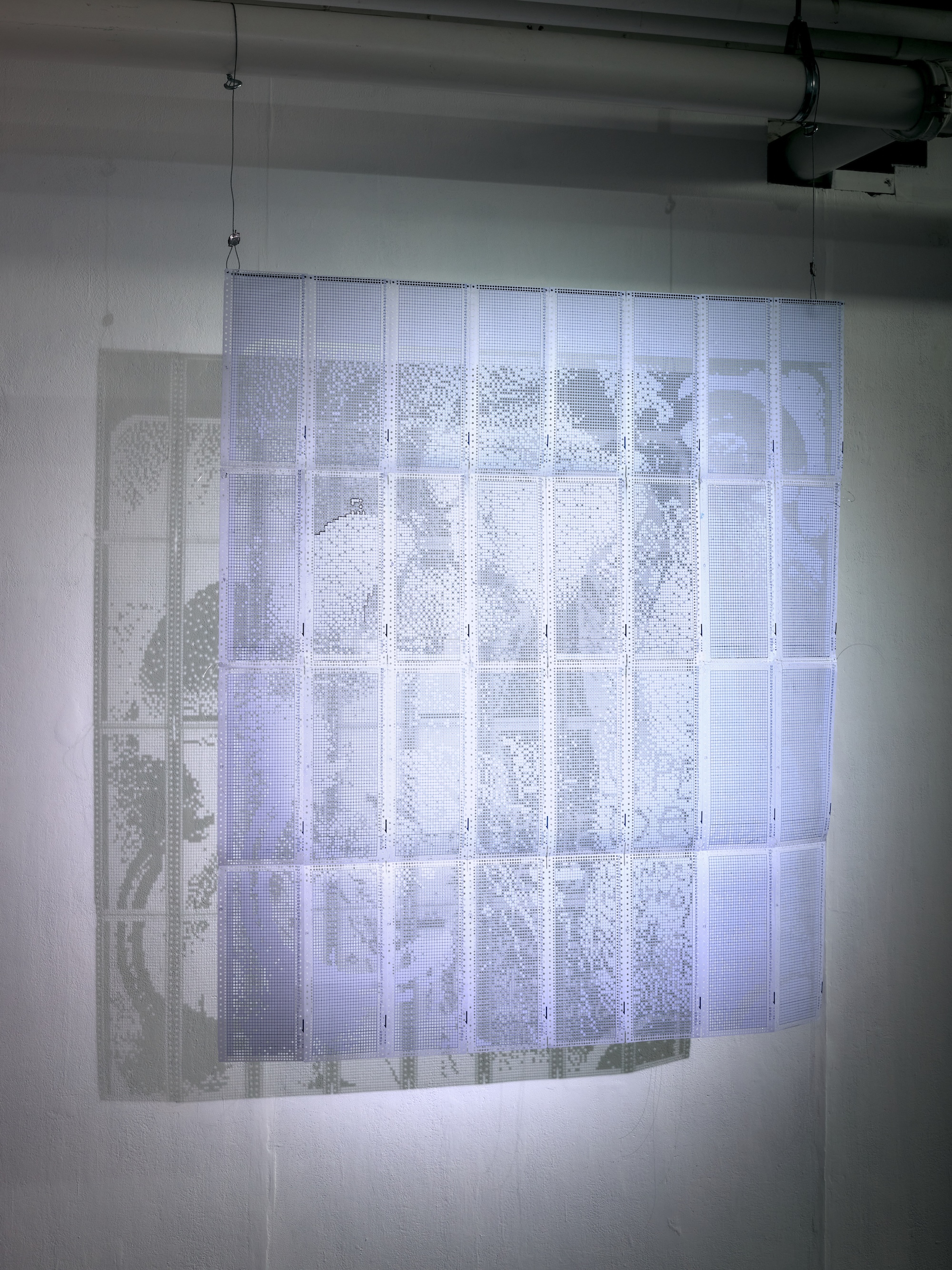
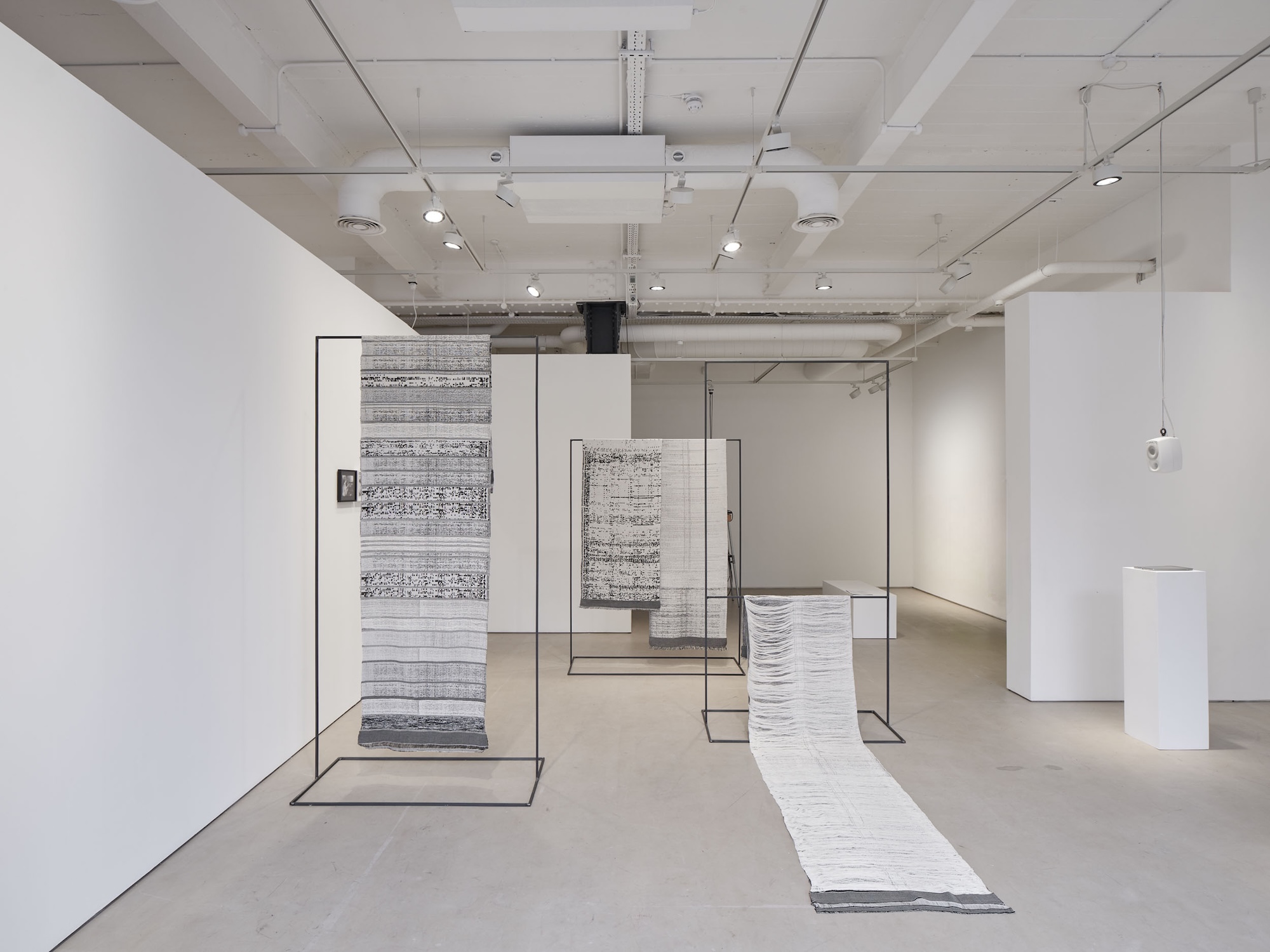
Crystal Bennes takes the connection in the opposite direction. Her When Computers Were Women (2021) translates 2,131 computer punch cards from a CERN experiment into woven textiles, returning information associated with advanced scientific research to the material language that helped make computing possible in the first place.
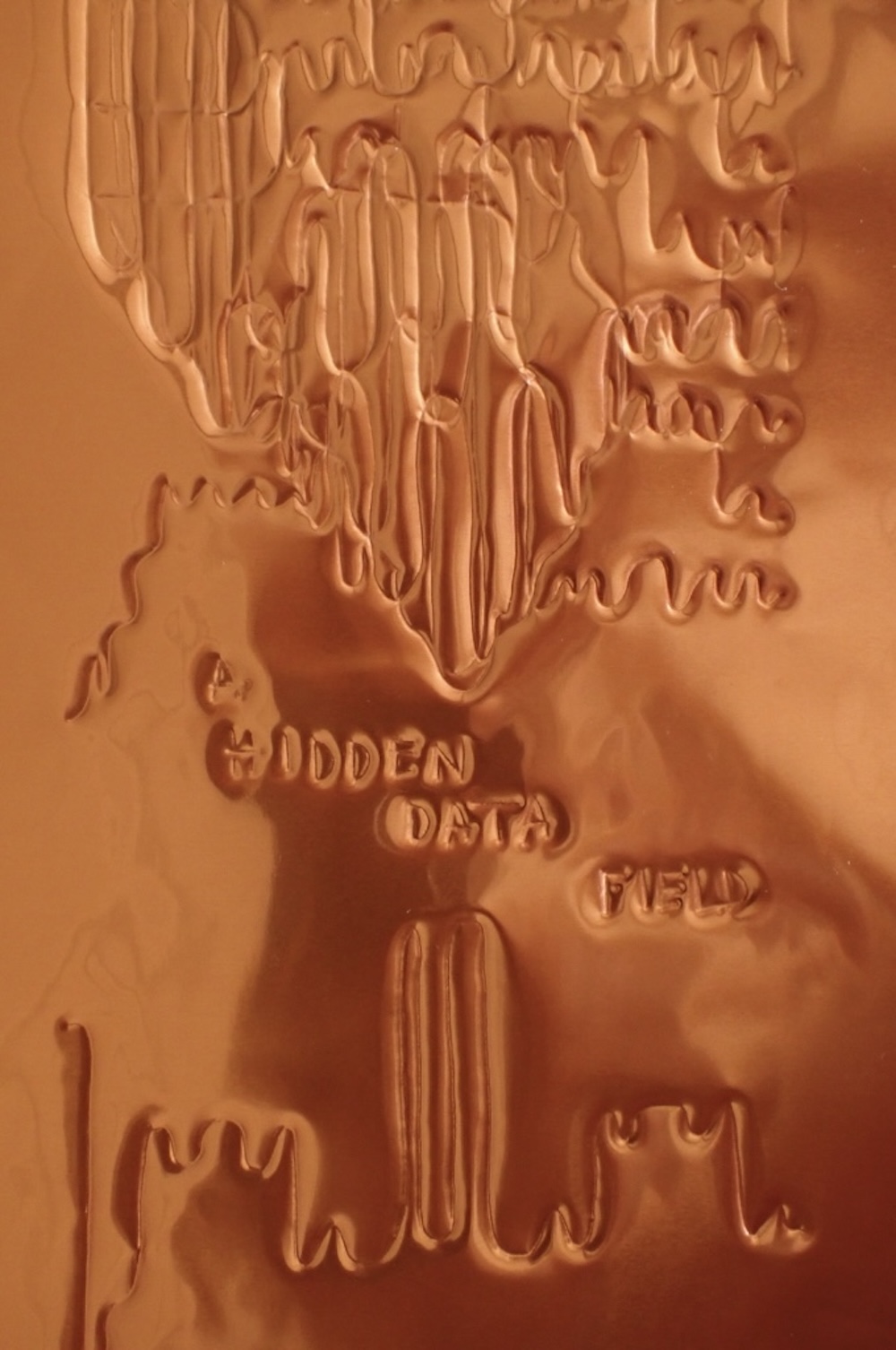
Elsewhere, daniela brill estrada and Monica C. LoCascio’s Phantom Fields (2026) embosses historic lace drafts alongside fragments of physics and poetry onto copper, bringing scientific knowledge and heritage craft into the same material field.
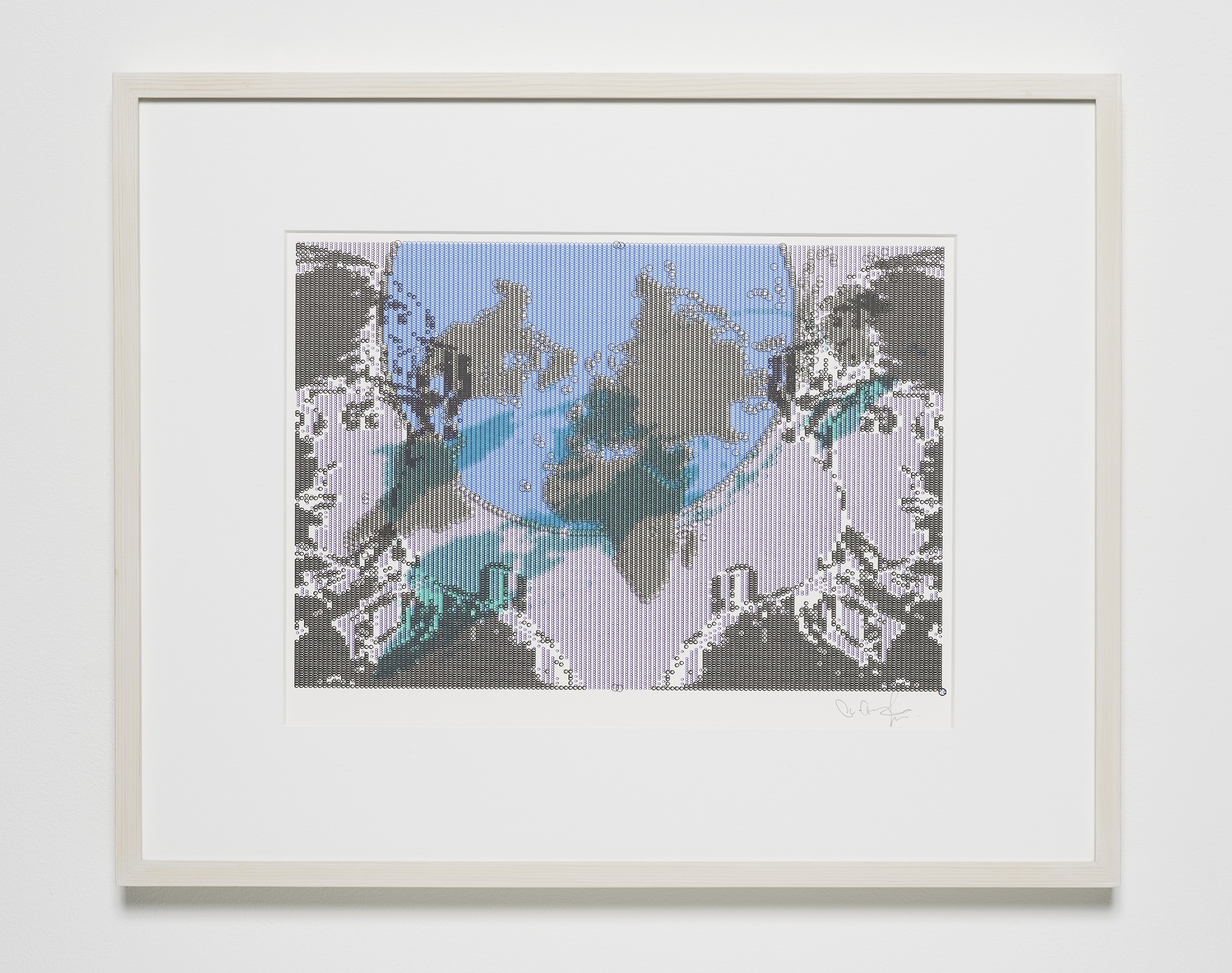
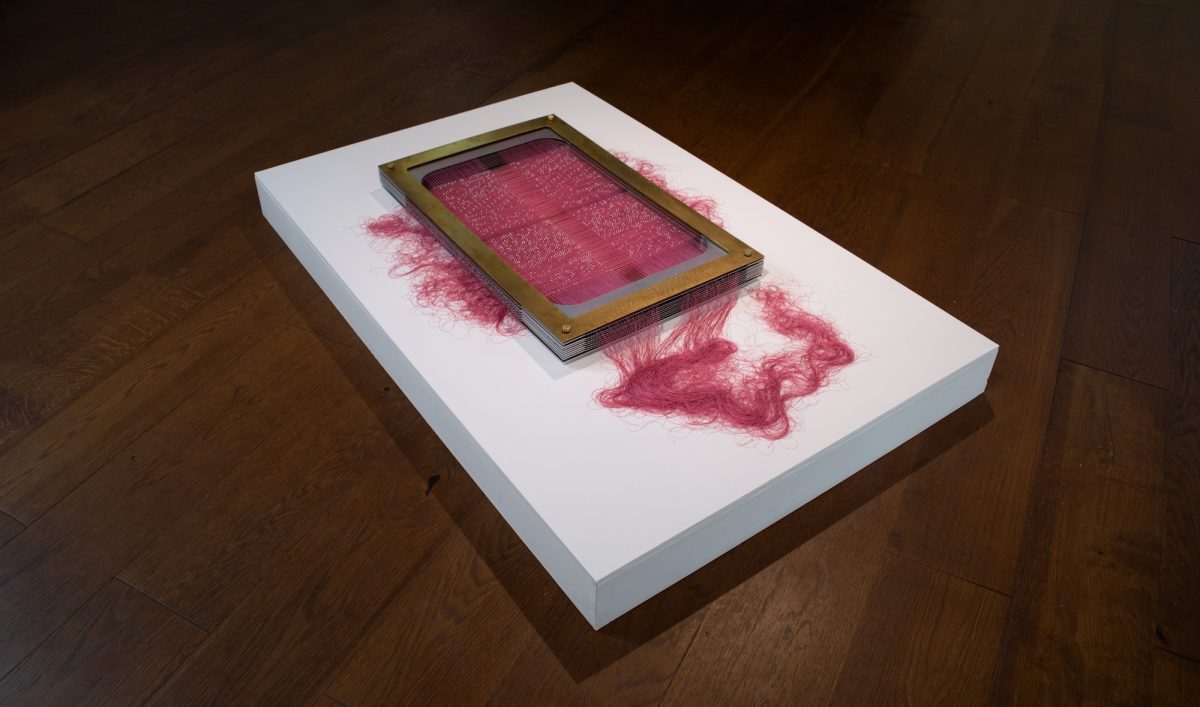
Shannon Swinburn’s IBM 1401 (2025) reconstructs the hand-threaded memory of an early computer, while Steph Linn’s History Keeps Me Awake at Night (2024) takes an untraceable digital image and reproduces it through hand-punched knitting cards.
It’s a particularly timely collision. As computation increasingly becomes associated with AI, automation and supposedly immaterial technologies, Softwear looks backwards to reveal just how physical its history really is — woven, punched, threaded and assembled by hand.
Wainstein brings an equally interdisciplinary background to the project. A curator, researcher and writer, she previously held curatorial positions at Tate Modern and Tate Britain, working on exhibitions including Yoko Ono and Electric Dreams: Art and Technology Before the Internet. Alongside an MA in Art History from UCL, she holds a bachelor’s degree in Physics with Philosophy from the University of Manchester.
Softwear, 18th September–17th October 2026,
No Show Space
Preview: 17th September, 6:30PM–8:30PM
Softwear is an apexart Open Call Exhibition 2026–27 and runs at No Show Space from September to October.