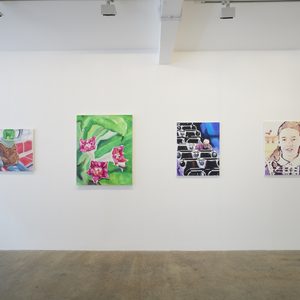
Rising painter Ninka Skhiereli has arrived at her practice by an unconventional route. After studying criminal law and exploring creative fields including furniture, fashion and tattooing, she found painting through a process of instinct, experimentation and mentorship rather than formal academic training. The result is a body of work that moves fluidly between portraiture, abstraction, landscape and still life, guided less by fixed concepts than by emotion, intuition and a willingness to embrace uncertainty.
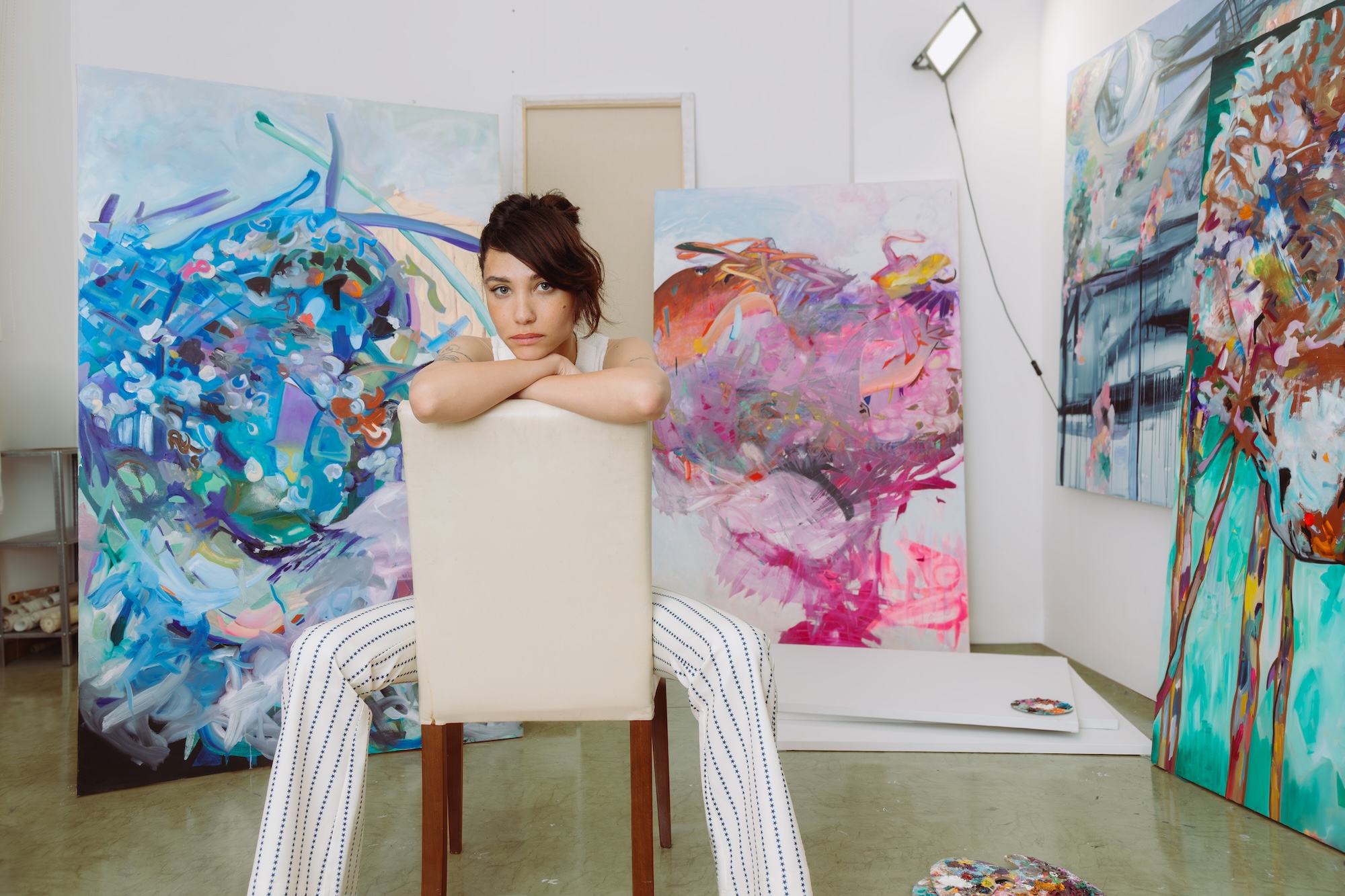
Ahead of her latest exhibition, FAD Magazine spoke to Skhiereli about her creative journey, the influence of mentor Gia Edzgveradze, her relationship with oil paint, and why contradiction, vulnerability and authenticity sit at the heart of her work.
FAD: Can you discuss how your previous creative informs your current work and ways of working?
Honestly, it’s a difficult question to answer because I don’t think of my previous creative outlets as work that informs my current art. I just think that they were, at the time, my attempts at finding opportunities to create, one way or the other. I’d always felt a charged artistic energy within me restricted by my choice of education and career (criminal law), however, I was still seeking a path to get to the final destination – that being painting. So, I believe working in these creative, yet relatively limited fields was a way for me to get to my goal of truly, freely creating.
That all being said, I didn’t stumble upon my previous “jobs” (if we can call them that) by accident. I’ve always loved furniture and clothing and tattoos; I feel a pull toward pieces of each, and they can evoke certain emotions – whether it’s complete serenity, comfort or cosiness, or, on the contrary, unnerving unease or anxiety. I had always appreciated and considered these fields to be art, in and of themselves, although relatively limited versions of it.
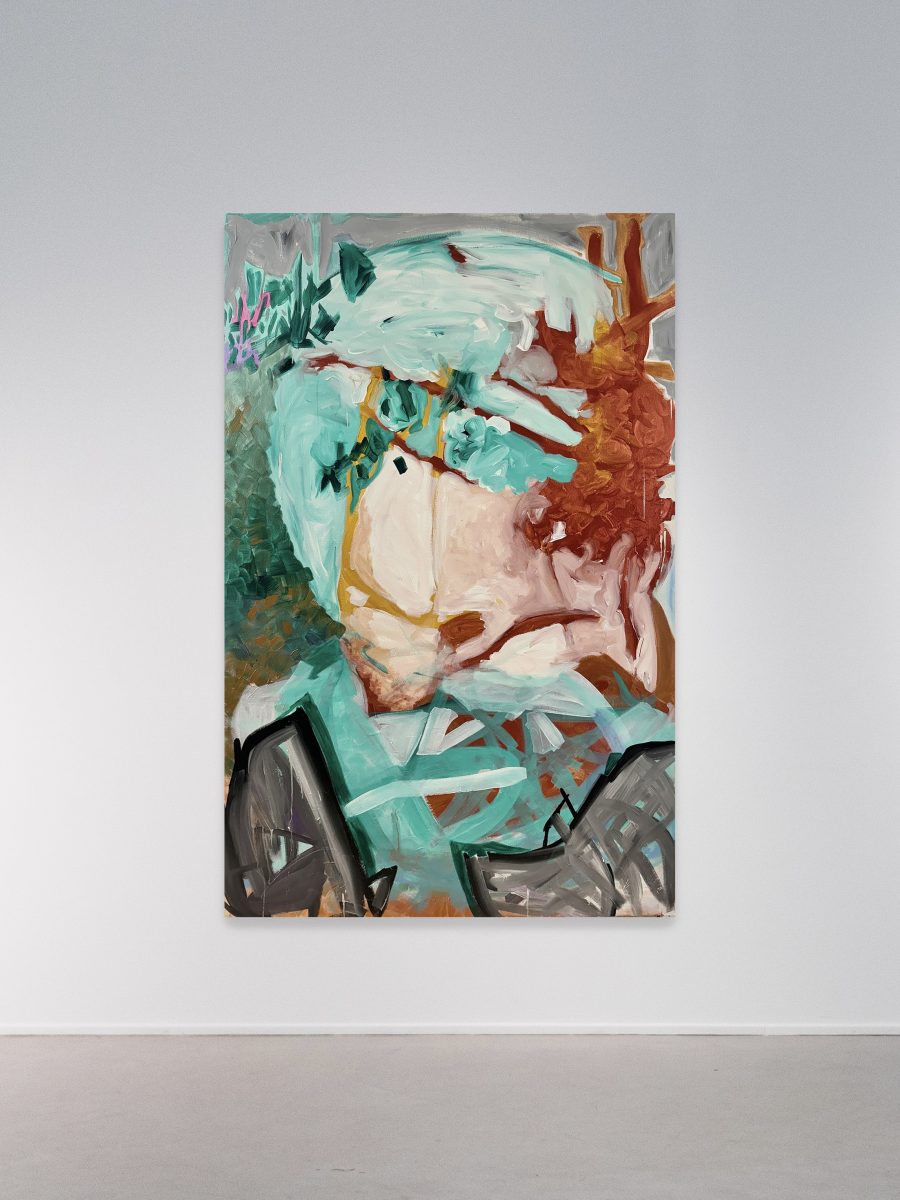
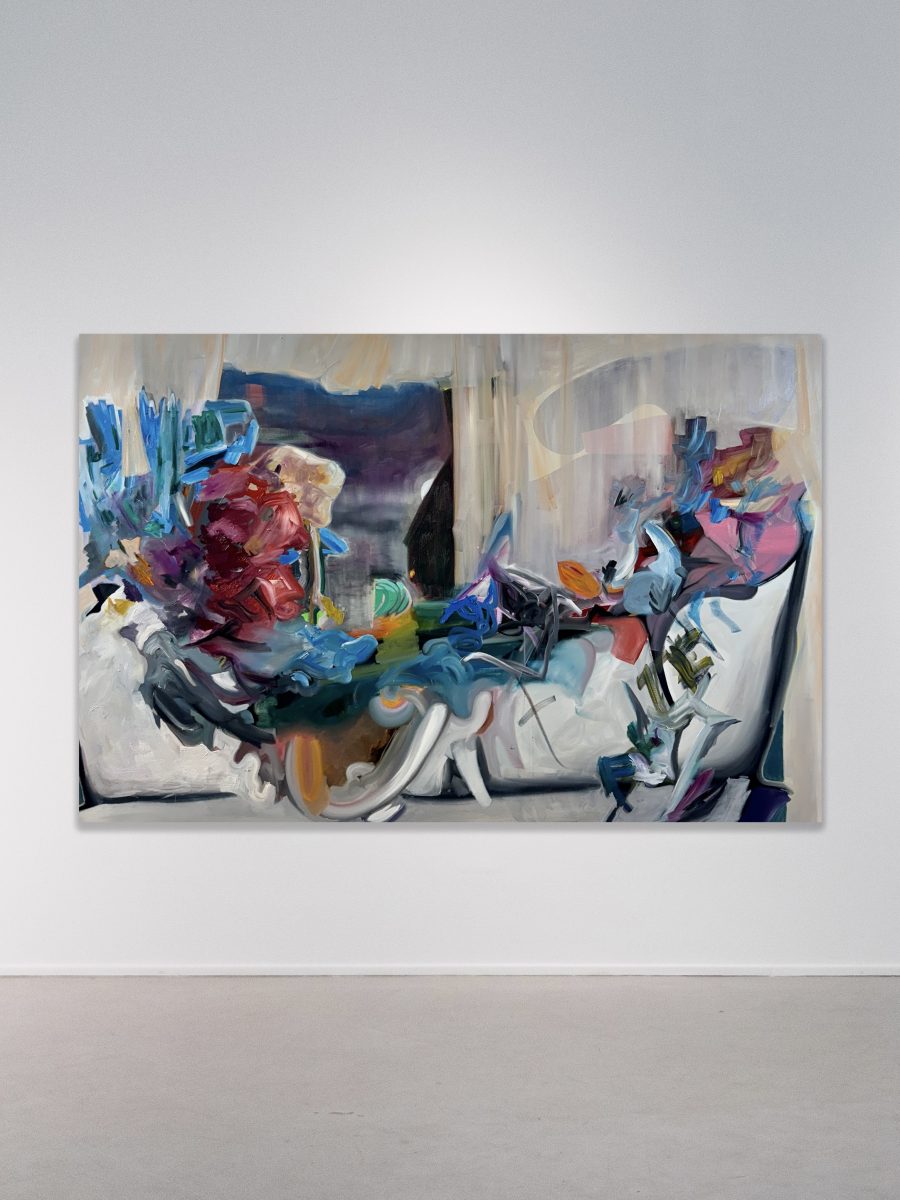
Your artistic development was shaped through mentorship rather than formal academic training. How did this unconventional path influence the way you approach artmaking today?
First of all, the way Gia (my mentor) approached our mentor-mentee relationship did not involve any discussions or instructions in terms of the technical aspects of painting. I discovered and developed my technique by myself which was a kind of creative outlet on its own. Struggling with technique by myself has been an invaluable source of knowledge and a path of self-discovery and that’s what I preferred as well – discovering what I could incorporate while painting. Gia’s mentoring consisted mostly of allowing me to paint intuitively and then verbally breaking down the work in progress, and the motivation behind my processes – conscious or unconscious. He has a way of describing what I go through while I paint so fully, so clearly. It feels like he knows what I was trying to accomplish better than even I do, at times. I would liken this process to a type of psychoanalysis, where he helps me perceive my unconscious motivations and sometimes even messages. For example, Gia referred to my previous solo exhibition as ‘post-modern baroque ’, and as soon as I read that quote, I was immediately drawn to it and became starkly aware of the fact that it described my work perfectly/completely.
He also supplied me with endless information about art and vast knowledge of philosophy. These discussions showed me a new spectrum of possibilities, a wide range of artistic paths and opportunities. Being presented with such variety, I felt more open and capable of choosing my own path, which led me to finding what touches me, draws me in and discovering who I am as an artist.
Overall, my unconventional road to becoming an artist and my mentorship under Gia’s watchful eye have taught me to trust my instincts and believe that they will hold true; it has kept me completely and utterly honest and vulnerable in my work. This relationship has also changed the way I approach, appreciate and interact with art in general. Yes, my rise to artistdom has been unorthodox, but I think it is invaluable, as that’s what made me the painter I am and kept me completely authentic to myself.
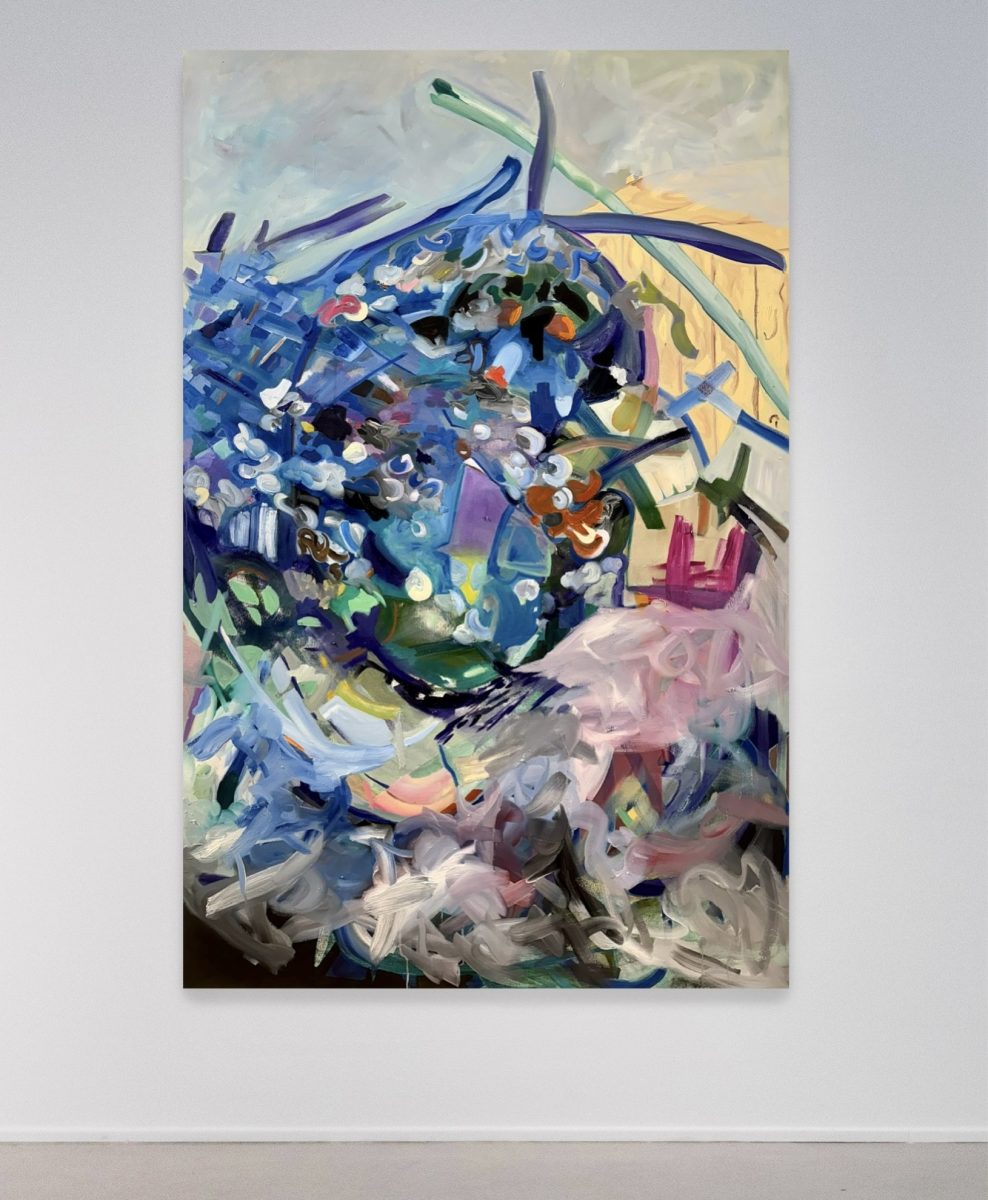
When you start a new work, what typically sets the process in motion? How do you navigate the space between intention and intuition as a painting develops?
I’m not sure there’s one specific thing that sets my process in motion. Often it’s visual inspiration of any kind – whether it’s a color scheme of a particular scene in a film, an aesthetic view outside or the way some random person walks down the street. Once the inspiration comes, I feel a sort of energy click in place within me, and I can’t wait to translate it/put it on a canvas. Or sometimes I just simply sit in my studio for hours on end, mostly just staring at a blank canvas, waiting for that click. So I don’t know, I guess I have no typical way I start painting, and I believe that that’s the most honest way to approach it – if I were to have a more ritualistic approach to painting, I think it would lead to me being less authentic.
While I paint, I completely trust my intuition as my intent sort of lingers in the background. My intention while painting is almost never conceptual – it’s mostly emotional, meaning what emotion I want the painting to evoke in me at the end. However, this intent is never concrete, and always bound to change in the process – completely depending on what I come up with intuitively. Raw instinct is the dominant force of my process, and intent changes accordingly.
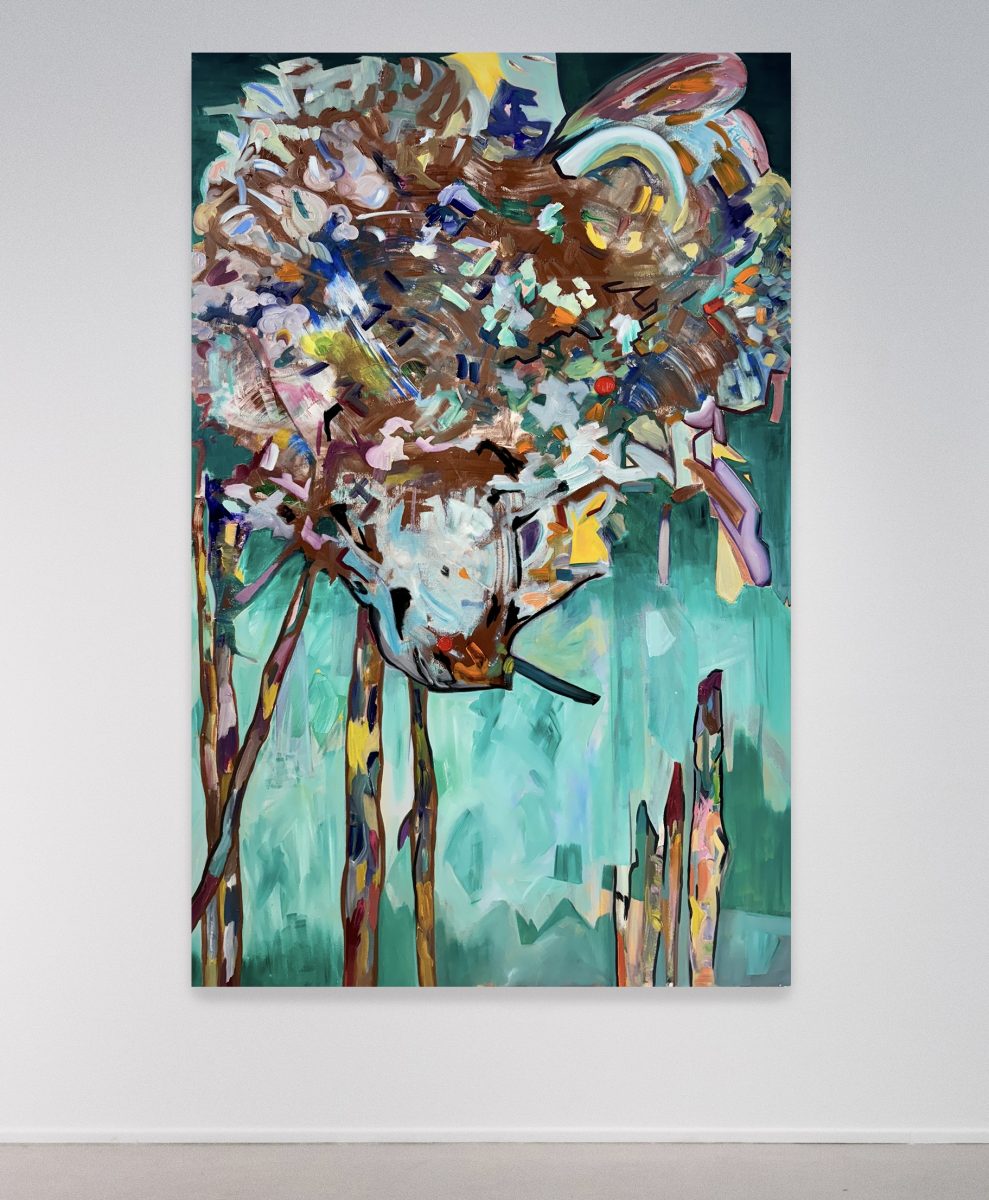
What draws you to oil paint as your primary medium and how do you engage with its challenges and possibilities?
At first, I hated working with oil, if I’m honest. I remember one time I tried to recreate my pencil sketch on a canvas with oil, and it was absolutely terrible. But I was intrigued – I took it as a challenge and became determined to master it, I guess. And in the process I fell in love with it, and now it’s my absolute favorite medium to work with.
Since I don’t paint academically and I’m not even aware of the rules of painting, let alone follow them, oil pushes me to keep searching and taking risks. It doesn’t obey easily, so you have to stay alert, and yet you’ll definitely come across something new while painting with oil. Like, with one stroke you might ruin a whole painting, and while trying to fix it you’ll be led down an alternate path and end up with a result that is drastically different from the original vision. That’s what I like about working with oil – it’s challenging, exciting and full of surprises.
Your paintings bring together portraits, landscapes, objects and abstractions in layered compositions. How do you consider balance, tension or coexistence within a single image?
To begin with, I am very unpredictable in terms of what I’m going to paint at any given moment – I might create a portrait in the morning and an abstract painting in the evening. That used to bother me a lot, because many great artists stay in a single period for some time. But I feel as if all the periods exist within me congruently and, depending on my “mood” at any given moment, one of them surfaces, and I transfer it on a canvas. So even though this jumping between the periods used to bother me, now I realize that that’s just my staple, my unique artistic expression.
When it comes to finding a balance between different aspects of art in a single image, I still trust my instincts and intuition to guide me. Sometimes I finish painting, and in that moment I understand that it is completed and balanced for what I’m looking for right there and then, and at others – I let a painting sit for days and wait for inspiration to change something that will bring it to completion, and all of the pieces will be brought together in harmony.
I honestly don’t know how else to describe this process of balancing a painting. I don’t have a set rule with which I navigate. I believe people change through time; each second brings a new experience, and therefore what might appear to me to be the right balance or intended effect of the painting in one moment might change drastically the next. So I follow these changes and modify my paintings until what I see matches my intention at that particular point. The painting is truly completed when it fully depicts how I feel in that moment, and when that occurs, it’s like the painting becomes a time capsule containing a balance that is true to that moment. I think that’s what makes a piece of art honest.
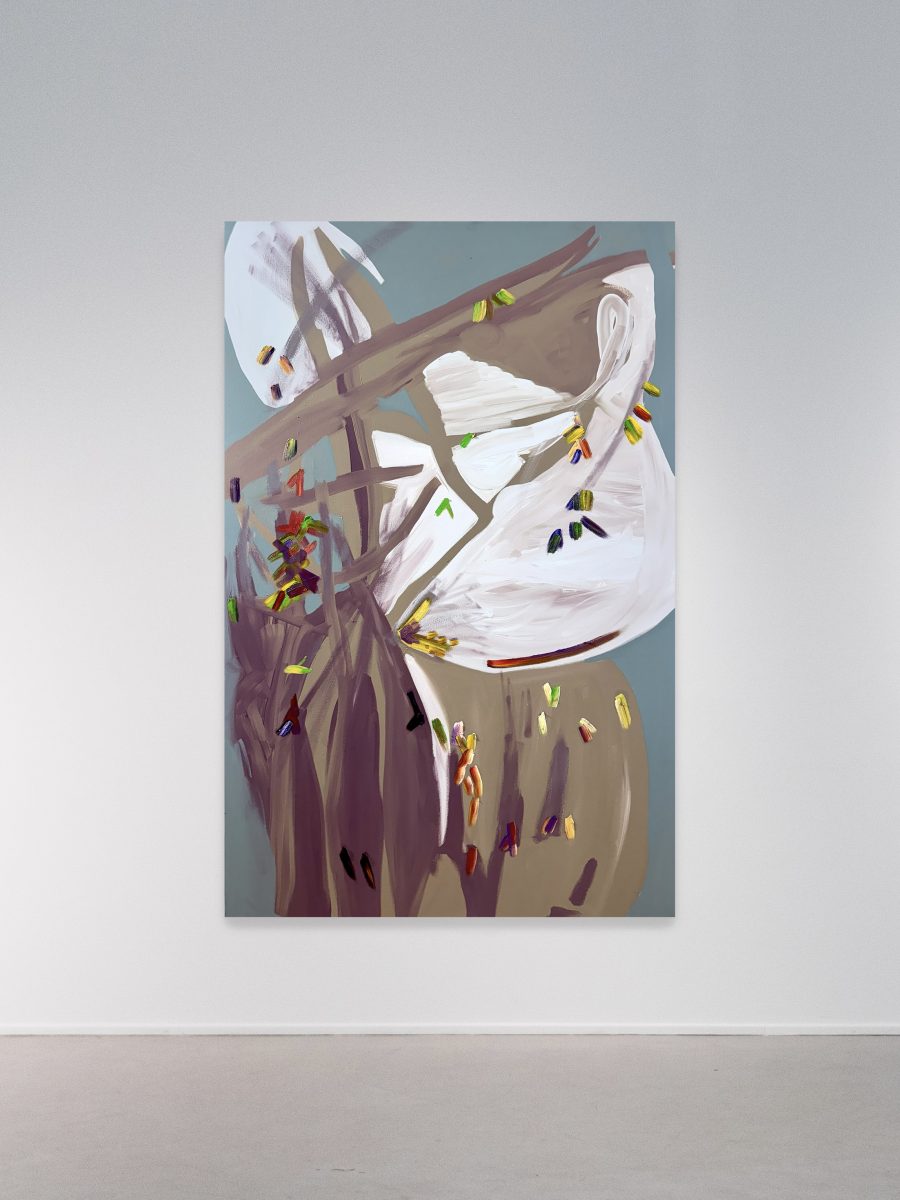
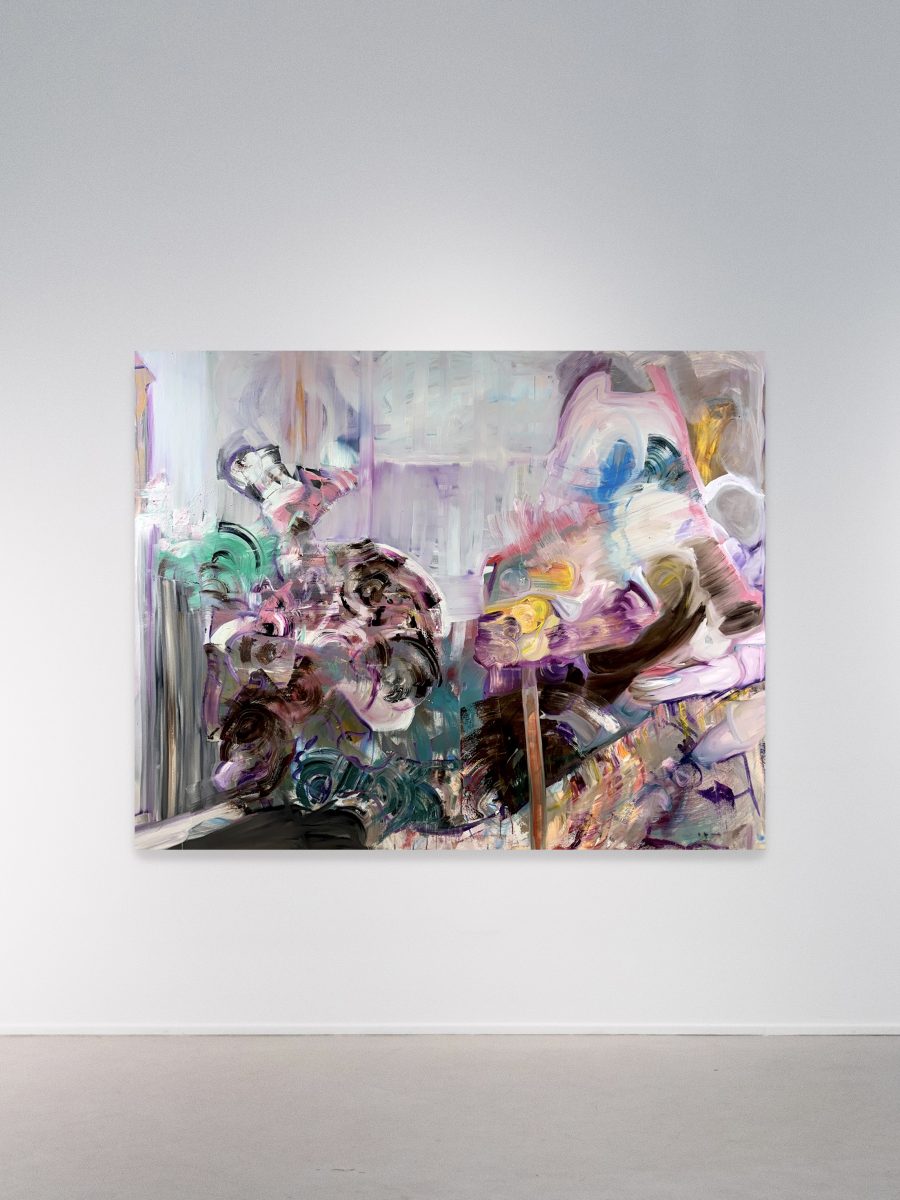
Much of your work seems to explore the relationship between past and future. How do ideas of time, memory and transformation surface in your practice?
I believe our experiences define us and our expectations, so when I paint, my work is informed by my past, but probably on a more subconscious level. I have gone through a very traumatic childhood, and during the hardest periods of my life, aesthetic beauty became my escape. I found solace in beautiful objects, and they became my friends as people in my life disappointed or took advantage of me. That’s why I love painting objects, abstract or figurative – they represent positive experiences from my past. I think that’s still the momentum I’m following now – art is a saviour, and I depict the things that have helped me escape a difficult reality.
When I paint, time in my mind doesn’t exist linearly; it flows both ways – toward the future and into the past. I feel like I’m painting a future that has already become a memory or the past that’s about to happen. I would liken it to existing in the fourth dimension, where time is shapeless, and everything happens simultaneously.
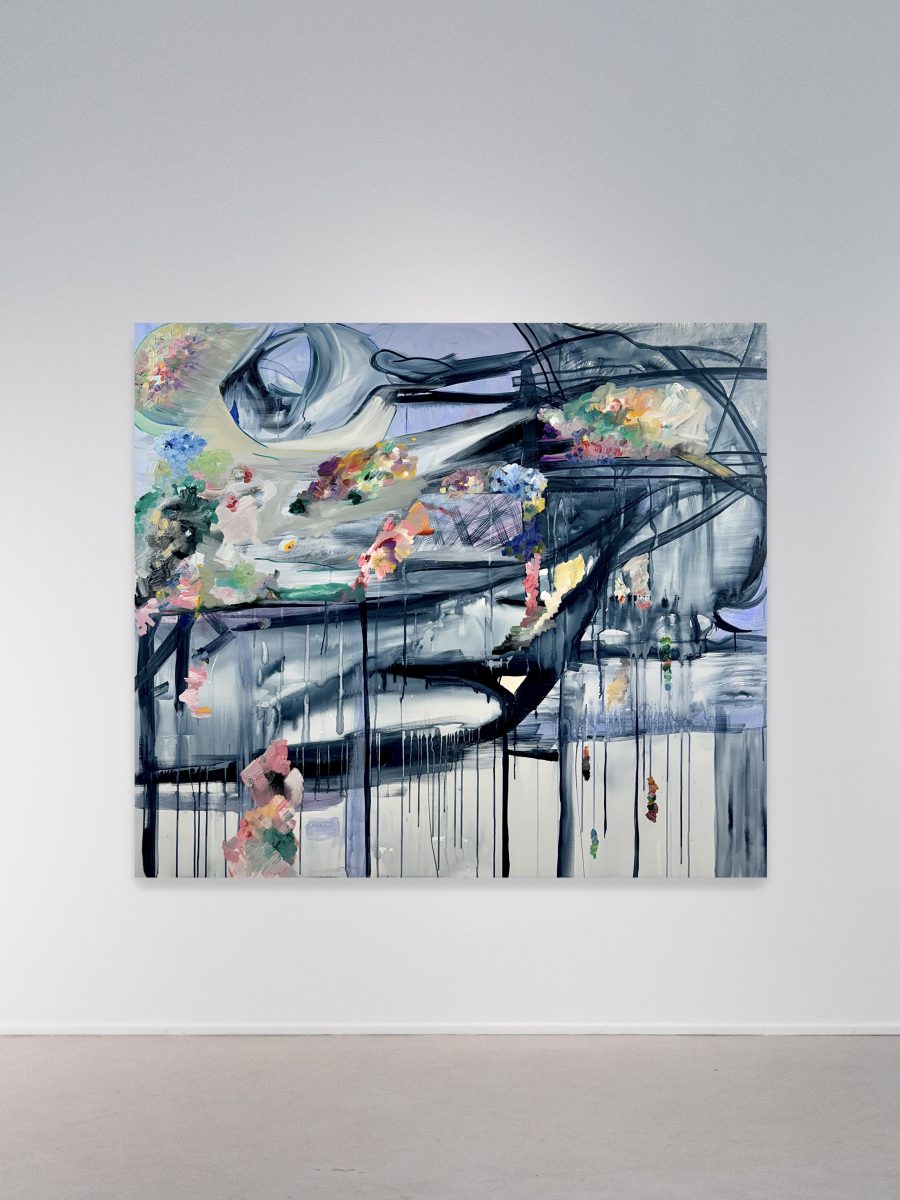
Your work embraces contradiction and diversity, rather than seeking uniformity. How do you define coherence within that multiplicity, both in life and in art?
I think people often try to fit a certain mould or image, to project an air of certainty and assurance. But in my opinion, we’re all uncertain and complicated creatures. The universe itself is full of contradictions, and when you accept it as it is, you realise that multiplicity is what we all have in common and what is the life force of our existence. When you stop trying to filter or edit yourself into a specific story, you perceive a lack of uniformity within you and all around you, and that’s what I think of as being coherent – everything has its place in the world, no matter how out of place they might appear. The trick is to listen to the universe long enough to understand that.
Art being a reflection of life is what makes it diverse and contradictory. I think art at its truest should depict the coherence of the paradoxical. And I try not to go against that when I paint. I strive to show that contradictory nature of life.
MORE: @ninka_skhiereli
All images Untitled, 2026 Courtesy the artist