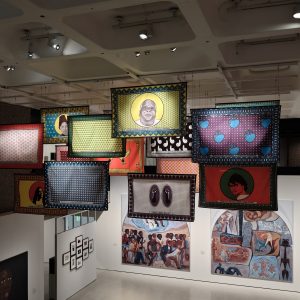
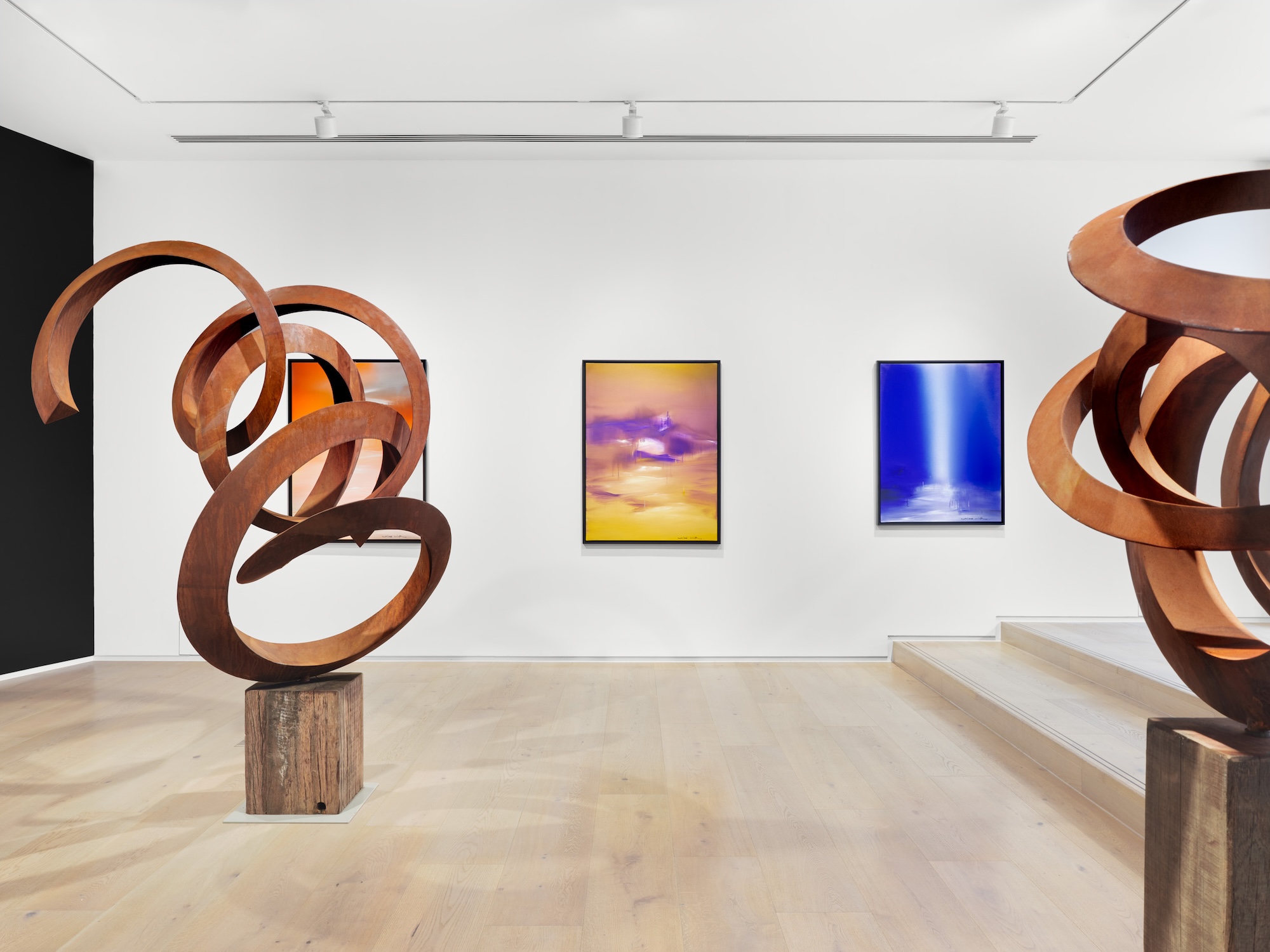
In an era where contemporary art increasingly pursues speed, concept, and productive efficiency, the work of Feng Xiao-Min and Pieter Obels feels remarkably quiet.
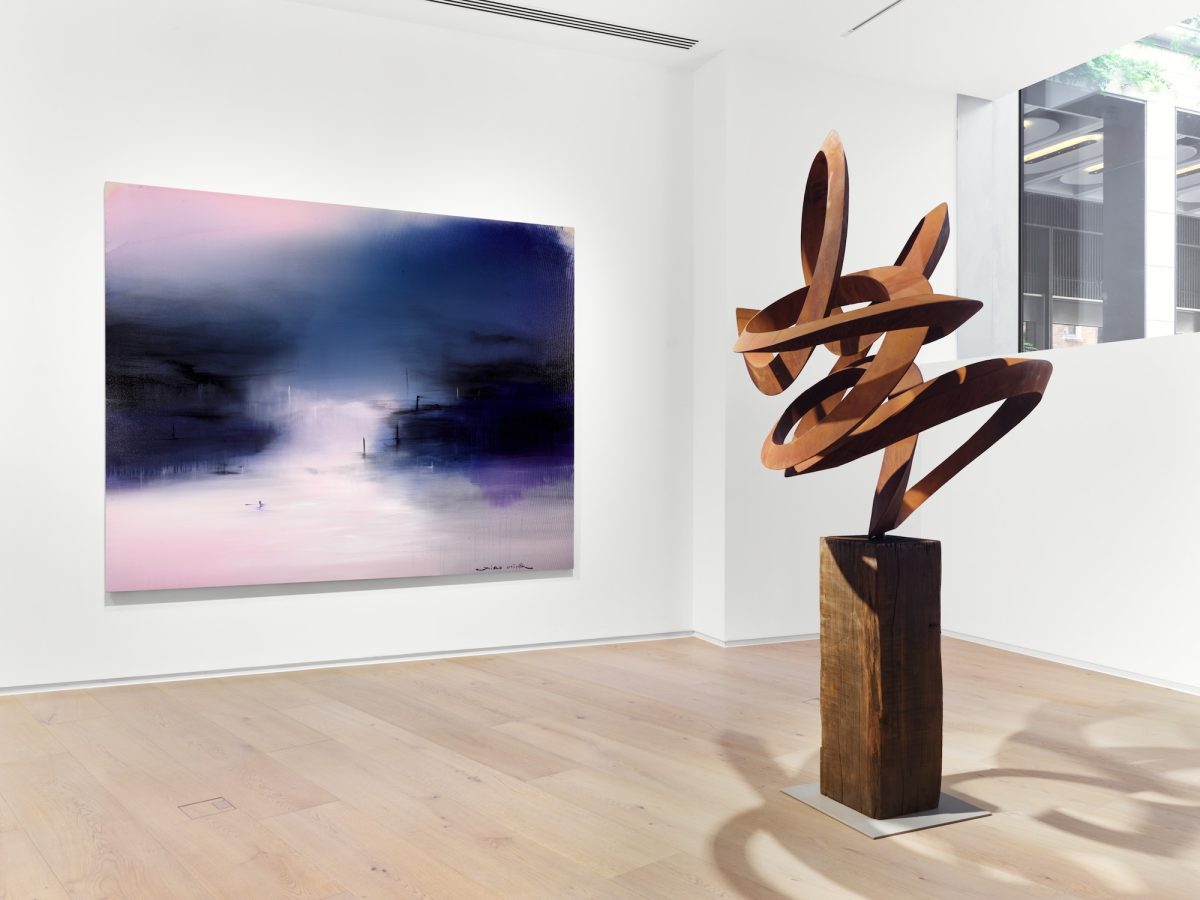
One has lived in France for over forty years, exploring light, space, and inner perception through abstract landscape; the other is rooted in the Dutch countryside, shaping organic structures in weathering steel that hover between plant growth and sculptural form. Despite their seemingly divergent cultural backgrounds and media, the two artists form an unexpectedly resonant dialogue in this joint exhibition at Opera Gallery London.
During the show, we sat down with Feng Xiao-Min for an in-depth conversation. From painting and calligraphy, emptiness and solidity, qi yun and brushstroke, to nature, time, and the paradox of “perfection” – the artist kept returning to the same question: what should art actually convey? And his answer was always bound up with feeling.
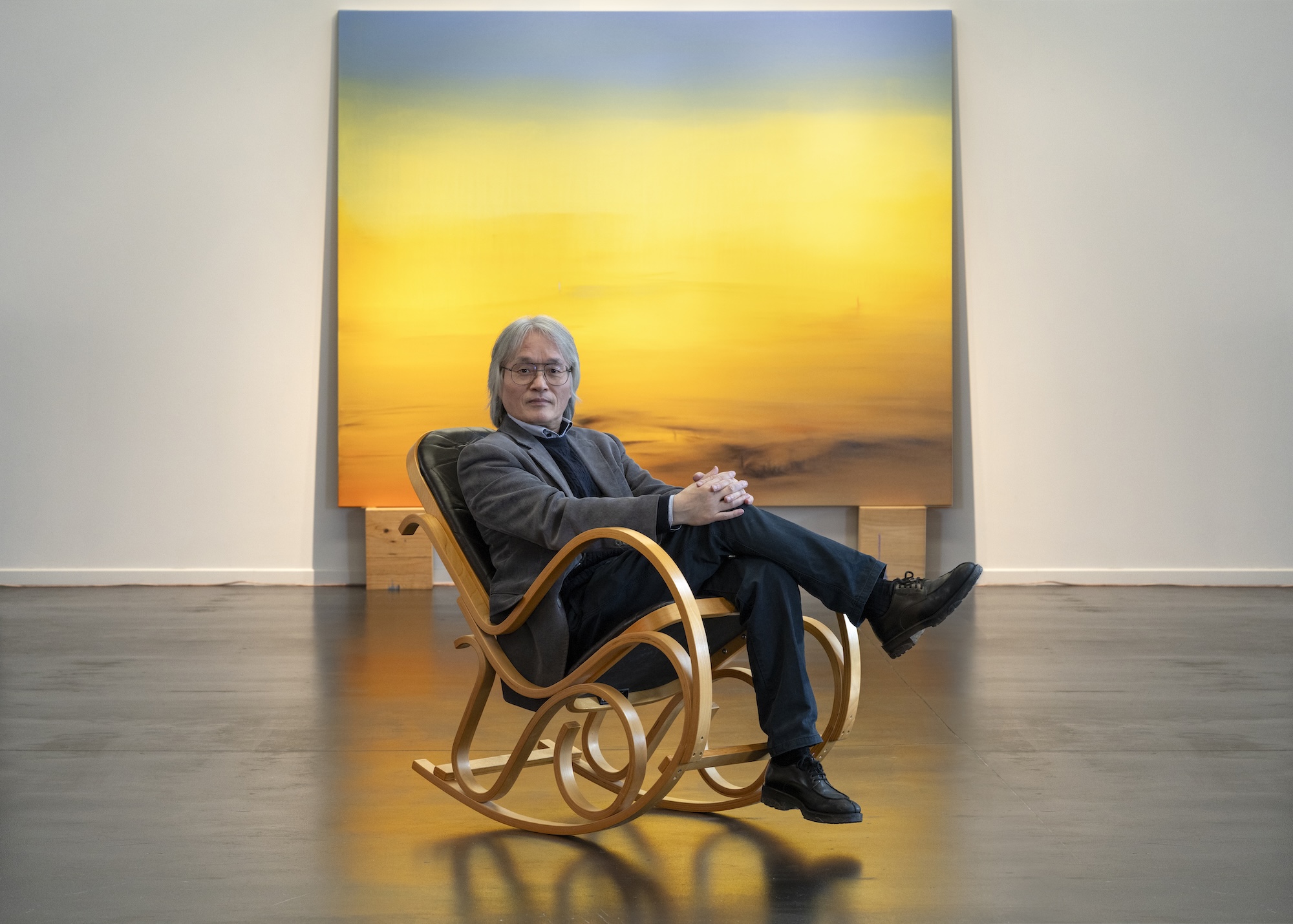
Question: How do you explain your work?
If you try to re-explain a painting in words, you inevitably lose a great deal of what is subtle and nuanced in it. Because the language of painting is a language that requires a particular sensitivity to experience – experienced through the eyes. It is very hard to articulate in words, and when you cannot articulate it, those fine details are lost.
Once someone has heard your explanation, they tend to feel they have understood the work based on what you have told them. But in reality, there is still so much in the work that cannot be expressed in language.
So what do you feel painting, as a language, is best able to convey?
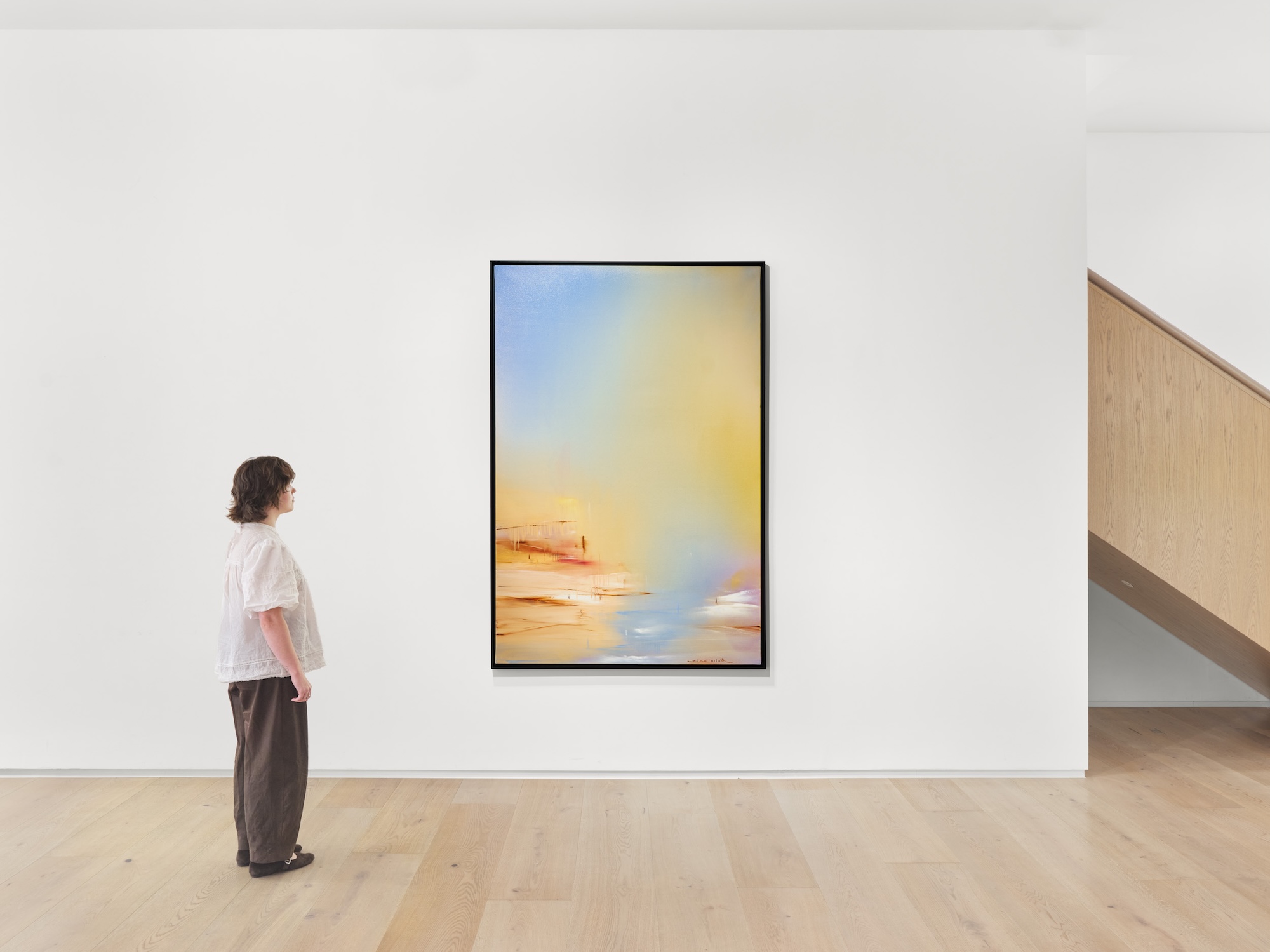
It has everything to do with each person’s experience, knowledge, and age. Some paintings speak to you and you feel something; others have nothing to do with you and you feel nothing at all. This is entirely normal. Feeling nothing does not mean the work is bad – nor does it mean it is good. It has nothing to do with the quality of the work; it is entirely about you: whether there is resonance. If there is no resonance, there is no resonance. You might understand it this way: this painting has temporarily lost its meaning for you. No matter how priceless it may be, if you look at it and feel nothing, then you feel nothing.
Can I understand this as a kind of silent dialogue between a person and a painting?
Yes. Those who can communicate, communicate. And communication, in a sense, is resonance. You need feeling before there can be resonance. It is the same between people: because there is feeling, conversation multiplies, and talking becomes more and more interesting. Looking at paintings is the same. The more you look, the more you like it; and as you slowly come to like it, you begin to see many subtle things within the painting. Things that, again, cannot be explained in words. Everyone’s interpretation is different, and what each person sees in it differs too.
Some people are determined to “understand” a painting, or want to know the artist’s true intentions, so they feel they must speak with the artist directly. What do you make of the idea of “understanding” a painting?
I think if you can become friends with an artist and have a real conversation, that is of course the greatest fortune. But most people never have that opportunity. An artist cannot possibly sit down with so many people, one by one. Each person takes a long time. If you spend every day receiving visitors, your time to create suffers.
That said, if you are a collector and have the chance to get close to an artist – to talk, to learn about their life, habits, and experiences – it will certainly help you understand their work. You come to understand their circumstances. And once you understand their circumstances, you begin to see why some artists’ canvases are very pure and clean, while others feel somewhat muddied; why some work is weighted towards black and grey, while others are exceptionally bright. None of this is a question of good or bad – it is a reflection of a person’s lived experience on the surface of the canvas. What appears in a painting is, in truth, their life.
You practised calligraphy for a long time. Personally, I feel calligraphy is a remarkably useful discipline – it trains aesthetic sensibility and cultivates the self, while its structure, brushwork, and rhythmic pauses all translate directly into painting. Looking at your work today, I sense a great deal of play between fullness and emptiness: some areas are dense and compact, others wide open. Could you speak to how you understand the relationship between xu and shi – emptiness and solidity – and between calligraphy and painting?
I think calligraphy has helped my painting in two principal ways.
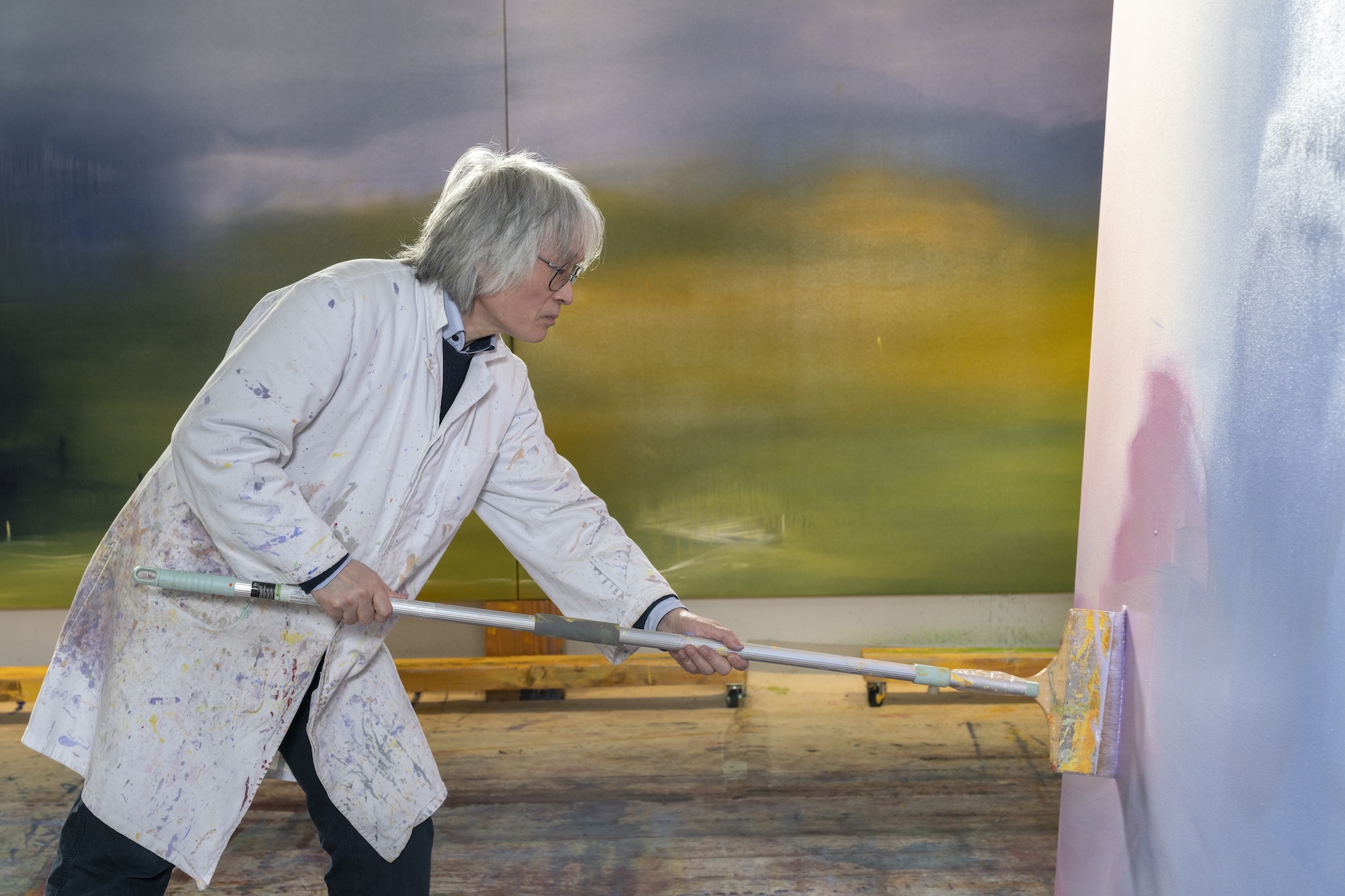
The first is control of the brush. Command of the brush is essential. How you move it, how you load the ink, how you release the stroke – all of this requires a very long time to practise. In Chinese traditional art, training brush strength is an extended process, like a pianist who must practise every day. Only after a certain level of practice do you truly reach the point of xiong you cheng zhu – having the bamboo already formed in your mind – so that you can express through the brush what you truly wish to express.
The second is command of pictorial space. Given a surface, a space, how do you manage it, compose it, arrange it? Calligraphy is deeply concerned with this. Why does calligraphy have both dry brushstrokes and saturated ones? When the brush is dry, there is a sense of lightness and airiness, yet also of force. When the ink is full, there is a sense of weight and depth. These two are in balance. If a work is dense ink from start to finish, with no dry strokes and no empty passages, it becomes monotonous. This is, in fact, connected to the Chinese philosophical concept of yin and yang. Black and white, yin and yang, sun and moon – all are relationships of balance.
The dry stroke is xu – emptiness. The dense stroke is shi – solidity.
Western viewers may grasp this less immediately, because it is rooted in Chinese philosophy. But in terms of visual experience, it is enormously important. Someone unfamiliar with the form might see a dry stroke and wonder whether the ink simply ran out. But someone who truly understands knows that without those dry passages, the work lacks the balance between xu and shi.
In the layout, the opening tends to be heavier, establishing momentum; then, where lightness is needed, it eases. This too is a form of balance. If someone writes at roughly the same size throughout, with little variation in line weight, no dry passages, no tonal contrast, the work will feel tedious. It will lack vitality, lack variation, lack what one might call ling qi – a kind of spiritual animation. This is especially apparent when looking at calligraphy. (What we are describing here is primarily xing and cao scripts – running and cursive script.)
Many people cannot say why one work is beautiful and another is not. They can only say, “it feels different.” But that inarticulate difference is precisely where the most important things live.
It seems as though the ling qi – the spiritual animation – in a painting comes from the particularly fine balance of yin and yang?
From xu and shi rendered particularly well. In fact, as Western painting developed to a certain stage, similar things began to emerge. You see many painters deliberately preserving visible brushstrokes. This is very close to the dry passage in Chinese calligraphy. A dry stroke moves across the surface and the trace of its passage is clearly legible. When I see brushwork like that, I feel a particular excitement.
So painting must also carry qi yun – breath-resonance?
Yes, I particularly love paintings that show their brushwork. Because they have more magnetism.
You mentioned Turner earlier. I’d like to know – in what way did he influence you?
Turner struck me very powerfully. First, his space. He handles space exceptionally well. The canvas has a kind of qi to it – very open, very transparent. Even in a small format, there is an unusually expansive presence. Then there is his light. His light is handled with great naturalness and ease, and it is very comfortable to look at. And he broke entirely free of the conventions of European traditional painting. Whether depicting clouds, air, the sea, or natural phenomena, he always managed to paint a great sweeping qi yun – a breath-resonance that is in motion.
People who have not studied painting often assume that “looking exactly like the subject” is the highest achievement. In fact, in the early stages of training, likeness is mainly about resolving problems of visual structure: how do you handle space? How do you organise what is in front of you into the picture plane? What angle do you choose? All of this already reflects your level of understanding. Why is it that given the same scene, one person produces something extraordinary while another produces something ordinary? Because the ability to select a viewpoint differs. Photography is the same. The masters often prevail through a unique angle. Ultimately photography comes down to two things: first, framing; second, the light source. The master finds an unusual angle and also handles the light well.
Does your work fall into different series? Different weather seems to influence your palette.
It does have an influence. But that influence is very hard to explain in words. Much of the time you do not even know it yourself. It is a natural response. The light in winter is weaker, and the days are short. In spring it begins to brighten. Summer is the strongest. Then in autumn it gradually fades again. Each season’s light is different. And the human senses and perceptual system respond to these changes naturally. Just as when it gets hot, you naturally reach for lighter-coloured clothing; when it is cold, you tend towards deeper tones. These are all natural responses.
That sense of relationship feels very much like the connection between heaven, earth, and the human being. Could you go deeper on how nature acts upon the work of making?
As you continue to create, you gradually come to understand something. When I was young, I pursued perfection intensely. For example, if I painted a line, I always wanted it smoother than a machine could produce. I would work at this corner, touch up that edge. But by the time you feel the line is at its most perfect, in truth that line has already died – because it has lost its life.
Later I slowly came to see that sometimes too much perfection is precisely imperfection. Very often, marks that form naturally within a painting – you should allow them to exist. Because sometimes, nature itself is helping you to create. The fusing of colours, the accidental changes that arise as the brush moves – these are not things you can entirely control. This is what it means to be in a state of tianren heyi – the unity of heaven and the human.
You can never paint an absolutely controlled line one hundred percent of the way. Since this is so, do not be attached to it. Paint according to your feeling, and leave the rest to the materials, to time, to nature. Sometimes the result will exceed your expectations. If the effect is strong, it shows your foundations have arrived; if not yet, then continue to paint.
When I was young, I always wanted to reach a certain height quickly, wanted to achieve perfection as soon as possible. But because my experience was insufficient and my time was insufficient, I could never reach the perfection I imagined. The more I pursued it, the more I was disappointed. I later came to understand that this is a necessary process.
So when people ask me how one should learn to paint, I say: keep painting. Many things are not taught by others but are gradually understood through your own experience.
When I was young I never thought a simple painting could be hard to make. I always thought a canvas packed full was the most impressive. Later I came to understand the opposite: filling the surface is easy; achieving openness and spiritual lightness is the hardest thing of all. When your capacity for control has not yet arrived, painting sparsely will simply look unfinished. But in the hands of a master, it is entirely different.
Look at the work of Bada Shanren. Perhaps just a few blades of grass and a single bird, with the rest entirely white space. But the force of it surpasses a canvas filled with an entire mountain. It is deeply comfortable to look at. This is a high order of achievement – and among the hardest to reach.