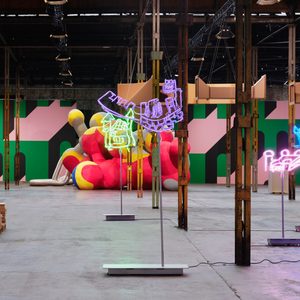
Art is one of the ways in which we are able to comprehend the world that surrounds us. It lets us perceive in a certain way, through certain eyes and through specific sensibilities, giving new shapes to things that are universally seen but individually experienced, with the aspects of life and nature transitioning from concrete to malleable, all through the mercy of the artist’s vision.
This intersection is where we can find the works of chilean filmmaker and visual artist José Cárdenas. Currently based in London, his artistic research gravitates toward finding connections between nature, memory and spirituality, with a multi-disciplinary approach that traverses through installation, photography and digital imagemaking, being able to craft immersive audiovisual experimentations that submerge the viewer into his visions.
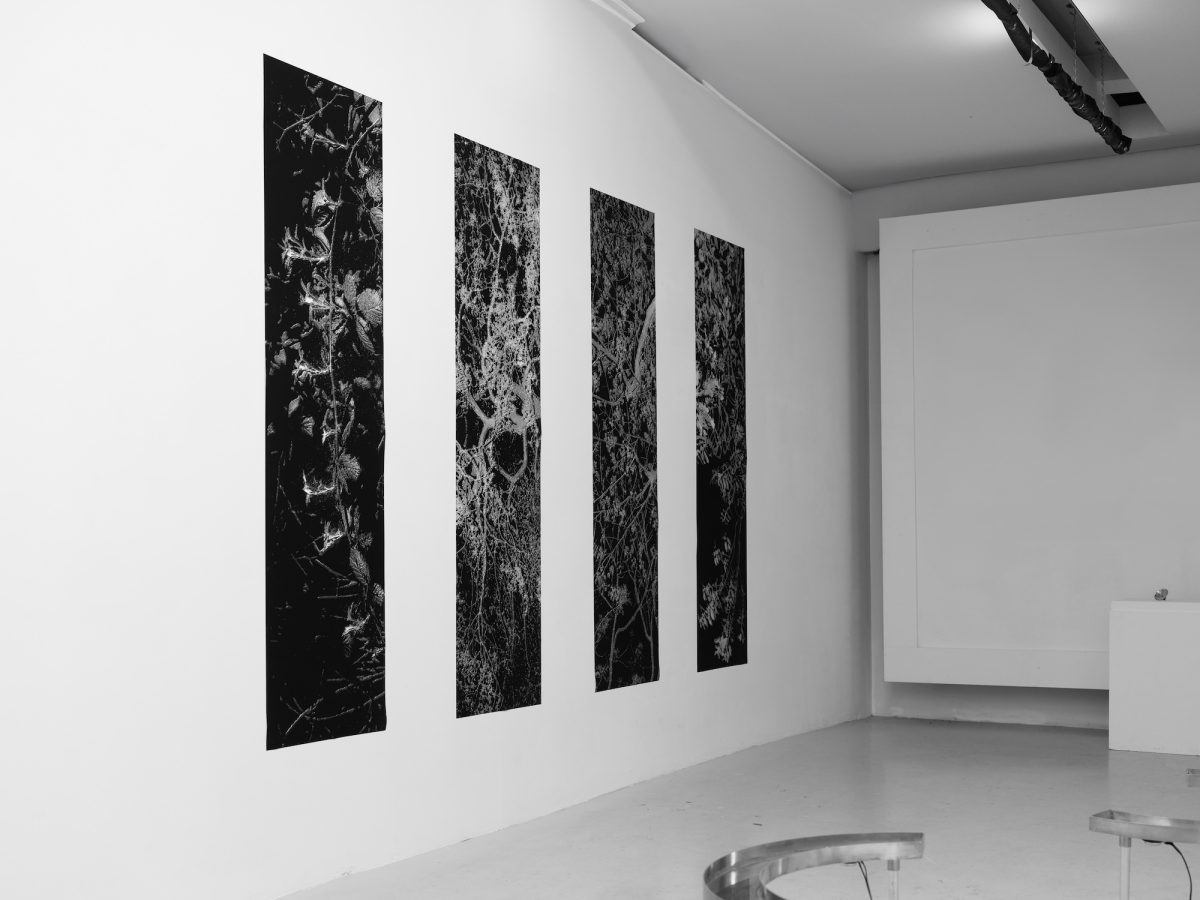
Cárdenas’ pieces represent some prime examples of the transformative instrumentality that’s contained within art and its many mediums, with him developing a series of pieces that intervene nature in a non-invasive way, rearranging its many elements through image and sound to create audiovisual landscapes that feel transmutated and post-human, remitting us to a decomposing yet ever-changing world.
In a triad of technonatural explorations made by the artist throughout this year, we stumble upon complex visual exercises that are painstakingly mediated by the use of technology, capturing and transforming not only what we can see but also what we hear and feel, distorting the senses of the viewer in a way that doesn’t feel plainly artificial but instead eerily palpable and enveloping, at times teleporting us into an uncanny world where everything has been seemingly altered yet it feels all-too-familiar.
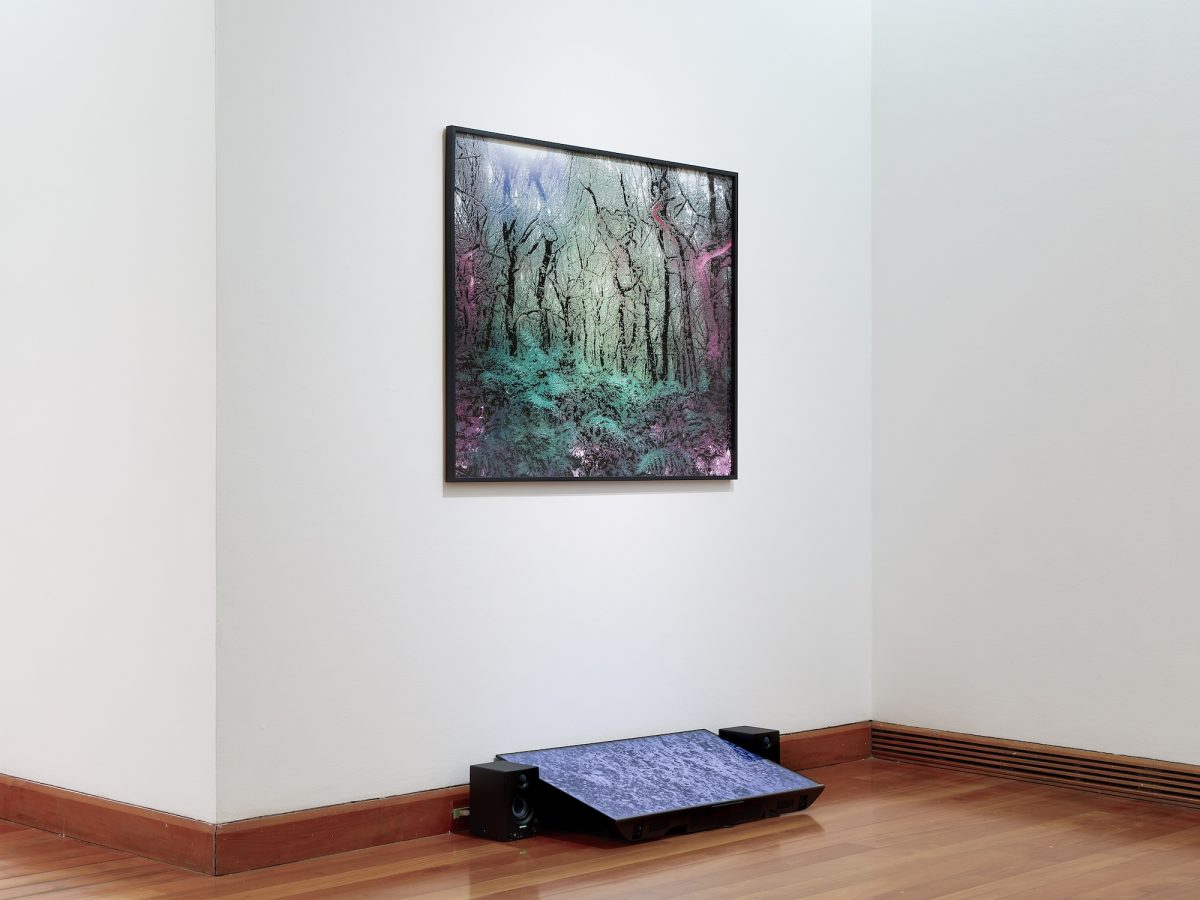
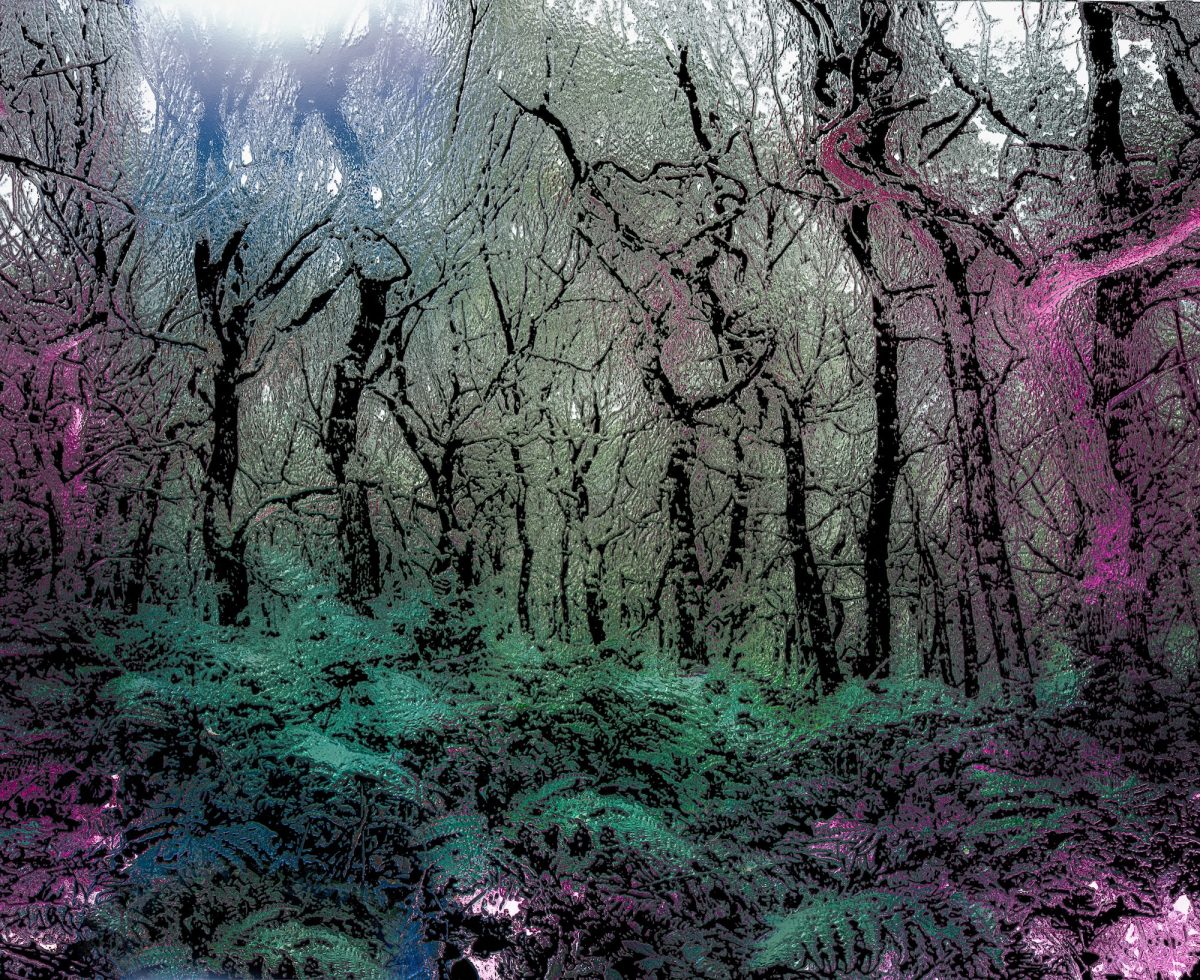
Inside the Mercurial Landscape Series (2025), for example, it’s possible to find this sort of mechanical interjection of the sublime image of nature, depicting digitally-altered photographs of one of the last remaining temperate forests in the United Kingdom.
This scarcely witnessed, alluring naturalistic sight gets drenched in iridescent colors and visually artificial distortion to create a scene that, despite its dreamlike nature, inevitably reminds us of human intervention. The altered images get coupled with a soundpiece that ominously rearranges field-recordings of the forest itself, as if it were its own voice heeding a warning call to not get too deep inside, to stop harming it before facing the consequences.
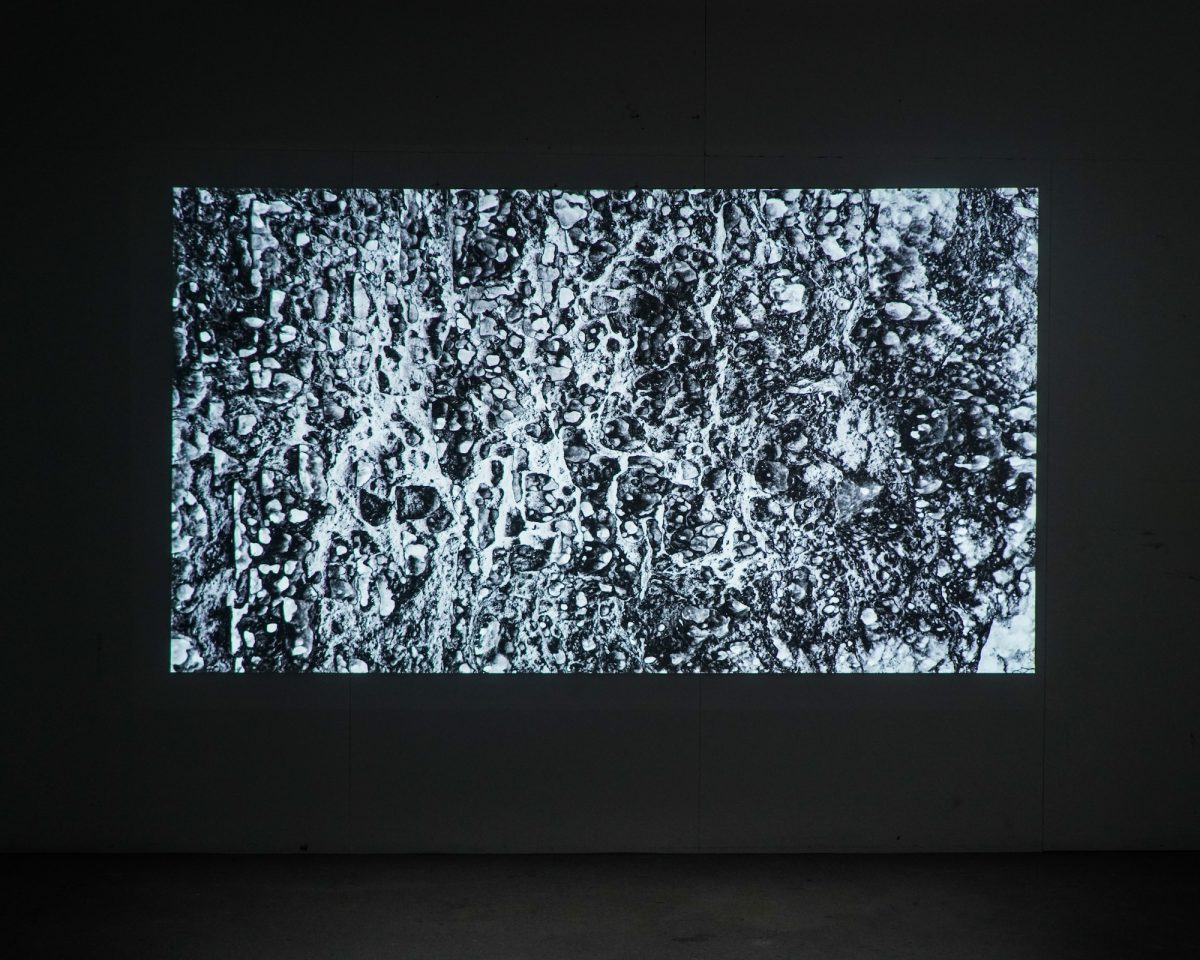
But the everlasting change of our earthly surroundings does not always come from human intervention but sometimes from nature itself. That’s where the video-installation A Body of Land (2025) transports us: into an intricate and mesmerizing image that reveals the millenary change that occurs during the formation of shale rocks. Its shifting, entrancing visuals lets us immerse ourselves in this shapeshifting process, connecting our gaze to the geological transformation exerted by nature. We are surrounded by an accompanying soundscape composed of digitally altered recordings of the sea—an array of distorted, eerie sounds of waves endlessly crashing along the shores of our planet, changing it perpetually in ways beyond terrestrial control.
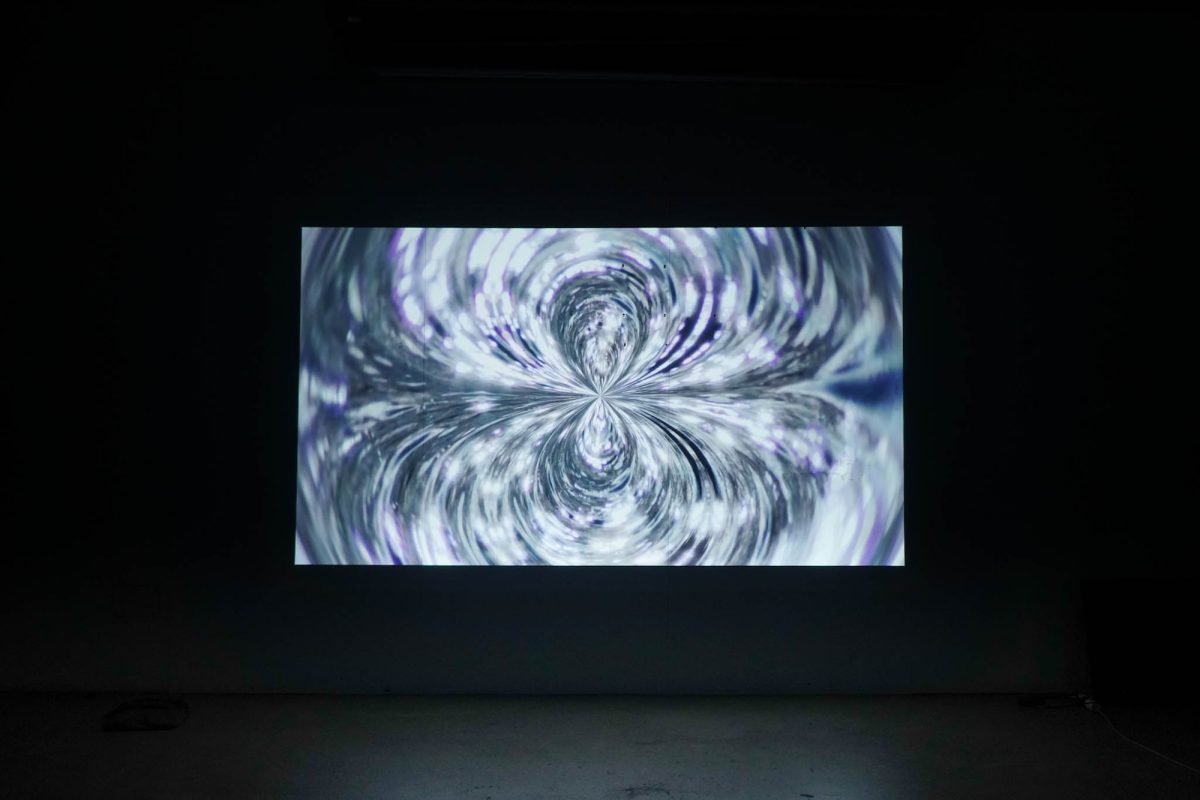
After traversing through the vegetative land, landing upon the eroding ground and then trapped against an engulfing sea, one can’t help but look up into the sky and just wonder what’s there above all of it, staring down from a seemingly infinite ceiling. The monolithic piece Inti (2025) serves as a monumental glimpse into what hangs over our earthly existences.
Titled after the Inca sun deity, this experimental film blends the material visuality of our closest star to develop a hypnotic trip toward it, at first injecting the eyes of the viewer into an undefined spiral of blinding luminescence, disorientating just enough so we are suddenly hit by the magnanimous image of our sun; the one that we were looking for through all the shimmering lights, dazzling as always. The sound design present in the piece, composed of magnetic recordings taken from the star itself, get manipulated into something reminiscent of a whale song, a kind of mermaid serenade that urges us to look for it, to follow it frequency deep into its realm until we find it, endowed with a sentience that’s beyond our comprehension, amplifying the notion that we are being summoned by a deity. This magnified representation ends making all the more gloomy and heartbreaking when we start to slowly get away from Inti, watching and hearing it recede into the distance, depriving us from its light until we’re left with just cold darkness and empty silence, nothing else.
What these pieces ultimately display is a symbiotic form of representation: a communion between nature and technology in pursuit of multilayered and palpable art, one that is as organic as it is synthetic. What José Cárdenas achieves through his work feels like an acute response to our current landscape and the way we perceive it: the over-artificiality, the disconnect from our surroundings, the increasing disregard for what is real, for what we can truly touch and feel. There is no way back—primitivism is a lost battle—but moving forward should not necessarily mean techno-dystopia nor a cybernetic pseudo-reality; there must be an in-between point where technology can intertwine with our natural surroundings, providing new ways to preserve, resurrect and amplify them, eventually allowing for an eternal communion.
All that may be far fetched for now, but this is the art that gives us a grasp into what’s possible.
MORE: @jose.crd.l