

Entropy / Noun
1. a measurement of the energy in a system or process that is not available to do work 1 2. lack of order or predictability; gradual decline into disorder. “The crucial thing about entropy- it always increases over time. It is the natural tendency of things to lose order. Left to its own devices, life will always become less
structured. Sandcastles get washed away. Weeds overtake gardens” 2
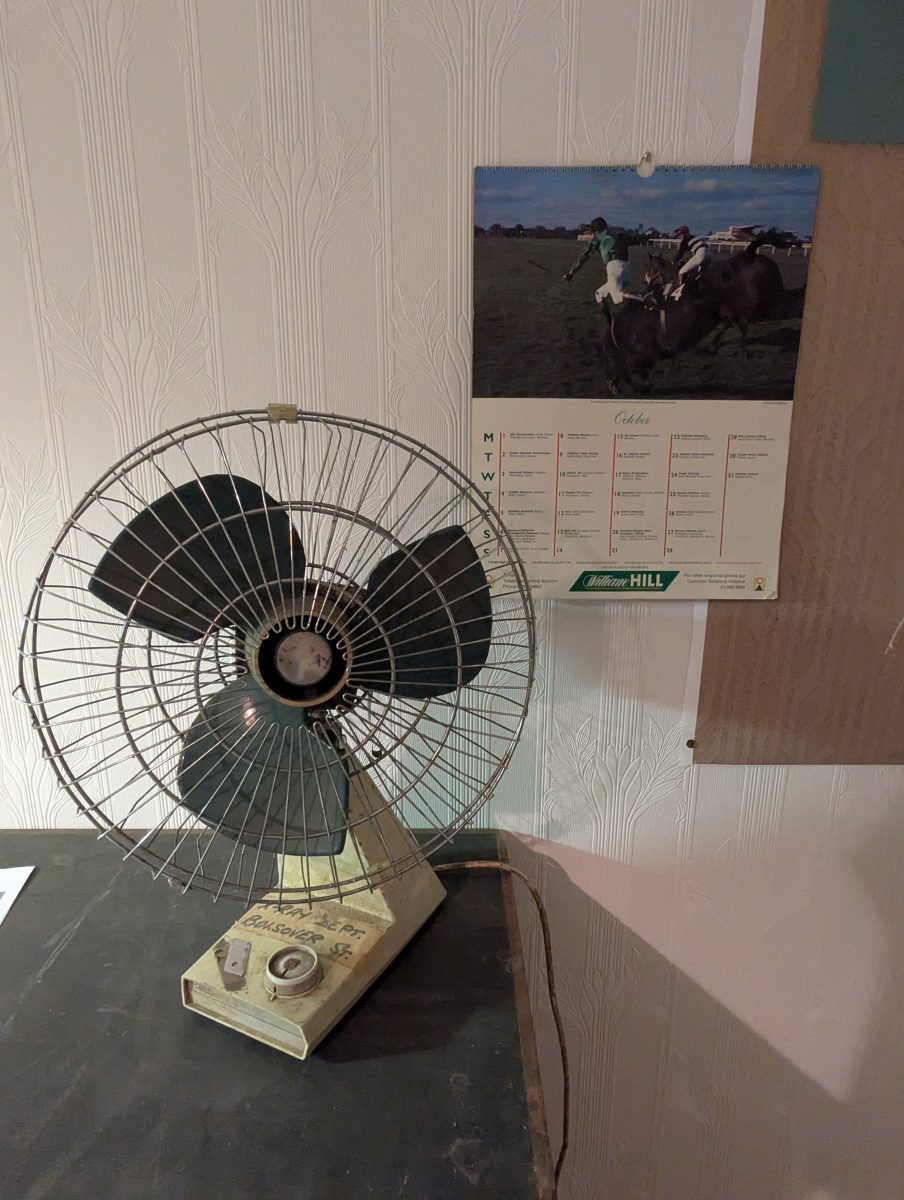
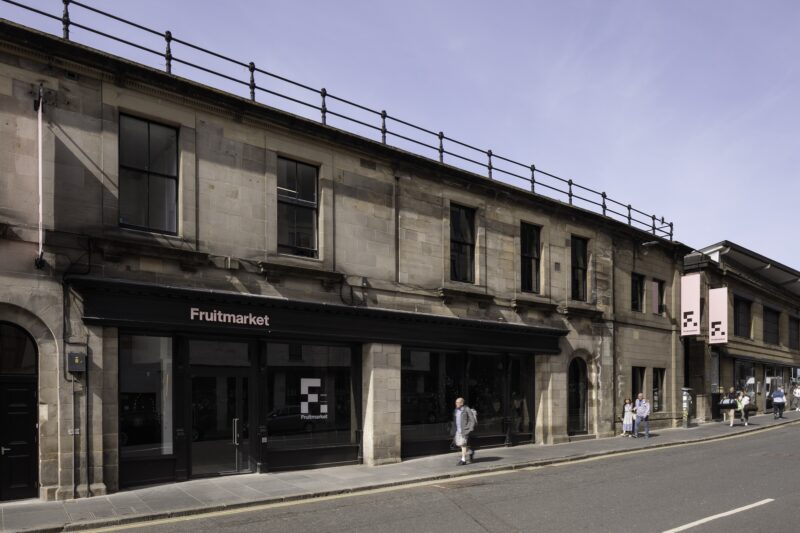
In this unprecedented time of change and turmoil perhaps we need to embrace entropy? Perhaps we need to pause and let things be washed away, slow down and let the weeds take over? Synonymous with immersive installations, Mike Nelson recently spent two months in homage to this decay; in an act of service and love to the entropy of a block of South London flats. In a “reverse DIY” 3 feat, Nelson has created a hauntingly familiar work, Humpty Dumpty, a transient history of Mardin earthworks, low rise, at Fruitmarket gallery in Edinburgh. The exhibit, which coincides with Edinburgh Arts Festival, then comes full circle and counters with the inquisitive exploration of the rebirth of a South-Eastern Turkish city, Mardin.
If you grew up in the 70s-90s, in a British council house, Low Tide is akin to attending the funeral of a former life. I’d suggest you start your journey here, in the upper gallery and Warehouse, where Nelson sensitively captures the gritty detail with nostalgic reminiscence, of the now extinct, Heygate Estate, through photography, sculpture and installation.
Life-size documentation, come sculptures, dominate the upper gallery. Interior and exterior scenes ubiquitous to run-down, concrete housing estates around the country are showcased and transformed into 3D works with Nelson’s scavenged and reused materials- providing a rich textural language of his own work alongside patinaed architectural features. Incongruous 80s arcade machines also form parts of these sculptures, the technology and aesthetic of these pieces not quite matching the decaying beauty of the wooden beams or the flaking deterioration of salvaged metal but a genre marker of an era none-the-less.
The scale of these works (printed on a machine, specifically sourced from the same era as the building) give them transportive powers. I feel like I could walk up the well- worn stairs, I almost feel the threadbare carpet underfoot, the invasive presence of beige- the tiles, the carpets, the wallpaper, the curtains- feels so recognisable I can almost hear the hiss of the open grill in my mum’s kitchen. I smell and could reach out to her infamous chip pan entombed in grease. Stepping into Nelson’s work is like inhabiting a memory and I am flooded with flashbacks of pink velour pyjamas and anaglypta wallpaper.
There is also a distinct evocation of wistfulness in this work. Stairs are embellished with festoons of work lights and torn lanterns from bygone celebrations. They are littered with evidence of lives lived: crisp packets, frayed t-shirts, chipped paintwork, fag-ends and mould. The guts have been ripped out and homes have been left to slowly die.
Continuing this mournful trip through Nelson’s exterior photos, the audience are invited to trespass through scrapyards of rusting hubcaps and abandoned garages. Ironic graffiti claiming this failed utopia as ‘Home Sweet Home’ jostles with the palpable coldness of the giant textured slabs used to hastily construct the tower blocks. We see behind the scenes of the concrete- in excavations of pipes and clipped electrical cables and the monstrous claw of a digger making way for ‘progress’.
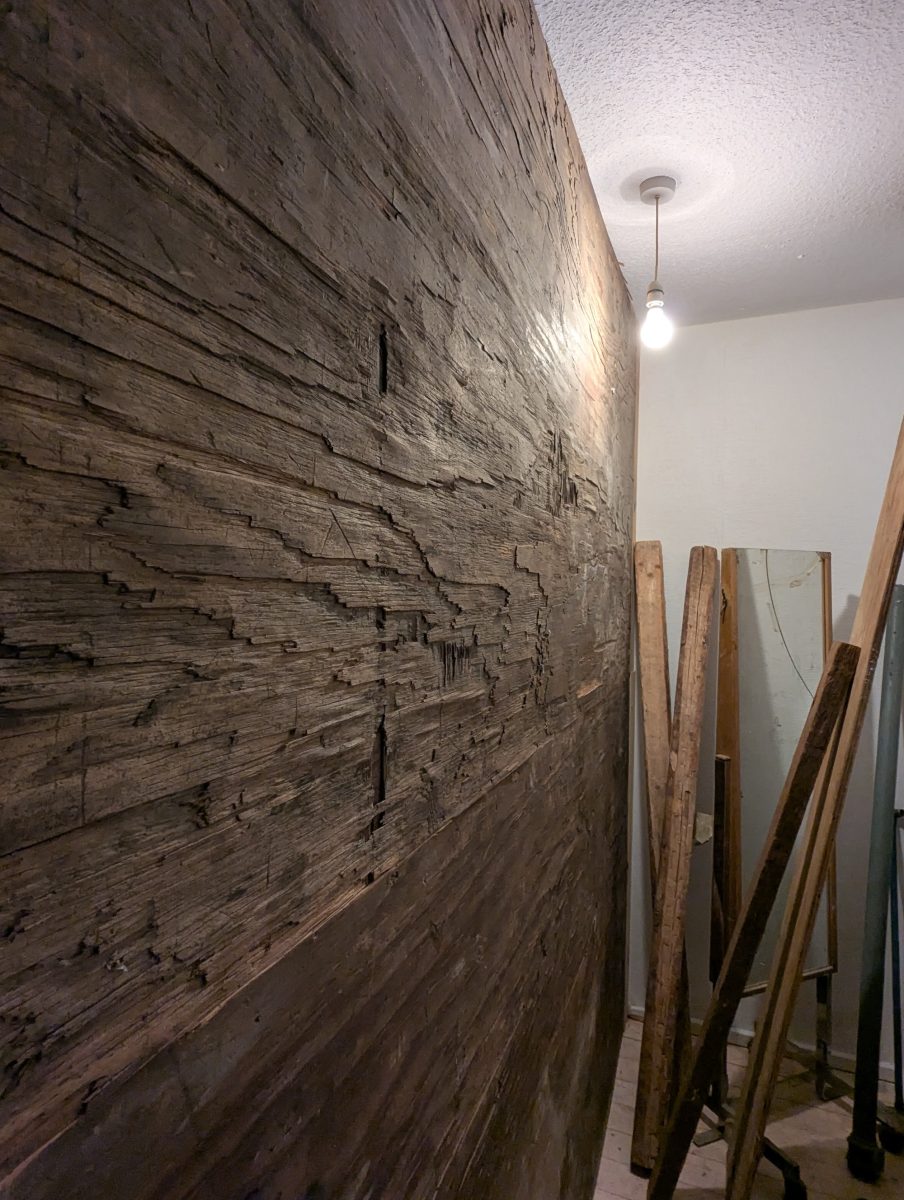
If these photos don’t help you inhabit council houses of the 70s, just make your way down to the warehouse where you can physically enter a scale replica of one of the flats Nelson visited. Despite it being a replica in shape and size Nelson has cobbled together this building and it’s contents from all corners of the earth. Suggesting perhaps that decay and entropy are a universal experience? Or just embracing the beauty and texture of found materials?
Apprehensively, I enter through an ominous metal security door (from New York), scrawled with graffiti tags, which creaks and then slams behind me. Instantly, I leave the gallery, and I am consumed by contrary feelings of both home and anxiety. The bones of the place creak as I explore the crumbling façade and damp innards of this building steeped in a melancholic fragility- it feels as if it could disintegrate at any moment. An unfettered harsh light from a bare-bulb and the flicker of a strip light highlight the Matrix-type glitch of this construction, of a construction, within a construction and expose a bookshelf cleared of life but layered in grime.
The shuffle of my feet on barren floorboards is the only sound in this seemingly deserted place, which only serves to underline the feeling that I shouldn’t be here. I am witnessing something I shouldn’t, and it is both thrilling and terrifying.
The chipboard walls and chipped doors are laced with roses of mould, and the proverbial stench of damp concrete is pervasive as I try to readjust my vision to the darkness lingering through the kitchen window (from Nelson’s own house, I’m told).
An expansive building site of rubble and abandoned builder’s buckets surrounds the ‘house’ and it is testament to Nelson’s vision that it’s almost impossible to remember that I am in a gallery.
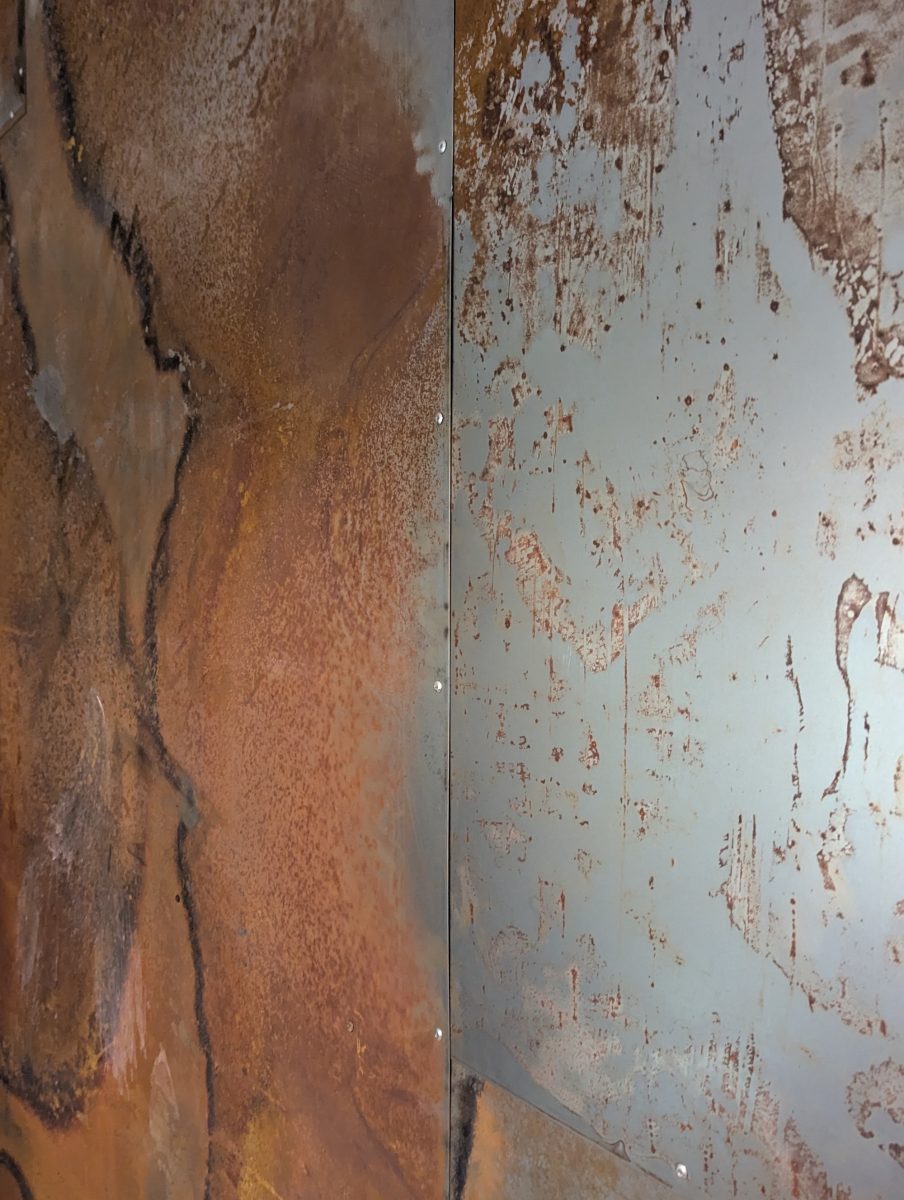
There is of course an ugliness and revulsion in this place but there is also a gritty beauty in this life left to its own devices too. Maps of rusty continents claim territory on metal panels, vivid Verdigris green coats old copper pipes (not a Farrow and Ball paint chart in sight) and the ‘decorative’ glass panels refract light from within the building. And again, this work ignites recollections of nights spent wrapped in a duvet, huddled against a radiator in my first flat in Glasgow.
Transposed onto the now decomposing relic, and my own reminiscence, are residents, a community “decanted” to far flung corners of a sprawling city; the ghosts of kids scrapping over toys, tv dinners, loving, screaming, life and death. The thought of this loss and diaspora rips my guts out- this community’s loss is a loss and a grief for the audience too.
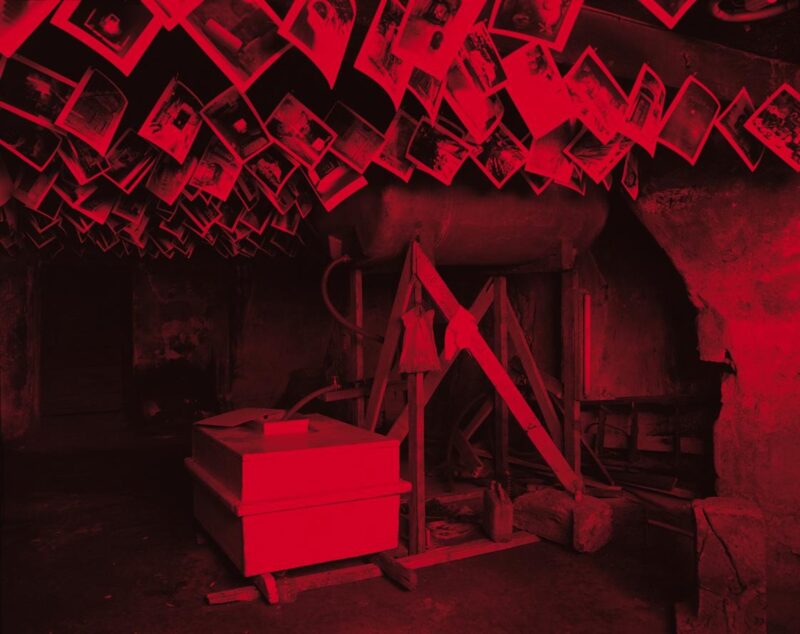
And suddenly, out of nowhere, I am confronted with nests of photo cuttings, misprints of giant photographs and the huge obsolete printer that was used to create the photos upstairs- have I taken the red or blue pill?- I can never remember which one is reality. But reality it is. Nelson reminds us that this is a construction. Now we see a print-out of a construction, inside the construction of a construction, inside a construction- the layers and levels are complex. It’s a bit of a mind melt but Nelson is
reminding us that this is a spectre. This is a memorial to a place and time that no longer exists.
This could have been voyeuristic poverty porn, but Nelson so obviously cherishes this place and his work is so obviously a love story and eulogy to a life and place that has been lost. An outpouring of grief for a place that can never be put together again.
As if this weren’t enough Nelson provides a counterweight to this decay and loss. A salve in the form of A transient history of Mardin earthworks, consoles us that while decay and destruction are inevitable there will also be rebirth and growth. Of course, as Nelson himself points out, regeneration is never straightforward and the politics and agenda behind this is never clear but birth whatever its motive is still birth. The work includes an annotated map (creased with use and life) of the earthworks 4 and photos documenting Nelson’s wanderings around a city in a phase of regeneration- the excavations, the rubble, the pipes and cables. Subverting tradition, Nelson has dared to hang the work at waist hight but instead of making us peer down on these urban landscapes, tiny benches, built from reclaimed wood, invite you to investigate the streets and life of a city in upheaval at a slower pace- for me the dare has paid
off.
At first glance, these scenes could be warzones or demolition sites but on closer inspection these perfect mounds and pits- earthworks – are too pristine, too premeditated. And the presence of life in these shots also points to a more hopeful future for this city.
The warmth of the Edison filament lamps- mounted as part of the exhibit rather than as invisible spectres casting light on the art- juxtaposes the cool light of the photographs, the snaking cables, echo the chaos of the streets and their infrastructure. The coolness of the photographs that dominate the main room belies the clammy heat we know exists in this place- a signature of Nelson’s work to show us something that we have to then deconstruct for ourselves. In the anti-room the contrasting warmth of the sodium light illuminates night scenes; reveals neon signs and passageways where we journey through this unfamiliar territory with Nelson as our guide.
In typical Nelson style he has also had the wall in the gallery amputated and repositioned with the ragged edges of the fracture exposed- constructing a construction within a ….
And to what point? To celebrate? To commemorate? Mourn? Criticise? Perhaps all of the above? Whatever the point is, Nelson deftly shares with us the splendour and grief of the degeneration and regeneration of time and place; he taps into something primal and universal: birth and death and it is both beautiful and terrifying!
Mike Nelson, Humpty Dumpty a transient history of Mardin earthworks low rise, 27th June –5th October 2025, Fruitmarket
1 Cambridge Dictionary, available at: https://dictionary.cambridge.org/dictionary/english/entropy (viewed 4/7/2025) 2 Oxford Languages: https://languages.oup.com/google-dictionary-en/ 3 Conversation with Information Assistant, Fruitmarket, 27/06/2025 4 Borrowing the term from Robert Smithson- these temporary land art sculptures are captured as
works of art.