AI, biotech, big data – today it feels like every artist is asked to “respond” to science. Too often, that response is made into a spectacle: sleek visuals, futuristic vibes, and scientific jargon sprinkled on top. But is that really art responding to science, or just fashionable jargon dressed up as art?
Yuqiang Chen thinks otherwise. For him, art and science only matter in relation to lived experiences and social realities. Without that consideration, combining art and technology risks becoming empty rhetoric.
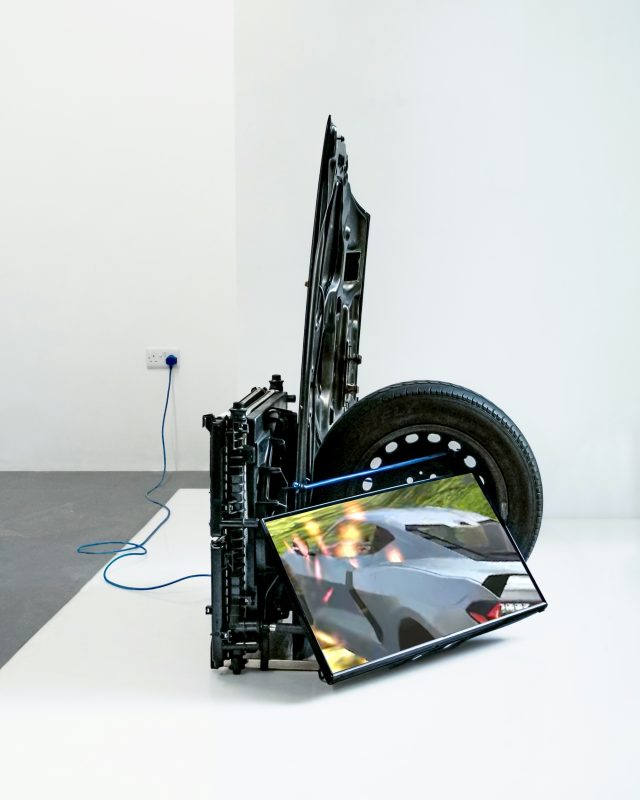
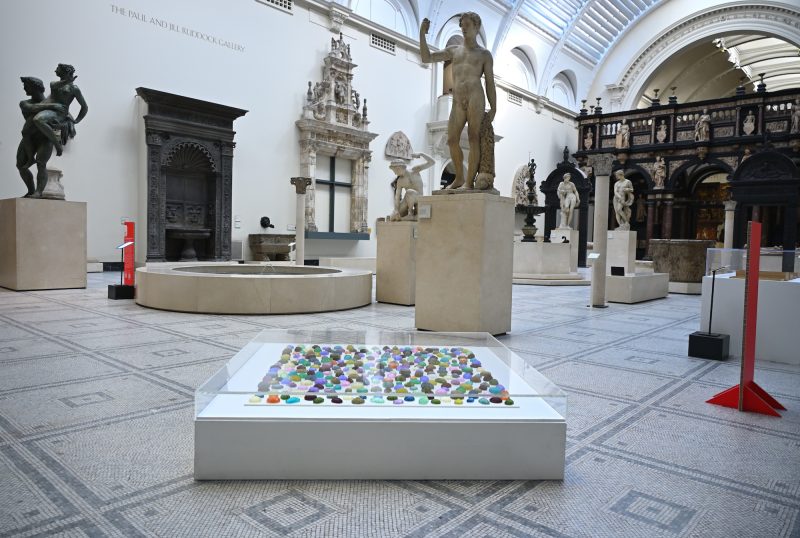
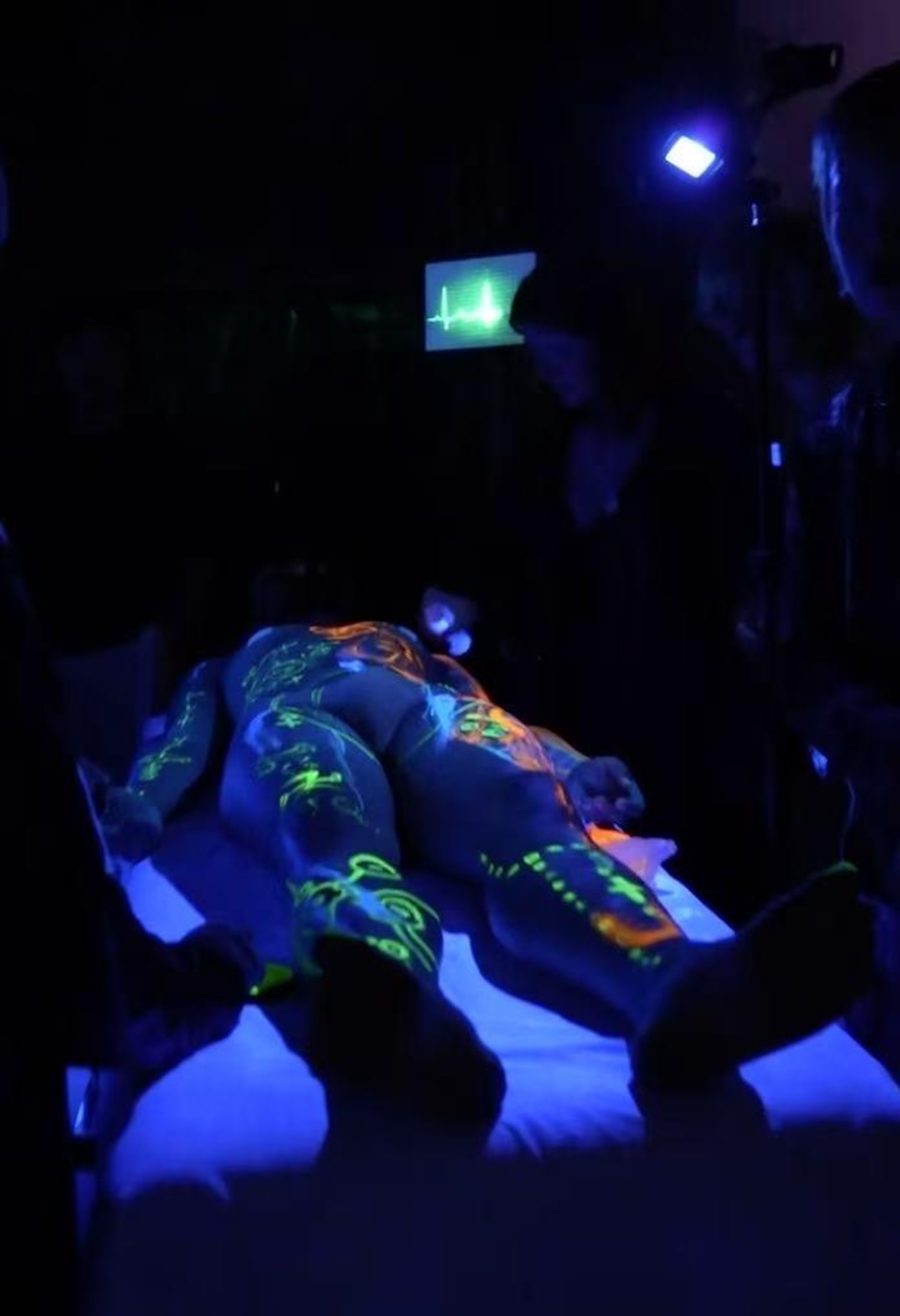
Chen is an interdisciplinary artist and researcher based between the UK and China. His art spans from performance, moving image to critical theory, engaging themes of posthumanism and technology. His works often use medical and biological frameworks to investigate ethics and fluid identities. Imaging the Unrested Future, exhibited at the London Design Festival and JWLLRS, shows how Chen opens up new dialogue between science and art.
Personal Experience as a Critical Lens
Chen’s art is closely tied to his memories and the social issues that shaped his early life. Growing up in China during rapid economic change, he saw how gaps in the healthcare system left people vulnerable, from overuse of antibiotics to unlicensed doctors. Later, when he studied biology, those memories became a framework through which he could question wider structures of knowledge and power. For him, bio-art is not about praising or dismissing technology, but a way of attempting to understand the tangled relationship between the body, society, and knowledge.
Imaging the Unrested Future
In Imaging the Unrested Future, Chen’s reflections come into sharper focus. The piece begins with medical imaging, showing how technology reshapes our idea of the body. Scans can expose what the eye cannot see, offering clarity that once seemed impossible. Yet that same clarity can feel unsettling. The body is no longer a part of us, something sensed or felt directly; it appears instead as an image, a sequence of numbers, a set of charts.
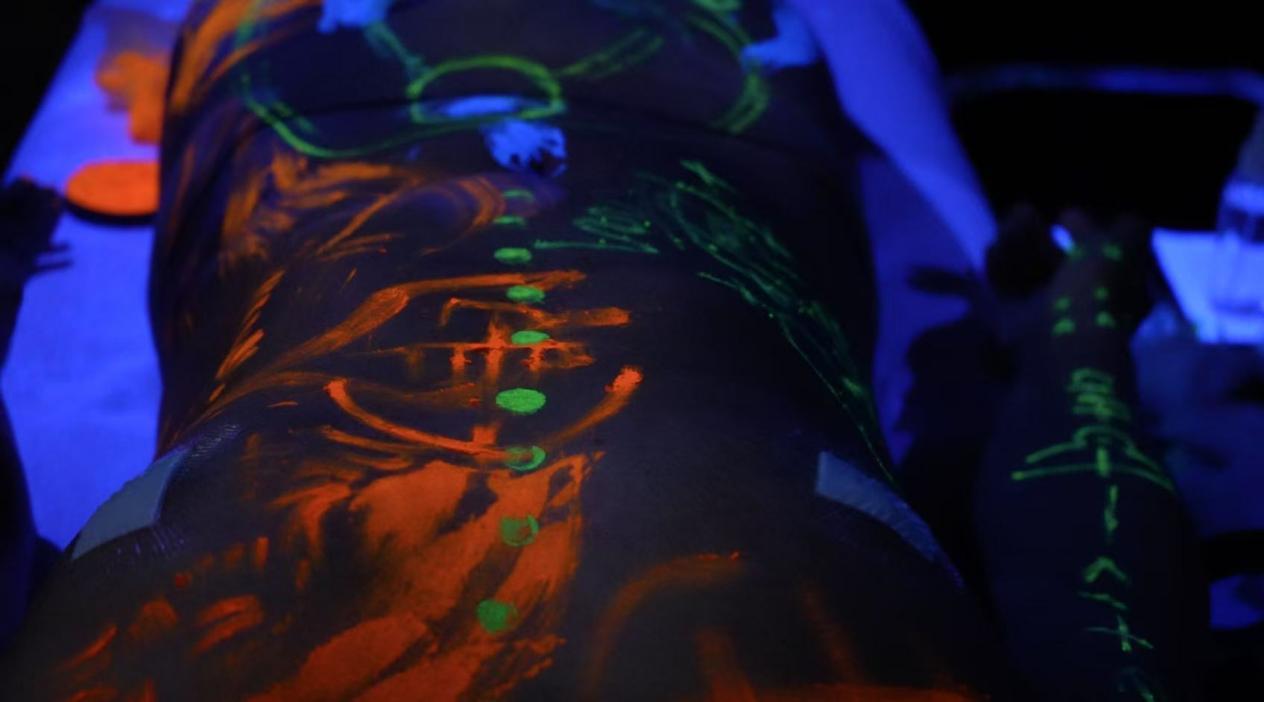
This shift generates a paradox. On the one hand, medical imaging undeniably aids in diagnosis and deepens our understanding of the body. On the other hand, it risks fragmenting bodily integrity, reducing the human body to something that can be dissected and reassembled. Within the work, this tension unfolds across both its narrative and visuals, confronting viewers with a question: as imaging takes precedence, are we gradually losing our direct perception of the body?
Chen avoids tidy conclusions. Instead, his work is open to interpretation, giving audiences space to pause and reflect. Technology, after all, is rarely straightforward, and his art points to the value of looking at it from different angles.
Private Narratives, Public Resonance
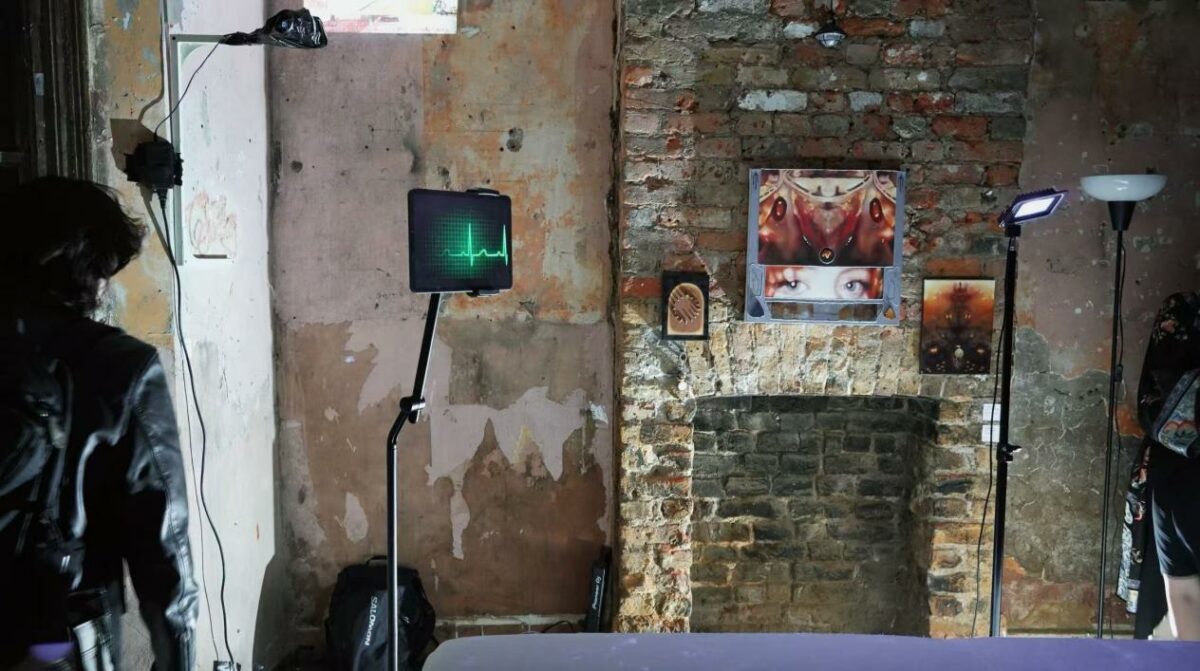
Personal stories run through Chen’s art, but never in the form of a straightforward autobiography. In Imaging the Unrested Future, his mother appears repeatedly as a central figure – sometimes as a caregiver, sometimes as someone in need of care, and at other times, as a monstrous presence. Within his work, she was seen as a private figure and was a representative of more than her illness and anxiety. These were not only personal experiences.
They pointed to something larger – gaps in the healthcare system, and the unease that surrounds medical culture. These moments remind us that the body’s sensations and ordeals are never experienced in isolation. It is always entangled with institutions, with histories, and with the culture we live in.
What begins as intimate stories in Chen’s work transforms into something that pushes crucial topics into public contemplation, producing both emotional resonance and a sharper edge of critique.
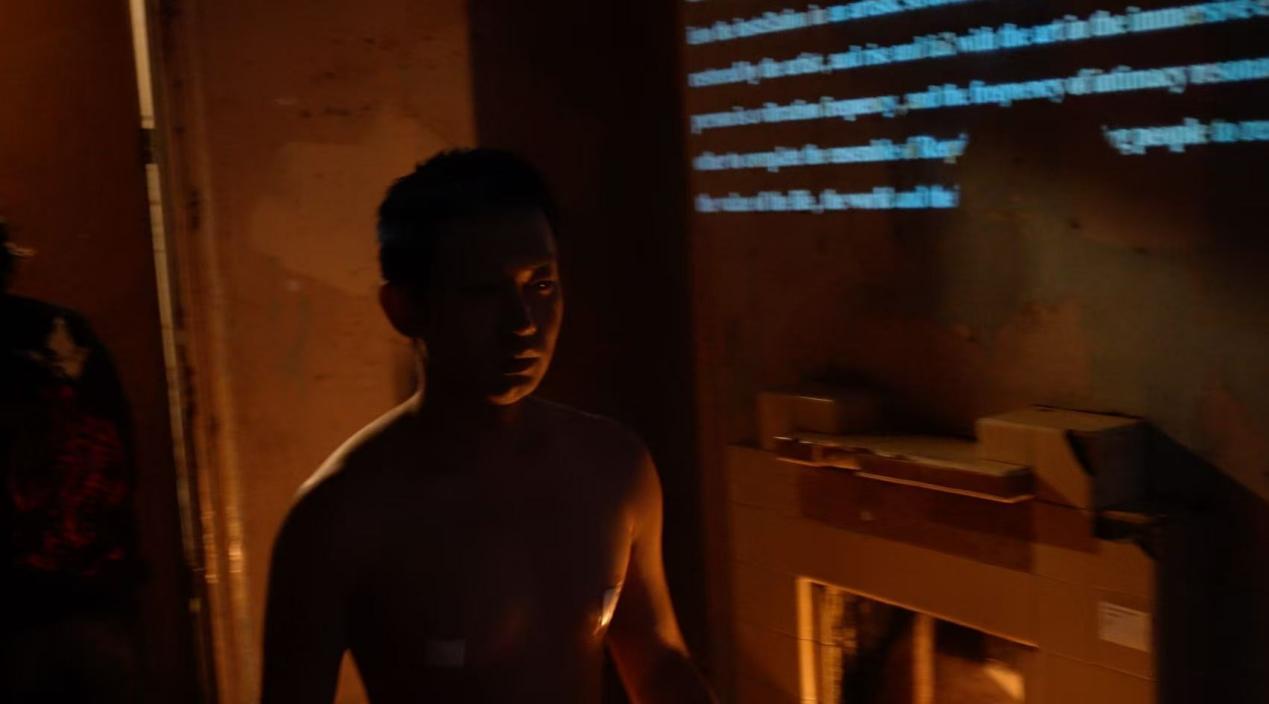
The way he uses story and scientific thought also appears in Apoptosis of the Web. In it, Chen brings together his struggles with depression and medication with the biological process of cellular autophagy. Here, science is not turned into spectacles. Instead, it shows how the biological and the personal shed light on each other. Grounding his art in lived reality gives it a sense of honesty and weight. It distinguishes his work from those that borrow scientific language only for surface effect.
The Value and the Risk of Interdisciplinarity
For Chen, interdisciplinary art is a way of addressing urgent issues such as medical crises, technological change, and social conflict, while simultaneously respecting science and keeping the distance needed for critique.
Science offers tools and frameworks, but art highlights the effects, ethics, and cultural complexities. Personal experience, in this sense, becomes more than stories; it becomes a method of working. By grounding art in lived reality, Chen is able to show how science and society intersect with each other. At the same time, he warns that it’s easy to slide into empty jargon when art borrows the language of science without substance. His practice insists that genuine cross-disciplinary work is not about dressing art in scientific clothing, but about opening new ways for the public to see how science both shapes – and is shaped by – the world we live in.
Conclusion
The collaboration between science and art is not a smooth fusion but a field of friction. It demands from artists both an attentiveness to scientific complexity and the imaginative capacity to reframe it. Chen’s art shows that the true promise of integrating art and science does not lie in novelty or trend, but in its ability to return us to lived experience, to the contradictions of social life, and to the vulnerabilities of the body.
By situating the personal within the public, the intimate within the systemic, his works not only respond to the technological reshaping of human life but also invite us to rethink what it means to be human in an age of accelerating change.
yuqiangchen.com/Info / @yuqqi_c