In its 21st edition, Contemporary Istanbul stands as a cultural passage between East and West, bringing artistic voices from across the globe into the city’s unique crossroads. Among them, four sought-after sculptures command a closer look, each revealing a distinct language of form, material and imagination.
Alice Aycock’s Spinning Top at Galerie Thomas Schulte occupies the shifting territory between sculpture, industrial engineering and dynamic imagination. Constructed from white powder-coated aluminium, the whirling structure transforms static space into a psychologically charged vortex.
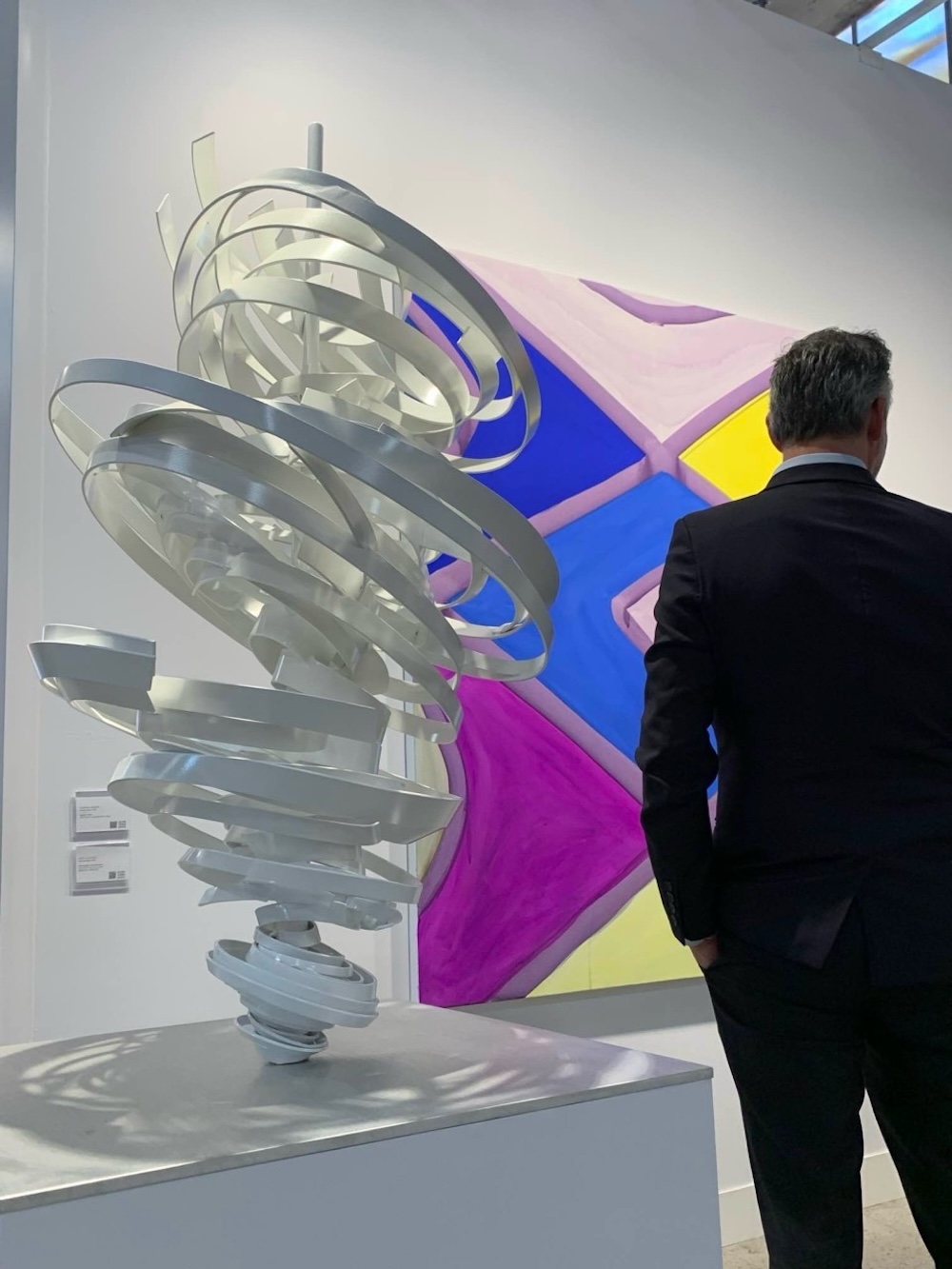
Its architectural mechanics evoke a system that has escaped its original logic, resembling a stylised machine, an atmospheric tornado or a kinetic toy suspended between precise assembly and chaotic dispersion.
Aycock uses geometry and repetition to generate a sharp tension between order and chaos. The precise engineering suggests a rational, mathematical system, yet the upward-spiralling motion produces a dreamlike, unpredictable energy.
Ultimately, Spinning Top extends sculpture beyond a still object, creating an unfolding situation in which spatial movement becomes a choreography of perception.
Tony Cragg’s Ivy at Dirimart presents an exploration of organic morphology and the fluid dynamics of natural form. Sculpted from wood and treated with a deep, dark green patina, the towering vertical work ascends through a rhythmic series of compressed, undulating planes that continuously reconstruct the surrounding space.
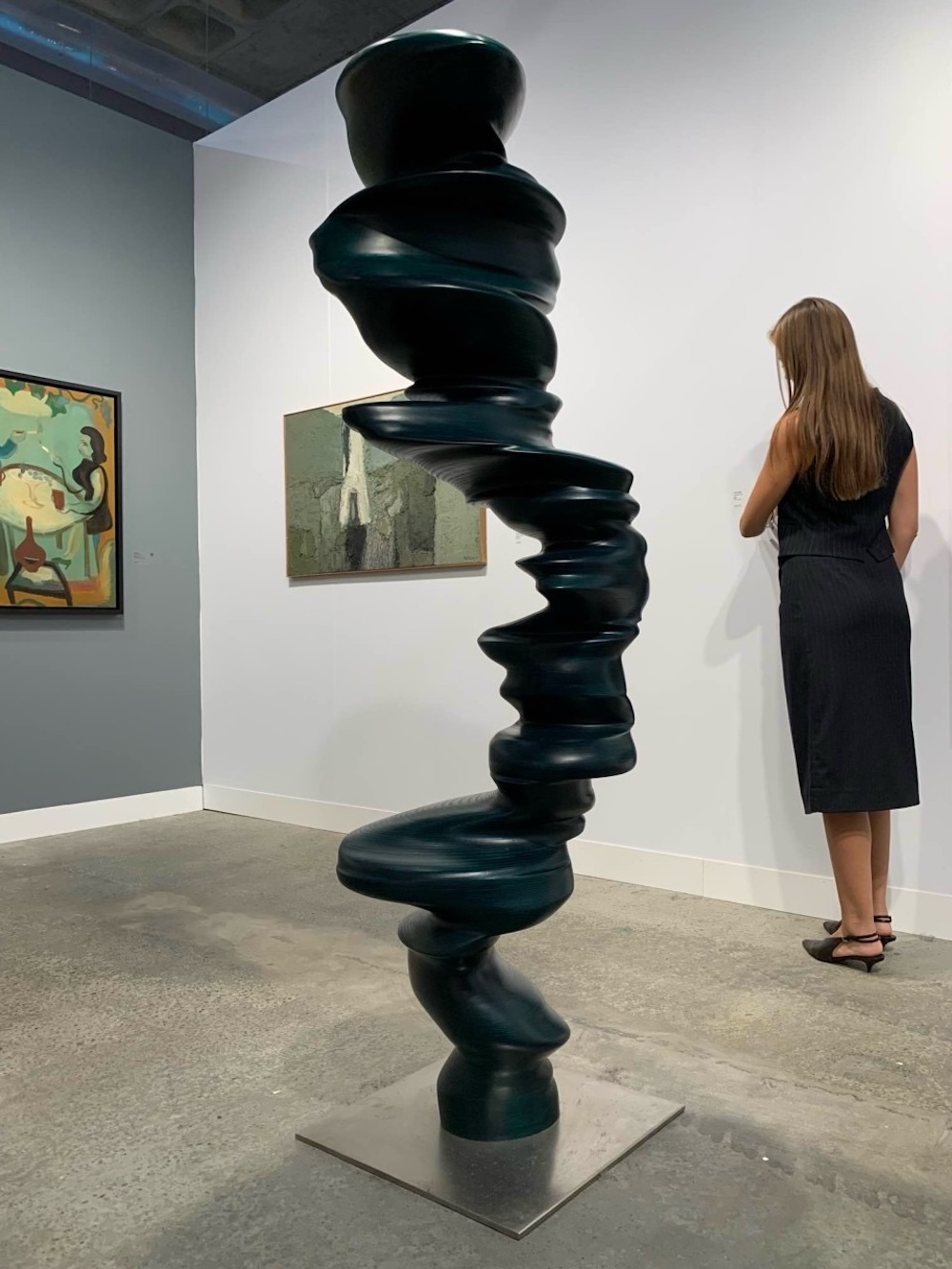
As the viewer navigates the sculpture’s perimeter, its spiralling contours generate a shifting interplay between volume and void, momentarily suggesting the outlines of nature before dissolving back into abstraction. Cragg coaxes the dense timber into a sense of biological movement, recalling the upward trajectory of climbing flora, geological stratification or kinetic energy captured mid-motion.
Through this precise manipulation of mass, light and silhouette, Ivy challenges static ideas of traditional sculptural form. The work invites active engagement, functioning as a meditative threshold between the physical reality of the material and the imaginary world of the observer.
Regine Schumann’s Lightcatcher Istanbul at Andreae Gallery transforms spatial conditions, ambient light and the visual field into its primary sculptural subjects. Created from precision-cut fluorescent acrylic glass, the translucent sculpture engages with the gallery’s illumination, capturing light to project a glowing, expanding presence into the surrounding architectural space.
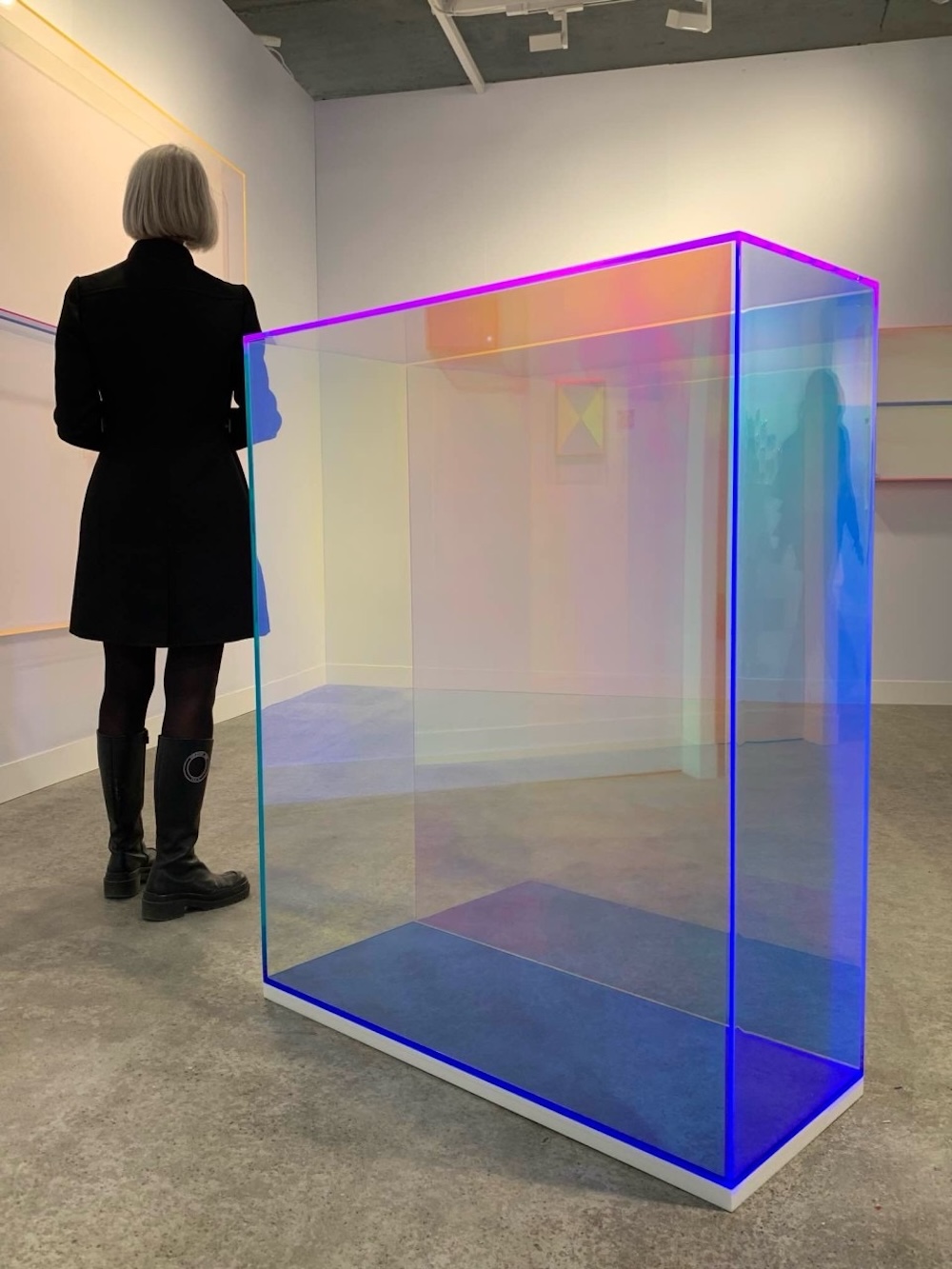
As viewers move around it, the work continually shifts through refractions, luminous edges and subtle colour overlays. Schumann uses the optical properties of tinted acrylic to shape light into an almost atmospheric volume.
With its twin languages of minimalist geometry and chromatic translucency, the sculpture heightens sensory awareness, blurring the distinction between physical form and ambient space and turning the act of seeing into the work’s primary subject. Just as the eye begins to settle into its logic, the work surprises, revealing that what appears to be a fixed form is, in fact, an event of light, perception and presence.
Johnny Depp’s The Bunnyman, presented by the SIGG Art Foundation, transforms a familiar, playful figure into a monumental sculptural presence. Standing two metres high in white bronze, the half-human, half-rabbit form occupies an ambiguous space between fantasy and reality, vulnerability and strength.
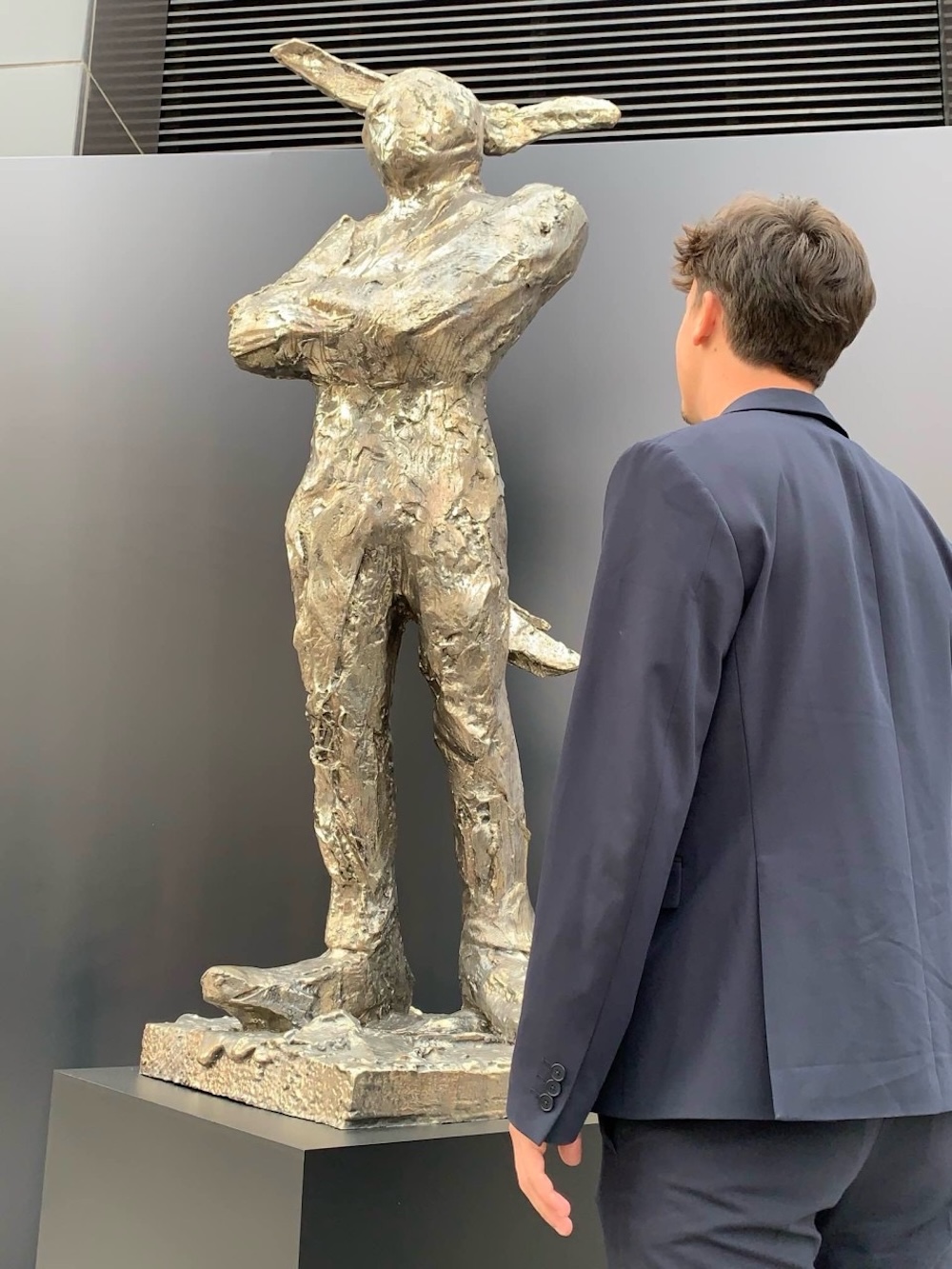
The figure appears both mysterious and performative, its stillness giving it an enigmatic psychological presence. Its raised gesture and sword suggest protection and authority, while the softened, almost theatrical character of the rabbit introduces an unexpected sense of lightness and imagination.
The sculpture’s textured bronze surface further reinforces its physical presence, allowing light to reveal traces of its making and giving the figure a distinctly tactile character. What begins as an imagined persona becomes an autonomous object within the architectural space.
Balancing monumentality with playfulness, The Bunnyman explores play not simply as an innocent act associated with the past, but as a sophisticated language of presence.
Contemporary Istanbul, September 23rd to 27th, 2026, at Tersane Istanbul
All photos Ida Ivanka Hamilton