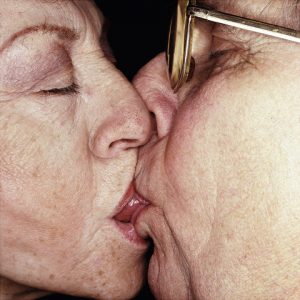
Swipe through any dating app today, and you are not looking at a stranger so much as a small, deliberate exhibition. Six photos, a few lines of text, a handful of prompts answered with just enough wit to signal personality without trying too hard. The modern dating profile has become a genre of visual self-portraiture, governed by its own conventions of lighting, cropping, sequencing, and tone. It borrows from advertising, from Instagram, from the vernacular of the personal brand — and increasingly, from the language of design itself.
This shift has not gone unnoticed by people whose job is to read those signals professionally. A matchmaker in New York recently described the profile as “the new business card of the self” — a compact, curated artifact that has to do the work once handled by a friend’s introduction or a chance meeting at a bar. Where that comparison gets it right is in recognizing intention: a good profile, like a good business card, is designed. It communicates values, humor, aesthetic sensibility, even class signifiers, often before a single word is exchanged.
The Photograph as Identity Statement
Every image on a dating profile is a compositional choice. The rooftop shot signals aspiration; the dog photo signals warmth; the group shot at a wedding signals social proof. None of these are neutral documentary evidence — they are edited fragments standing in for a whole person. This is where dating profiles intersect meaningfully with visual culture at large: they function like miniature mood boards, assembled with the same instincts that shape a gallery wall or an editorial spread. The self becomes art-directed.
The Pressure to Perform
The trouble begins when curation tips into fiction. A profile optimized entirely for desirability — filtered skin, borrowed settings, outdated photos, exaggerated interests — creates a gap between the presented self and the actual one. That gap eventually surfaces, usually on a first date, and it costs trust. The pressure to appear effortlessly interesting, spontaneous, and photogenic can push people toward performance rather than expression, turning self-presentation into a kind of low-grade anxiety.
Practical Guidance: Curating Without Distorting
A few principles help keep a profile honest without making it dull:
- Authenticity over aspiration. Choose images that reflect how you actually look and live, not a highlight reel. Recent, varied, well-lit photos beat a single flattering outlier.
- Consistency across platforms. Discrepancies between a dating profile and other public presences (LinkedIn, Instagram) read as red flags. Alignment builds credibility.
- Privacy as a design constraint. Avoid identifying details — home exteriors, workplace signage, license plates, children’s faces — that compromise safety while adding little to self-expression.
- Language that matches the image. A profile’s text should describe the same person the photos show. Mismatched tone (playful photos, guarded bio) creates confusion rather than intrigue.
- Edit like a curator, not a retoucher. Selecting flattering, honest images is curation. Altering bone structure or fabricating settings is misrepresentation.
What a Profile Reveals — and Conceals
The most interesting question isn’t whether someone is “attractive enough,” but what their choices reveal about how they want to be seen, and what those choices leave out. A profile can disclose humor, taste, and values while still concealing vulnerability, contradiction, or ordinariness — the very things that make people compelling in person. For FAD’s readers, the dating profile offers a small but revealing case study in contemporary visual culture: proof that identity, in the digital age, is increasingly something designed, edited, and staged — and that the most compelling self-portraits are still the ones brave enough to leave a little imperfection in the frame.