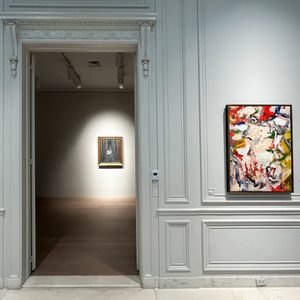
Edited by Denise Wendel-Poray in collaboration with Alex Katz, Skira, 2026 – 284 pages, 200 colour illustrations, £55
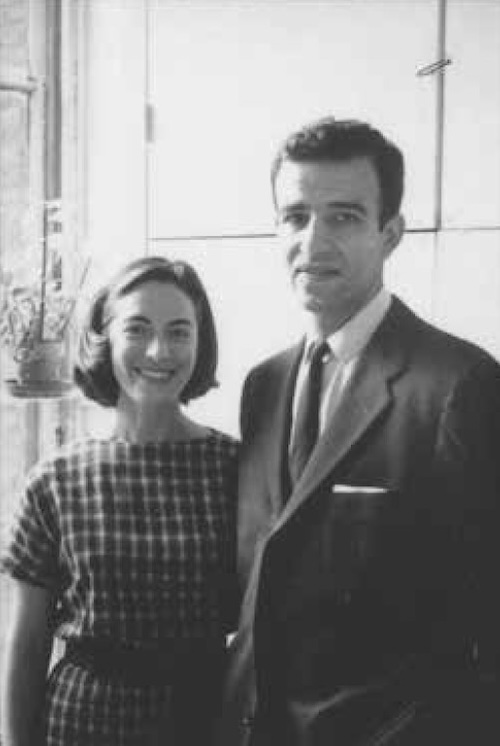
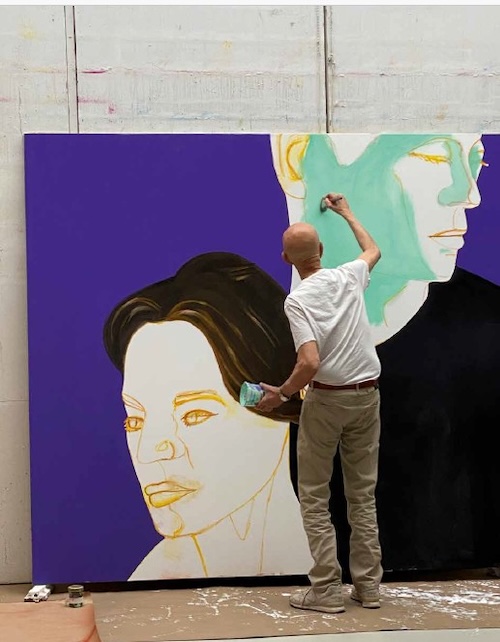
Katz with Ada, 1958 and Katz in the studio, 2021
Here’s an attractively-presented chance to consider Alex Katz from multiple perspectives, ahead of his 100th birthday next year. Old enough to have matured alongside the abstract expressionists, he became known for swimming against that prevailing tide by channelling some of their concerns into figurative works of deceptive simplicity. Katz’s way of reducing the world to its essential contrasts through the flat application of colour shares something with Pop Art, too, but he focuses on direct observation, not secondary sources. In Denise Wendel-Poray’s introductory words ‘his large-scale portraits and landscapes, stripped of unnecessary detail, heighten the presence of his subjects instead of dissolving them into commentary’.
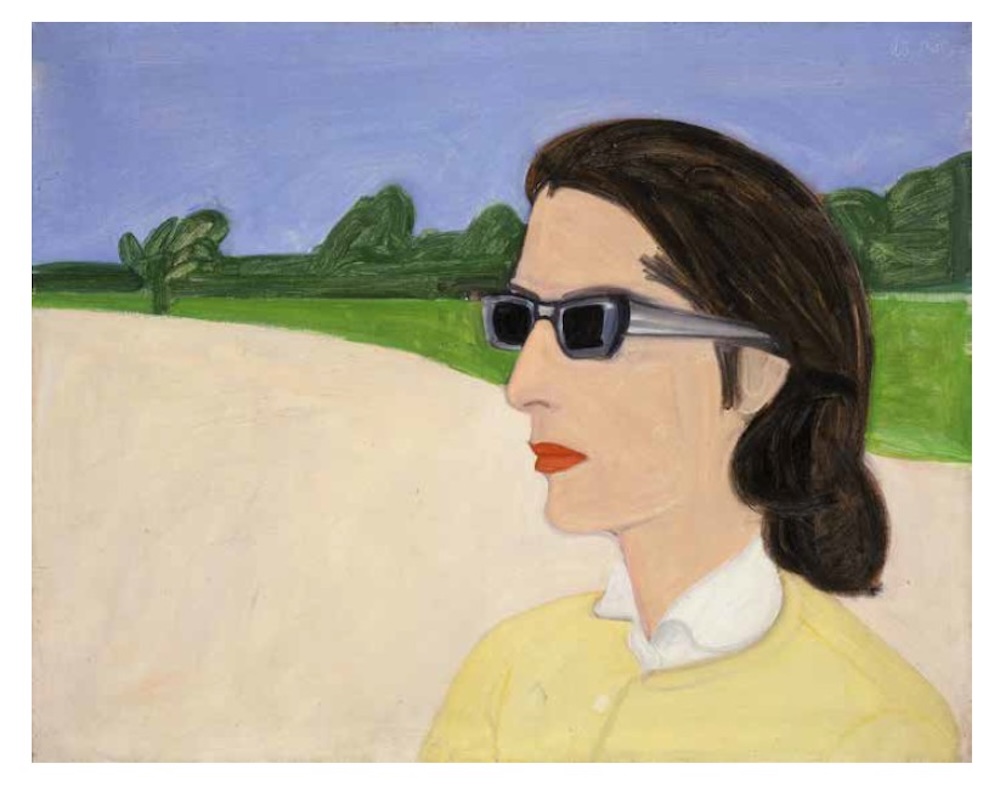
In line with the ‘Milestones’ series structure, this volume starts by presenting Katz’s inspirations: the Ancient Egyptian bust of Queen Nefertiti, a van Gogh drawing, Soutine, Matisse, Utamaro, a photo of Stan Getz and Dizzy Gillespie and a still from Goddard’s Le Mépris are among the reproductions on view in his studio. There follows a photographic record of his studio life, an ‘intimate portfolio’ including personal photographs, interviews with Wendel-Poray and Robert Storr, and some 200 pages of illustrations, grouping his work. The most famous are his depictions of his 98-year old wife Ada, who has appeared in over a thousand paintings – Alex married her 68 years ago, and if they both make it to 100 in 2027 that will, statistically, be a 1 in 5,000 chance. Other themes include large heads; fashion; public works; and portraits from two wider areas of culture with which Katz has consistently engaged – dance and poetry. For a full decade, for example, he saw Edwin Denby, who wrote extensively about dance, ‘almost every day for lunch’. And Katz says the revolutionary New York poets of the 1950’s – notably Frank O’Hara, John Ashbery, James Schuyler and Kenneth Koch, were his initial audience, as he didn’t fit into the academic art world. Moreover, their approach chimed with his. Katz speaks of how their work was ‘really about the ‘here and the now’ … and I wanted to paint the ‘now’: no past tense, no future, only now, the immediate present’. He was aiming ‘to paint a post-abstract painting…by giving the ‘surface energy’ of Kline and de Kooning to representational painting, and get the scale up, too. I just didn’t know how to do it.’ Katz says he destroyed a thousand paintings in late forties and the early fifties as he found out how.

People might be Katz’s primary subject, but landscape and still life are also important. The section on flowers includes the monumental ‘Superb Lilies 2’, alongside Katz’s explanation that ‘I got interested in flowers in the 1950s because the atmosphere was all macho. We had group exhibitions, and I liked to put a flower in the exhibition and kill all the macho painters.’ He adds that flower paintings ‘are very difficult to do well. You can describe a flower, but did you really get the color right? So, the description kills the color. And if you get the color right, do you have the volumes right? So, it’s very complicated…It’s extremely difficult to do a non-formulaic flower painting.’
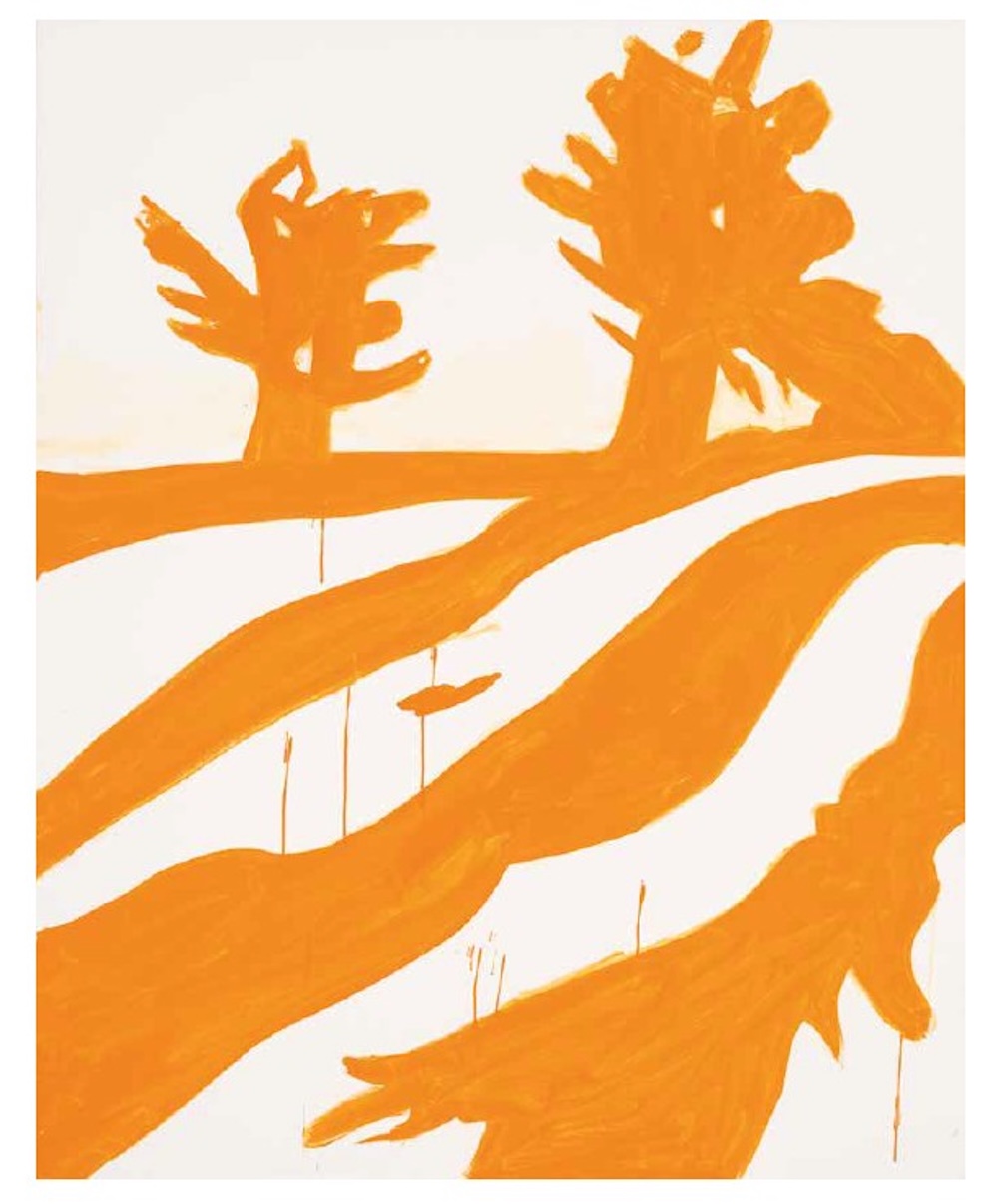
Katz, who splits his time between New York and Maine – often painting in New York from sketches made in Main – is grateful for his ongoing activity. That’s carried on after his vast show at the Guggenheim in 2022: ‘Most painters, after big retrospectives, fold. I was lucky! It’s a real freak that I got these years in my nineties. I have no problem painting, and the size doesn’t matter—I’ll crawl up twelve feet if I have to.’ And what does he crawl up to now? His latest idea is the ‘after-image’: ‘Matisse’s Red Studio is an ‘after-image’ painting’, says Katz, ‘It’s like you are outdoors in the summer, and it’s all green; you walk through the doorway, and it flashes red—that’s what he did to make that painting. My paintings, red on white, are after-images.’
Paul Carey-Kent selects a ‘Gallery of the Month’, a ‘Show of the Month’, a ‘Work of the Month’ and a ‘Book of the Month’ for his weekly column in FAD. A collection of previous gallery columns, ‘Paul’s Galleries To Go’, is available from FAD Bazaar.