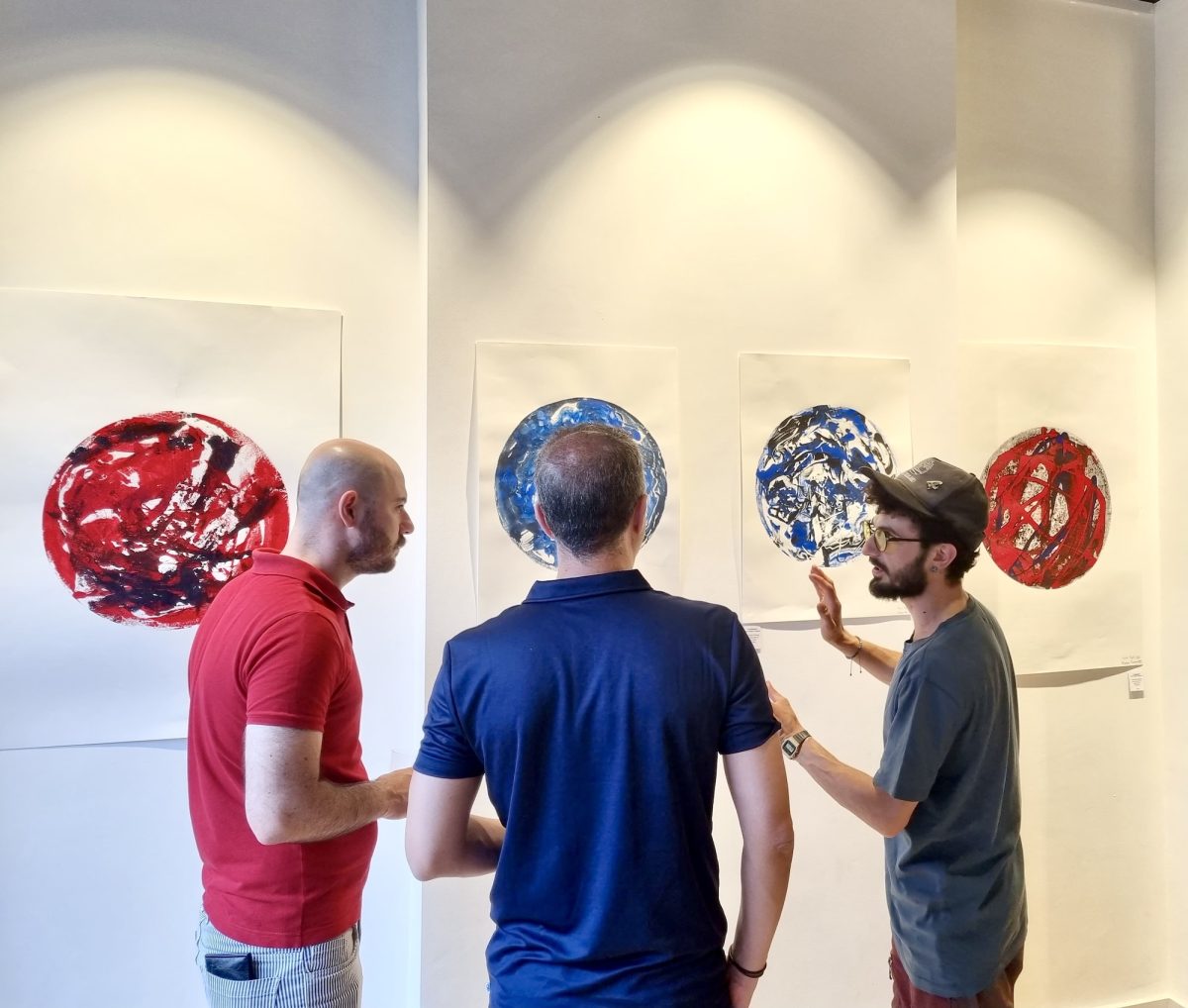
Hasan Yigit works at the intersection of abstract painting and experimental printmaking, creating monotypes that possess the energy, movement and emotional intensity of gestural painting while remaining fundamentally rooted in the unique processes of print. Using ink applied to a circular glass plate before transferring each image onto paper, Yigit embraces the unpredictable relationship between pressure, residue, transfer and chance. Every work is a singular impression, where the language of abstraction emerges not through the gesture of a brush alone, but through the physical act of printing itself. The result is a body of work that challenges traditional distinctions between painting and printmaking, demonstrating how the expressive qualities of abstraction can arise through process as much as intention.
Born in Bursa, Turkey, Yigit began his artistic journey through photography and independent expressionist painting before undertaking formal training in Art Education at Bursa Uludag University, where he immersed himself in traditional printmaking techniques, developing expertise in woodcut, linocut, etching, engraving, screen printing and monotype. While grounded in these historical disciplines, his practice has steadily evolved towards experimentation, using printmaking not as a reproductive medium but as a space where each impression becomes an unrepeatable event. His debut solo printmaking exhibition, presented in Bursa in 2023, marked the beginning of an artistic practice that has continued to evolve through travel, research and cross-cultural exchange, including periods living and working in the United Kingdom and Thailand.
These different cultural environments have shaped Yigit’s visual language, informing a practice centred on colour, emotion and personal transformation, with abstraction functioning as a means of expressing experiences that extend beyond language. Circular forms recur throughout his compositions, acting simultaneously as eyes, mirrors and windows into shifting psychological states. Built from bold colours, layered surfaces and fluid movement, the works often evoke Abstract Expressionist painting, yet their distinctive visual character emerges from the transfer of ink, the resistance of the printing surface and the unpredictable interactions between material and process. Rather than attempting to control every outcome, Yigit embraces the unexpected, allowing coincidence to become an active collaborator in the creation of each image.
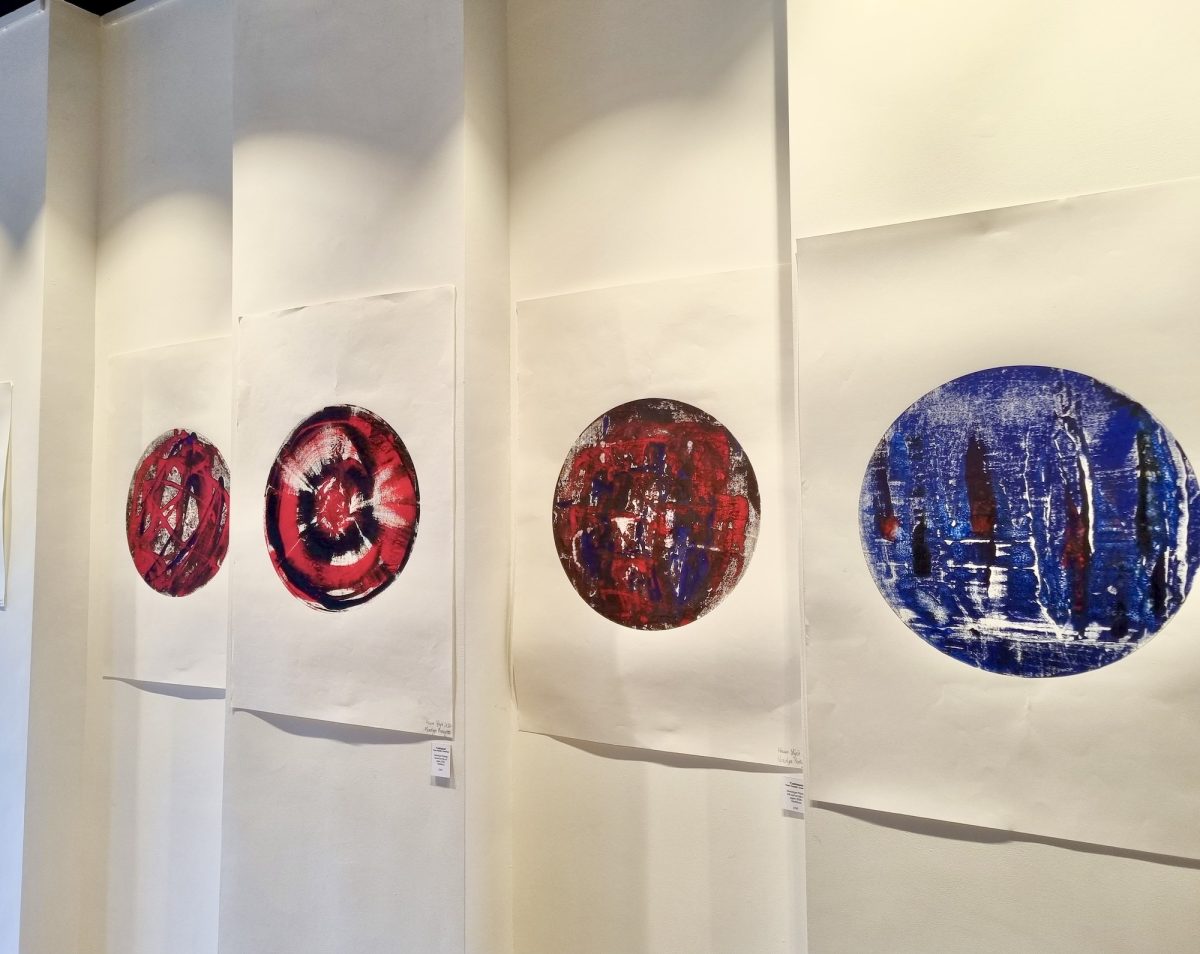
This dialogue between intention and unpredictability lies at the heart of Yigit’s practice. His recent London exhibition, Trace, Transfer & Transform at Versus Art Gallery, brought these ideas together through a series of large-scale monotypes created using a 50cm circular glass printing plate. The recurring circular form becomes both the physical matrix from which the image is printed and a symbolic device—functioning as an eye, a mirror and a window into shifting emotional states. Although the works possess the gestural energy of abstract painting, their surfaces are built entirely through the mechanics of monotype, where ink, pressure, residue and chance determine the final image. Each print is unique, preserving the unrepeatable moment of its creation and reinforcing Yigit’s belief that printmaking can be as immediate, expressive and emotionally charged as painting itself.
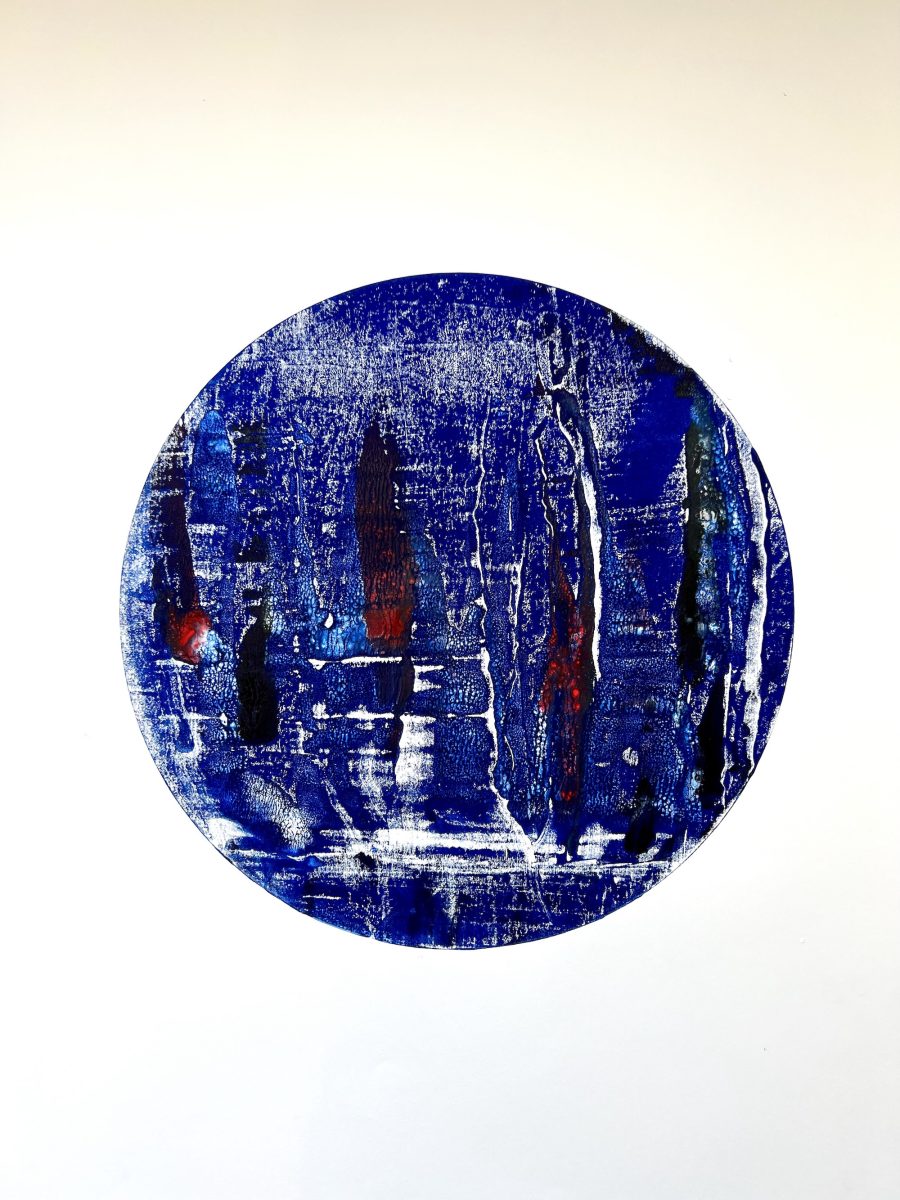
What makes Yigit’s work particularly compelling is the way it expands monotype beyond its traditional association with immediacy and singularity, positioning it instead as a contemporary language of transformation. His prints do not simply record an image; they preserve the tension between control and surrender, between the artist’s physical gesture and the independent behaviour of ink, pressure and surface. In this sense, each work becomes both an object and an event — a record of movement, decision, accident and emotional release.
Yigit’s work has been exhibited internationally, from solo exhibitions in Bursa and Bangkok to presentations in Tokyo and London, reflecting a practice that continues to expand across cultures while remaining rooted in the expressive possibilities of printmaking. By combining the tactile qualities of traditional print processes with the visual language of abstraction, he is helping to redefine contemporary monotype, demonstrating that the medium can be every bit as gestural, immersive and psychologically resonant as painting while retaining the singular physical qualities that make each printed image unique.
MORE: @hasanyigitart