Marylebone Church, London, 25th April – 18th May
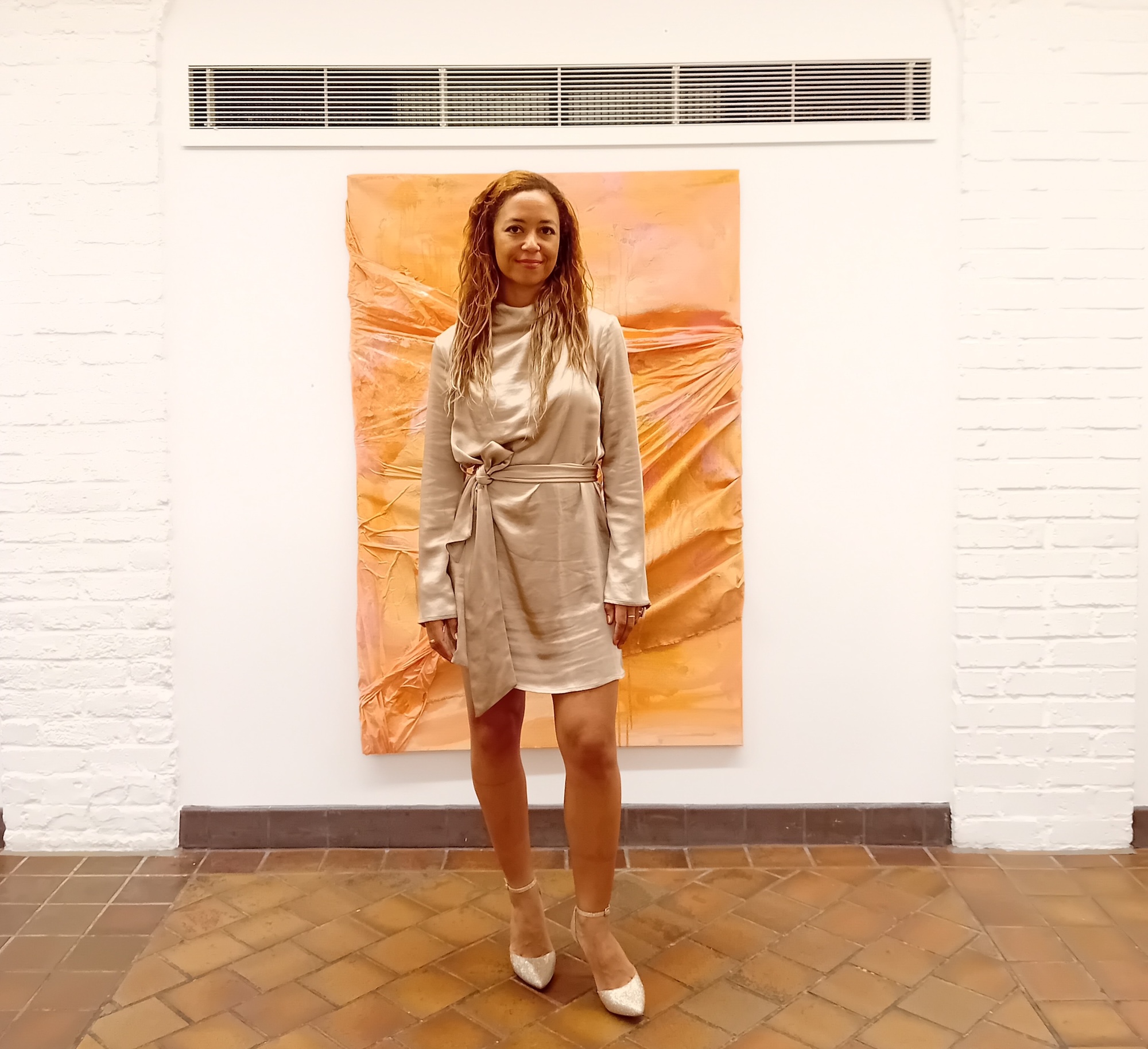
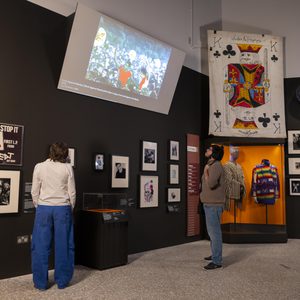
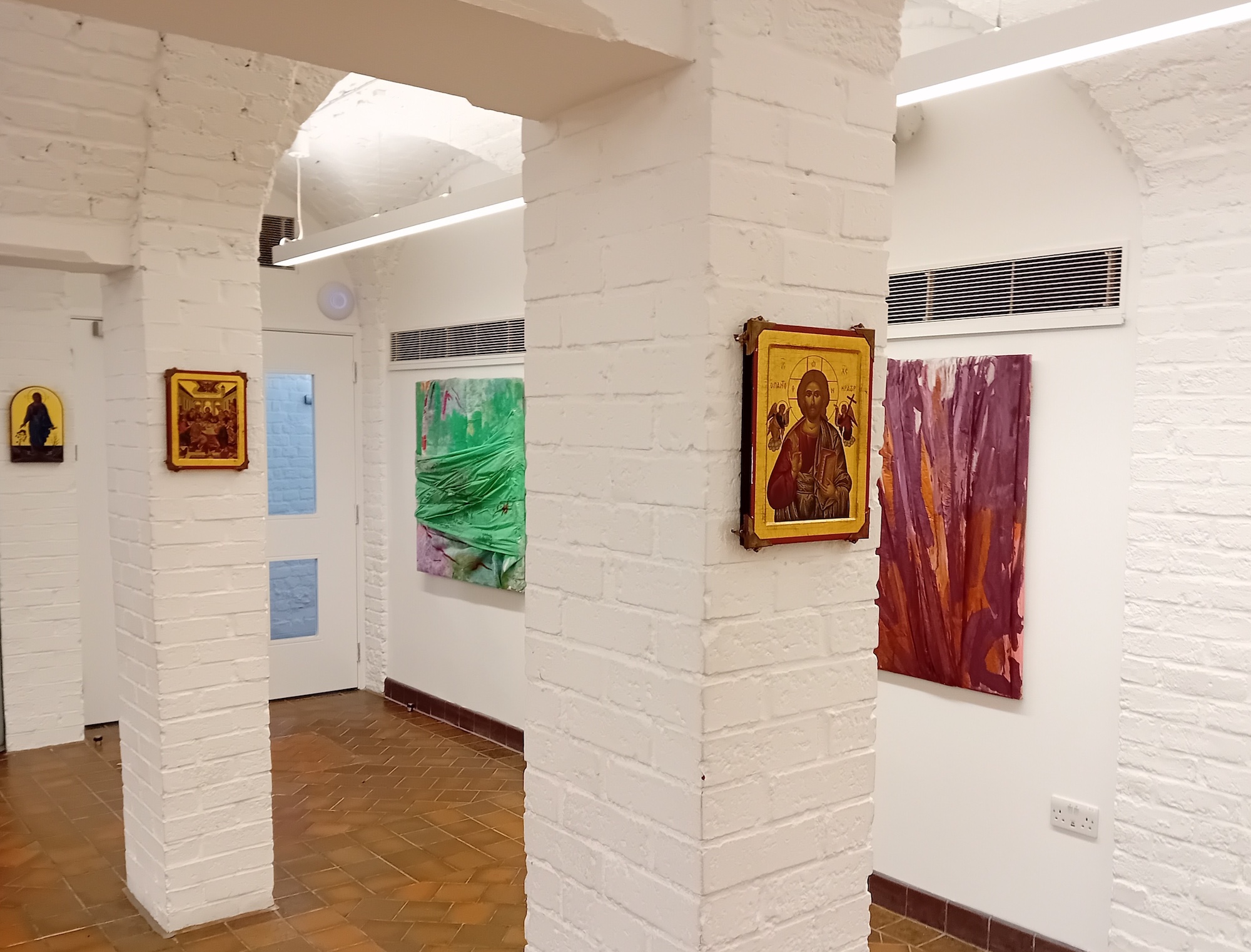
What do you want in abstract painting – materiality, gesture, content of some sort? Cristallina Fischetti gives you all three through ten works in a characterful venue: the Art Centre in the recently renovated crypt of St Marylebone Parish Church. Pretty-much opposite Madame Tussaud’s, it’s also just yards from where, despite her being half Italian and half-Colombian by birth and subsequently transatlantic, Fischetti grew up. My installation shot reveals an unusual feature: a permanent collection of icon paintings, off which any temporary exhibition is bound to play – in this case, I believe, successfully, as there is a shared spiritual aspect.
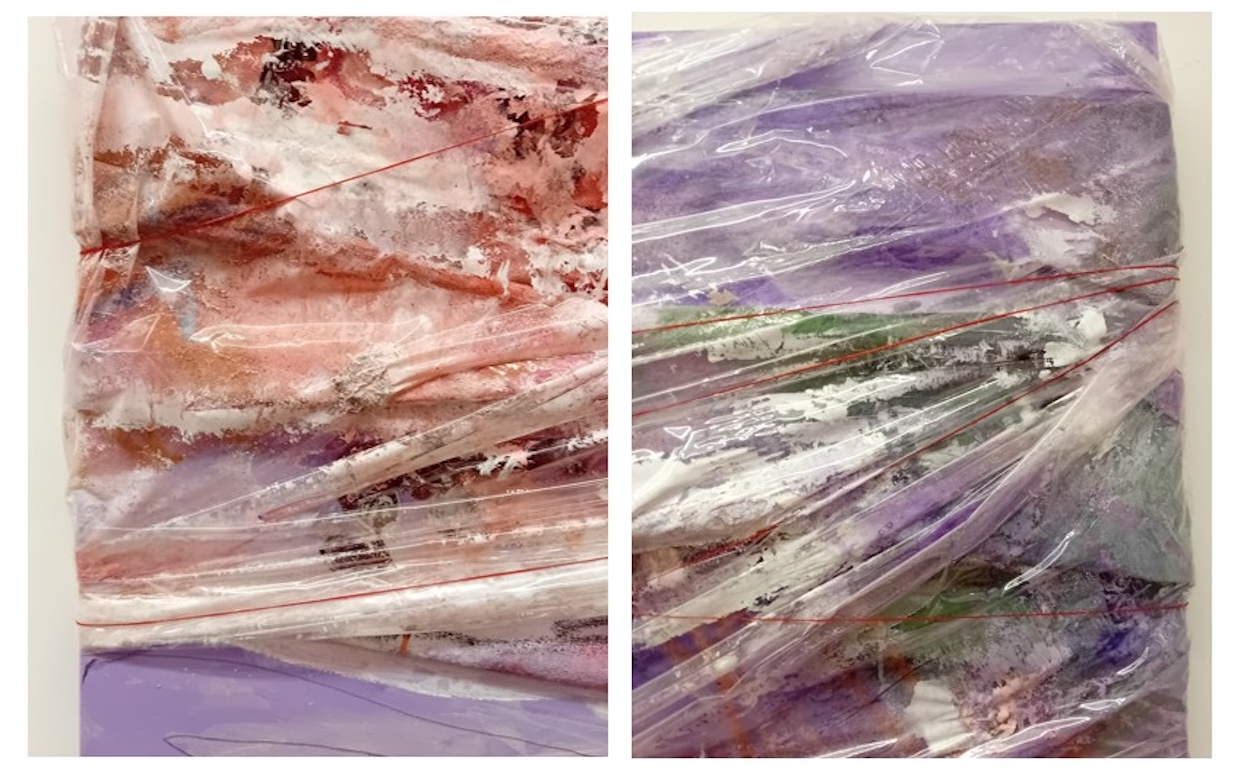
To start with materiality, Fischetti revels in the layered and unorthodox use of canvas and non-art substances such as coffee and wine – referencing her multiculturalism, but also with their healing properties in mind. She makes frequent, if partially disguised, use of plastic, a charged material given its environmental impact. You might say it is, for once, successfully recycled – as art, effecting a shrine of sorts to the rarely elevated substance. Carla Accardi’s radical use of Sicofoil comes to mind as a relevant precedent, especially as her family, like Fischetti’s, originated in Sicily. You’ll also find leather hidden in one work, with the personal connection that Fischetti, who once worked in fashion, trained as a cordwainer.
Those various materials are used to energetic gestural effect. You might trace that to abstract expressionism, and Fischetti is an admirer of Frankenthaler and Motherwell in particular. Yet much wider areas of engagement also feed in. The paintings emerge on the floor as Fischetti dances them ritualistically into being. She channels a background including ballet, yoga, alchemy, tarot and mystical healing into a performative hour, knotting and stapling canvas around a frame as she goes. Then come more reflective phases as she waits, reflects and adjusts. Thinking and non-thinking, it seems, are in balance.
Fischetti’s content is more complex. Her process generates the sense that the paintings embody emotional states, philosophical attitudes and narratives, and Fischetti can provide compelling accounts of her intentions. Those, though, needn’t be what the viewer reads into them so much as the trigger for their own interpretations. Compare, for example, how Hilma af Klint’s abstract symbolism derives from mysticism and theosophy. Fischetti, comparably, runs the spiritual practice ‘Abstract Medicine’, exploring conversations around consciousness, creativity and intuitive knowledge. Yet, as with af Klint, you don’t have to buy into the broader beliefs – I’m of a rather severely empirical mindset – to detect and appreciate the purposive aura.
Fischetti’s own explanations operate at the levels of both the cycle and the individual painting. In her words, ‘drawing on alchemical symbolism, feminist cosmologies and contemporary ecological thought’, her work ‘considers painting as a dynamic threshold between body, environment and consciousness’. The ten paintings in Marylebone are the first two ‘acts’ of a Five Act whole of 33 paintings in the cycle ‘Alchemea’ – ‘my alchemy’. That references the transformation of base materials (or experiences) into gold (or enlightenment). The acts begin with Disintegration / Darkness (‘Nigredo’) followed by Dissolution (‘Solutio’). That makes for a coherent display sequence here, the tenor varying from darkly witchy to quietly meditative to sensually fleshy to a loud gold conclusion. The full cycle moves on to Cleansing / Reconfiguration (‘Purificatio’), Integration / Union (‘Coniunctio’), and finally Transformation / Illumination (‘Rubedo’).
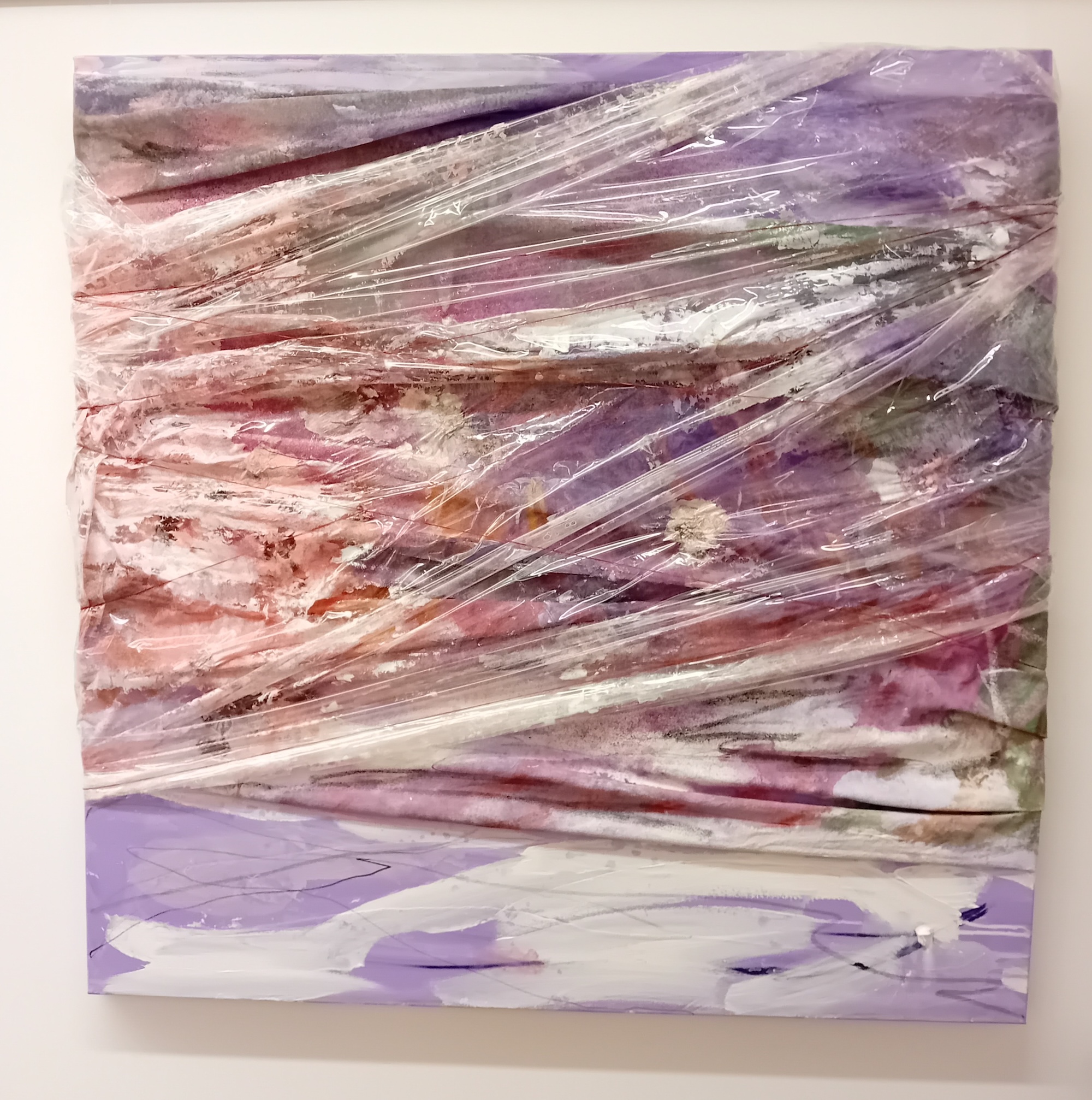
To take an example at the single painting level, ‘Reliquia per Veronica’ struck me for its formal language and a mood of feelings enclosed. It turns out to be the most directly personal work in the show: a bittersweet celebration and commemoration of Fischetti’s lifelong best friend, who died recently after a long battle with breast cancer. Purple and lilac were Veronica’s colours, and she often wore a Gucci scarf depicting rose petals, acknowledged by their inclusion in the work. Delicate threads bind the elements together intimately. I read the lowest part of the painting as river-like, and Fischetti says that the setting is Lazio, known as a place where Etruscan relics are washed up by the Tiber, bringing individual and collective histories together.
So ‘Alchemea’ is well worth exploring. And you can dive deeper into Fischetti’s world through both her own website and an hour-long interview on the ‘Who ARTed’ podcast, available on Spotify, the Podcast website and YouTube.
Paul Carey-Kent selects a ‘Gallery of the Month’, a ‘Show of the Month’, a ‘Work of the Month’ and a ‘Book of the Month’ for his weekly column in FAD. A collection of previous gallery columns,
‘Paul’s Galleries To Go’ is available from FAD.