Tate Britain has opened the first major survey exhibition of Hurvin Anderson, bringing together around 80 works spanning more than three decades of painting.
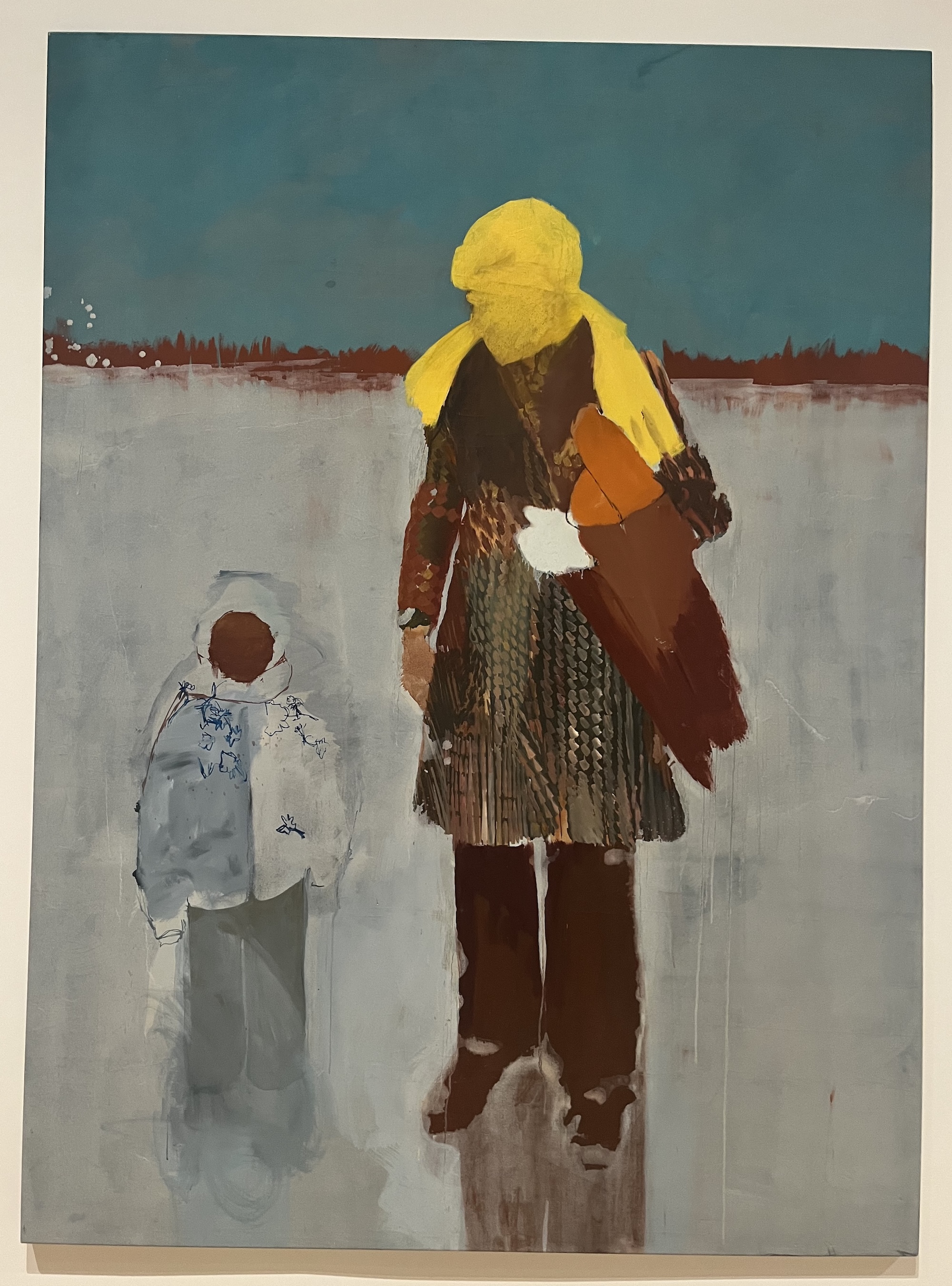
Moving between Birmingham and the Caribbean, Anderson’s work has long operated in a space of in-between—images that feel grounded yet unsettled, familiar yet dislocated. As he describes it, the paintings capture the sensation of “being in one place but thinking about another.”
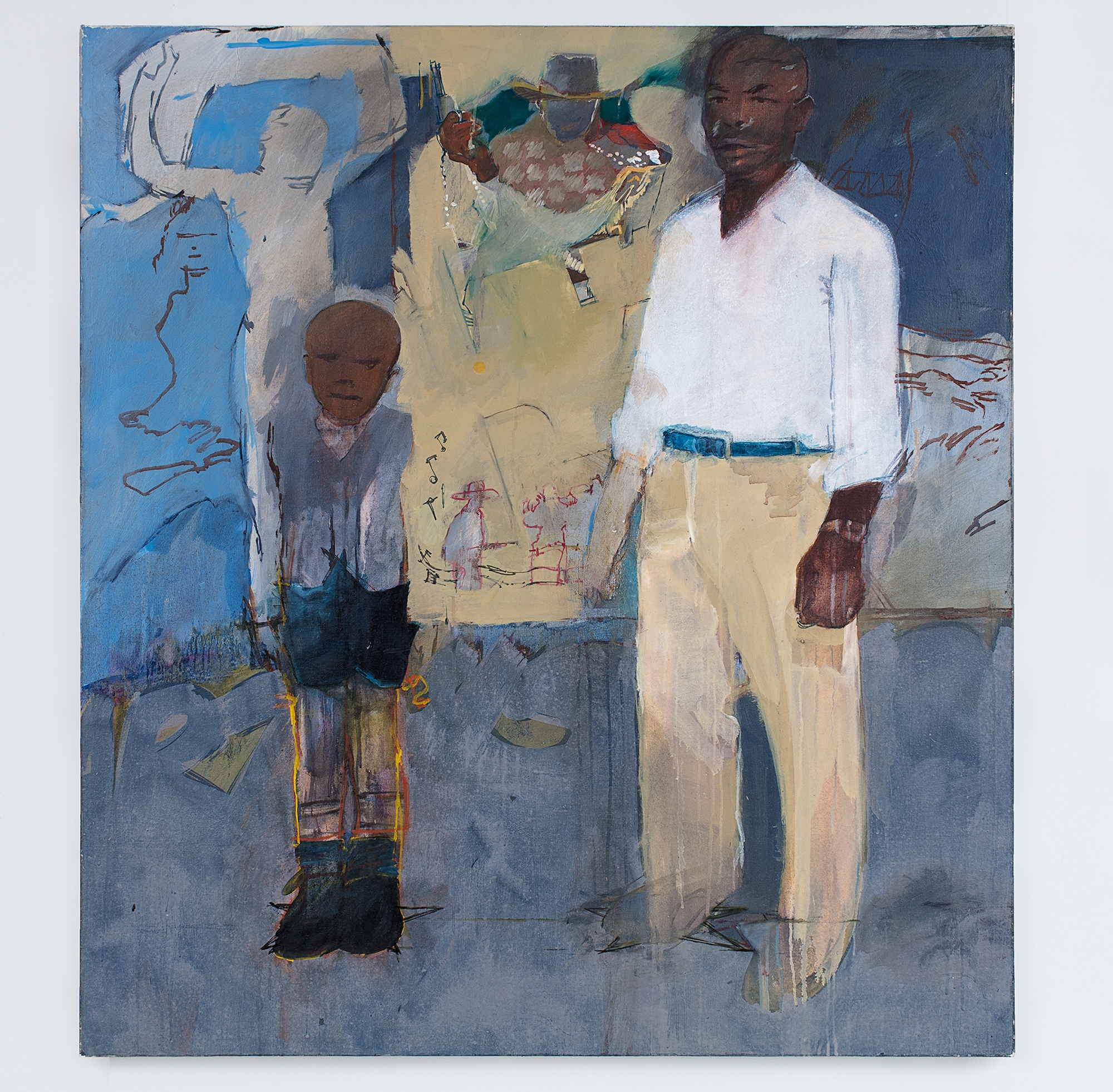
The exhibition traces that condition across landscapes, interiors and social spaces, where colour and composition become tools for navigating memory, migration and identity. Early works set the tone. Bev (1995), a double portrait of the artist’s sister, collapses time into a single frame, while Hollywood Boulevard (1997) places a young Anderson beside his father, blurring autobiography and reconstruction.
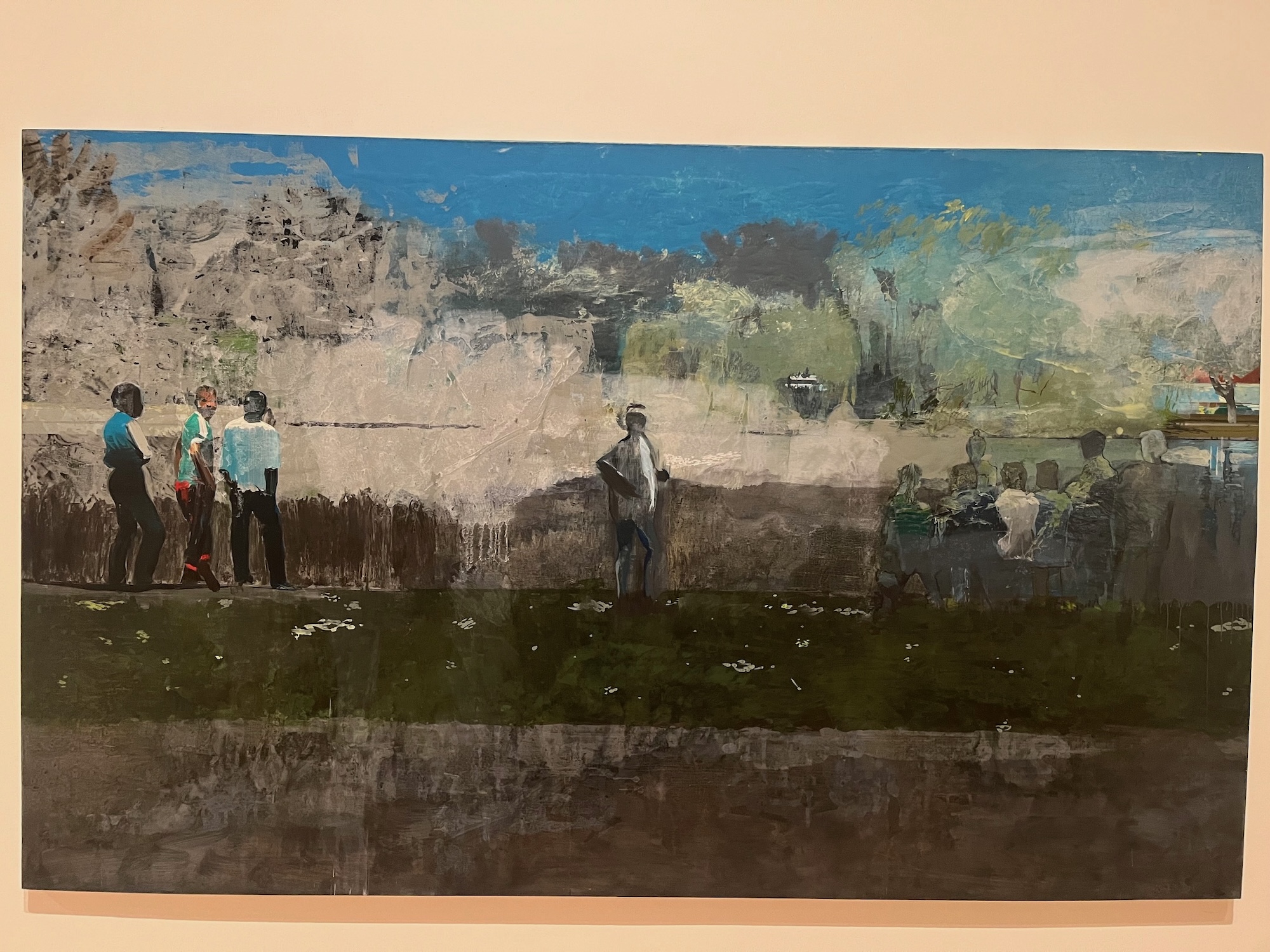
From there, the show loops rather than progresses. Anderson’s practice has always been iterative—returning to the same image, reworking it, letting it shift. The Ball Watching series (1997–2010) is a key moment: a photograph of friends in Handsworth Park becomes something unstable, stretched between English suburb and tropical landscape. Place is no longer fixed; it’s layered.
That instability continues in the barbershop paintings, among the artist’s most recognisable works. Emerging from the social spaces created by Caribbean communities in Britain, these interiors hold both presence and absence—chairs waiting, mirrors reflecting, histories embedded in everyday settings. Works from the Barbershop and Peter’s series sit alongside more recent paintings, extending this ongoing exploration of communal space.
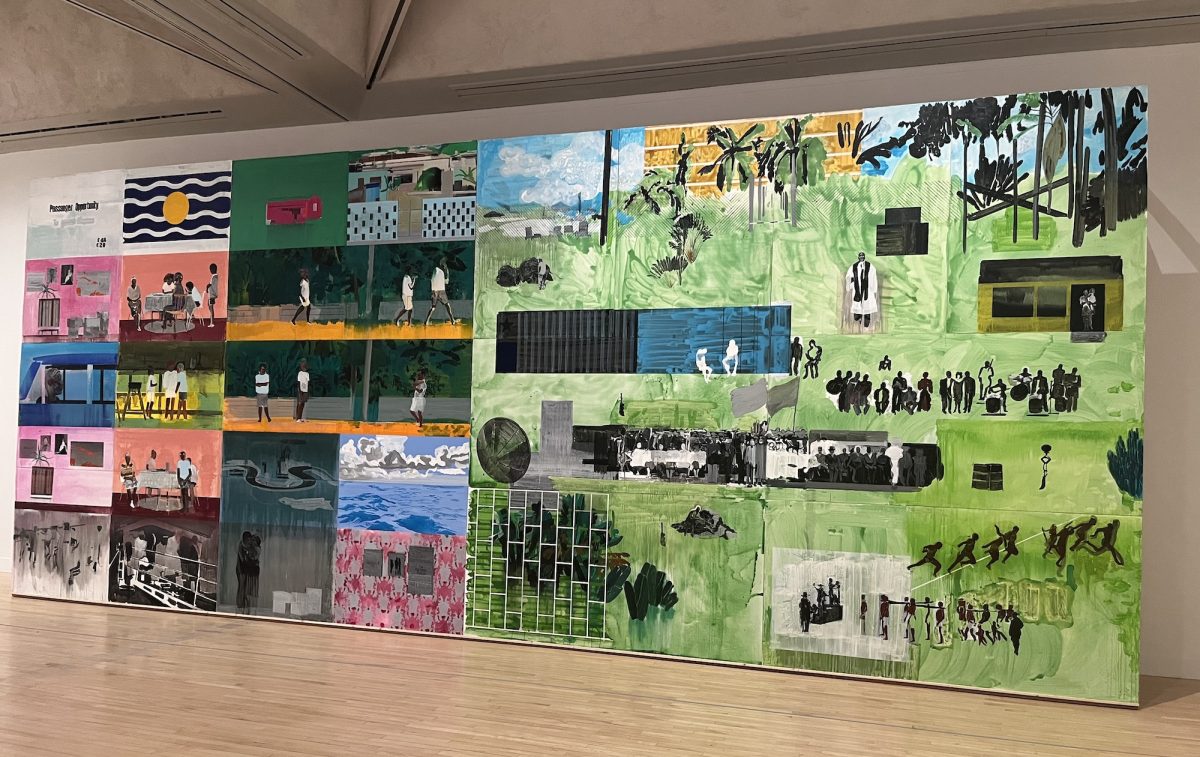
A major highlight is the UK debut of Passenger Opportunity (2024–25), a monumental 24-panel work that revisits murals originally painted in Jamaica in the 1980s. Here, Anderson reconfigures the imagery into something more open-ended—part history, part speculation—reflecting on migration between the Caribbean and Britain.
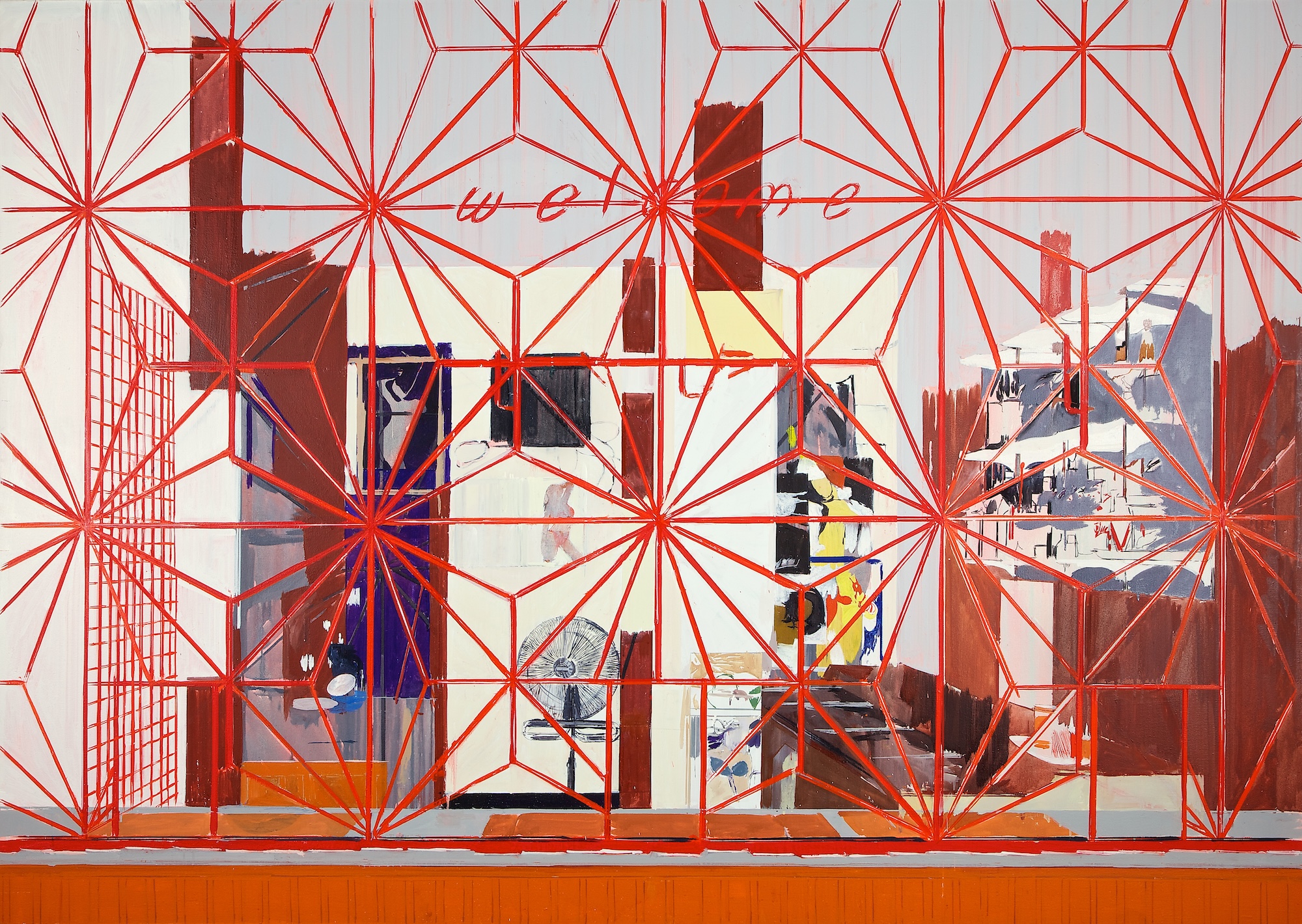
Across the exhibition, barriers recur. Grilles, fences and screens appear repeatedly, subtly holding the viewer at a distance. In works from the Welcome series, a Caribbean bar is seen through a red security grille; elsewhere, wire fencing cuts across the picture plane. These devices don’t just frame the scene—they complicate access to it.
Later works deepen that atmosphere. The Jamaican hotel paintings—overgrown, emptied, slowly reclaimed—carry a quiet weight, where architecture becomes a trace of economic and colonial histories. In Is It OK To Be Black? (2015–16), one of the few works to include recognisable figures, Anderson shifts the dynamic entirely, placing the viewer within the gaze rather than outside it.
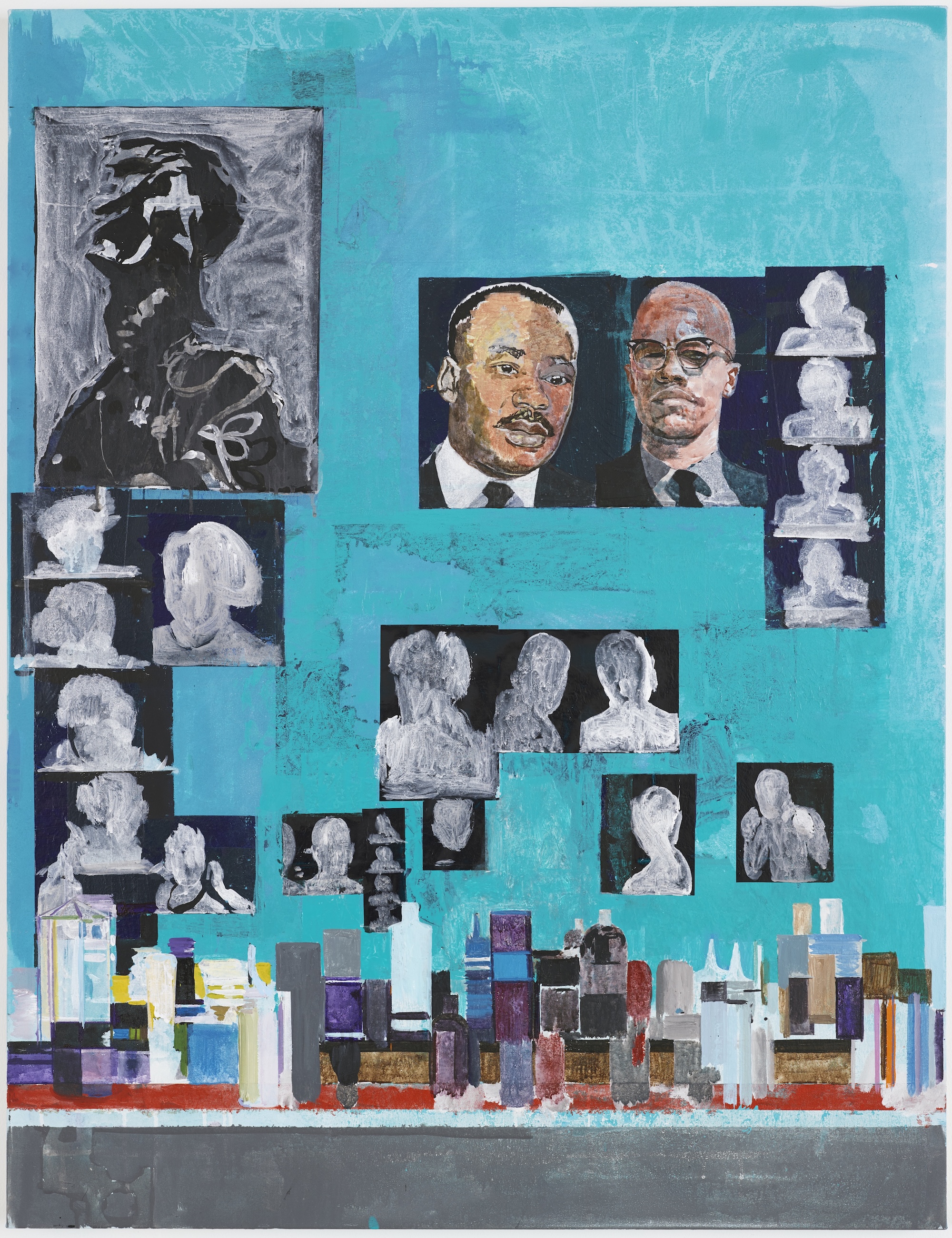
What emerges across the show is not a fixed narrative, but a constant negotiation—between places, histories and ways of seeing. Anderson’s paintings don’t resolve these tensions. They hold them in suspension.
Hurvin Anderson, 26th March – 23rd August 2026, Tate Britain
Late at Tate Britain: Hurvin Anderson, 15th May 2026 6PM-10PM, Discover workshops, talks, music and performances, taking you through Hurvin Anderson’s landscape paintings. We’ll be taking inspiration from Hurvin’s use of light, paint and his experiences making work in the UK and Caribbean. Experience the exhibition across the gallery, as it is filled with colour, light and vibrancy.
About the artist
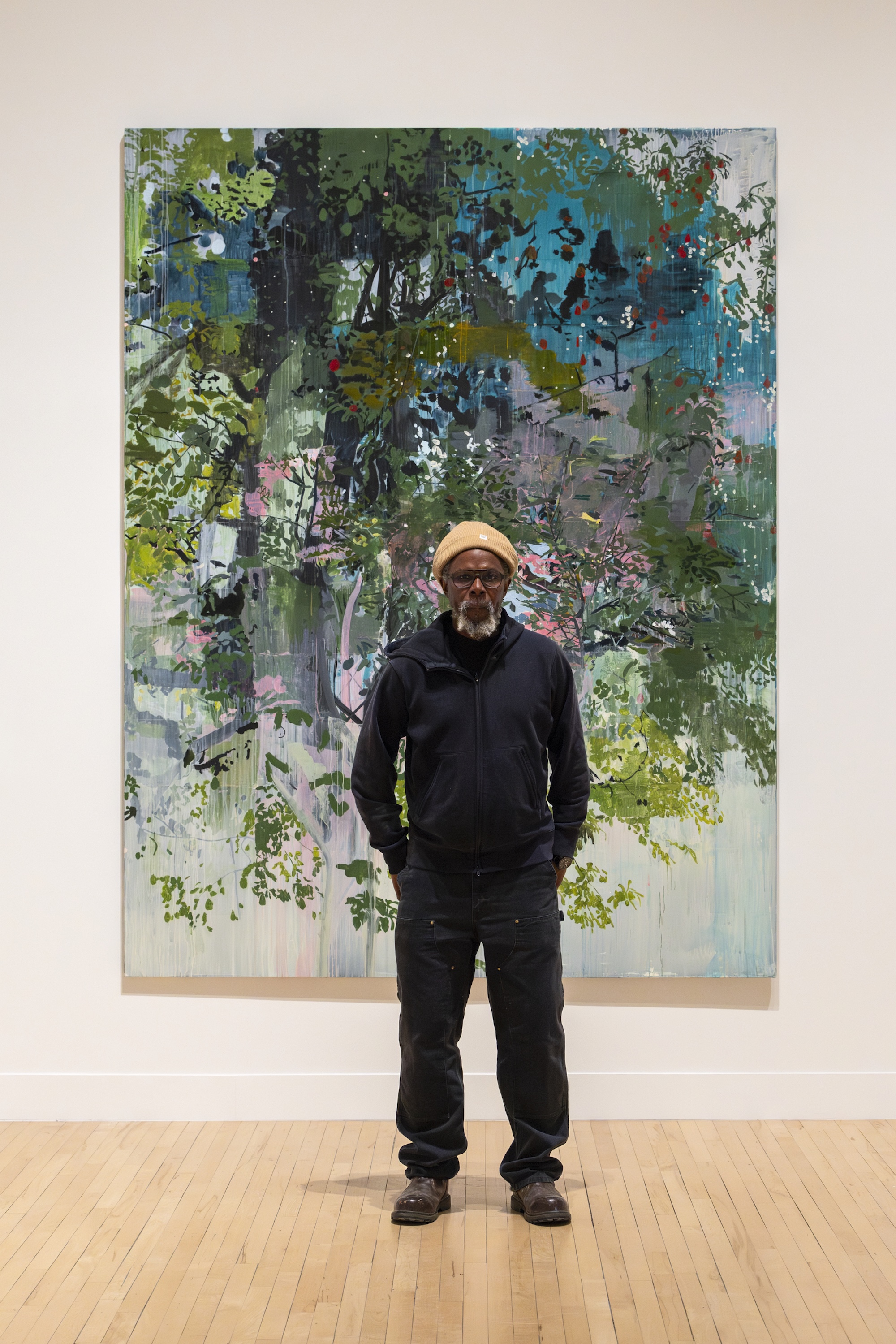
Born in Birmingham, England in 1965, Hurvin Anderson works in Cambridgeshire and London. He completed his BA at the Wimbledon School of Art in 1994, before receiving his MA from London’s Royal College of Art in 1998. Anderson was shortlisted for the Turner Prize in 2017, and his work is represented in public collections around the UK, USA and Europe. Recent solo exhibitions of his work have been held at Pérez Art Museum, Miami (2024), The Hepworth Wakefield and Hastings Contemporary (2023) and his work has been featured in recent group shows including The Time is Always Now: Artists Reframe the Black Figure, National Portrait Gallery, London and Philadelphia Art Museum (2024-5), Radical Landscapes, Tate Liverpool (2022) and Life Between Islands: Caribbean-British Art 1950s – Now, Tate Britain (2021).
Hurvin Anderson has been commissioned by Transport for London’s Art on the Underground programme to present a new mural artwork for Brixton Underground station, launching in November 2026. The mural programme invites artists to respond to the diverse narratives of the area in recognition of the local murals painted in Brixton in the 1980s. This commission will be the tenth in the series and will remain on view for a year.