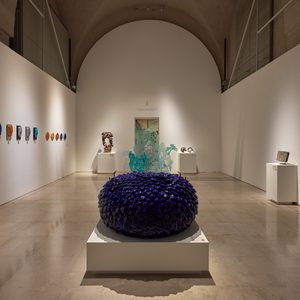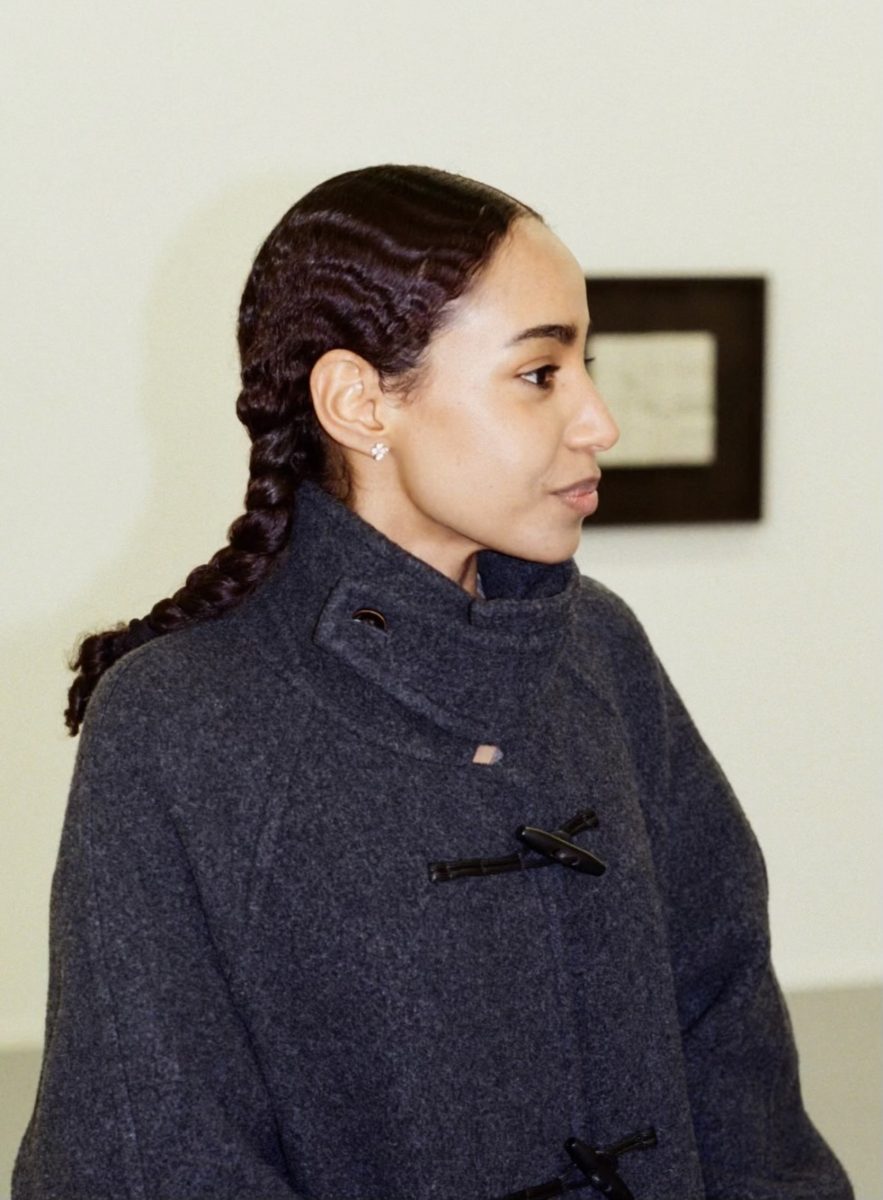
After attending Camille Provost’s exhibition at Project Loop, the title Excessive Refinement stayed in my mind for weeks. Initially reminded of my own perfectionism, I then thought about how the words work against but also for each other in an oxymoronic embrace. To be excessive is to be too much, but to be refined is to be just the right amount — therefore, to be too much (whether that’s too refined, too simple, or too loud) could be exactly the right amount? There is a tension of dualities, but perhaps there is also equilibrium?
Meeting for coffee, Provost told me a story that I believe embodies her creative practice. When an art tutor told her she needed to find more inspiration from other artists in her work, she confusingly responded, but I am the inspiration for my work? Having only recently graduated from the Royal College of Art, her first solo exhibition demonstrates just that – a highly intuitive and clear voice.
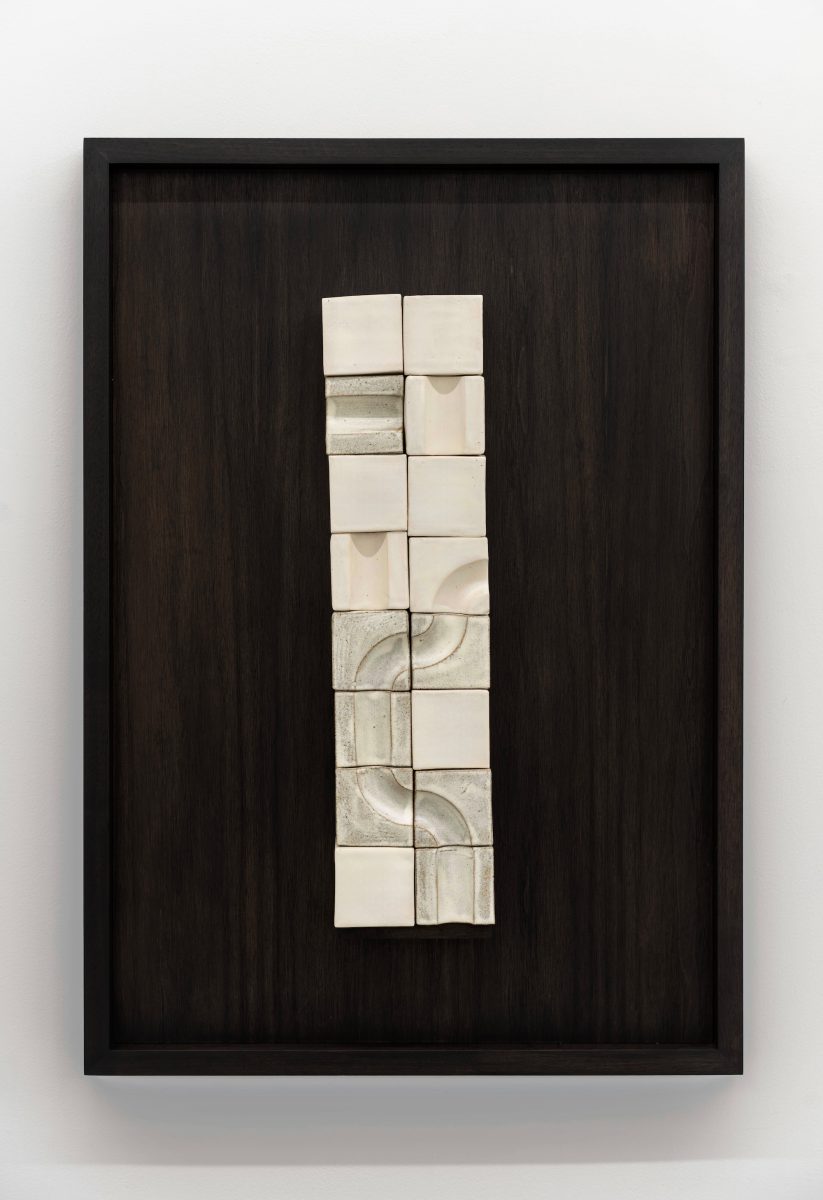
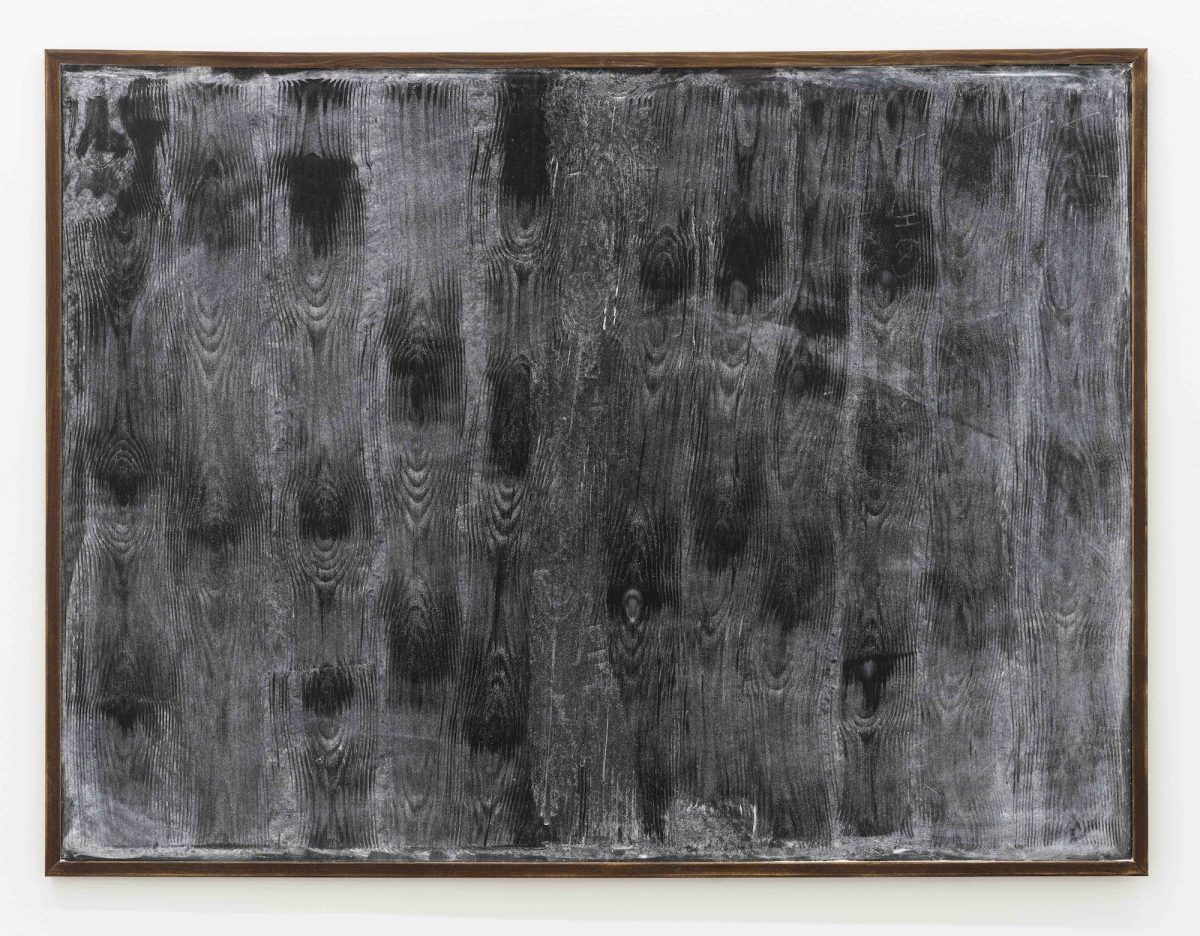
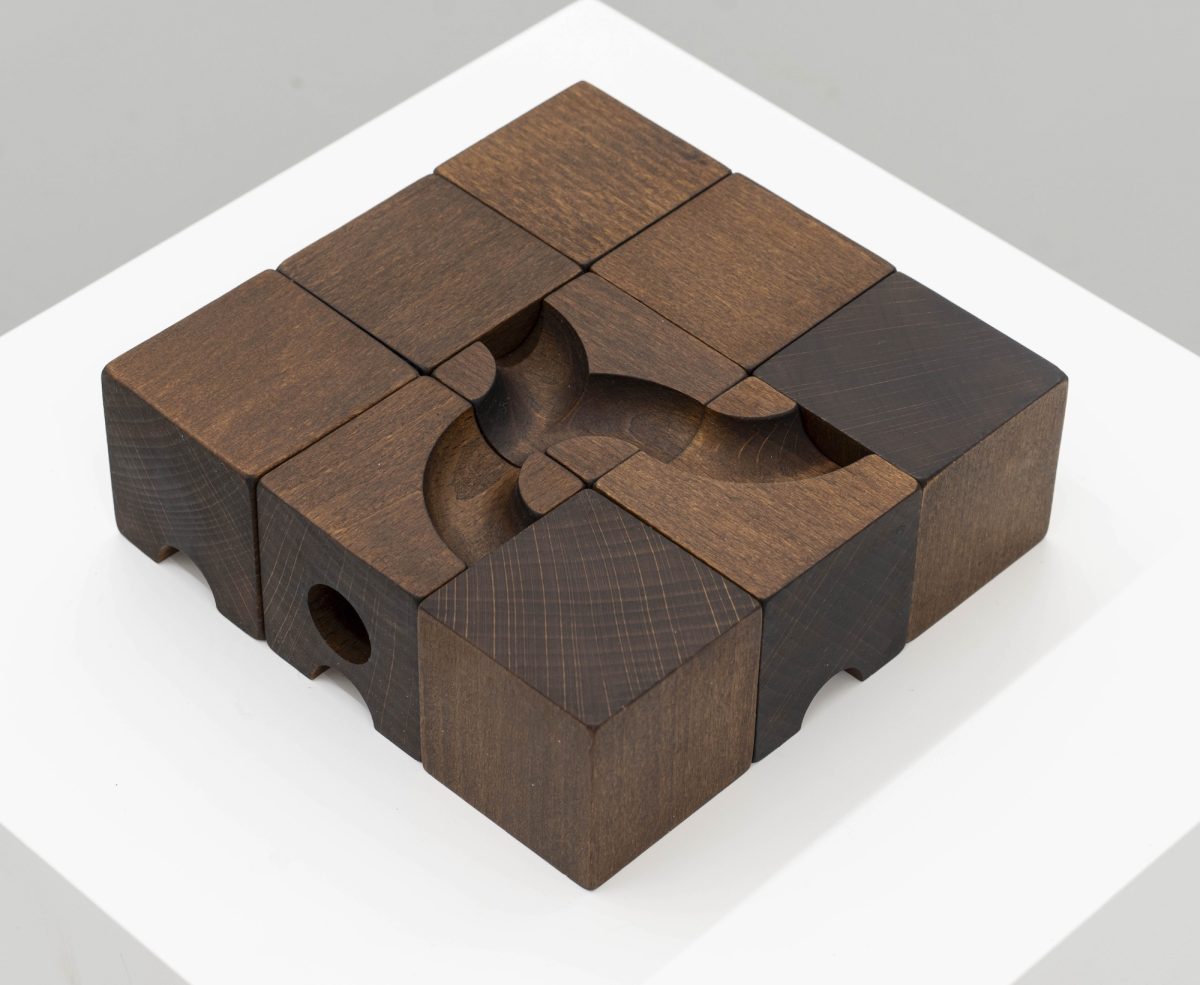
Influenced by her background in Archaeology, Provost becomes her own thesis under observation. Personal artifacts are referenced throughout, such as a wooden sculpture from her show at the RCA, a school blackboard with wood etchings, and fibre rush seats she hand weaves herself. Poems by close friends Camille Bacon and Amel Meghraoua add to this collection, where Bacon describes Provost as looking “lucidly over the ledge of her own life”.
In this interview, I join Provost to look over the ledge and discuss her creative process, love for materials, and what being an excessive refiner means to her.
You refer to your work as a research process. How did you research for this exhibition?
Everything always starts with the materials. I went home to Brittany and I was looking around, searching in family albums, and observing materials around me. I collect a lot of objects in my studio, and I started to play with this chunk of clay. At first, I was frustrated because I couldn’t get the exact shape right, but it made me want to lean into that frustration more. I thought, I’m not comfortable doing this, so I’m going to keep doing it. I didn’t have access to the wood and machine I usually use, but being an artist is about being resourceful. Artists I look up to use what’s in front of them. Experimentation is a huge part of the exhibition, and clay is a great material for that. All the pieces are first-time pieces; I didn’t do any tests before. I was leaning into the discomfort of doing something for the first time, not knowing what it will look like, which is another element to clay as you don’t know what will come out of the kiln.
Your title — Excessive Refinement — what does that statement mean to you?
The title came from a conversation I was having with my friend Camille. She feels like my twin from another country, with the same name. We were talking about a Lygia Clark and Neo-Concrete documentary I watched, where the art critic said the only feminine quality about her work was the excessive refinement. This is coming from the 50s, but I got really obsessed with that sentence. We were also talking about Black art and culture, and how it’s often criticised for being so “out there” or confidently present. Camille told me that’s what excessive refinement is about — it’s about being yourself in a way that is real, beautiful, and precise. It doesn’t mean something simple, but something specific. It’s just the right amount. It’s exactly what I want to say; it’s perfectly refined. That’s very much what I’m trying to do. I want to get rid of the noise or anything unnecessary, and get straight to the point.
What does unnecessary look like to you?
I would like to get to a point where I use specific materials for a specific outcome, rather than for aesthetic value. I am often scared to use colour because it feels like, Why would this be pink? What’s the need for pink? I want it to be intentional. I find art with colour so appealing to the eye, but with my work, it’s completely different. Even if I try to go there, the work doesn’t want to go that way. I only had two months to make this work, so I had to go straight to the point, and it feels my most honest as a result.
Your approach to creating, is there a lot of planning or is it really intuitive?
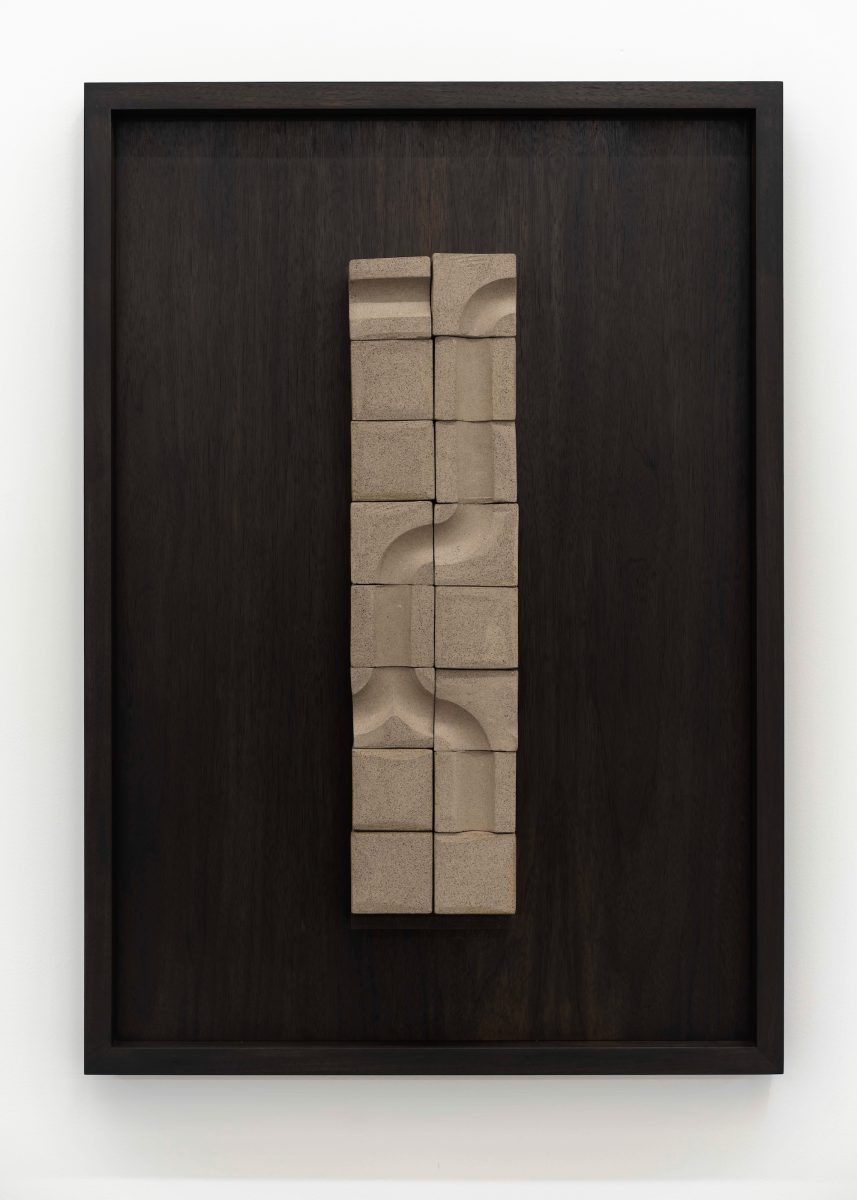
If you come to my studio, you will see a lot of failed pieces. It’s about repetition, doing something again and again until it performs, until it feels just right. When I get to that point, that’s where I usually step away from the studio for a couple of days. When I come back, I ask, how did I get here? That’s usually when the writing comes in. It’s a very intuitive practice. At the same time, the research is always unintentionally there; it’s always part of what I’m creating.
When people think of geometry, they might assume it’s very planned and mathematical, but your work seems also very internal and an emotional process?
It’s a very emotional process. The geometry and mathematical language of my brain… well, it’s always been there. I used to go to my grandad’s workshop a lot, he had all these mechanical objects and I think that language stayed with me. Even in Archaeology, you work with tools and small objects — again, the geometry is always there. At the RCA, I read this book about how to play French board games. It had all these little symbols, and it really informed the visual language of my work and the comfort that I have with very simple shapes and forms.
What attracts you to certain materials?
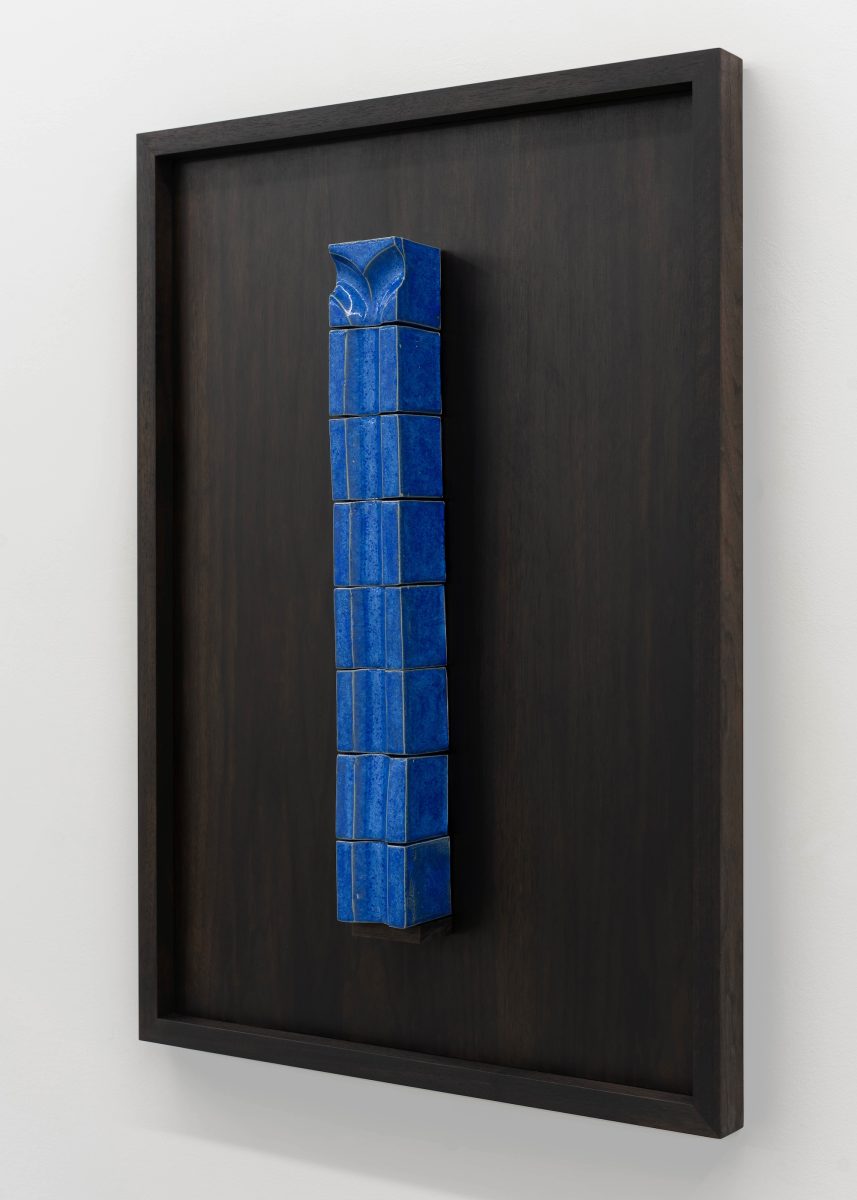
The primary material I’m connected to is wood because growing up, it was everywhere — in both worlds — it was there when I was in Brittany and when I was in Côte d’Ivoire. I talk about finding this place in-between and being comfortable existing in that liminal space. I wanted to use it as a connection to those worlds. Growing up in a workshop environment, I was very familiar with it. When I started making things, I thought I can’t draw, I can’t paint, but I can make stuff. I wish people would touch my work, put their hands on it, and feel the material and the gestures. Material is very important to me; I don’t like textures that are too smooth. The relationship between touch and memory is also something that I’m really interested in. For some people, it’s smell or sight, but for me, it’s touch.
I’ve read this phrase a few times in relation to your work – resisting nostalgia, in favour of critical intimacy – what does that mean to you?
For me, that phrase means not leaning too much into my feelings. Not falling into the trap of seeing the past as romantic or better than what I’m experiencing now. Rather, looking at the past through research and experimentation to understand myself and why I make this work. It comes a lot from my Archaeology practice of looking at the past from an objective perspective. I don’t think I would be able to make the work if I was leaning too much into my emotions, because I would be crying all the time – I need that separation.
Migration and belonging factor into your inspiration, and you can feel that tension between movement and rootedness. How have you found ways to express that tension?
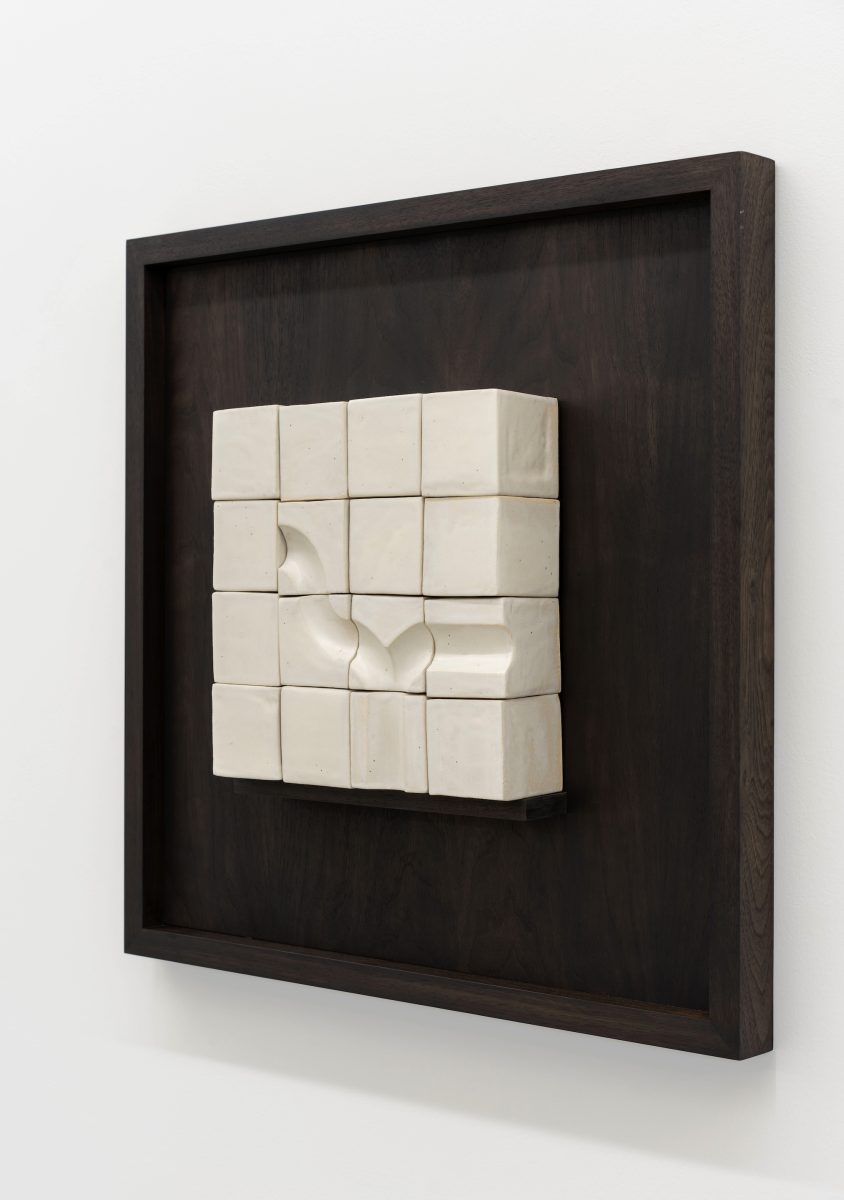
It’s through the materials. I play with the hardness of the materials through the shapes I create. You can see the passages I create; the carving is very fluid, and it has this roundness that goes against the hardness of the material itself. I love the place between something very heavy or concrete and creating something very soft inside.
What’s next with your work?
I want to make it even more engaging for my audience. It still feels a bit intimidating, because art is not always comfortable to touch. I want to break this barrier and lean into more playfulness, more scale, and even into installation.
Camille Provost, Excessive Refinement, 23rd January – 14th March 2026. Project Loop