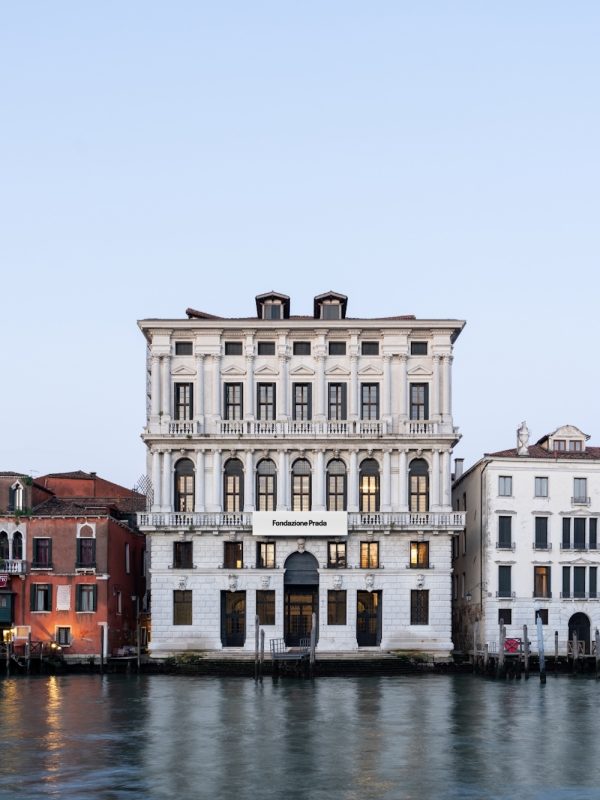

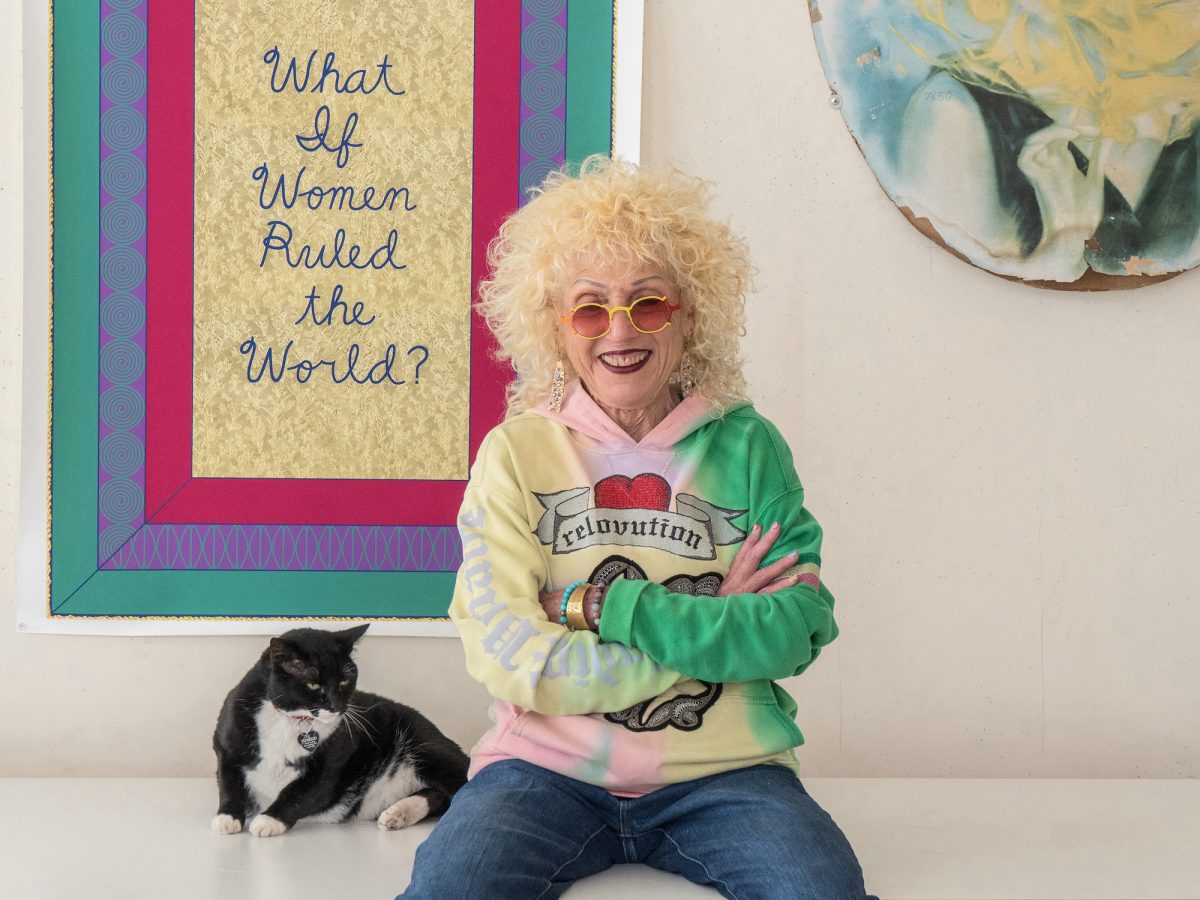
Timed to coincide with the 2026 Venice Biennale, Alberta Pane presents The Materiality of Judy Chicago, a focused solo exhibition by the pioneering American artist at its Venice gallery. Curated by Allison Raddock, the exhibition runs from 8th May to 22nd November 2026 (opening by invitation on 7th May) and offers a rare, material-led reading of Chicago’s six-decade career, alongside the debut of a new body of work created specifically for the occasion.
Long synonymous with The Dinner Party (1974–79), Judy Chicago has spent much of her career pushing against the gravitational pull of that landmark project. Acquired by the Brooklyn Museum in 2001 and permanently installed in 2007, the work became both a triumph and a shadow—prompting the artist to once ask whether the rest of her practice would ever fully emerge. The Materiality of Judy Chicago answers that question decisively.
From spray-painted car hoods and porcelain plates to needlework, glass, fireworks, and smoke, Chicago has consistently dismantled artistic hierarchies, elevating materials and techniques historically dismissed as “craft.” Raddock’s curatorial approach traces this radical material intelligence across key series from the late 1960s to today, revealing the conceptual continuity beneath Chicago’s shifting forms and scales.
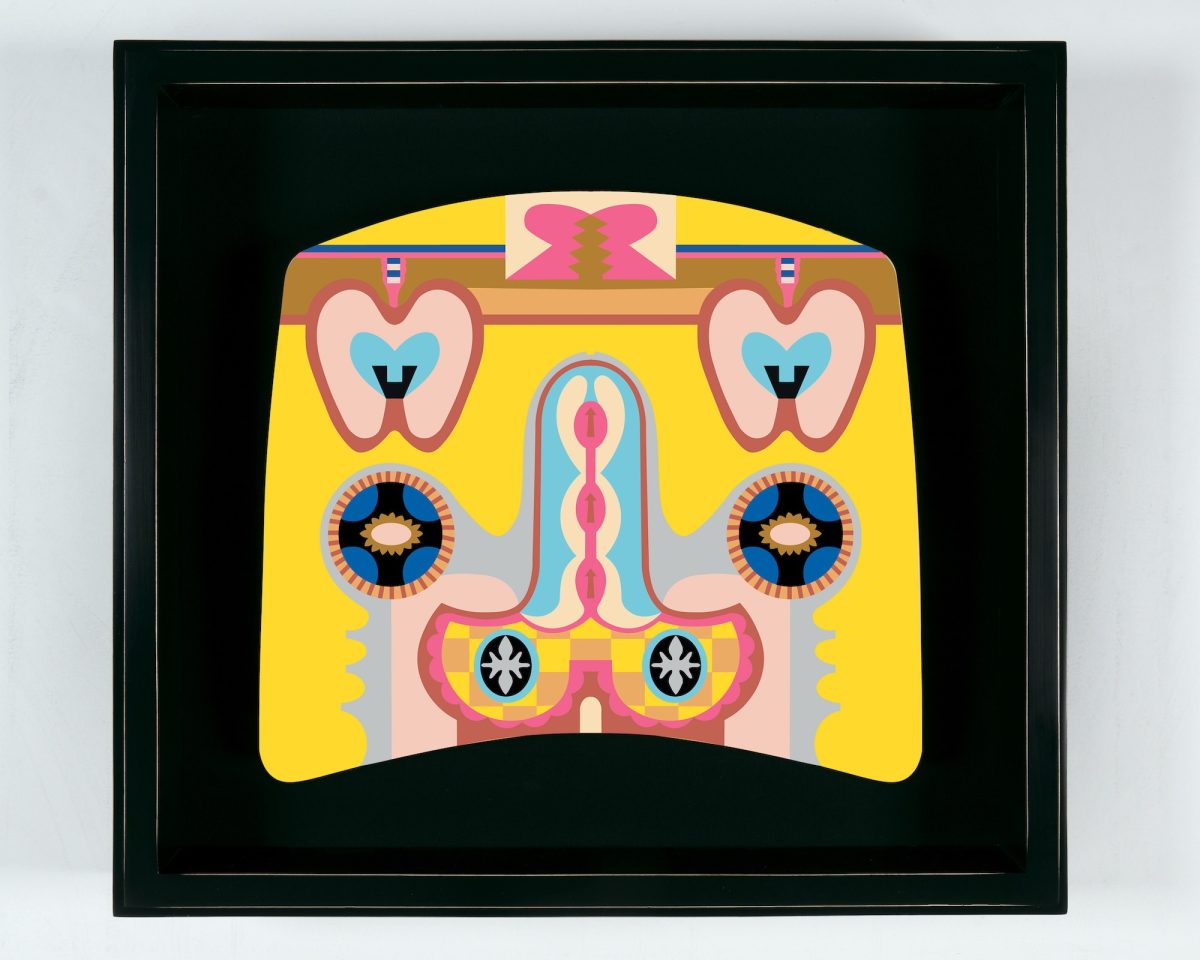
At the centre of the exhibition is the world premiere of Judy Chicago: Lilies/Goddesses, a new sculptural series developed in collaboration with Studio Berengo (Venice), JRP|Editions (Zurich), and the Corning Museum of Glass (New York). Eight new works in glass and bronze expand Chicago’s ongoing engagement with the lily motif—at once botanical, symbolic, and political—into objects designed to inhabit spaces ranging from tabletops to outdoor landscapes, and potentially monumental public settings.
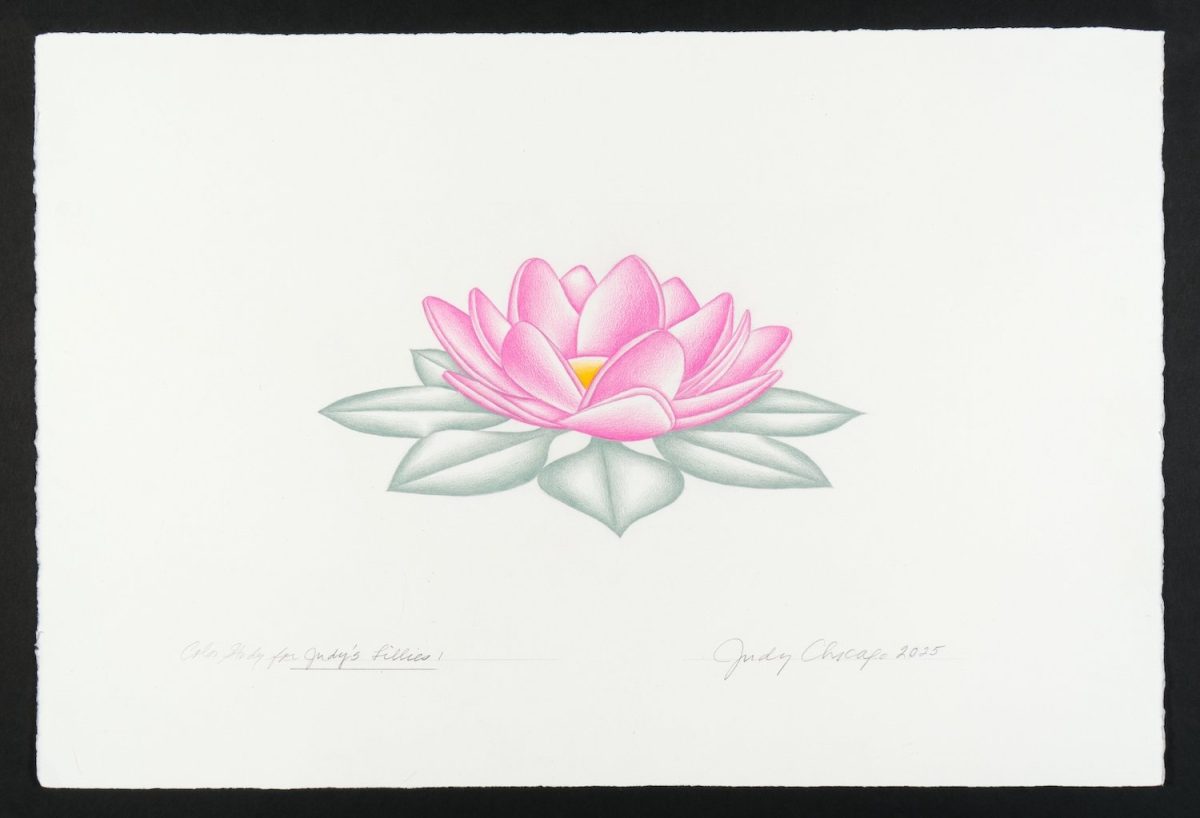
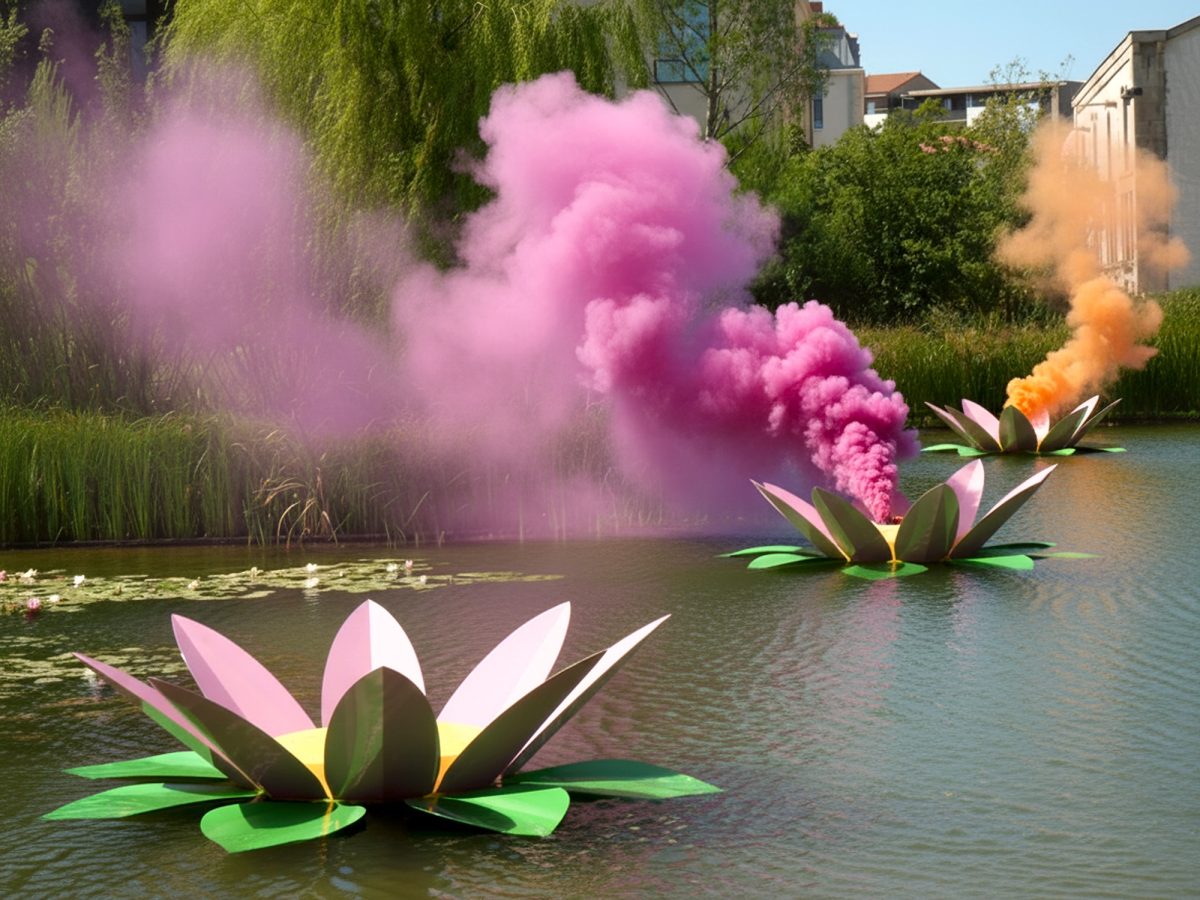
The series builds on An Homage to Arles (2024), commissioned by LUMA Arles, where floating metal lilies erupted in fireworks over water—an explicit nod to Monet and the Impressionists, whose work Chicago first encountered as a child at the Art Institute of Chicago. Beneath their beauty, these works carry an increasingly urgent ecological charge. What began as an effort to “soften” industrial environments through smoke, colour, and ephemerality has evolved into a meditation on planetary vulnerability, climate collapse, and the consequences of patriarchal systems of extraction and control.
This renewed focus on Chicago’s breadth follows a decade of major institutional reassessment. Her first retrospective at the de Young Museum in 2021, curated by Claudia Schmuckli, and subsequent exhibitions, including Revelations at Serpentine North (2024), curated by Hans Ulrich Obrist, reframed her practice as both formally rigorous and intellectually consistent—regardless of medium.
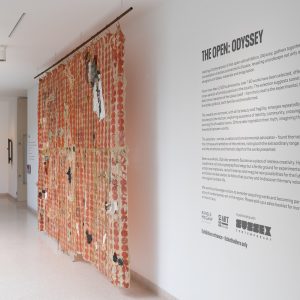
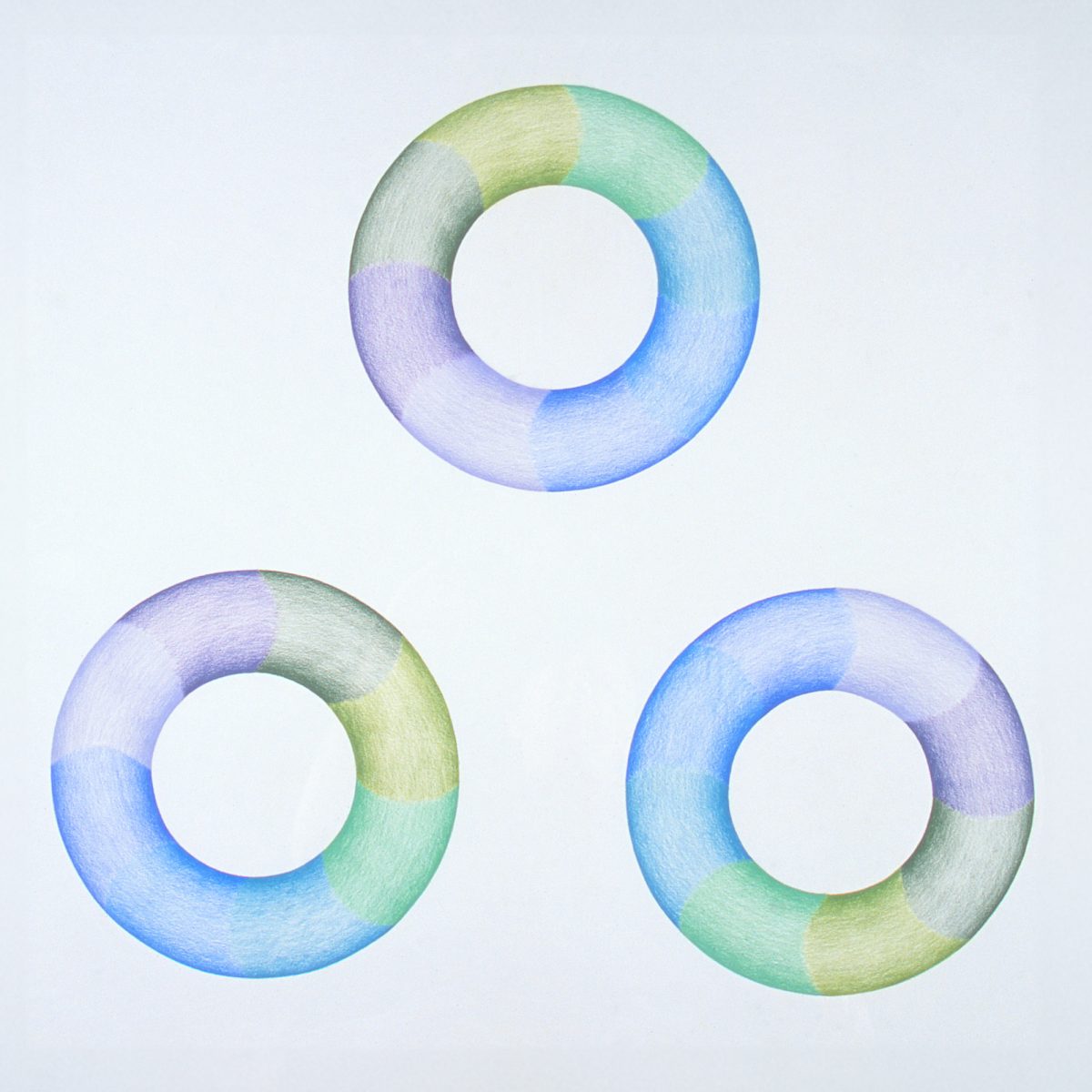
Alongside the new sculptures, the Venice exhibition brings together drawings and minimalist works from the late 1960s; plates and preparatory drawings from The Dinner Party; textiles from the Birth Project (1980s); paintings from PowerPlay; and photographs from the Garden Smoke series. Seen together, these works foreground Chicago’s lifelong commitment to material experimentation as a feminist strategy.
Artist, writer, and educator Judy Chicago has spent her career advocating for an expanded definition of art and a broader role for artists in society. The Materiality of Judy Chicago presents her practice not as a singular moment, but as an evolving, interconnected body of work—one that insists on art’s capacity to provoke thought, challenge power, and imagine more equitable futures.
Judy Chicago, The Materiality of Judy Chicago, 8th May – 22nd November 2026, Galleria Alberta Pane
Curated by Allison Raddock
The exhibition is accompanied by a catalogue designed by Multiplo and edited by Alberta Pane, featuring an exclusive interview between Judy Chicago and Massimiliano Gioni.
About the artist
Judy Chicago’s (b. 1939, Chicago IL, USA) career spans almost six decades, during which time she has produced a prodigious body of art that has been exhibited all over the world. In the 1970s, she pioneered feminist art and feminist art education in a series of programs in southern California. She is best known for her monumental work, The Dinner Party, a symbolic history of women in Western Civilization executed between 1974-79. Subsequent bodies of work have addressed issues of birth and creation in the Birth Project; the construct of masculinity in PowerPlay; the horrors of genocide in the Holocaust Project, on which she collaborated with her husband, photographer Donald Woodman; and most recently, mortality and humankind’s relationship to and destruction of the Earth in The End: A Meditation on Death and Extinction, which debuted at the National Museum of Women in the Arts in Washington, DC in 2019.
Over the course of her career, Chicago has remained steadfast in her commitment to the power of art and to women’s right to engage in the highest level of art production. As a result, she has become a symbol for people everywhere, known and respected for her work and life as models for a broader definition of art, an expanded role for the artist, and women’s right to freedom of expression. In 2018 she was named one of Time Magazine’s “100 Most Influential People” and Artsy magazine’s “Most Influential Artists”. In 2019, she received the Visionary Woman award from the Museum of Contemporary Art Chicago and was an honoree at the annual Hammer Museum gala in Los Angeles. In 2020 she was feted by the Museum of Arts and Design at their annual MAD Ball. Since then, she has been the recipient of multiple honors and awards and her work continues to be shown internationally. Her works are in collections at major museums around the world. @judy.chicago
About the curator
Allison Raddock is a curator, art advisor, and market specialist with over 25 years of experience navigating the international art world. Grounded in the New York gallery scene and globally engaged, she has built a career at the intersection of curatorial rigor and advising, with a particular focus on modern and contemporary art.