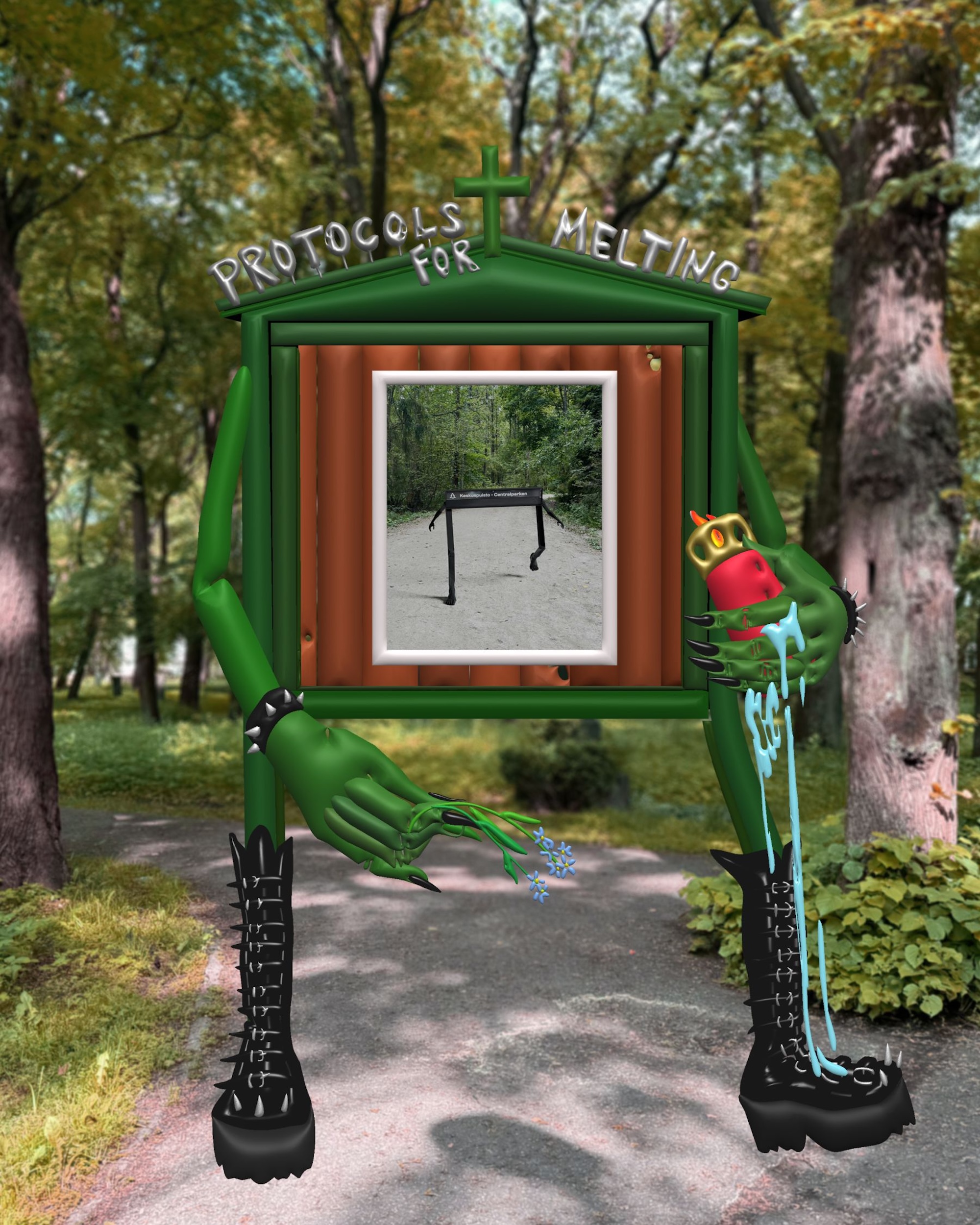
I’m just back from Helsinki. Three days immersed in all things ‘Media Art’. Despite that arbitrary categorisation, the trip outlined some of the art form’s contours; how and what it looks like, often, how and why artists use this way of working, critically. More than Digital, or any variation on Audiovisual Art, where a viewer is normaly a receiver of information, the artists and artworks I encountered in Helsinki – from Joonas Hyvönen and Liga Spunde’s site-responsive augmented reality walk around the city’s central park, Protocols for Melting (2025), to Flis Holland’s 25/7 (2025), a sound walk that questions the impact of ‘smart cities’ on corporeal life – blend technologies and the physicalities of the human body to create new, participatory communities. In rendering viewers complicit, these works of Media Art aspire to contradict the social, political and ecological state of things. That is, the artists I met each use technology against the grain, speculating on how digital tools can be used to counter the logics of autonomy and optimisation that are squashing the stuff of life. So, what is Media Art?
To prelude: my trip to Finland’s capital coincided with the second annual Minna Tarkka Lecture series (December 1st—4th, 2025). Convened by M-Cult – a cultural production agency, focusing on how art, media and technologies can connect with social and political subjects – the series acts as a platform to discuss and debate ‘the potential of art, media, and technology to participate in and shape current and future democratic societies’. Named in homage to Minna Tarkka (1960—2023) – M-Cult’s founder and a vital figure in the discourse around Media Art, setting up the first Finnish university course related to Media Art for instance – and embracing the focus she placed on hospitality, critical experimentation and social engagement, the specific theme of this year’s event was ‘Collective Imagination in the Era of Optimisation’. A title sufficiently loose to envelop subjects from political critique to community organising. It’s of note that alongside a number of quasi-academic talks given in the Kiasma museum’s theatre, the series included public workshops held at Aalto University and a feast of edible artworks – the event blurred hospitality, art practice and pedagogy.
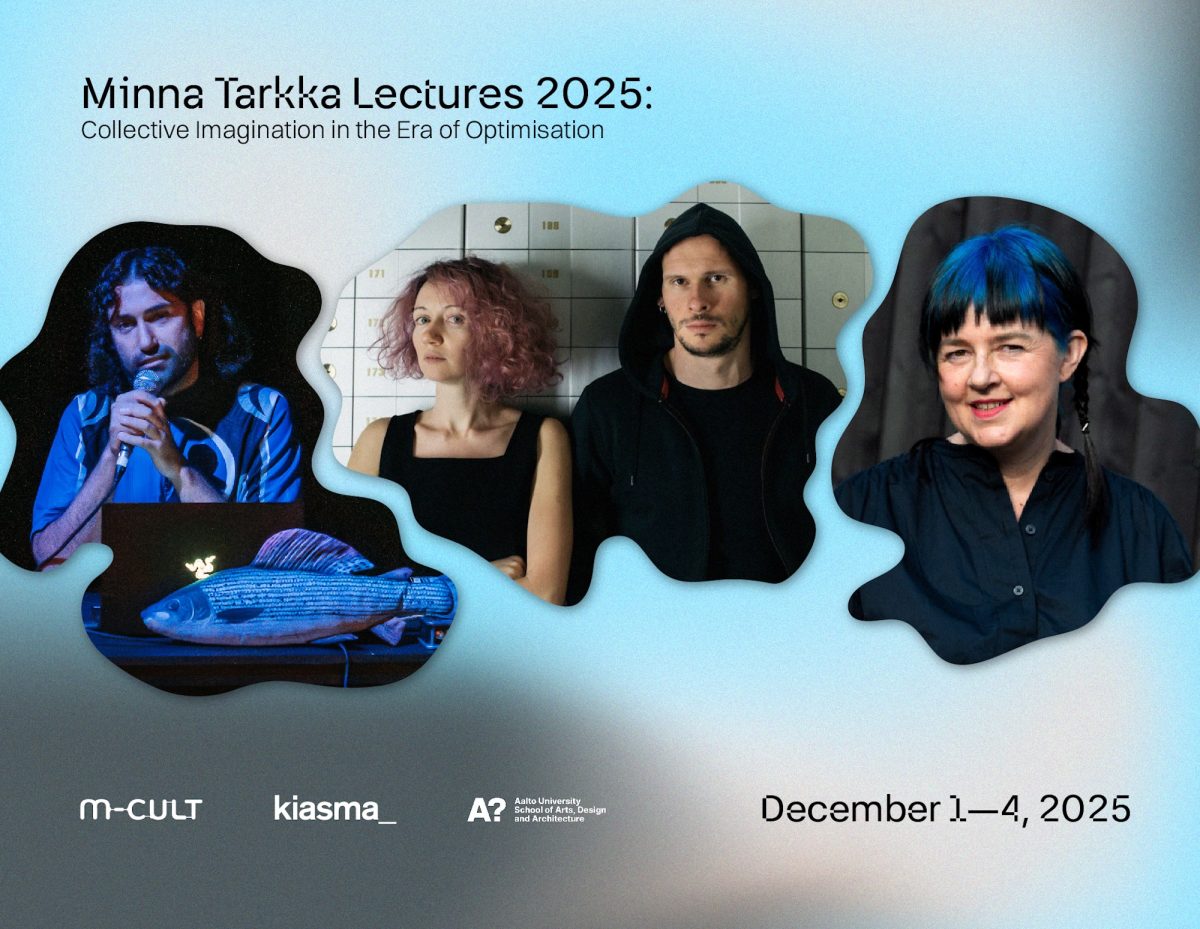
If I remember correctly, the first question I asked on meeting the M-Cult team and the keynote speaker for this year’s lecture series, Ruth Catlow (a UK-based artist, researcher, curator, and the co-founding director of Furtherfield), was: What is Media Art? Replies were indefinite, mostly concerning the boxes used by funding agencies to allocate their monies evenly. Why am I here then? What is the point of such an event focused on this medium? Questions I did not ask but which I sought to answer for myself over the subsequent days.
Derived from the modern Latin ‘tunica’ or ‘membrana’, ‘coat’ or ‘layer, and ‘medius’, ‘middle’ (as Google tells me), ‘Media’ etymologically connects with ideas of in-betweenness – the space that exists between different things. More modern connotations further this, often filling this space between with reportage and other methods of communication – ie, Mass Media. In the context of art, I want to foreground the definition of Media Art used by UNESCO’s City of Media Arts, Karlsruhe (Germany). In a long blog post on the subject, they suggest Media Art is rooted in ‘any extension of ourselves’, defined by something ‘apparatus-based’, produced and reproduced and received via machines. Isn’t that Digital Art? I thought…
The definition of Media Art progressed by M-Cult, as evidenced in the artworks I encountered on my trip, takes this sense of the term one step further. Rather than denoting works of art made with machines (Digital) or in response to technological advancements (Post-Digital), Media Art here alludes to a more-than-human merging of digital and physical realms, manifesting with a deep commitment to social engagement – an extension of sociocultural life.
Catlow’s collaborative project The Treaty of Finsbury Park (2025) is a good example of this particular sense of Media Art in action. Based on a speculative fiction, set ‘several years into the future where all the species of [Finsbury Park (London)] have risen up to demand equal rights with humans’, the online Live Action Role Play game (LARP) asks players to become one of the more-than-human creatures of the Park. In becoming creaturely, viewer-participants are encouraged to reconsider the nature of the Park, how this is used, and how, in thinking ‘like a dog, bee or even grass’ with others to support the overall development of the game, players could help ‘change the way we all see and participate in our local urban green spaces forever’. Ultimately, The Treaty of Finsbury Park asks players to become more than passive receivers of a vital message – humans have placed the Earth in ecological crisis – setting them the mission to come together and enable ecological action.
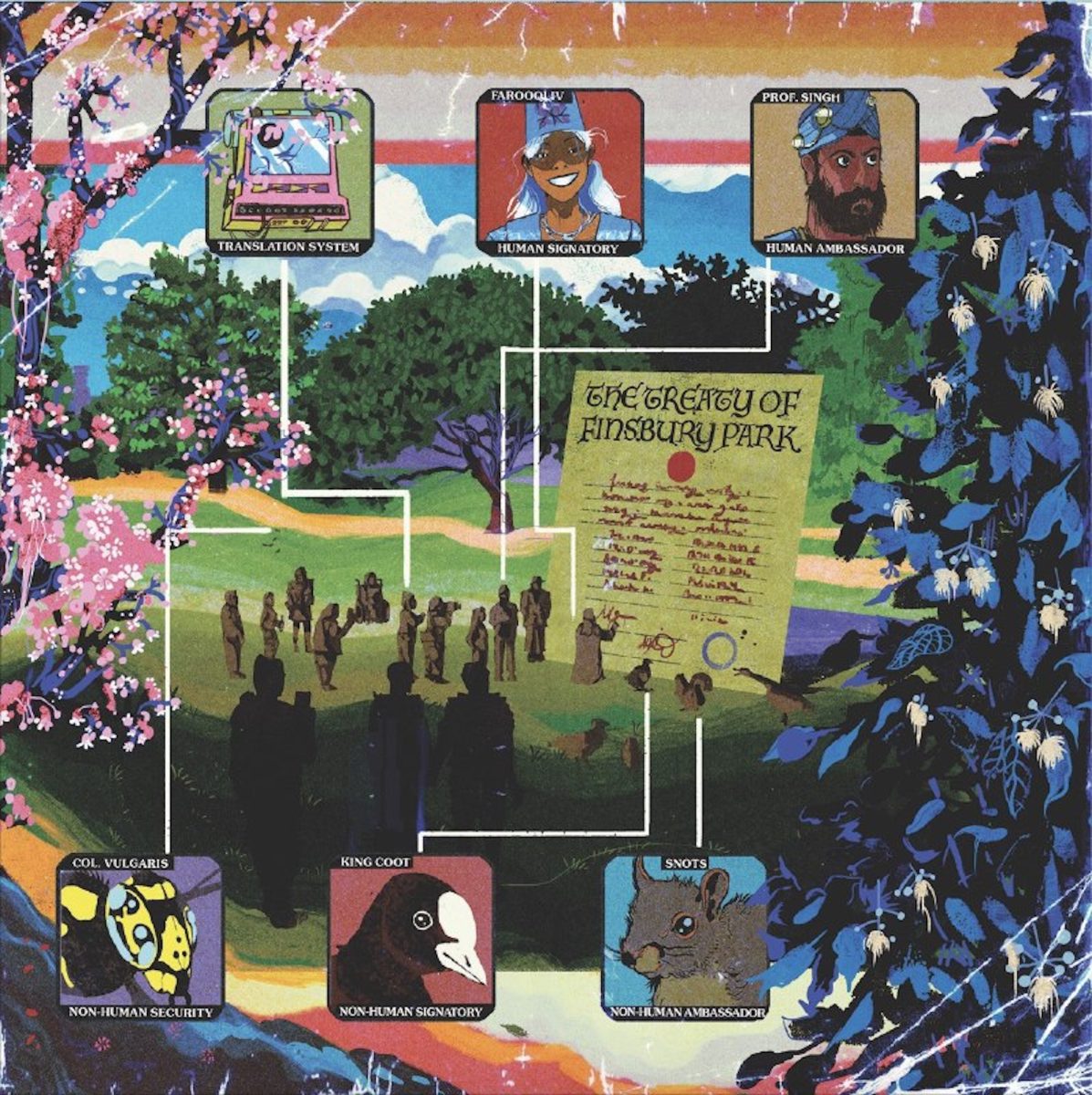
Now, I am the first to question the ability of any work of art, socially engaged or otherwise, to actually change the conditions of the world – most art is a metaphor and, in part, that is what makes it different to design. This is perhaps another important aspect of Media Art; instead of seeking a grand aesthetic fix to the polycrisis wrought by coloniality, such works of art unfold as speculative situations. Engaged, through digitally inflected methods of being together, these moments ask us to collectively think about what must happen in order to create the conditions for the future, or at least, in the words of Tina Campt, they ask us to come together collectively to perform ‘a future that hasn’t yet happened but must’. This work isn’t about creating change, but about creating the conditions that show things can change.
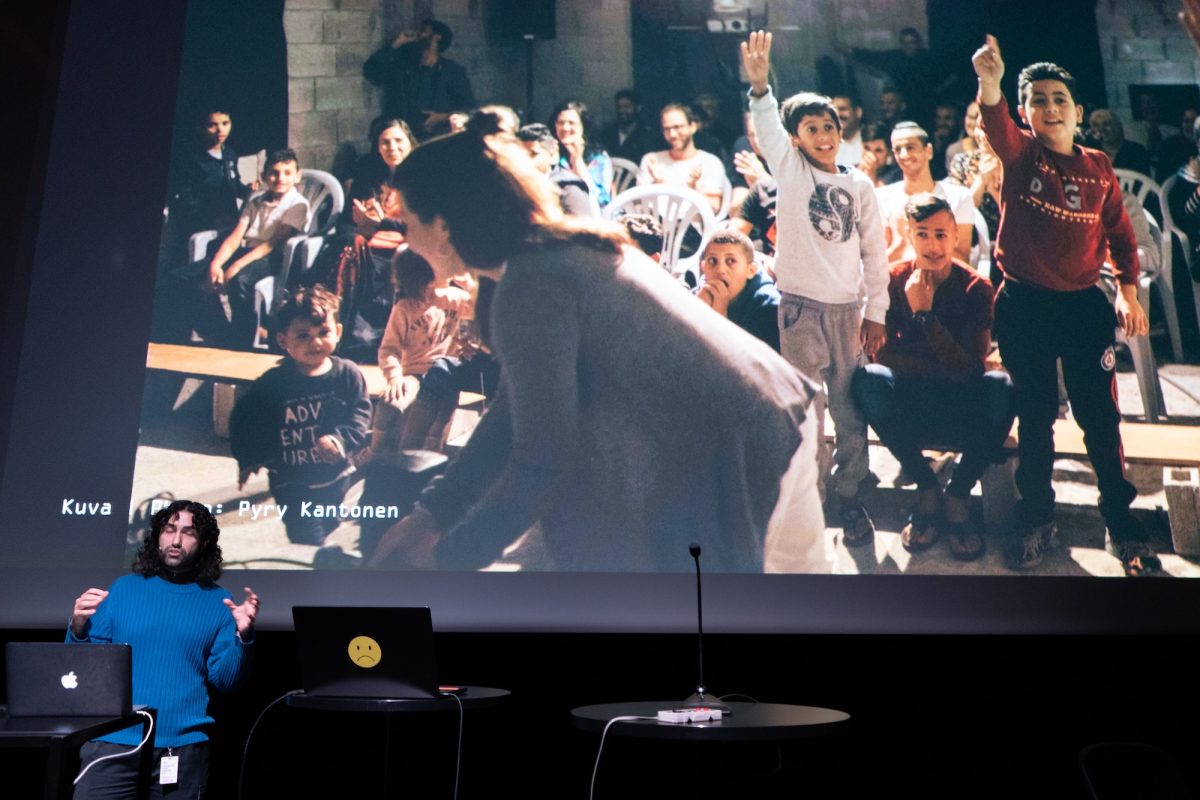
Shifting from the global to the local, one of the projects artist and game designer Harold Hejazi spoke about in his participatory lecture, ‘Reprogramming Public Spaces’ – itself a work of Media Art, with the audience being invited to interact with an AI fish live – elucidates the most beautiful way art, any work of art, can bring people together to imagine a life otherwise. Developed through conversations with people living in the al-Arroub refugee camp (Palestinian), Conversational Karaoke(c.2018) was a video game installed as part of the Recall–Reflect–Return 70 Years: Palestine Performance Symposium hosted by Nowat Theatre. In this interactive installation, the participating residents saw muted videos of others from the camp deep in conversation. In pairs or small groups, those participating approached a microphone and had the opportunity to add their own words to the video footage seen, creating a humorous audiovisual collage. (nb. I would encourage everyone to read more about this artwork: haroldhejazi.com/conversational-karaoke.)
Houmour is a critical aspect of Hejazi’s practice, as he stated in this lecture, “when we laugh together, it breaks down barriers between people”. Art works like Conversational Karaoke not only instantiate this belief but use lighthearted enjoyment – a shocking word for an Art World context – to create moments of solidarity. And, let’s not forget, it is through togetherness that real political work happens. In this way, Hejazi’s interactive video games – his Media Artworks – operate adjacent to political protests, allowing those who might fear or not have the basic human right to protest proper to participate in the collective creation of a better reality, however fleeting that might be.
Hejazi touches upon what I feel to be the most important aspect of Media Art as I have come to understand it following my trip. Unlike Digital Art – Audiovisual, Post-Digital Art, etc – Media Art is, to use Hejazi’s words, “what happens between people [and that is] more important than the technology used”. Yes, artists who use this medium embrace an array of technologies to create their art, but in refusing the optimised logics of autonomy, they expand these digital apparatus to create networks where community can be practised differently.
With all this in mind, I am brought back to Karlsruhe’s definition of Media Art: a way of making which is activistic and performative, participatory and interactive, socially engaged, ‘not bound up with any particular medium or media’ but a meeting of different media, digital and bodily, all networked and interdependent – the stuff of life really.
MORE: @mcult.helsinki