That At Home in the 17th Century is an atypical exhibition for the Rijksmuseum is clear from the very start. A grand museum renowned for its Vermeers, Rembrandts and Frans Hals portraits of mercantile prosperity here turns its gaze to bladder stones, lice combs and cesspit excavations. Seven curators have worked for nearly four years on this ambitious project, bringing together archaeology, anthropology and decorative arts to reconstruct not the grandeur of the Dutch Golden Age, but the texture of its domestic life.
Across nine diorama-like galleries created by theatre designer Steef de Jong, visitors follow a day in the life of a 17th-century Amsterdam household, from dawn’s chilly ‘toilette’ to candlelit convivial evenings by the hearth; the displays underscored by lighting that follows the cycle of daylight.
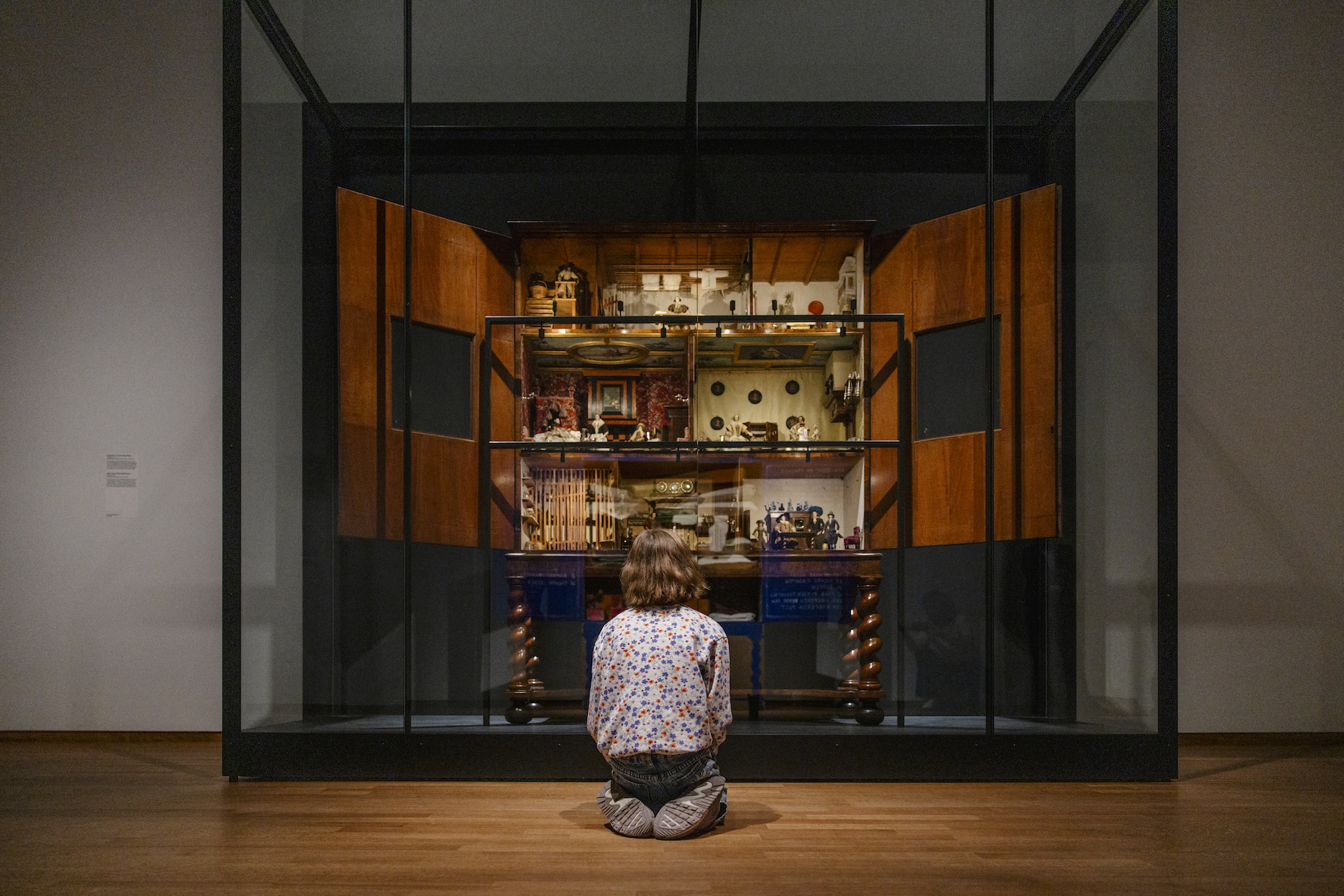
De Jong, known for his dynamic cardboard stage sets for opera, translates that theatrical sensibility into a sequence of immersive rooms that merge exhibition and stage design. “I saw it as a theatre piece,” he explains. “It’s a story from morning to night, a dialogue between historical domestic objects and humble cardboard. I wanted visitors to feel they were walking through a house that still remembers the people who lived there.”
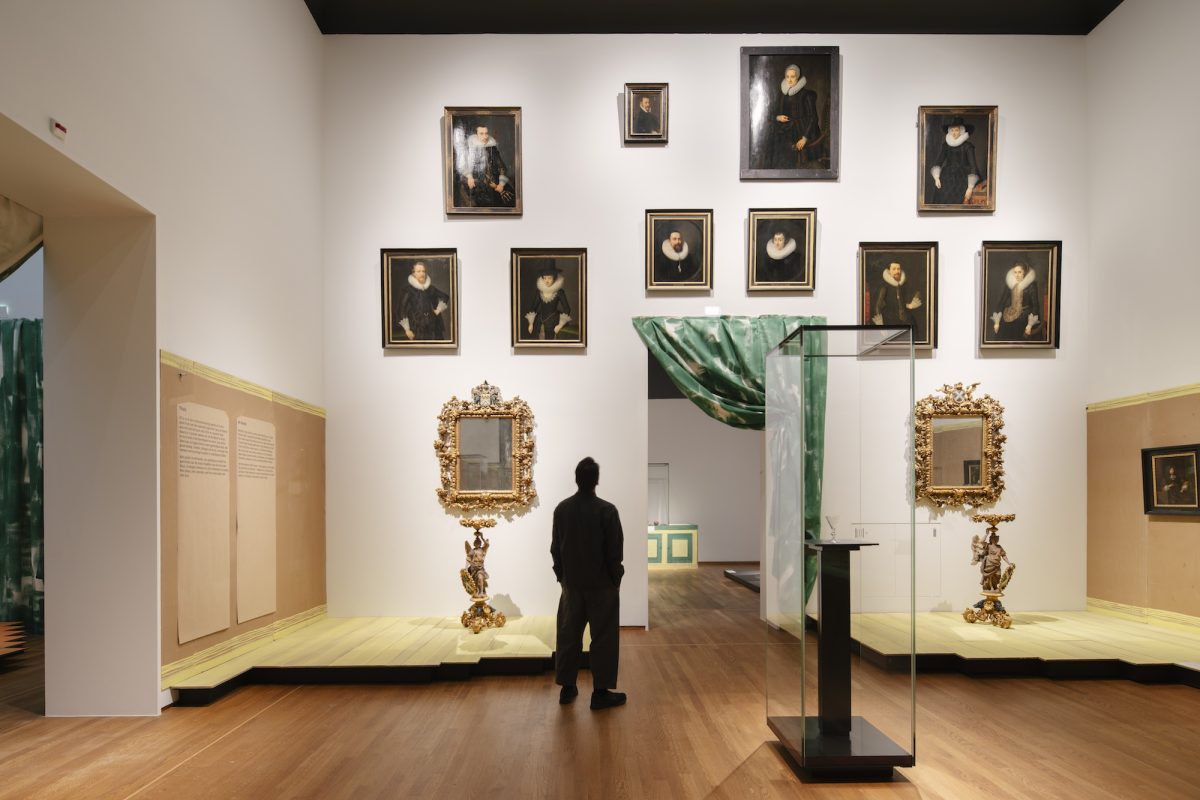
His world of cardboard and painted illusion becomes the frame through which 195 artefacts – many on loan from archaeological sites and historic homes, (some so ordinary they couldn’t be part of the Rijksmuseum collection) – are presented not as static relics but as living testimonies to daily life.
“I wanted to create an immediate relationship with the imagination of the viewer,” adds De Jong. “To make the story theirs. The chamber pot sits beside the bed, the warming pan hangs where you’d expect it – everything is positioned so you can almost sense the person who last touched it.”
The result feels startlingly intimate, connecting us immediately with the 17th-century inhabitants who used these objects, behind the closed doors of the households. Instead of masterpieces, we encounter modest yet revealing artefacts: a woman’s corset loaned from the V&A, a silver toothpick and ear spoon cleaner that doubled as jewellery, a bed warmer for lonely women (husbands were often away on business trips, or in the military), and even a 17th-century wooden ‘irrigator’, used for contraception, its shape suggesting other purposes too. Together with the Archeologie West-Friesland institution, the curators studied the contents of the 17th-century cesspit at the home of the mayor of Hoorn and his family, the Soncks , who lived at the same address through several generations, bringing on display remains of food, bones, seeds and crockeries, documenting the family’s eating habits; there are table settings, with pressed linens folded with sharp creases as proof of cleanliness; delicate Delft chinas, and silver spice boxes signalling status during dinner parties. The curators’ anthropological approach lift a veil on how such objects were used, what they said about class, gender and hygiene, and how their very functionality shaped the rhythm of daily life.

The Rijksmuseum’s celebrated doll’s houses – belonging to Petronella Oortman and Petronella Dunois – serve as the exhibition’s emotional and conceptual anchors. Far from children’s playthings, these miniature masterpieces, each containing over 700 meticulously crafted items, were the life’s work of their owners: collectors’ pieces and symbolic homes that recorded idealised, yet faithful, representations of domestic order. Moving them into the exhibition, with each tiny object relocated individually by conservators, highlights their extraordinary realism and the devotion with which they were assembled. Callers to the Petronellas’ households once came to see these dolls houses as extraordinary collectibles, and they still astonish today as detailed microcosms of 17th-century Amsterdam, complete with commissioned miniature furniture, silverware, glassware and fully clothed wax figures busy with everyday chores. One even includes the window cleaning sticks, perched in a bucket by the door, ready for the morning’s work.
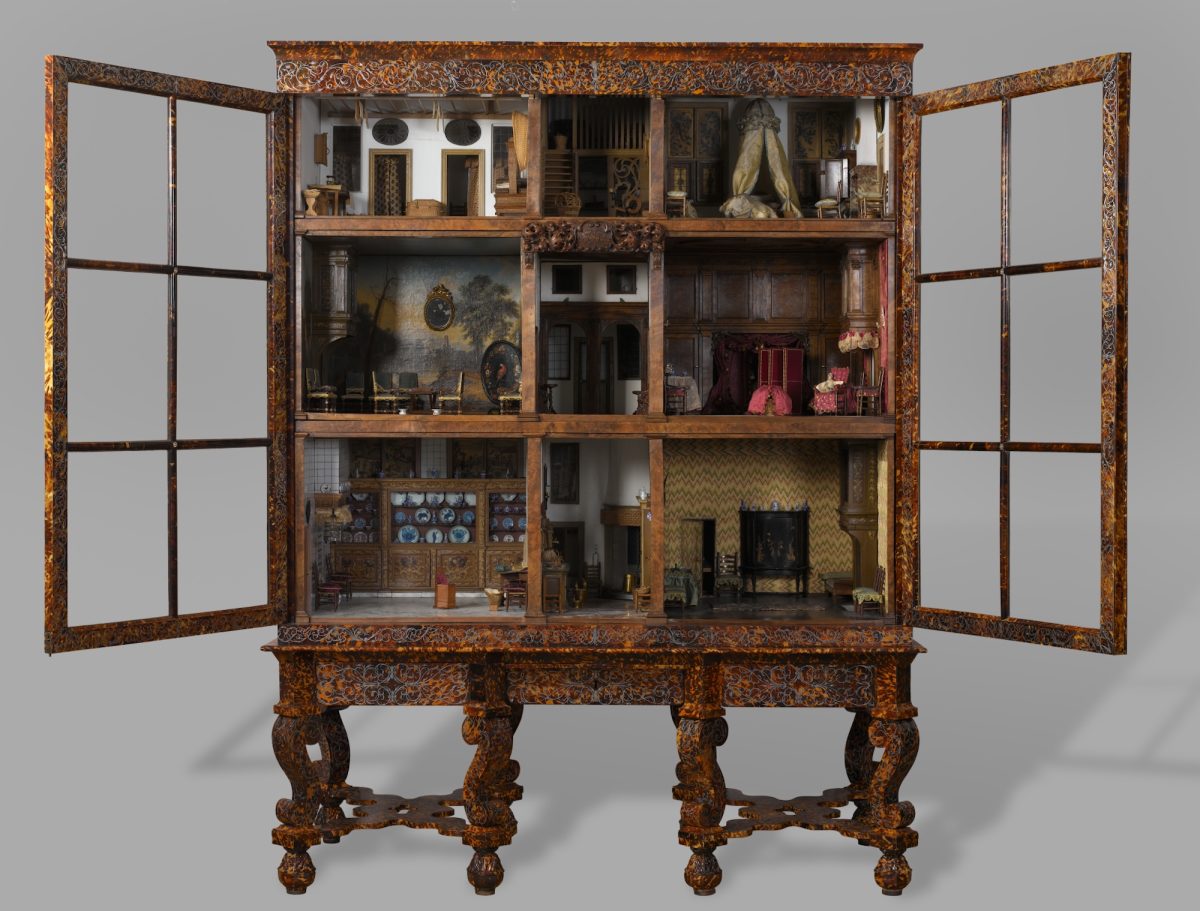
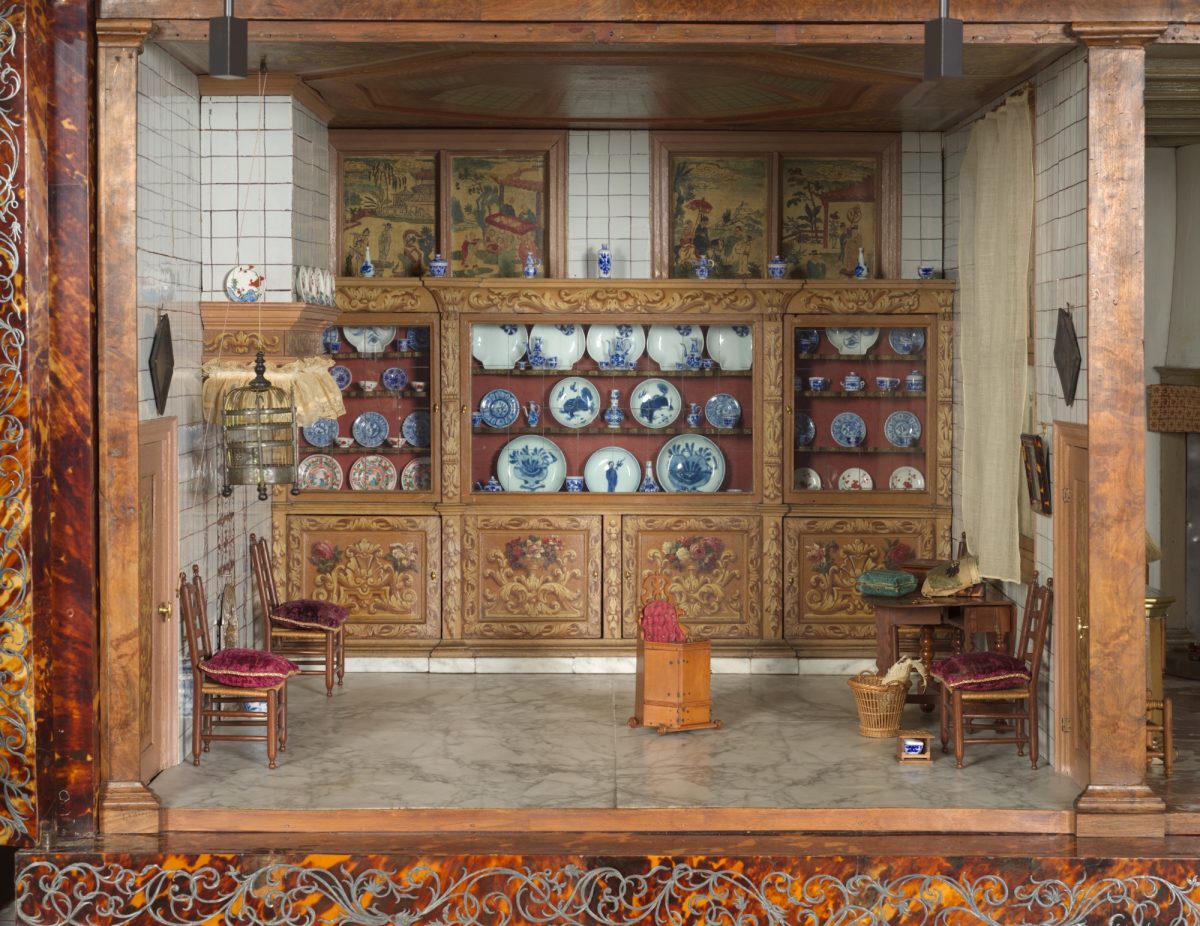
The emotional connection is built through the domesticity of every single object on display, explored in the menial tasks of daily life. Interestingly, while this is not an exhibition necessarily portraying women’s conditions, or a woman’s point of view, their presence and significant roles within the households unavoidably take centre stage.
There is humour and tenderness in the way the curators have portrayed how life’s milestones were acknowledged – weddings, births, deaths; this is particularly evident in a room entirely dedicated to childhood – featuring children’s furniture, a rattle inset with quartz to soothe teething pains, ritual glasses used to toast new mothers, play kitchenware and toy cannons, and two letters from a little girl to her father, proud of her improvements as she learnt to write. For any parent having to deal with all of children’s many paraphernalia, together with the worries and hopes that this phase of life brings, this display will feel incredibly relatable.
There is also occasional unease, particularly in the final gallery. Here, remarkably, the formal reception room of the Boudaen Courten family from Zeeland province – rich textile merchants with shops in Amsterdam, Middlesmoot, and London – is recreated. It showcases not only the ancestral family portraits, gilded mirrors and original furniture that would have welcomed guests, but also a game of ‘goose’ (the equivalent of snakes and ladders, which would have been played by adults as a gambling game), and an unusual memento – a 5cm bladder stone which was removed in 1647 to xx after her 13th pregnancy. She survived the operation (not a given outcome at the time), and the bladder stone was displayed with pride since then, as a sign of family resilience and strength. The effect is both poignant and uncanny, a reminder of continuity and mortality alike.
For Rijksmuseum director Taco Dibbits, the exhibition represents a shift in perspective. “We know the 17th century through its masterpieces,” he says, “but what went on behind closed doors remained largely invisible. Here we explore what it meant to live, to cook, to wash, to care, in those houses we so often see represented only from the outside.” It is a rare invitation to cross the threshold from the grandeur of art history into the intimacy of daily life.
“Vermeer shows us the Instagram version of the 17th century,” notes curator Femke Diercks, “perfect domestic scenes – but what did life really smell, sound and feel like?” At Home in the 17th Century answers that question with rare precision and imagination. This is a show about ordinary things, yet it achieves something extraordinary: it makes us feel the warmth of a kitchen, the weight of a linen press, the quiet pride of a merchant’s household, and through it all, the unbroken thread of domestic life.
Catalogue by Irma Boom. On view until January 2026 in the Philips Wing, Rijksmuseum, Amsterdam.